

You have seventeen tabs open in Google Sheets. One tracks orders. Another tracks invoices. A third is the “master” sheet that somebody broke last Tuesday by deleting a row. A study led by Prof. Pak-Lok Poon found that 94% of business spreadsheets contain errors (Frontiers of Computer Science, 2024). You already know this because you have lived it. This article walks through five real businesses that stopped patching spreadsheets and built custom apps instead, without writing code, using imagine.bo’s Describe-to-Build workflow. You will see exactly what changed: hours saved, costs cut, and growth that was previously stuck behind a broken formula.

TL;DR: Spreadsheets cost businesses billions annually through errors and wasted time. According to Frontiers of Computer Science (2024), 94% of business spreadsheets contain faults. These five businesses replaced manual processes with AI-built apps on imagine.bo and saw results ranging from 15 hours saved weekly to over $50,000 in annual cost reduction. If your operations still run on spreadsheets, you are competing with one hand tied behind your back.
Why Do Spreadsheets Break When Your Business Grows?
Spreadsheets break because they were never designed to be multi-user business applications. According to Upward Technology (2025), employees lose an estimated 240 to 360 hours per year on repetitive data entry tasks alone. That is up to nine full work weeks per employee spent typing information that software could handle automatically.
Launch Your App Today
Ready to launch? Skip the tech stress. Describe, Build, Launch in three simple steps.
Build
The problem compounds with each new team member. When three people edit the same file, version conflicts multiply. When five people need different permission levels, spreadsheets offer none. There is no audit trail, no role-based access, and no way to enforce validation rules without fragile workarounds.
Spreadsheets fail businesses in a specific, predictable pattern. They work fine for one person tracking one thing. They start cracking when a second person needs access. They fully collapse when business logic, like conditional pricing, approval chains, or scheduled notifications, enters the picture. This is the exact inflection point where an AI-powered no-code app becomes cheaper than maintaining the spreadsheet.
According to Gartner, 70% of new enterprise applications will use no-code or low-code technologies by 2026, up from less than 25% in 2020 (Gartner, 2025). Businesses are not switching for novelty. They are switching because spreadsheets cannot scale.
Case 1: How a Logistics Coordinator Saved 15 Hours a Week
A small freight coordination business in Southeast Asia managed shipment tracking, driver assignments, and delivery confirmations across four separate spreadsheets. Every morning started with 90 minutes of copy-pasting data between tabs. Every Friday ended with a manual reconciliation that regularly surfaced discrepancies.
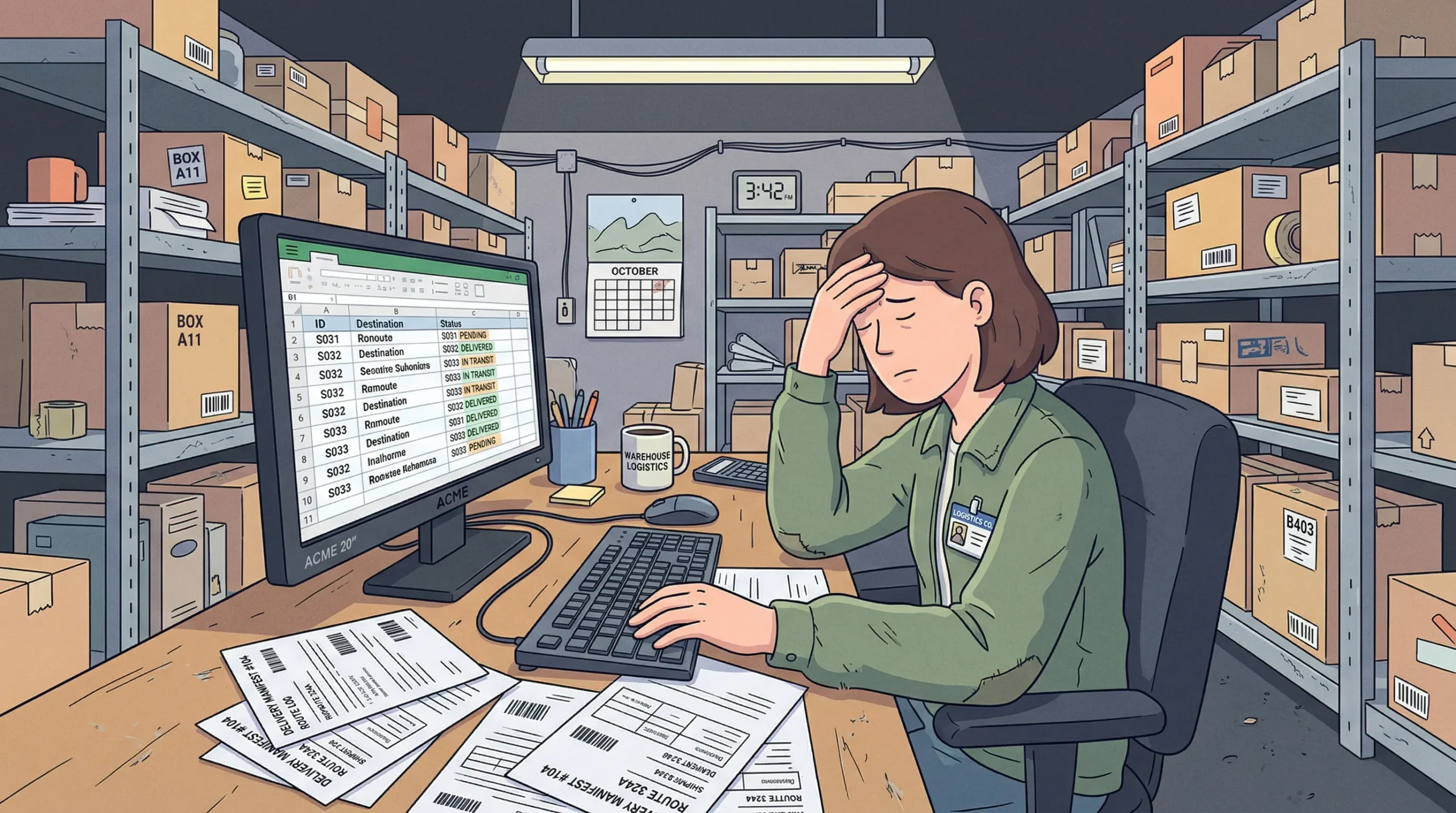
The coordinator described the problem simply: “I spend more time managing my spreadsheets than managing my drivers.” Using imagine.bo’s Describe-to-Build feature, they prompted: “Build a shipment tracking app where dispatchers assign drivers to loads, drivers confirm pickup and delivery with timestamps, and managers see a live dashboard of all active shipments.”
The AI generated the full app structure, database schema, and role-based access in under ten minutes. The Hire a Human feature handled the integration with their existing GPS tracking API. Total build time from first prompt to deployment: six days.
The result was measurable. Weekly time spent on data management dropped from 18 hours to roughly 3 hours. That is 15 hours returned to actual operations. According to OrderEase (2024), a 2% error rate across 100,000 annual shipments costs approximately $100,000 in corrective actions alone. Eliminating manual data entry removed most of those errors at the source.
Case 2: A Boutique Gym Replaced Five Tools With One App
A boutique fitness studio in the UK was using a spreadsheet for class scheduling, a separate tool for member check-ins, a third for payment tracking, another for trainer availability, and email for all communication. Monthly cost across these tools exceeded $380, and no two systems talked to each other.

They used imagine.bo to build a custom booking and management app that consolidated everything. Members book classes, trainers set availability, payments are tracked, and automated reminders go out before each session. The owner described the before-and-after as the difference between running a business and babysitting software.
The gym’s monthly software cost dropped from $380 across five tools to $25 on imagine.bo’s Pro plan, a 93% reduction. Member no-show rates dropped by roughly 40% after automated reminders were added, which the spreadsheet system could never support. According to Kissflow (2025), organizations that deploy no-code workflow automation report a 65 to 70% reduction in process cycle time. This gym’s scheduling workflow went from a 20-minute manual process to instant self-service.
Case 3: How a Nonprofit Cut $50,000 in Annual Admin Costs
A mid-sized nonprofit managing donor relationships, volunteer coordination, and grant reporting was drowning in spreadsheets. Their executive director estimated that two full-time staff members spent roughly 60% of their time on data entry and report generation. That is over $50,000 in annual salary directed at work that software should handle.

They built a donor and volunteer management app on imagine.bo that tracks donations, automates thank-you emails, schedules volunteers, and generates grant reports with one click. The AI-Generated Blueprint handled the core structure. An imagine.bo engineer, brought in through the Hire a Human feature, configured a custom export for their specific grant reporting format.
According to Acumen Research (2025), the global no-code development platform market was valued at $34.7 billion in 2025, partly driven by organizations like nonprofits that need powerful software but cannot afford custom development. This nonprofit’s total cost was $499 for the Done For You build plus $25 per month ongoing. Their previous system cost over $50,000 per year in staff time alone.
The staff members previously buried in spreadsheets now spend their time on fundraising and community programs. That is not just a cost saving. It is a strategic reallocation that directly supports the organization’s mission.
Case 4: A Freelance Agency Stopped Losing Invoices
A four-person design agency tracked projects, time entries, and invoices in a shared Google Sheet. The system “worked” until it did not. They discovered they had failed to invoice three clients over two months, leaving roughly $8,400 on the table. The spreadsheet had no alerts, no automation, and no way to flag overdue items.
They built a project and invoicing app using imagine.bo in a single afternoon. The app tracks project status, logs billable hours, auto-generates invoices at project milestones, and sends payment reminders. Role-based access means clients see their own project status without seeing anyone else’s data.

The agency founder noted that the real cost of spreadsheets was not the tool itself but the revenue that slipped through its gaps. Within three months of switching, their average days-to-payment dropped from 34 days to 12 days because automated reminders removed the human bottleneck of “remembering to follow up.”
According to Forrester, 84% of businesses are now adopting low-code or no-code solutions to address gaps left by developer shortages (Forrester, 2024). For small agencies, the gap is not just developer talent. It is operational infrastructure that spreadsheets cannot provide.
Case 5: A Small Retailer Built a CRM That Actually Gets Used
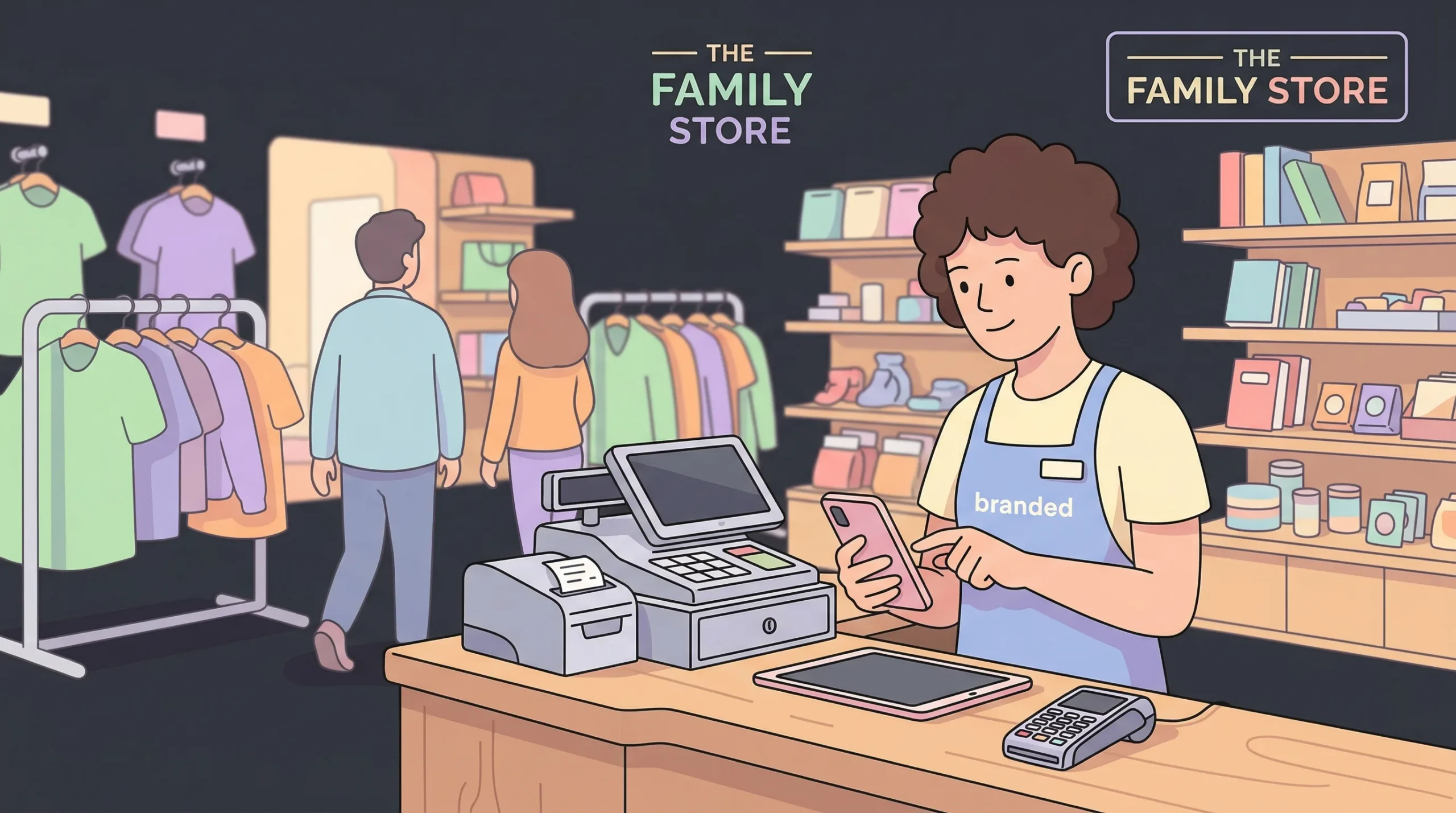
A family-owned retail business with three locations tried a major CRM platform. The staff found it overwhelming and reverted to a spreadsheet within two months. The spreadsheet captured customer names and purchase history but offered no way to segment customers, trigger follow-ups, or track repeat purchase rates.
They used imagine.bo to build a simplified CRM that matches their actual workflow. Staff log customer interactions in two taps. The system automatically tags high-value customers, flags accounts that have not purchased in 90 days, and sends the owner a weekly summary. No training manual needed because the interface was designed around how their team already works.
According to Fortune Business Insights (2025), SMEs represent 43% of the no-code AI platform market, driven by demand for solutions that do not require a dedicated technical team. This retailer’s story illustrates why: they did not need a complex enterprise CRM. They needed a tool that fit their process, not the other way around.
The common thread across all five cases is not technology adoption for its own sake. It is the elimination of what I call “spreadsheet tax”: the invisible hours, missed revenue, and operational friction that accumulates when your business outgrows its tools but has not yet outgrown its fear of building something better. According to the Bureau of Labor Statistics, the US alone faces a projected shortfall of 1.4 million software developers by 2026 (BLS, 2025). No-code platforms exist specifically because most businesses will never be able to hire their way out of this gap.
What These Five Businesses Have in Common
Every business in this article shares three patterns worth noting.
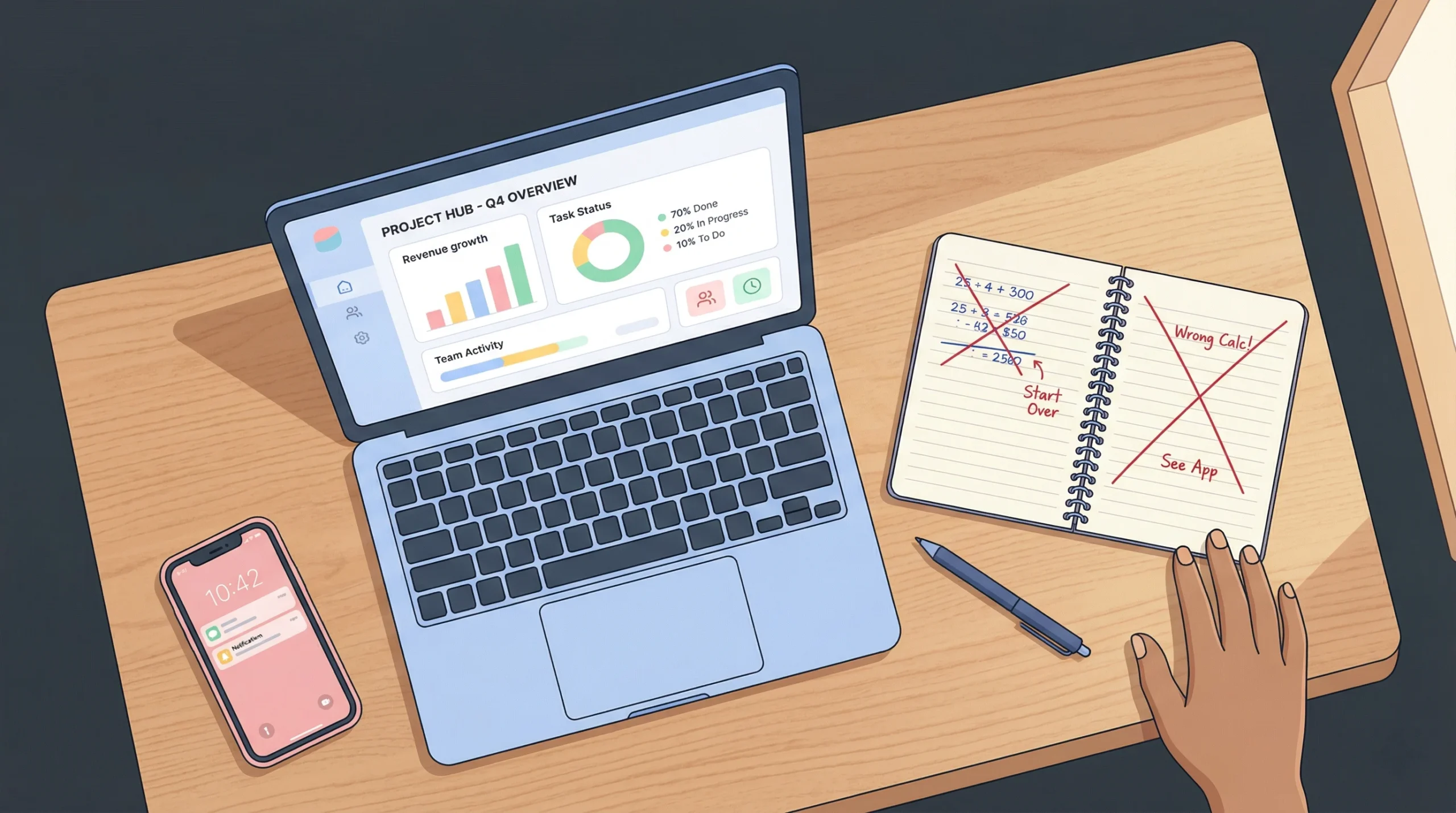
First, none of them started by wanting an “app.” They started by wanting their spreadsheet to stop breaking. The shift happened when they realized that fixing the spreadsheet would always be temporary, but building the right tool would be permanent.
Second, all of them launched their replacement app in under two weeks. imagine.bo’s One-Click Deployment meant they did not need to learn cloud infrastructure, configure servers, or manage hosting. The AI built the app. The platform handled deployment. And when something needed human precision, the Hire a Human feature brought in an engineer for that specific task.
Third, the ROI was immediate and measurable. Not “we feel more organized” but “we recovered $8,400 in missed invoices” and “we cut $50,000 in admin costs.” According to UserGuiding (2025), the average company avoids hiring two IT developers by using no-code tools, generating approximately $4.4 million in increased business value over three years.
FAQ
How long does it take to replace a spreadsheet with an app on imagine.bo?
Most businesses in these case studies went from first prompt to deployed app in under two weeks. Simple apps can be generated and deployed in a single day. According to Gartner (2025), no-code platforms reduce development time by up to 90% compared to traditional methods. The complexity of your data model and integrations determines whether you need hours or days.
Do I need technical skills to build a business app without code?
No. imagine.bo uses a Describe-to-Build interface where you type what you need in plain English. The AI generates the database, interface, and logic. According to Gartner, 80% of technology products will be built by non-developers by 2026. If you can describe your workflow clearly, you can build the app.
What happens when the AI cannot handle a specific feature?
You use imagine.bo’s Hire a Human feature to assign that task to a vetted engineer. According to Forrester (2024), 84% of businesses adopting no-code still need specialized development for edge cases. The hybrid model means you are never stuck. The AI handles the 80% that is standard. A human engineer handles the 20% that is not.
Is it cheaper to build an app than to keep using spreadsheets?
Almost always, yes. The hidden cost of spreadsheets includes staff time on data entry, revenue lost to errors, and the opportunity cost of manual processes. imagine.bo’s Pro plan costs $25 per month with 150 credits, rollover, and priority support. According to Frontiers of Computer Science (2024), 94% of spreadsheets contain errors. The cost of those errors typically dwarfs any software subscription.
Can I migrate my existing spreadsheet data into an imagine.bo app?
Yes. You can structure your app to match your existing data model, then import your spreadsheet data into the new database. For complex migrations, the Hire a Human feature connects you with an engineer who can handle the data transfer and validation. The imagine.bo Pro plan includes support to help you through this process.
Three Takeaways and Your Next Step
First, spreadsheets are costing you more than you think. The 94% error rate is not an abstract statistic. It is missed invoices, wrong shipments, and hours of reconciliation that you are paying for every week.
Second, replacing a spreadsheet with a custom app is no longer a six-figure, six-month project. These five businesses did it in days, not months, and for a fraction of what traditional development would cost.
Third, the hybrid model matters. AI gets you 80% of the way in minutes. Human engineers handle the rest. That combination is why these businesses shipped apps that actually work in production, not just prototypes that look good in a demo.
If your business still runs on spreadsheets and manual processes, imagine.bo’s Done For You plan lets the team build your app for you. One fixed price. No technical knowledge required. Your spreadsheet era can end this week.
Launch Your App Today
Ready to launch? Skip the tech stress. Describe, Build, Launch in three simple steps.
Build