83% of workers say hybrid work is ideal, blending remote and in-office collaboration (Zoom, 2024). That stat explains why founders keep looking for better ways to schedule and run meetings online without piling on complexity. One founder saw the gap clearly: teams wanted a cleaner, faster alternative to bloated meeting platforms, and with https://app.imagine.bo/, that idea became a polished brand we’ll call Meetora. The result wasn’t just a nice-looking SaaS site. It was a launch-ready business presence designed to help people book, manage, and join meetings in minutes, backed by the kind of prompt-driven workflow discussed in building a SaaS with AI.
What Did Meetora Need?
91% of businesses with more than 10 employees use video conferencing technology in some form (Oberlo, 2024). For Meetora, the answer was simple: it needed a website that felt professional from day one and made meeting scheduling look effortless, not technical.
Launch Your App Today
Ready to launch? Skip the tech stress. Describe, Build, Launch in three simple steps.
BuildThe real opportunity wasn’t creating “another Zoom clone.” It was building trust fast. People booking client calls, remote interviews, demos, coaching sessions, and recurring team standups don’t want friction. They want a platform that promises clear scheduling, reliable joining, and a modern experience. Sound familiar?
That meant the founder needed a site that could instantly communicate three things: what the product does, why it’s easier than legacy tools, and how quickly a visitor can get started. A clunky MVP would’ve undercut the whole premise. A generic template wouldn’t have carried enough authority for a SaaS category where buyers judge credibility in seconds.
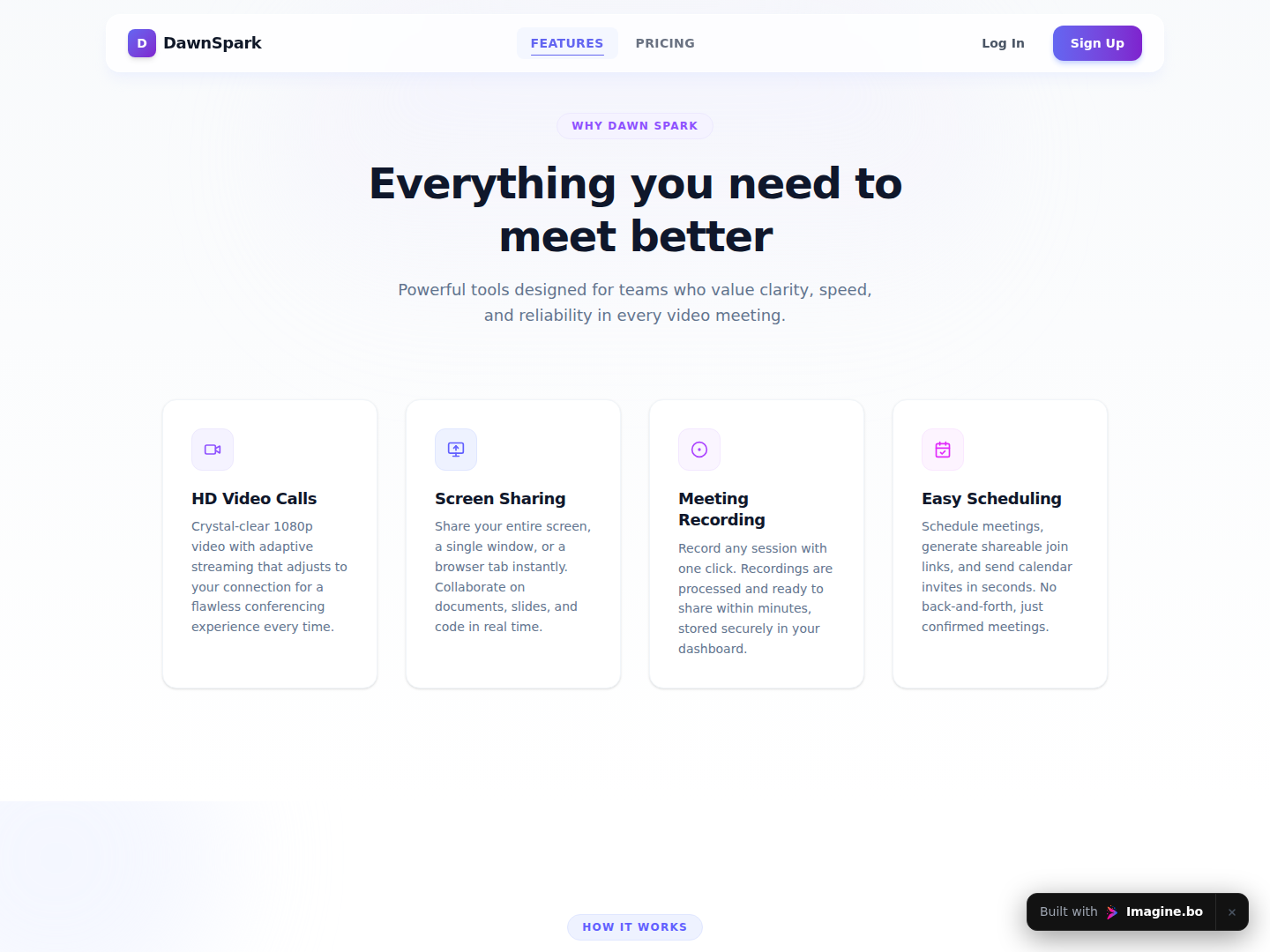
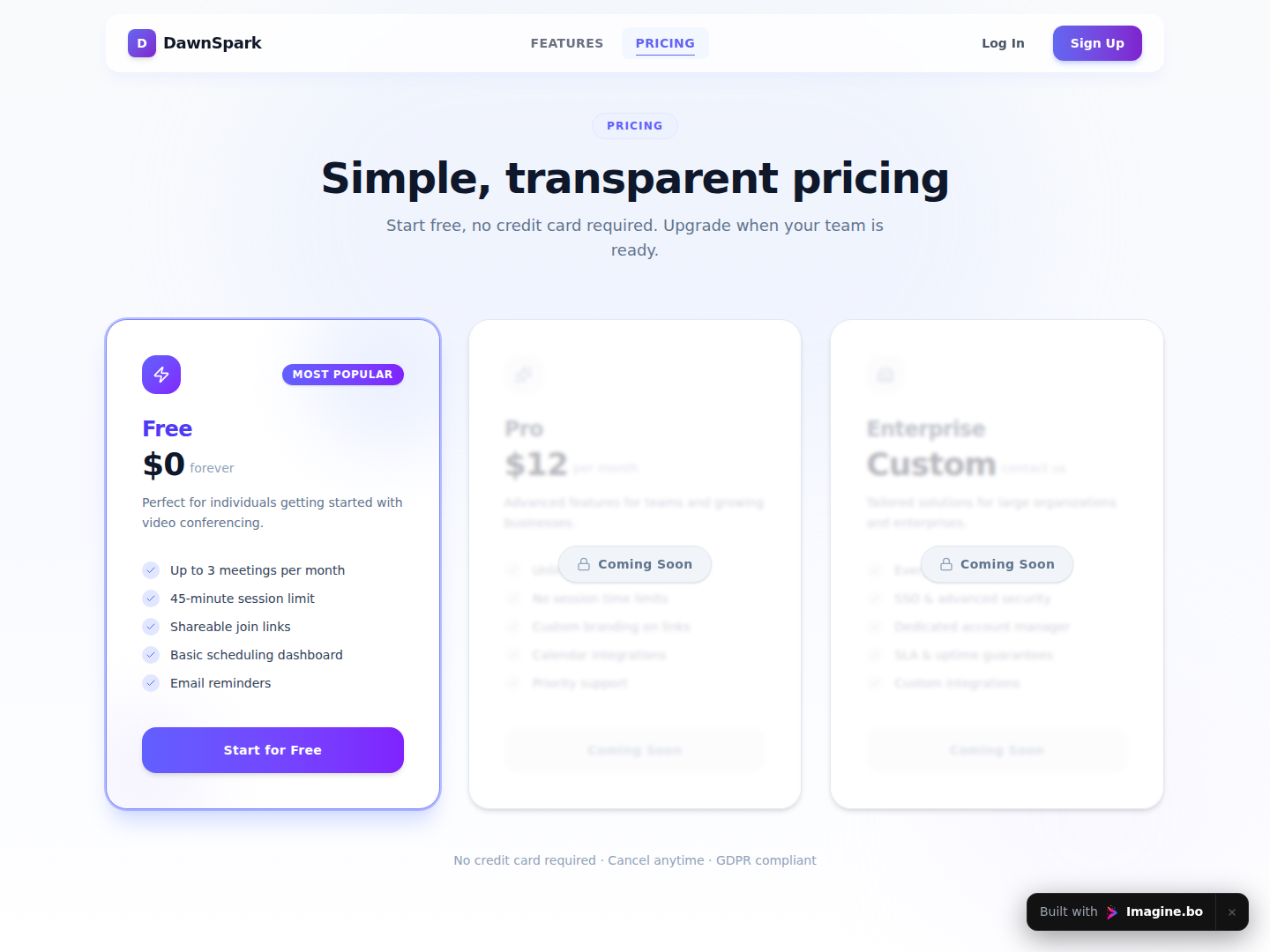
According to Owl Labs’ State of Hybrid Work 2024, video communication remains a standard business behavior, not a niche workflow. For founders launching meeting software, that means the website has to sell confidence immediately. If the experience feels confusing, prospects assume the product itself will be confusing too.
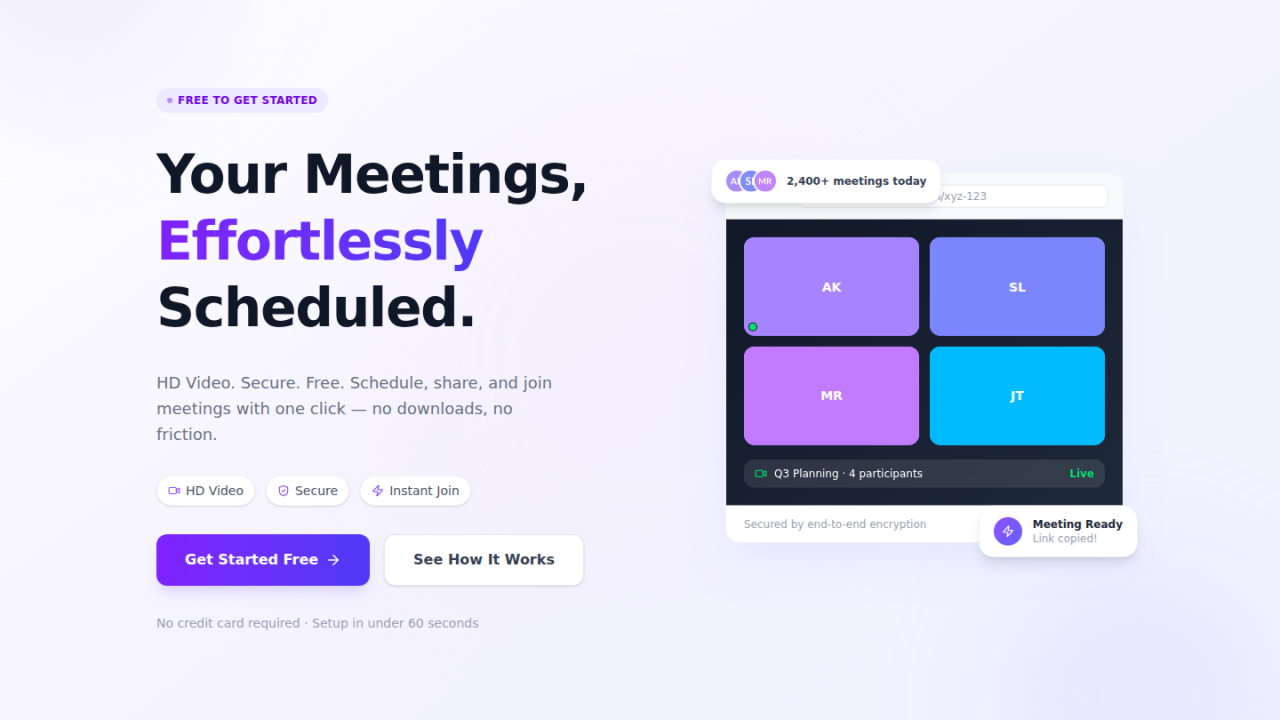
Meetora’s founder used imagine.bo to turn a plain-language idea into a focused SaaS presence that highlighted benefits like scheduling, sharing, and joining meetings without making visitors decode a technical stack. That’s exactly where vibe coding shines: the founder stays in the flow of the business idea while the platform shapes the experience around it.
And because SaaS buyers compare quickly, the site also needed visible value framing around plans and features. That gave Meetora a stronger commercial edge from the first version, not months later after design and dev cycles. For founders thinking the same way, the broader pattern is covered well in SaaS MVP case study examples.
How Was Meetora Built with imagine.bo?
75% of business leaders say speed to market is a top priority when adopting new digital tools (PwC, 2024). Meetora was built with imagine.bo by translating a simple prompt into a launch-ready SaaS website that combined product storytelling, user onboarding intent, and scheduling-focused conversion paths.
The founder didn’t need to map every interface detail manually. Instead, imagine.bo let the product vision lead. The prompt described a video conferencing website where people could schedule meetings similar to mainstream tools. From there, the platform shaped that concept into a coherent digital product presence: modern messaging, strong hierarchy, clear feature framing, and conversion-oriented structure.
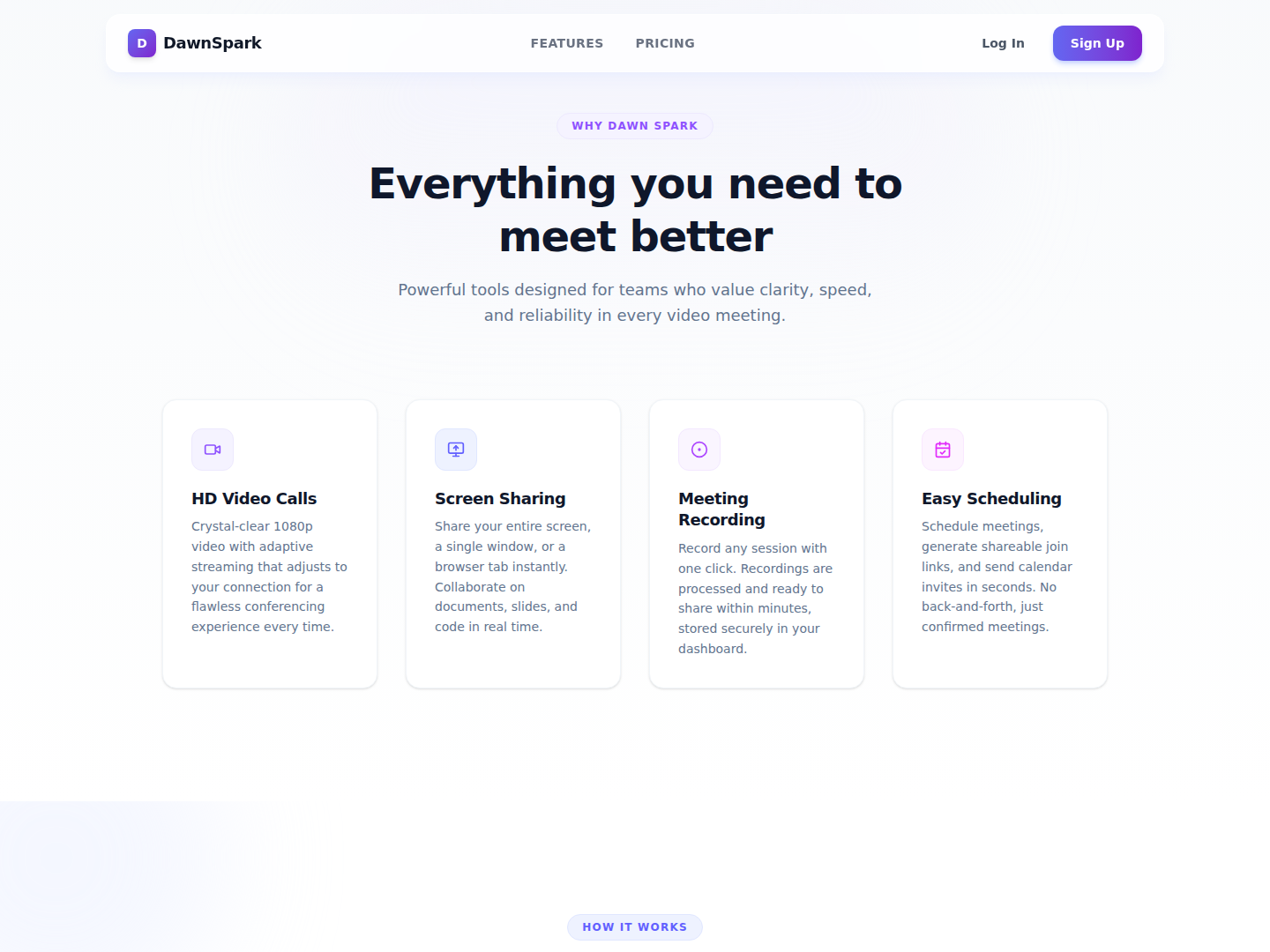
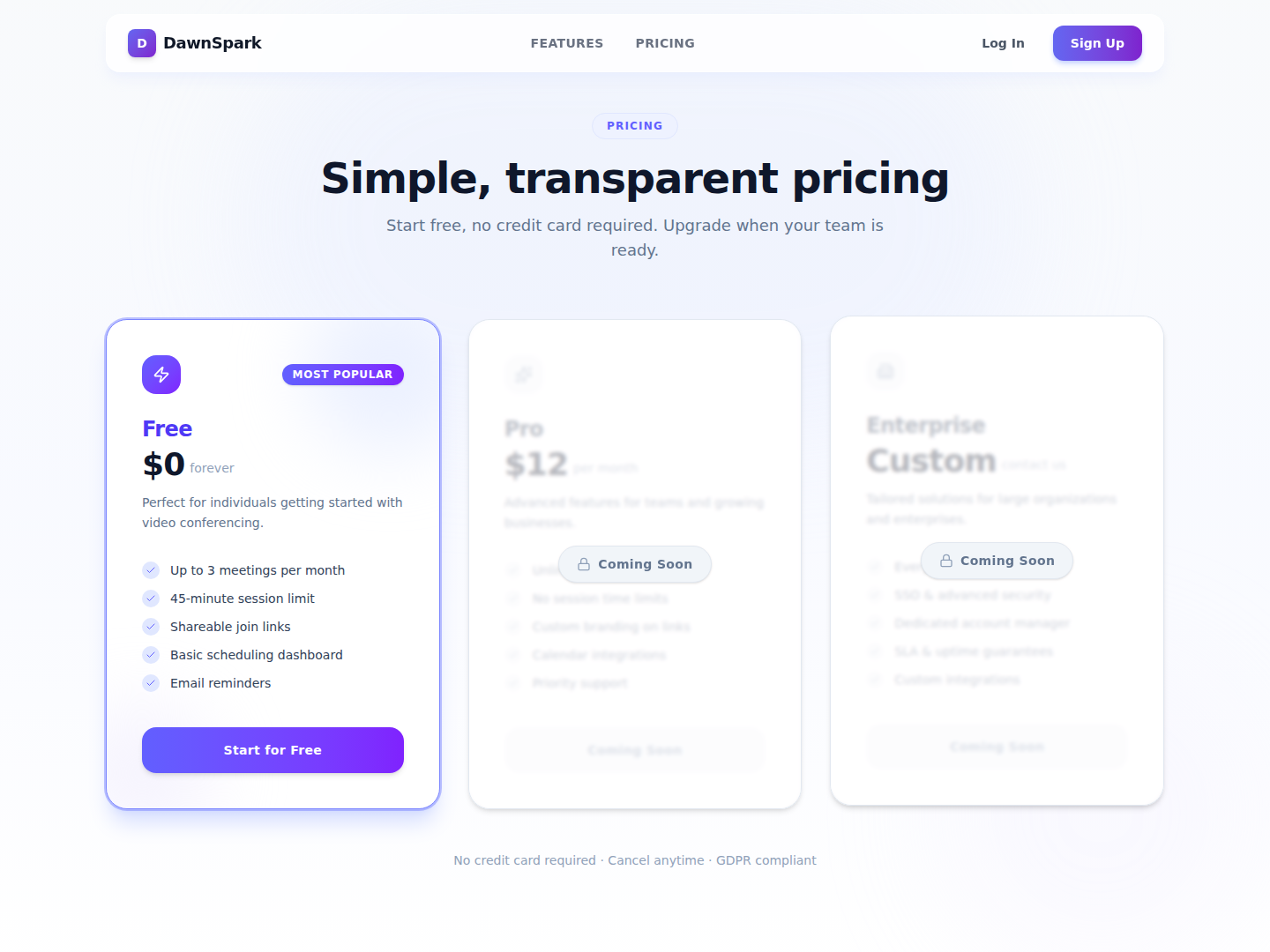
That matters because the founder wasn’t just building pages. They were building momentum. A visitor needs to understand, within seconds, that Meetora can help them schedule calls, manage upcoming meetings, and share join links without a tedious setup process. If you can communicate that clearly, conversion gets easier. If you can build it quickly too, you can test demand sooner. Want to see how that workflow starts? You can start building on imagine.bo with the same prompt-led approach.
Imagine.bo’s advantage here is that it supports a founder’s intent. Instead of forcing a non-technical builder to think in components first, it helps them think in outcomes: scheduling, trust, signups, and product differentiation. That’s a better fit for SaaS founders who need traction before they need complexity.
According to McKinsey’s 2024 research on generative AI, organizations are using AI to compress early-stage production timelines across design and content tasks. For founders, that means vibe coding tools like imagine.bo can turn startup ideas into testable market assets faster, shortening the distance between concept validation and first customer conversations.
What Makes This Video Conferencing Website Stand Out?
94% of first impressions are design-related (ResearchGate, 2020). Meetora stands out because it doesn’t merely describe online meetings; it packages the promise of better meetings into a product story that feels reliable, modern, and easy to adopt.
First, the positioning is clear. The website makes the offer easy to grasp: schedule, manage, and join meetings from the web. That’s the kind of clarity a busy buyer notices instantly. No one wants to decode jargon before booking their next call, right?
Second, the business model is visible. Strong SaaS sites don’t hide how value scales. When visitors can understand plan differences and what they’re paying for, they qualify themselves faster. That cuts friction for the founder and increases buying confidence.
Third, the experience feels complete. Even at the website stage, Meetora signals maturity. It looks like software people can trust with recurring workflows, not an unfinished experiment. That distinction matters in collaboration software, where trust is half the sale.
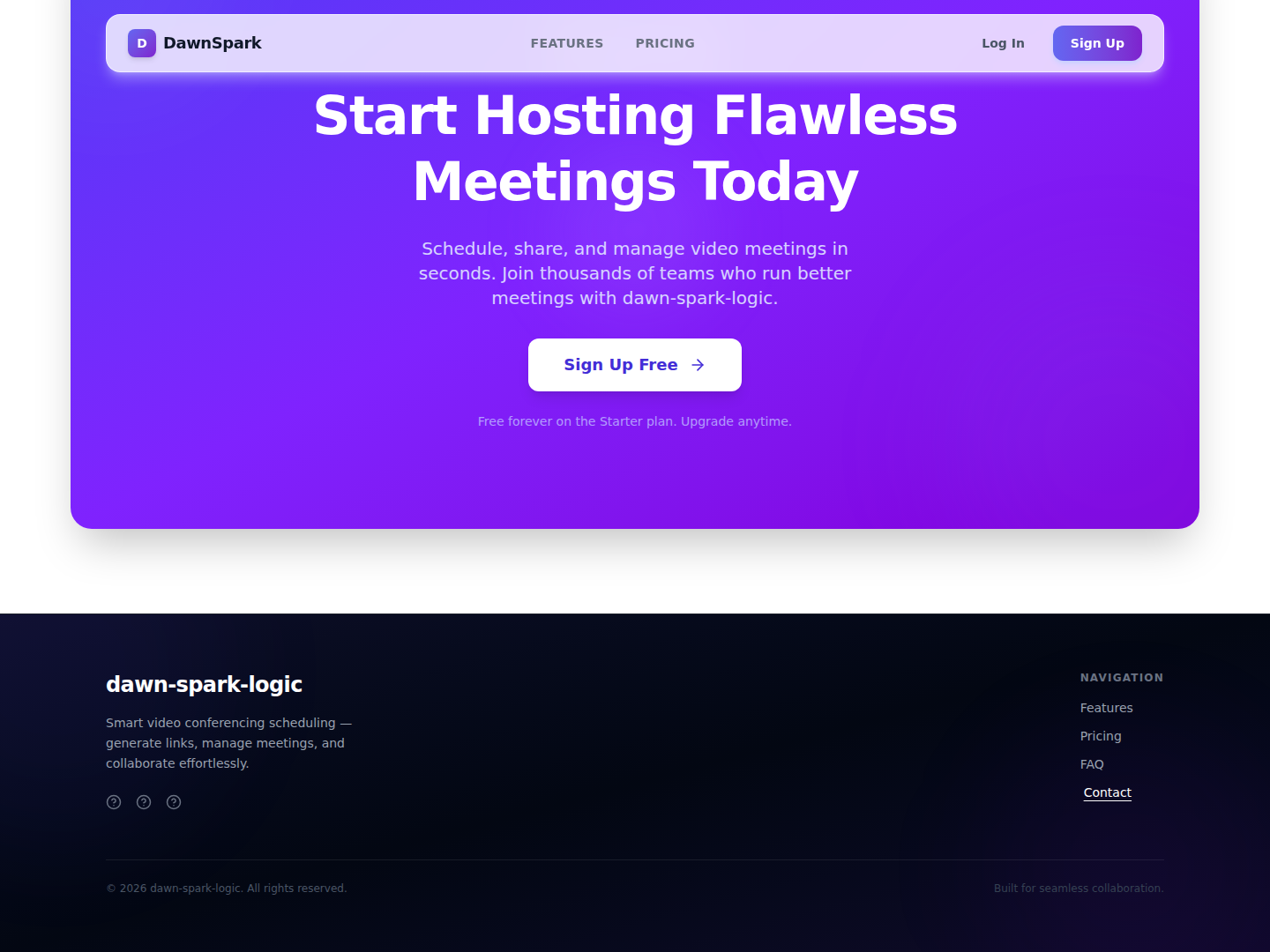
According to Google’s UX guidance cited across conversion studies, users reward websites that reduce uncertainty quickly. Meetora does that by combining benefits, pricing clarity, and objection-handling content in one cohesive experience. For SaaS founders, that creates a stronger path from curiosity to sign-up intent.
There’s also a wider SEO upside. Pages that clearly align offer, audience, and intent are easier for search engines and AI answer engines to interpret. That’s why founders building with prompt-first tools should also study SEO-friendly website design tactics.
How imagine.bo Makes This Possible
61% of business leaders say AI is already improving speed and productivity inside their organizations (Deloitte, 2024). Imagine.bo makes Meetora possible by giving founders a way to shape a production-grade web presence around a business concept, without getting stuck in code, handoffs, or fragmented tools.
That includes the things founders actually care about: clear messaging, polished UI, visual hierarchy, conversion flow, and a structure that can support real product growth. But does it actually work? Meetora is a strong example because the finished site feels aligned with the business model. It doesn’t look like a workaround. It looks launchable.
For a meeting platform, that’s huge. The founder needed one environment that could support acquisition and product storytelling at the same time. Imagine.bo delivered that without forcing the founder into a slow traditional cycle of wireframes, mockups, revisions, developer scoping, and endless cleanup. If you’re comparing speed, workflow, and scale potential, you can see imagine.bo’s pricing and map the platform against your launch timeline.
What’s especially powerful is the alignment between vibe coding and modern SaaS validation. In 2026, founders won’t win by planning longer. They’ll win by shipping clearer. Imagine.bo supports that shift by letting people move from prompt to polished website while keeping the business narrative intact.
According to Stanford HAI’s AI Index 2024, AI adoption across business functions continues to rise as organizations seek measurable productivity gains. For early-stage founders, the practical takeaway is direct: a vibe coding platform like imagine.bo reduces launch friction, helping them test positioning, collect feedback, and iterate before traditional development would even begin.
What This Means for Collaboration SaaS Founders in 2026
80% of employees say they need better tools and technology to do their jobs effectively (Asana, 2024). For collaboration SaaS founders, that means there’s still room to build focused products, but only if you can launch fast enough to meet the market while the need is active.
Meetora is a useful signal. It shows that a founder with a sharp idea doesn’t need a full engineering team to create a credible digital product presence. They need clarity, speed, and a platform that helps turn intent into something people can actually evaluate. So what does that mean for your business?
It means the old gap between “I have an idea” and “I have a public SaaS brand” is getting smaller. Vibe coding is changing founder behavior. More teams will validate categories with live products instead of slide decks. More solo builders will publish software brands that look ready for market. More niche SaaS players will win because they launched before bigger competitors finished planning.
That shift is why imagine.bo matters beyond one project. It helps founders move while conviction is high, before momentum cools off. If you’re seeing the same trend, the broader context around this founder movement is captured well in non-technical founders building products.
Frequently Asked Questions
How long does it take to build a video conferencing website with imagine.bo?
It can take hours to produce a credible first version instead of weeks of back-and-forth planning. That speed matters because 75% of business leaders prioritize faster digital delivery (PwC, 2024). Founders can validate ideas sooner using prompt-led workflows described in idea-to-live app workflows.
Do I need coding skills to use imagine.bo?
No. Imagine.bo is built for people who can describe what they want clearly, even if they can’t code it themselves. That’s timely because the World Economic Forum, 2025 highlights rising demand for digital creation skills beyond traditional engineering. You can launch with prompt-based building instead of writing code from scratch.
Is a vibe coded website good for SEO?
Yes, if the site has strong structure, clear intent, and useful content. Google’s ranking systems continue rewarding relevance and page experience signals (Google Search Central, 2024). A vibe coded site can perform well when it presents a focused offer and follows best practices like those in SEO for AI-built SaaS products.
Can imagine.bo build websites for SaaS and collaboration products?
Yes. Meetora proves imagine.bo can shape a polished collaboration SaaS website around scheduling, trust, and product positioning. That matters because 91% of businesses with over 10 employees use video conferencing tools (Oberlo, 2024), which leaves room for specialized products that present a sharper value proposition.
What makes imagine.bo different from other AI website builders?
Imagine.bo is especially strong for founders who want business-ready outcomes, not just decorative layouts. Deloitte, 2024 found 61% of leaders already see AI improving productivity, and imagine.bo applies that gain to product launch speed, positioning, and flow. It’s built for founders who need a real website with traction potential, not just a mockup.
Meetora is a practical example of what happens when a strong market need meets the best vibe coding tool at the right time. Instead of waiting on a long build cycle, the founder got a polished SaaS presence that could explain the offer, build trust, and support growth.
- Clear positioning wins: Meetora communicates scheduling and video meeting value quickly.
- Speed changes outcomes: imagine.bo helps founders test markets while demand is still hot.
- Prompt-first building works: non-technical creators can launch serious SaaS websites without code.
If you’ve got a software idea that deserves to be live instead of lingering in a doc, now’s the time to act. Build your next product faster with imagine.bo’s AI website builder.
Launch Your App Today
Ready to launch? Skip the tech stress. Describe, Build, Launch in three simple steps.
Build