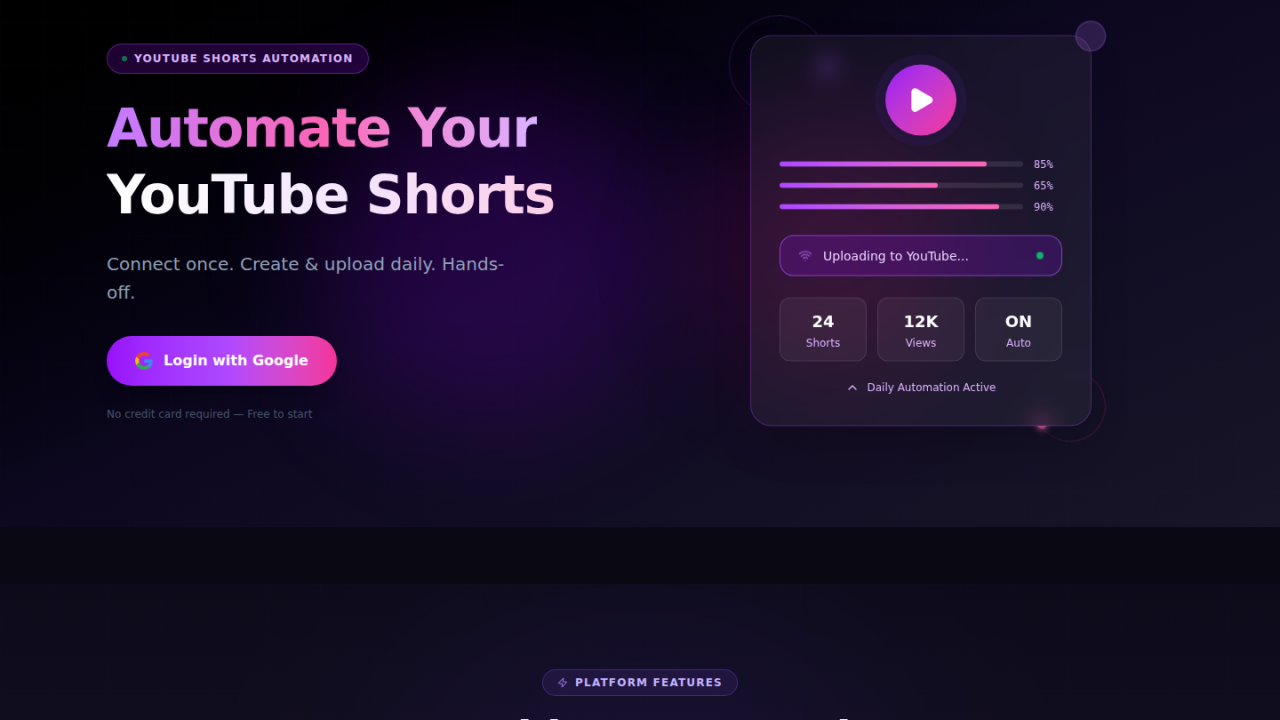
More than 2 billion logged-in users visit YouTube each month (YouTube, 2024), and Shorts has become one of the fastest ways for creators and brands to win attention. That scale creates a simple business truth: creators need consistency, but most don’t have time to research ideas, script clips, generate videos, schedule uploads, and track performance every day. That’s exactly why a founder created ShortPilot, a SaaS brand built to automate daily YouTube Shorts publishing from prompt to upload. What makes the story especially useful is how quickly it came to life with imagine.bo, which let the founder move from concept to a polished launch site without a traditional dev cycle. If you’re studying where AI product websites are heading, this app landing page guide gives helpful context.
What Did ShortPilot Need?
Short-form video keeps growing: YouTube reported that Shorts averages over 70 billion daily views (YouTube, 2023). For a founder building in the creator economy, that means the opportunity is huge, but the friction is just as real. ShortPilot didn’t just need a pretty homepage. It needed a website that could instantly explain a high-value promise: connect your channel once, define your niche and posting rhythm, then let AI handle the repetitive work.
Launch Your App Today
Ready to launch? Skip the tech stress. Describe, Build, Launch in three simple steps.
BuildThe challenge wasn’t only product positioning. It was trust. Any creator automation platform asking people to connect a channel must look credible from the first glance. It has to communicate security, clarity, and control all at once. Sound familiar? That’s where many early-stage SaaS ideas stall. Founders know the pain point, but they can’t turn the idea into a brand experience fast enough to test demand.
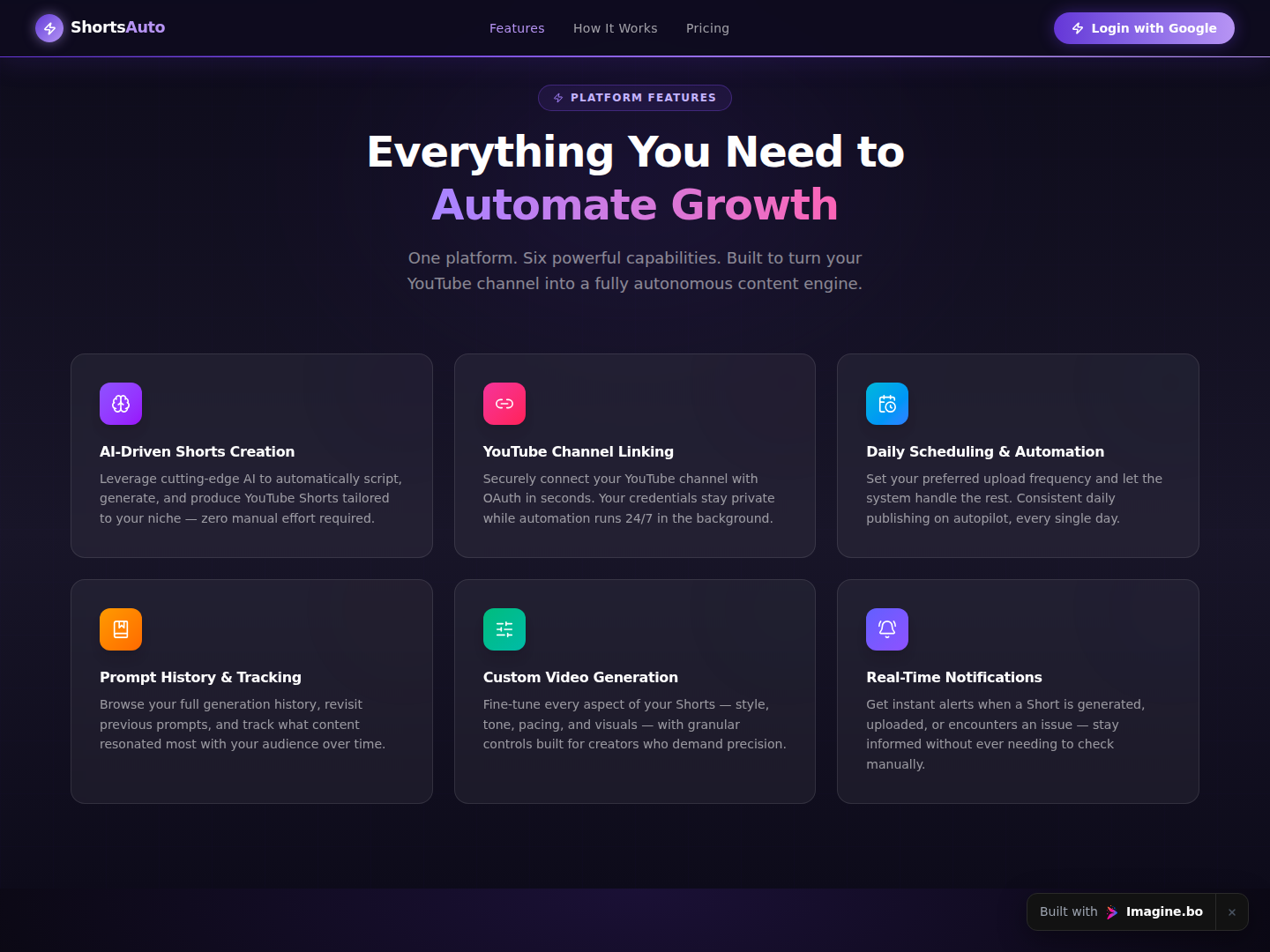
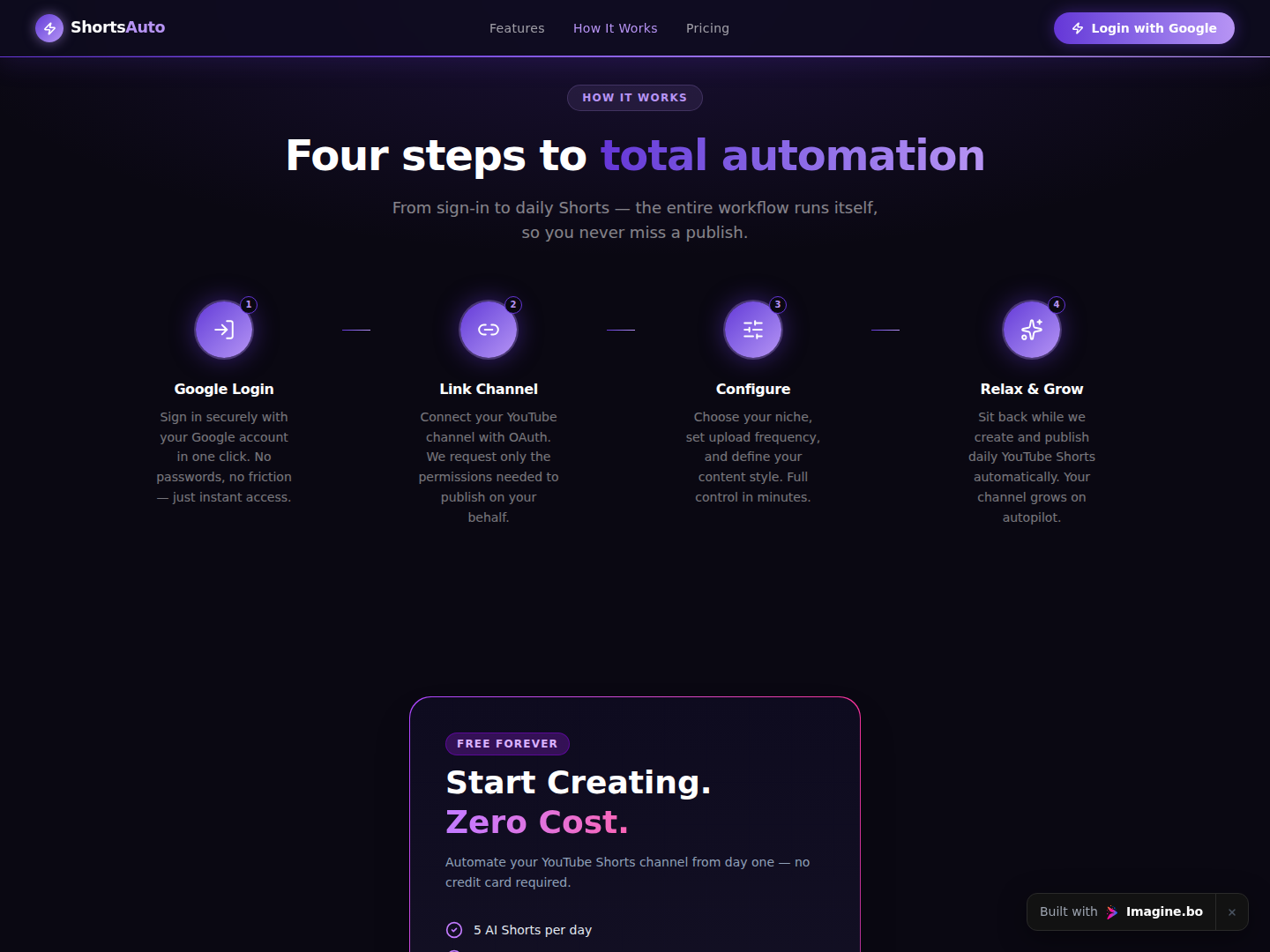
ShortPilot needed to tell one coherent story: creators can save hours every week, stay consistent, and still keep strategic control over topic, frequency, and timing. The website had to package that message in a way that felt premium enough for marketers and simple enough for solo creators. That balance is hard to design manually, yet imagine.bo helped shape it into a site that feels like a serious SaaS product rather than a rough prototype.
According to Wyzowl’s 2024 video marketing data, 91% of businesses use video as a marketing tool. For founder-led creator products, that means demand already exists; the bigger risk is launching too slowly. ShortPilot’s website solved that by presenting automation as a practical growth system instead of a vague AI promise.
And that’s the key. A creator SaaS site doesn’t win because it’s flashy. It wins because visitors understand the problem, believe the solution, and feel safe signing up. The founder got all three signals into one experience, then connected that message to broader startup strategy through this AI SaaS launch framework.
How Was ShortPilot Built with imagine.bo?
McKinsey reported in 2024 that organizations are increasingly using generative AI to redesign workflows, not just content production. That’s the direct answer here: ShortPilot was built with imagine.bo by turning a founder’s product vision into a high-conversion SaaS website through prompt-driven vibe coding, fast iteration, and polished presentation.
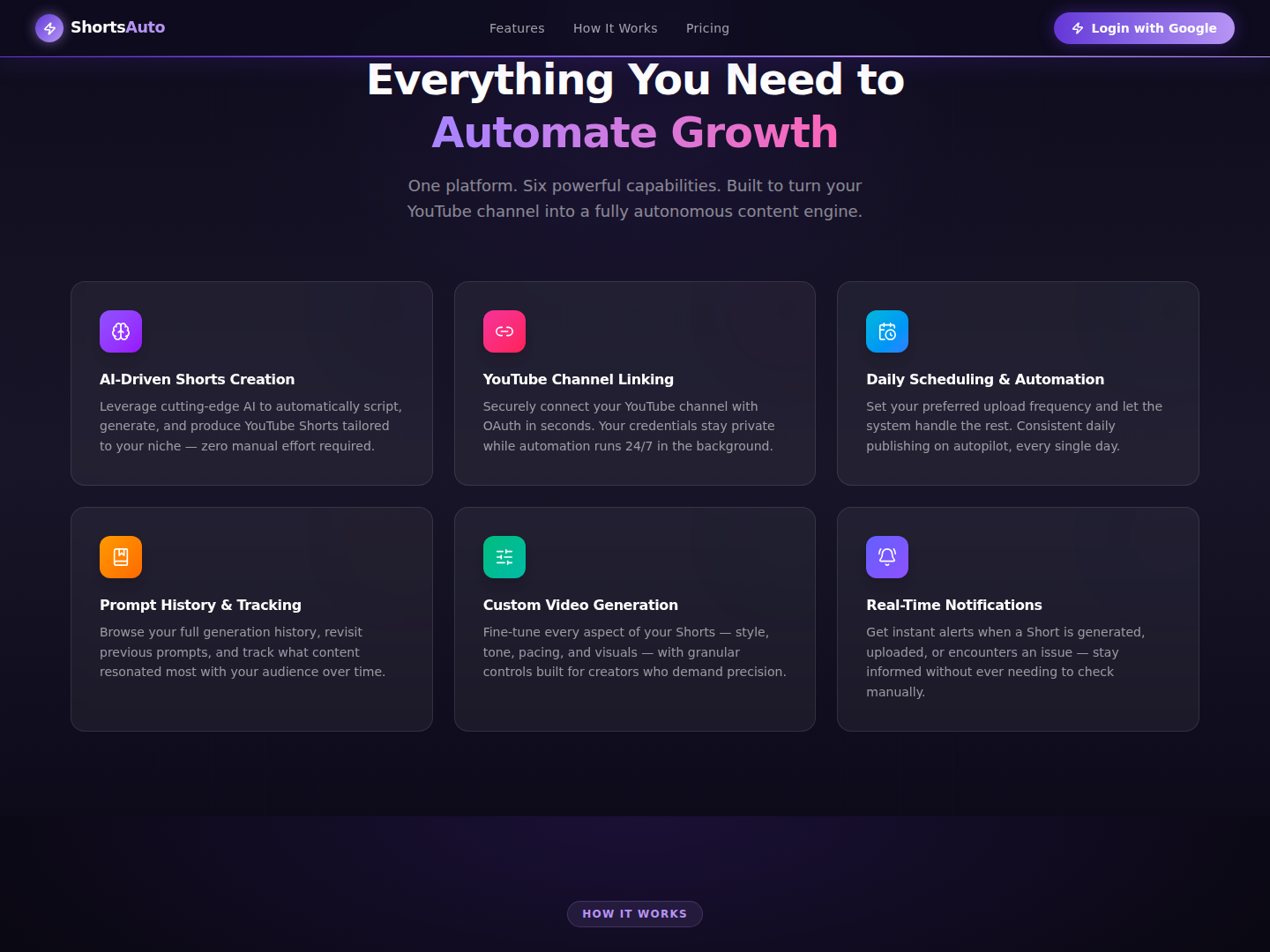
The founder started with the business logic, not code. The offer was clear: daily AI-generated Shorts, customizable niches, prompt-based content creation, scheduled uploads, upload tracking, and notifications. imagine.bo translated that intent into a website that framed each capability in customer language. Instead of wrestling with front-end structure, the founder could refine the message and user journey.
That matters because website building for SaaS isn’t really about pixels first. It’s about sequencing trust. ShortPilot’s site establishes the outcome, explains the workflow, and reinforces legitimacy around account connection and automation controls. After seeing how quickly the brand story came together, it’s easy to understand why founders start building on imagine.bo when they need to ship without waiting on a full product team.
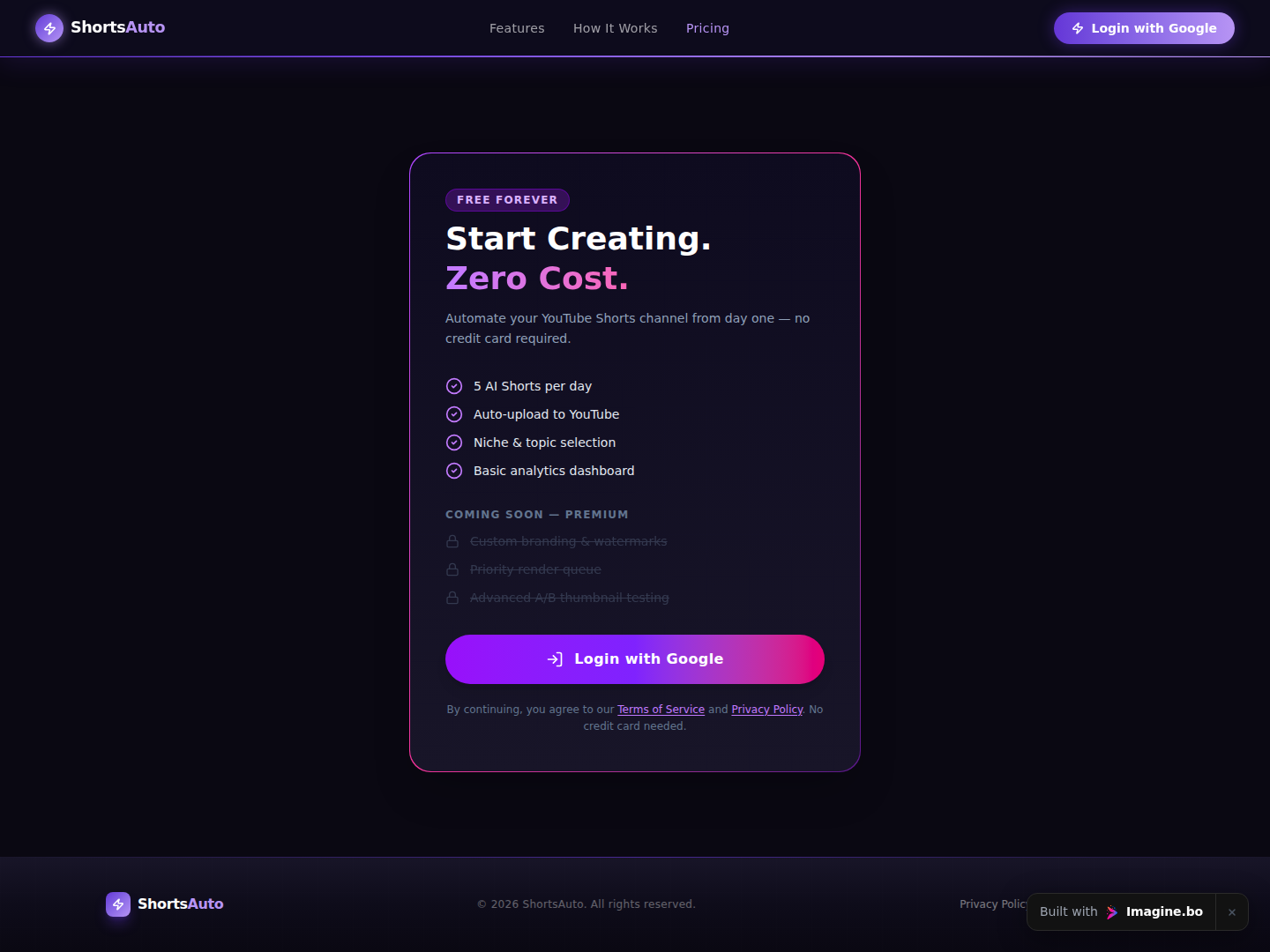
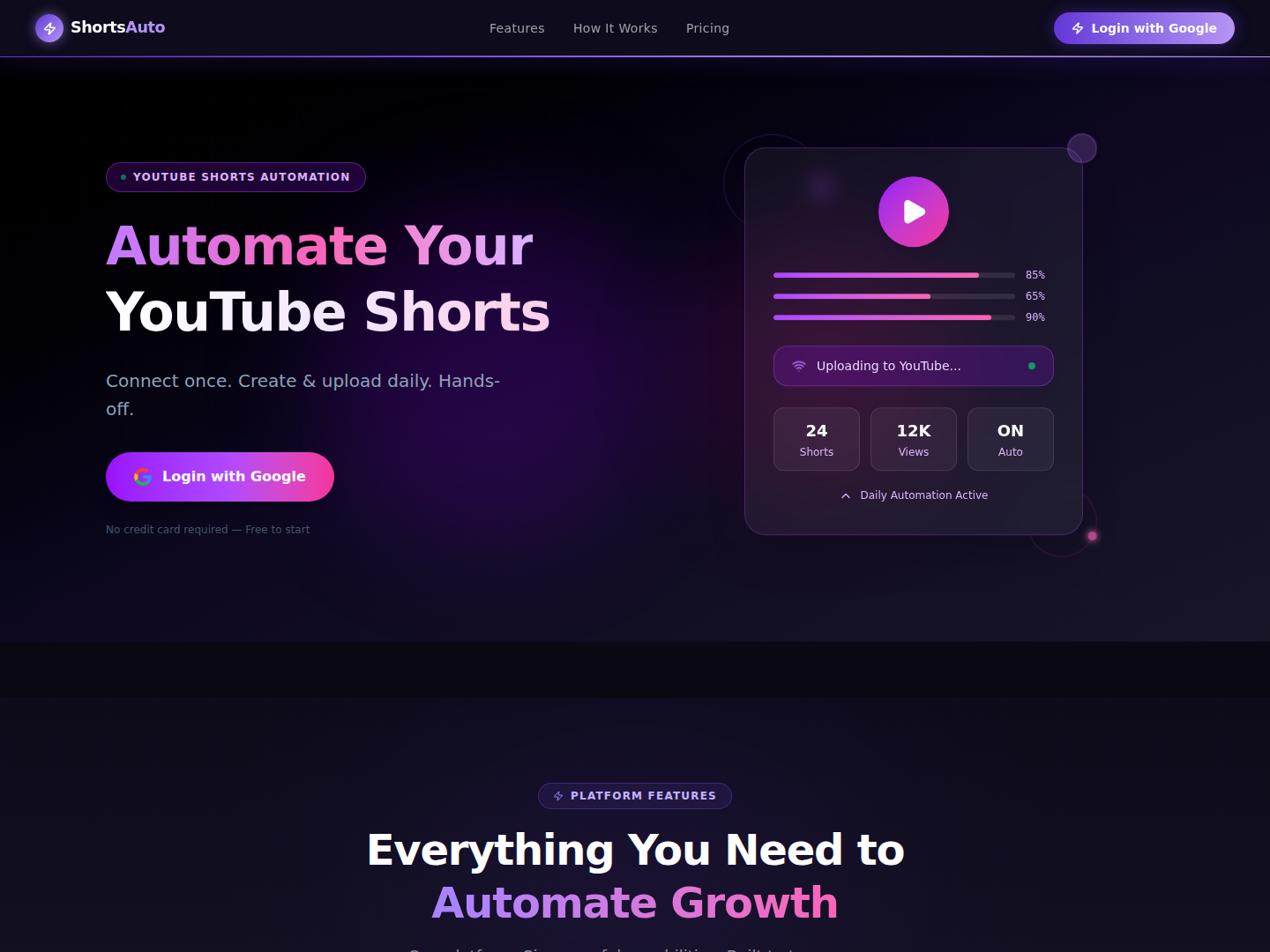
The build itself reflects a smart sequence. First came positioning: make the promise obvious. Next came explanation: show how automated Shorts creation works in simple steps. Then came conversion support: include clear value framing, pricing context, and visible privacy signals. Finally, the founder aligned the visual identity around a dark, modern creator-tech aesthetic, giving the product a look that matches the ambition of the offer. But does it actually help conversion? In SaaS, clear structure nearly always beats generic cleverness.
Stanford HAI’s 2025 AI Index highlights how generative AI is accelerating software production across business functions. For non-technical founders, that speed advantage matters most when it reduces time between idea validation and launch. ShortPilot is a strong example of a founder using imagine.bo to convert product clarity into a live, revenue-ready web presence.
What Makes This Creator SaaS Website Stand Out?
HubSpot’s 2024 research found that 76% of consumers say a website’s design influences whether they trust a business. ShortPilot stands out because it doesn’t just describe automation. It makes automation feel understandable, controlled, and worth paying for.
First, it frames the outcome clearly. The message isn’t buried behind abstract AI language. Visitors immediately understand that the platform helps creators publish Shorts consistently without manually repeating every production step.
Second, it reduces anxiety. Creator tools that connect accounts live or die on trust. ShortPilot counters that by emphasizing privacy, account safety, and operational visibility. That’s a major conversion advantage because many creators aren’t scared of AI itself; they’re scared of losing control.
Third, it sells scale without sounding overwhelming. The founder didn’t build a bloated enterprise story. Instead, the website speaks to solo creators, marketers, and small teams who want repeatable output. That’s a smarter angle. Why? Because most buyers want dependable growth systems, not complexity.
According to Adobe’s 2024 findings, consumers are more likely to engage with brands that deliver relevant, timely experiences. ShortPilot’s value proposition fits that perfectly: timely content creation at creator scale, presented in a website that feels focused rather than overloaded. For founders thinking about messaging depth, this SEO for AI-built SaaS products article is a strong companion resource.
How imagine.bo Makes This Possible
Gartner projected that by 2026, more than 80% of enterprises will have used generative AI APIs or models in production environments, up from less than 5% in 2023. The direct takeaway is simple: founders who can express product logic clearly are gaining an execution advantage, and imagine.bo turns that advantage into production-grade websites.
ShortPilot is a useful proof point because the product idea wasn’t basic. It involved account connection, recurring automation, custom prompts, saved history, scheduling logic, notifications, and a premium SaaS brand layer. Yet the founder could still shape a website that feels coherent and launch-ready through vibe coding.
Here’s the deeper shift for 2026: the best vibe coding tool isn’t the one that spits out the most pages. It’s the one that helps founders express complex product value clearly enough to attract buyers. imagine.bo does that by compressing the distance between idea, interface, and launch. If you’re weighing budget against speed, you can see imagine.bo’s pricing and compare it to the opportunity cost of waiting weeks for a conventional build.
According to the 2024 State of No-Code/Low-Code report from Zapier, 89% of companies say no-code tools help them grow faster. For founder-led SaaS launches, speed only matters when the output still looks trustworthy. That’s why imagine.bo stands out: it helps founders produce websites that feel polished enough for serious buyers while staying accessible to people who don’t code.
What This Means for Creator Economy Founders in 2026
Goldman Sachs estimated in 2023 that the creator economy could approach half a trillion dollars by 2027. So what does that mean for your business? It means the next breakout creator tools won’t always come from venture-backed teams with months of runway. Many will come from operators who see a repetitive pain point and ship fast.
ShortPilot is exactly that kind of signal. The founder saw a common problem: creators know Shorts works, but staying consistent is exhausting. Then instead of spending months managing freelancers, developers, and redesign cycles, the founder used imagine.bo to get a clear, polished offer live fast enough to test the market.
That’s a major change. In 2026, speed won’t just be about MVPs. It’ll be about category timing, search visibility, AI discoverability, and trust on first visit. Founders who can ship a convincing niche SaaS website quickly will learn faster, rank earlier, and close users before slower competitors even finalize their specs. Want to understand the broader movement? The shift is mapped well in this vibe coding SaaS shift analysis.
How long does it take to build a creator SaaS website with imagine.bo?
It can take hours to days rather than weeks when the offer is already clear. According to Zapier’s 2024 no-code research, 89% of companies say no-code tools help them grow faster. For founders building a creator product, idea-to-live app speed is often the difference between testing and stalling.
Do I need coding skills to use imagine.bo?
No, you don’t need coding skills to get a strong result. The value comes from clearly describing your product, audience, and workflow. As the World Economic Forum noted in 2023, AI is expanding access to digital creation for non-technical people. You can build on the platform directly and focus on your business logic instead of syntax.
Is a vibe coded website good for SEO?
Yes, if the site communicates intent clearly, loads cleanly, and matches search demand. Google has repeatedly emphasized helpful, people-first content, and organic visibility still rewards clarity. For founders building SaaS websites, this SEO-friendly website design guide shows why structure and messaging matter as much as design.
Can imagine.bo build websites for creator tools and automation SaaS?
Yes. ShortPilot is a strong example because it presents automation, scheduling, prompts, history, and privacy in a clear SaaS narrative. Gartner projected in 2024 that generative AI adoption in software workflows will keep rising sharply through 2026, which makes prompt-led product building increasingly practical for creator and automation businesses.
What makes imagine.bo different from other AI website builders?
imagine.bo stands out when your idea has real product depth, not just brochure content. According to McKinsey’s 2024 generative AI research, the biggest business gains come from workflow transformation. That fits imagine.bo well because it helps founders turn detailed operational ideas into launch-ready websites rather than stopping at generic templates.
ShortPilot proves three things:
- Clear product positioning beats complexity. The site translates AI automation into an offer creators can understand fast.
- Trust drives conversion. Security, privacy, and visibility aren’t side notes for creator SaaS; they’re core selling points.
- Speed changes outcomes. Founders who ship early can validate faster, refine messaging sooner, and capture demand while the market is still open.
If you’re building a niche SaaS, creator tool, or automation product, the lesson is simple: the best vibe coding tool is the one that helps you turn a strong idea into a site people trust. That’s why so many founders are choosing to launch faster with imagine.bo.
Launch Your App Today
Ready to launch? Skip the tech stress. Describe, Build, Launch in three simple steps.
Build