50% of consumers say website design is a key factor in forming an opinion about a business’s brand (Top Design Firms, 2024). For a design studio, that number hits even harder. If your own site looks generic, slow, or unfinished, prospects assume your client work will too. That’s the tension Aurora Vision had to solve: present premium visual taste, prove creative depth, and convert attention into serious inquiries without waiting through a long traditional build cycle. That’s exactly where imagine.bo stood out as the best vibe coding tool, turning a bold portfolio idea into a polished digital presence built for lead generation. If you want a broader look at this shift, the best vibe coding for portfolio sites trend is already changing how creative founders launch.
What Did Aurora Vision Need?
94% of first impressions are design-related (ResearchGate, 2020). For a design-led business, the direct answer is simple: Aurora Vision needed a website that made visitors feel the studio’s quality before they read a single sentence.
Launch Your App Today
Ready to launch? Skip the tech stress. Describe, Build, Launch in three simple steps.
BuildThe founder wasn’t trying to publish a basic brochure site. They needed something far more persuasive: a digital portfolio that felt cinematic, modern, and confident enough to attract creative directors, art buyers, and premium clients. Sound familiar? Many studios do excellent work for clients while their own website lags behind, patched together with templates that flatten their identity.
That gap costs money. When a creative business can’t present its work with clarity and motion, prospects don’t just hesitate. They bounce.
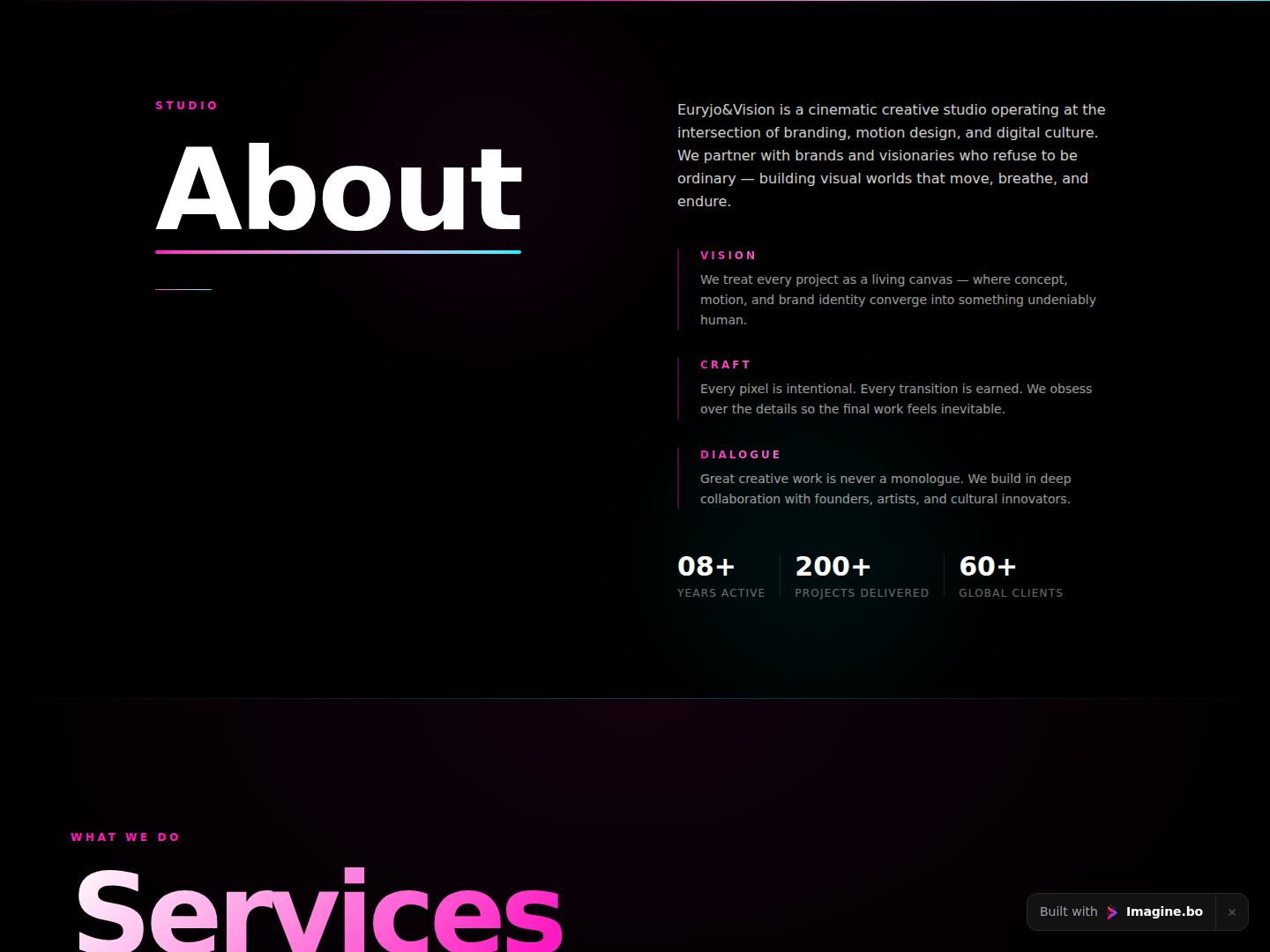
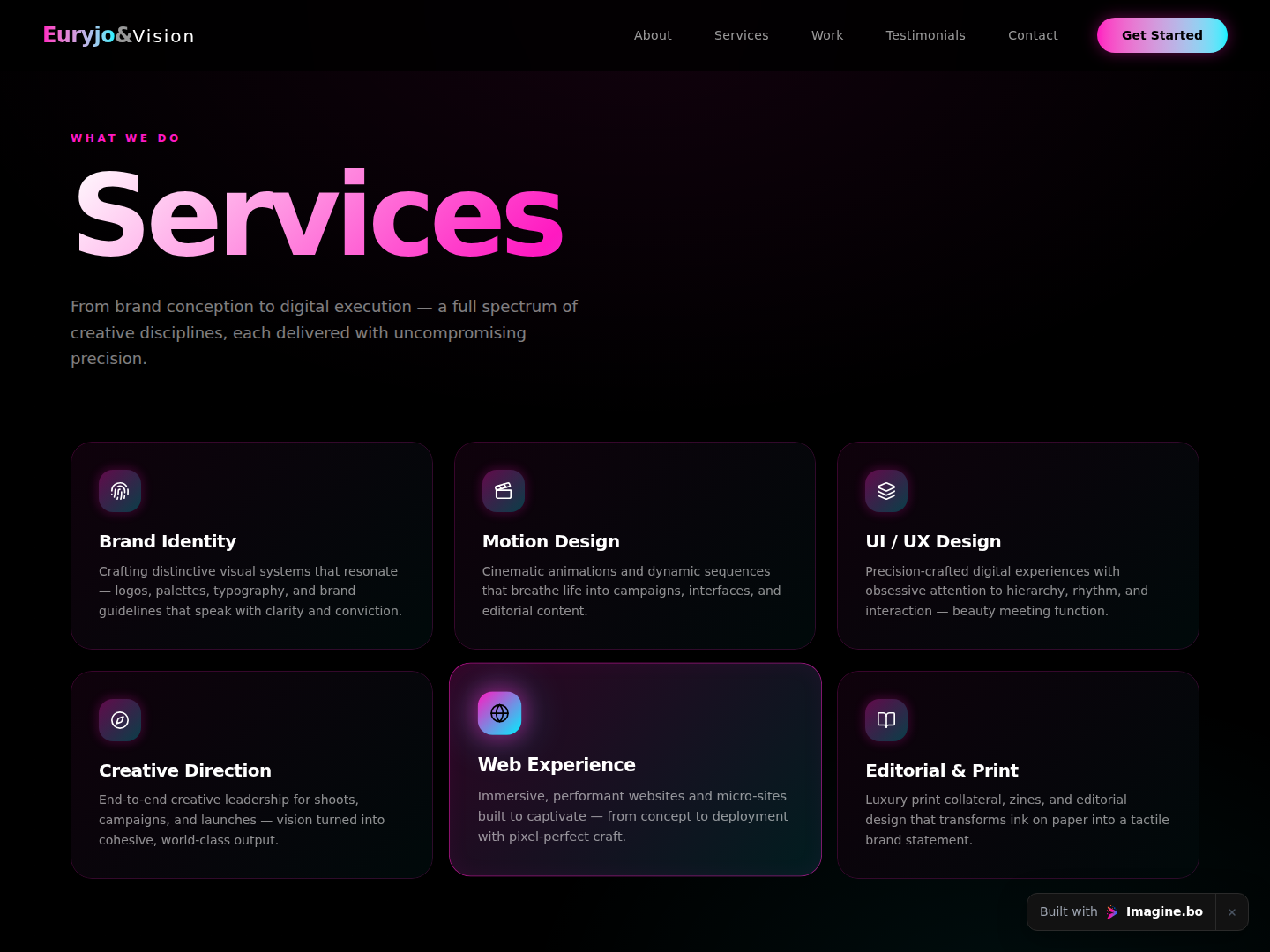
What made the challenge especially interesting was the brand itself. Aurora Vision wasn’t selling commodity design. It was selling taste, direction, and confidence. So the website had to communicate three things fast: the studio understands high-end aesthetics, it can handle real client work, and it makes outreach feel easy rather than intimidating.
According to ResearchGate’s 2020 findings, 94% of first impressions are tied to design signals. For premium creative studios, a portfolio website isn’t just a gallery. It functions as a trust filter, shaping whether qualified buyers stay long enough to review work and make contact.
That’s why imagine.bo matters here. It didn’t force the founder to translate a visual instinct into technical tickets. It let them express the feel of the brand directly, then turn that feel into a live website experience. And that’s a very different workflow from the old back-and-forth of mockups, revisions, and delayed launches. By the time the site went live, Aurora Vision had an asset that looked intentional from the first scroll to the inquiry moment. For more examples of B2B presentation that converts, see this B2B website builder guide.
How Was Aurora Vision Built with imagine.bo?
71% of small businesses now have a website, and speed to launch increasingly shapes who gets discovered first (Forbes Advisor, 2024). The direct answer: Aurora Vision was built with imagine.bo by turning a strong creative prompt into a production-ready portfolio experience without writing code.
The founder started with a clear business idea, not a technical specification. That matters. Instead of planning frameworks, animation libraries, and backend wiring, they described the kind of studio presence they wanted: bold, dark, immersive, visually premium, and built to showcase design services and project work.
From there, imagine.bo translated intent into structure. Brand styling, section hierarchy, motion behavior, portfolio presentation, testimonials, and a working contact flow came together in one streamlined build path. But does it actually work for non-technical creators? In this case, yes, because the founder stayed focused on positioning and messaging while the platform handled the heavy lifting. If you want to start building on imagine.bo, this is the exact kind of workflow that makes it compelling.
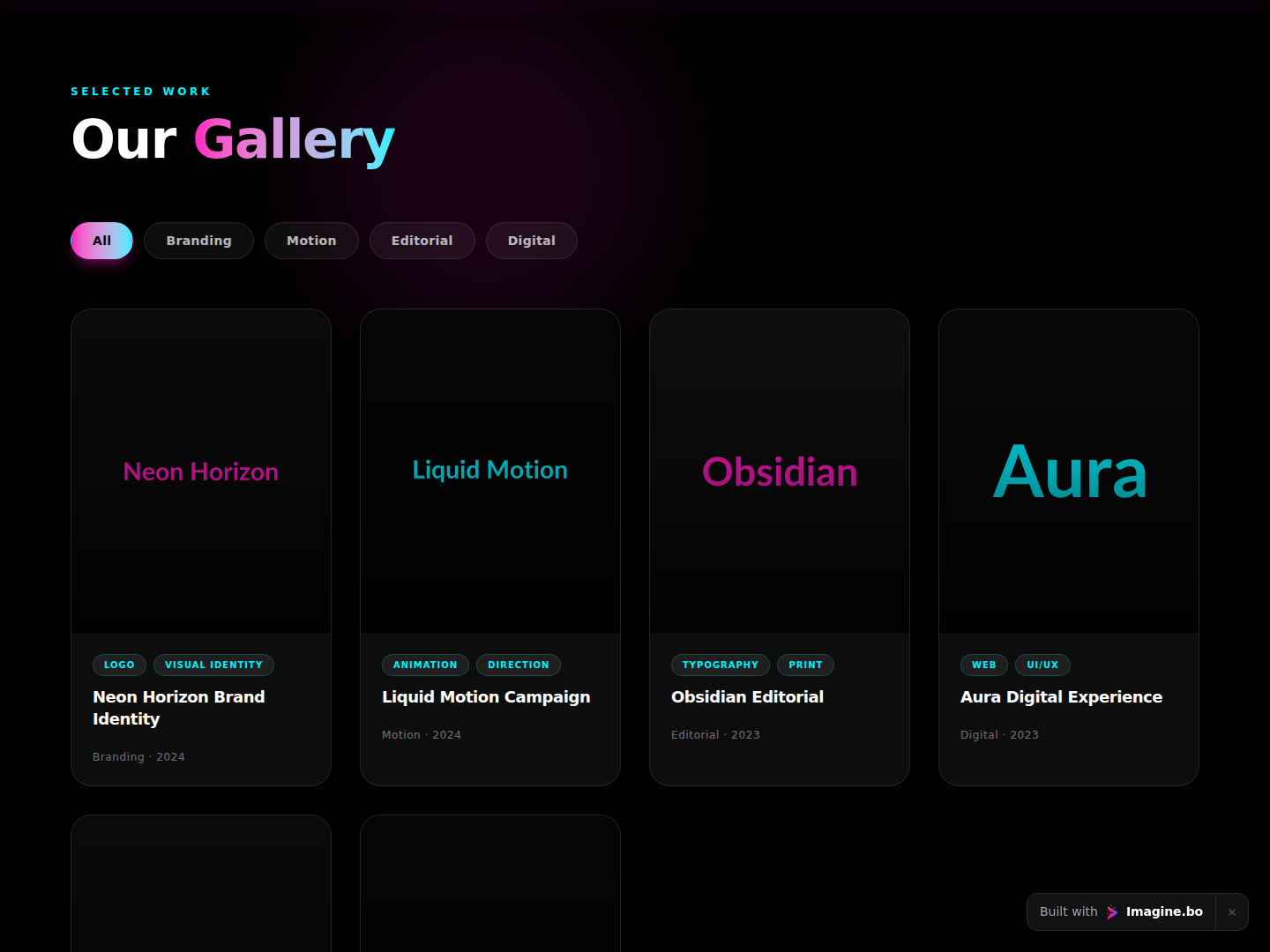
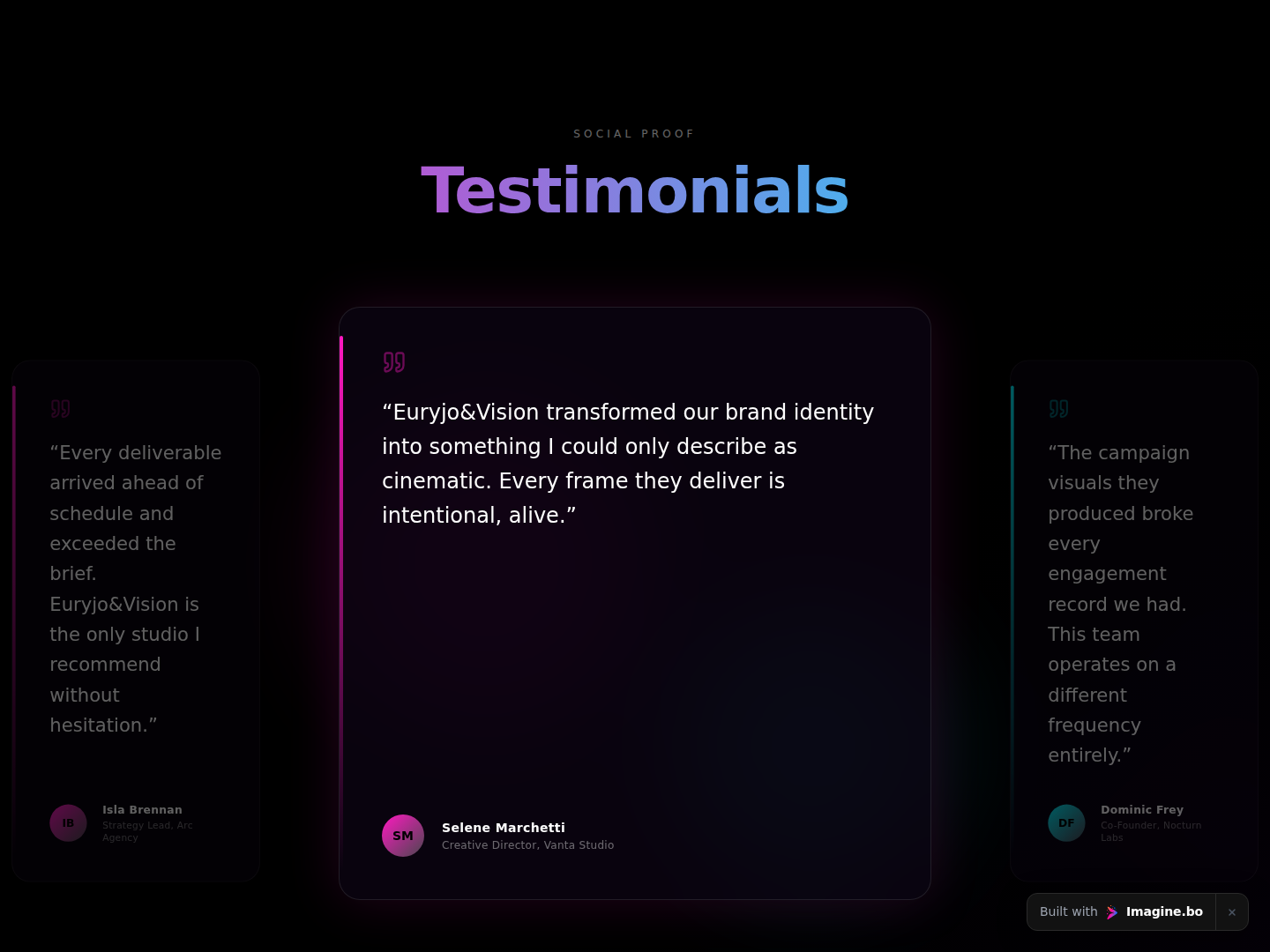
The result feels crafted because the steps were business-first:
- Define the brand mood so the website reflects the studio’s visual language.
- Shape the offer clearly with services that help visitors self-qualify.
- Show proof fast through a gallery that makes the work central.
- Reduce friction with testimonials and a direct contact path.
- Use motion carefully so the site feels premium, not distracting.
According to Forbes Advisor, 71% of small businesses already have websites in 2024, which means not having one isn’t the main problem anymore. The bigger issue is launching a site that actually signals quality. imagine.bo helps founders close that quality gap without needing a development team.
What Makes This Portfolio Website Stand Out?
38% of people stop engaging with a website if the content or layout is unattractive (Adobe, 2022). The direct answer is that Aurora Vision stands out because it combines visual authority, proof, and conversion intent in one tight experience.
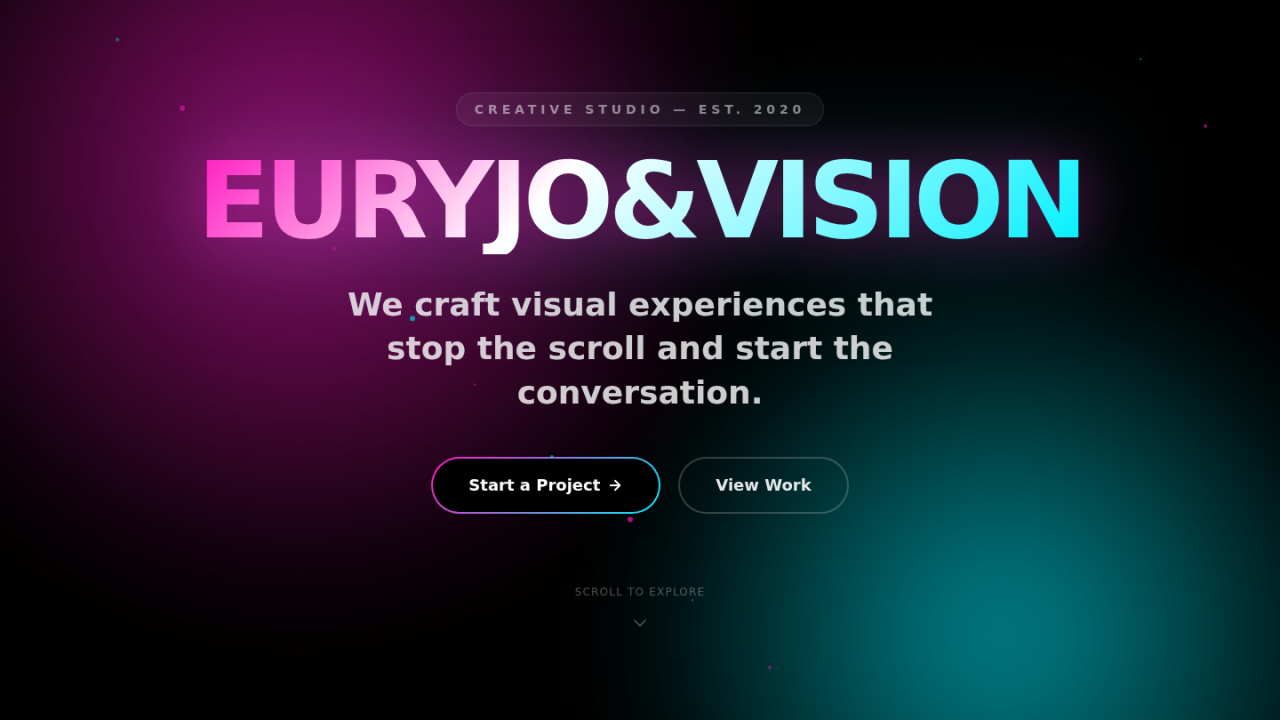
First, the site looks like the studio it represents. That may sound obvious, but plenty of agency websites feel like recycled templates. Aurora Vision instead presents a strong visual identity: dark atmosphere, saturated color accents, clean hierarchy, and motion that supports the mood rather than overwhelming it.
Second, the work is easy to understand. Visitors don’t need to decode what the studio does. They see capability through examples, then move naturally toward trust signals. So what does that mean for your business? It means a portfolio stops being passive and starts doing sales work.
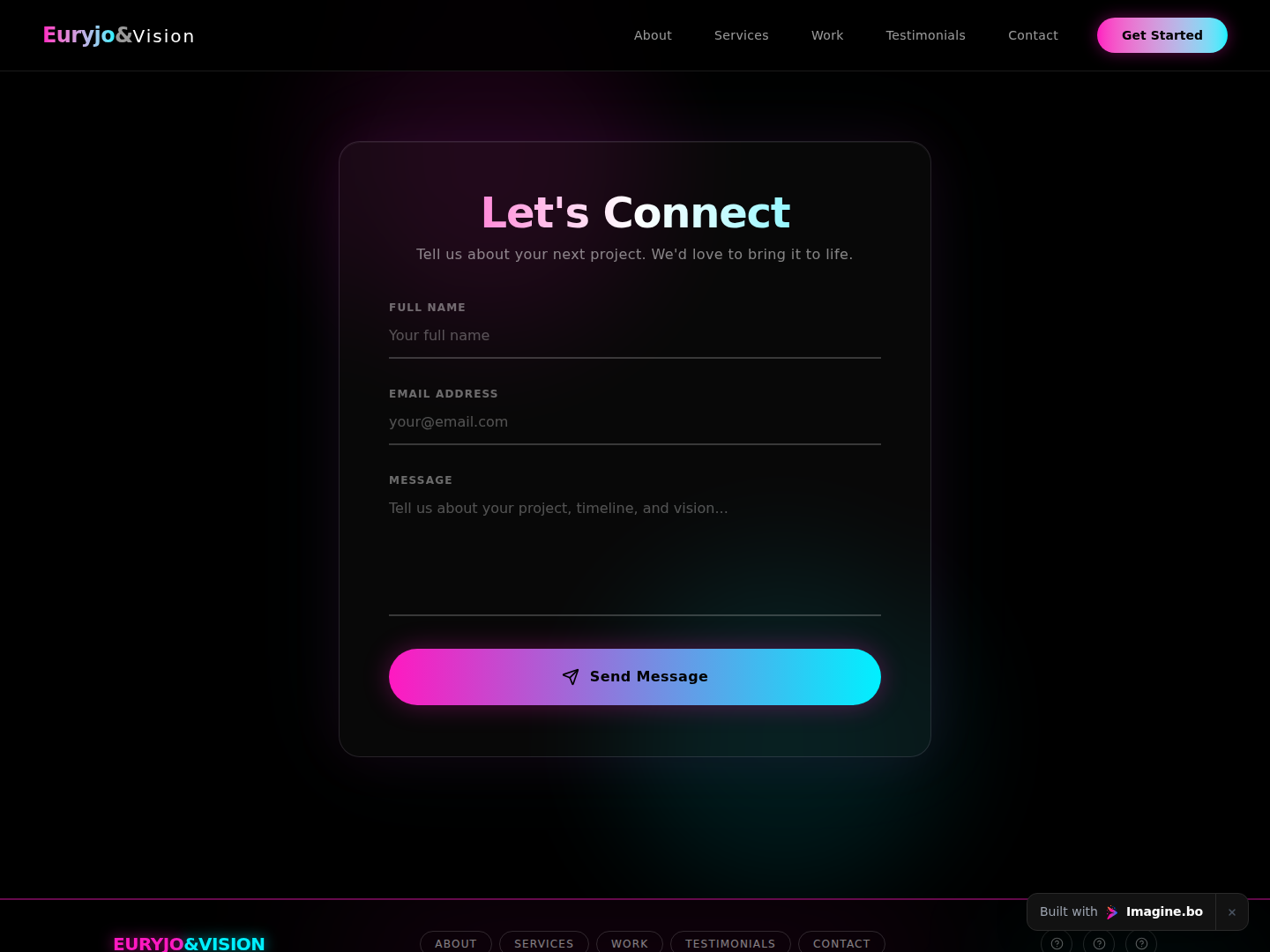
Third, the site closes the loop. Too many portfolio websites inspire visitors yet fail to convert them. Aurora Vision makes the next action feel obvious and low-friction, which is essential when high-value buyers are comparing several studios at once.
That combination of aesthetics, clarity, and response path is why this site works. It’s not just pretty. It’s commercially aware. If you’re studying how AI and interface quality are converging, this AI builders in web design analysis gives useful context.
How imagine.bo Makes This Possible
75% of users judge a company’s credibility based on its website design (Stanford Web Credibility Research, 2021). The direct answer: imagine.bo makes this possible by letting founders shape a professional website through vibe coding, where intent, style, and business goals guide the build.
Traditional website production often breaks momentum. A founder has an idea. Then come wireframes, developer handoffs, visual mismatches, delays, and compromises. imagine.bo shortens that distance dramatically. Instead of forcing non-technical creators into technical workflows, it helps them describe what they want and turn that into a working site that already feels market-ready.
That’s especially powerful for creative industries. Designers, agencies, photographers, filmmakers, and art-led brands don’t struggle because they lack vision. They struggle because translating vision into deployment usually demands extra layers of execution. imagine.bo removes much of that friction, so a founder can protect the original concept while still shipping quickly. If you want to compare budgets before building, you can see imagine.bo’s pricing.
According to Stanford Web Credibility Research, 75% of users assess a company’s trustworthiness through website design alone. That’s why vibe coding has become more than a convenience trend. It gives founders a faster route to credible digital presence, which directly affects inquiries, referrals, and conversion opportunities.
For Aurora Vision, that meant a site with premium styling, clear service framing, social proof, a compelling work showcase, and a functional inquiry path. Not weeks of translation. Not a stack of tools stitched together. Just a focused route from concept to launch.
What This Means for Creative Founders in 2026
According to HubSpot, 76% of consumers look at a company’s online presence before physically visiting or making contact (HubSpot, 2024). The direct answer is clear: in 2026, creative founders won’t be judged only by their work. They’ll be judged by how convincingly their website packages that work into trust.
That shift is getting sharper, not softer. Prospects expect speed, polish, responsiveness, and a coherent brand story. If you’re still treating your website like a side project, what are potential clients assuming about your process? They’re probably not waiting around to find out.
Vibe coding changes the economics of that decision. It lowers the time cost of launch while preserving room for originality. That’s the key point. Creative founders no longer have to choose between a fast build and a distinctive one.
Aurora Vision is a strong proof point. With imagine.bo, the founder turned a creative vision into an online presence that can attract better-fit leads, support premium positioning, and remove the lag between inspiration and execution. For founders exploring that same path, the broader trend is mapped well in this piece on building from one prompt.
FAQ
How long does it take to build a portfolio website with imagine.bo?
It can take minutes to get a strong first version live, especially when your offer and visual direction are clear. Speed matters because 71% of small businesses already have websites (Forbes Advisor, 2024), so launching earlier helps you compete faster. Many founders start with a prompt and refine from there using fast launch workflows.
Do I need coding skills to use imagine.bo?
No, you don’t need coding skills to create a professional website with imagine.bo. That’s why vibe coding matters for founders and creatives. As the World Economic Forum highlighted in 2023, digital access is broadening who can build online products. You can create your site directly on the imagine.bo builder platform and stay focused on your brand instead of syntax.
Is a vibe coded website good for SEO?
Yes, if the site has clear structure, strong messaging, fast load behavior, and pages that satisfy search intent. Google’s own Search documentation continues to emphasize helpful, people-first content. For practical guidance, this SEO-friendly website design guide explains what helps AI-built and no-code sites rank well.
Can imagine.bo build websites for creative studios and agencies?
Yes, and Aurora Vision is a strong example of that fit. Creative businesses depend heavily on credibility, and 75% of users judge a company by website design (Stanford Web Credibility Research, 2021). imagine.bo works well for agencies, studios, consultants, and other visual brands that need both polish and speed.
What makes imagine.bo different from other AI website builders?
The difference is that imagine.bo is built around vibe coding, so founders can guide outcomes through intent, positioning, and style instead of piecing together rigid templates. That matters because 94% of first impressions are design-related (ResearchGate, 2020). For creators who need speed without losing brand feel, imagine.bo gives a more expressive build path.
Aurora Vision shows what the best vibe coding tool should actually do: not just publish pages, but help a founder express quality, attract the right audience, and make outreach easier.
- Strong design drives trust, especially for studios selling premium creative work.
- Fast launch matters, but only when the result still feels distinct and conversion-ready.
- imagine.bo gives non-technical founders a real path from idea to polished website without losing the brand’s original energy.
If you’re building a creative portfolio, agency presence, or design-led business site, the smartest next step is to build your website with imagine.bo and move from concept to launch while the momentum is still fresh.
Launch Your App Today
Ready to launch? Skip the tech stress. Describe, Build, Launch in three simple steps.
Build