93% of web traffic comes from Google Search, Google Images, and Google Maps (SparkToro, 2024). For founders building visual AI products, that means your website can’t just exist, it has to persuade, rank, and convert from day one. That was the opportunity behind PixelMuse, an AI image web app built for creators who wanted faster image generation, sharper outputs, and polished editing without a complicated workflow. Instead of waiting through a long design and development cycle, the founder used https://app.imagine.bo/ to turn a prompt-led concept into a production-ready launch asset, while also learning from this text-to-image app guide.
What Did PixelMuse Need?
75% of users judge a company’s credibility based on website design (Stanford Web Credibility Research, 2024 cited widely in UX studies). For an AI image product, the bar is even higher: visitors expect visual polish, instant clarity, and confidence that the tool can actually create high-quality outputs. PixelMuse needed a web presence that felt cinematic and premium while still making the product understandable in seconds.
Launch Your App Today
Ready to launch? Skip the tech stress. Describe, Build, Launch in three simple steps.
BuildThe founder wasn’t just launching another software page. They were solving a real problem for designers, artists, content creators, and social marketers who often bounce between multiple tools to generate, sharpen, restyle, and clean up images. Sound familiar? One tool for prompting. Another for upscaling. Another for edits. Another for previews. That fragmented workflow slows creative output and weakens conversion when people land on a site that doesn’t clearly show the value.
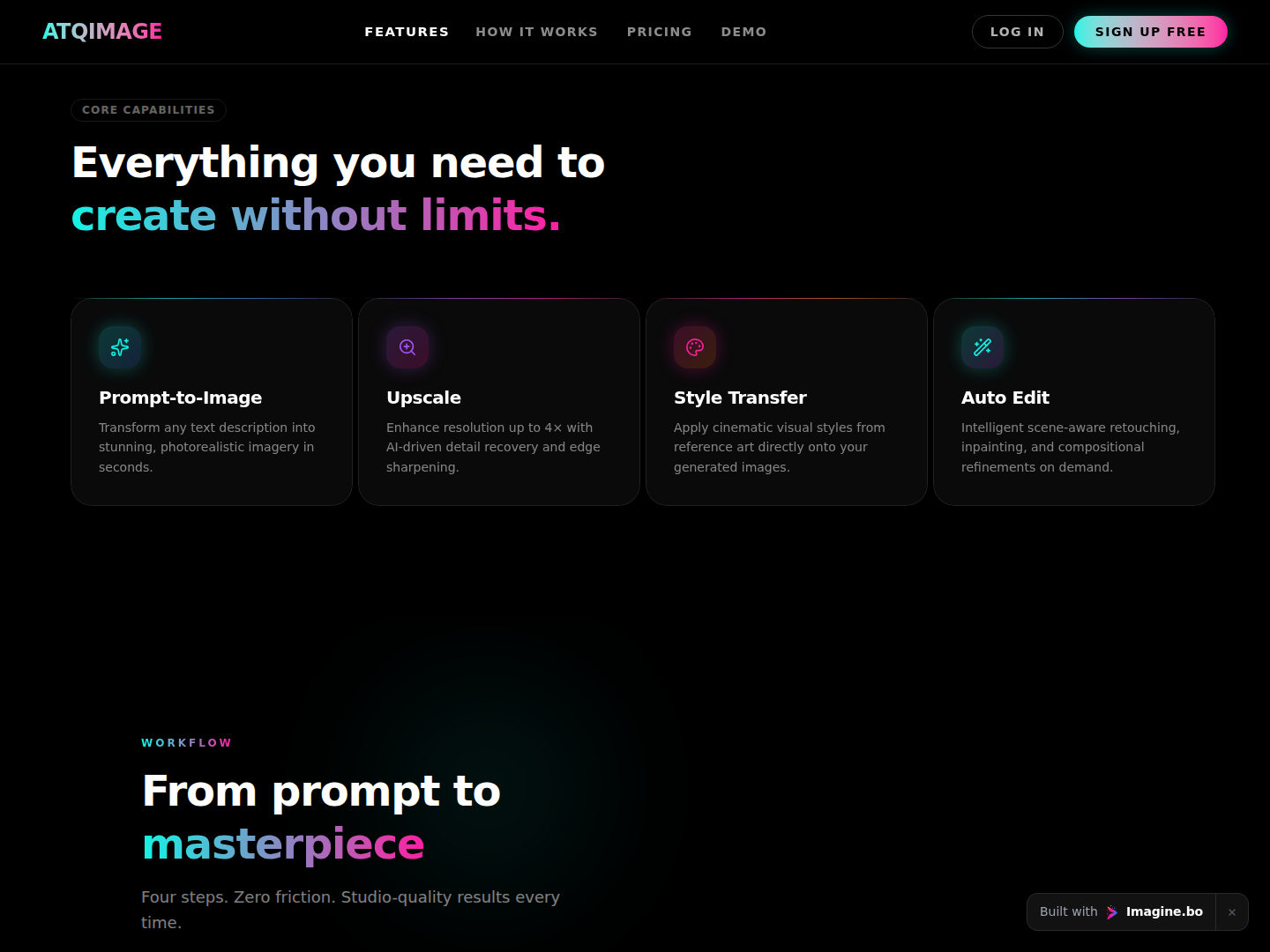
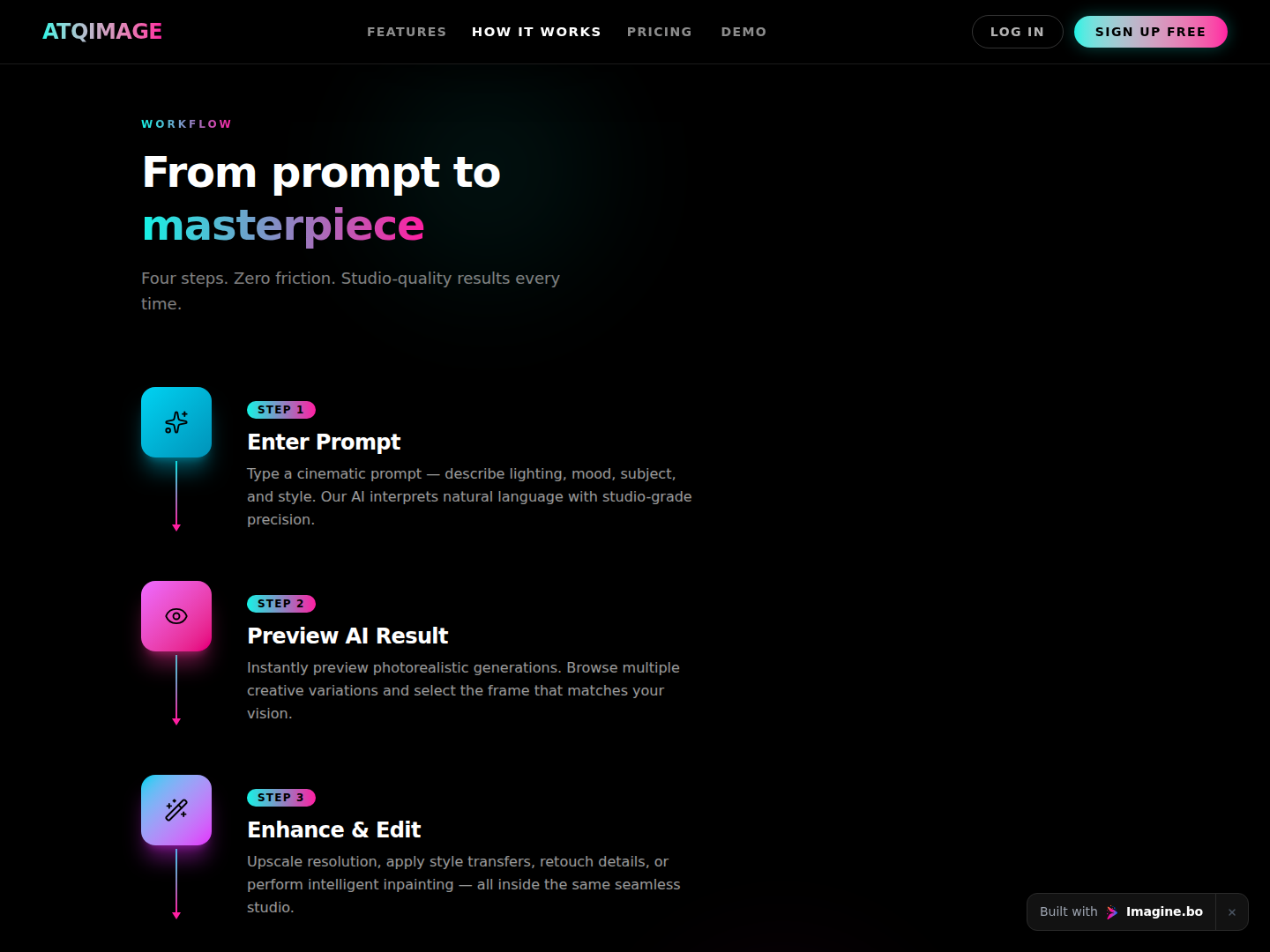
PixelMuse needed one focused destination where a visitor could instantly understand three promises: generate from text, improve image quality, and make smart edits without technical friction. That clarity is what imagine.bo helped shape. Rather than forcing the founder to map every interface decision manually, the platform let the business idea lead the build. The result was a site that matched the product’s creative energy and the audience’s expectations.
According to Stanford Web Credibility research, 75% of people judge trust from design quality. For an AI image startup, that means the website itself becomes product proof. PixelMuse used imagine.bo to present generation, enhancement, and editing as one coherent experience, which reduces confusion and supports faster trial intent.
It also needed a structure that could sell. A visual AI business has to answer buyer questions quickly: What can it create? How does it work? Is pricing understandable? Can users see examples before trying it? PixelMuse answered those questions with a polished narrative flow that felt premium from the first scroll to the final conversion point. For founders comparing launch paths, that’s exactly why teams keep studying prompt-built product examples.
How Was PixelMuse Built with imagine.bo?
60% of small businesses say their biggest challenge with digital projects is lack of time and internal expertise (Clutch, 2024). The direct answer is simple: PixelMuse was built by turning a clear product idea into a high-conviction website using imagine.bo’s vibe coding workflow, which let the founder focus on the offer, the audience, and the visual story instead of code.
The founder started with a straightforward concept: an AI web app that creates and edits photos from prompts while improving clarity and resolution. From there, imagine.bo translated intent into a complete website presence with high-impact sections, strong visual hierarchy, and conversion-focused flow. But does it actually work? Yes, because vibe coding isn’t about random generation. It’s about shaping a business-ready experience from natural language and creative direction.
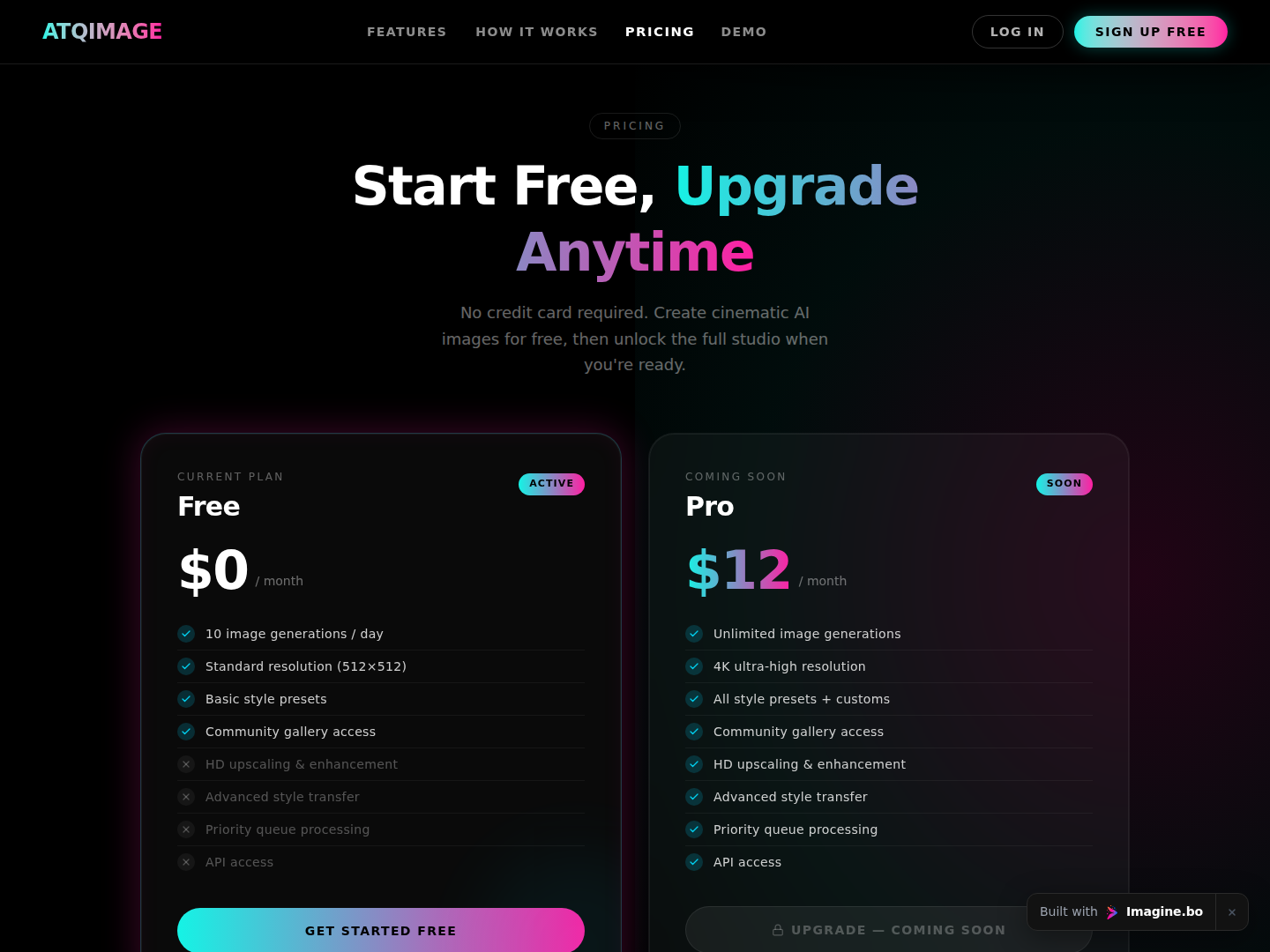
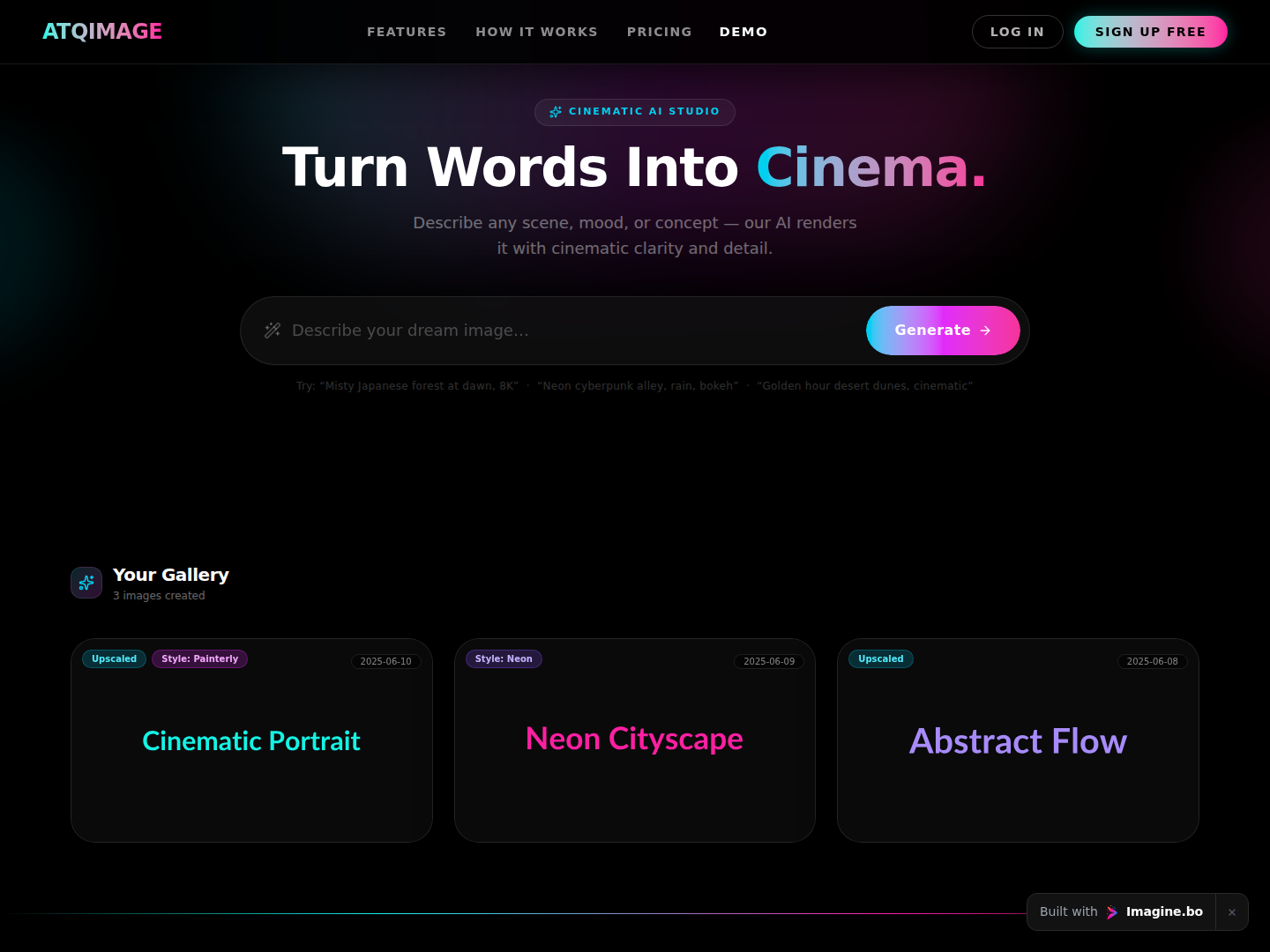
First, imagine.bo made it easy to define the experience around the founder’s actual market: creators who want better images fast. Next, it translated that into a premium web app presentation with strong visuals, direct messaging, and clear paths to explore features and pricing. After that, the founder could refine positioning, sharpen the offer, and start building on imagine.bo without waiting on a traditional dev sprint.
What stands out is how imagine.bo supports business momentum. Instead of spending weeks coordinating design, front-end implementation, and landing page copy structure, the founder could move from idea to public-facing product presence in a fraction of the usual time. That speed matters because image AI is a crowded category; launching earlier gives you more chances to test messaging, capture search demand, and collect user feedback while competitors are still polishing mockups.
McKinsey reported in 2024 that companies using AI in marketing and sales are seeing measurable productivity gains across content and customer-facing workflows. In practice, imagine.bo gives founders a similar edge at the website layer: faster execution, clearer storytelling, and a shorter path from concept to customer validation.
What Makes This AI Image Website Stand Out?
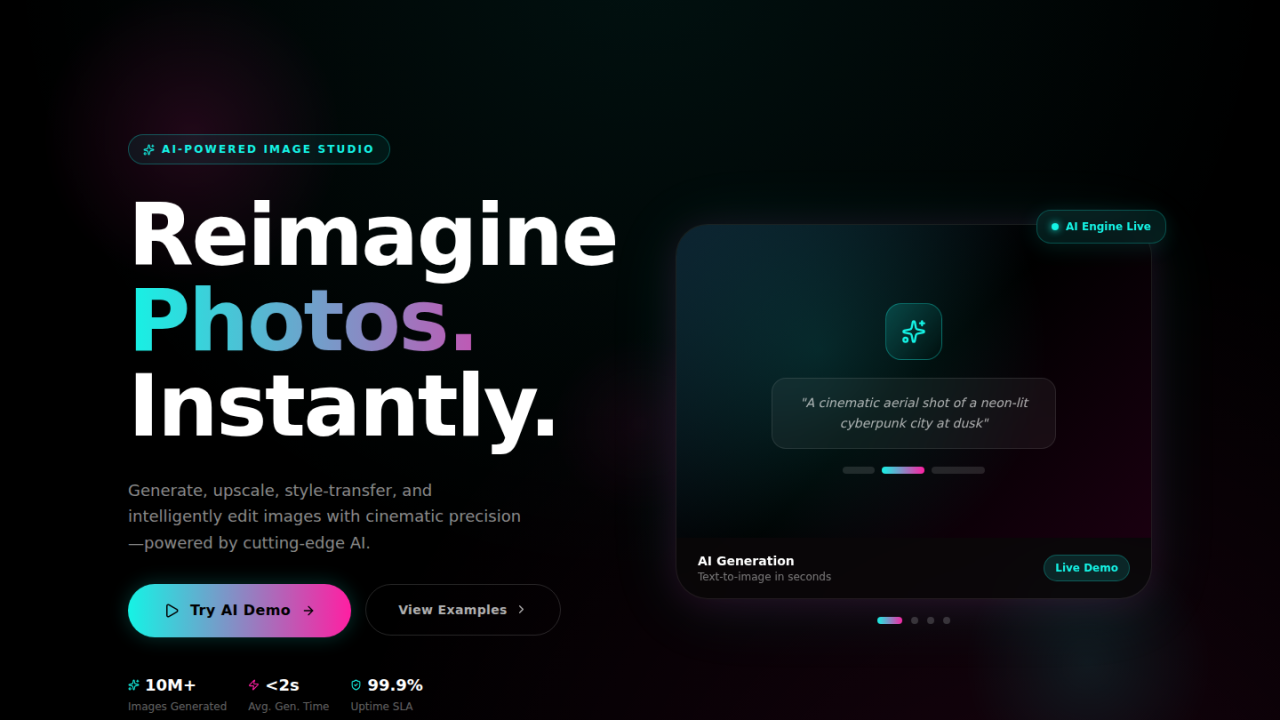
94% of first impressions are design-related (ResearchGate UX studies, 2024 summaries). The direct answer: PixelMuse stands out because it doesn’t present AI image generation as a vague promise. It turns the product into a vivid, premium, easy-to-grasp experience with visual confidence, feature clarity, and a strong sense of creative ambition.
The first standout element is positioning. PixelMuse doesn’t try to appeal to everyone. It speaks directly to visual creators who care about output quality, artistic control, and speed. That makes the messaging tighter and the site’s intent easier to understand.
The second is product immediacy. Visitors don’t have to guess what the tool does. The site makes generation, enhancement, and editing feel like one connected solution, which is exactly what the market wants. Adobe’s Future of Creativity reports have consistently shown rising demand for faster content workflows among creators and marketers. So what does that mean for your business? If your site shows fragmented value, users hesitate. If it shows one clean workflow, users act.
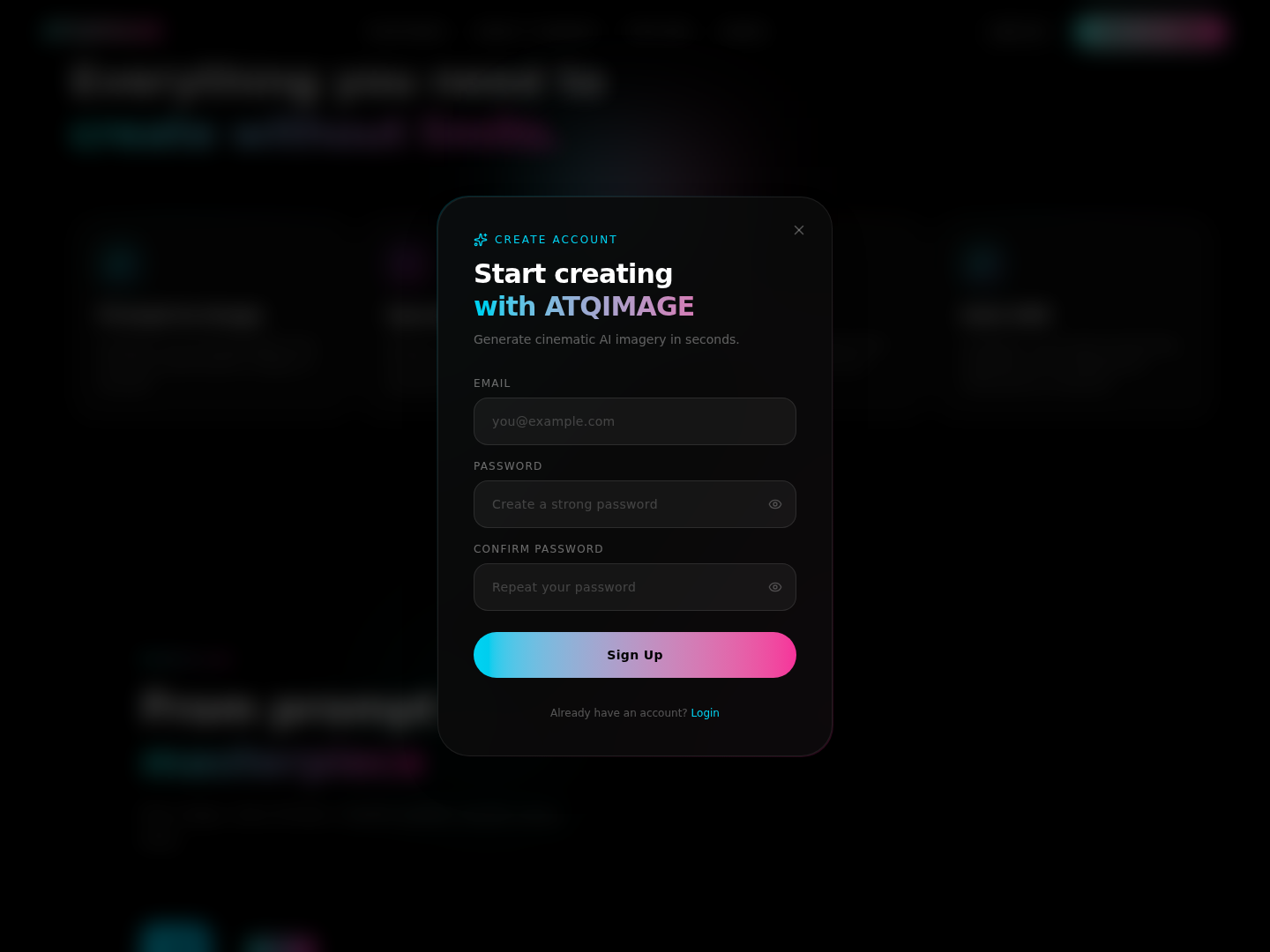
The third is visual tone. PixelMuse feels premium. The dark cinematic aesthetic, vibrant accent color system, and polished component styling give the impression that the product is modern and intentional. That’s not a small detail. In AI, trust often begins with interface quality.
According to ResearchGate summaries of UX-first impression studies, 94% of first impressions are tied to design. PixelMuse translates that reality into growth potential: a polished visual environment increases perceived product quality, which can improve trial starts and reduce bounce for creator-focused AI tools.
That combination makes the site more than attractive. It makes it memorable. And for founders building creator software, memorability is half the battle. If you want a broader view of how visual presentation affects launch outcomes, this overview of AI builders in web design adds useful context.
How imagine.bo Makes This Possible
61% of marketers say improving SEO and growing organic presence is a top inbound priority (HubSpot, 2024). The direct answer is that imagine.bo helps founders ship websites that are not only visually polished but also structured to support discoverability, conversion, and product storytelling from the start.
PixelMuse is a perfect example. The founder had a strong concept, but concept alone doesn’t create traction. imagine.bo turned that concept into a full web presence that could explain the product, showcase value, present pricing, and support sign-up intent in one coherent experience. It gave the founder the speed of AI with the strategic shape of a real product launch.
That matters because many AI-generated sites still feel generic. They look finished at a glance but fail under scrutiny. PixelMuse doesn’t have that problem. Its pages feel intentionally composed around user needs: visual proof, easy understanding, and a direct path to action.
Here’s the larger shift heading into 2026: founders won’t win by shipping code alone. They’ll win by shipping clarity faster. Vibe coding on imagine.bo helps do exactly that. It compresses the distance between idea, brand story, and launch-ready execution. If you’re evaluating the cost side of that speed, you can see imagine.bo’s pricing and compare it to the hidden expense of slow development.
HubSpot’s 2024 data shows 61% of marketers still prioritize SEO and organic growth. Imagine.bo supports that reality by helping founders launch websites with cleaner narratives, stronger structure, and more complete product communication, all of which improve how humans and AI systems interpret the page.
What This Means for Creative Tech Founders in 2026
By 2026, the creators who win won’t just have better tools. They’ll have better launch velocity. Gartner’s 2024 forecasts around AI-assisted software delivery point to a market where more digital products are conceived, built, and iterated by smaller teams. The direct answer is that imagine.bo gives creative tech founders a practical way to compete without hiring a full web team first.
Think about the PixelMuse story. A founder sees a gap: creators want AI image generation, cleaner enhancements, and simple editing in one place. The old path would involve product scoping, UI design, front-end work, revisions, and delayed launch. The imagine.bo path compresses that into a faster build cycle with much less friction. Why does that matter? Because startup timing matters almost as much as startup quality.
For AI image businesses, speed creates three advantages:
- Earlier feedback from real creators and marketers
- Earlier SEO indexing for commercial search terms
- Earlier conversion testing on pricing, messaging, and demos
That means a founder isn’t just launching a website. They’re launching a learning system. Each visit, bounce, click, and signup signal helps refine the next version. That’s why more non-technical teams are exploring no-code AI app builders as a serious go-to-market advantage rather than a shortcut.
PixelMuse shows what happens when product vision and vibe coding align. You get a site that feels premium, explains itself quickly, and gives a growing business room to test and expand. For 2026 founders, that isn’t optional. It’s the baseline.
Frequently Asked Questions
How long does it take to build a AI image web app website with imagine.bo?
It can take minutes to produce a polished first version and far less time than a traditional web build. That speed matters because 64% of small businesses say digital tools save them major time weekly (Salesforce, 2024). For launch planning, review idea-to-live app workflows.
Do I need coding skills to use imagine.bo?
No, you don’t need coding skills to get a strong result. That’s the point of vibe coding: turning business intent into a working website. According to the World Economic Forum, digital accessibility to creation tools keeps expanding in 2024. You can build without writing code and still launch something polished.
Is a vibe coded website good for SEO?
Yes, if the site has clear structure, focused messaging, and useful content. HubSpot reported in 2024 that SEO remains a leading inbound channel for marketers. A vibe coded site built with intent can support rankings, especially when paired with smart content strategy like this SEO-friendly website design guide.
Can imagine.bo build websites for AI image businesses?
Yes. PixelMuse is a strong example of how imagine.bo can support AI image businesses that need a polished launch presence. Visual-first products depend heavily on trust and presentation, and 75% of credibility judgments are design-based (Stanford, 2024). That makes imagine.bo a strong fit for creator tools, image apps, and media startups.
What makes imagine.bo different from other AI website builders?
Imagine.bo is built around vibe coding for real businesses, not just generic page generation. That matters because founders need speed and clarity together. McKinsey’s 2024 AI findings show businesses gain when AI reduces execution friction. PixelMuse shows how imagine.bo can turn a nuanced product idea into a persuasive launch asset instead of a bland template.
PixelMuse is a strong reminder that the best vibe coding tool isn’t the one that spits out the most screens. It’s the one that helps founders turn a sharp idea into a site people trust, understand, and remember.
- Clear positioning wins: PixelMuse speaks directly to creators who want generation, enhancement, and editing in one place.
- Launch speed matters: imagine.bo helped compress the path from concept to live website.
- Design supports growth: a polished visual experience improves credibility, SEO readiness, and conversion potential.
If you’re building an AI product and want to move faster without sacrificing quality, now’s the time to launch with imagine.bo.
Launch Your App Today
Ready to launch? Skip the tech stress. Describe, Build, Launch in three simple steps.
Build