
For years, the barrier to entry for Artificial Intelligence was a steep mountain of complex mathematics, deep neural networks, and years of Python mastery. Students and aspiring founders were frequently told to “learn the theory” or spend years in academia before they could even think about building AI-powered applications. It is time to flip that script.
From Student to Builder: The New AI Mindset
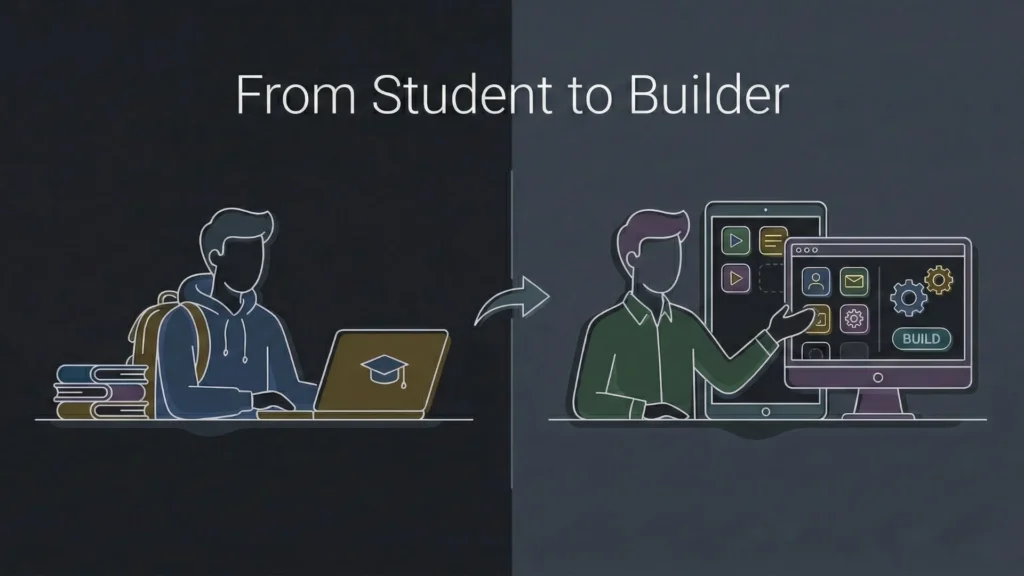
To truly ignite your AI journey, you must stop thinking of yourself merely as a student and start thinking like a product builder. The most effective way to understand AI is not by reading research papers in a vacuum, but by solving real-world challenges with tangible solutions.
Launch Your App Today
Ready to launch? Skip the tech stress. Describe, Build, Launch in three simple steps.
BuildThanks to the meteoric rise of no-code AI, the “messy reality” of production systems is no longer reserved exclusively for data scientists with PhDs. You can now move from a napkin sketch to a revenue-ready product in days, not months. For students specifically, AI project ideas using no-code tools, including comprehensive AI Project Ideas For Students No-Code, are the fastest way to build a portfolio that stands out.
However, a word of caution: while generic no-code tools are excellent for simple prototypes, launching a serious AI startup requires more than just a drag-and-drop interface. To build a sustainable business, you need Imagine.bo a platform designed to bridge the gap between “no-code ease” and “SDE-level architecture.”
This is your comprehensive guide to 20+ no-code project ideas for students and founders, along with a roadmap on how to launch them immediately using Imagine.bo.
Why No-Code + AI is the Fastest Path to Innovation
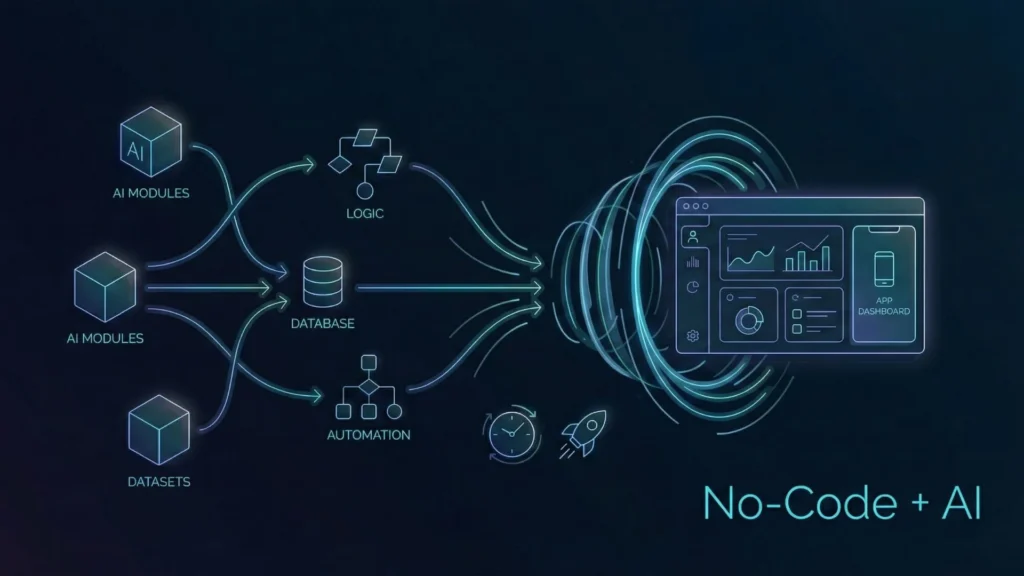
Historically, building an AI application required a full-stack team comprising a data engineer, a machine learning specialist, and a backend developer. Today, no-code AI has fundamentally transformed accessibility, speed, and cost.
1. True Accessibility
The democratization of technology means you no longer need to hire data scientists or spend years studying Natural Language Processing (NLP) to deploy advanced models. The logic that used to require thousands of lines of code is now abstracted into visual workflows. This allows subject matter experts—like biology students, business majors, or artists—to build tools that solve problems specific to their fields without hitting a technical wall.
2. Unrivaled Speed to Market
In the startup world, speed is the only currency that matters. Tasks that once took weeks of coding and debugging can now be accomplished in minutes. For a student or early-stage founder, this means you can validate your startup idea before writing a single line of code. You can launch an MVP (Minimum Viable Product) on a Friday and have your first paying customer by Monday.
3. Drastic Cost Efficiency
Traditional software development is expensive. Between server costs, API usage, and developer salaries, the burn rate is high. No-code platforms allow you to build, test, and iterate using affordable tools, significantly reducing the financial risk of innovation. This is crucial for students bootstrapping their ideas.
However, many “beginner” platforms limit you to simple logic and “toy” apps. To build a business that scales, you need Imagine.bo’s unique advantages, such as AI reasoning, enterprise-grade security, and one-click launch capabilities.
Category 1: SaaS & Business Productivity
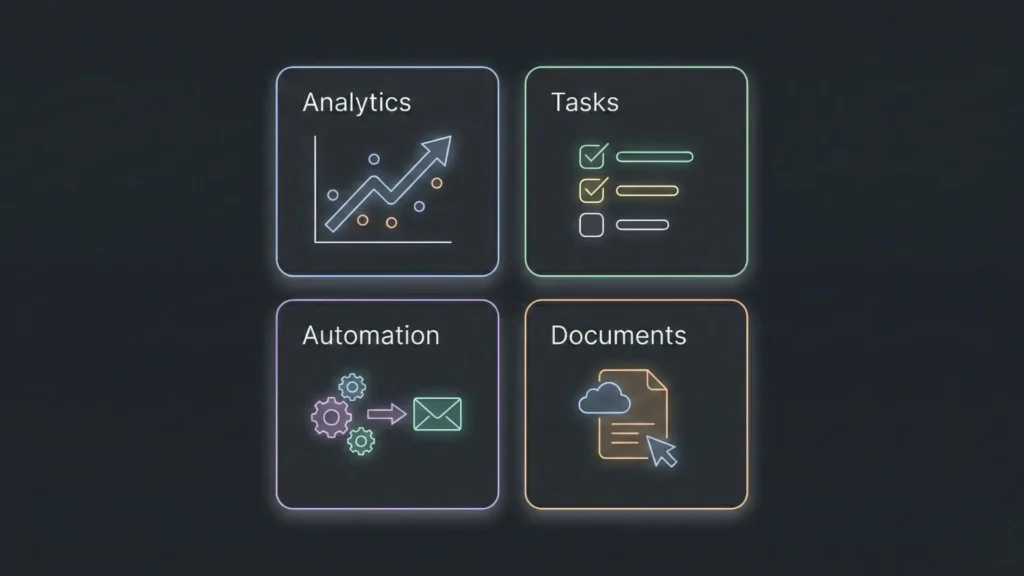
These projects solve the “boring” problems that businesses face daily. While they may not seem flashy, they are highly lucrative because companies are always willing to pay for efficiency, automation, and data clarity.
1. AI-Powered Keyword Research & SEO Tool
Content marketing is a massive industry, but finding the right keywords is tedious. You can build a tool that automates the discovery of trending topics and optimizes content for search engines.
- How it works: The AI scans top-ranking articles, analyzes semantic gaps, and suggests headers and keywords.
- The Imagine.bo Edge: Use Imagine.bo to integrate real-time search data APIs, allowing your tool to provide up-to-the-minute trend analysis rather than static historical data.
2. Intelligent Spam & Fraud Detector
Small businesses lose millions annually to phishing and transaction fraud. An AI tool can use pattern recognition to filter malicious emails or flag suspicious transactions.
- How it works: The model is trained on datasets of known scam emails or fraudulent financial patterns to detect anomalies.
- The Imagine.bo Edge: Security is paramount here. Imagine.bo’s SDE-level architecture ensures that sensitive data is processed securely, making your tool trustworthy for business users.
3. Automated Sales Predictor
Retailers often struggle with inventory management—buying too much stock or running out of hot items. A predictive analytics tool analyzes historical data to forecast weekly or monthly sales trends.
- How it works: The system ingests past sales CSVs, accounts for seasonality (like holidays), and outputs a purchasing plan.
- The Imagine.bo Edge: You can build a dashboard that visualizes these predictions, turning raw data into a “buy/don’t buy” traffic light system for store owners.
4. Sentiment Analysis for Brand Monitoring
Brands need to know what people are saying about them, but reading thousands of tweets is impossible. This tool scans social media and reviews to tell a business exactly what customers think in real-time.
- How it works: It uses NLP to categorize comments as positive, negative, or neutral, and extracts specific sentiment analysis (e.g., “shipping is slow”).
- The Imagine.bo Edge: Utilize Imagine.bo’s multi-agent capabilities to not just analyze the sentiment, but to draft appropriate responses for the customer support team automatically.
5. Smart Document Summarizer
Lawyers, researchers, and students drown in reading material. A smart summarizer condenses lengthy research papers, legal contracts, or technical manuals into concise, actionable highlights.
- How it works: The AI identifies the core thesis and supporting arguments, stripping away fluff while retaining critical clauses or data points.
- The Imagine.bo Edge: Unlike basic GPT wrappers, you can program the AI to look for specific risks or opportunities within the text, utilizing advanced document summarization techniques.
Category 2: Education & Career Development
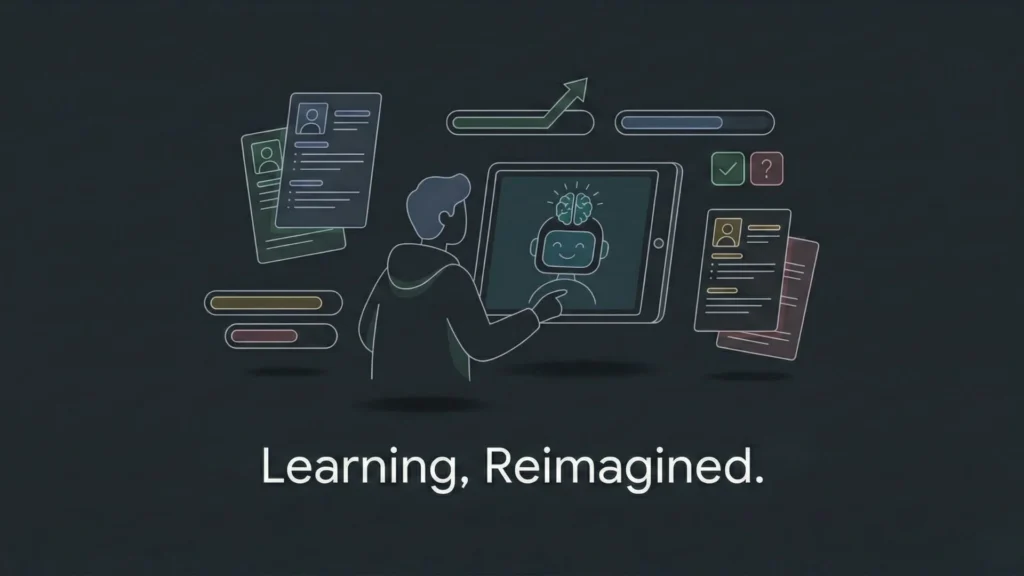
AI in education is not about replacing teachers; it is about hyper-personalization and augmenting human capabilities to make learning more efficient.
6. AI Resume Parser & Ranker
HR departments are flooded with applications. This tool helps recruiters quickly identify the most skilled candidates by filtering for context, not just keywords.
- The Innovation: Traditional parsers miss good candidates who use different terminology. An AI-driven resume screening tool understands that “React Developer” and “Frontend Engineer” often overlap, ensuring talent isn’t missed.
7. Adaptive Learning Teaching Assistant
Every student learns at a different pace. You can build a humanoid or web-based assistant that adapts its tutoring style—visual, textual, or quiz-based—to an individual student’s needs.
- The Innovation: If a student fails a quiz on algebra, the AI doesn’t just repeat the lesson; it changes the explanation method or uses a different analogy, mimicking a real private tutor.
8. Multi-Agent Career Development Tool
Finding a job is a full-time job. Build a comprehensive bot that analyzes a user’s resume, scrapes the web for matching job descriptions, and drafts personalized cover letters for each application.
- The Innovation: This requires a multi-agent workflow: Agent A finds the job, Agent B analyzes the resume gap, and Agent C writes the cover letter. Imagine.bo is perfectly suited for this complex orchestration.
9. Plagiarism & Originality Analyzer
With the rise of AI writing, academic integrity is under threat. This tool uses deep learning to ensure the integrity of academic papers and blogs by analyzing sentence structures and perplexity scores.
- The Innovation: Beyond just catching copy-pasting, it can detect “AI-generated” flows, helping schools maintain standards while teaching students to write authentically.
10. AI Quiz Generator from Video
Students love video tutorials but rarely take notes. This tool converts educational videos (like YouTube lectures) into summarized notes and interactive quizzes to boost retention.
- The Innovation: It automatically timestamps the video, extracts the transcript, and generates fun AI quizzes based on the key learning outcomes, turning passive watching into active learning.
Category 3: Creators, Media & Entertainment
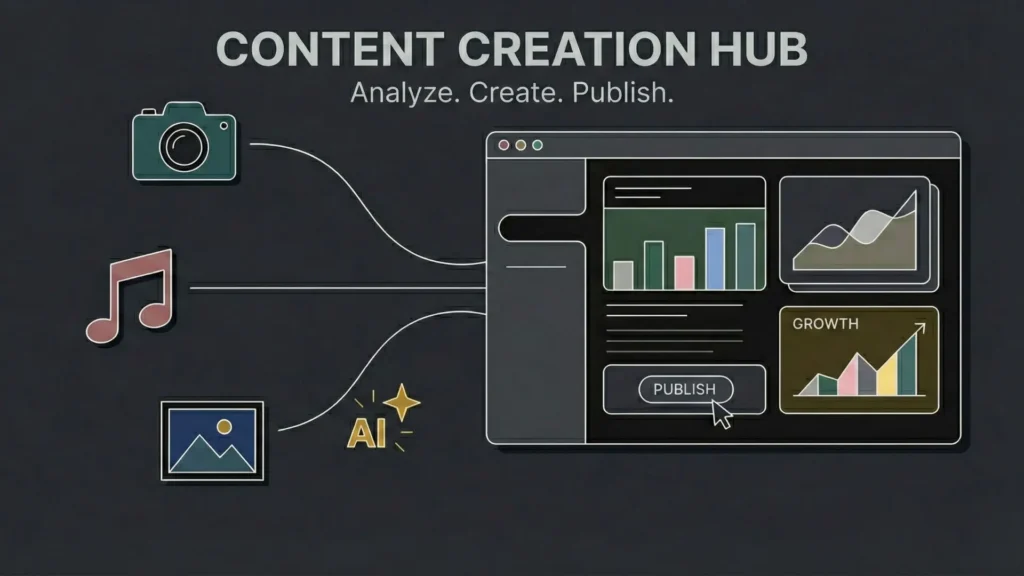
The creator economy is booming, and AI is the ultimate leverage for content production. These tools help creators produce higher quality content faster.
11. AI Music & Background Score Composer
Video editors constantly struggle with copyright strikes. This platform allows non-musicians to generate AI music for their videos or games based on mood prompts.
- The Opportunity: Creators are willing to pay a subscription for a library of “safe,” generative music that fits the exact length and emotion of their video clips.
12. Intelligent Recommendation Engine
Why do people stay on TikTok? The algorithm. You can build a recommendation engine that suggests content (books, movies, music, or products) based on nuanced user behavior rather than just “most popular.”
- The Opportunity: Niche communities (e.g., indie gaming, horror novels) need better discovery tools than what Amazon or Netflix provide. A specialized recommendation engine is a great micro-SaaS.
13. Image-to-Short-Story Generator
This is a creative tool for writers and educators. It transforms visual inputs into immersive, audio-based narratives, making storytelling accessible to the visually impaired or sparking creativity in children.
- The Opportunity: This can be marketed to parents as an educational tool, where a child draws a picture, and the AI tells a bedtime story based on that drawing.
14. Fake News & Misinformation Detector
In an era of viral misinformation, credibility is valuable. This tool flags unreliable or fabricated news articles by analyzing linguistic patterns, cross-referencing facts, and checking source credibility.
- The Opportunity: A browser extension that gives a “Trust Score” to news sites could be invaluable for researchers, journalists, and conscientious news readers.
15. Automated Image Captioning Tool
Social media managers need to post accessible content. This tool uses computer vision to generate accurate, descriptive Alt-Text for images, improving SEO and accessibility for blind users.
- The Opportunity: This is a high-volume B2B tool. Marketing agencies would use this to bulk-process thousands of images with recognition tools for e-commerce catalogs or Instagram feeds.
Category 4: Health, Lifestyle & Social Impact
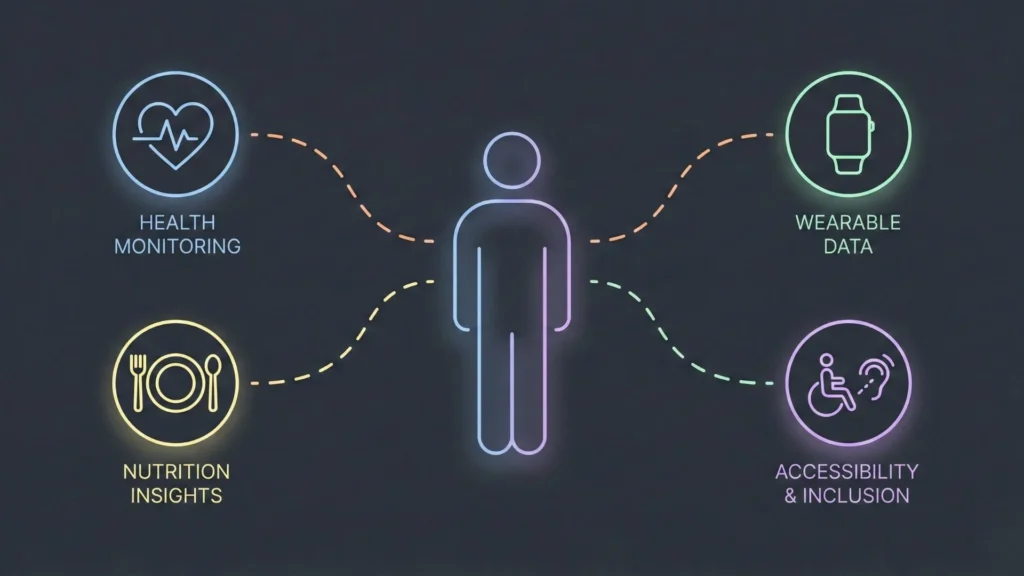
These projects focus on real-world safety, well-being, and physical health, proving that no-code AI can extend beyond the digital screen.
16. Medical Monitoring Assistant
A system that monitors vital signs via wearable API data and alerts family members or doctors in case of anomalies.
- Building with Imagine.bo: You can create a secure workflow that ingests data from smartwatches. If the heart rate exceeds a threshold, the AI triggers an SMS alert agent to notify a contact. This is a prime example of crafting tomorrow’s care with AI health apps.
17. AI Recipe & Dietary Recommender
General recipe apps are notorious for failing to handle complex restrictions (e.g., “Vegan, soy-free, high-protein, under 20 minutes”). This tool changes the dynamic by suggesting meals based strictly on available ingredients in the fridge and specific user needs.
- Building with Imagine.bo: The AI reasoning capabilities allow the app to “understand” ingredients chemically. This ensures it doesn’t suggest a recipe that hides an allergen under a different name. You can learn more about how to build an AI-powered app that handles complex data logic like this effortlessly.
18. Sign Language-to-Text Translator
This bridges critical communication gaps by converting hand gestures captured on a webcam into text or speech in real-time.
- Building with Imagine.bo: This utilizes computer vision integration. It is a profound project for those looking to make a social impact. If you are in academia, this is one of the best AI project ideas for students to showcase the power of accessible technology. Imagine.bo’s latency handling ensures the translation feels conversational and instant.
19. Traffic & Safety Monitor
Analyze road data or CCTV feeds to predict traffic jams or identify workplace hazards (like a worker not wearing a helmet).
- Building with Imagine.bo: By processing video feeds through object detection models, this tool can be sold to construction companies or city planning bureaus to improve safety standards. For a practical example of this technology in action, check out our guide on how to build a driver safety app without code.
20. Personalized Medicine Insight Bot
Every patient is unique. This bot analyzes patient data patterns and research papers to help doctors determine the most suitable treatment types for complex cases.
- Building with Imagine.bo: This requires Managed RAG capabilities (Retrieval-Augmented Generation), where the AI references a trusted database of medical journals before answering. This ensures high accuracy and safety, which is critical when developing healthcare patient apps.
Why Imagine.bo is the Natural Choice for Founders
If you search for “no-code tools,” you will find dozens of platforms. However, while sources mention various tools like Python libraries or basic drag-and-drop builders, they often fail to address the “Day 2” problems: scalability, security, and professional architecture.
This is where Imagine.bo stands apart. It isn’t just a place to “practice” or build a toy for a hackathon; it is a platform built for launching real businesses.
1. Advanced AI Reasoning
Most automation tools follow simple “If-This-Then-That” logic. This breaks down when complexity increases. Imagine.bo leverages advanced AI reasoning to handle ambiguity, make decisions based on context, and execute multi-step tasks without needing you to hard-code every single possibility.
2. SDE-Level Architecture
The dirty secret of no-code is “spaghetti code.” Many platforms generate messy backends that are slow and insecure. Imagine.bo builds with scalable SaaS architecture standards. This means the underlying structure of your app is clean, optimized, and professional. You are effectively hiring a Senior Architect to build your foundation, without paying the salary.
3. Scalability & Security
As you grow from a student project to a startup, you handle user data, payments, and proprietary information. You need enterprise-grade security. Imagine.bo offers a structure that grows with your success, ensuring your app doesn’t crash when you hit your first 1,000 users. Security is paramount; ensure you are securing AI-generated web apps correctly from day one.
4. Speed & One-Click Launch
The biggest killer of startups is “analysis paralysis”—spending too much time tweaking and never shipping. Imagine.bo allows you to move from a validated idea in the “Sandbox” to a live, one-click launch. It handles the hosting, the deployment, and the maintenance.
Comparison: Imagine.bo vs. Generic No-Code Tools
To visualize why the platform matters, let’s look at the architectural differences. For a deeper dive into the landscape, read our analysis on No-Code vs. Low-Code differences in 2025.
| Feature | Generic No-Code Tools | Imagine.bo |
| Logic Capability | Simple, linear, rule-based (If X, then Y) | Advanced AI Reasoning (Contextual decision making) |
| Backend Structure | Proprietary “Black Box” (hard to export/scale) | SDE-Level Architecture (Professional standards) |
| Scalability | Often limited by user count or database rows | Built for Growth (Enterprise-grade scaling) |
| Data Security | Basic standard compliance | High-Level Security Protocols for sensitive data |
| Launch Process | Complex integrations often needed for domains | One-Click Deployment to live production |
| Market Readiness | Best for Prototypes and “Toys” | Revenue-Ready Products from Day 1 |
Building Your Product: A Step-by-Step Roadmap
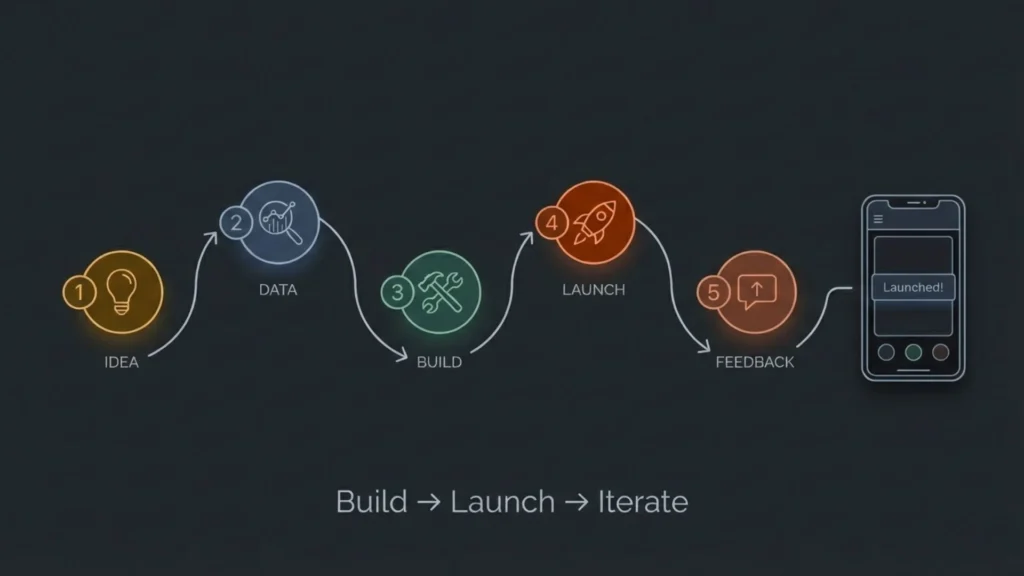
You have the ideas, and you have the platform. Here is how you execute.
Step 1: Select Your Problem
Don’t just pick an idea because it sounds cool. Choose a niche from the AI SaaS startup ideas for 2025 that aligns with your interests or a problem you have personally faced. The best founders build solutions for problems they understand deeply.
Step 2: Gather Your “Data”
Even in no-code, you need to understand the information your AI will process. If you are building the “Resume Parser,” gather 50 different resume formats to test. If you are building the “Recipe Recommender,” understand the structure of a recipe database.
Step 3: Build with Imagine.bo
Use the intuitive interface to design your workflow. Focus on the flow of the problem you are solving. Let Imagine.bo handle the heavy lifting of API connections, database management, and authentication. You can learn specifically how to Vibe Code and build apps with AI to speed up this process.
Step 4: Validate & Iterate
Use the “one-click launch” to get your product in front of real users immediately. Don’t wait for perfection. Launch, listen to user feedback, and validate your startup ideas using the rapid iteration cycle of Imagine.bo to refine your model.
Conclusion: Stop Learning, Start Building
The future belongs to the innovators who can harness AI for positive change. We are currently in a “Gold Rush” era of technology, but unlike previous eras, the shovels and pickaxes are digital and accessible to everyone.
Whether you are a student building a Sign Language Recognition App to help your community, or a founder launching a Sales Prediction SaaS to disrupt the retail industry, the tools you use will define your success. You can stay in the library reading about neural networks, or you can step into the arena.
Don’t let your AI journey get stuck in the “theory” phase. Ignite your AI journey today by building your first AI app into a real, scalable, and revenue-ready product.
Launch Your App Today
Ready to launch? Skip the tech stress. Describe, Build, Launch in three simple steps.
Build