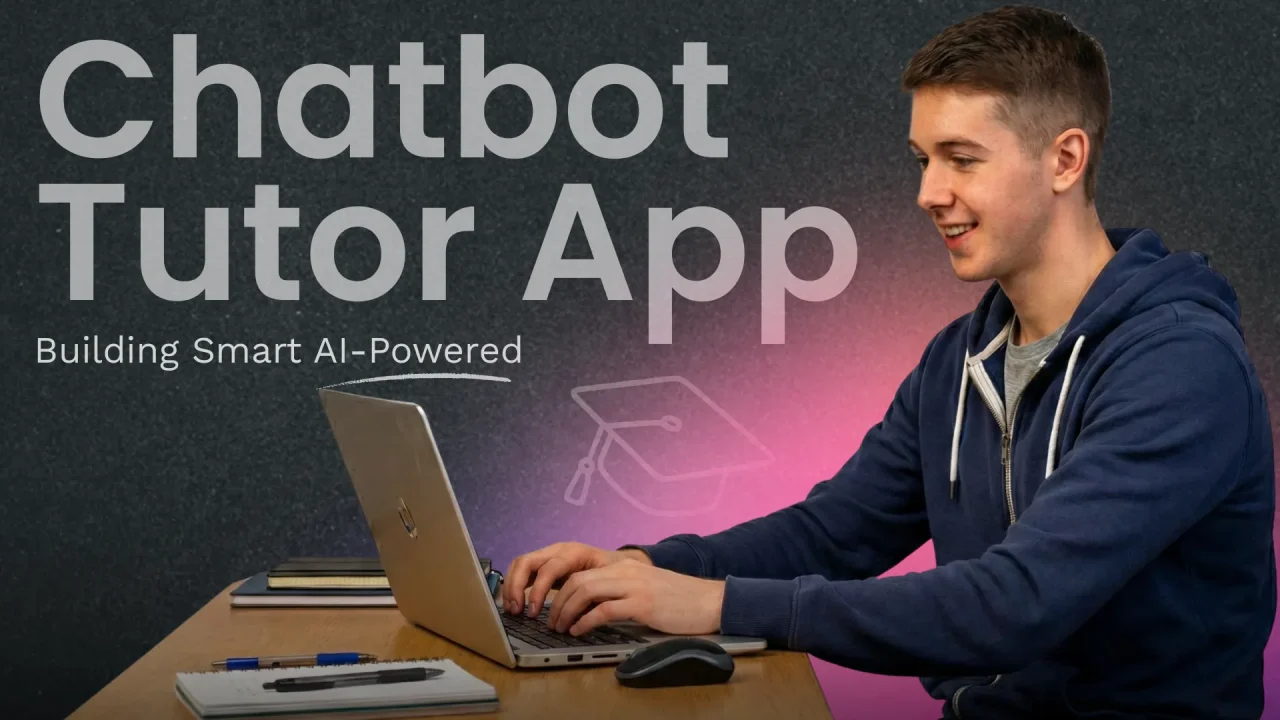
Artificial intelligence is effectively and rather quietly rewriting the operating system of education. While headlines often focus on students using AI to write essays or the fear of plagiarism, the real revolution is happening in the operational trenches of learning: the rise of AI-powered tutoring through chatbots.
We are moving past the era where technology in the classroom meant simply digitizing a textbook or putting a quiz on an iPad. We are entering an era of “active” technology. One of the most practical, scalable, and immediately impactful applications of this shift is the AI tutoring chatbot.
Launch Your App Today
Ready to launch? Skip the tech stress. Describe, Build, Launch in three simple steps.
BuildThese are not the clunky customer service bots of a decade ago that looped you in endless circles of “I didn’t quite get that.” When designed well, modern AI tutors are adaptive, empathetic, and highly personalized learning assistants. They have the power to close persistent learning gaps and scale support in ways human-only systems simply cannot manage due to resource constraints.
Perhaps most importantly, building these tools no longer requires a PhD in computer science or a massive budget for a team of software engineers. The no-code movement has democratized access to this technology, allowing educators, founders, and product teams to build production-ready learning assistants without writing a single line of code.
This guide explores the anatomy of an AI tutor, the strategy behind building one, and how you can move from a concept to a deployed, revenue-ready application.
Beyond the Help Desk: Understanding AI Chatbots in Education
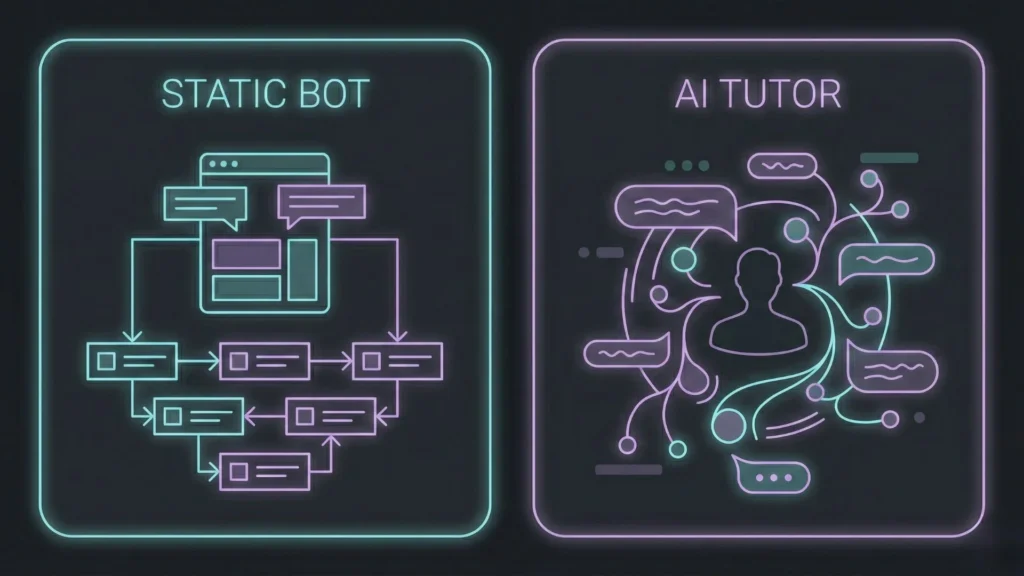
To build an effective tool, we first have to distinguish between an automated FAQ bot and a true AI tutor.
A standard chatbot follows a decision tree. It is static. If a student asks, “When is the assignment due?” it looks up the date and replies. While useful for administrative tasks, this is not tutoring.
An AI-powered tutor functions as an adaptive learning partner. It doesn’t just deliver content; it reacts to the learner. It utilizes Natural Language Processing (NLP) to understand context, nuance, and intent. If a student asks a question about a complex physics concept, the AI doesn’t just spit out the definition. It might assess what the student already knows, offer an analogy, or break the problem down into smaller steps.
The Shift from Passive to Active
Traditional digital learning is often passive: watch a video, read a PDF, take a multiple-choice quiz. AI tutoring transforms this into a dialogue. The system adjusts difficulty, pacing, and instructional style based on how the student interacts with the material in real-time. It replicates the dynamic of a one-on-one tutoring session, available 24/7.
Transforming the Experience Through Personalization
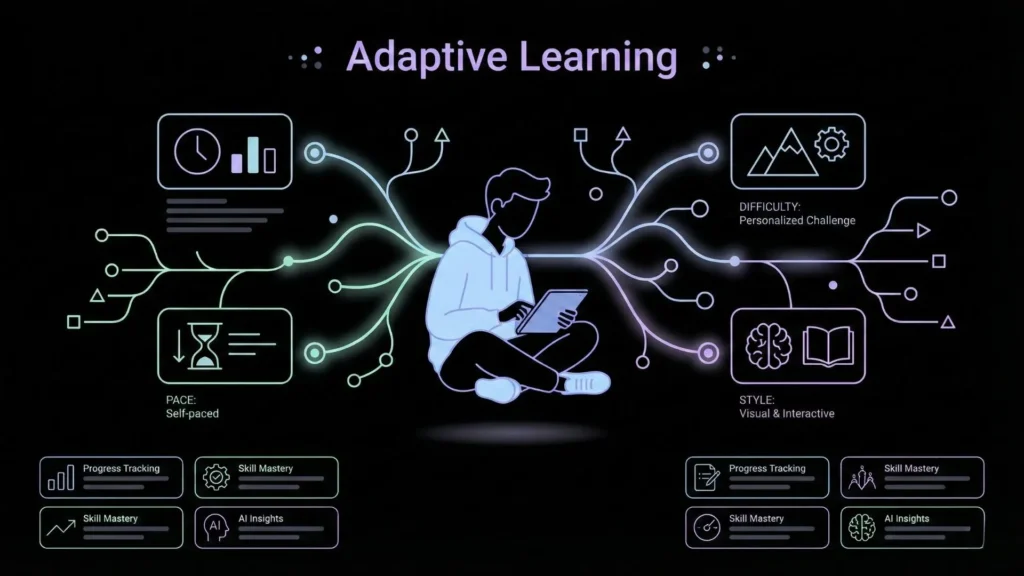
The “Holy Grail” of education has always been personalized learning instruction tailored to the specific needs, pace, and interests of a single student. Historically, this was impossible to scale. A teacher with 30 students in a classroom cannot create 30 distinct lesson plans every day.
AI tutoring delivers this personalization at scale.
The Adaptive Loop
Adaptive learning algorithms serve as the brain of the operation. They analyze student behavior continuously.
- The Struggle: If a learner is stuck on a specific concept say, balancing chemical equations the chatbot detects the struggle. It doesn’t just repeat the previous explanation. It pivots. It might introduce an alternative explanation, offer a visual aid, or provide a simpler example to build confidence before returning to the complex problem.
- The Excel: Conversely, if a learner is breezing through the material, the system recognizes that the student is bored. It raises the difficulty, introduces advanced topics, or challenges the student to apply the concept in a novel scenario.
Sentiment Analysis: The Emotional Layer
Effective personalization isn’t just about IQ; it’s about EQ. Advanced AI tutors utilize sentiment analysis to read the “room.” By analyzing word choice, response latency, and interaction patterns, the bot can identify frustration, confidence, or total disengagement.
If the AI detects frustration (e.g., the student is typing short, aggressive responses or making repeated errors), it can shift its tone to be more supportive, suggest a break, or switch to a different learning modality. If it detects a critical roadblock, it can flag the issue and escalate it to a human teacher. This creates a learning experience that feels tailored rather than generic, drastically improving retention.
Addressing Learning Gaps and The Equity Problem
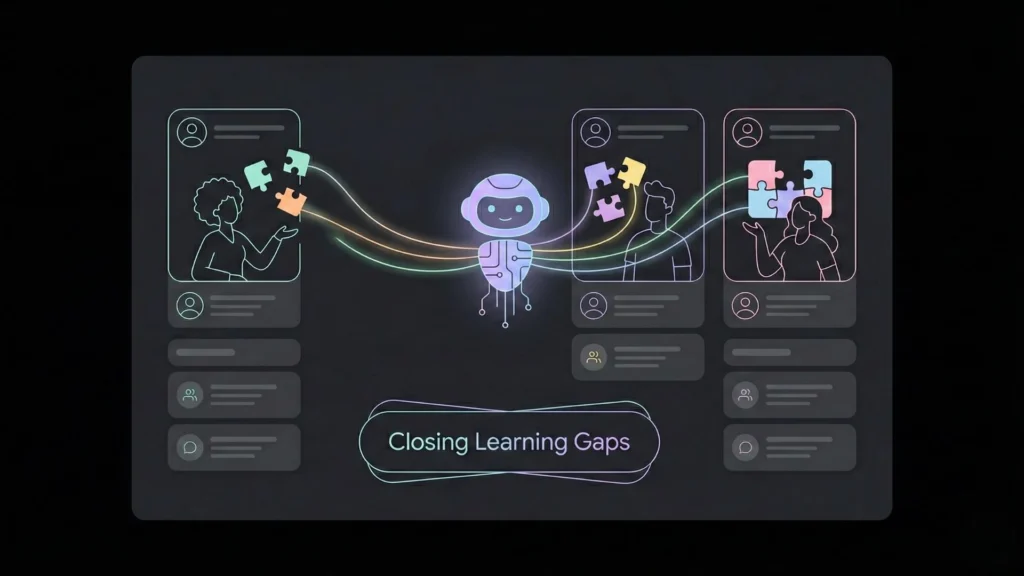
Classrooms are diverse by default. In any given 5th-grade math class, you have students performing at a 3rd-grade level and others at a 7th-grade level. Teachers are often forced to teach to the middle, leaving the struggling students behind and the advanced students bored.
AI tutors act as the ultimate equalizer. They provide the “tier 2” support that schools struggle to fund.
targeted Remediation
A student might be failing Algebra II not because they don’t understand the new concepts, but because they have a foundational gap in pre-algebra from two years ago. A human teacher might take weeks to diagnose this specific gap. An AI tutor, tracking the student’s logic and error patterns, can identify it almost immediately.
The chatbot can then launch a “micro-lesson” to patch that specific hole in their knowledge focusing practice solely on that area before bringing them back to the current curriculum. This continuous assessment happens in the background, without the stigma of failing a test in front of peers.
The Human-AI Partnership
It is crucial to state that AI is an assistant, not a replacement. Education requires mentorship, complex moral judgment, and emotional support that software cannot provide.
The strongest outcomes come from a hybrid model. When the AI handles the repetition, the grading, and the foundational remediation, it creates space for human educators to focus on higher-value interactions, mentorship, and complex critical thinking. The AI clears the weeds so the teacher can water the garden.
Engagement: Making Learning Conversational
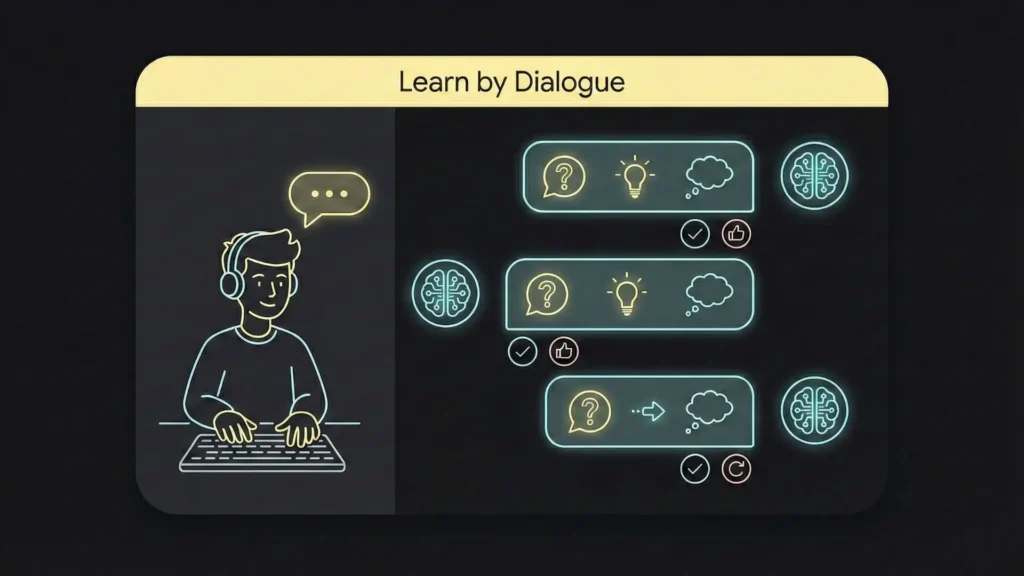
We know that engagement drops when learning feels passive. If a student feels like a spectator, they check out. AI chatbots solve this by enforcing interactivity.
The Socratic Method at Scale
Great tutors don’t give answers; they ask the right questions. AI tutors can be programmed to use Socratic questioning. Instead of saying, “The answer is 5,” the bot might ask, “What formula do you think applies here?” or “How did you arrive at that conclusion?”
Gamification and Tone
The “personality” of the bot matters. A dry, robotic interface feels like homework. A bot designed with a supportive tone, light humor, or narrative elements feels like a companion. Elements of gamification streaks, badges, or unlocking new “chapters” of conversation trigger the dopamine loops that keep students motivated. Instant feedback is a major component of this; knowing immediately that you are making progress is a powerful motivator.
The “How-To”: Choosing the Right No-Code Platform
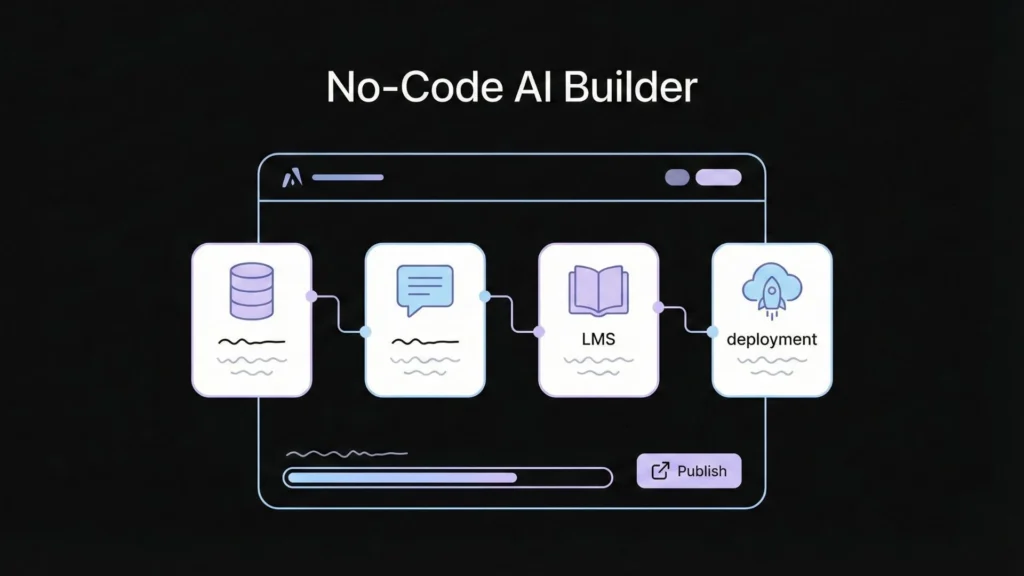
You understand the value. Now, how do you build it?
The rise of no-code platforms has removed the engineering barrier. However, the market is flooded with tools. For education, not all platforms are created equal. You cannot simply use a generic marketing chatbot builder and expect it to handle the pedagogical nuance of a tutor.
Comparing the Options
- Flow-Based Builders: These are visual tools where you drag and drop logic blocks. They are great for linear conversations but struggle with the “messiness” of student questions.
- AI-Native Platforms: These prioritize Natural Language Understanding (NLU). They are better at handling varied phrasing. Students rarely ask questions in the exact keywords you expect; an AI-native platform can understand that “I don’t get it,” “I’m lost,” and “This makes no sense” all mean the same thing.
Key Factors for Education
When selecting your stack, look for these specific capabilities:
- LMS Integration: Does it talk to Moodle, Canvas, or Blackboard? If the bot lives in a silo, it cannot access grades or assignments, limiting its ability to personalize. Seamless integration with LMS platforms is often the deciding factor for institutional adoption.
- Contextual Memory: Can the bot remember what the student said five minutes ago? Or five days ago?
- Data Privacy (FERPA/GDPR/COPPA): This is non-negotiable. If you are dealing with student data, the platform must support encryption, role-based access, and strict data residency rules.
- Scalability: Usage-based pricing (paying per message) can kill an education startup if a pilot goes viral. Look for predictable scaling costs.
Designing the Mind of the Tutor
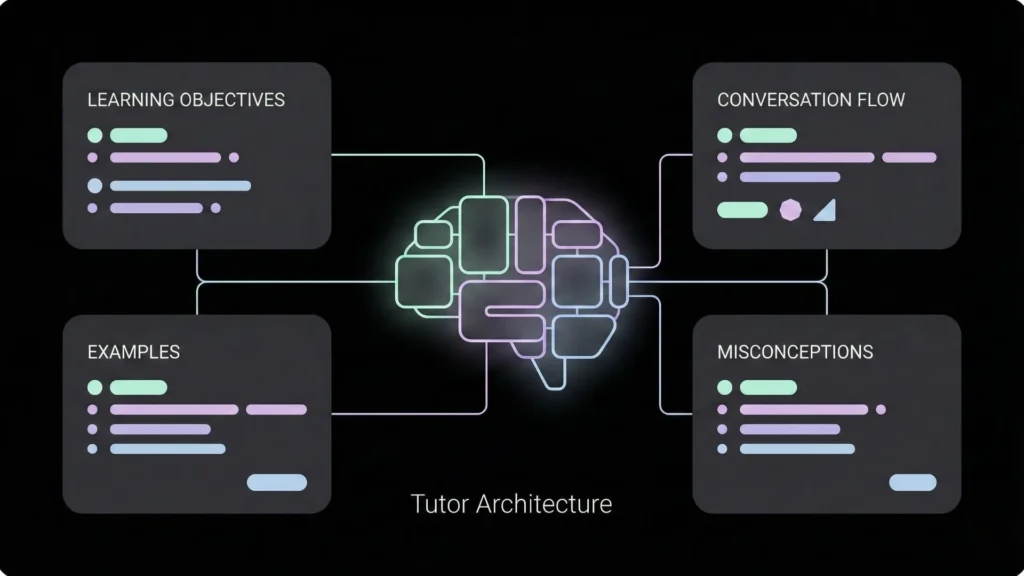
Before you touch the software, you must design the pedagogy. Strong outcomes start with clear design decisions.
1. Scope and Learning Objectives
A common failure point is trying to build a “Tutor for Everything.” Do not try to build a bot that teaches Biology, Chemistry, and French simultaneously. Start with a narrow, well-defined scope. For example: “A chatbot to help 9th graders master quadratic equations.” Clear learning objectives guide your content creation and assessment logic.
2. Conversational Architecture
Treat your learning flow like a script for a play where the audience participates.
- Avoid Walls of Text: If the bot sends three paragraphs of text, the student will skim it. Break information into bite-sized chunks (bubbles).
- Multimedia Integration: Text helps, but visuals explain. A well-designed flow should be able to serve up an image, a diagram, or a short video clip when a student is stuck.
- Flow Logic: This is where conversation design becomes critical; mapping out how the bot guides the student back to the path when they stray is just as important as the lesson content itself.
3. Structuring the Knowledge Base
Your AI needs a source of truth. This is your Knowledge Base (KB). Content should follow a hierarchy:
- Broad Concept (e.g., Photosynthesis)
- Sub-Concept (e.g., The Calvin Cycle)
- Specific Examples
- Common Misconceptions
The cleaner your data structure, the smarter your bot will appear.
The Intelligence Layer: NLP and Machine Learning
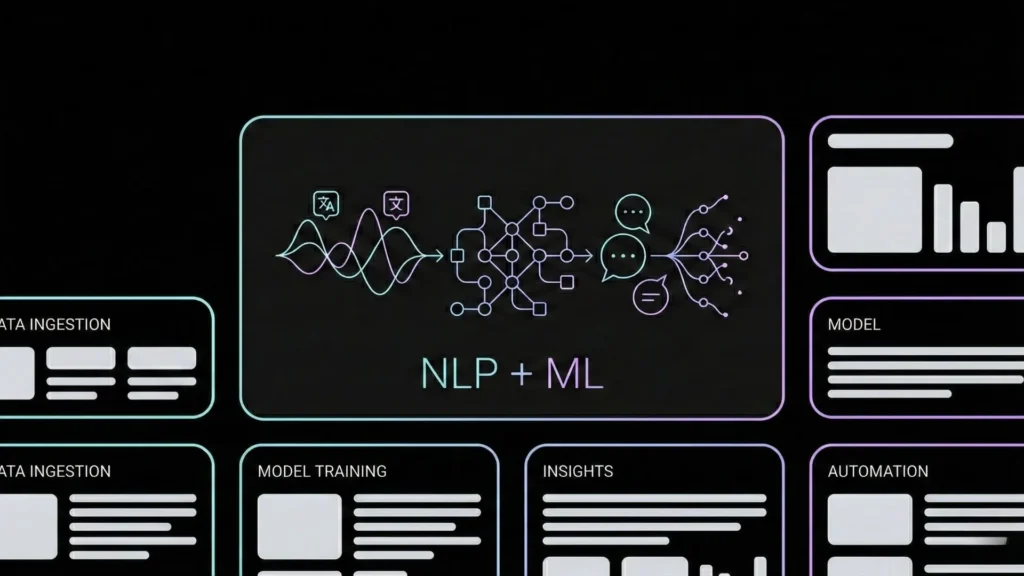
This is where the magic happens. You are moving from a “scripted” experience to an “intelligent” one.
Natural Language Processing (NLP)
NLP is the technology that allows the bot to decipher human language. Keyword-based systems break easily. If a student types “I’m not doing well,” a keyword system looking for “grades” might miss it. Leveraging Natural Language Processing enables the bot to understand the intent behind the words, ensuring that “I’m lost” triggers a help sequence rather than a generic error message.
Machine Learning for Adaptive Feedback
Over time, your system gathers data. Machine learning uses this data to refine the experience. If the system notices that 80% of students drop off after Question 4, it flags Question 4 as “too hard” or “poorly phrased.” This allows for a product that improves itself.
Real-Time Assessment
Instead of waiting for a Friday quiz, the bot assesses in real-time. “Micro-quizzes” embedded in the chat provide instant data. This is vastly superior to delayed grading, where a student might not realize they misunderstood a concept until a week later when they get their paper back.
Iteration: Testing and Feedback
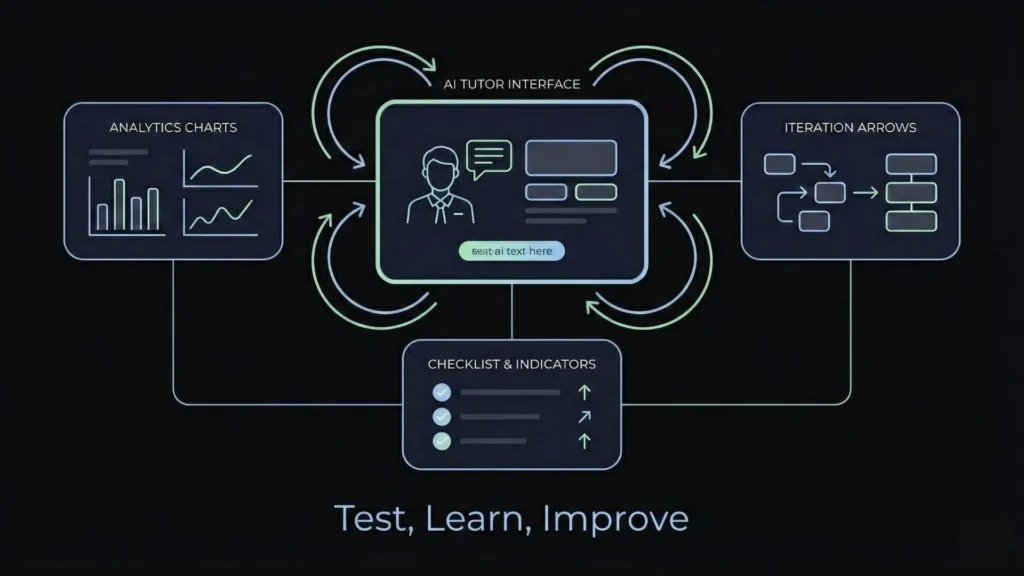
You will not get it right on day one. AI tutors require iteration.
The “Hallucination” Risk
AI models can sometimes confidently state false information (hallucinations). In education, this is dangerous. Your testing phase must include “adversarial testing” trying to trick the bot into giving wrong answers to ensure your guardrails hold up.
User Feedback Loops
Don’t just look at the metrics; look at the transcripts. Where do students seem confused? Where do they get angry? A mix of quantitative analytics (completion rates) and qualitative observation (reading the chat logs) helps you refine the tone and content. Learning from user feedback is the only way to transition from a prototype that works in theory to a product that works in a classroom.
Deployment, Security, and Maintenance
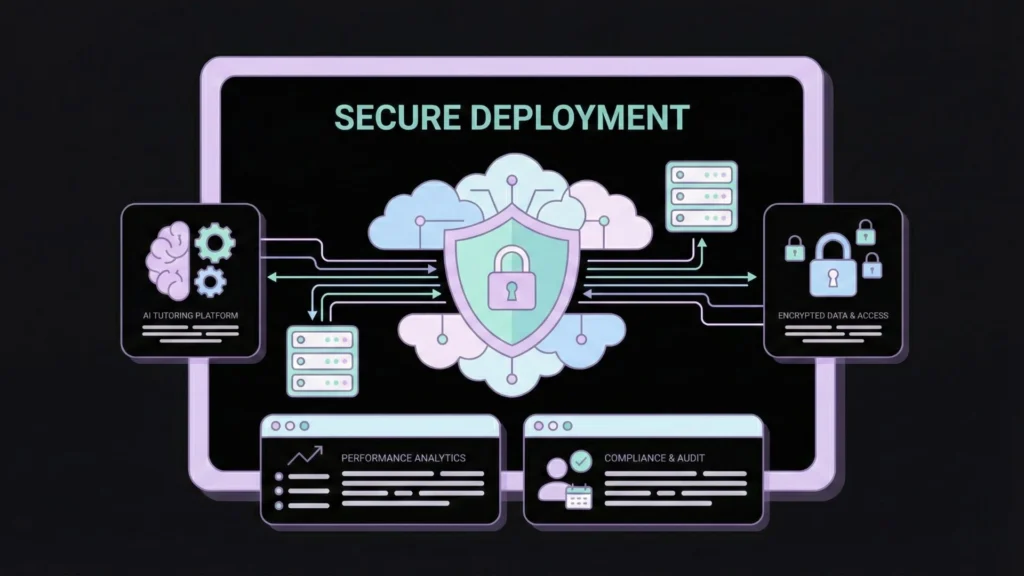
Once built, deployment is the next hurdle.
Data Privacy as a Feature
In the education sector, trust is your currency. You must communicate clearly how data is collected and stored. Features like role-based permissions (so a student can’t see another student’s data, but a teacher can see their class’s data) are essential. Following strict data privacy and compliance protocols is not just a legal requirement but a competitive advantage when selling to schools.
The Content Lifecycle
Curricula change. Science advances. Language evolves. Your AI tutor is a living product. Schedule regular updates to your knowledge base to ensure the information remains relevant. A bot teaching outdated geography or deprecated coding syntax will lose user trust instantly.
The Fast Track: Building with Imagine.bo
We have discussed the complexity of stitching together chat interfaces, backend databases, LMS integrations, and hosting. For many educators and founders, managing this technical “Frankenstein” stack is the biggest bottleneck.
This is where platforms like Imagine.bo change the equation.
Imagine.bo is an AI-driven no-code app builder designed to manage the entire product lifecycle. It isn’t just a drag-and-drop interface; it is an intelligent engine. Instead of hiring a backend engineer, a frontend developer, and a DevOps specialist, you describe what you want to build in plain English.
The system applies deep AI reasoning to define your features, user flows, and architecture. It then generates a secure, scalable application built to real engineering standards. It handles the frontend, the backend, the database, and the deployment in one environment.
For educational products, this means faster experimentation, cleaner infrastructure, and fewer technical trade-offs. Start building your AI tutor to focus on learning outcomes while the platform handles execution.
The Future of AI-Powered Tutoring
We are only at the beginning of this curve. The future of AI tutoring is moving rapidly toward:
- Multimodal Interaction: Tutors that can see and hear. Imagine a student holding a math worksheet up to their webcam, and the AI recognizing the problem and walking them through it vocally.
- Emotional Awareness: Tutors that can detect stress in a student’s voice and suggest a mindfulness break.
- Hyper-Transparency: A move toward “Explainable AI,” where the bot can explain exactly why it recommended a certain learning path to a teacher or parent.
The most successful tools of the coming decade will be those that balance high-level automation with transparency and human oversight.
AI-powered tutoring is no longer a question of possibility; the technology is here. It is no longer a question of resources; no-code platforms have lowered the cost. It is now simply a question of execution.
The tools are in your hands. Launch your AI app now.
Launch Your App Today
Ready to launch? Skip the tech stress. Describe, Build, Launch in three simple steps.
Build