81% of travelers say they prefer to book trips online, including flights, rather than through offline channels (Statista, 2024). That number says everything. If a travel founder or airline operator can’t offer a polished digital booking experience, they’re losing demand before the first route is even filled. That’s why SkyPort, a new airline management platform built on imagine.bo, stands out: it turns a complex operational idea into a live, professional web experience without the founder writing code. And if you’re studying where prompt-built products are headed, this piece on travel and tourism app launches adds useful context.
What Did SkyPort Need?
72% of travel and hospitality leaders say improving the digital customer experience is a top business priority (Deloitte, 2024). For an airline venture, the need goes beyond a pretty homepage. It has to support discovery, booking, account access, and operational control in one place. That’s the hard part, isn’t it?
Launch Your App Today
Ready to launch? Skip the tech stress. Describe, Build, Launch in three simple steps.
BuildSkyPort began with a clear business problem: travelers want a fast way to search and book flights, while airline teams need a central place to manage routes, passengers, and schedules. Most early-stage founders would split that into multiple tools, multiple vendors, and months of development. That usually means higher costs, slower iteration, and a product that feels stitched together.
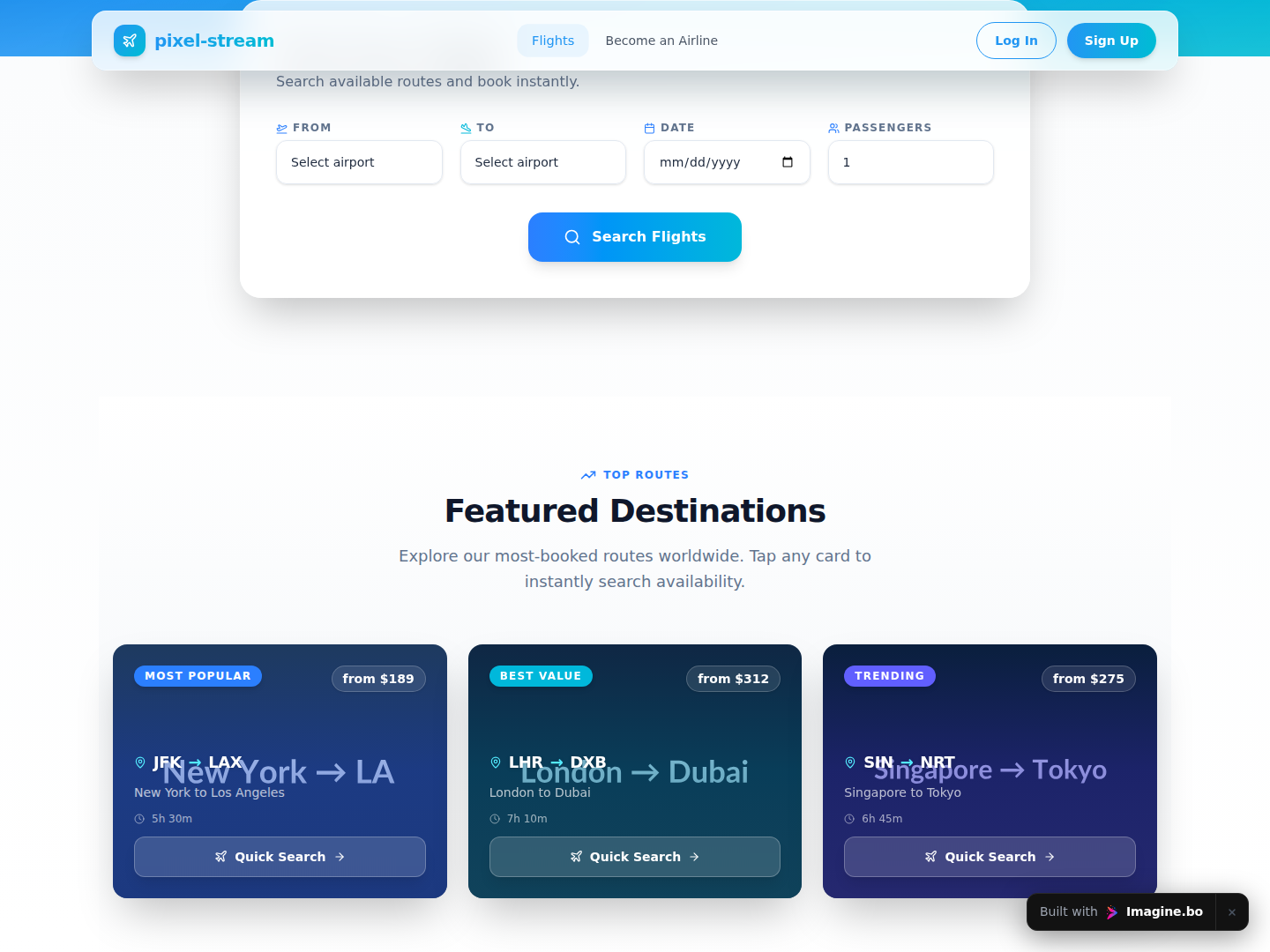
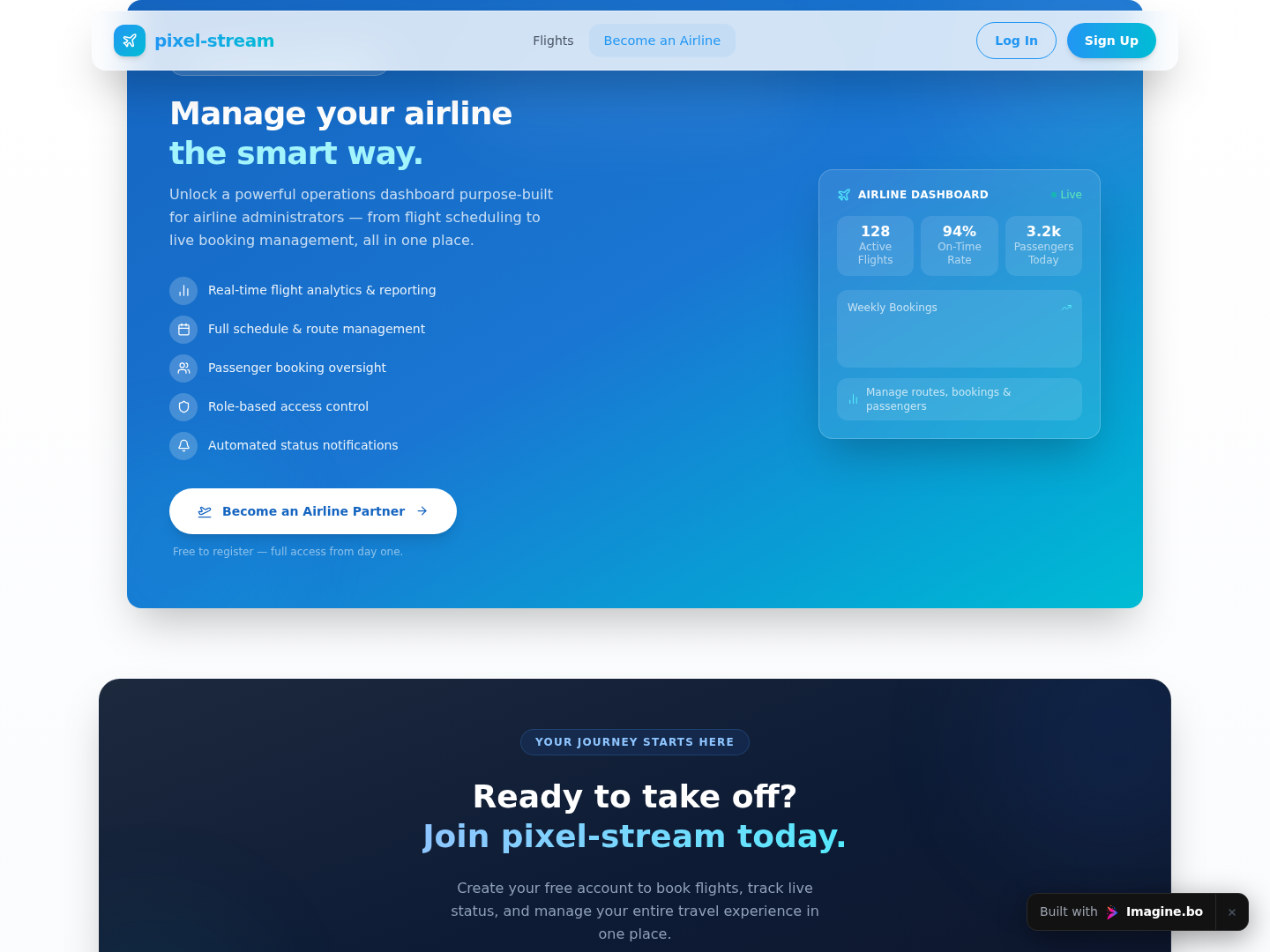
What SkyPort needed wasn’t a brochure site. It needed a business engine. The founder had to speak to two audiences at once: passengers making booking decisions and airline operators managing real inventory. imagine.bo made that possible by translating a broad product idea into a coherent, production-grade website experience built around trust, speed, and role-based utility.
According to McKinsey’s travel insights in 2024, digital leaders in travel win by reducing friction across the booking journey. SkyPort reflects that principle directly: one unified experience for search, booking visibility, and operational oversight helps reduce user drop-off and internal inefficiency.
That matters because a founder pitching airlines can’t show a mockup anymore. They need something live, branded, and usable. SkyPort gave them exactly that, which is why the project reads less like an experiment and more like a serious travel product from day one.
Traditional development would’ve turned this into a long scoping process. Instead, the founder could validate the concept, present it to stakeholders, and move toward adoption faster. For anyone building multi-role products, the wider launch without developers guide shows why this speed advantage is becoming standard.
How Was SkyPort Built with imagine.bo?
76% of organizations say AI lets them move from idea to execution faster than previous workflows allowed (Microsoft, 2024). That’s the direct answer: SkyPort was built by describing the product clearly, then using imagine.bo to turn that prompt into a complete airline booking and management experience.
The founder didn’t need to assemble a designer, front-end developer, back-end engineer, and DevOps team before seeing progress. They started with the core idea: a platform where travelers can search and book flights, and airline companies can sign in to manage their operations. imagine.bo then shaped that intent into a polished web product with clear user flows, modern visuals, and business-ready structure.
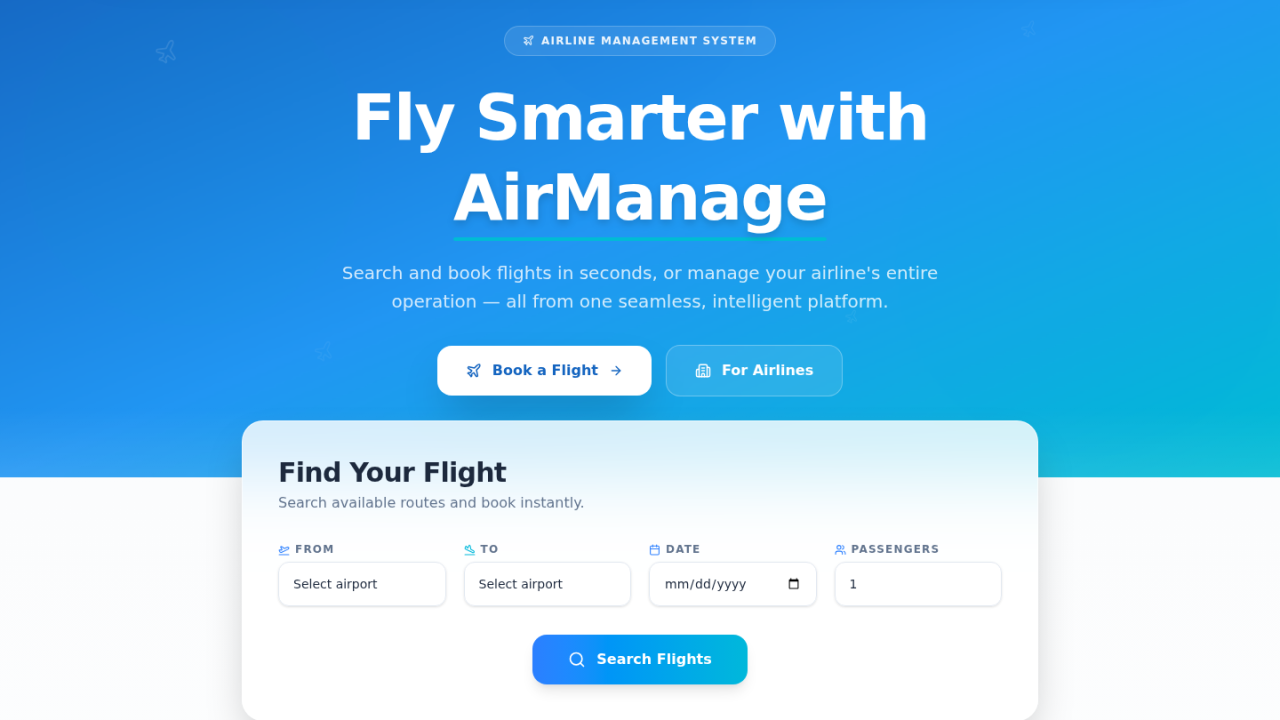
What does that look like in practice? First, the public-facing experience was created so travelers could immediately understand the value and search for flights. Next, operator-focused functionality was presented in a way that made airline onboarding feel like a natural extension of the same platform. After that, account-based actions and management views were organized so the whole experience felt unified instead of fragmented. Want to start building on imagine.bo? This is exactly the sort of workflow it handles well.
That workflow is where imagine.bo separates itself from basic AI page makers. It isn’t just producing surface-level design. It’s helping founders express business logic through vibe coding, so the site reflects how the company actually works. Search, onboarding, account access, and management functions all support one another. That’s a big shift from “website first, operations later.”
According to GitHub’s 2024 developer research, teams using AI assistance report meaningful gains in speed and productivity. For non-technical founders, the practical outcome is even bigger: they can go from concept to a presentable, usable platform in a fraction of the time traditional development demands.
What Makes This Travel Website Stand Out?
53% of mobile users leave a site if it takes longer than three seconds to load a page experience they trust (Google, cited widely in web performance benchmarks). The direct answer is that SkyPort stands out because it combines clarity, utility, and business depth without overwhelming the visitor.
First, it gives travelers immediate orientation. Visitors don’t have to guess what the platform does. The path from discovery to booking intent is obvious. That’s huge in travel, where hesitation kills conversion. Sound familiar?
Second, it speaks to airline operators as real customers, not an afterthought. Most travel startups either build for passengers or for back-office teams. SkyPort does both. That creates a stronger business case, because the platform isn’t only chasing bookings; it’s also presenting itself as operational software.
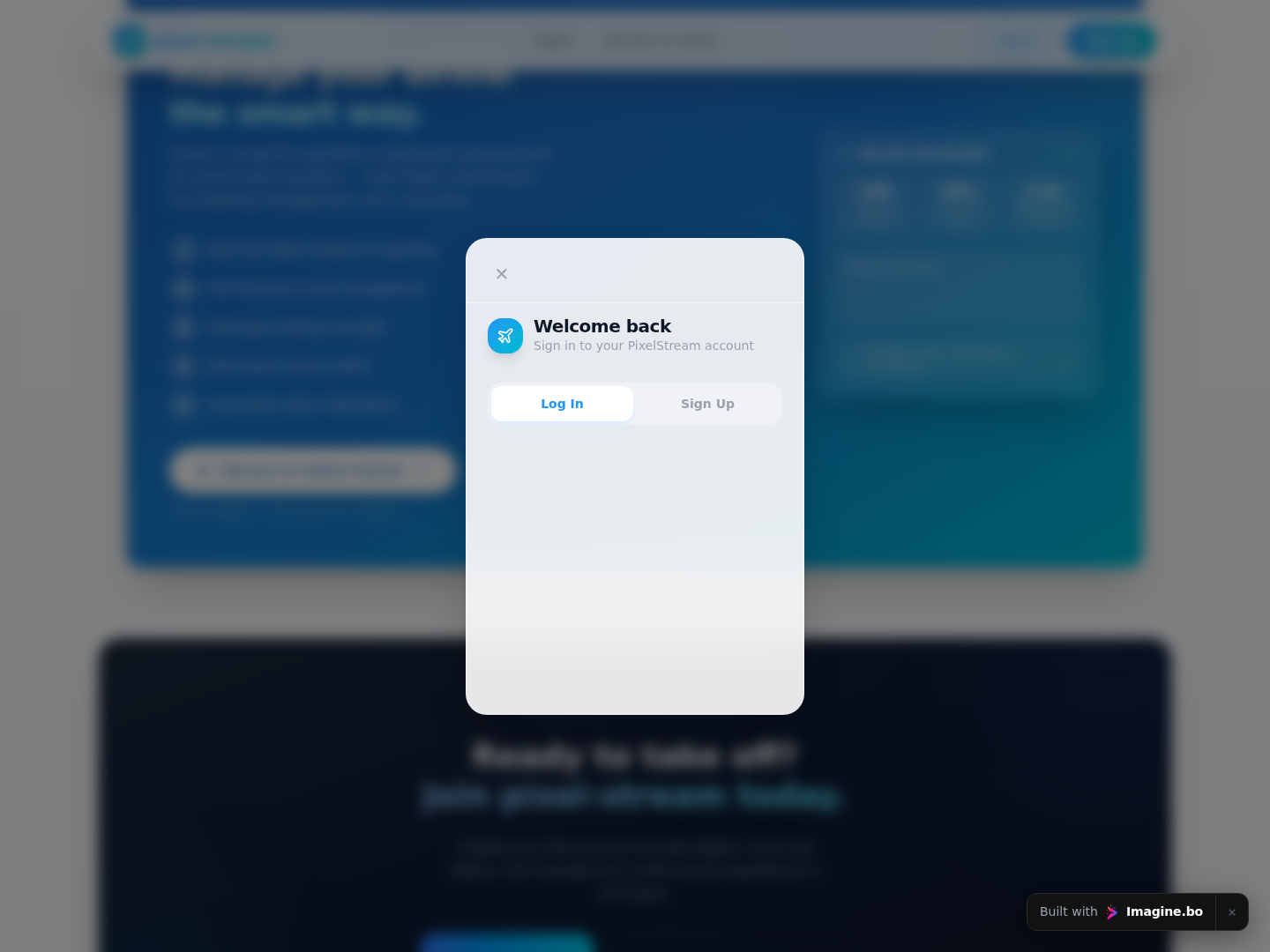
Third, the visual language feels premium and current. That isn’t cosmetic. In travel, presentation shapes trust. If the site feels outdated, visitors wonder whether the booking process is reliable too.
According to Adobe’s digital trends research in 2024, customer experience leaders outperform because they align design quality with practical utility. SkyPort does exactly that: it pairs attractive travel merchandising with clear management value for operators, which strengthens both acquisition and retention.
For founders thinking beyond launch day, imagine.bo’s content ecosystem also helps frame broader SEO decisions. A useful next step is this SEO-friendly website design guide, especially if organic search will be part of your growth plan.
How imagine.bo Makes This Possible
75% of consumers judge a company’s credibility based on website design (Stanford Web Credibility Research, widely cited). The answer is simple: imagine.bo gives founders a faster path to credible, functional web products that don’t look or feel temporary.
SkyPort worked because imagine.bo supports more than visual page generation. It helps founders turn a prompt into an experience that matches real business needs: public discovery, user access, workflow logic, and polished presentation. For a travel product, that’s the difference between a nice concept and a platform that can actually be shown to partners or early customers.
It also reduces the usual startup drag. Instead of spending weeks translating requirements between team members, the founder can iterate directly in the product-building flow. That shortens feedback loops. It also helps preserve the original business idea, rather than losing it in handoff after handoff.
And yes, budget pressure matters. If you’re comparing tools before committing, you can see imagine.bo’s pricing and weigh it against the cost of custom development.
According to the U.S. Small Business Administration, limited technical resources are a consistent barrier for early-stage companies. Platforms like imagine.bo remove much of that barrier by giving founders a way to build credible software without first building a full technical department.
What This Means for Travel Founders in 2026
By 2026, AI-enabled product creation is expected to be a standard operating model across many startup categories, not a novelty (Gartner, 2024 forward-looking forecasts). The answer for travel founders is clear: speed, adaptability, and ownership of customer experience will matter more than ever.
Travel is a category where timing matters. Routes change. customer expectations change. Partnerships change. If every product adjustment requires a long dev cycle, smaller operators stay stuck while more agile players test faster. But what if a founder could reshape the experience as the market changes? That’s exactly why vibe coding is becoming so attractive.
SkyPort is a strong example of the 2026 pattern already emerging: founders don’t just want websites. They want operationally meaningful products that can sell, onboard, inform, and manage from one branded experience. imagine.bo fits that need because it supports business creation, not just page assembly.
For airline startups, regional carriers, or travel tech founders, this changes the economics of launching. You can validate demand before hiring a full engineering team. You can pitch with a live product instead of static slides. You can test new audiences faster. And you can study adjacent AI-first build strategies in resources like build an app by describing it to sharpen your own approach.
Frequently Asked Questions
How long does it take to build an airline management website with imagine.bo?
It can take minutes to generate the first working version and far less time than a traditional custom build. According to Microsoft (2024), 76% of organizations using AI report faster execution. For a practical example of prompt-based speed, see idea-to-live app speed.
Do I need coding skills to use imagine.bo?
No, you don’t need coding skills to start. That’s the point. The platform is built for founders who can describe what they want clearly. Gartner’s 2024 projections continue to show growth in citizen development, and you can build without coding on imagine.bo as a non-technical user.
Is a vibe coded website good for SEO?
Yes, if it’s structured around clear content, useful pages, and search intent. Google’s long-standing guidance rewards helpful, user-focused content. A vibe coded site can absolutely compete when it launches with strong architecture and messaging, especially when paired with advice from an AI-built SEO strategy guide.
Can imagine.bo build websites for the travel industry?
Yes. SkyPort is a strong travel example because it combines passenger booking intent with airline management workflows in one product. Statista (2024) reports that 81% of travelers prefer booking online, which makes travel a strong fit for prompt-built digital products that need to launch quickly and look trustworthy.
What makes imagine.bo different from other AI website builders?
Many AI builders focus on simple pages. imagine.bo is stronger when a founder needs a real business website with workflow depth, role-aware experiences, and production-ready polish. Stanford’s web credibility research shows 75% of users judge trust from design, and imagine.bo helps turn prompts into products that feel ready for customers, not just demos.
SkyPort proves three things:
- The best vibe coding tool isn’t just about speed; it’s about turning a business model into a usable website.
- Travel founders need more than a landing page; they need booking logic, trust signals, and operator value in one experience.
- imagine.bo helps non-technical builders move earlier, test sooner, and present a stronger product from the start.
If you’re building a travel platform, airline portal, or any multi-role web product, now’s a smart time to launch your build with imagine.bo.
Launch Your App Today
Ready to launch? Skip the tech stress. Describe, Build, Launch in three simple steps.
Build