77% of consumers check a business’s website before visiting in person (GE Capital Retail Bank, 2023). For a CrossFit gym, that means your website isn’t just a brochure. It’s your first coach, first sales rep, and first proof that the community inside the box is worth showing up for. That’s exactly why ForgeFit needed more than a generic fitness template: it needed a bold digital presence that matched the intensity of the training experience and turned curiosity into free-trial signups. Built with https://app.imagine.bo/, this project shows why vibe coding is becoming the fastest path from idea to live business asset. If you’re comparing modern prompt-based builders, this guide pairs well with best vibe coding tool app landing page.
What Did ForgeFit Need?
68% of fitness customers say a studio’s online presence influences their decision to try it (Mindbody, 2024). ForgeFit needed a site that instantly felt intense, trustworthy, and local. Not polished in a sterile way. Strong. Gritty. Real.
Launch Your App Today
Ready to launch? Skip the tech stress. Describe, Build, Launch in three simple steps.
BuildThe founder had a clear vision: a CrossFit brand with raw industrial energy, visible class information, proof of coaching credibility, and a friction-light path to claim a free week. Sound familiar? That’s the challenge many gym owners face. They know what their community feels like in person, but translating that feeling into a website usually means long design cycles, developer handoffs, and compromises that water down the brand.
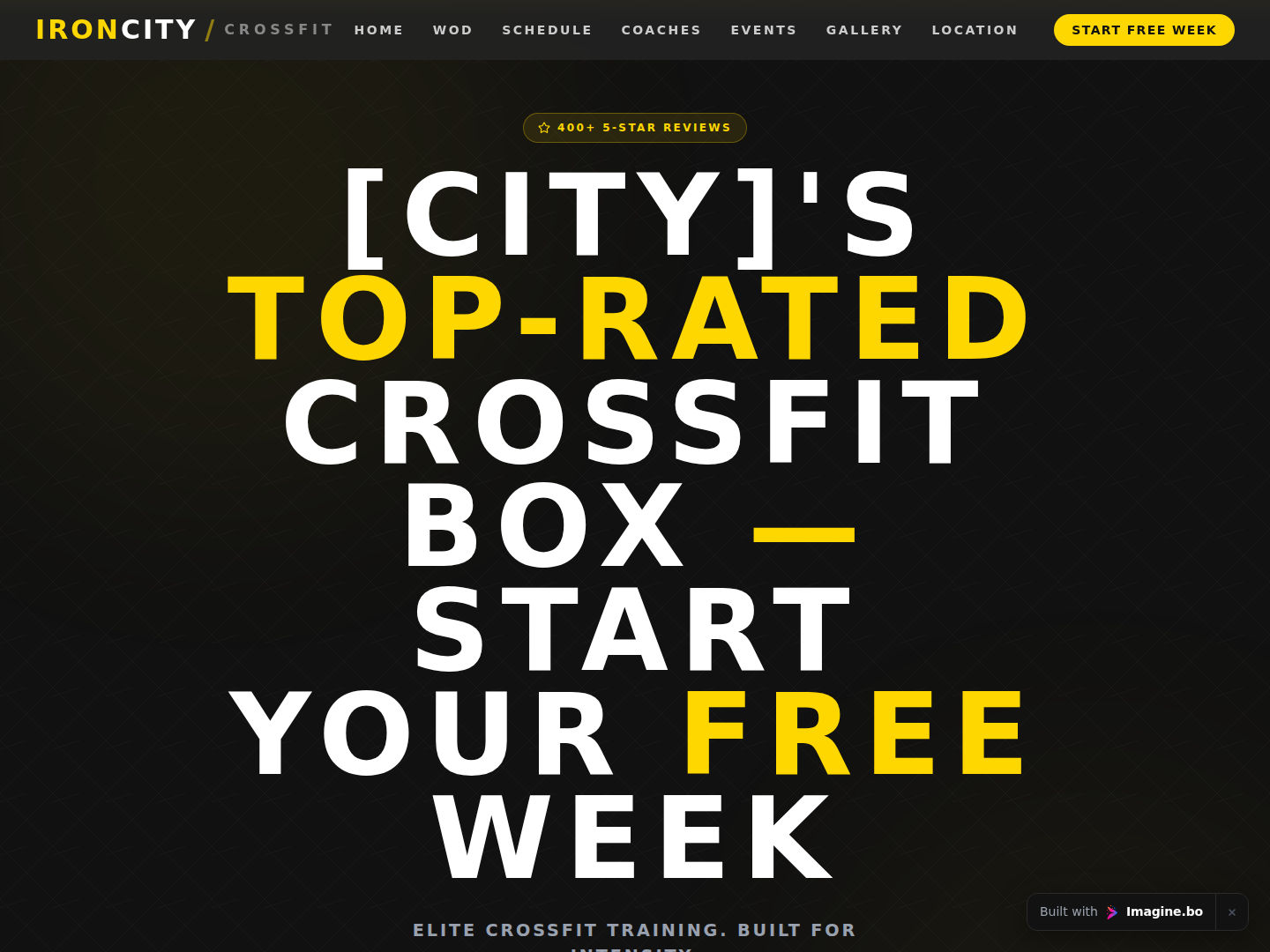
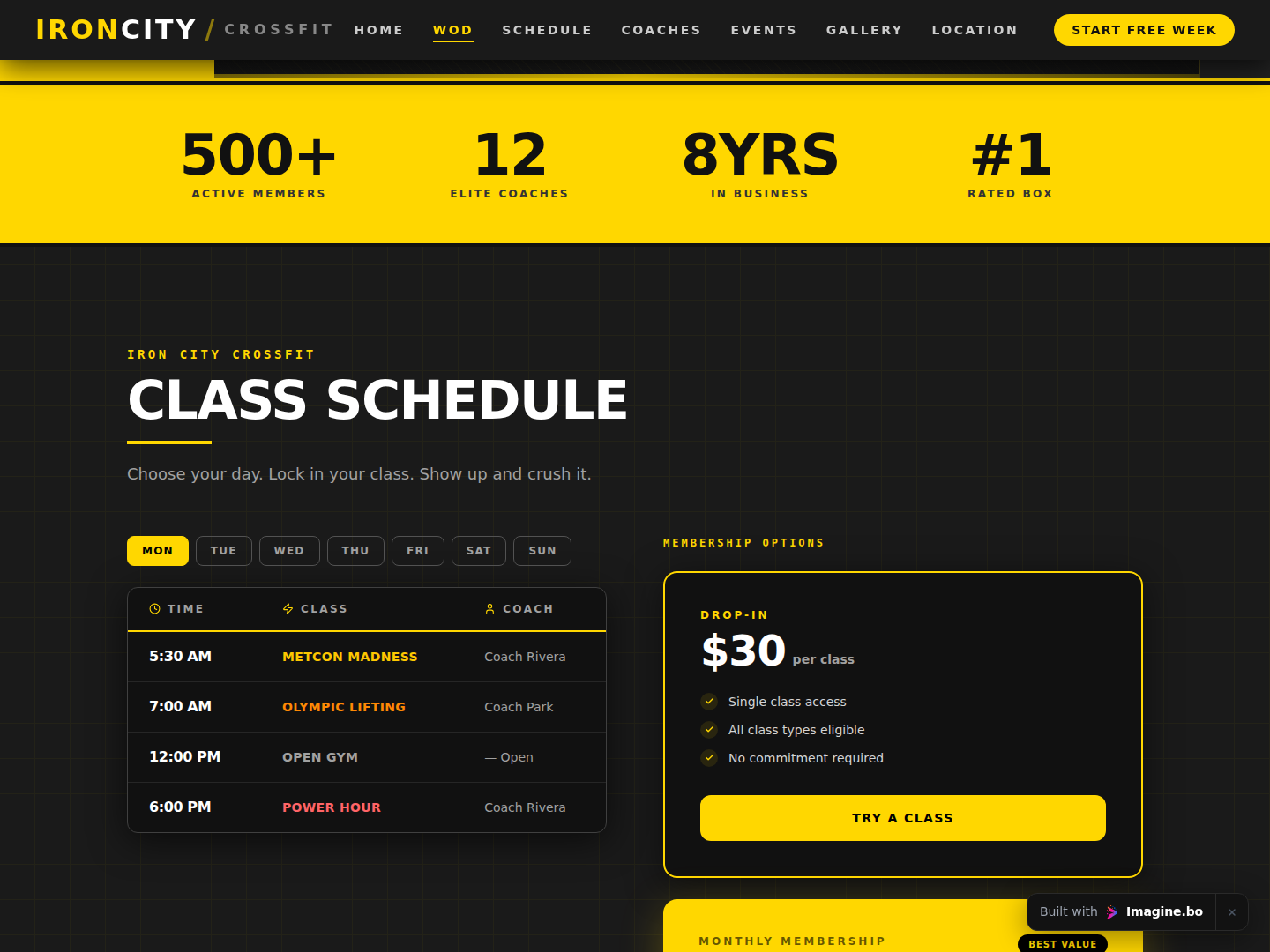
What ForgeFit really needed was message clarity. Visitors had to understand three things within seconds: what kind of training was offered, whether beginners were welcome, and how to start without risk. A one-page experience made sense because local gym leads rarely want to hunt around. They want the vibe, the schedule, the coaches, and the next step. Then they want to decide.
According to Statista, the global health and fitness club market continues to expand, with revenue growth tied closely to customer experience and brand trust (Statista, 2024). For local gyms, a conversion-focused website isn’t optional anymore; it’s a front-door asset that directly shapes trial signups and retention potential.
ForgeFit’s success started with that alignment: the site didn’t try to be everything. It focused on converting local searchers into first-time visitors by showing workouts, coaches, event energy, and an easy free-trial offer. That clarity is what made the build so effective. For more examples of prompt-led launch strategy, see make a website with one prompt.
How Was ForgeFit Built with imagine.bo?
75% of SMBs say they want technology that saves time and reduces dependence on technical specialists (Salesforce, 2024). ForgeFit was built by turning a strong creative prompt into a finished website concept, then refining the details until the brand felt unmistakable. The speed mattered, but the control mattered too.
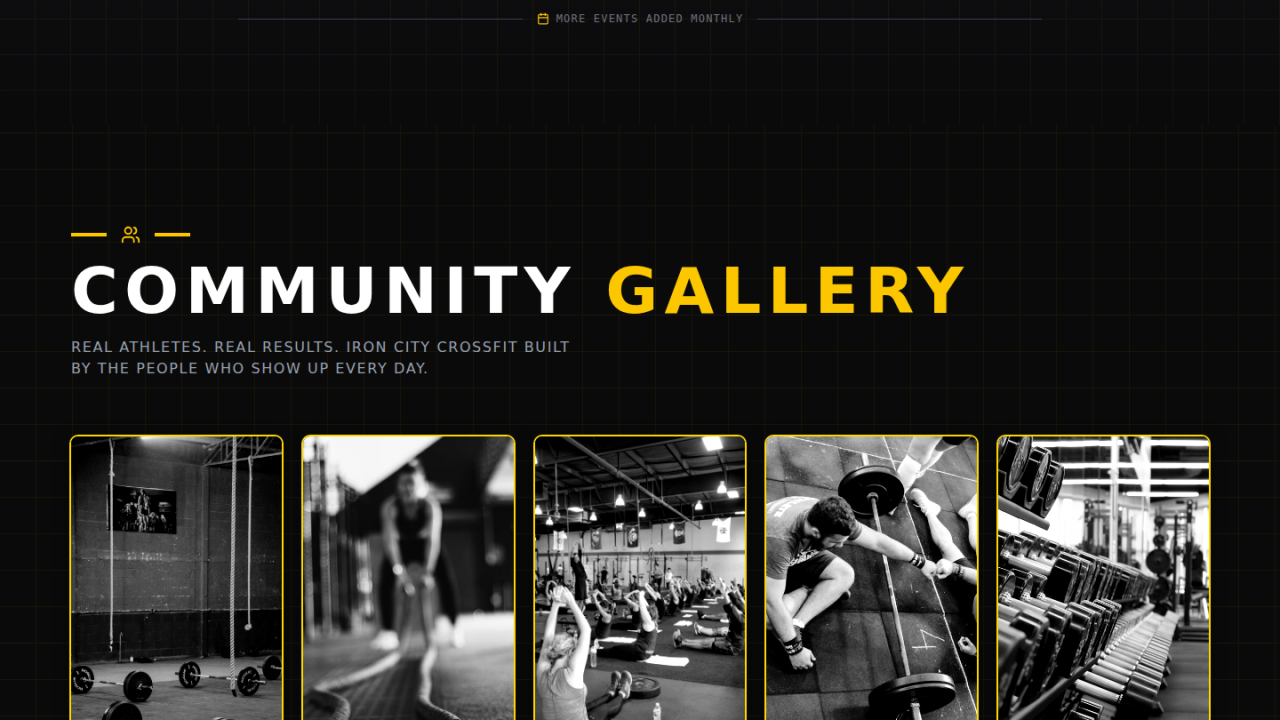
First came the visual direction: concrete textures, charcoal tones, safety-yellow accents, and commanding typography. Then came the conversion structure: a strong opening promise, visible daily programming, social proof through coaches and community content, and a lead form timed for action instead of hesitation. But does it actually work? Yes—because the site’s story follows the buyer’s thought process instead of the business owner’s org chart.
With imagine.bo, the founder could move from idea to working website without writing code, while still shaping the experience around brand personality and business goals. That’s why many non-technical operators now start building on imagine.bo instead of waiting weeks for a traditional web project to get off the ground.
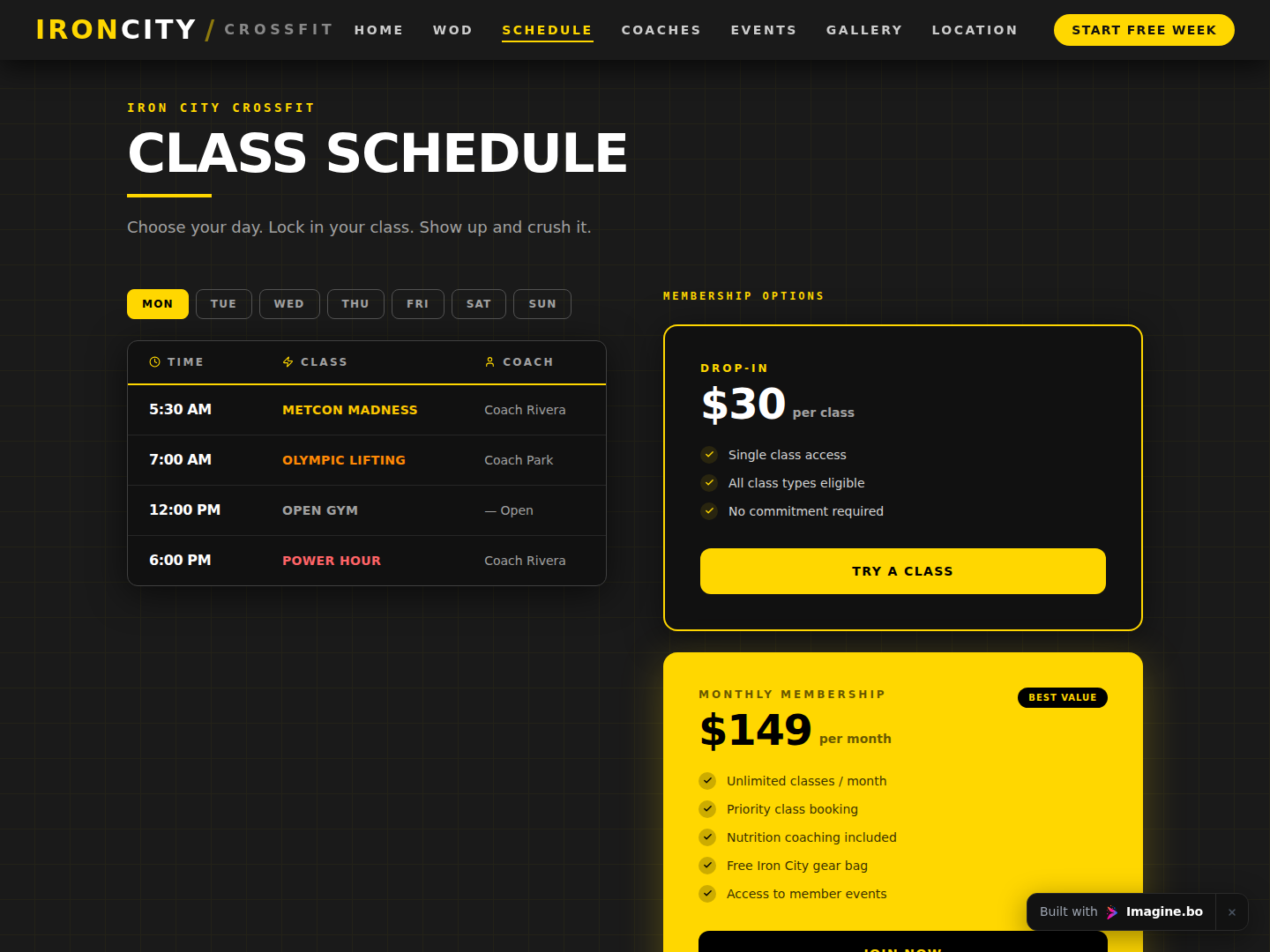
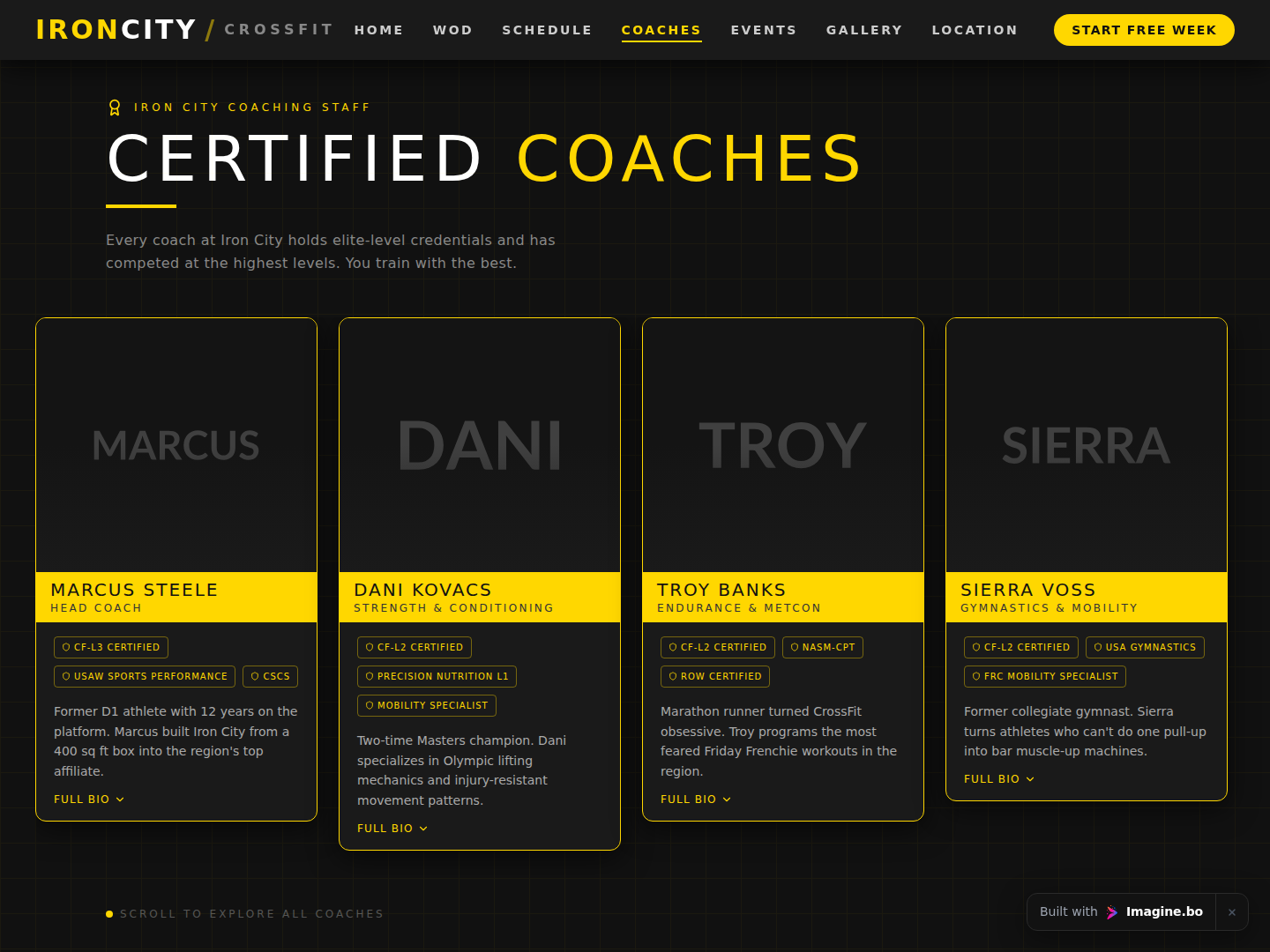
The build flow was smart and practical. The founder described the desired look, key trust signals, and the exact actions visitors should take. imagine.bo translated that into a production-ready landing page concept with the right sections, strong hierarchy, and persuasive pacing. Schedule visibility reduced uncertainty. Coach profiles built legitimacy. The free-trial pathway removed resistance. Each part supported the same business goal: get someone from interest to first visit fast.
According to HubSpot’s Web Strategy research, pages with clear calls to action and reduced friction outperform cluttered pages in lead generation because users encounter fewer decision barriers (HubSpot, 2024). For gym websites, that means fewer distractions and more momentum toward booking a trial.
What Makes This Gym Website Stand Out?
94% of first impressions are tied to design (ResearchGate, 2020). ForgeFit stands out because it doesn’t look like a generic health club website. It looks like the real training environment customers are about to walk into, and that visual honesty matters.
First, the brand aesthetic matches the audience. The industrial styling tells serious athletes they’ll feel at home, while the layout remains clear enough for beginners who need confidence before they commit.
Second, the site answers objections before they become bounce reasons. Daily programming shows the gym is active. Schedule and pricing information reduce friction. Coach credibility addresses trust. Community event content signals that this isn’t just a place to work out; it’s a place to belong. Isn’t that what local fitness brands need most?
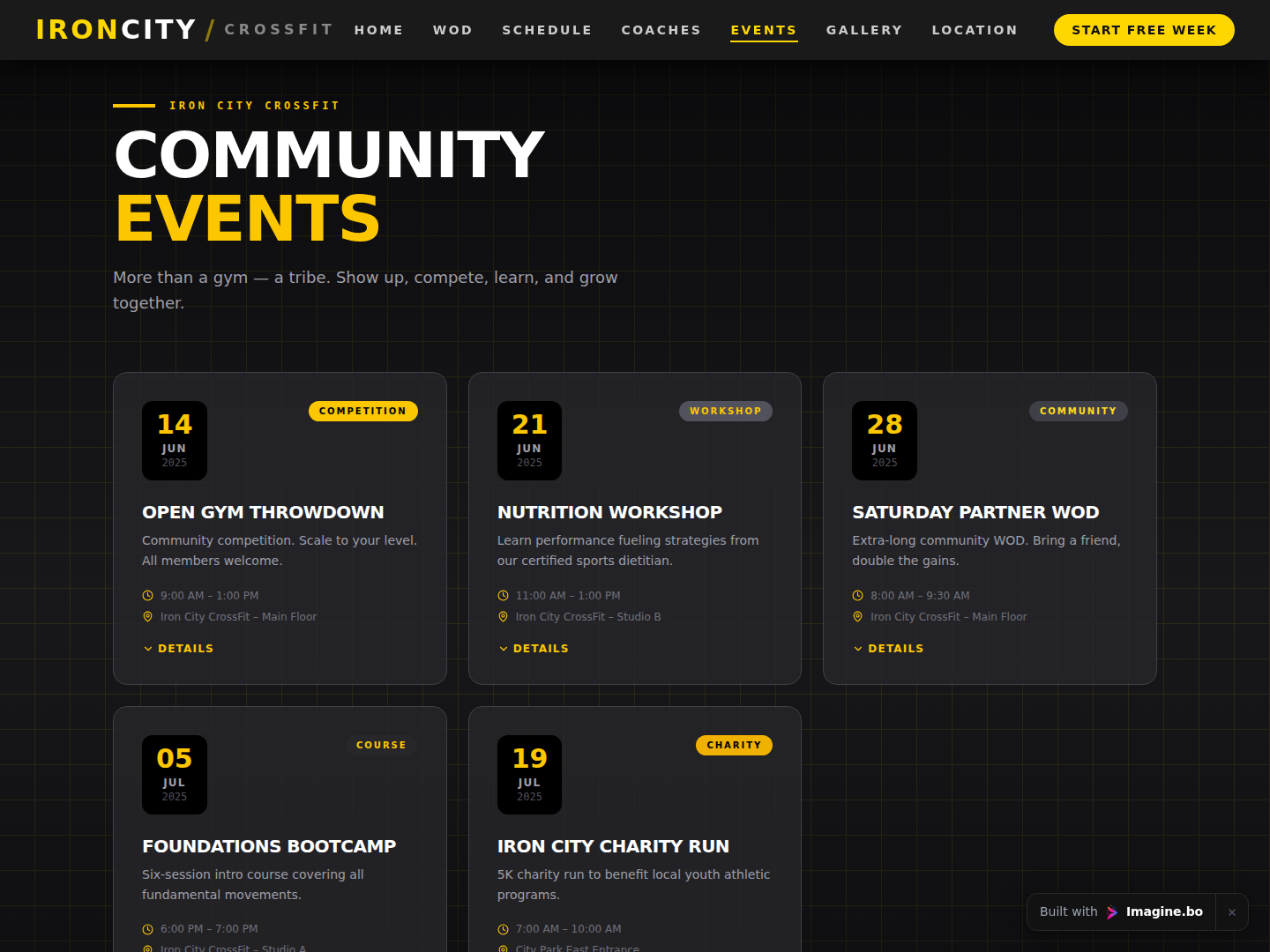
Third, the experience is built for action. A strong one-page flow keeps users moving. They don’t need to interpret complex navigation or decode vague copy. They can feel the energy, verify the offer, and act.
According to Google consumer behavior research, people prefer fast access to the information needed to make local decisions, especially on mobile devices (Google, 2024). A strong gym landing page wins by compressing discovery, trust, and conversion into one focused experience.
That principle applies well beyond fitness, which is why imagine.bo’s broader content on SEO-friendly website design guide is so relevant to founders building sites that need both rankings and results.
How imagine.bo Makes This Possible
61% of small businesses say AI helps them work more efficiently (US Chamber of Commerce, 2024). imagine.bo makes this kind of website possible by giving founders a prompt-driven path to a business-ready result: strong design direction, conversion thinking, and the ability to create without a traditional development bottleneck.
The platform’s advantage isn’t just speed. It’s the way vibe coding turns intent into structure. A founder can describe the feeling, audience, offer, and desired user journey, and imagine.bo helps shape those inputs into a coherent website that looks purposeful rather than patched together.
That’s a big shift for 2026. More local businesses don’t need a massive web stack first. They need a high-confidence digital asset that gets live quickly, validates positioning, and supports lead flow. If you’re weighing budgets before launch, you can see imagine.bo’s pricing and compare that path against the cost of a slower custom build.
According to Gartner’s projections on AI-enabled work, businesses that integrate AI into execution workflows gain speed advantages that affect go-to-market timing, not just internal productivity (Gartner, 2024). For local service brands, launching earlier often means collecting leads earlier, testing offers earlier, and improving earlier.
ForgeFit is a clean example. The founder didn’t need to manage design files, front-end handoffs, and development iterations across multiple vendors. They needed the best vibe coding tool to convert a sharp gym concept into a live destination that looked premium and felt true to the brand.
What This Means for Fitness Founders in 2026
82% of consumers say convenience influences which businesses they choose (Forrester, 2024). For fitness founders, convenience starts before the first class. It starts the moment someone searches, lands on your site, and decides whether you’re worth the visit.
So what does that mean for your business? It means the best gym websites in 2026 won’t be the ones with the most pages. They’ll be the ones with the clearest promise, strongest identity, and shortest distance between interest and action.
Vibe coding changes the economics of getting there. Instead of waiting for perfect conditions, founders can launch, test, adjust messaging, sharpen offers, and improve lead capture much faster. That’s especially valuable in local fitness, where seasonality, competition, and community momentum can shift quickly.
We’re also seeing a wider pattern: non-technical founders now expect software creation to feel conversational. They want to describe what they need and get something real back. That’s why imagine.bo fits this moment so well. The platform aligns with the broader rise of AI-assisted creation covered in fitness professionals are launching apps.
For gym owners, boutique studio operators, and personal training brands, that means one thing: your website no longer has to lag behind your vision. If your brand already has energy in the real world, your digital presence can finally keep up.
Frequently Asked Questions
How long does it take to build a gym website with imagine.bo?
AI-assisted website workflows can cut launch timelines dramatically, and 64% of small businesses say speed is a top reason they adopt AI tools (Salesforce, 2024). With imagine.bo, a gym owner can go from concept to working site fast because the process starts with prompts, not code. For examples, review ideas to live apps in seconds.
Do I need coding skills to use imagine.bo?
No. That’s the point. 73% of no-code users say speed and accessibility are key reasons they choose these platforms (Zapier, 2024). imagine.bo is designed for founders who can describe what they want clearly, then refine the result without writing code. You can begin directly on the imagine.bo app builder and shape the site around your brand.
Is a vibe coded website good for SEO?
Yes, if the site is structured around search intent, clarity, and conversion. Google continues to reward helpful content and strong user experience signals (Google Search Central, 2024). A vibe coded site built with purpose can rank well, especially when paired with principles like those in the SEO-friendly website design guide.
Can imagine.bo build websites for fitness businesses?
Yes. Fitness businesses need trust, scheduling clarity, community proof, and strong lead capture, and imagine.bo supports prompt-driven builds tailored to those goals. Since 68% of fitness customers are influenced by online presence when choosing a studio (Mindbody, 2024), a platform that quickly turns brand direction into a polished website can be a strong fit for gyms, coaches, and studios.
What makes imagine.bo different from other AI website builders?
The difference is that imagine.bo centers the founder’s intent, brand feel, and business goal instead of forcing a generic template path. According to McKinsey, companies using AI well gain measurable speed and productivity advantages (McKinsey, 2024). imagine.bo applies that advantage to website creation, helping non-technical founders build sites that feel specific, persuasive, and launch-ready.
ForgeFit proves three things:
- A great gym website should feel like the gym itself, not a recycled template.
- The best vibe coding tool shortens the path from idea to revenue by turning intent into a working site fast.
- Clear structure converts because visitors can understand the offer, trust the brand, and claim a trial without friction.
If you’re building a fitness brand and want a site that looks strong, ranks well, and drives action, it’s worth trying build your site with imagine.bo.
Launch Your App Today
Ready to launch? Skip the tech stress. Describe, Build, Launch in three simple steps.
Build