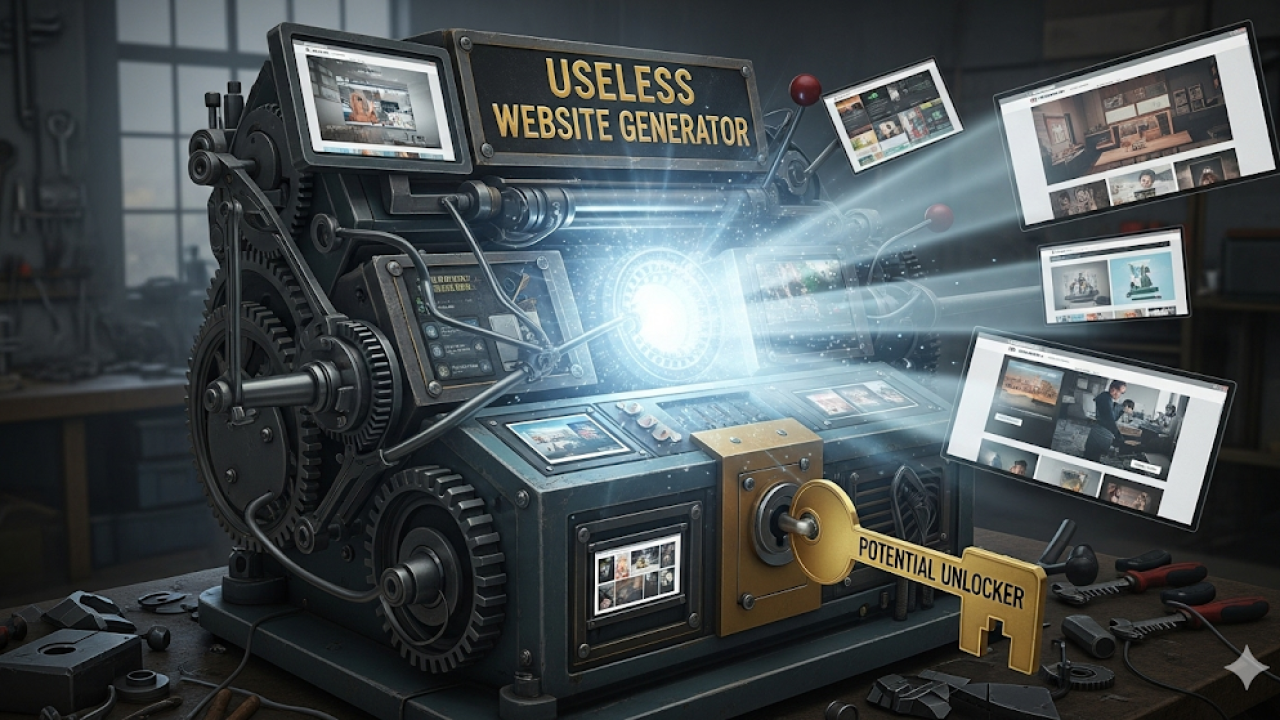
The internet has a secret economy built on deliberate purposelessness. Novelty websites with zero practical function consistently pull in hundreds of thousands of visitors every month. According to Semrush, theuselessweb.com attracted 776,290 visits in December 2025, with an average session duration of over six minutes. That is longer than most people spend reading an actual article. For anyone building in the no-code or AI-powered web space, that number deserves attention. This guide covers what useless website generators are, which ones are worth bookmarking, and why smart indie builders are shipping their own versions in 2025. For broader context on how random web tools operate, the guide to random website generators is a useful companion read.
TL;DR: Useless website generators are tools that send you to random, pointless, or entertaining web destinations with one click. The original, theuselessweb.com, draws nearly 800,000 monthly visits (Semrush, 2025). Far from being purely wasteful, these sites are studied for virality lessons, used as developer creative warm-ups, and are now shippable in hours using AI builders like imagine.bo.
What Is a Useless Website Generator?
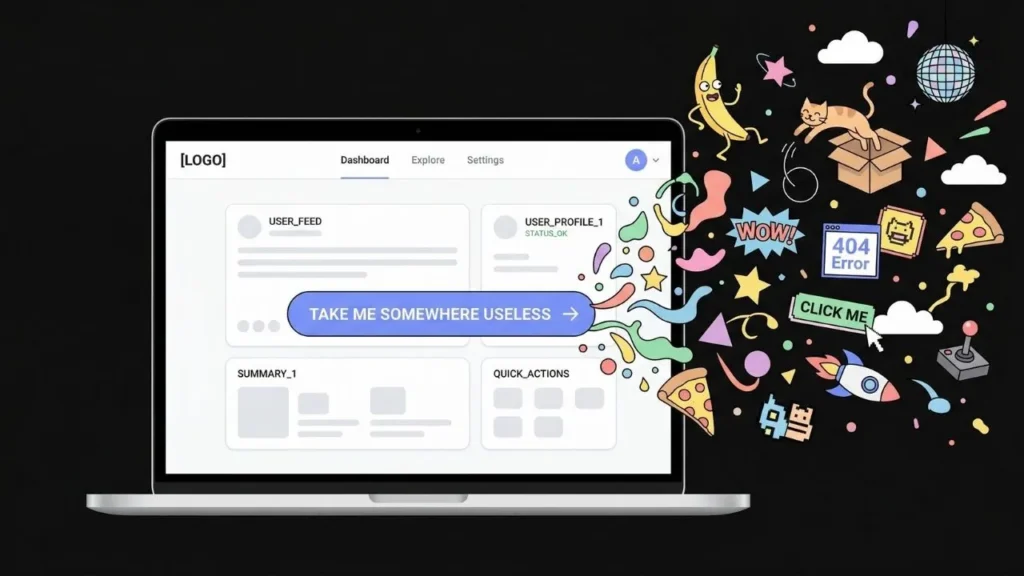
A useless website generator sends you somewhere random, strange, or entertainingly pointless with a single click. The destination serves no practical purpose. According to Similarweb, organic search drives over 50% of desktop traffic to theuselessweb.com, which means people are actively seeking this experience rather than stumbling into it. The deliberate absurdity is the product itself, not a flaw in the product’s positioning.
Launch Your App Today
Ready to launch? Skip the tech stress. Describe, Build, Launch in three simple steps.
BuildThe format strips away every element that creates friction or demands commitment. One button, one redirect, infinite novelty. That simplicity is a deliberate product decision, not an accident of low effort. You can see the same principle in action with single-purpose web projects covered in the breakdown of making a website with one prompt.
The category splits into two distinct types. The first is the “random redirect” generator, which sends you to a curated list of bizarre destinations on the broader web. The second is the “single-experience novelty site,” which is itself the useless thing: a page that does one odd thing, over and over, forever. Both types share the same DNA. Instant gratification. Zero learning curve. High social shareability.
Useless website generators are single-click tools that redirect users to deliberately pointless web destinations. According to Similarweb, over 50% of theuselessweb.com’s desktop traffic originates from organic search, confirming that audiences actively seek these experiences rather than discovering them passively through social shares alone.
The 8 Best Useless Website Generators Worth Clicking Today
The useless web ecosystem has more than a dozen active curators in 2025. Of the approximately 1.12 billion websites on the internet, only about 17% remain actively maintained, according to Userguiding (2025). These eight generators cut through the abandoned majority with consistent curation quality and sustained audience engagement.
What makes any of these sites memorable when most web content is forgotten in seconds? The answer is always the same: a single mechanic so perfectly executed that it requires no explanation and no second visit to understand.
The Useless Web (theuselessweb.com): The original benchmark. One button labeled “please” sends you to curated pointless destinations. Its December 2025 average session of over six minutes outperforms most editorial content sites by a substantial margin, according to Semrush.
Bored Button (boredbutton.com): A close competitor that skews toward interactive mini-games and quizzes rather than pure absurdity. Better choice for someone who wants a 10-minute break with slightly more cognitive engagement than looping animation.
Neal.fun: A collection of single-purpose interactive experiments by developer Neal Agarwal. The Perfect Circle game (draw a circle, get a percentage score) and The Size of Space tool are consistent standouts. Each goes viral on a regular cycle. This is what “useless done well” looks like at the craft level.
Pointer Pointer (pointerpointer.com): Move your cursor anywhere on the page and the site retrieves a photograph of someone pointing exactly at your mouse position. Simple mechanic. Oddly hypnotic execution. It proves that a genuinely original interaction mechanic needs no surrounding content to hold attention.
HackerTyper (hackertyper.net): Type anything and realistic-looking code fills your screen at speed. Press Alt for “ACCESS GRANTED.” Zero utility, maximum satisfaction. Reliably goes viral every time someone posts a screenshot to social media.
Screaming Into the Void (screamintothevoid.com): Type your frustrations and the site converts them into a generated scream. This one sits on the border between useless and genuinely cathartic stress relief.
WindowsSwap (windowswap.com): Watch looping video from strangers’ windows around the world. Zero interactivity, pure ambient experience. Session times reportedly run longer than click-driven generators because the experience is calming rather than stimulating.
Viralwalk: Each click on its lizard icon sends you to a random web destination. One of several direct competitors to theuselessweb.com fighting for the same audience segment with a similar single-button approach.
If you are thinking about building your own novelty tool, the guide to building a fun AI quiz app without code shows how to get a single-purpose interactive experience live without writing traditional code.
The top generators in this space distinguish themselves through curation discipline rather than sheer volume. theuselessweb.com maintained a December 2025 average session of over six minutes according to Semrush, a figure that signals deep engagement with content that has no instrumental purpose and no retention mechanism beyond the experience itself.
Why “Useless” Sites Are Surprisingly Useful for Indie Builders
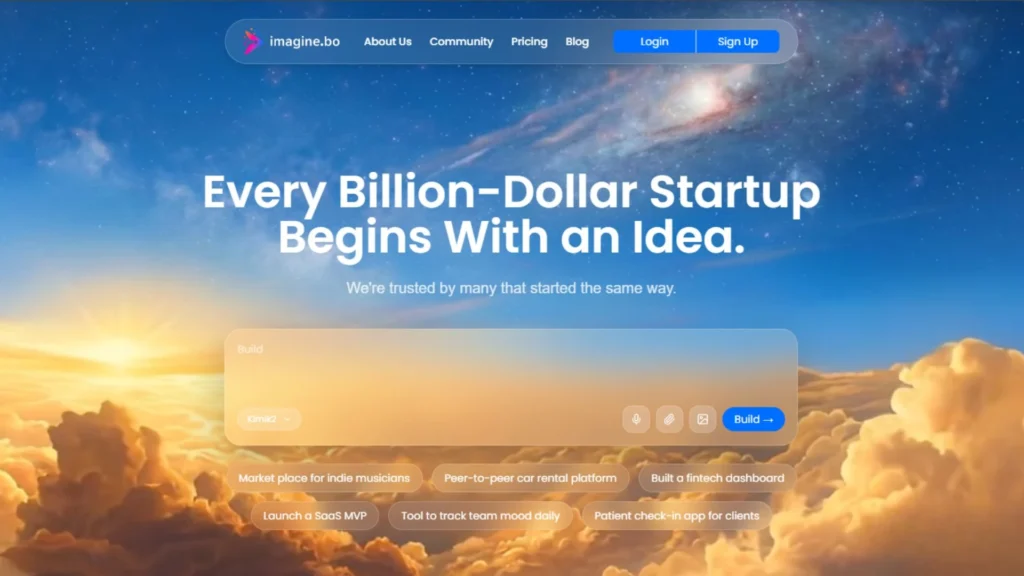
Useless websites are among the most cost-efficient viral experiments available to indie builders right now. A genuinely funny single-purpose web experience spreads through group chats and social feeds with no advertising spend. According to Stripe’s 2024 Indie Founder Report, 44% of profitable SaaS products are now run by a single founder, double the 2018 figure. When development cost approaches zero, a novelty site becomes a low-risk distribution experiment that pays out in backlinks, brand recognition, and passive revenue.
Why would a serious builder invest time in something intentionally pointless? The utility breaks into three clear categories. First, novelty sites work as portfolio pieces. A developer or designer who ships a polished micro-site demonstrates taste and execution capability more credibly than a skills list on a resume. Second, they function as traffic experiments. A viral page generates backlinks to your domain, which compounds into organic search authority over time. Third, they serve as cognitive resets. Research in creative cognition indicates that short breaks involving novel stimuli restore focused attention more effectively than passive scrolling.
The 2025 Indie Hacker Trends Survey found that 1 in 3 indie SaaS founders now use AI for more than 70% of their development and marketing workflows. That shift changes the economics of a weekend side project completely. When a novelty site costs a weekend rather than months of contract development, shipping something purely for the experience becomes financially rational rather than self-indulgent.
Shipping a quick novelty project also functions as a distribution warm-up for your real product. You learn what makes something shareable before attaching a pricing page to it. The full playbook for monetizing micro-scale tools built with AI is covered in the post on building and selling micro-tools using AI.
Novelty web projects offer non-obvious strategic value for indie builders. According to Stripe’s 2024 Indie Founder Report, 44% of profitable SaaS products are now solo-founded, double the 2018 rate. With AI tools cutting development cost to near zero, a “useless” side project has become a viable distribution experiment, backlink strategy, and portfolio asset for single-person operations.
How Do You Build Your Own Useless Website Generator with AI?
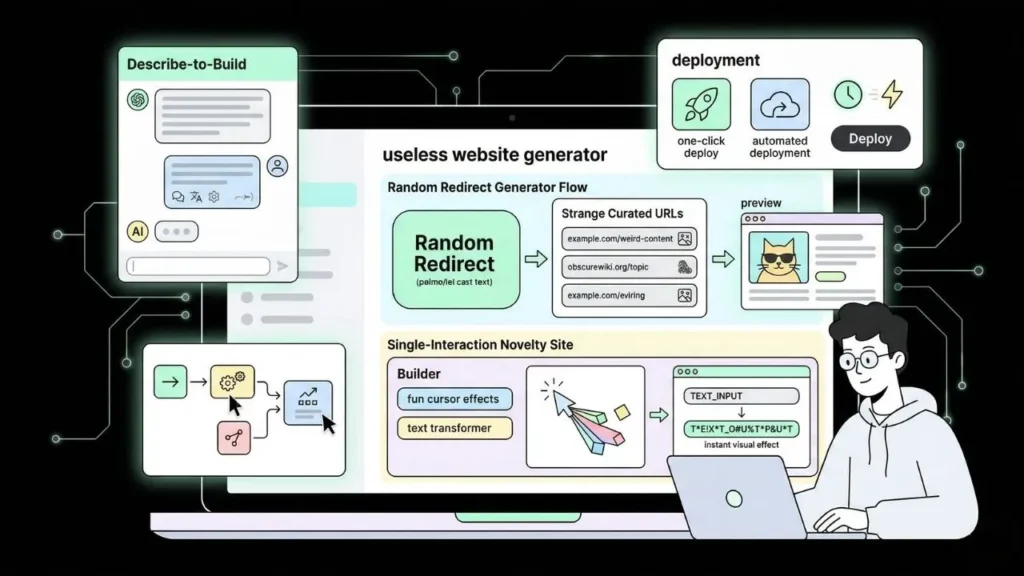
Building a random-redirect generator now takes hours, not weeks. The no-code AI platform market was valued at USD 4.28 billion in 2024, projected to reach USD 44.15 billion by 2033 at a 30.2% CAGR, according to Grand View Research. That market growth means better and more accessible tooling for non-technical founders, and a working novelty site is genuinely achievable in an afternoon.
The build-your-own path splits into two distinct project types.
The random redirect model: You need a curated list of destination URLs, a front-end button that triggers a redirect, and randomization logic on the backend. The logic is genuinely simple. The hard work is curation. Pick a specific theme, such as bizarre product listing pages, obscure fan wikis, or abandoned government microsites, and invest more effort in list quality than in the code. A tightly themed generator builds repeat visits because users trust the curation.
The single-experience novelty model: You are building one interaction: a sound generator, a cursor effect, a text transformer, or a fake terminal. The interaction must be immediately legible, instantly satisfying, and shareable in a single screenshot or short video. Those constraints are a creative brief, not limitations on your ambition.
With imagine.bo, you describe either project in plain English using the Describe-to-Build feature and receive a working full-stack app with front-end, backend logic, and deployment-ready output in the same session. The One-Click Deployment handles Vercel for the front-end and Railway for the backend without any configuration work. The article on building an app by describing it walks through what that process looks like from blank prompt to deployed.
The key architectural decision is whether your app generates dynamic content, which needs backend logic, or serves static redirects, which can run serverlessly at near-zero cost. For most novelty sites, simpler architecture means faster load times. Faster load times directly improve how often people share what they find.
AI-powered no-code platforms have fundamentally lowered the cost of launching novelty web experiments. Grand View Research valued the global no-code AI platform market at USD 4.28 billion in 2024, with projections to reach USD 44.15 billion by 2033. For indie builders, this means a weekend novelty project that once required a developer hire now requires only a clear concept and an afternoon.
Can You Actually Make Money From a “Useless” Website?
The honest answer is yes, sometimes, though rarely from the site alone. According to Gartner, 70% of new applications in 2025 use no-code or low-code tools, up from under 25% in 2020. That speed advantage changes the experiment economics entirely. When a novelty site takes an afternoon to ship rather than weeks of contract development, you can afford to fail several times before landing on the concept that sticks.
Most high-traffic novelty sites generate revenue through display advertising networks. A site with 500,000 monthly visits can produce meaningful passive income depending on audience geography, session behavior, and ad inventory. It is not a standalone business. But it is real income from a project with no customer support queue, no churn management, and no ongoing maintenance beyond occasional list updates.
The less obvious monetization path is indirect. Is indirect monetization a real strategy, or a consolation prize for sites that never earned direct revenue? In practice, it compounds. A viral novelty site generates backlinks, social credibility, and proof that you finish and ship things. That credibility converts into consulting inquiries, newsletter subscribers, and product sales. Several indie hackers have traced their first meaningful product traction to a side project that went viral for completely unrelated reasons. The novelty site becomes an unplanned top-of-funnel.
For specific strategies on converting AI-built apps into sustainable revenue without traditional development overhead, the post on monetizing prompt-built apps without coding covers the practical mechanics in detail.
One honest caveat: shock-based or offensive novelty sites do not belong in this category and do not perform reliably over time. The sites with sustained traffic are charming in their uselessness, not unpleasant. Design quality matters even when the content is intentionally pointless. A poorly designed pointless site is just poor design.
The economics of novelty website monetization shifted significantly when no-code AI tools reduced build costs to near zero. Gartner reports that 70% of new applications in 2025 use no-code or low-code methods, up from under 25% in 2020. This speed shift makes a display ad revenue experiment on a novelty site financially rational rather than a vanity project, particularly when the site doubles as a backlink and credibility asset.
Frequently Asked Questions
What is the most popular useless website generator?
The Useless Web at theuselessweb.com is the original and most widely referenced in the category. According to Semrush, it attracted 776,290 visits in December 2025, with an average session of over six minutes. That session duration outperforms most editorial content sites, making it a meaningful case study in how deliberate pointlessness attracts and holds audience attention at scale.
Can I build my own useless website for free?
Yes. A static single-experience site deploys on free hosting tiers from platforms like Vercel at no recurring cost. For backend logic or dynamic redirect functionality, imagine.bo’s free plan provides 10 credits per month and lets you ship public projects without paying. Gartner reports 70% of new apps use no-code or low-code tools in 2025, meaning the infrastructure for free launches is genuinely accessible. The post on shipping a product from a single-line prompt shows how fast the process actually moves.
How do useless websites make money?
The primary route is display advertising. A page with 500,000 monthly visits generates passive income from ad networks without product management, user support, or recurring development costs. The secondary route is indirect: a viral site builds backlinks, social credibility, and an audience that converts into clients, subscribers, or customers for other work. Most successful creators treat the novelty site as a discovery channel rather than a standalone revenue source.
How long does it take to build a random website generator?
With an AI builder, a basic random-redirect experience can be live in two to four hours. A polished single-experience novelty site with custom interactions may take a full weekend. Traditional development for the same project would take weeks and require JavaScript, CSS, and backend hosting knowledge. No-code platforms reduce development time by up to 90%, according to Pathfinder, which changes the math on building for fun versus building for profit.
Are useless website generators safe to use?
Established generators like theuselessweb.com curate their destination lists and filter out unsafe sites. Less established generators that index the broader open web carry more risk, as some destinations may serve pop-ups, malware, or intrusive tracking scripts. Stick to named generators with a documented curation history, or build your own using a manually reviewed list of vetted destinations.
The Bottom Line
Three things stand out after examining the useless website ecosystem in 2025. Deliberate purposelessness is a real and repeatable traffic strategy when executed with creative precision. A site that does one genuinely strange thing well consistently outperforms a site that tries to be useful and falls short. The cost of shipping a novelty web experience has dropped to near zero with AI builders, which means the barrier for non-technical founders to run this kind of experiment has effectively disappeared. And the monetization is indirect more often than direct, but backlinks, credibility, and audience attention compound over time in ways that standard content marketing cannot easily replicate.
If you want to ship a novelty project this week, start with a single-experience concept rather than a redirect generator. One weird interaction, executed well, spreads faster than a curated list of external links. Use imagine.bo’s Describe-to-Build feature to get the full-stack version live without writing a line of code. The One-Click Deployment handles hosting automatically. Take your idea from concept to live app and see how fast the process actually moves.
Launch Your App Today
Ready to launch? Skip the tech stress. Describe, Build, Launch in three simple steps.
Build