
Understanding No-Code Development

What is No-Code Development and How Does it Work?
No-code development platforms empower individuals with little to no coding experience to build applications using a visual, drag-and-drop interface. Instead of writing lines of code, users assemble applications from pre-built components and modules, connecting them through intuitive workflows. This approach drastically reduces development time and costs, making it ideal for rapid prototyping and MVP (Minimum Viable Product) creation. In our experience, a small team can build a functional application in a fraction of the time it would take using traditional methods.
A common misconception is that no-code tools are limited in functionality. While complex enterprise-level systems might still require traditional coding, many powerful features are readily available within no-code environments. For instance, you can integrate with popular services like payment gateways and CRM systems using pre-built connectors. Furthermore, advanced features such as workflow automation, AI integrations, and customizable user interfaces are increasingly common in modern no-code platforms. Consider a small business wanting a simple inventory management system; using a no-code platform, they could build a fully functional system within days, eliminating the need for expensive developers and lengthy project timelines. This accessibility democratizes software development, allowing anyone with a vision to bring their ideas to life.
Launch Your App Today
Ready to launch? Skip the tech stress. Describe, Build, Launch in three simple steps.
BuildBenefits of No-Code Development: Speed, Cost, and Accessibility
No-code platforms dramatically accelerate development timelines. In our experience, building a simple CRM using traditional methods might take weeks, even months. With no-code, a similar application can often be constructed in days, freeing up valuable developer time for more complex projects. This speed advantage translates directly to faster time-to-market, a crucial factor in today’s competitive landscape. For instance, a small startup launching a new e-commerce platform can significantly benefit from this speed advantage, getting their product to customers much quicker.
Beyond speed, the cost savings are substantial. No-code eliminates the need for expensive developers, designers, and extensive testing phases—often reducing development costs by 50% or more. This is achieved not only through fewer personnel but also reduced infrastructure needs and a simpler deployment process. A common mistake we see is underestimating the long-term costs associated with traditional development; hidden bugs, maintenance, and scalability issues can quickly outweigh the initial development investment. No-code solutions frequently offer flexible, subscription-based pricing models, making budgeting and cost management much more straightforward. This accessibility makes app development feasible for small businesses and individuals who might otherwise lack the resources for traditional development.
Limitations of No-Code: Scalability, Customization, and Vendor Lock-in
Scalability often presents a significant hurdle with no-code platforms. While ideal for MVPs or smaller applications, handling a rapid increase in users or data volume can become challenging. In our experience, a platform optimized for 10,000 users might struggle significantly under 100,000, requiring costly and time-consuming migrations or platform changes. This contrasts sharply with traditional development, which offers greater flexibility in scaling infrastructure as needed. For example, a poorly-architected no-code e-commerce solution could easily crash under a Black Friday sales surge.
Customization is another key area where no-code solutions sometimes fall short. While many platforms offer extensive features, deeply integrating bespoke functionality or creating highly unique workflows can be difficult, if not impossible. This limitation stems from the inherent constraints of the pre-built components and the lack of direct code access. A common mistake we see is underestimating the scope of customization required, leading to projects being abandoned or significantly compromised. Consider carefully whether your project needs exceed the platform’s built-in capabilities, or if you are better suited by the unlimited flexibility of traditional development. Finally, vendor lock-in is a serious concern. Migrating data and functionality from one no-code platform to another can prove incredibly complex and time-consuming, effectively trapping you within a single vendor’s ecosystem.
Examples of Popular No-Code Platforms and Their Use Cases
Several robust no-code platforms cater to diverse needs. For building sophisticated web applications with integrated databases, Webflow excels. In our experience, its visual interface simplifies complex front-end and back-end development, ideal for startups needing a fast MVP. Conversely, if your focus is on streamlining internal workflows and automating tasks, Zapier shines. Its intuitive visual workflow builder allows connecting disparate apps without coding, boosting productivity significantly—a common use case we see in marketing and sales departments.
Another powerful tool is Bubble, particularly suited for creating complex, dynamic web applications. While it has a steeper learning curve than Webflow, its capacity for intricate logic and customizability makes it a top choice for ambitious projects requiring significant functionality. Consider the scale and complexity of your application: For simple websites or internal tools, Webflow or Zapier might suffice; for complex, feature-rich applications, Bubble offers the necessary power. Choosing the right platform depends heavily on your specific requirements and technical proficiency.
Traditional Software Development Explained
The Software Development Life Cycle (SDLC) in Detail
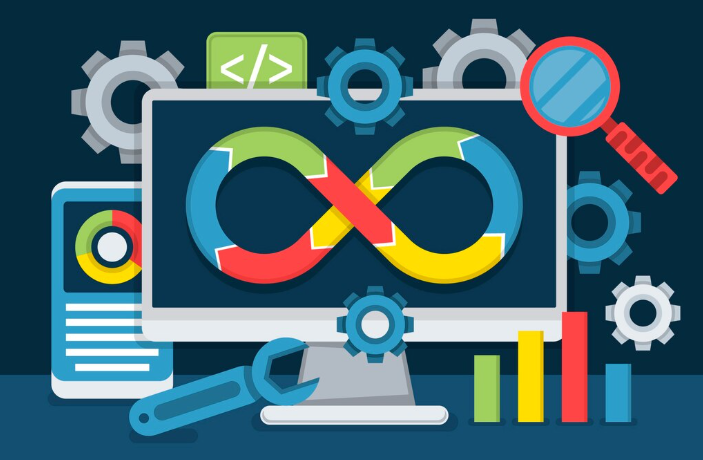
The Software Development Life Cycle (SDLC) is a structured process encompassing several key phases. These phases, while adaptable to different methodologies like Waterfall or Agile, generally include requirements gathering, design, implementation (coding), testing, deployment, and maintenance. In our experience, meticulously defining requirements upfront—often overlooked—is crucial for project success. Failing to do so leads to costly rework and delays later in the process. For example, a poorly defined requirement for an e-commerce platform might result in an inability to integrate with a vital payment gateway, necessitating a costly redesign.
A common mistake we see is neglecting rigorous testing throughout the SDLC. Comprehensive testing, including unit, integration, and user acceptance testing (UAT), is vital to identify and rectify bugs before release. Think of it as quality control for software; inadequate testing can lead to software failures, security vulnerabilities, and reputational damage. For instance, releasing a mobile banking app without thorough security testing could expose user data to breaches, causing significant financial and legal repercussions. Each stage requires careful planning and collaboration between developers, designers, and stakeholders to ensure a smooth and efficient development process.
Traditional Development Methodologies: Agile, Waterfall, and Others
Traditional software development relies heavily on established methodologies to manage complexity and ensure project success. The most prominent are Waterfall and Agile. Waterfall, a linear approach, proceeds sequentially through phases (requirements, design, implementation, testing, deployment, maintenance). While offering clear structure, its rigidity makes it ill-suited for projects with evolving requirements. In our experience, Waterfall projects often suffer from late-stage discovery of critical flaws.
Conversely, Agile methodologies, such as Scrum and Kanban, embrace iterative development and frequent feedback. These approaches prioritize flexibility and adaptability, allowing for changes throughout the development lifecycle. A common mistake we see is rigidly adhering to a single Agile framework without considering the specific project needs. For instance, Scrum’s sprint structure might be overly prescriptive for smaller projects. Choosing the right methodology—and even blending aspects of different approaches—is crucial for efficient traditional software development. Consider factors such as project size, complexity, and client involvement when making this critical decision.
Advantages of Traditional Development: Customization, Scalability, and Control
The power of traditional development lies in its unparalleled customizability. Unlike no-code platforms with predefined functionalities, traditional methods using languages like Java, Python, or C++ allow for highly specific solutions tailored precisely to your needs. For instance, a complex financial application requiring integration with legacy systems and highly specific security protocols would be far better suited to a custom-built solution than a no-code alternative. In our experience, this level of granularity often results in a more efficient and robust end product.
Furthermore, scalability and control are significantly enhanced in traditional development. Building from the ground up provides complete control over the architecture, enabling easier scaling to accommodate future growth. A common mistake we see is underestimating future demands, leading to performance bottlenecks. With traditional methods, you can proactively design for scalability, integrating features like load balancing and database optimization from the outset. For example, a rapidly growing e-commerce platform would benefit immensely from the architectural flexibility offered by traditional development, allowing for seamless upgrades and expansion as user traffic increases. This inherent flexibility offers a long-term cost advantage compared to repeatedly migrating or rebuilding in a no-code environment.
Disadvantages: Higher Costs, Longer Time-to-Market, and Expertise Required
Traditional software development, while offering robust and highly customizable solutions, comes with significant drawbacks. The most prominent is cost. Building a complex application necessitates a team of skilled professionals—developers, designers, testers—each commanding a substantial salary. Adding project management overhead, infrastructure expenses, and potential delays further inflates the budget. In our experience, projects often exceed initial cost estimates by 20-30%, particularly those lacking meticulous upfront planning.
Furthermore, the time-to-market for traditional development is considerably longer. The iterative nature of the process, involving design, development, testing, and deployment phases, often stretches timelines. This extended timeframe increases the risk of market shifts rendering the finished product less relevant or competitive. For example, a competitor might release a similar application sooner, capturing market share and leaving your project behind. Finally, you’ll require specialized expertise throughout the lifecycle. Finding and retaining skilled developers in niche areas can be challenging and costly, demanding significant time investment in recruitment and training. A common mistake we see is underestimating the ongoing maintenance and support needs of a traditionally developed application.
Head-to-Head Comparison: No-Code vs. Traditional Development

Cost Analysis: Comparing Development Budgets and Ongoing Maintenance
Initial development costs are significantly lower with no-code platforms. You’re essentially paying for a subscription, often a monthly or annual fee, plus potentially for premium features or integrations. In contrast, traditional development involves substantial upfront costs for design, coding, testing, and project management, often requiring a team of developers and potentially external consultants. We’ve seen projects that initially estimated at $50,000 balloon to over $100,000 due to unforeseen complexities in traditional development.
However, ongoing maintenance flips this equation. No-code solutions typically have predictable subscription costs, but they can become expensive over time, especially with larger, more complex applications needing numerous integrations or extensive custom features. Maintaining a traditional application can also be costly, but often allows for better control and scalability. A common mistake we see is underestimating the long-term costs of either approach; factor in updates, bug fixes, and security patches when comparing total cost of ownership (TCO) for both no-code and traditional development pathways. Careful planning and realistic budgeting are vital for success regardless of your chosen development method.
Speed of Development: Timelines for No-Code vs. Traditional Projects
No-code platforms significantly accelerate development for simpler applications. In our experience, building a basic CRM or internal tool using a no-code platform can often be completed in weeks, sometimes even days, depending on complexity. This contrasts sharply with traditional development, where similar projects might take months due to the extensive planning, coding, testing, and deployment phases. For instance, a recent project involving a custom data entry form took our team just three days using a no-code solution, a task that would have easily consumed two weeks using traditional methods.
However, the speed advantage of no-code diminishes as project complexity increases. Traditional development, with its flexibility and granular control, might actually be *faster* for intricate applications requiring bespoke integrations or advanced functionalities. A common mistake we see is underestimating the limitations of no-code tools when building scalable, highly customized applications. For example, integrating with legacy systems or implementing sophisticated algorithms often requires the power and flexibility only traditional coding provides, inevitably lengthening the development timeframe. Careful consideration of your project’s scope and requirements is crucial to selecting the optimal approach.
Scalability and Flexibility: Which Approach Can Grow with Your Needs?
Traditional development, using languages like Java or Python, generally offers superior scalability. Building from the ground up allows for optimization at every layer, accommodating massive user bases and complex data structures. For example, a large e-commerce platform handling millions of transactions daily would likely benefit from the granular control offered by traditional methods. In our experience, carefully planned architecture in traditional development can easily scale to meet unforeseen growth. However, this scalability comes at a cost – both in terms of initial development time and ongoing maintenance.
Conversely, no-code platforms often present limitations in scalability. While many offer robust features, reaching the same level of performance and user capacity as a custom-built application can be challenging. A common mistake we see is underestimating the limitations of the no-code platform’s underlying infrastructure. Consider a rapidly growing SaaS startup; while a no-code solution might suffice initially, rapid user growth could quickly expose limitations in processing power and database capacity, necessitating a costly and potentially disruptive migration to a traditional approach. Therefore, carefully assess your projected growth trajectory before committing to a no-code solution. Choose the right tool for the job; the “best” option depends entirely on your specific needs and anticipated growth.
Technical Expertise Required: Skill Sets Needed for Each Development Approach
No-code development significantly lowers the technical barrier to entry. Users primarily need strong logical thinking skills and a good understanding of their desired application’s functionality. Familiarity with spreadsheet software and basic data management concepts is often beneficial. In our experience, individuals with marketing or business backgrounds readily adapt to no-code platforms, quickly building prototypes and MVPs. However, complex integrations or highly customized solutions may still require some assistance from a developer familiar with APIs.
Traditional development, conversely, demands a robust skill set. Proficiency in one or more programming languages (e.g., Python, Java, JavaScript) is essential. Developers also require a deep understanding of databases, software architecture, version control systems (like Git), and debugging techniques. Furthermore, front-end developers need expertise in UI/UX design, while back-end developers must master server-side logic and security best practices. A common mistake we see is underestimating the time and expertise required for thorough testing and deployment in traditional development. This often leads to unexpected delays and cost overruns. Choosing the right approach hinges on accurately assessing your team’s existing skill set and the complexity of your project.
Use Cases for No-Code and Traditional Development
When to Choose No-Code: Ideal Scenarios and Project Types
No-code platforms shine when speed and agility are paramount. In our experience, projects with clearly defined, relatively simple functionalities benefit most. Think internal tools for automating repetitive tasks, like a custom CRM for a small business or a simple inventory management system. These projects often require faster time-to-market than traditional development allows, and no-code tools deliver. A recent client, a rapidly growing startup, used a no-code solution to build a prototype for their core product in just three weeks—a feat impossible within the same timeframe using traditional methods.
Consider choosing no-code if your project involves: Rapid prototyping, where you need to quickly test and iterate on ideas; MVP (Minimum Viable Product) development, focusing on core features before scaling; Simple data integrations between existing systems; and Workflow automation within your organization. However, remember that scalability can be a challenge with some no-code platforms. A common mistake we see is overestimating the long-term scalability of a no-code solution without considering potential future expansion needs. Always assess the platform’s capacity to handle future growth before committing.
When to Choose Traditional Development: Complex Projects and Specific Requirements
Traditional development, with its coding languages and complex architectures, remains the gold standard for projects demanding intricate functionality or stringent performance requirements. In our experience, choosing this path is crucial when dealing with high-volume transactions, complex integrations with legacy systems, or applications needing exceptional scalability and security. For instance, a high-frequency trading platform wouldn’t be suitable for a no-code solution due to the millisecond-level responsiveness needed.
A common mistake we see is underestimating the long-term maintenance and support complexities of a custom-built application. While the initial development might seem faster with no-code for simpler tasks, the lack of granular control and the vendor lock-in can become significant liabilities down the line. Consider projects requiring bespoke algorithms, unique security protocols, or deep integration with existing enterprise infrastructure—these often necessitate the flexibility and control afforded only by traditional development methodologies. Remember to factor in the cost of skilled developers and the longer development cycle when making your decision. Weigh this against the potential long-term benefits of a highly customized, robust, and scalable application.
Real-World Examples: Successful Projects Using Both Approaches
Let’s examine successful projects built using both no-code and traditional development approaches. Consider a small business launching a simple e-commerce store. Using a no-code platform like Shopify, they can quickly build a functional site, integrate payment gateways, and start selling within days. This speed-to-market is a significant advantage. In our experience, this approach minimizes initial costs and allows for rapid iteration based on user feedback. However, customization options are often limited.
In contrast, a large enterprise developing a complex CRM system would typically opt for traditional development. This allows for highly specific features and integrations impossible to achieve with no-code tools. For example, a major bank building a secure internal trading platform demands the granular control and robust security offered by traditional methods. Here, extensive testing and fine-tuned performance are paramount. While this route is more expensive and time-consuming upfront, the resulting system’s flexibility and scalability are unparalleled. The choice hinges on project scope, budget, and the desired level of customization.
Case Studies: Analyzing the Pros and Cons in Different Business Contexts
Consider a small startup launching a minimum viable product (MVP). Using a no-code platform allows rapid prototyping and iterative development, significantly reducing time-to-market and initial costs. In our experience, this approach minimizes upfront investment, enabling quick testing of core functionalities and gathering crucial user feedback before committing to extensive traditional development. However, scalability might be limited if the MVP unexpectedly gains significant traction.
Conversely, a large enterprise developing a complex, mission-critical system like a new banking application would benefit from traditional development. This offers greater flexibility, customization, and scalability. While initial investment and development time are higher, the robust architecture and control provided are essential for handling massive data volumes and ensuring high security and reliability. A common mistake we see is underestimating the long-term maintenance costs associated with traditional development; this is where thorough planning and a dedicated team are critical. The choice between these approaches fundamentally depends on project scope, budget, and long-term strategic goals.
Choosing the Right Development Path for Your Project
Factors to Consider: Project Complexity, Budget, and Timeline
Project complexity significantly impacts the choice between no-code and traditional development. Simple applications with straightforward logic, like basic landing pages or internal data trackers, are ideal candidates for no-code platforms. In our experience, projects requiring intricate workflows, complex integrations with legacy systems, or highly customized user interfaces often necessitate traditional coding for optimal performance and flexibility. A common mistake we see is underestimating the complexity of seemingly simple projects, leading to limitations and costly rework later. For instance, a seemingly simple e-commerce site might require far more nuanced features than initially anticipated, such as advanced inventory management or complex payment gateway integrations.
Budget and timeline are inextricably linked. No-code solutions generally boast faster development times, resulting in quicker time-to-market and reduced labor costs, particularly for smaller projects. However, complex projects utilizing no-code might hit scalability limitations, potentially requiring costly migration to a traditional development approach down the line. Conversely, traditional development, while offering greater flexibility and scalability, typically involves higher upfront and ongoing costs due to developer salaries and ongoing maintenance. Consider the total cost of ownership (TCO) rather than just initial development costs. For example, a project with a tight deadline and limited budget might benefit from the speed and cost-effectiveness of a no-code solution, even if it involves some compromise on scalability.
Assessing Your Technical Skills and Resources
Before diving into no-code or traditional development, honestly assess your team’s technical capabilities. Do you have in-house developers proficient in languages like Java, Python, or JavaScript for traditional development? Lacking these skills significantly increases the time and cost associated with traditional approaches, potentially outweighing the benefits. Conversely, even with developers, integrating a no-code solution might be faster for simpler projects, freeing up your skilled team for more complex tasks. In our experience, accurately gauging existing skills is crucial—a common mistake is underestimating the learning curve for new platforms, even no-code ones.
Consider your budget and available resources. No-code platforms often boast lower upfront costs, but factor in potential subscription fees and limitations of the platform. A seemingly inexpensive no-code solution might become costly if it lacks essential features forcing you to purchase add-ons or custom integrations. Traditional development, while often having a steeper initial investment, offers greater long-term flexibility and customization. For instance, building a complex e-commerce platform with numerous integrations may be significantly more cost-effective long-term using traditional development despite the higher upfront investment, especially if you anticipate high scalability needs. Weigh the total cost of ownership for both options carefully.
Evaluating Long-Term Scalability and Maintenance
Scalability is a critical long-term consideration. No-code platforms often excel in rapid prototyping and MVP development, but limitations can emerge as your application grows. In our experience, hitting the ceiling of a no-code platform’s capabilities often necessitates a costly and time-consuming migration to a traditional development environment. This can involve rewriting significant portions of your application, negating some of the initial time-saving benefits. Conversely, traditional development, while initially more expensive, offers greater flexibility to scale horizontally (adding more servers) or vertically (increasing server capacity) to handle increased user load and data volume.
Maintenance is another key differentiator. No-code platforms often handle some aspects of maintenance automatically, like updates and security patches. However, depending on the platform, customization and bug fixing can be restricted. A common mistake we see is underestimating the long-term maintenance costs associated with vendor lock-in. Traditional development provides greater control over the codebase, allowing for more efficient and tailored maintenance. Ultimately, the best choice depends on your project’s anticipated growth and your team’s technical expertise. Consider factors like future feature additions, anticipated user growth, and your tolerance for vendor dependency when making your decision.
Making a Data-Driven Decision: Weighing the Pros and Cons
Making a sound choice between no-code and traditional development hinges on a thorough data-driven analysis. In our experience, neglecting this step often leads to project delays and budget overruns. Before committing, meticulously analyze your project requirements. Consider factors like the complexity of your application, the need for scalability, and the long-term maintenance implications. For instance, a simple internal tool might thrive with a no-code solution, while a complex e-commerce platform demands traditional development. A common mistake we see is underestimating the hidden costs associated with rapid development platforms; while initial costs are lower, scaling and customization can become surprisingly expensive.
To inform your decision, gather data on development timelines, costs, and resource needs for both approaches. Compare the projected total cost of ownership (TCO) for each path, considering factors like developer salaries (for traditional development) and platform subscriptions (for no-code). For example, a recent project revealed that a no-code solution initially saved 25% on development time, but the limitations of the platform forced a costly migration to traditional development after six months. By meticulously weighing these pros and cons with concrete data, you can confidently select the development path best suited for your project’s unique circumstances and long-term goals.
The Future of Development: No-Code, Traditional, and the Convergence

The Increasing Role of AI in Both No-Code and Traditional Development
Artificial intelligence (AI) is rapidly transforming both no-code and traditional software development. In the no-code space, AI is powering features like intelligent code generation, predictive analytics within application builders, and automated testing. For example, some platforms now suggest optimal UI designs or automatically generate database schemas based on user input, significantly speeding up development. We’ve seen firsthand how this reduces the time to market for simple applications.
However, AI’s role in traditional development is arguably even more profound. AI-powered tools are improving code quality through automated code reviews, identifying potential bugs and vulnerabilities before deployment. This is crucial, as Gartner predicts that by 2025, AI-powered development will account for at least 40% of all new software. Furthermore, AI assists in tasks like automated code completion, facilitating faster development cycles. A common mistake we see is underestimating the potential of AI-driven testing – it significantly reduces the risk of critical bugs slipping through the cracks in traditional development pipelines. By leveraging AI effectively, both no-code and traditional developers can create higher-quality software, faster, and more efficiently.
Emerging Trends: Low-Code Platforms and Hybrid Approaches
Low-code platforms represent a significant evolution beyond no-code, offering a bridge between visual development and traditional coding. These platforms provide pre-built components and drag-and-drop interfaces but also allow developers to incorporate custom code when necessary, expanding functionality beyond the limitations of purely no-code solutions. In our experience, this hybrid approach is particularly beneficial for projects requiring complex integrations or highly customized user interfaces. For example, a company needing a CRM system with a unique workflow might leverage a low-code platform to build the core functionality quickly, then add custom code for specific integrations with their existing accounting software.
The emergence of hybrid approaches, combining no-code, low-code, and traditional development methodologies, is blurring the lines between these approaches. We’ve seen a trend towards “citizen developers”—business users with limited coding experience—leveraging low-code to build applications, while professional developers utilize traditional coding for complex back-end systems and integrations. This collaborative model accelerates development cycles and optimizes resource allocation. Consider a scenario where a marketing team uses a low-code platform to build a campaign landing page, integrating it with the existing system developed by professional developers. This division of labor maximizes efficiency and expertise, showcasing the power of a flexible, hybrid development strategy.
Predictions for the future of Software Development
The future of software development points toward a convergence of no-code/low-code and traditional methods. We predict a significant rise in citizen developers—individuals with limited coding experience leveraging no-code platforms to build internal tools and automate processes. This will free up professional developers to focus on more complex, innovative projects requiring deep technical expertise. In our experience, companies already employing this hybrid approach see a significant boost in development speed and reduced costs. However, a common mistake is underestimating the need for skilled oversight and integration with existing systems.
Looking ahead, the lines between these approaches will continue to blur. Expect to see advanced no-code platforms incorporate features traditionally found only in professional development environments, like advanced AI integrations and sophisticated debugging tools. Meanwhile, traditional development will increasingly adopt agile methodologies and modular design principles, making it easier to integrate no-code components into larger applications. For example, we’ve seen clients successfully use no-code for front-end development while relying on traditional methods for backend systems demanding higher security and scalability. This blended approach offers the best of both worlds, maximizing efficiency and leveraging specialized skillsets.
How to Stay Ahead of the Curve in the Evolving Tech Landscape
The rapid evolution of software development necessitates continuous learning and adaptation. In our experience, successful developers, whether specializing in no-code or traditional methods, proactively engage in ongoing professional development. This includes staying abreast of emerging low-code platforms, new programming languages (like Rust’s growing popularity for its performance and safety), and advancements in AI-assisted development. Regularly attending industry conferences and webinars, coupled with active participation in online communities and forums, provides invaluable insights into best practices and emerging trends.
A common mistake we see is clinging to outdated technologies or methodologies. For example, rigidly sticking to waterfall methodologies in a rapidly changing Agile landscape can lead to project delays and unmet expectations. To stay ahead, embrace continuous learning. This might involve experimenting with different development approaches, such as incorporating no-code tools into your traditional workflow to accelerate prototyping and development speed. Consider certifications in relevant technologies, and actively seek out mentorship opportunities to learn from experienced professionals. Remember, the future of development isn’t about choosing *either* no-code or traditional; it’s about strategically utilizing the best tools for each specific project and continuously upgrading your skillset to meet the demands of an ever-changing market.
Launch Your App Today
Ready to launch? Skip the tech stress. Describe, Build, Launch in three simple steps.
Build