In the traditional tech world, building an Artificial Intelligence application was a privilege reserved for those with Ph.Ds. or years of Python experience. But the landscape has shifted. We are now in the era of “Democratic Intelligence.” Whether you are a marketer, a business analyst, or a visionary founder, the barrier to entry has vanished.
This guide is designed to take you from a curious spectator to a hackathon champion. We will explore how to leverage No-Code AI tools to build high-impact solutions in record time, and how platforms like Imagine.bo are bridging the gap between a weekend prototype and a revenue-ready business.
Launch Your App Today
Ready to launch? Skip the tech stress. Describe, Build, Launch in three simple steps.
BuildUnderstanding No-Code AI and the Hackathon Ecosystem
Defining No-Code AI and its Potential
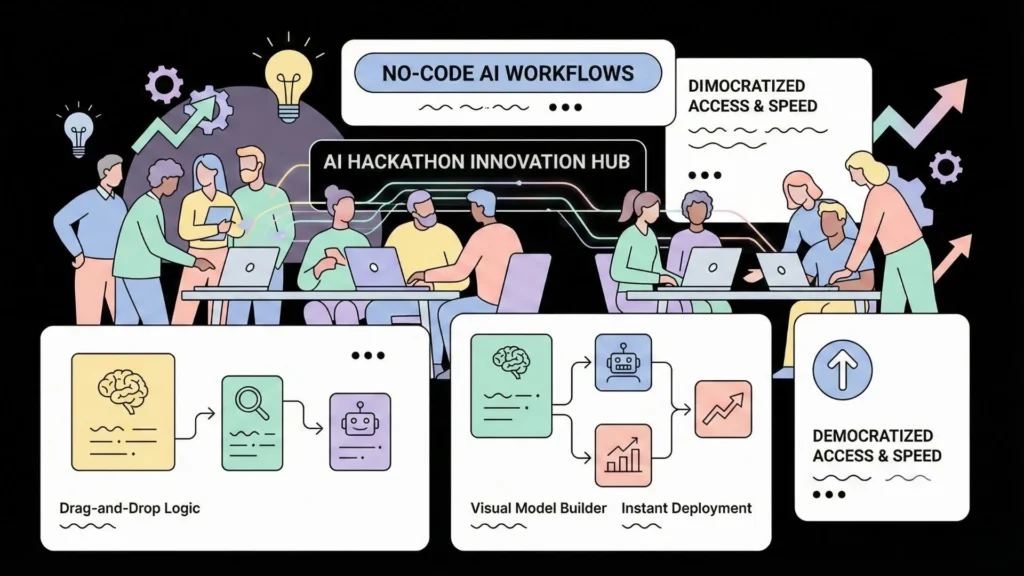
No-code AI democratizes artificial intelligence by abstracting complex programming into user-friendly visual interfaces. Instead of writing thousands of lines of code to handle neural networks, you use drag-and-drop components and logical “reasoning” workflows.
In our experience, this significantly lowers the barrier to entry. We’ve seen small businesses—who previously couldn’t afford a data science team—build custom AI models for customer segmentation or fraud detection in just a few sittings. The speed of development is the real game-changer. For a deeper dive into speed vs. strategy, check out our AI vs. No-Code MVP guide for fast startup launches.
However, there is a common misconception that No-Code means “low quality.” Modern platforms are changing this. For instance, Imagine.bo employs SDE-level (Software Development Engineer) standards, ensuring that while you aren’t writing code, the underlying architecture is clean, scalable, and secure. This is crucial if you intend for your hackathon project to survive beyond the final presentation.
What to Expect at an AI Hackathon
AI hackathons are intense, fast-paced sprints. You should expect a whirlwind of activity: brainstorming, data cleaning, prototyping, and the final high-stakes pitch. To prepare for the competitive environment, it helps to review how to build AI apps for hackathons before the clock starts ticking.
Successful teams realize one thing early: Strategic planning beats raw speed. A common mistake is underestimating the time needed for data acquisition. Many teams lose half their development time grappling with “dirty” data. If you want to win, you must allocate significant time for data preparation—even when using visual tools.
Benefits of Participation
Beyond prizes, hackathons offer:
- Practical Mastery: Learning by doing is 10x more effective than watching tutorials.
- Networking: You’ll meet mentors, judges, and future co-founders.
- Portfolio Building: Showing a working AI app is the best way to prove your skills to employers.
Choosing the Right No-Code AI Tools for Your Arsenal
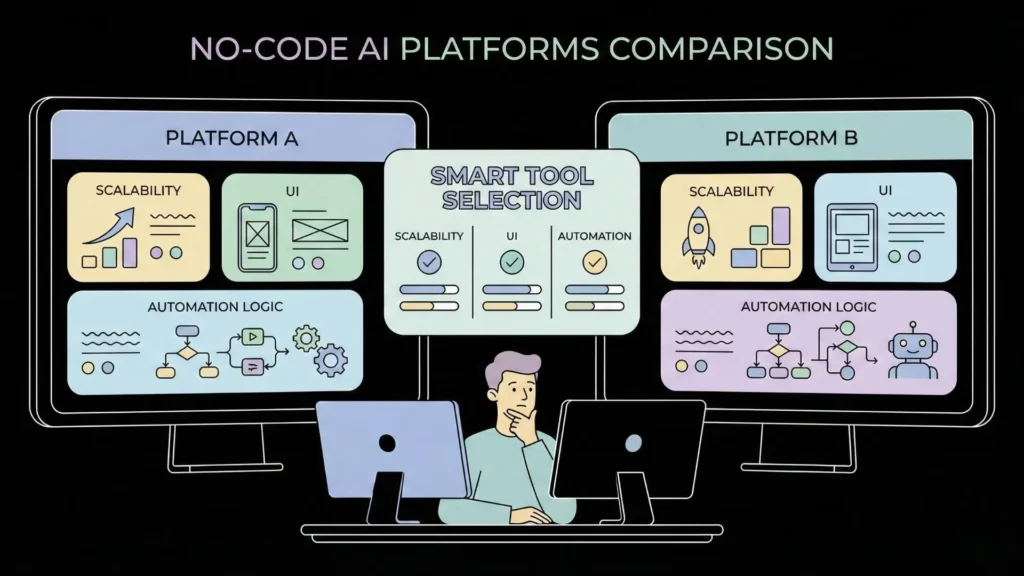
Not all no-code tools are created equal. Your choice depends on whether you are building a specific “model” (like image recognition) or a complete “product” (an app with users and data).
Top No-Code AI Platforms Compared
- Lobe.ai: Exceptional for beginners focusing on custom image recognition.
- Bubble.io: A powerhouse for general app development. While powerful, it often requires extensive manual logic setup.
- Imagine.bo: This is the “End-to-End” evolution of no-code. Unlike tools that only handle one part of the stack, Imagine.bo takes a plain-English description and builds the entire system. When compared to other emerging tools, many founders find the Imagine.bo vs. Bolt comparison helpful for choosing the right level of engineering precision.
Selecting the Best Tool Based on Your Project Idea
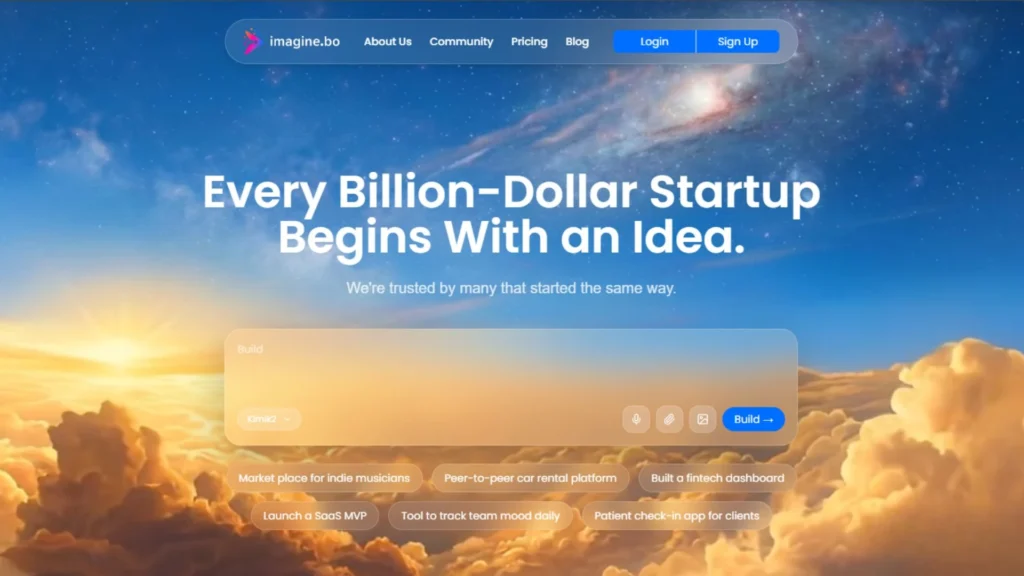
If your project is a niche experiment, Lobe might be enough. But if you are building a SaaS MVP (Minimum Viable Product) during the hackathon, you need a platform that offers scalability. Transitioning from a side project to a full startup without code requires a tool that handles the “heavy lifting” of the backend automatically.
Ideation and Project Planning: Finding Your Winning Idea
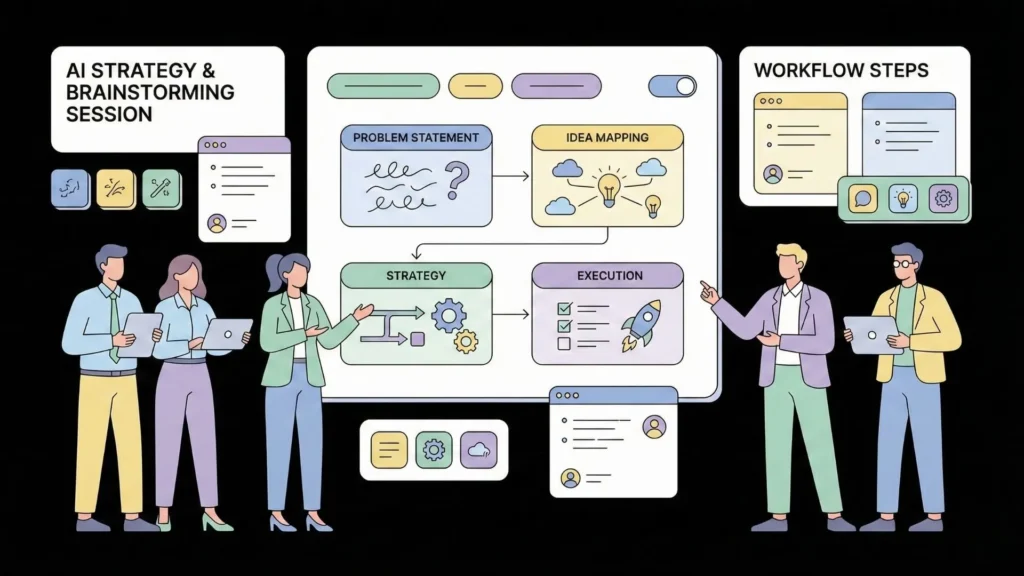
Identifying Real-World Problems
Focus on areas with readily available data. Public datasets on Kaggle are gold mines. The key is to find a niche. A hyperlocal project is often more impressive to judges than a generic “AI for the world” project. Before you settle on an idea, follow this step-by-step guide to MVP development to ensure your concept has legs.
The Five-Step Workflow for Success
To stay organized, we recommend a workflow inspired by the Imagine.bo model:
- Vision Definition: Describe the problem in plain language.
- Reasoning & Mapping: Map out the user flow.
- Development & QA: Build the system with automated checks.
- Launch & Optimize: Deploy to a secure environment.
- Iteration: Use feedback to refine logic.
Building Your No-Code AI Project: A Step-by-Step Guide
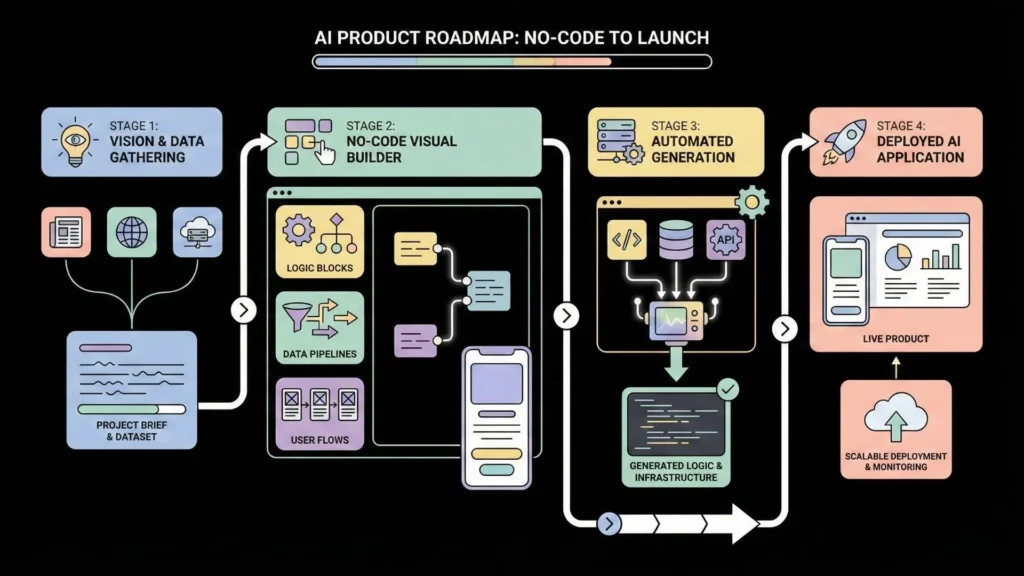
Mastering Prompt Engineering
In the world of no-code AI, the prompt is the code. Instead of saying “Write about dogs,” you should say “Write a 200-word essay comparing the temperaments of Golden Retrievers and German Shepherds for a family with toddlers.” For those looking to master the technical side of conversation, our prompt engineering tips for no-code developers can help you extract the best possible logic from the AI engine.
Technical Excellence in a No-Code Environment
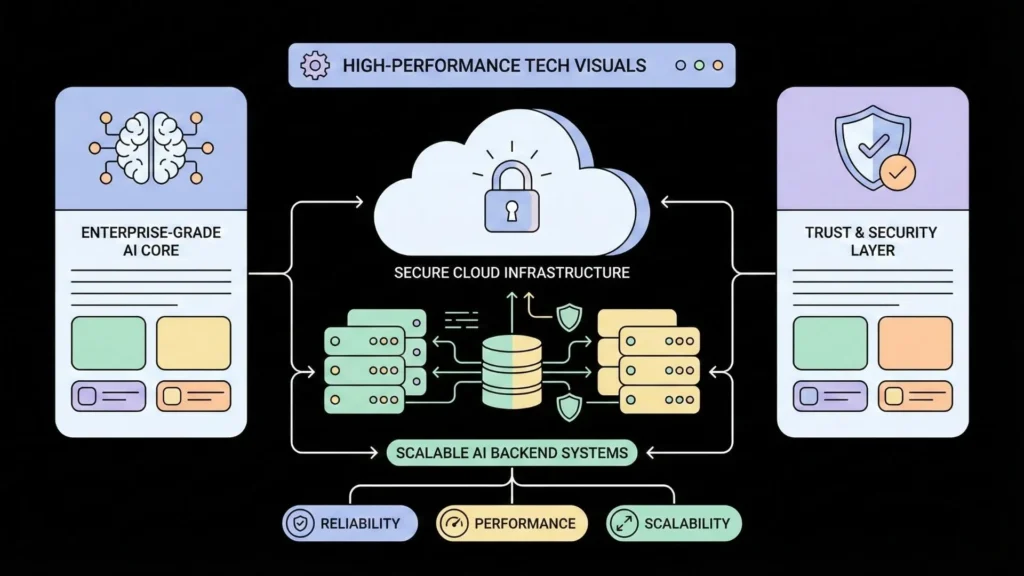
Security and Scalability
Many no-code projects fail because they aren’t “Enterprise-Ready.” This is why we emphasize SDE-level architecture. You should look for tools that are cloud-native and high-performance. If you plan on growing your hackathon winner into a real company, you must understand how to scale no-code AI apps to production.
Troubleshooting and Debugging
Debugging no-code is about checking data flow. Most modern platforms provide visual debuggers. You can also leverage creative debugging strategies to identify where your logic might be breaking without looking at a single line of script.
Presentation and Pitching: How to Win Over Judges
Crafting a Compelling Narrative
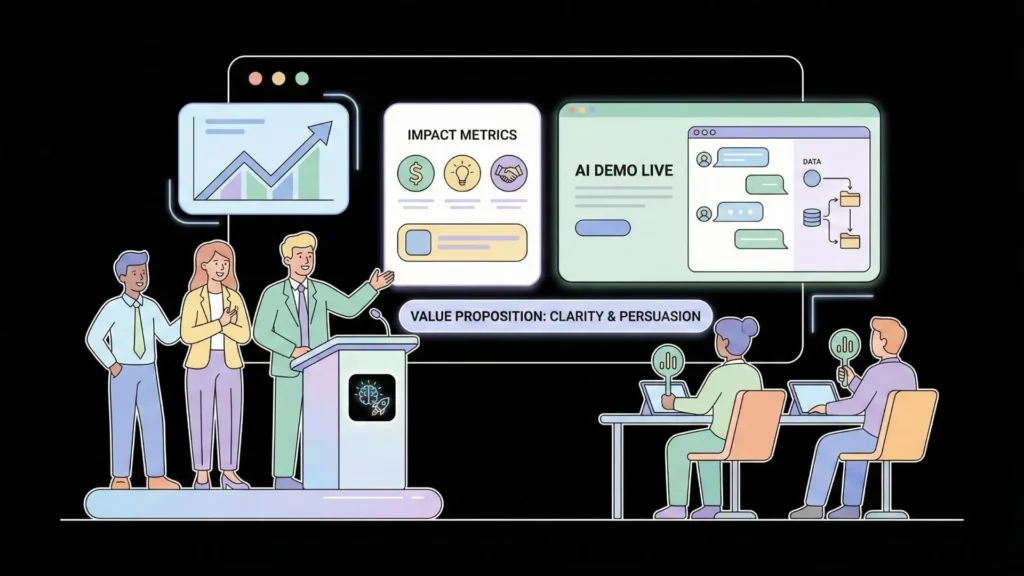
Judges don’t care about your “tech stack” as much as they care about the impact.
- The Hook: Start with a staggering statistic.
- The Solution: Show a working demo.
- The Visuals: Use professional AI tools for graphics and design to make your UI/UX stand out.
Beyond the Hackathon: Scaling Your Skills
Building a Portfolio
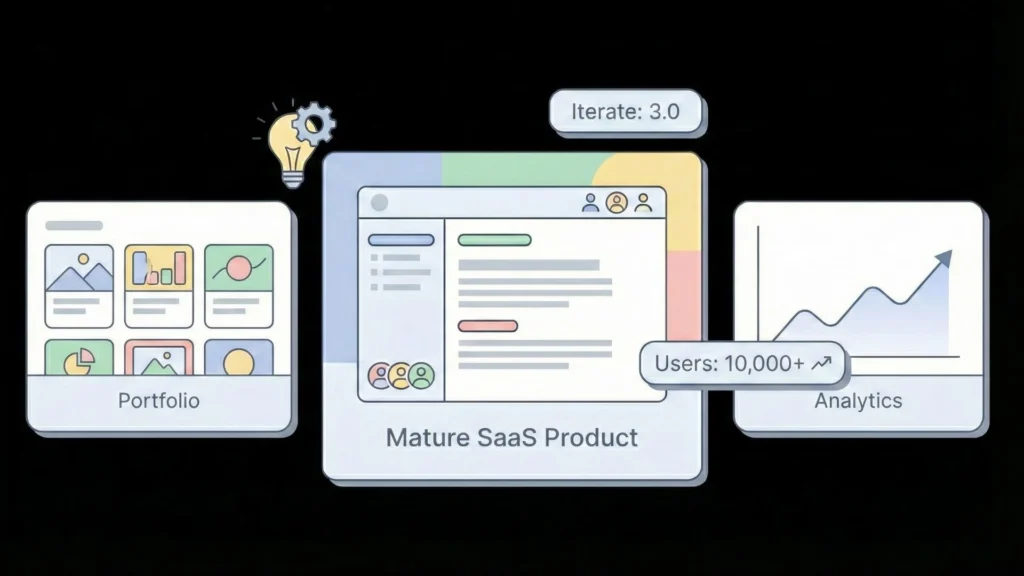
Your hackathon project shouldn’t die on Sunday night. Document the process and quantify your results. Seeing a complete case study on AI no-code MVPs can provide a blueprint for how to present your work to future clients or investors.
Effective Teamwork
The most successful teams leverage automation to handle repetitive tasks, allowing the humans to focus on the “Vibe” and the “Pitch.”
Conclusion: Your Journey Starts Now
The era of the “technical founder” being the only one who can build products is over. With tools like Imagine.bo, you have a full engineering team inside your browser. You can move from a simple vision to a revenue-ready app without writing a single line of code.
Participating in a no-code AI hackathon is the fastest way to prove to yourself—and the world—that you are ready to lead in the AI revolution. So, find a problem, pick your tools, and start building. The future is waiting for your vision.
On-Page SEO Checklist for This Article
- Primary Keyword: No-Code AI Hackathon Guide
- Secondary Keywords: AI App Builder, Imagine.bo, Build AI without coding, No-code AI platforms, AI for founders, SDE-level no-code.
- Meta Description: Master the world of No-Code AI with our ultimate hackathon guide. Learn to build production-grade apps with tools like Imagine.bo and win your next AI competition.
- Internal Link Strategy: Focused on MVP validation, scaling, and specific tool comparisons.
Related Articles
- Hackathon AI Projects: Your No-Code Guide to Success
- From Zero to Hero: How a Student Won a Hackathon with a No-Code App
- Supercharge Your Small Business: A No-Code Guide to AI Automation
- No-Code vs Low-Code AI: Choosing the Right Path for Your Next Project
- Unlocking Data Insights: Your Expert Guide to No-Code AI Tools for Analysis & Visualization
Launch Your App Today
Ready to launch? Skip the tech stress. Describe, Build, Launch in three simple steps.
Build