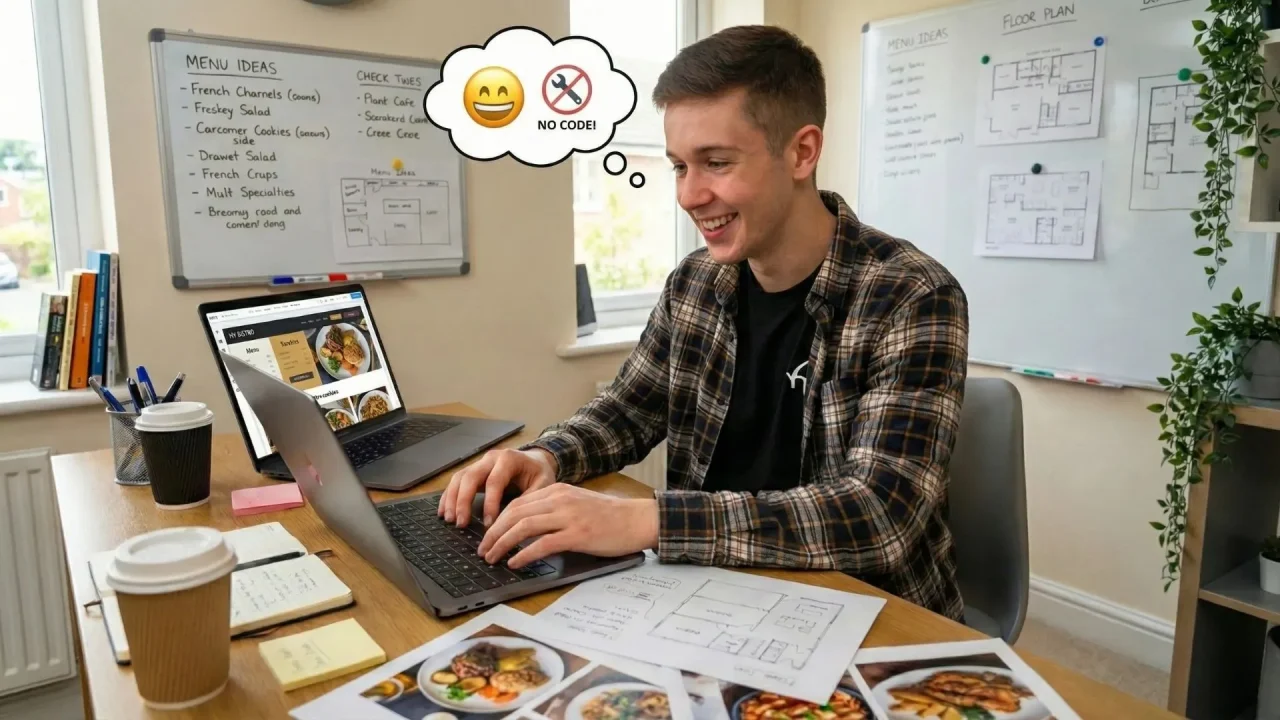
In the modern hospitality landscape, the digital experience is no longer a secondary concern; it is the primary interface through which customers discover, interact with, and purchase from a brand. However, for most restaurant owners and founders, building a truly robust digital infrastructure presents a binary choice that feels like a lose-lose scenario.
On one hand, there are the traditional website builders—tools designed for aesthetic presentation but lacking the “brains” or backend logic required to handle complex operational workflows like real-time inventory, multi-location management, or sophisticated loyalty logic. On the other hand, there is the path of custom development, which involves hiring a team of software engineers, managing a high-burn budget, and navigating the risks of technical debt and project delays.
Launch Your App Today
Ready to launch? Skip the tech stress. Describe, Build, Launch in three simple steps.
BuildFor a non-technical founder, the “Engineer Trap” is real. Hiring a senior developer or an agency often results in costs exceeding six figures before the first order is even processed. Furthermore, the misalignment between business vision and technical execution often leads to a product that is difficult to update and expensive to maintain.
The emergence of production-grade AI development platforms has changed this equation. It is now possible to build a professional, scalable, and highly secure restaurant backend and frontend without writing a single line of code or hiring a single developer. This is not about building a “hobby” site; it is about building a production-ready software system that can support a scaling business.
Why Restaurants Need More Than Just a Website
A common mistake made by new hospitality founders is treating their digital presence as an online brochure. In reality, a successful modern restaurant requires a comprehensive management system. A simple landing page with a menu PDF is no longer sufficient to compete in a market dominated by high-efficiency delivery apps and seamless digital ordering.
The Complexity of the Restaurant Backend
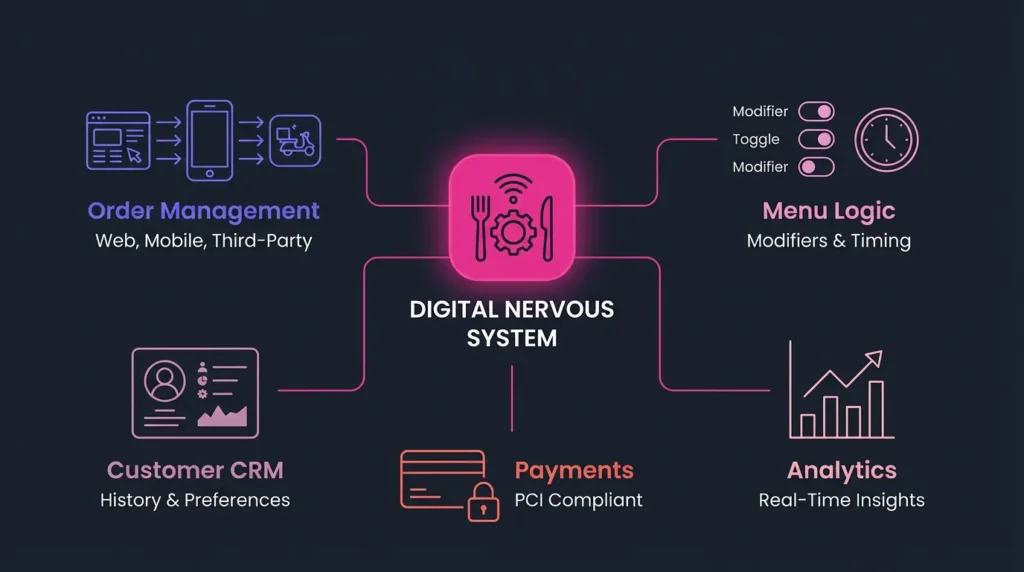
To operate at scale, a restaurant needs a backend system capable of handling several critical functions:
- Dynamic Order Management: Processing orders from multiple channels (web, mobile, third-party) and routing them to the correct kitchen station.
- Sophisticated Menu Logic: Managing modifiers (e.g., “extra cheese,” “no onions”), dietary tags, and time-based availability (breakfast vs. dinner menus).
- Customer Data and CRM: Tracking order history, preferences, and contact information to drive repeat business through personalized marketing.
- Payment Orchestration: Securely handling transactions, refunds, and payouts while ensuring PCI compliance.
- Analytics and Reporting: Providing real-time insights into top-selling items, peak hours, and labor costs.
Most “no-code” website builders are visual layers with very shallow databases. They struggle when asked to perform logic-heavy tasks, such as calculating delivery radiuses or managing ingredient-level inventory. This is why “production-ready” is the most important criteria for any founder looking to avoid hiring engineers. You need a system that doesn’t just look like a restaurant website but functions like a restaurant’s digital nervous system.
Traditional Development vs. AI No-Code: Cost, Time, and Risk
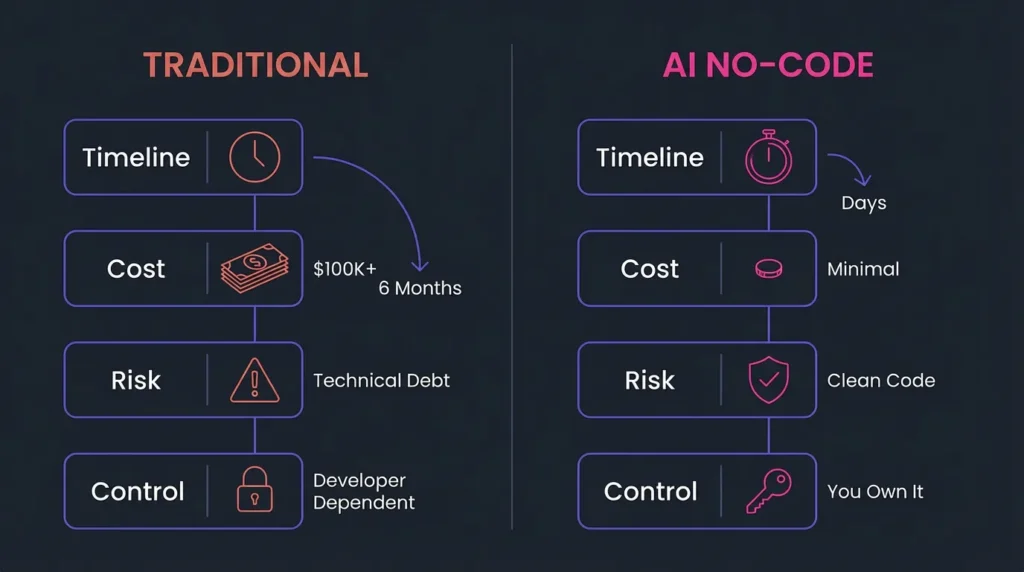
To understand the value of an AI-powered approach, one must examine the hidden realities of the traditional software development life cycle (SDLC).
The Real Cost of Hiring Engineers
When you hire a developer or an agency to build a custom restaurant system, you aren’t just paying for the code. You are paying for:
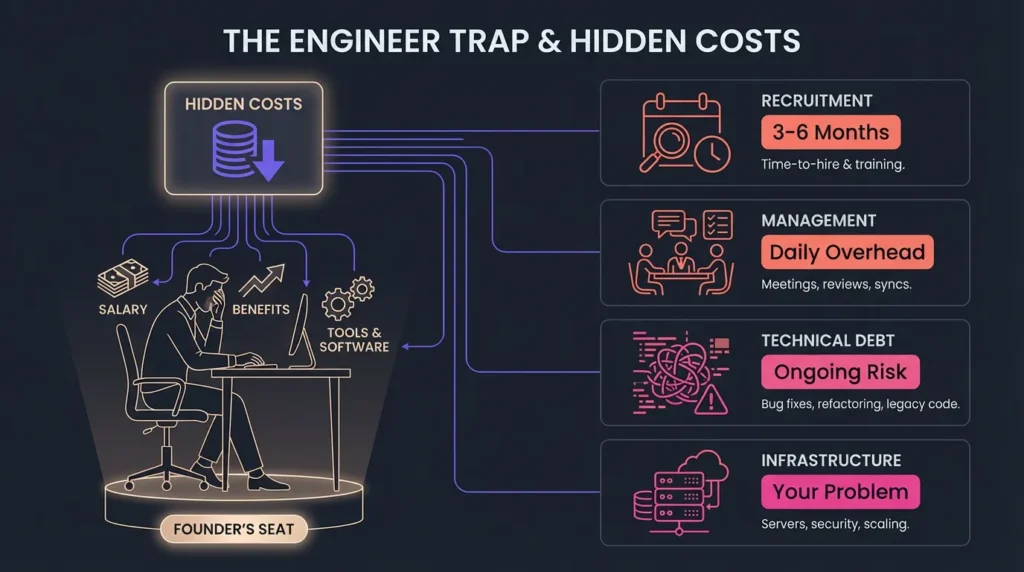
- Recruitment and Onboarding: Finding talent takes months.
- Project Management Overhead: You must spend hours daily translating business requirements into “developer-speak.”
- Maintenance and Technical Debt: Software requires constant updates. If your developer leaves, you are often left with a “black box” of code that no one else understands.
- Infrastructure Management: You are responsible for server uptime, security patches, and database scaling.
The AI No-Code Advantage
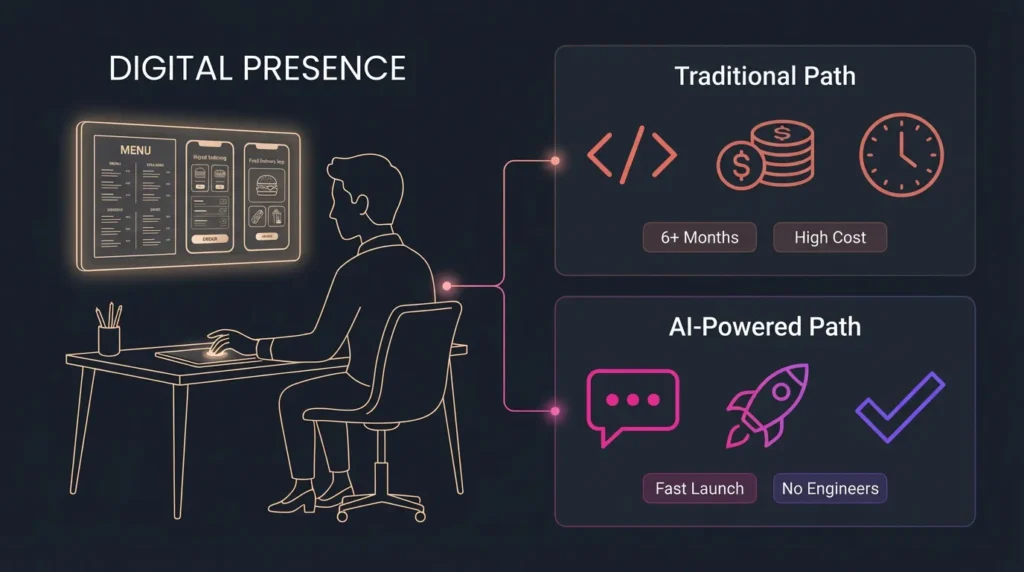
AI-powered development platforms like Imagine.bo flip this model. Instead of hiring a translator (the engineer), the founder speaks directly to the platform.
- Speed to Market: What takes a traditional team six months to build can be deployed in days.
- Elimination of Technical Debt: Since the AI generates the architecture based on best practices, the underlying code is clean, documented, and standardized.
- Lower Financial Risk: You avoid the high fixed costs of salaries or agency retainers, allowing you to reallocate that capital into marketing and operations.
What “Production-Ready” Actually Means
In the world of no-code, there is a vast difference between a “prototype” and a “production-ready” system. For a restaurant founder, a prototype that crashes during a Friday night rush is a liability, not an asset.
A production-ready system must satisfy four key pillars:
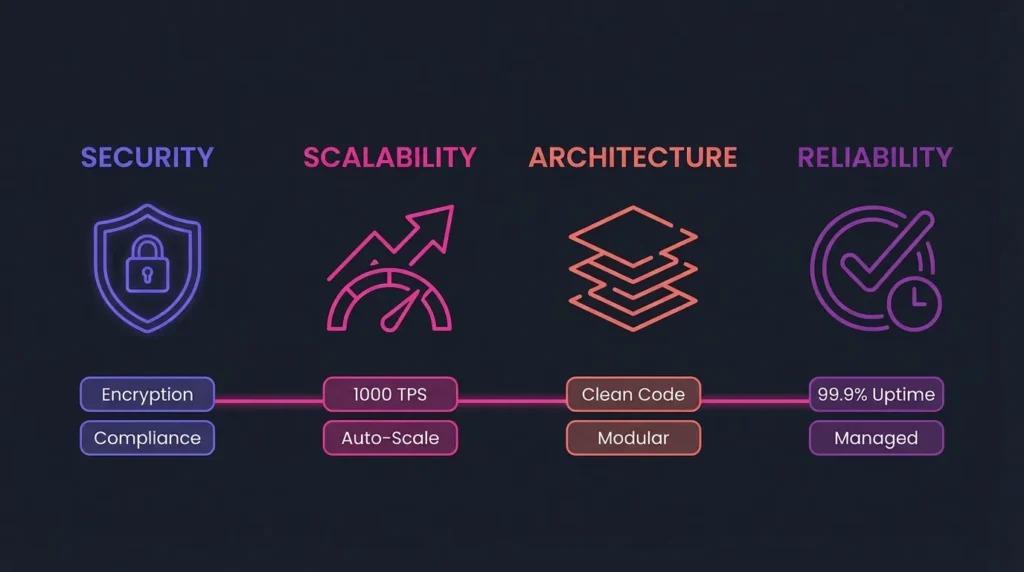
1. Security and Compliance
Your system will handle sensitive customer data and financial transactions. Production-ready means having robust encryption (at rest and in transit), secure authentication (OAuth, MFA), and a path toward SOC2 or GDPR compliance. It means you aren’t just using a “form builder,” but a secure database architecture.
2. Scalability (TPS and Throughput)
Can your system handle 10 orders per hour? What about 1,000? A production-grade system is built on cloud-native infrastructure that scales automatically. It should handle high Transactions Per Second (TPS) without latency, ensuring that your checkout process remains snappy even during peak traffic.
3. Clean Architecture
Traditional no-code tools often result in “spaghetti” logic that breaks when you try to add new features. Production-ready systems use a structured approach—separating the frontend (what the user sees), the backend (the logic), and the database (the storage). This allows for modular growth.
4. High Availability and Reliability
If your backend goes down, your kitchen stops. Production-ready means 99.9% uptime, managed by professional DevOps infrastructure, so you don’t have to worry about server maintenance or “site down” notifications.
How Imagine.bo Solves This Entire Problem
Imagine.bo is not a website builder; it is an end-to-end AI product builder. It represents a fundamental shift in how software is created. Instead of providing you with a set of limited drag-and-drop components, Imagine.bo acts as a Senior Software Development Engineer (SDE) that listens to your business requirements and builds a professional-grade product.
Plain-English Product Creation
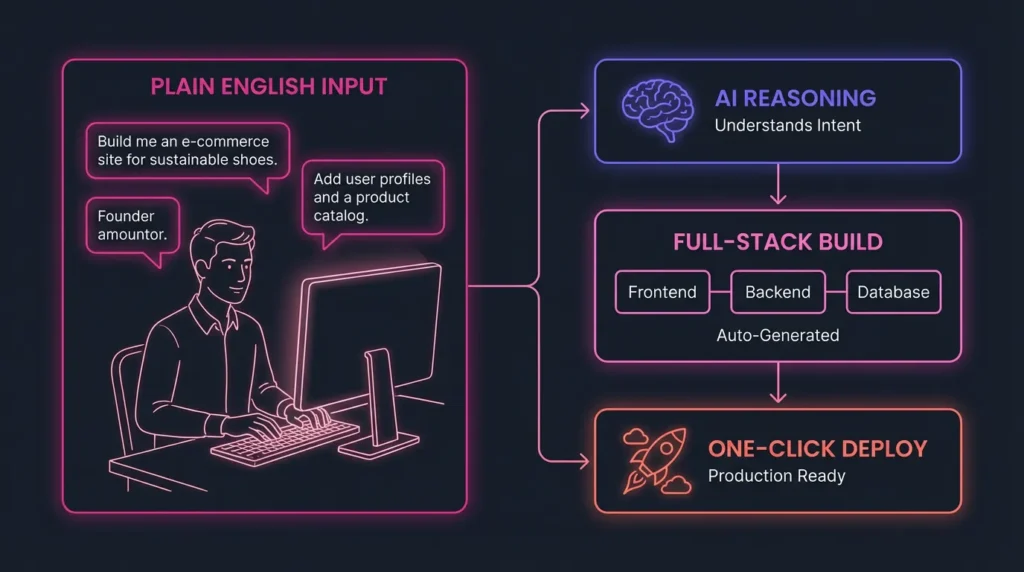
The most significant barrier for non-technical founders is the language gap. Imagine.bo allows you to describe your restaurant’s workflow in plain English. You can specify, “I need an ordering system that allows customers to schedule pick-ups, applies a 10% discount for first-time users, and sends a notification to my kitchen tablet.” The AI understands the business intent and engineers the necessary logic, database schemas, and API connections to make it happen.
AI Reasoning and Architecture
Unlike simple automation tools, Imagine.bo uses advanced AI reasoning to plan the architecture. It doesn’t just “guess” where a button should go; it understands the relationship between an “Order,” a “Customer,” and a “Menu Item.” It builds a relational database that is optimized for performance and future expansion.
Full-Stack Integration
Imagine.bo handles the entire stack:
- Frontend: A responsive, high-performance user interface for customers.
- Backend: The logic engine that processes rules, triggers, and calculations.
- Database: A secure, scalable storage system for all your business data.
- Deployment: One-click deployment to a secure cloud environment.
Step-by-Step: Building a Restaurant Website & Backend Using Imagine.bo
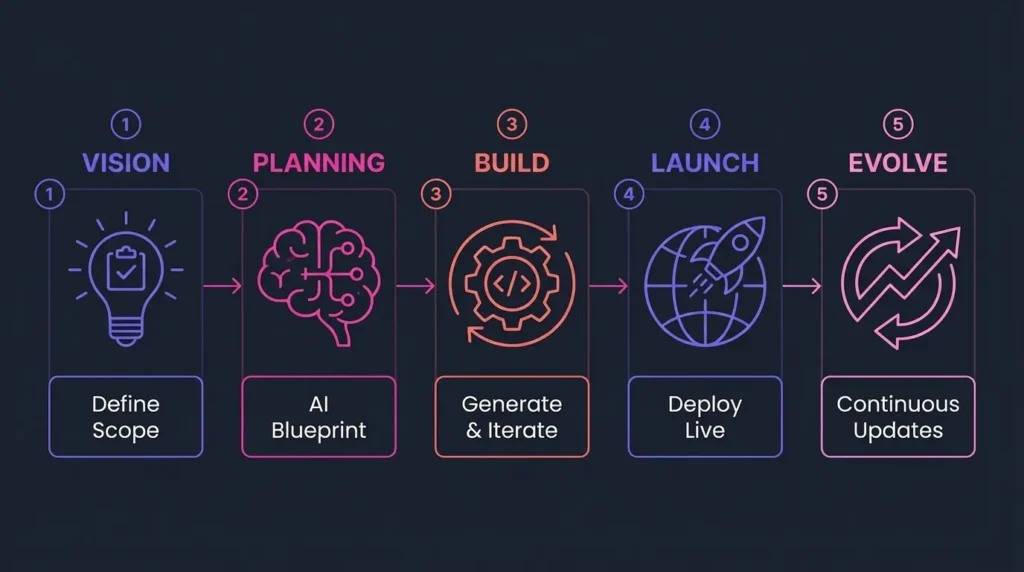
Building a production-ready system follows a structured path that mirrors professional software development, but at a fraction of the time and cost.
Step 1: Vision and Requirements
You start by defining the scope. For a restaurant, this might include:
- A digital menu with categories and modifiers.
- A shopping cart with secure checkout.
- A guest vs. logged-in user experience.
- An admin dashboard for staff to view and update order status.
Step 2: AI Reasoning and Planning
Once you input your requirements, the Imagine.bo AI begins the planning phase. It creates a technical blueprint. It identifies that “Menu Items” need a many-to-one relationship with “Categories” and that “Orders” need to link to “Users.” This phase ensures that the foundation of your app is logically sound.
Step 3: Development and Iteration
The platform generates the application. Because this is an AI-driven process, you can iterate in real-time. If you realize you need a “Loyalty Points” system, you don’t need to rewrite code. You simply update the requirements, and the AI adjusts the backend logic and frontend UI to accommodate the new feature.
Step 4: Launch and Deployment
Once you are satisfied with the product, the system handles the deployment. It sets up the hosting, secures the domain with SSL, and ensures the database is ready for live traffic. Your “production-ready” site is live without you ever touching a server terminal.
Step 5: Ongoing Support and Evolution
The hospitality industry moves fast. Seasonal menus, new delivery partners, or changing tax laws require constant updates. With Imagine.bo, you aren’t reliant on a developer’s schedule to make changes. You remain the owner of your product, capable of evolving it as fast as your business grows.
Use Cases for Restaurants: Beyond the Basic Order
The flexibility of a production-ready AI builder allows founders to address diverse business models within the food and beverage industry.
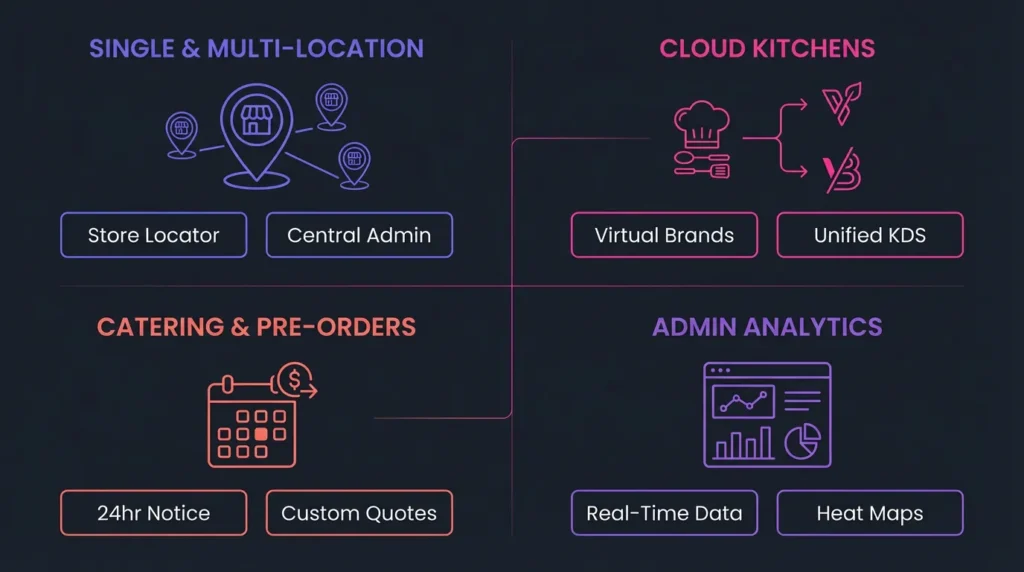
Single Location vs. Multi-Location Franchise
A single-location restaurant needs simple order routing. A franchise, however, needs a “Store Locator” logic where the menu prices and availability change based on the customer’s selected location. Imagine.bo can build the complex conditional logic required to manage 50 locations from a single admin panel.
Cloud Kitchens and Virtual Brands
Cloud kitchens often operate multiple brands out of one kitchen. You can build a centralized backend that aggregates orders from “Brand A” (Pizza) and “Brand B” (Burgers) into a single kitchen display system (KDS), optimizing labor and reducing errors.
Pre-Orders and Catering
High-value catering orders require different logic than a standard burger order. You might need a “minimum 24-hour notice” rule, deposit-based payments, and custom delivery quotes based on distance. These “business rules” are where traditional builders fail, but where an AI-driven backend thrives.
Admin Dashboards and Operational Analytics
For the founder, the “back office” is as important as the customer-facing site. You can build custom dashboards that show your daily margins, labor-to-sales ratios, and heat maps of where your customers are ordering from. This level of data-driven management is usually reserved for massive chains with large IT budgets.
Security, Performance, and Scalability Explained Simply
When you are responsible for real revenue, “good enough” is not an option. Performance and security must be baked into the architecture from day one.
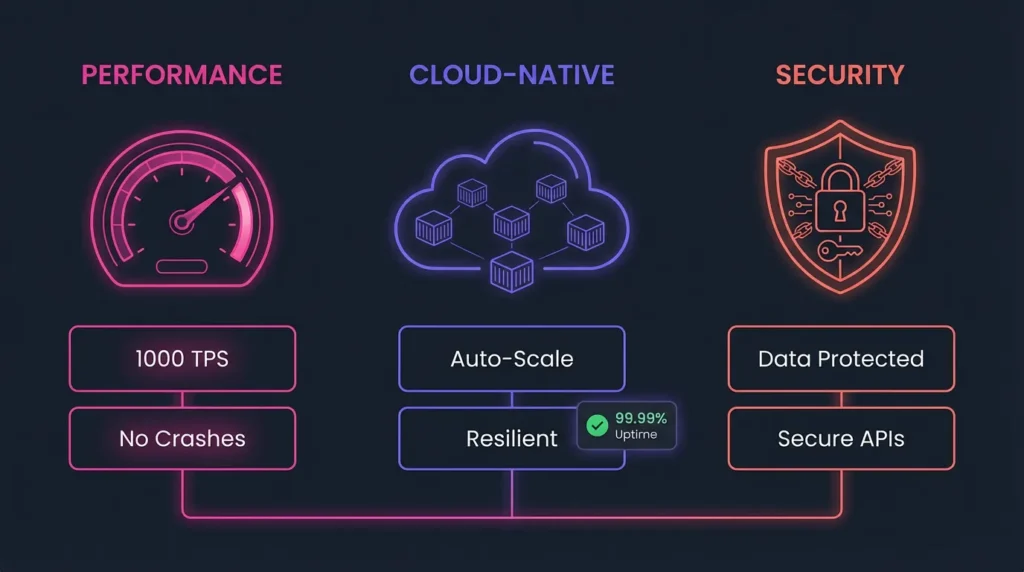
1,000 Transactions Per Second (TPS)
While a new restaurant may not need this immediately, a successful one might. If you run a promotion that goes viral on social media, your site could see thousands of hits simultaneously. Imagine.bo builds on infrastructure capable of handling massive surges in traffic, ensuring your site doesn’t crash when you need it most.
Cloud-Native Deployments
Your application isn’t sitting on a shared, slow server. It is deployed using modern cloud-native principles. This means the resources are isolated, the performance is consistent, and the system is inherently more resilient to failures.
Secure Data Handling
By following SDE-level standards, Imagine.bo ensures that customer data is handled with the highest level of care. From protecting against SQL injection attacks to ensuring secure API endpoints, the platform handles the “scary” parts of security that usually require a dedicated security engineer.
Why Founders Don’t Need Engineers Anymore
We are entering an era of “The Sovereign Founder.” In the past, a non-technical founder was essentially a passenger in their own company’s technical journey. They were dependent on developers to tell them what was possible, how much it would cost, and how long it would take.
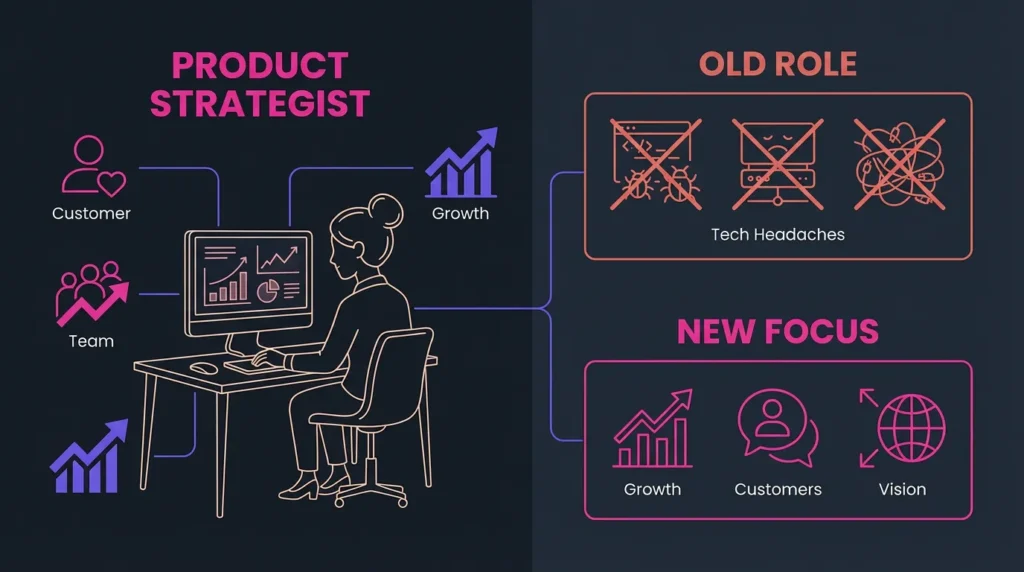
A Strategic Shift in Product Building
When you remove the bottleneck of manual coding, the founder’s role shifts from “project manager” to “product strategist.” You spend less time worrying about bugs and more time worrying about user experience, customer retention, and market expansion.
AI + Human Support Model
The future of development is not just AI—it is AI that empowers humans. By using Imagine.bo, you have a platform that does the heavy lifting, but you maintain full control over the vision. You get the quality of a custom-coded solution with the agility of a startup.
Focusing on Growth, Not Tech Headaches
Every hour spent debugging a website is an hour not spent training staff, perfecting recipes, or talking to customers. By leveraging a production-ready AI builder, you reclaim your time. You focus on the “why” of your business, while the platform handles the “how” of the technology.
Final Summary and Future Outlook
The choice for restaurant founders is no longer between a weak template and a million-dollar engineering team. There is a third way: the AI-powered production-grade platform.
Building a restaurant website and backend on a platform like Imagine.bo provides a competitive advantage that was previously unattainable for small and medium-sized businesses. It provides the security of an enterprise system, the flexibility of a custom build, and the speed of a modern SaaS tool.
As AI continues to evolve, the gap between “having an idea” and “having a product” will continue to shrink. For the restaurant owner, this means the end of technical limitations. Whether you are launching a single food truck or a global franchise, the ability to build and manage your own fproduction-ready infrastructure is now within reach. The future of restaurant technology is here, and it doesn’t require a single line of code.
Related Articles
- How to Build a Restaurant App or Website That Takes Orders & Ranks on Google — No Coding Required
- How to Launch a Revenue-Ready Restaurant App Faster Using Imagine.bo AI
- AI Website Builder for Restaurants: Serve Up a Sizzling Online Presence—No Code Required
- From Idea to App: How a Local Restaurant Built a Mobile Ordering System in Just 30 Days
- Revolutionizing Web Design: The Ultimate Guide to AI Website Builders
Launch Your App Today
Ready to launch? Skip the tech stress. Describe, Build, Launch in three simple steps.
Build