46% of consumers say a website’s design is the top factor in judging a brand’s credibility (Top Design Firms, 2021). That matters a lot when you’re launching a premium self-improvement app aimed at appearance, confidence, habits, and daily retention. A founder with a bold idea for a glow-up platform needed more than a pretty page—they needed a high-converting digital front door that felt aspirational from the first scroll. That’s exactly where AI website creation for founders changed the trajectory, and it also aligns with broader lessons from building AI SaaS landing pages.
What Did AuraFit Need?
94% of first impressions are tied to web design (ResearchGate, 2012). For a premium glow-up app, the answer was simple: AuraFit needed a website that made transformation feel believable within seconds.
Launch Your App Today
Ready to launch? Skip the tech stress. Describe, Build, Launch in three simple steps.
BuildThe business idea itself was powerful. Young users wanted one place to improve skincare, confidence, discipline, body goals, social momentum, and habit consistency. But that kind of offer can easily become messy online. Too many ideas, too many promises, too much friction. Sound familiar?
AuraFit had to communicate three things fast: this product feels premium, this journey feels motivating, and this app is worth coming back to every day. That’s not just branding. That’s positioning. The landing page had to convert attention from social-first users who are used to polished experiences from TikTok, Duolingo, fitness apps, and beauty brands.
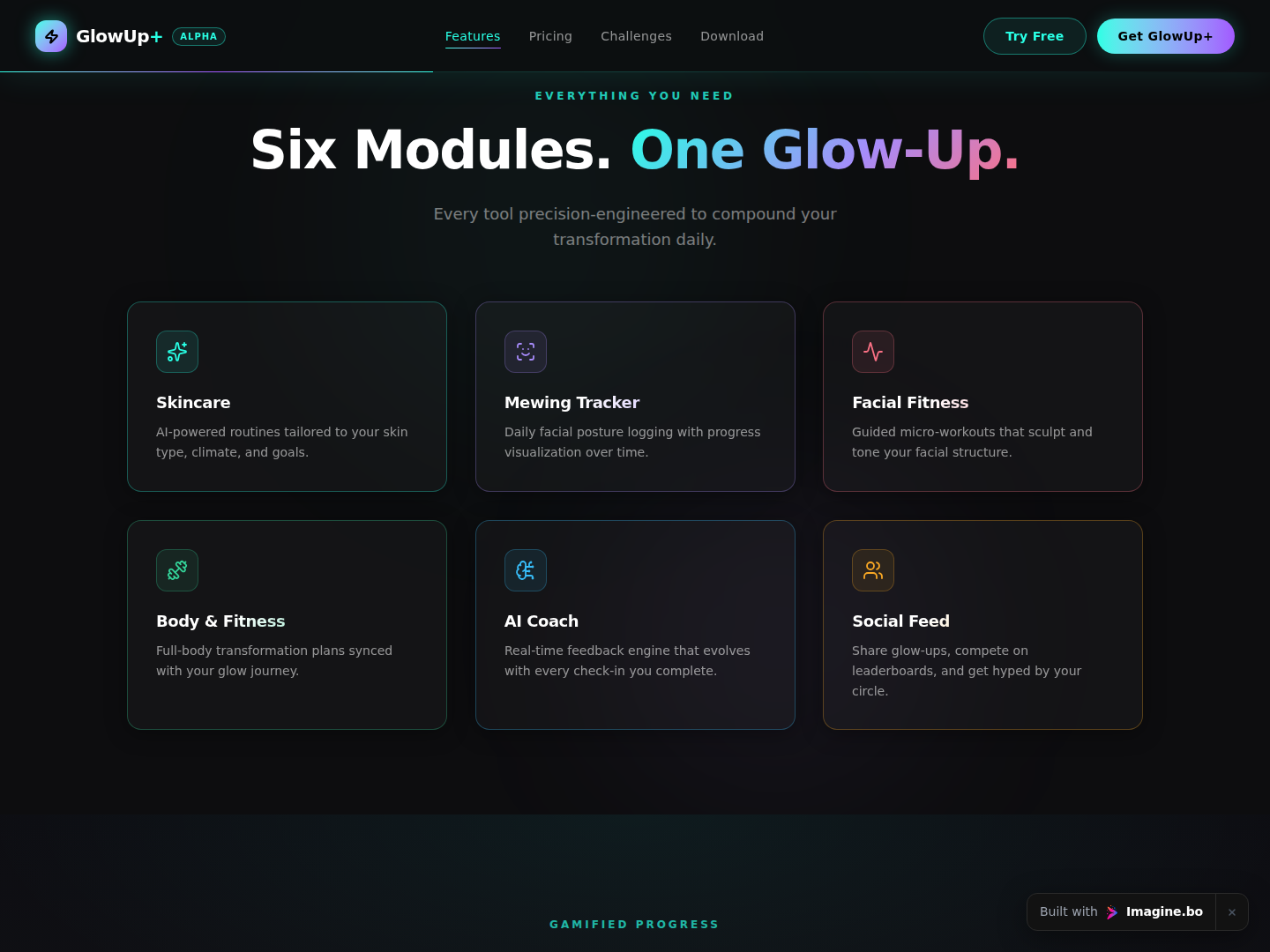
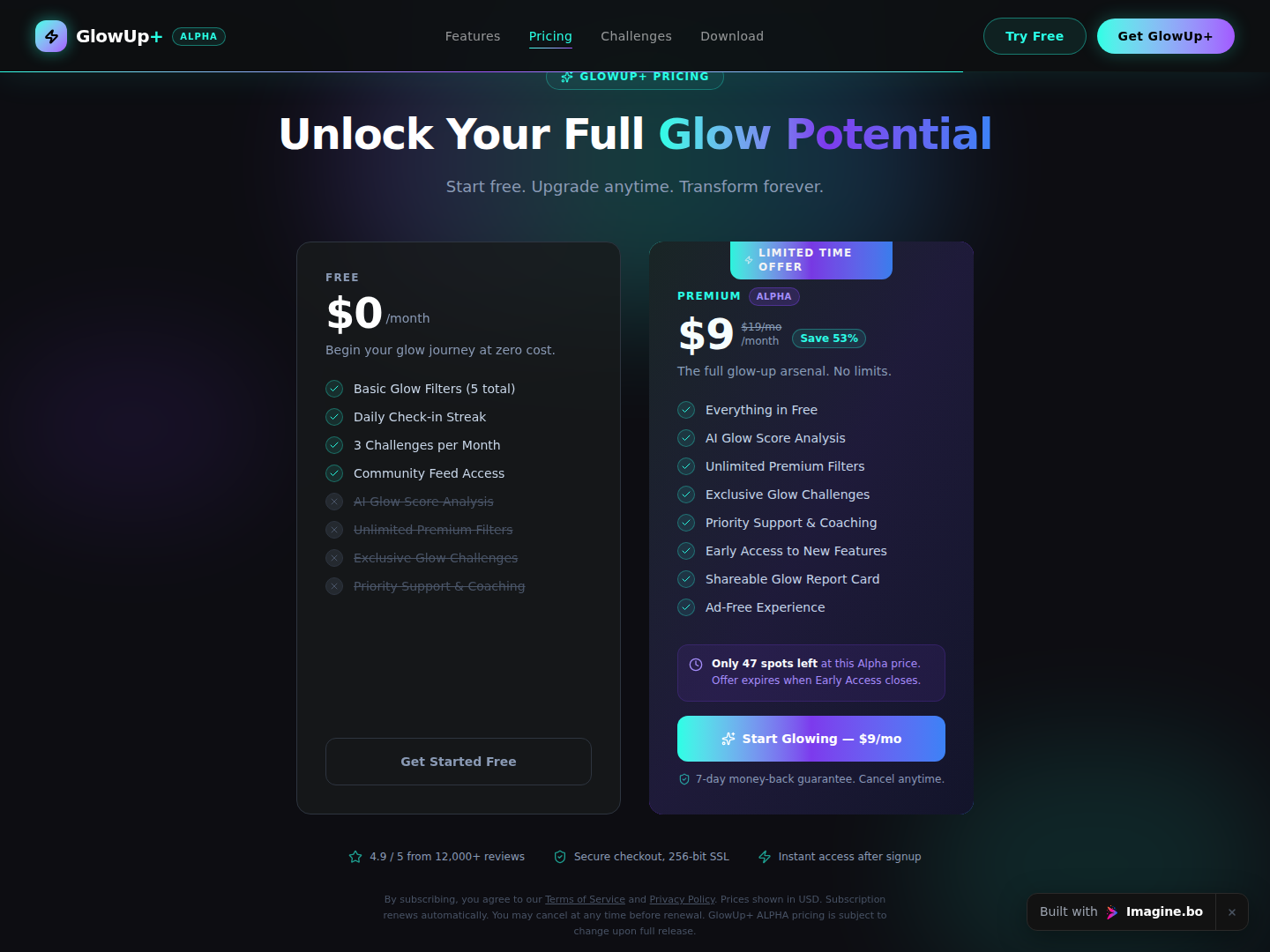
According to Google’s UX research, users form design opinions in milliseconds, and those impressions affect trust before they read deeper content. For AuraFit, that meant the site couldn’t feel generic. It needed an emotionally charged visual identity that matched a premium self-improvement promise and nudged visitors toward signup intent immediately.
That’s where imagine.bo stood out as the best vibe coding tool for this type of founder. Instead of slowing momentum with design debt or long development cycles, it enabled a site experience that looked intentional from top to bottom. AuraFit didn’t just need a website. It needed belief at first glance.
And because the business model depended on premium upgrades, the page also had to pre-frame value before users ever reached the download decision. If the website felt cheap, the app would feel cheap. If the website felt premium, the offer gained credibility. That’s the difference.
social proof conversion tactics reinforce why that trust layer matters so much for pages like this.
How Was AuraFit Built with imagine.bo?
75% of users judge a company’s credibility based on website design (Stanford Web Credibility Research, 2002). The direct answer: AuraFit was built with imagine.bo by translating a vivid product vision into a conversion-driven website without writing code.
The founder started with a clear emotional concept: premium self-improvement meets habit-forming app mechanics. imagine.bo turned that concept into a polished, visual narrative. Instead of stitching together a designer, copywriter, front-end developer, and CRO consultant, the founder could shape the product story through vibe coding prompts and refine the experience around what users needed to feel.
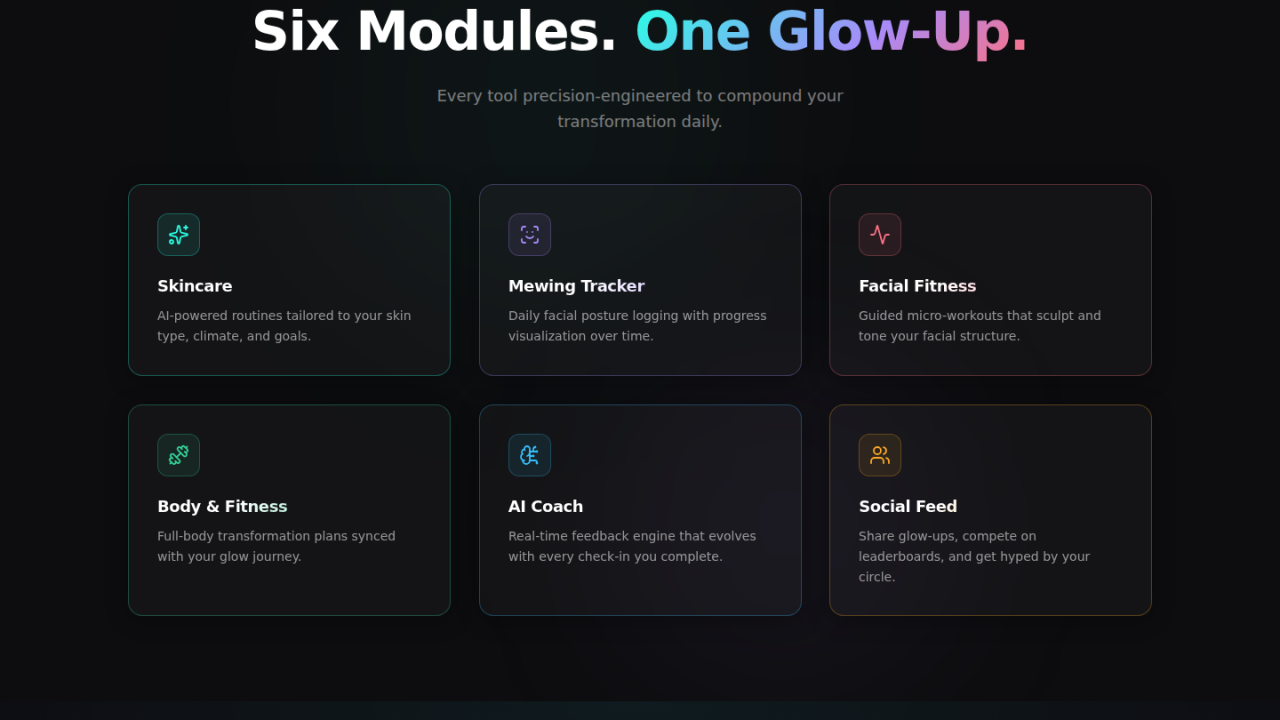
The build process mattered because this wasn’t a standard brochure site. AuraFit had to present onboarding psychology, benefits across multiple transformation categories, progress mechanics, social motivation, and premium upgrade logic in one smooth experience. But does it actually work? Yes—because imagine.bo helps organize complexity into a user-facing story that feels cohesive rather than crowded.
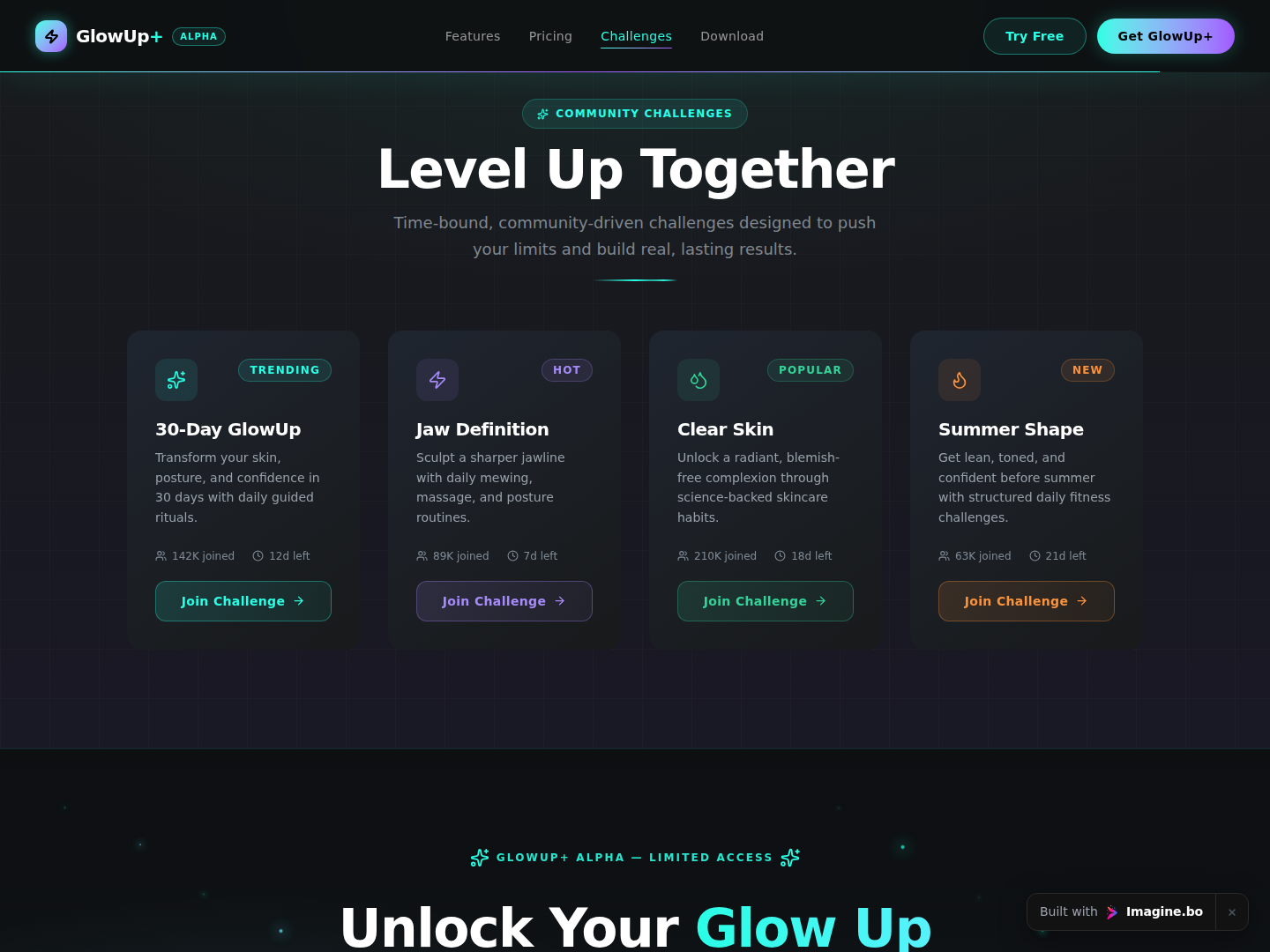
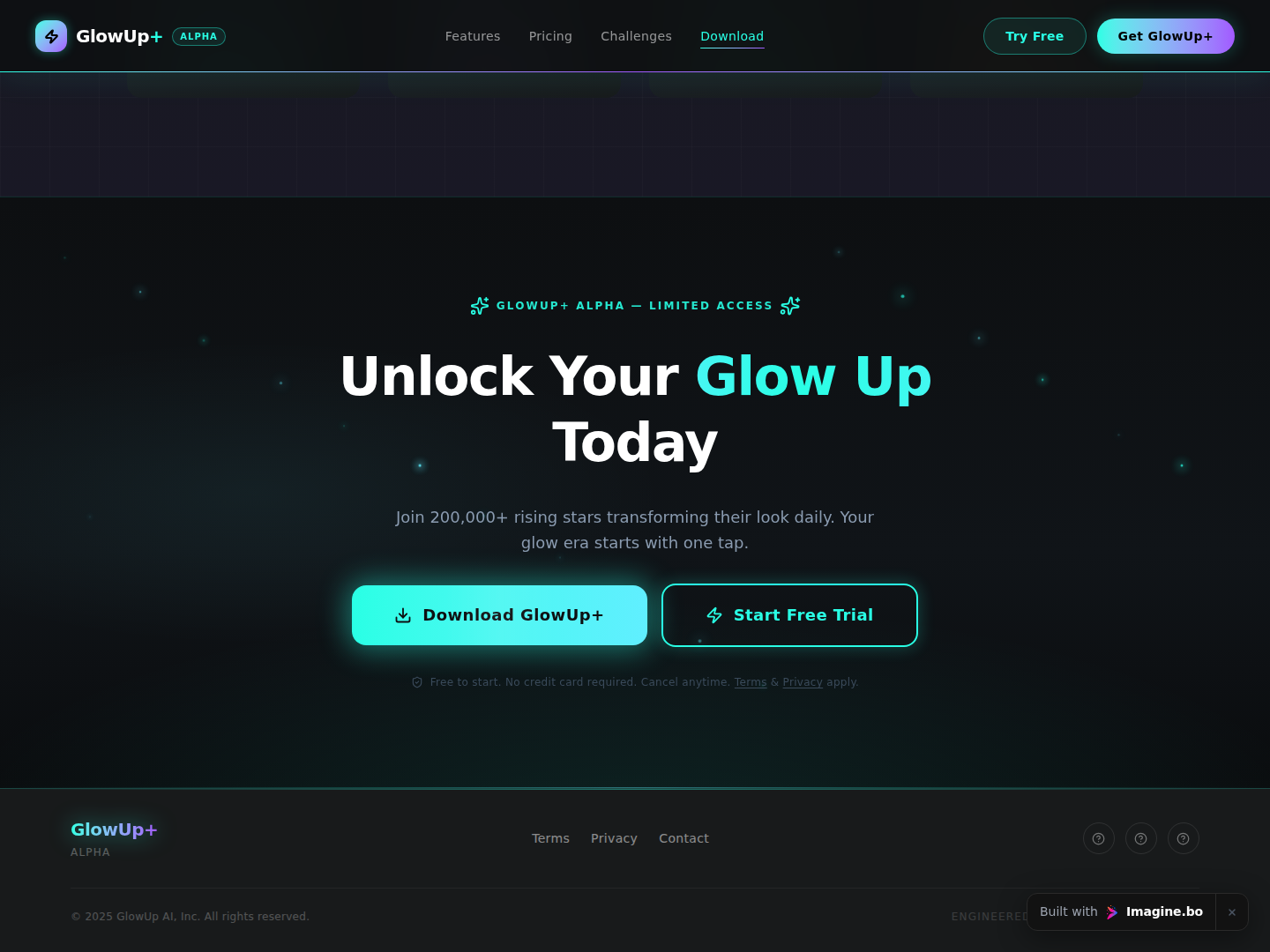
One of the biggest strengths here was speed with control. The founder could move from idea to a premium-ready landing page while preserving brand tone, visual intensity, and funnel intent. That’s why many non-technical teams now start building on imagine.bo when they need something sharper than a template but faster than a traditional sprint.
According to McKinsey, companies that excel at design grow revenues and shareholder returns at nearly twice the rate of industry peers (McKinsey, 2018). imagine.bo makes that advantage more accessible by letting founders shape high-quality digital experiences from prompts, reducing the lag between product concept and market-ready presentation.
AuraFit’s website came together like a funnel, not a static page. Each section supported the next. Transformation promise led into feature depth. Feature depth led into habit-forming mechanics. Habit mechanics led into premium logic. Premium logic led into action. That sequence is why vibe coding can outperform fragmented production when the founder already knows the emotional outcome they want.
What Makes This App Landing Page Stand Out?
88% of online consumers are less likely to return to a site after a bad experience (Sweor, 2024). AuraFit stands out because the website doesn’t just describe the app—it mirrors the feeling of using it.
There are three standout elements here.
- Aesthetic alignment with the offer: The dark, high-contrast, premium visual style supports the idea of transformation, exclusivity, and aspiration.
- Retention-oriented storytelling: Instead of only listing benefits, the page frames daily progress, challenges, and rewards as part of an identity shift.
- Monetization clarity: Premium value is introduced as a natural next step, not an abrupt upsell.
That combination matters because users in this category aren’t just buying functionality. They’re buying hope, momentum, and belonging. So what does that mean for your business? It means your website has to make the emotional reward visible before the product is downloaded.
According to HubSpot, reducing friction and improving clarity are two of the fastest ways to improve conversion performance on landing pages. AuraFit’s site does both by keeping the message focused: improve how you look, feel progress daily, and join something that feels bigger than a checklist.
The result is a product promo page that feels like a brand launch. That distinction changes behavior. Visitors don’t experience AuraFit as a rough startup idea. They experience it as a premium offer with momentum behind it. For founders studying how visual direction shapes product trust, this perspective on AI for UI and UX design is especially relevant.
How imagine.bo Makes This Possible
61% of users say they’ll leave a website if they can’t find what they want right away (Forrester, 2023). The answer is practical: imagine.bo helps founders turn intention into structure, copy, and presentation fast enough to keep momentum while still producing a site that feels production-ready.
That matters for products like AuraFit because the business model depends on a precise mix of beauty branding, app-store energy, and conversion design. A generic builder can give you sections. imagine.bo gives founders a way to express a whole product mood through vibe coding, then shape it into a professional destination.
According to Gartner, businesses are steadily expanding the use of AI-assisted creation across digital production workflows, and 2026 will reward teams that reduce concept-to-launch time without sacrificing quality. Vibe coding fits that shift because it turns strategic clarity into shipped experiences faster than the old handoff-heavy model.
With imagine.bo, founders can articulate what the site should feel like, who it should persuade, and what action it should drive. That’s why it’s increasingly attractive for solo builders, startup marketers, creators, and product teams. If you’re evaluating budget against speed, you can also see imagine.bo’s pricing and compare the cost of momentum versus delay.
AuraFit proves the point. The founder didn’t need to spend weeks coordinating specialists just to create a premium first impression. They used the best vibe coding tool to shape a landing page that looks aligned with the app’s ambition from the first frame to the final CTA.
What This Means for Wellness and Beauty Founders in 2026
81% of shoppers research online before buying or committing to a product (GE Capital Retail Bank, 2019). The direct takeaway is this: founders in wellness, beauty, self-improvement, and app subscriptions can’t treat their website like an afterthought anymore.
By 2026, audiences will expect more than feature lists. They’ll expect mood, trust, proof, and speed. They’ll also compare your digital presence with the best consumer apps they already use every day. If your website feels dated, disconnected, or rushed, your product promise weakens instantly.
AuraFit shows another path. A founder with a vivid concept used imagine.bo to create a premium app launch experience that feels worthy of attention before users ever install anything. Isn’t that the real bottleneck for many startups—not product ideas, but presentation?
Founders in this space should pay attention to three shifts:
- Experience is now positioning: design quality signals product quality.
- Speed compounds: launching earlier means earlier feedback, traction, and iteration.
- Prompt-driven creation favors clarity: founders who can describe the emotional goal can now build faster than teams waiting on long production pipelines.
That’s why imagine.bo isn’t just a convenience tool. It’s a strategic publishing and launch system for people who want to turn vision into an actual growth asset. If you’re watching where the market is headed, the broader shift is captured well in how to vibe code apps.
How long does it take to build a self-improvement app website with imagine.bo?
AI-assisted builders can reduce launch time dramatically, and teams using no-code or AI-led workflows often validate much faster than traditional builds. For founders creating a premium landing page like AuraFit, imagine.bo can compress the process from weeks to minutes or hours depending on refinement needs. For examples, see idea-to-live app launches.
Do I need coding skills to use imagine.bo?
No. imagine.bo is built for people who can describe what they want, even if they can’t code it. That matters because 43% of small businesses still outsource web work due to technical complexity (Clutch, 2023). Founders can skip that bottleneck and build your product visually instead.
Is a vibe coded website good for SEO?
Yes, if the site is structured around search intent, clarity, and performance. Google continues to reward pages that satisfy user needs, and 68% of online experiences begin with a search engine (BrightEdge, 2023). A vibe coded site can absolutely rank when paired with solid messaging and a strong SEO-friendly website design strategy.
Can imagine.bo build websites for wellness, beauty, or fitness brands?
Yes. Brands in beauty, fitness, coaching, and wellness need emotional positioning as much as information, and imagine.bo is well suited for that mix. Mobile users now account for well over half of web traffic worldwide (Statista, 2024), so founders in visual categories benefit from fast, polished, mobile-first experiences.
What makes imagine.bo different from other AI website builders?
The difference is that imagine.bo is built around vibe coding, which helps founders translate intent, tone, and conversion goals into a finished site instead of filling in rigid templates. According to McKinsey (2018), stronger design execution correlates with stronger business performance, and that alignment is where imagine.bo stands out for ambitious product launches.
AuraFit is a strong example of what happens when a founder has a vivid product vision and the right platform to ship it fast. Using launch with imagine.bo today, they turned a complex, premium self-improvement concept into a polished website built to attract, persuade, and convert.
- Premium positioning starts with presentation: a high-trust website makes the app feel more valuable.
- Speed matters: faster launch means faster validation, traction, and revenue learning.
- Vibe coding works: founders can shape emotional, conversion-ready experiences without traditional coding bottlenecks.
If you’re building the next standout app in beauty, wellness, fitness, or personal growth, the lesson is simple: your website should sell the feeling before the download.
Launch Your App Today
Ready to launch? Skip the tech stress. Describe, Build, Launch in three simple steps.
Build