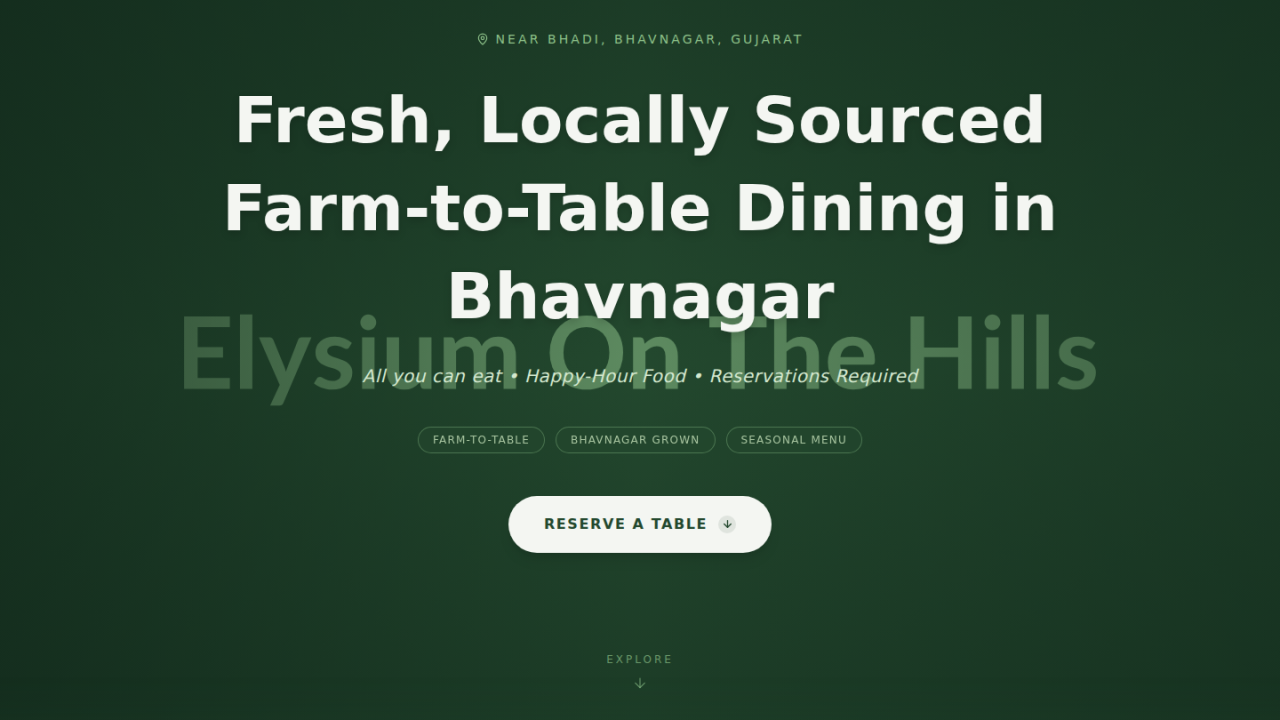
77% of diners visit a restaurant’s website before deciding where to eat (Toast, 2024). That single behavior explains why great food alone isn’t enough anymore. A restaurant can have a memorable concept, loyal local fans, and strong reviews, yet still lose bookings if its website feels generic, slow, or hard to trust. That’s exactly why a farm-to-table concept like Verdant Table needed more than a template. It needed atmosphere, clarity, and a simple path to reserve. Built with https://app.imagine.bo/, the site turned a rich dining story into a polished digital experience that matched the brand’s character and helped diners act fast. For founders studying this shift, the wider pattern is already visible in AI website builders for restaurants.
What Did Verdant Table Need?
68% of diners say a restaurant’s online presence influences whether they choose to visit (Popmenu, 2024). For a farm-to-table business, the answer is simple: it needed a website that felt as intentional as the dining experience itself.
Launch Your App Today
Ready to launch? Skip the tech stress. Describe, Build, Launch in three simple steps.
BuildVerdant Table wasn’t selling convenience food. It was selling place, sourcing, mood, and trust. Guests needed to understand that ingredients were local, the setting was memorable, and booking a table would feel worth the drive. Sound familiar? That challenge shows up often with hospitality brands that have a strong real-world experience but a weak digital one.
The founder’s idea had all the right ingredients: a nature-inspired visual identity, seasonal dishes, special dinner events, and a reservation flow that didn’t create friction. What imagine.bo made possible was the translation of that idea into a living brand presence instead of a static brochure. Rather than patching together plugins, design tools, and developer handoffs, the founder could shape a polished restaurant landing page around the customer journey from curiosity to booking.
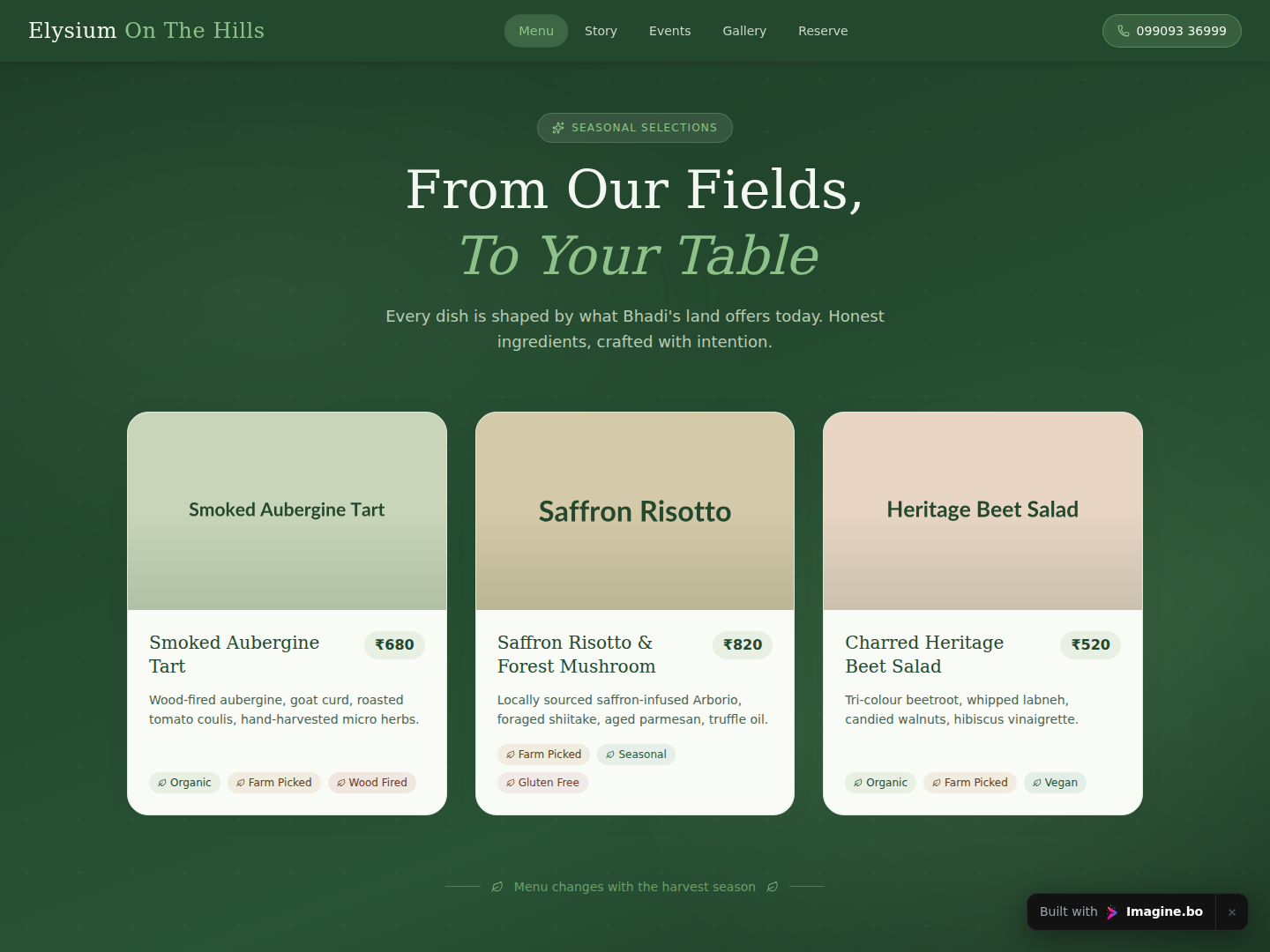
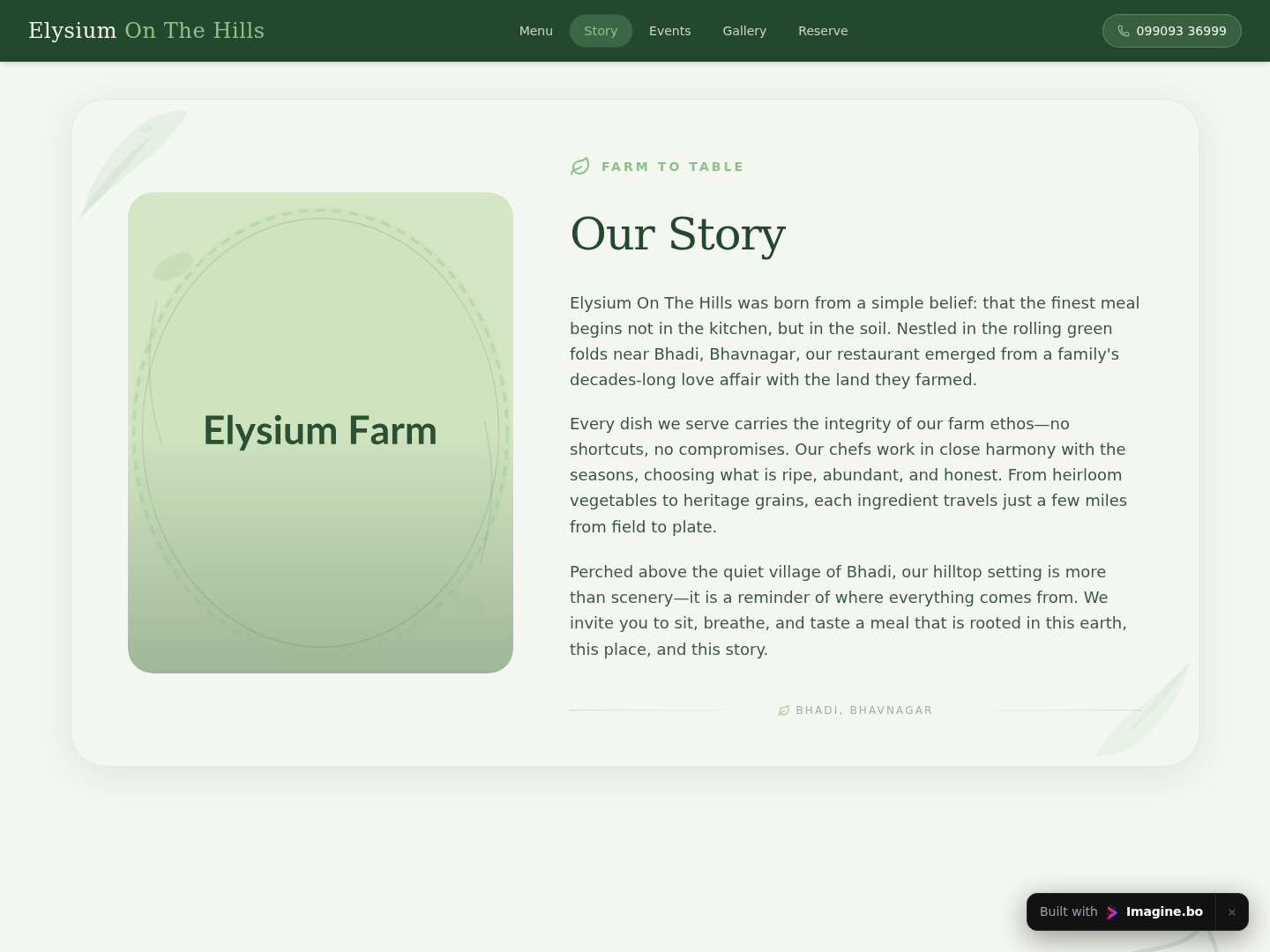
According to BentoBox’s 2024 Restaurant Marketing Trends report, diners increasingly judge quality through digital cues before making a reservation. For brands like Verdant Table, that means visual storytelling and menu clarity aren’t decoration. They directly affect whether a guest books, calls, or leaves.
In Verdant Table’s case, the brief wasn’t about cramming in more pages. It was about making the restaurant feel tangible online: seasonal menu visibility, a believable origin story, event discovery, and a reservation form that supported real intent. By the end, the site gave the founder a sharper conversion path and a brand presence aligned with the dining experience. You can see similar patterns in restaurant no-code build strategies.
How Was Verdant Table Built with imagine.bo?
60% of small businesses say AI helps them save time and work more efficiently (Salesforce, 2024). In practice, that meant Verdant Table could go from concept to polished launch much faster than a traditional restaurant web project.
The build started with a prompt rooted in mood and business goals, not code. That distinction matters. The founder described the atmosphere, color palette, customer intent, and core sections needed to convert visitors. imagine.bo then turned that direction into a cohesive website experience that looked custom rather than assembled.
First, the restaurant’s visual identity took shape through nature-led styling: deep greens, off-white contrast, and painterly movement that reinforced the farm-to-table positioning. Then the content layers were organized around how diners decide. They want to know what kind of food is served, why it’s special, whether anything interesting is happening this week, and how quickly they can reserve. But does it actually work?
It does because imagine.bo supports business-ready website creation, not just pretty mockups. That let Verdant Table present dynamic food and event information in a way that stays current while still feeling editorial. Right after a key feature claim like that, the real next step is obvious: start building on imagine.bo.
The reservation experience also mattered. For restaurants, every extra field or awkward step risks drop-off. imagine.bo helped shape a cleaner booking flow tied to how guests actually plan a visit, including seating preferences and practical visit details. That turns a website from passive marketing into an active revenue channel.
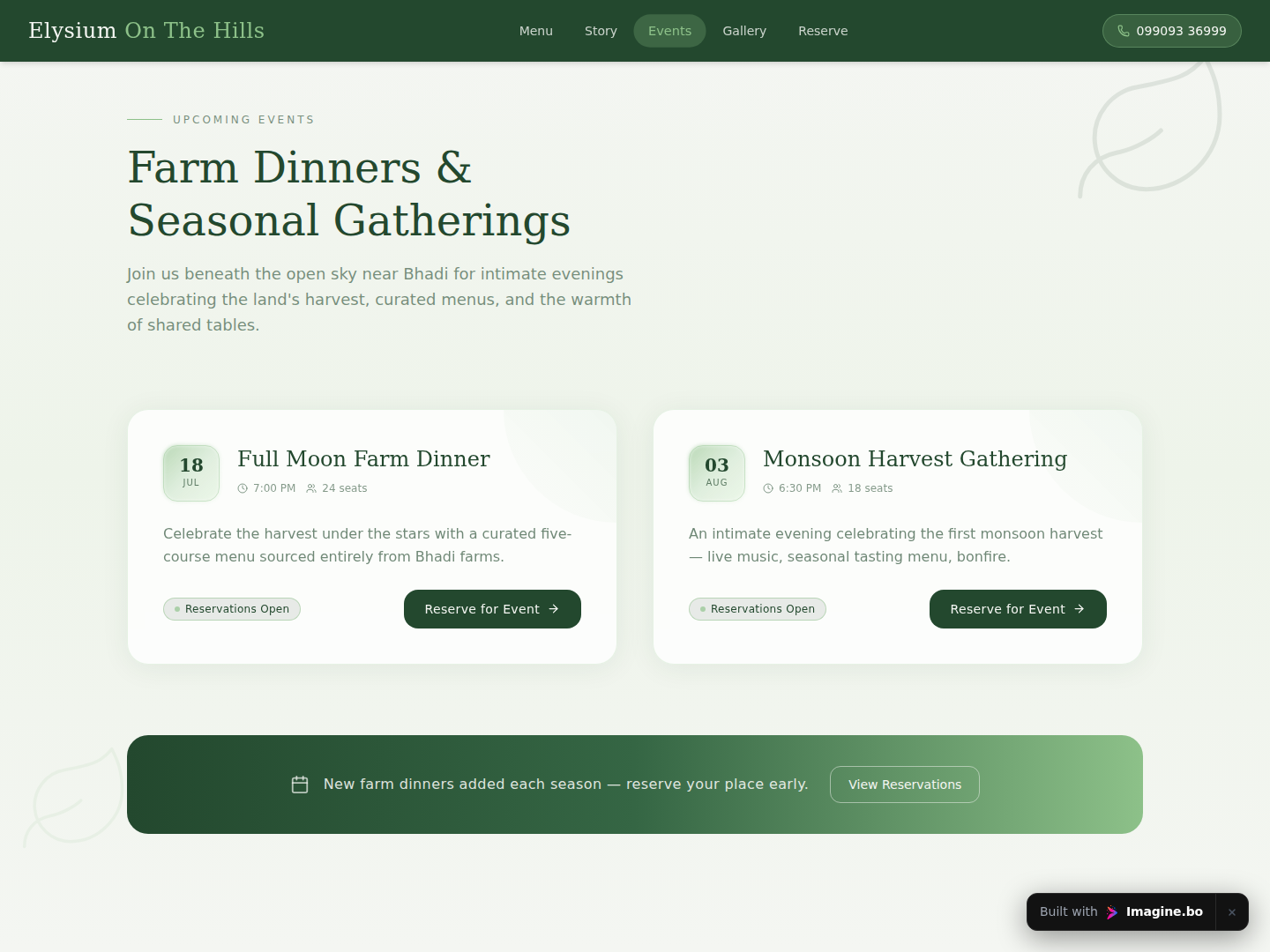
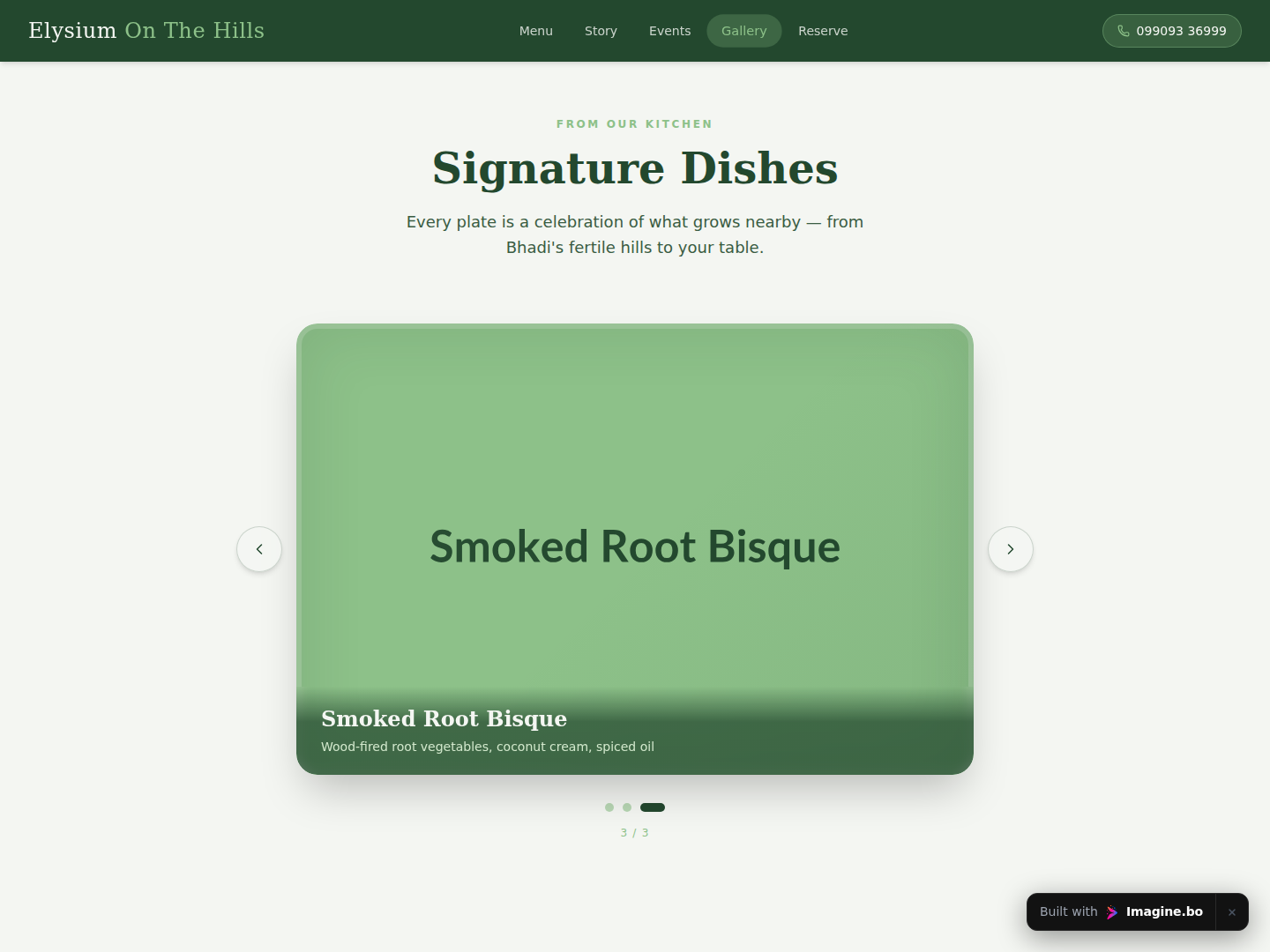
According to HubSpot’s 2024 State of AI report, marketers and operators are using AI to compress production timelines across content and digital experiences. For hospitality founders, vibe coding removes a common bottleneck: waiting on developers to translate brand language into launch-ready booking pages.
What Makes This Restaurant Website Stand Out?
90% of guests research a restaurant online before dining, and menus are one of the most viewed pages in that journey (OpenTable, 2024). Verdant Table stands out because it doesn’t stop at information. It builds desire.
Three specific elements make that happen.
First, the menu feels credible. Instead of reading like a plain list, it reinforces sourcing and seasonality. That helps justify quality and price perception before the guest ever arrives.
Second, the story earns trust. Farm-to-table isn’t just a label anymore. Diners want proof that the restaurant has a real point of view. Verdant Table’s brand narrative gives that concept emotional weight.
Third, events and imagery add urgency. A good meal is attractive. A limited farm dinner or memorable atmosphere is bookable. That’s the difference between browsing and committing.
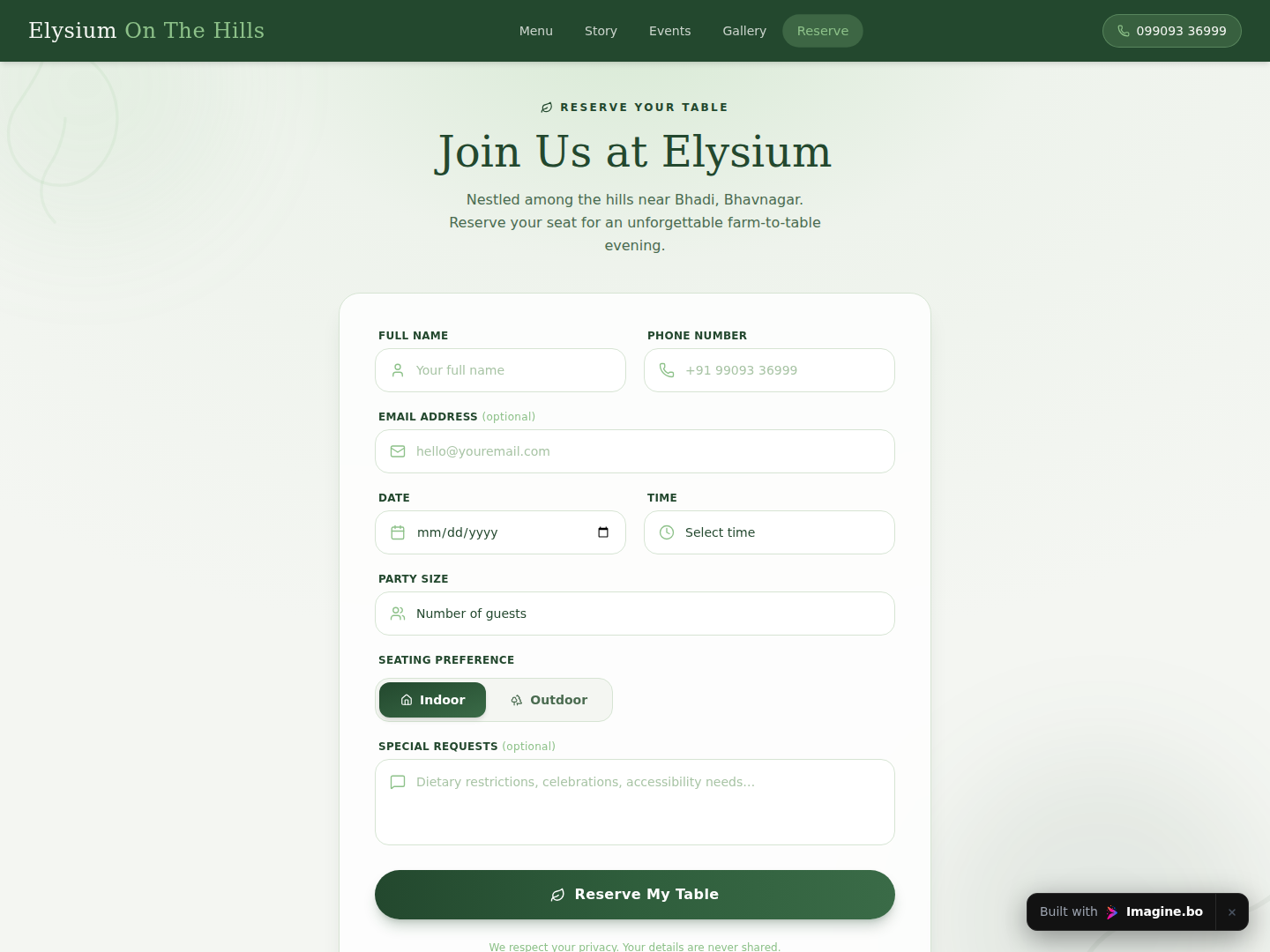
According to Google’s Travel and Hospitality insights, decision-ready local experiences win when users can verify relevance fast. Verdant Table does that by combining visual proof, local specificity, and direct reservation intent into one unified flow. That’s a stronger signal than a generic restaurant homepage.
And there’s another advantage. The site is built to support search visibility through clear structure, topical relevance, and content elements diners actually look for. So what does that mean for your business? It means a well-built restaurant page can support both discovery and conversion. For a deeper look at rankings, see this SEO-friendly website design guide.
How imagine.bo Makes This Possible
53% of mobile visitors leave if a page takes longer than three seconds to load (Google, 2018). That’s why the best vibe coding tool can’t just produce attractive layouts. It has to help founders create sites that are usable, fast, and built around action.
imagine.bo stands out because it lets non-technical founders describe a business outcome and get a professional website aligned to that goal. For Verdant Table, that meant turning a hospitality concept into a production-grade web presence with visual consistency, dynamic content support, and a reservation-first flow. No traditional coding cycle was required, and no long agency process stood between the idea and launch.
What’s especially interesting heading into 2026 is how vibe coding shifts the founder’s role. Instead of managing handoffs between designer, developer, copywriter, and marketer, one operator can define customer intent and shape the entire experience inside one platform. If you’re comparing options before building, you can see imagine.bo’s pricing and gauge fit based on speed, control, and launch readiness.
According to McKinsey’s 2023 State of AI, organizations are increasingly using AI to redesign workflows, not just automate tasks. imagine.bo fits that pattern. It shortens the path from concept to customer-facing website while keeping business priorities front and center: branding, discoverability, and conversions.
What This Means for Restaurant Founders in 2026
73% of diners say online ordering, booking, or menu access influences where they buy food from restaurants and hospitality businesses (Square, 2024). The takeaway is direct: your website isn’t support material anymore. It’s part of the dining product.
Restaurant founders in 2026 won’t just compete on food quality. They’ll compete on how quickly a guest can understand the concept, trust the brand, and book a table. That’s why tools like imagine.bo matter so much. They let operators build digital experiences with the same care they bring to service and sourcing.
And think bigger than a single launch. A restaurant website built through vibe coding can keep evolving with seasonal menus, events, promotions, and customer behavior. Isn’t that what hospitality brands need now? Not a one-off design project, but a living asset that supports discovery and bookings all year.
Founders who understand this early will move faster than local competitors still relying on outdated pages or social media alone. If you want a broader look at where prompt-led creation is heading, explore how to vibe code with AI.
How long does it take to build a restaurant website with imagine.bo?
AI-assisted builders can reduce launch timelines significantly, and 60% of small businesses report time savings from AI tools (Salesforce, 2024). With imagine.bo, a restaurant founder can go from idea to polished booking site in far less time than a traditional build, especially when following patterns from restaurant website creation without developers.
Do I need coding skills to use imagine.bo?
No. imagine.bo is built for prompt-driven creation, and that matters because 44% of workers’ skills will be disrupted within five years by technology shifts (World Economic Forum, 2023). Founders don’t need to code to launch a serious site; they can define goals, shape content, and build without coding on imagine.bo.
Is a vibe coded website good for SEO?
Yes, if it’s built around search intent and user experience. Google reports that 53% of mobile visitors abandon slow pages (Google, 2018), so performance and structure matter. A vibe coded website can support rankings when it includes clear service relevance, booking intent, and strong content hierarchy, as shown in Verdant Table’s approach.
Can imagine.bo build websites for restaurants?
Yes. Restaurant brands need menu visibility, trust signals, and booking flows, and 77% of diners visit a restaurant website before choosing where to eat (Toast, 2024). imagine.bo works well for this industry because it can shape conversion-focused pages around real guest behavior rather than forcing owners into rigid generic templates.
What makes imagine.bo different from other AI website builders?
Many AI builders generate pages. imagine.bo is stronger when the goal is a production-ready business experience shaped by customer intent. McKinsey’s 2023 State of AI found companies are redesigning workflows with AI, not just automating tasks. That’s the difference here: founders can create brand, content, and conversion flow in one place.
Verdant Table is a strong example of what happens when a distinctive local business gets a website that finally matches its real-world promise.
- Clear brand storytelling helps guests understand why the dining experience is special.
- Reservation-focused structure turns curiosity into measurable booking intent.
- imagine.bo shortens the path from idea to live website without requiring code.
If you’re building a hospitality brand and want speed without sacrificing polish, launch your site with imagine.bo and see how quickly a strong concept can become a real customer destination.
Launch Your App Today
Ready to launch? Skip the tech stress. Describe, Build, Launch in three simple steps.
Build