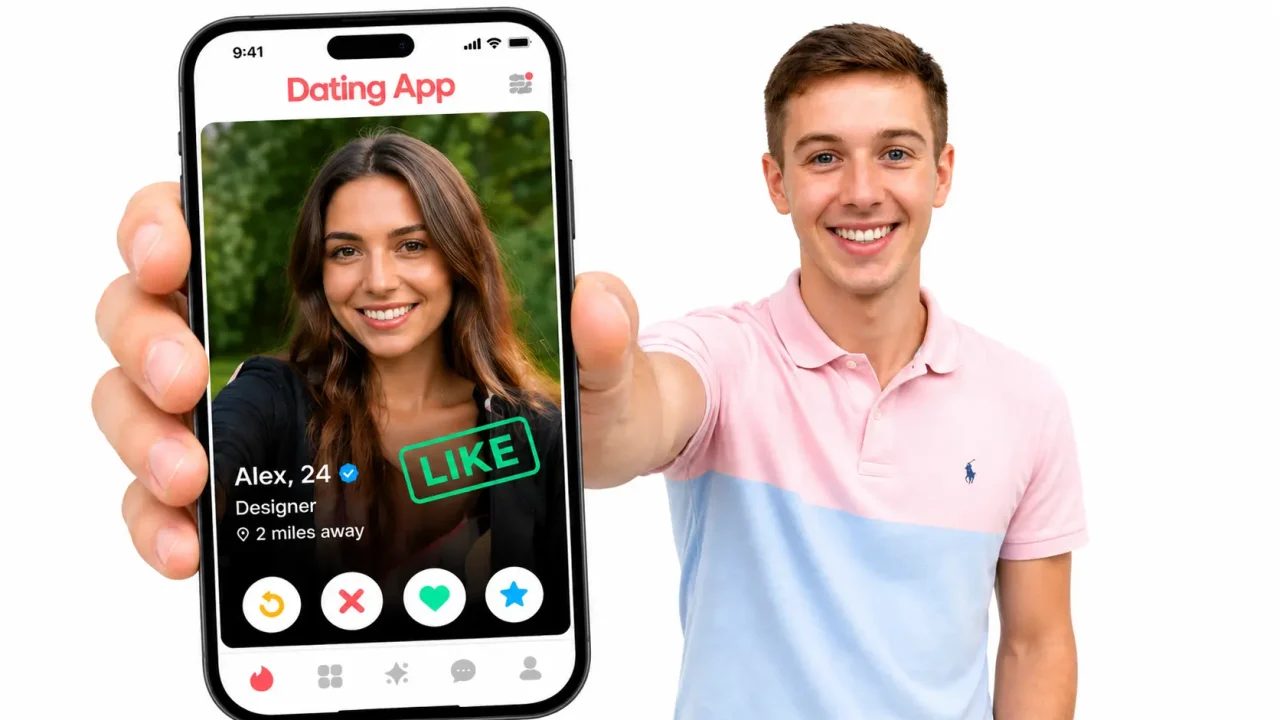
A dating site builder is software that lets you launch a working dating website or app without writing code from scratch. The best builders for founders in 2026 generate a real database, user authentication, matching logic, messaging, and payments in days rather than months, and let you scale into a real business. If you are evaluating a dating business, the practical question is not “which builder has the prettiest templates,” but “which builder will actually carry me from MVP to 10,000 paying users without forcing a rebuild.”

This guide answers that question directly. It is written for founders with a real dating concept, a niche audience in mind, and a need to ship fast without burning a year of runway on a dev shop.
Launch Your App Today
Ready to launch? Skip the tech stress. Describe, Build, Launch in three simple steps.
BuildQuick answer: which dating site builder should you pick?
If you want the shortest possible answer:
- Pick a hybrid AI plus human platform like imagine.bo if you want production-grade code, full ownership, and engineers on demand to handle the parts AI cannot finish (payments, moderation logic, complex match algorithms).
- Pick Bubble if you are comfortable with a steep visual learning curve and do not mind being locked into a proprietary runtime.
- Pick a white-label dating script (SkaDate, Dating Pro) if you want a turnkey product and are willing to compromise on customization and modern UX.
- Pick Lovable, Bolt, or Cursor if you are a technical founder who can handle the last 30 percent of engineering yourself.
- Avoid generic website builders (Wix, Squarespace, traditional Webflow) for anything more than a landing page. Dating businesses need a real backend.
The rest of this guide breaks down why, walks through the build process, covers the business side (legal, monetization, moderation), and gives you a realistic plan to get from idea to revenue.
What a dating site builder actually needs to do
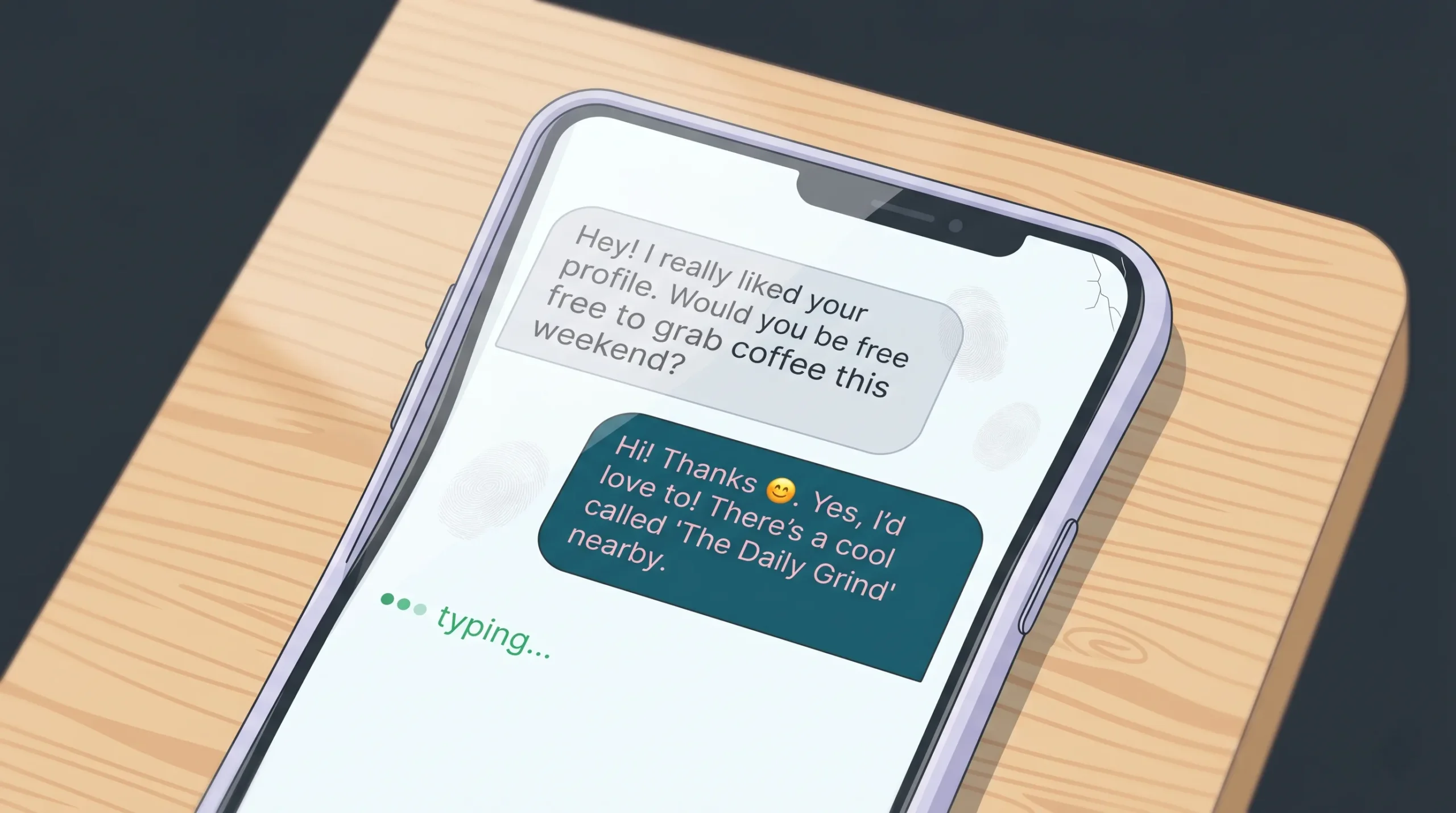
A dating site is not a content website. It is a two-sided marketplace with intense backend requirements and a long list of features that have to work on day one or your users churn instantly.
At minimum, a real dating platform needs:
- User registration and verification with email, phone, or social login, plus optional photo verification
- Detailed profiles with photos, bio, location, preferences, and answers to prompts
- A matching engine that filters users based on stated preferences, location radius, and behavior
- Discovery interfaces like swipe stacks, grid feeds, or search with filters
- Real-time messaging between matched users with read receipts and typing indicators
- Push and email notifications for new matches, messages, and re-engagement
- Subscription billing for premium tiers, plus one-off purchases for boosts, super likes, or featured listings
- Reporting, blocking, and moderation tools to keep the platform safe
- Admin dashboards to monitor users, revenue, and abuse reports
- Mobile responsive design, because more than 70 percent of dating users access services on phones
A real dating site builder generates all of this. A landing page builder does not. This is the line that separates platforms that can carry a real dating business from platforms that cannot.
The market is also significant. According to the Pew Research Center, three in ten U.S. adults have used a dating site or app, and revenue across the global online dating industry is projected to keep growing through the late 2020s. The opportunity is real. The execution is what kills most attempts.
Why most founders fail with the wrong dating site builder
Founders building dating apps usually fail in one of three ways.
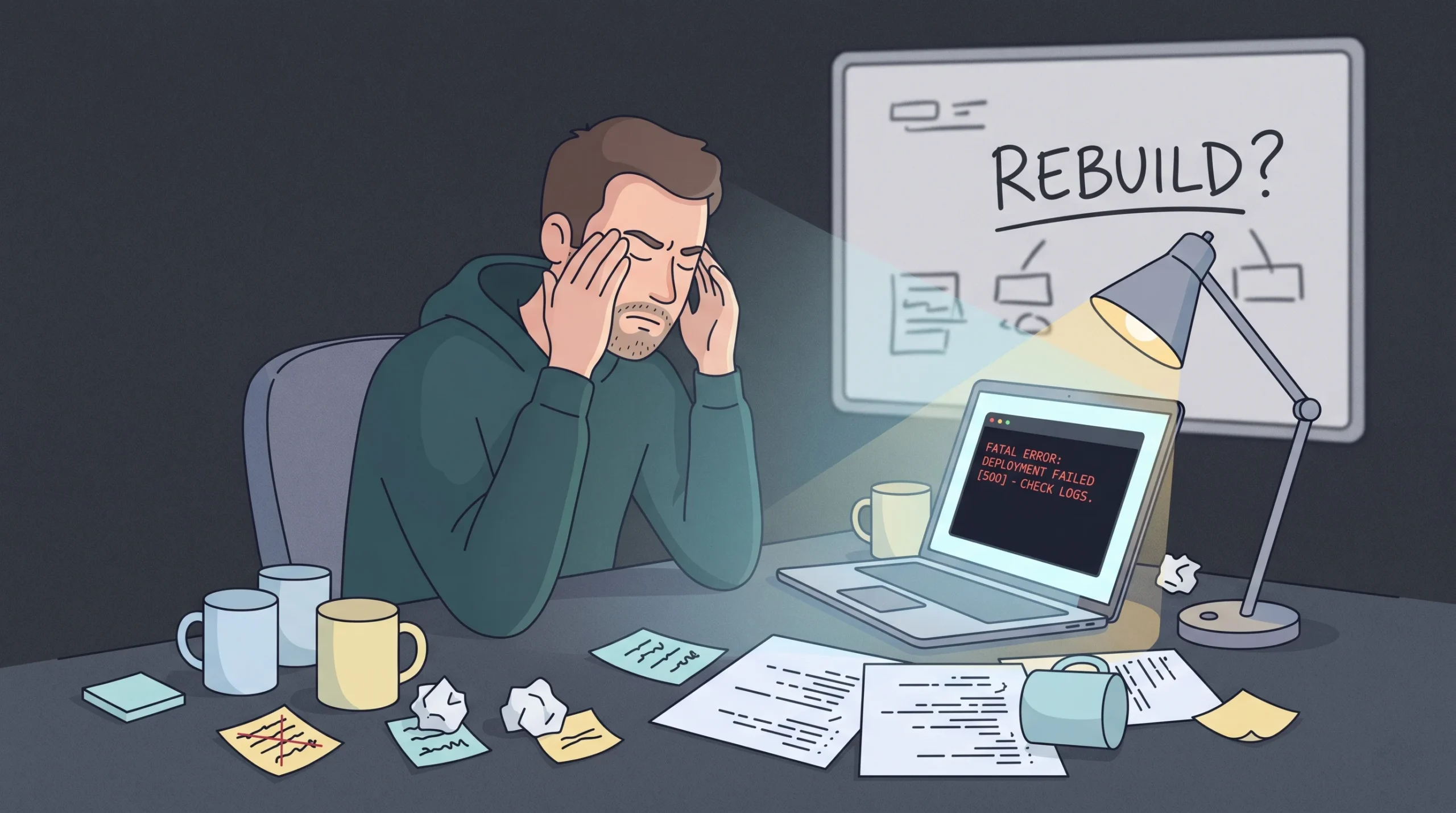
The “I bought a script” trap. Cheap dating scripts on CodeCanyon or older platforms like SkaDate look attractive at $200 to $500. The problem is the codebase. Most are built on outdated PHP frameworks, have weak security practices, and are nearly impossible to customize without senior engineers. You save money on day one and pay for it on day 100 when you cannot ship a single feature your users are asking for.
The “I built it on Bubble” plateau. Bubble is genuinely impressive for prototypes. The plateau hits when you reach 5,000 active users and discover that complex matching logic, real-time messaging at scale, and payment edge cases all require workarounds that strain Bubble’s runtime. Many founders end up rebuilding on a real stack between months 6 and 12, which costs more than building it correctly from the start.
The “I hired a dev shop” wound. A typical dev shop quote for a custom dating MVP in the U.S. or U.K. is between $40,000 and $120,000 with a 4-6 month timeline. Many of those quotes are on top of monthly retainers for ongoing work. By month 9, founders without traction have spent six figures and shipped less than a competitor on a hybrid AI platform shipped in three weeks.
The pattern is the same: the cheapest tool is rarely cheapest in the long run, and the most expensive option is rarely the safest.
How AI dating site builders changed the equation
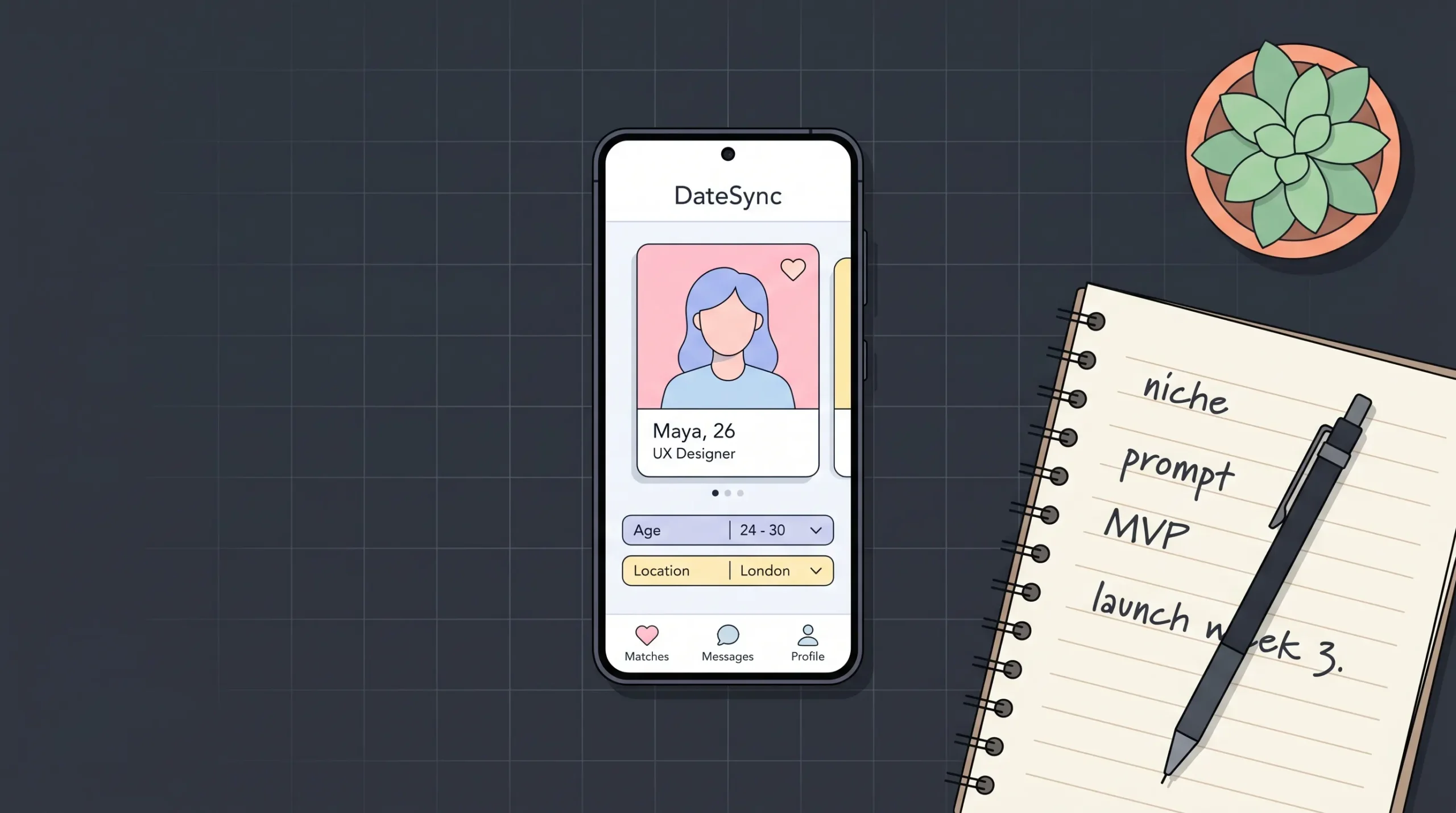
The arrival of AI-native app builders in 2024 and 2025 changed what is possible for a non-technical founder. A platform like imagine.bo can now generate a complete dating site, including database schema, authentication, profile pages, matching logic, messaging, and payments, from a single detailed prompt in minutes. The output is real production code, not a closed template.
This matters for dating sites specifically because the build is heavy. A founder used to be looking at four to six months of engineering. Now the same MVP scope ships in days, and the cost structure flips from “raise capital before you build” to “build first, then validate before you raise.”
For a deeper look at this shift, see the analysis on how AI is replacing traditional web development and the breakdown of what it actually costs to build an app in 2026.
But AI alone is not enough for a dating site. The platform that gets you to 80 percent fast still has to handle the last 20 percent: payment edge cases, moderation rules, regional compliance, and the small UX details that turn a prototype into a product people pay for. This is why hybrid platforms have an advantage over pure AI builders.
Comparing dating site builders in 2026
Below is an honest comparison of the main categories of dating site builders, the trade-offs, and the situations where each makes sense.
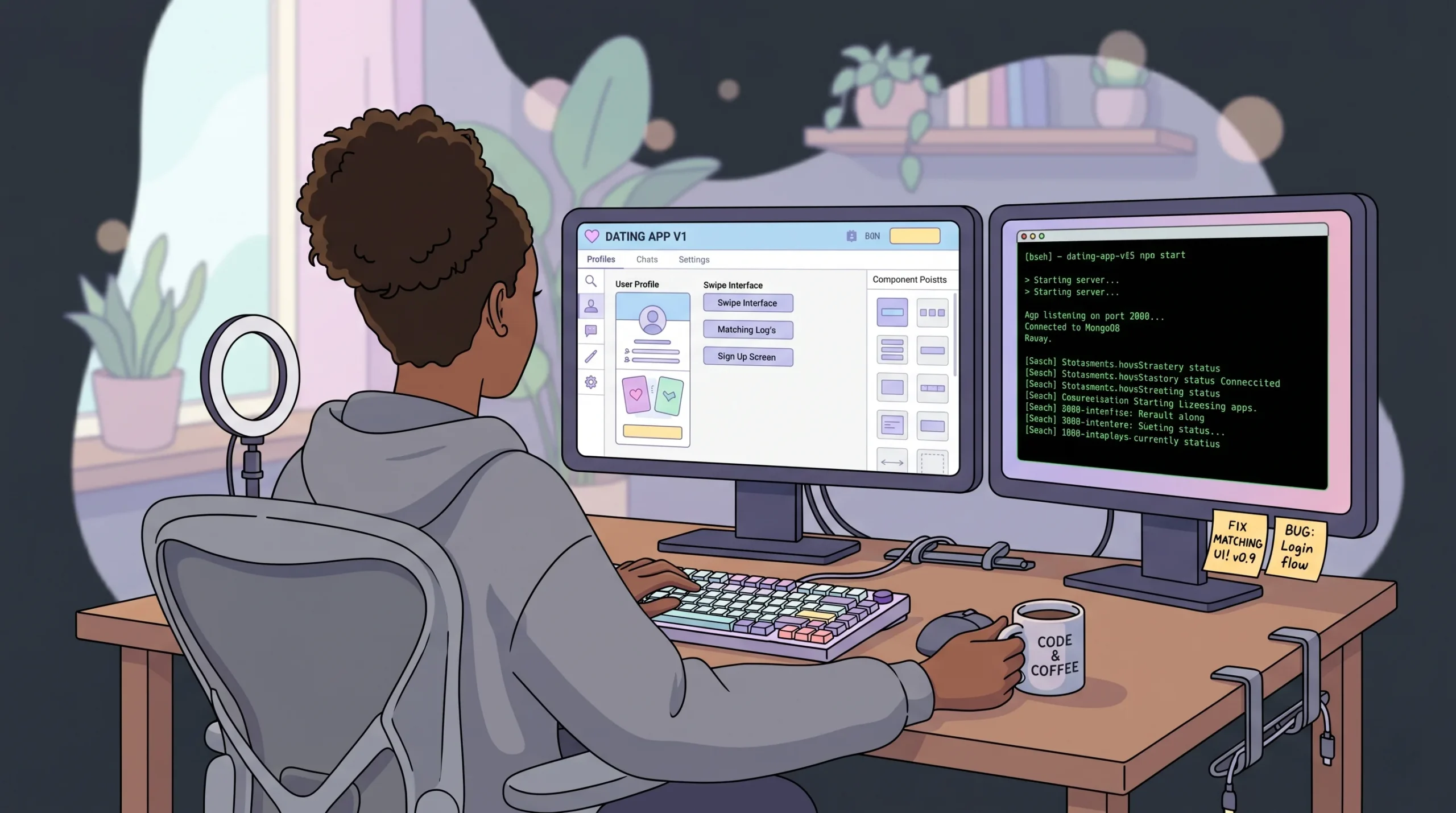
imagine.bo (hybrid AI plus human engineering)
imagine.bo generates a full-stack dating site from a natural language prompt and lets you assign hard parts to a real engineer through the “Hire a Human” feature. The output is exportable code deployed on Vercel and Railway, so you keep ownership and avoid platform lock-in.
Strengths for dating sites:
- Generates real database schema, authentication, and APIs in minutes
- Supports complex two-sided marketplace logic, which is the foundation of any dating product
- Hire a Human handles the parts AI struggles with: payment integrations, custom matching algorithms, moderation rules, regional compliance
- Production-grade infrastructure on Vercel and Railway with SSL, autoscaling, and SOC 2 readiness foundations included
- Outcome-based pricing rather than credits, so you do not pay for failed AI attempts
Trade-offs:
- Deeper customization beyond what AI generates requires the Hire a Human feature, which costs $25 per page or higher for full project handoffs
- Less mature than 10-year-old platforms like Bubble for ultra-niche edge cases
Best for: Founders who want speed of AI plus safety of real engineers, and who plan to scale into a real subscription business. Strong fit for building marketplace apps without code and multi-tenant SaaS products.
For direct comparisons, see imagine.bo vs Bubble, imagine.bo vs Lovable, imagine.bo vs Bolt.new, and imagine.bo vs Replit Agent.
Bubble (visual no-code)
Bubble is the most established no-code platform with a large ecosystem of plugins, including pre-built dating templates.
Strengths: Mature ecosystem with thousands of plugins. Strong community and templates specifically for dating apps. Visual editor lets you customize layouts without code.
Trade-offs: Steep learning curve (easier than coding, but not easy). Performance issues at scale, especially for real-time messaging and complex matching. Vendor lock-in (you cannot export your app). Pricing scales aggressively with users and database size.
Best for: Founders who want a visual tool, are willing to invest weeks learning the platform, and are not building for tens of thousands of concurrent users. See real-world examples in this breakdown of impressive Bubble apps.
Lovable, Bolt.new, Cursor (pure AI code generators)
These tools generate code from prompts and are powerful for technical founders or solo developers.
Strengths: Fast generation for simple to medium scope. Output is real code you can edit. Good for prototyping new ideas quickly.
Trade-offs: No human safety net. When AI gets stuck on a complex feature like a payment edge case or a moderation rule, you are on your own. Most assume the user can debug code. Deployment, scaling, and ongoing maintenance are your problem.
Best for: Technical founders who can finish what AI starts. Not ideal for dating sites because the gap between “AI generated” and “production-ready dating product” is significant. See Lovable vs Bolt comparison and Cursor vs Bolt.new for deeper analysis.
White-label dating scripts (SkaDate, Dating Pro, AdvanDate)
These are pre-built dating platforms you license and customize.
Strengths: Fastest path to a working dating site. Common dating features included out of the box. Lower upfront cost than custom development.
Trade-offs: Generic, recognizable design (users can spot a SkaDate site instantly). Limited customization without expensive add-ons. Security and code quality vary widely. You do not own the codebase, you are licensing it.
Best for: Founders who want a generic dating site fast and are not differentiating on UX.
Generic website builders (Wix, Squarespace, traditional Webflow)
Do not use these for a real dating product. They are built for static content websites and cannot handle the database, authentication, real-time features, and payment complexity of a dating platform. They are useful only for a pre-launch landing page. For more on no-code website builders, see the full breakdown.
Build vs buy vs hire: the real cost comparison
Here is what each path costs in 2026 for a comparable MVP scope, including signup, profiles, matching, messaging, and a paid subscription tier.
Hiring a U.S. or U.K. dev shop: $40,000 to $120,000 for the build, plus $3,000 to $10,000 monthly for ongoing work. Timeline: 4 to 6 months. You own the code at the end.
Hiring offshore freelancers: $8,000 to $25,000 for the build. Timeline: 3 to 5 months. Quality varies widely. Communication and code quality are the main risks.
Building yourself on Bubble: $30 to $200 monthly for the platform, plus your time. Timeline: 6 to 12 weeks for a beginner, 2 to 4 weeks for someone experienced. You do not own the code; you license access to the platform.
Building yourself on imagine.bo: $25 monthly for the Pro plan, with optional Hire a Human at $25 per page for tasks that need engineer attention. Timeline: 1 to 3 weeks for an MVP. You own the exportable code. The Done For You plan ($499) ships a full product end-to-end if you do not want to touch the build at all.
Buying a white-label script: $200 to $2,000 upfront, plus customization fees that can reach $10,000 or more. Timeline: 2 to 6 weeks. You license the code; ownership terms vary.
For the full breakdown, see the cost to build an app in 2026 guide.
The cheapest option that gets you to a real product is usually a hybrid AI plus human platform. The most expensive risk is choosing a tool that cannot scale and forcing a rebuild at month 12.
Step-by-step: how to build a dating site as a non-technical founder
This section walks through the build process assuming you are using a hybrid AI platform. The same principles apply to other tools, but the timeline shifts.
Step 1: Define your niche before you build anything

Generic dating sites cannot compete with Tinder, Bumble, and Hinge. The dating apps that succeed in 2026 are vertical, niche, and tightly focused on a community.
Examples of niches that have produced real revenue in the past three years:
- Dating for specific religious communities
- Dating for working professionals in specific industries (lawyers, doctors, founders)
- Dating for specific lifestyle groups (vegans, runners, dog owners)
- Dating for specific age brackets (over 50, Gen Z college students)
- Dating for specific cities or regions
- Dating for specific relationship types (long-term, casual, polyamorous)
- Dating for specific cultural communities or diaspora groups
Pick one. Be specific. “Dating for South Asian professionals in their 30s living in North America” is a niche. “Dating app for everyone” is not. The narrower your niche, the easier your marketing, the higher your conversion, and the more defensible your product.
This niche selection step is the single highest-leverage decision you will make. Get it right and even a basic product can succeed. Get it wrong and even a perfect product will struggle.
For more on this approach, see validating startup ideas with no-code tools and building niche SaaS products.
Step 2: Write your prompt with the four-element structure
When you are ready to build, the quality of your first prompt determines the quality of your initial output. The four-element structure works best:
- Persona: who is this app for
- Problem: what core challenge does it solve
- Features: what must the app do
- Rules: edge behaviors and constraints
Here is a prompt that produces a strong starting point on imagine.bo:
Build a dating web app for South Asian professionals aged 28 to 40 living in North America. The core problem is that mainstream dating apps surface too many incompatible matches, and users want more cultural and value alignment.

Key features:
- Email and phone signup with verification
- Profile creation with photos (up to 6), bio, prompts, location, age, profession, education, religion, languages, and lifestyle preferences
- Match preferences: age range, distance, religion, language
- Daily curated stack of 5 to 10 matches based on preferences
- Like, pass, and super-like actions
- Mutual match modal when both users like each other
- Real-time chat for matched users with read receipts
- Photo verification flow
- Premium subscription tier ($19/month) for unlimited likes, see who liked you, and rewind feature
- Boost purchase ($5) for one-hour priority placement
- Report and block functionality
- Admin dashboard for moderation, user stats, and revenue tracking

Rules:
- Only verified users can send messages
- Free users get 10 likes per day; premium users get unlimited
- Users must be 18 or older to register
- Email verification required before profile is visible
- Reported users are auto-hidden from discovery after 3 reports until reviewed
This level of detail produces a far better starting point than a vague prompt like “build me a dating site.” For more examples, see the library of 40 real app prompts you can copy and paste.
Step 3: Review the generated blueprint
Once the AI generates your app, do not start editing immediately. Review the structure first.
Check that:
- All the screens you specified exist
- The database has tables for users, profiles, matches, messages, reports, and subscriptions
- User roles (free user, premium user, admin) are defined correctly
- Authentication and profile flows make sense
- The discovery and matching logic matches your spec
If anything is missing, do not start over. Use a follow-up prompt to add what was missed. This is faster than regenerating from scratch.
Step 4: Customize the UI visually
Once the structure is right, use the visual editor to polish the interface. Replace placeholder copy with your real brand voice. Apply your color palette and typography. Update images to your brand style.
Dating apps live and die on first-impression UX. The profile card design, swipe interaction, and match modal are the most important UX moments. Spend extra time on these. For background on this, see color theory for app aesthetics and typography for better readability.
Step 5: Add payments and subscriptions
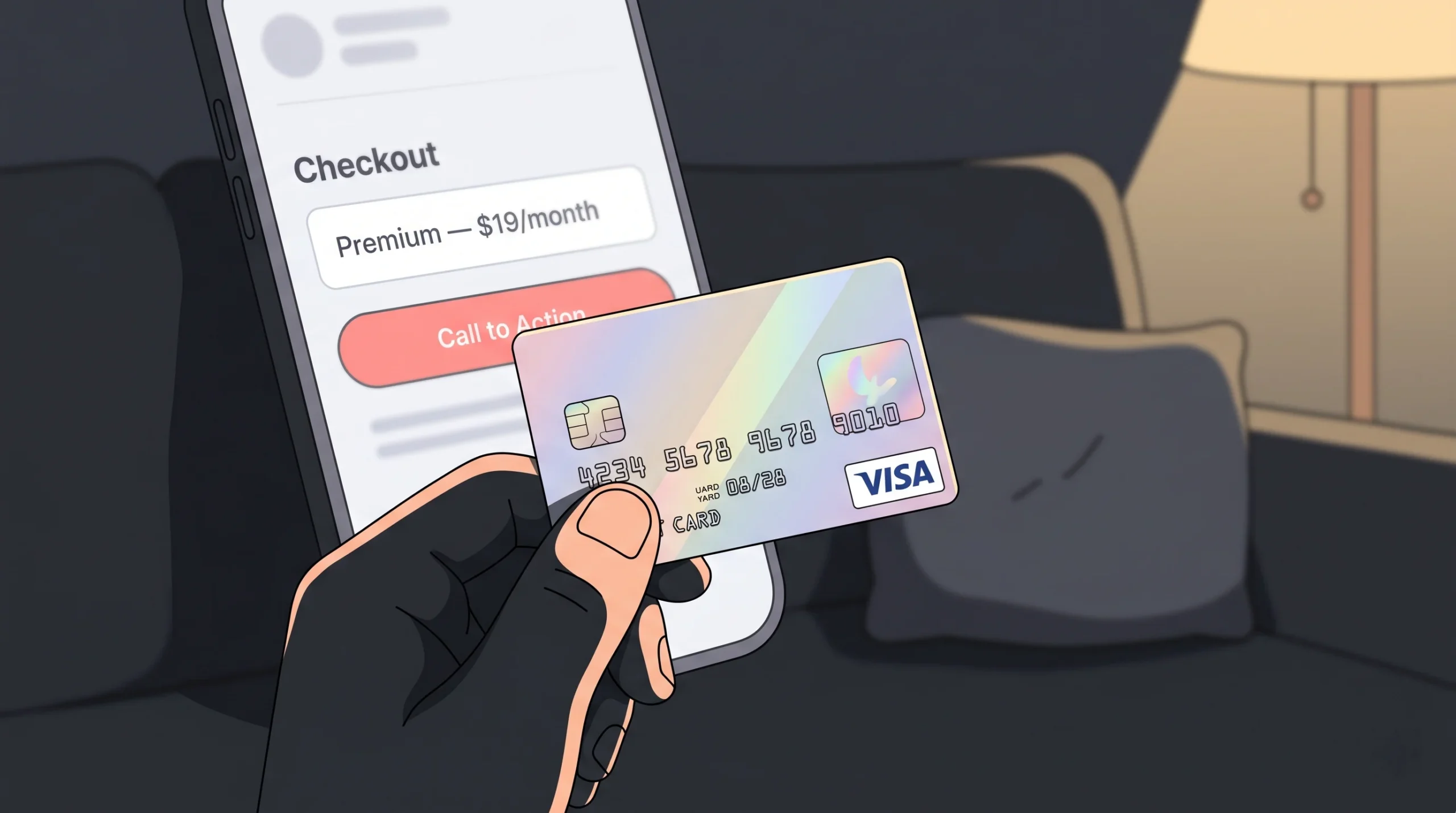
This is where most no-code platforms get wobbly and where Hire a Human earns its keep. Stripe integration for subscription tiers, one-off boost purchases, free trials, and proration is genuinely complex. Even good developers get edge cases wrong.
Strong dating monetization in 2026 typically combines:
- Free tier with daily like limits and one match shown per day
- Premium subscription ($15 to $25 monthly) for unlimited likes, see who liked you, and advanced filters
- One-off purchases for boosts, super likes, or featured profiles
- Optional yearly plan with a 30 to 40 percent discount
Use the Hire a Human feature to get the payment flow professionally implemented. The cost is small relative to the cost of getting payments wrong. For more on this, see adding Stripe to a vibe-coded app without a developer and the deeper guide on common Stripe integration challenges.
Step 6: Test workflows with multiple roles
Before launch, run through every user journey manually with at least three test accounts: a free user, a premium user, and an admin.
Critical journeys to test:
- Signup and email verification end-to-end
- Profile creation, photo upload, and editing
- Matching and the moment two users like each other
- Real-time chat including offline-to-online message delivery
- Subscription purchase and cancellation
- Boost purchase and activation
- Report flow including admin review
- Account deletion and data export
Catch the bugs before your users do. Dating users are particularly unforgiving because they are vulnerable when they sign up; one bad bug at the wrong moment kills retention forever.
Step 7: Set up moderation and safety from day one
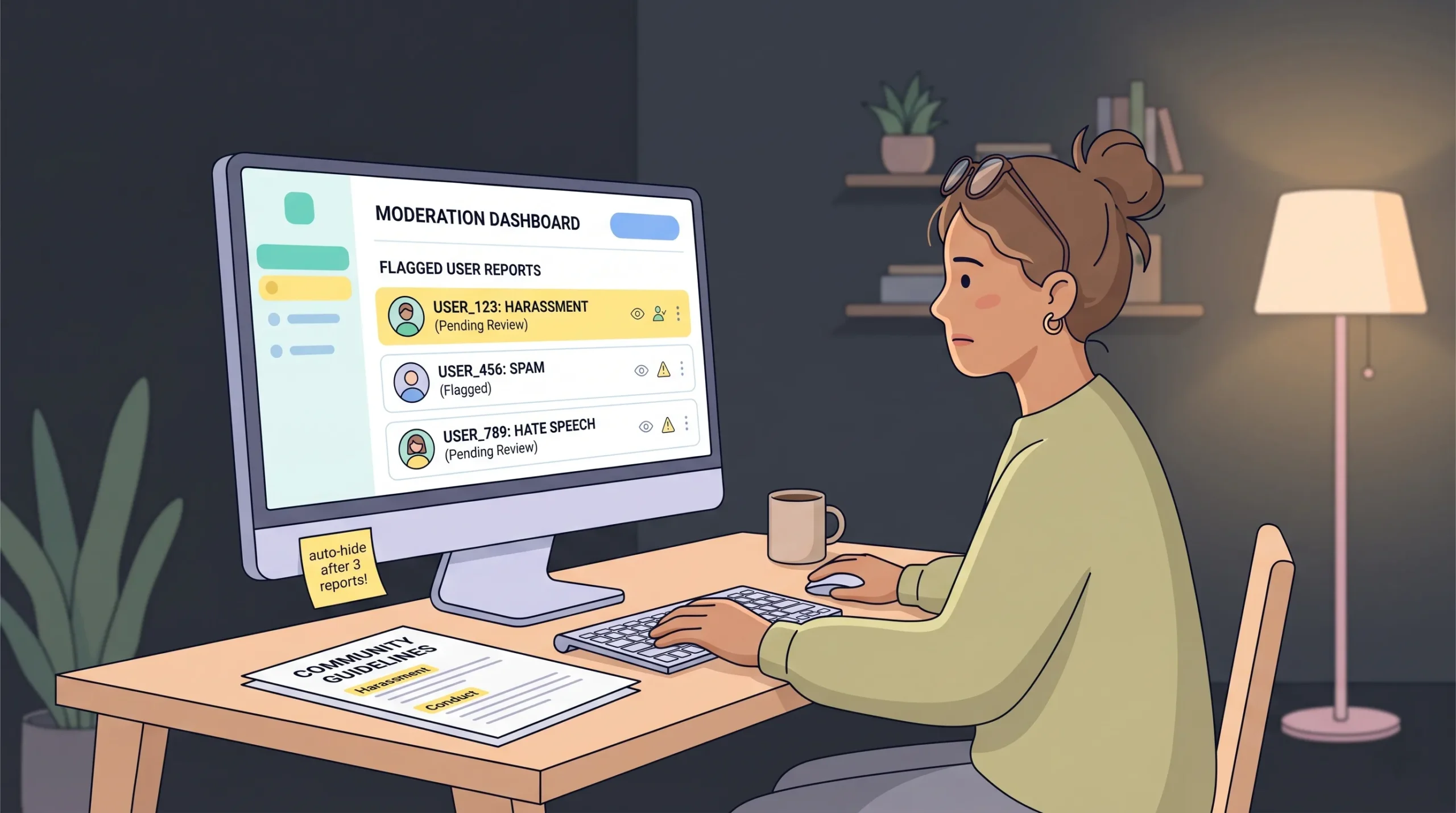
This is the part most founders underestimate, and it is the part that gets dating platforms shut down or sued. Moderation cannot be an afterthought.
Minimum moderation requirements at launch:
- Photo verification (selfie matched against profile photos)
- Age verification or attestation
- Report and block flows for users
- Auto-hide users after a threshold of reports
- Admin review queue
- Clear community guidelines and terms of service
- Easy account deletion and data export (GDPR right to erasure)
For higher-risk niches, add:
- Manual photo review before profiles go live
- Background check integration
- Live human moderation for messages flagged by AI
The legal frameworks here are real. Dating platforms in the EU must comply with GDPR, and platforms in the U.S. must comply with state-level privacy laws like CCPA. Platforms serving minors face additional restrictions under COPPA. Your terms of service, privacy policy, and data handling have to be airtight before launch.
Step 8: Deploy and launch with a focused acquisition strategy
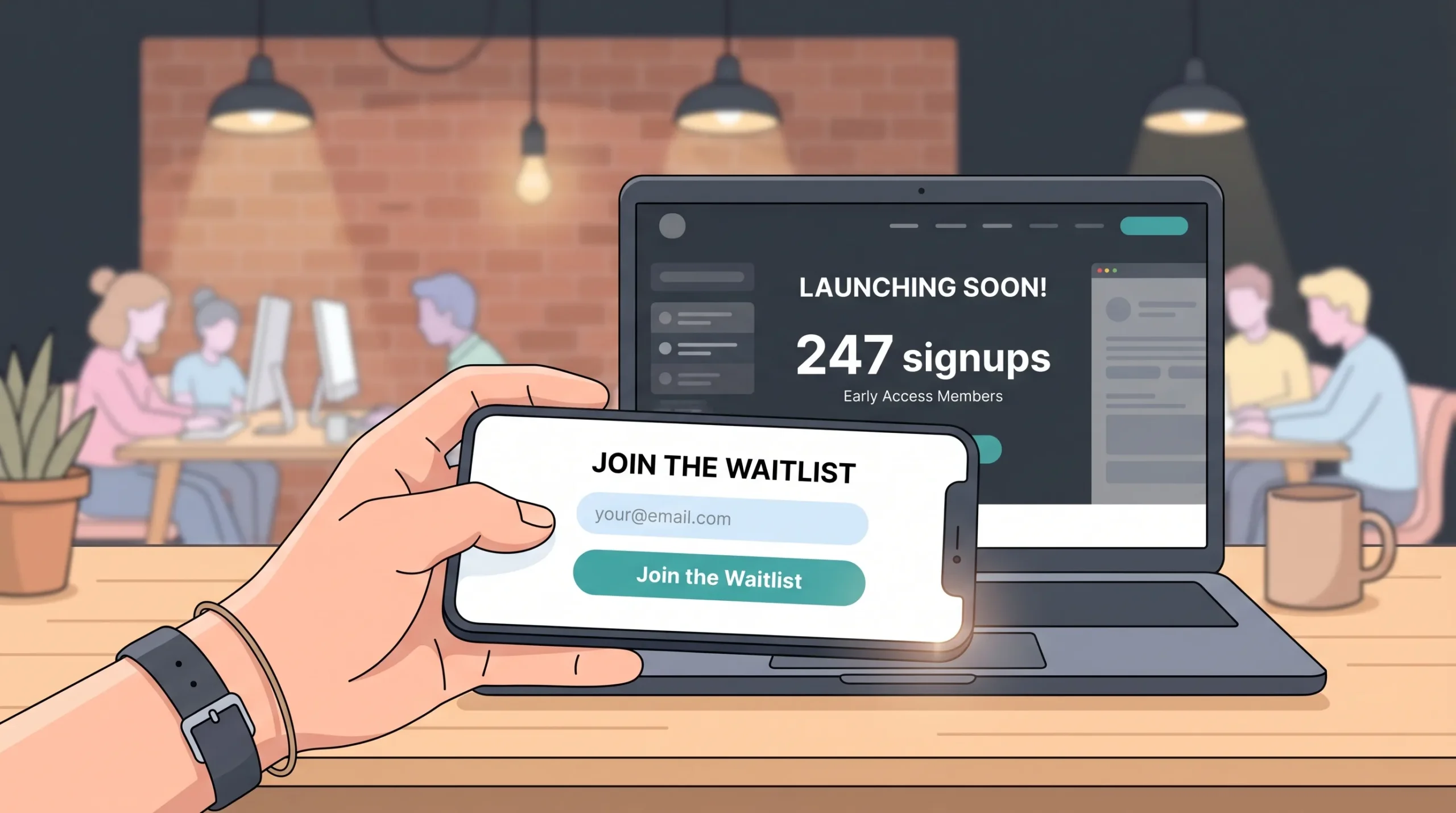
Deployment on imagine.bo is one click to Vercel and Railway. The harder work is getting your first 100 users.
The pattern that works for niche dating apps in 2026:
- Build a waitlist landing page 6 to 8 weeks before launch
- Drive waitlist signups through one targeted channel: a community where your niche lives (a subreddit, a Facebook group, a Discord, an industry conference)
- Launch with a closed cohort and onboard manually
- Focus relentlessly on getting both sides of the marketplace seeded in the same geography
- Ask early users for feedback in person where possible
Niche dating apps die from the cold-start problem. Three users in a city is worse than no users at all because it confirms there is nothing here. Always seed in concentrated geographies and only expand once a city is healthy.
Monetization: how to make money from a dating site in 2026
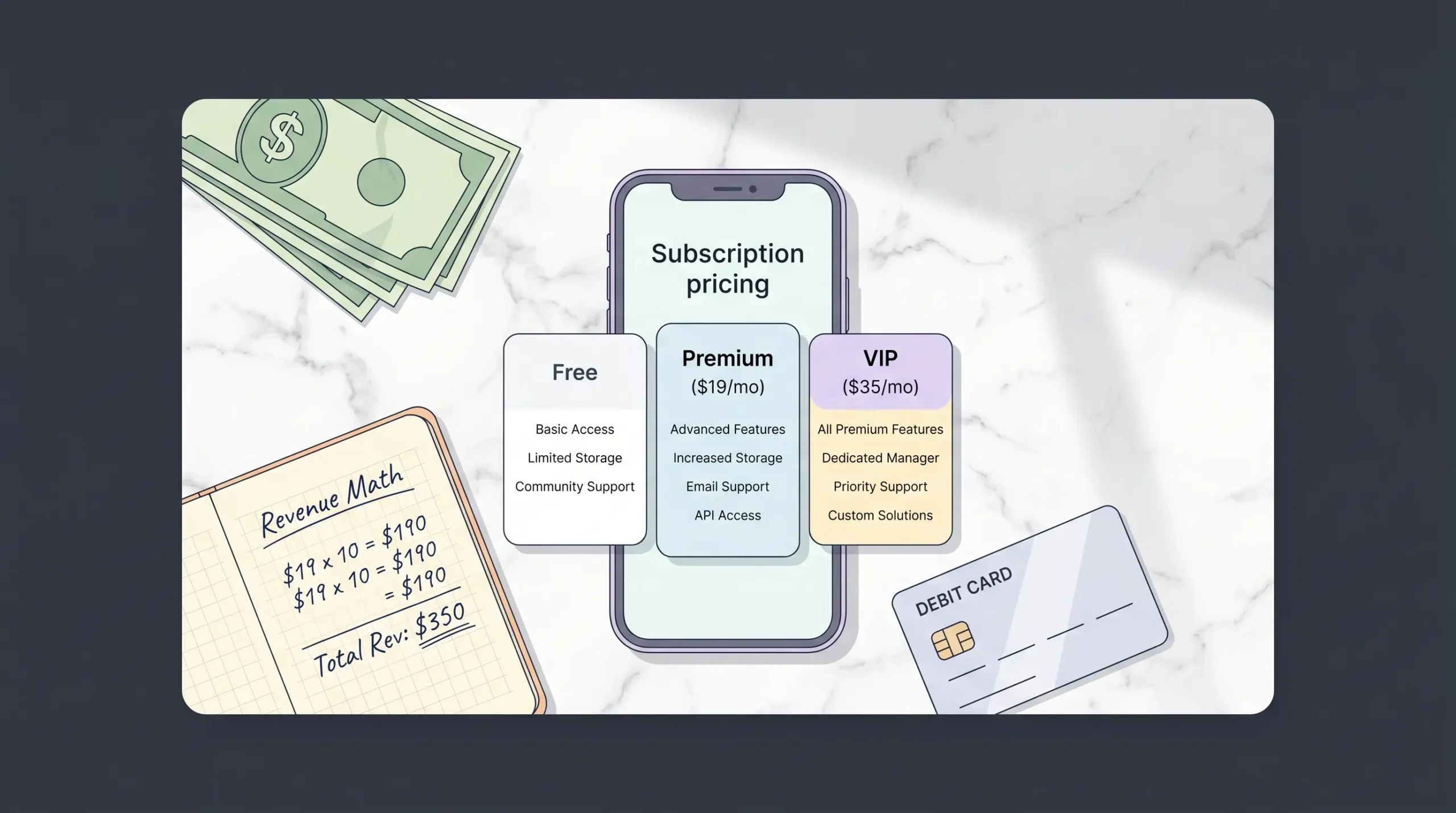
Dating is one of the few software categories where users are genuinely willing to pay. The challenge is matching your monetization to your niche and stage.
Subscription tiers are the dominant model. Tinder Plus, Bumble Premium, Hinge Plus all use this. Typical pricing in 2026 is $15 to $30 monthly, with discounts for quarterly and yearly plans.
One-off purchases add 20 to 40 percent to revenue for top apps. Common items: boosts, super likes, featured placement, profile spotlights, read receipts on individual messages.
Premium-only filters let free users see matches but require a subscription to filter by specific preferences. This converts well because users self-select; the people most willing to pay are also the ones most picky about preferences.
Affiliate revenue for adjacent products (date venues, gift services, relationship coaching, dating advice content) is small individually but adds up.
Coaching or premium services as a high-ticket upsell. Some niche dating apps add $200 to $500 monthly matchmaking services for users who want a more curated experience.
Avoid ads in early stages. Ads damage trust on a dating platform faster than any other product category. Save ads for if and when you reach significant scale.
For a broader view on monetization patterns, see how to launch a subscription-based app without developers and the analysis of monetizing prompt-built apps.
Safety, legal, and compliance: the parts you cannot skip
This is the section most founders skim. Do not skim it.
Data protection. GDPR in the EU, CCPA in California, PIPEDA in Canada, and similar laws apply. Your platform must handle data deletion, data export, and breach notification. For more, see the GDPR compliance in no-code tools guide.
Photo and identity moderation. Catfishing, deepfakes, and stolen photos are everywhere. Photo verification using selfies matched against profile photos is the industry baseline. Scaled platforms use services like Onfido or Persona. AI moderation tools flag inappropriate content before it goes live.
Payment compliance. PCI-DSS applies to any platform handling card data. Stripe handles most of this for you when set up correctly. Storing card numbers yourself is a non-starter.
Terms of service and privacy policy. Get these professionally written. Generic templates have gaps that hurt when something goes wrong. A real lawyer costs $1,000 to $5,000 for these documents and is worth every dollar.
Insurance and background checks. Once you have meaningful users, look into general liability and cyber insurance. Some niches expect background checks; integrate where appropriate.
For a broader take, see securing AI-generated web apps and the security best practices guide.
Common pitfalls when building a dating site
Most failed dating apps share the same mistakes. Avoid them:
Building for everyone. Niche or die. Mainstream dating is a winner-take-most market dominated by apps with billions in funding. Pick a community Tinder is bad at and serve them ten times better.
Skipping moderation. Bad actors find dating platforms within weeks of launch. If your moderation is reactive instead of proactive, you will lose your good users to harassment before you have a chance to fix it.
Cold-starting in too many cities. Three users in 50 cities is dead. 200 users in one city is alive. Seed in concentrated geographies.
Underpricing premium. Dating users pay willingly. $5 monthly subscriptions train users that your product is a toy. $20 to $30 is the right zone for serious products.
Ignoring retention. Acquiring users is hard, but losing them is easy. Users who get a match in week one stick around. Users who do not, leave. Optimize for the first match faster than for any other metric.
Skipping verification. Unverified profiles attract bots and fake accounts. Verified profiles attract real users. The trade-off is obvious in the data.
Trying to monetize too early. The first 1,000 users on a niche dating app should mostly be free. You need a healthy marketplace before you start charging. Premium converts at 5 to 15 percent of monthly active users in healthy products; if your conversion is below that, you do not have a monetization problem, you have a marketplace health problem.
For a wider view on this, see 10 critical mistakes to avoid when building no-code apps.
Frequently asked questions
How much does it cost to build a dating site in 2026?
Costs range from a few hundred dollars on a hybrid AI platform to over $100,000 with a custom dev shop. A reasonable budget for a niche dating MVP using a hybrid AI builder is $500 to $3,000 covering platform fees, payment integration through Hire a Human, design polish, and a domain. The Done For You plan on imagine.bo at $499 covers a full delivered product.
For the full cost breakdown, see cost to build an app in 2026.
How long does it take to build a dating site?
With a hybrid AI builder and a clear scope, a working MVP takes 1 to 3 weeks. Adding payment polish, moderation tooling, and a thorough QA pass extends launch readiness to 4 to 6 weeks. A custom dev shop typically takes 4 to 6 months for a comparable scope.
Do I need to know how to code to build a dating site?
No. Modern hybrid AI platforms generate full-stack code from natural language prompts and let you assign technical work to engineers when needed. The skills you actually need are clear writing, product thinking, and the ability to make decisions under uncertainty. For more on this shift, see non-technical founders building products.
Can I use a dating site builder to make a mobile app, not just a web app?
Yes. imagine.bo generates mobile-responsive web apps that work on any device. For a true native iOS or Android app, you can either ship a web app first and add native later, or use a separate native app builder. Most successful niche dating apps in 2026 launch as web apps first because the iteration speed is higher and the install friction for early users is lower. See building mobile apps without coding for the full breakdown.
Is it legal to build a dating site?
Yes, in most jurisdictions, with the right legal foundation. You need solid terms of service, a privacy policy, age verification, GDPR or CCPA compliance depending on where your users are, and basic moderation. Use a real lawyer for terms of service and privacy policy.
How do I get my first users on a dating site?
Build a waitlist 6 to 8 weeks before launch in a single concentrated community where your niche lives. Drive signups through that one channel. Launch to that cohort first. Get them matched and talking. Expand only after you have a healthy marketplace in your first geography. Cold-starting too broadly is the most common failure pattern.
What is the difference between a dating site builder and a regular website builder?
A regular website builder makes static content websites: blogs, landing pages, portfolios. A dating site builder generates a real backend with user accounts, a database, real-time messaging, payments, and matching logic. You cannot build a real dating product on Wix or Squarespace because they do not have a backend capable of handling these requirements. For a deeper comparison, see no-code vs traditional development.
Can AI handle the moderation on my dating site?
Partially. AI moderation tools are good at catching obvious issues: nude photos, hate speech, scam patterns, repeated harassment. They are not yet good at catching subtle issues like grooming or coercion. The right approach is layered: AI does the first pass, human moderators handle escalations, and reporting is easy and fast for users. See AI customer service automation for more on AI moderation patterns.
What features should I add after the MVP?
Based on what works for niche dating apps in 2026: video profiles, voice prompts, in-app events for premium users, matchmaking quizzes, compatibility scoring, social verification (LinkedIn, Instagram), and AI-powered conversation starters. Do not add these on day one. Ship the core, get users, then add features users actually ask for.
Should I build a dating site or buy a script?
Build, do not buy, unless you are testing an idea quickly with no plans to scale. Scripts feel cheap upfront but trap you in someone else’s codebase. Hybrid AI platforms now generate better code than most scripts, and you keep ownership.
Final recommendation: how to actually start

If you have a real niche and you want to ship fast without rebuilding in six months, the path is:
- Lock in your niche this week. Spend three days talking to people in the community you want to serve. If they cannot describe the problem in their own words, your niche is not real yet.
- Write the four-element prompt based on what you learned. Persona, problem, features, rules. Be specific.
- Generate the MVP on a hybrid AI platform. imagine.bo is the strongest fit for two-sided dating marketplaces because of the Hire a Human feature for payments and moderation logic.
- Use Hire a Human for the hard parts. Payment integration, custom matching logic, moderation rules, regional compliance. The cost is small relative to the risk of getting these wrong.
- Test with three roles end-to-end before launch.
- Launch in one concentrated community with a waitlist. Do not launch to the world. Launch to a city or a tight community where your niche actually lives.
- Focus on first-match-time. The single metric that predicts retention is how fast a new user gets their first match. Optimize the entire product around shrinking that number.
The dating market is enormous and the tooling is finally good enough that a non-technical founder with a sharp niche can ship a real product in weeks instead of years. The question is no longer whether you can build a dating site without a developer. The question is whether your niche, your positioning, and your execution are good enough.
If they are, the technology is no longer the bottleneck. Pick the right dating site builder, ship fast, and let the market tell you what to build next.
Ready to start building? See imagine.bo’s pricing and plans or browse the full library of 40 real app prompts you can copy and paste to see how other founders are structuring their builds.
Launch Your App Today
Ready to launch? Skip the tech stress. Describe, Build, Launch in three simple steps.
Build