
In the high-stakes world of investing, the barrier to entry has never been lower, yet the “noise” has never been louder. For the modern retail investor, the challenge isn’t finding data it’s surviving the deluge of it. We are living in an era where a single earnings call can trigger millions of automated trades in milliseconds, and a stray tweet can send a “meme stock” into the stratosphere.
For a beginner or a busy side-hustler, trying to keep pace using traditional spreadsheets and manual stock screeners can feel like bringing a calculator to a supercomputer fight. This is where AI-powered stock analysis tools enter the chat.
Launch Your App Today
Ready to launch? Skip the tech stress. Describe, Build, Launch in three simple steps.
BuildBut let’s be clear: AI isn’t a “get rich quick” button. It’s a sophisticated research assistant that works 24/7, sifting through mountains of balance sheets, news sentiment, and technical patterns to find the needles in the haystack. When combined with no-code financial apps, these tools don’t just help you pick stocks; they help you build a personalized system for financial freedom.
In this guide, we’ll explore how AI is democratizing high-level finance, the risks you need to watch out for, and how you can move from being a passive consumer of tools to a creator of your own custom financial ecosystem.
What Are AI-Powered Stock Analysis Tools?
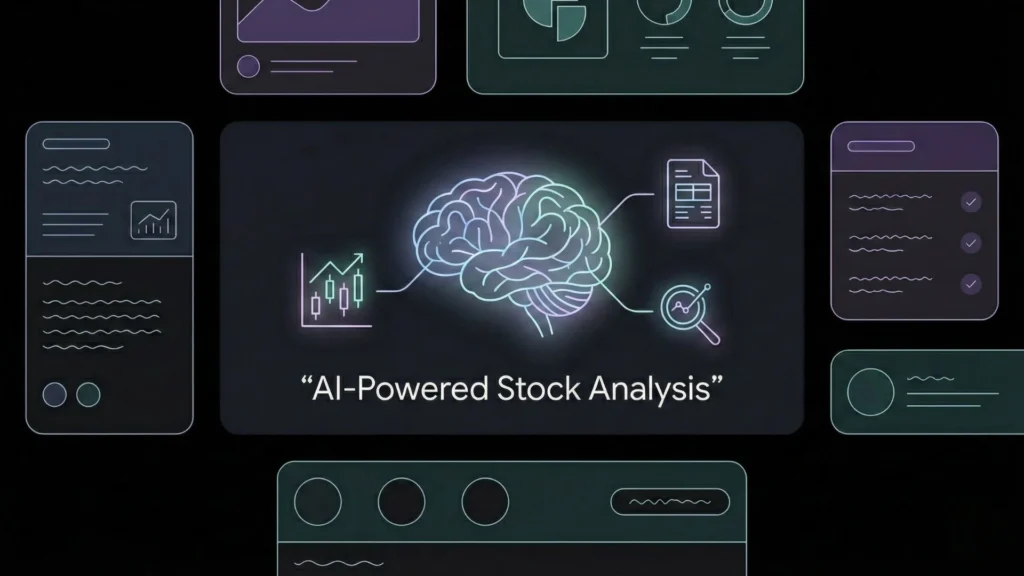
At its simplest, an AI-powered stock analysis tool is software that uses machine learning (ML) and natural language processing (NLP) to evaluate securities. While traditional screeners rely on “if/then” logic (e.g., “show me stocks with a P/E ratio under 15”), AI systems go several steps further.
The Evolution: Traditional vs. AI-Driven
- Traditional Screeners: These are essentially filters. You set the parameters, and the software returns a static list. They require you to know exactly what to look for.
- AI-Driven Systems: These tools “learn” from historical data. They don’t just see a low P/E ratio; they analyze how that ratio has correlated with price action over the last twenty years across different market cycles.
What Can AI Actually Do?
AI tools generally excel at three specific tasks that would take a human researcher hundreds of hours:
- Pattern Detection: Recognizing complex “head and shoulders” or “cup and handle” formations across thousands of charts simultaneously.
- Sentiment Analysis: Scanning thousands of news articles, Reddit threads, and analyst reports to determine if the “vibe” around a company is turning bullish or bearish.
- Predictive Modeling: Using historical data to assign a “probability” to future price movements (though, as we’ll discuss later, these are probabilities, not promises).
How AI Is Changing the Way Individuals Invest
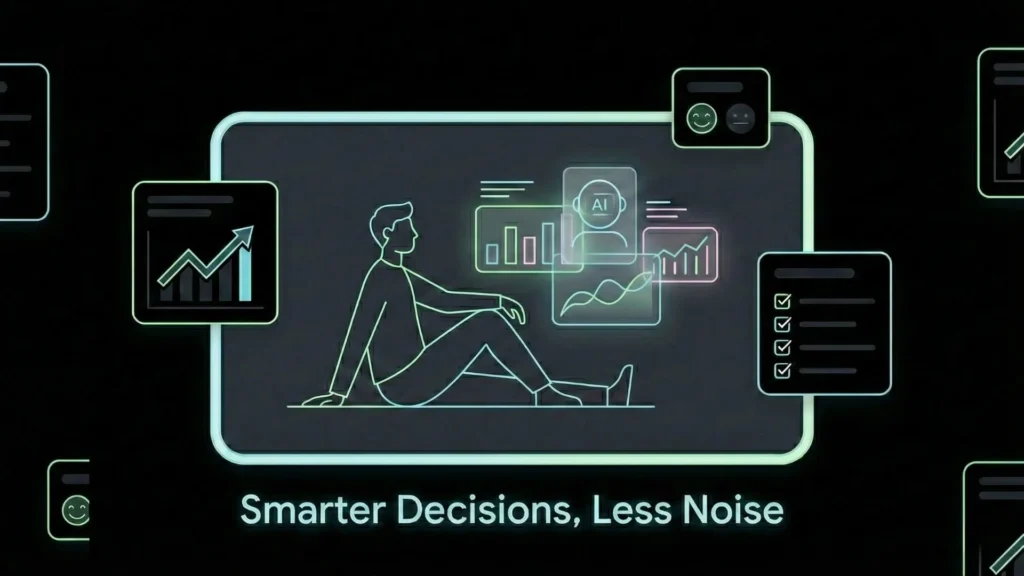
The “playing field” between Wall Street and Main Street has been uneven for decades. Institutions have used high-frequency algorithms and AI for years. Today, that same power is moving into the hands of retail investors.
From Manual Research to Assisted Decision‑Making
The most immediate benefit is time. Most retail investors have full-time jobs. Spending four hours a night reading 10-K filings is unrealistic. AI tools can summarize an entire earnings transcript into five key bullet points and highlight potential “red flag” language that a human might miss.
Furthermore, AI helps solve the #1 killer of retail portfolios: Emotional Bias. Humans are prone to “revenge trading” after a loss or “FOMO” (fear of missing out) during a rally. An AI doesn’t feel panic. It follows the data. By relying on an objective AI-driven strategy, you can transition from an impulsive trader to a disciplined system-builder.
AI for Beginners vs. Experienced Investors
- For Beginners: AI acts as a tutor. Tools like “InvestGPT” or conversational bots allow you to ask, “Why did this stock drop today?” and get a plain-English explanation rather than a confusing chart.
- For Pros: Experienced investors use AI to build “alpha.” They might use no-code tools to create custom models that look for specific “factor-based” opportunities, such as combining high free cash flow with low social media sentiment (a potential “unloved” value play).
Key Features to Look for in AI Stock Analysis Tools
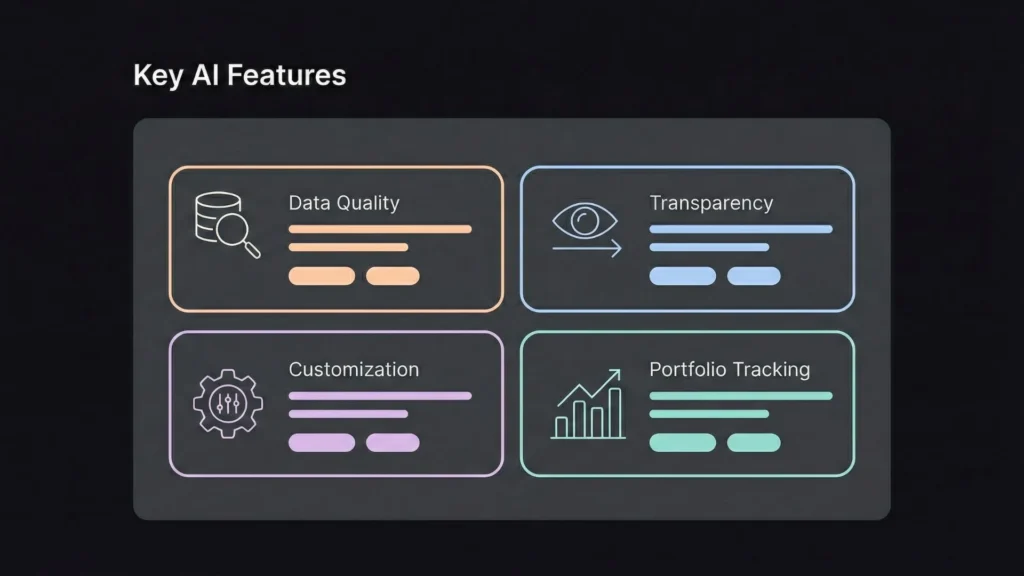
Not all “AI” tools are created equal. Some are just fancy wrappers for old technology. To find a tool that actually aids your journey to financial freedom, look for these pillars:
Data Quality and Coverage
AI is only as good as the data it consumes (“garbage in, garbage out”). Ensure the tool pulls from reputable sources like S&P Global, Morningstar, or direct SEC filings. 2026’s top tools now include “alternative data,” such as satellite imagery of retail parking lots or shipping manifest tracking, to give you an edge.
Explainability and Transparency
Avoid “Black Box” models. If an AI tells you to buy a stock, it should be able to explain why. Look for tools that provide confidence scores and show specific variables. The best platforms help you visualize the data logic, such as “High Revenue Growth + Low Volatility,” that triggered the recommendation.
Custom Filters and Strategy Control
The best tools allow you to “tweak the knobs.” You should be able to tell the AI, “I am a conservative investor looking for dividends,” or “I want high-risk, high-reward tech stocks.” If you can’t customize the logic, you’re just following someone else’s strategy.
Budget Tracking and Portfolio View
Financial freedom isn’t just about picking the right stock; it’s about capital allocation. The most useful modern tools bridge the gap between budgeting (how much you can afford to invest) and analysis (where that money goes). Look for a platform that acts as an AI-powered financial assistant, offering an integrated view of your savings, expenses, and investments.
Limitations and Risks of AI in Stock Analysis
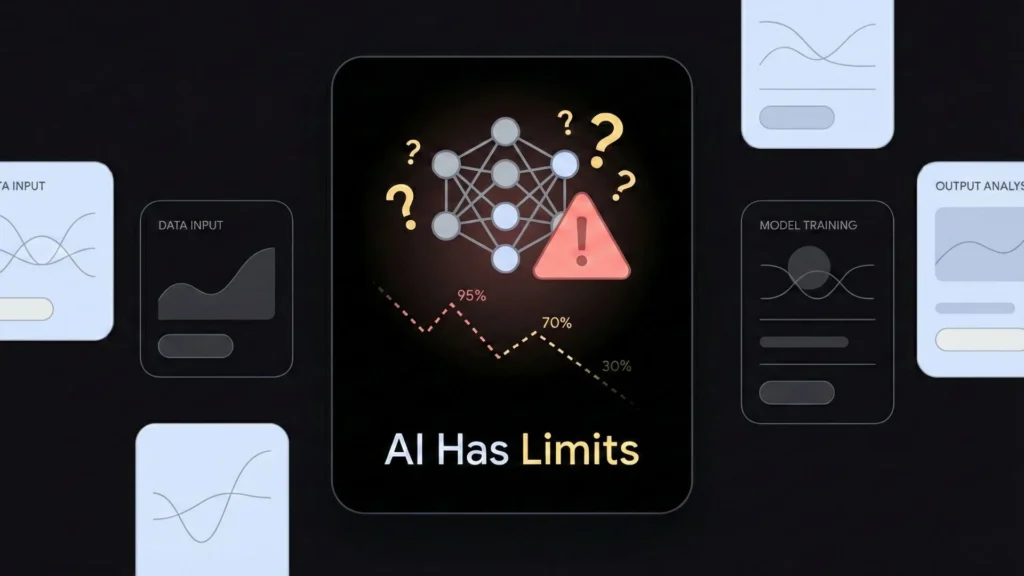
It is vital to approach AI with a healthy dose of skepticism. As powerful as these tools are, they are not crystal balls.
Important Note: The stock market is a “complex adaptive system.” Unlike a game of chess, the rules of the market can change mid-game based on human psychology, geopolitical events, and “Black Swan” incidents.
1. Over‑Reliance on Predictions
Just because an AI assigns an “80% probability” to a price increase doesn’t mean it will happen. Markets can remain irrational longer than you can remain solvent. Use AI as a filter, not a fiat.
2. The “Black Box” Problem
Some algorithms are so complex that even their creators don’t fully understand why they made a specific decision. If you don’t understand the logic, you won’t have the “conviction” to hold the stock when the market gets volatile.
3. Market Unpredictability
AI thrives on historical patterns. However, history does not always repeat. An AI trained on the “bull market” of the 2010s might struggle significantly in a high-inflation, high-interest-rate environment like we’ve seen in the mid-2020s.
Why No‑Code Matters in Financial Tools
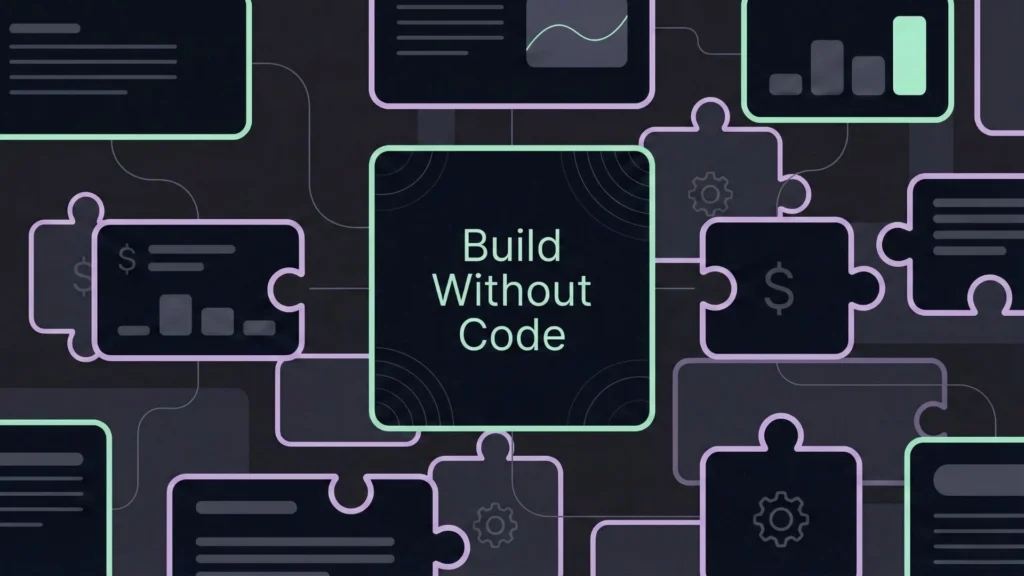
Most AI stock analysis tools are “off-the-shelf” products. You pay a subscription, you use their interface, and you follow their rules. But every investor’s financial situation is unique. Your risk tolerance, tax bracket, and long-term goals are different from mine.
No-code is the bridge. It allows you to stop being a customer of someone else’s software and start being the architect of your own.
In the past, building a custom dashboard that pulled real-time stock data and ran it through a machine-learning model required a degree in Computer Science and proficiency in Python. Today, no-code platforms allow you to “drag and drop” these functionalities. This shift is revolutionary because it gives the retail investor control.
Building Your Own AI‑Powered Budgeting or Stock Analysis Tool
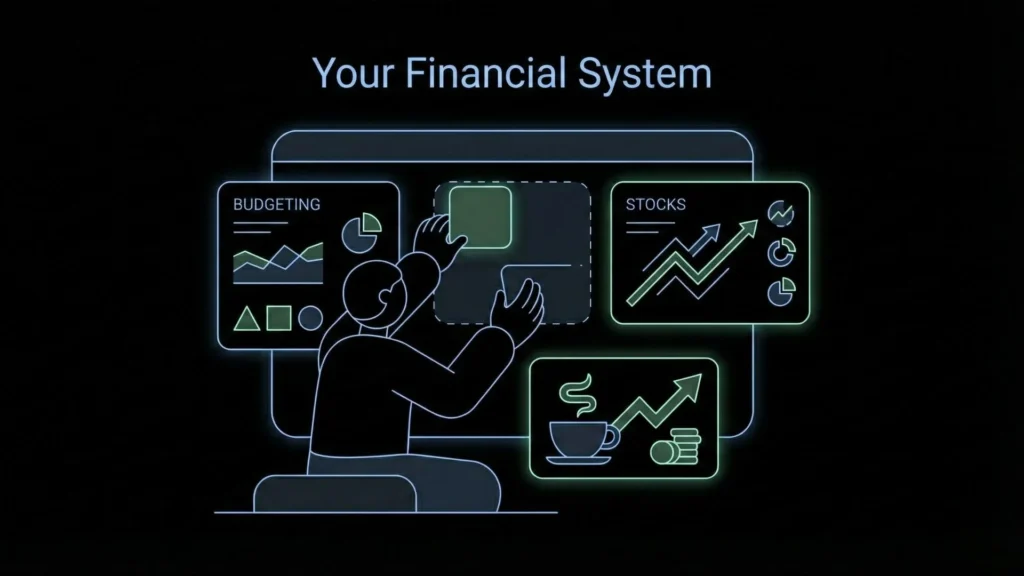
If you’ve ever thought, “I wish there was an app that tracked my daily coffee spending AND showed me how much that money would be worth if I invested it in NVIDIA,” you can now build that yourself.
Conceptual Use Cases for Custom Tools:
- The Personal Stock Screener: Create a tool that only alerts you when a stock in your “Watchlist” hits a specific valuation and has a positive sentiment score on Twitter.
- The “Investment-Linked” Budgeter: A budgeting app that automatically calculates your “investable surplus” at the end of the week and suggests the best-performing ETF in your portfolio to allocate it to.
- AI Research Assistant: A private tool where you can upload a PDF of a 10-K report, and an AI research assistant automatically extracts the “Debt-to-Equity” ratio and compares it to five competitors.
By building your own tool, you ensure that the AI is working for your specific strategy, rather than a generic “one-size-fits-all” model.
Where Imagine.bo Fits In

When we talk about building custom, AI-driven financial tools, we aren’t suggesting you start writing thousands of lines of code. This is exactly where Imagine.bo enters the picture.
Imagine.bo is not a stock brokerage or a financial advisory service. Instead, it is the infrastructure that allows you to bring your fintech ideas to life. Think of it as the “digital workshop” where you can start building your financial tools.
How it works for the Non-Technical Investor
Imagine.bo uses AI reasoning to understand what you want to build. You don’t need to know how to connect a database to a frontend. You simply describe your product vision in plain English, and Imagine.bo helps architect the logic.
- Plain-English Creation: You can describe a workflow “I want a dashboard that tracks my monthly expenses and uses AI to suggest which stocks from my ‘Value’ list I should buy with my leftover cash” and Imagine.bo helps architect the logic.
- Production-Ready Engineering: While many no-code tools are just for “prototypes,” Imagine.bo builds with SDE-level precision. This means the apps are secure, scalable, and ready for actual use.
- Speed and Control: Because the platform handles the heavy lifting of backend logic and database setup, you can go from “idea” to “functional tool” in a fraction of the time it would take a traditional development team.
Example Use Cases With Imagine.bo
- Custom Stock Analysis Dashboard: Founders can build internal tools to track industry-specific KPIs and stock movements of competitors.
- AI Budgeting App for Personal Finance: A side-hustler can build a tool that manages multiple income streams and automates the calculation of tax obligations vs. investment capital.
- Fintech MVP: For aspiring fintech entrepreneurs, Imagine.bo serves as the launchpad to build a Fintech MVP to show to investors or early users.
By using a platform like Imagine.bo, you aren’t just using an “AI tool” you are building an AI-powered asset that belongs to you.
Choosing the Right AI Stock Analysis Approach for You
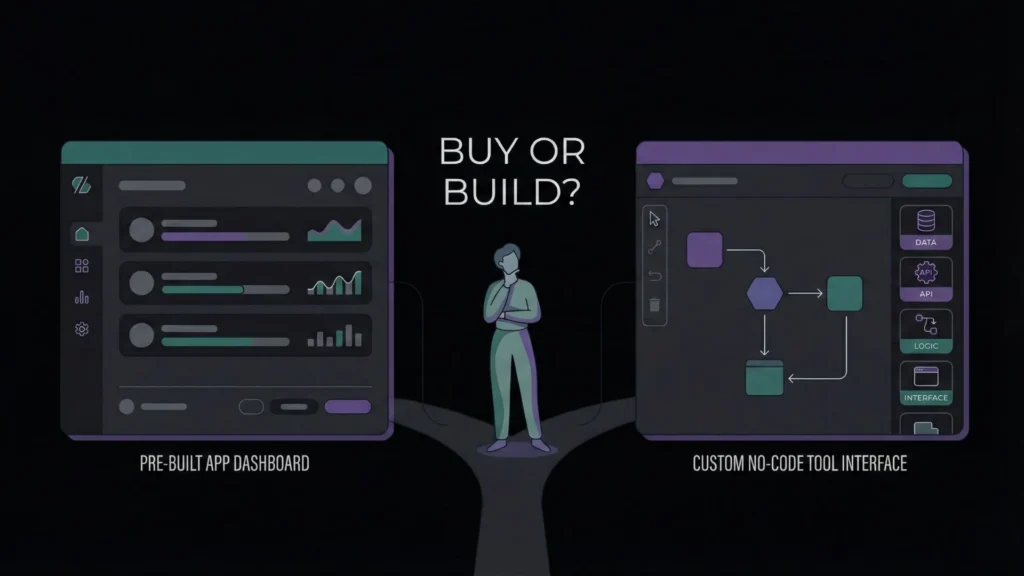
Should you buy an existing tool or build your own? The answer depends on your goals.
| Feature | Off-the-Shelf Tools (e.g., TrendSpider, Tickeron) | Custom No-Code Tools (via Imagine.bo) |
| Setup Time | Instant | A few hours/days |
| Customization | Limited to pre-set filters | Unlimited |
| Data Source | Fixed by the provider | Choose your own API integrations |
| Cost | Monthly subscription | Platform/Build costs |
| Best For | Casual traders, quick insights | Serious investors, founders, niche strategies |
When to use off-the-shelf: If you are just starting and want to see what AI can do, tools like WallStreetZen or Seeking Alpha’s quant ratings are excellent starting points.
When to customize: If you have a specific “edge” or strategy that isn’t covered by mainstream apps, or if you want to integrate your personal budgeting data with market analysis, building your own is the path to true financial clarity.
Final Thoughts: The Future is “Augmented”
Financial freedom isn’t found in a single “magic” stock pick or a complex algorithm. It is found in systems, discipline, and understanding.
AI-powered stock analysis tools are transformative because they remove the “grunt work” of investing. They allow you to stop being a data entry clerk and start being a Chief Investment Officer of your own life. Whether you are using AI to categorize your spending or to build custom dashboards that detect the next breakout pattern in the semiconductor industry, the goal is the same: clarity.
The future of wealth creation belongs to the “Augmented Investor” someone who combines the cold, analytical speed of AI with the nuanced, long-term judgment of a human.
Don’t just watch the AI revolution happen from the sidelines. Start building your own system that will power your freedom.
Launch Your App Today
Ready to launch? Skip the tech stress. Describe, Build, Launch in three simple steps.
Build