

Random website generators are more than just a tool for killing time. When used intentionally, they can spark fresh ideas, expose you to new industries, and sharpen your ability to analyze websites quickly. By sending you to unfamiliar pages, these tools help break creative ruts, reveal design and content trends you might miss in your usual browsing, and inspire new approaches to your own projects. Whether you are a marketer, developer, or curious learner, understanding how to use random website generators strategically can turn chance discovery into practical insight.
Introduction to Random Website Generators
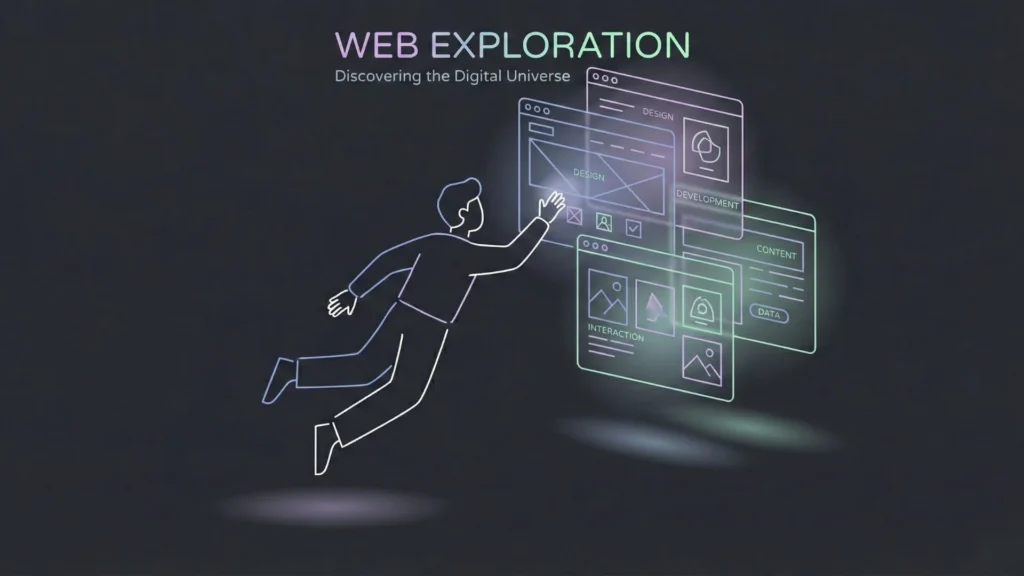
At its simplest, a random website generator is a tool designed to produce or discover web content through algorithmic selection rather than manual curation. In the early days of the web, these were often discovery engines that took users to existing, often obscure, corners of the internet.
Launch Your App Today
Ready to launch? Skip the tech stress. Describe, Build, Launch in three simple steps.
BuildToday, the concept has matured. Modern generators can now synthesize entirely new layouts, color schemes, and content structures on the fly. They matter because they solve the “blank page” problem. Whether you are a designer looking for a fresh color palette or a developer needing a mock environment to test a script, these tools provide immediate, low-stakes starting points.
In a world where speed to market is a competitive advantage, the ability to generate a functional layout or a unique domain concept in seconds is invaluable. It allows for rapid prototyping and high-volume brainstorming that would be impossible to achieve manually.
What Is a Random Website Generator?
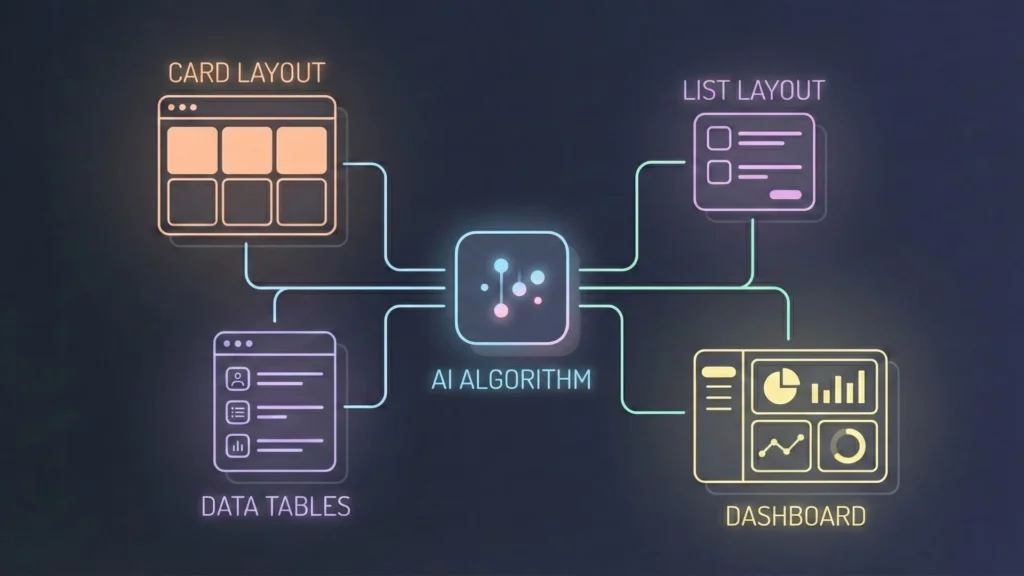
To understand these tools, we must distinguish between what they are and what they are not. A random website generator is a software application or script that uses randomized inputs to create a web-based output. This output might be a URL to an existing site, a generated wireframe, or a temporary landing page filled with placeholder text.
What They Do
These tools excel at providing variety. They offer a diverse range of visual styles, information architectures, and functional layouts. They are primarily used for inspiration, technical testing, and early-stage conceptualization. Many of these concepts are transforming the future of building software by lowering the barrier to entry for non-technical creators.
What They Don’t Do
A random website generator is not a replacement for a comprehensive web strategy. It does not understand your specific brand identity, your target audience’s psychological triggers, or your long-term business goals. While they can generate a “look,” they cannot generate a “purpose.” They are starting points, not finish lines.
How Random Website Generators Work
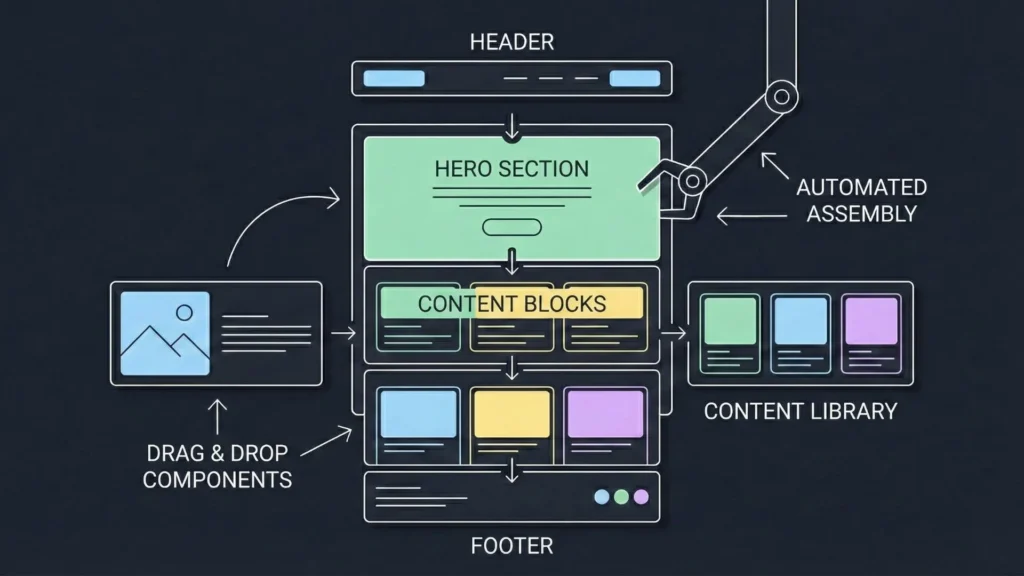
The underlying technology of these generators varies based on their intended purpose. However, most rely on a combination of pre-defined libraries and randomization algorithms.
Simple Technical Explanation
Most generators operate on a component-based logic. The developers of the tool create a vast library of headers, footers, body sections, and navigation bars. When a user clicks “generate,” the algorithm selects one item from each category and assembles them into a cohesive page.
Role of Algorithms and Randomness
The “randomness” is rarely truly random. Instead, it is often “constrained randomness.” For example, a generator might use an algorithm to ensure that the font selected for a header is legible when paired with the font selected for the body text. It uses logic to prevent the creation of broken or unusable layouts while still providing a unique result every time. This logic is a precursor to more advanced no-code AI app builders that use similar structures to assemble functional software.
Availability and Uniqueness Considerations
When dealing with URL generators, the tool often pulls from a database of registered but underutilized domains or generates strings that follow common naming conventions. For content generators, the uniqueness depends on the depth of the asset library. The larger the library, the less likely you are to see the same configuration twice.
Types of Random Website Generators
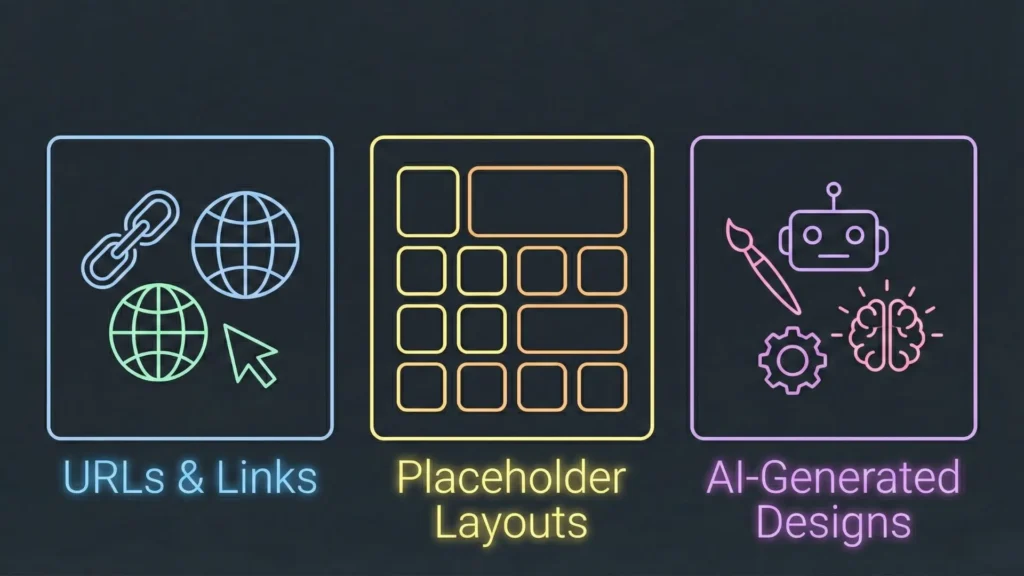
Not all generators serve the same purpose. Depending on your needs, you might engage with one of three primary categories.
URL and Domain Generators
These are perhaps the most common. They provide a random link to an existing website. For marketers, these are excellent for competitive research or finding niche design trends that haven’t hit the mainstream yet.
Placeholder and Mock Website Generators
Used primarily by UI/UX designers and front-end developers, these tools generate “dummy” sites. They come pre-loaded with placeholder text and stock imagery. They allow teams to test how a specific layout handles different content lengths or image orientations without having to write a single line of copy.
AI-Assisted Generators
The newest frontier involves Artificial Intelligence. These tools don’t just pick from a list; they generate assets in real-time. An AI-assisted generator can create a unique logo, write relevant copy, and suggest a color theory-based palette all at once. This process is detailed further in our AI website design guide, which covers how these tools assist beginners in creating visual assets.
Practical Use Cases

How do professionals actually use these tools in a daily workflow? The applications are more practical than they might initially appear.
Website Inspiration and Idea Generation
When you are stuck in a creative rut, seeing a layout or a color combination you would never have chosen can break the deadlock. Founders often use random generators to see how different industries structure their value propositions, providing a fresh perspective on their own landing pages. For instance, looking at an AI website builder for interior designers can provide specific aesthetic inspiration that differs from typical SaaS layouts.
Testing and QA Environments
Developers use random website generators to populate testing environments. If you are building a browser extension, a privacy tool, or an ad-blocker, you need to see how your software interacts with thousands of different site structures. Generating these sites randomly is the most efficient way to ensure robust compatibility.
Educational and Research Use
For students of web design, random generators serve as a study in “what works.” By looking at a wide variety of randomly served sites, one can begin to identify patterns in user experience (UX) and user interface (UI) design that are common across the web.
Creative and Experimental Projects
Sometimes, the goal is simply to play. Artists and creative coders use random generators to explore the boundaries of web technology, creating generative art or “net art” that changes every time the page is refreshed. These low-stakes experiments are crucial for MVP validation strategies, where the goal is to see what resonates before investing significant resources.
Benefits and Limitations
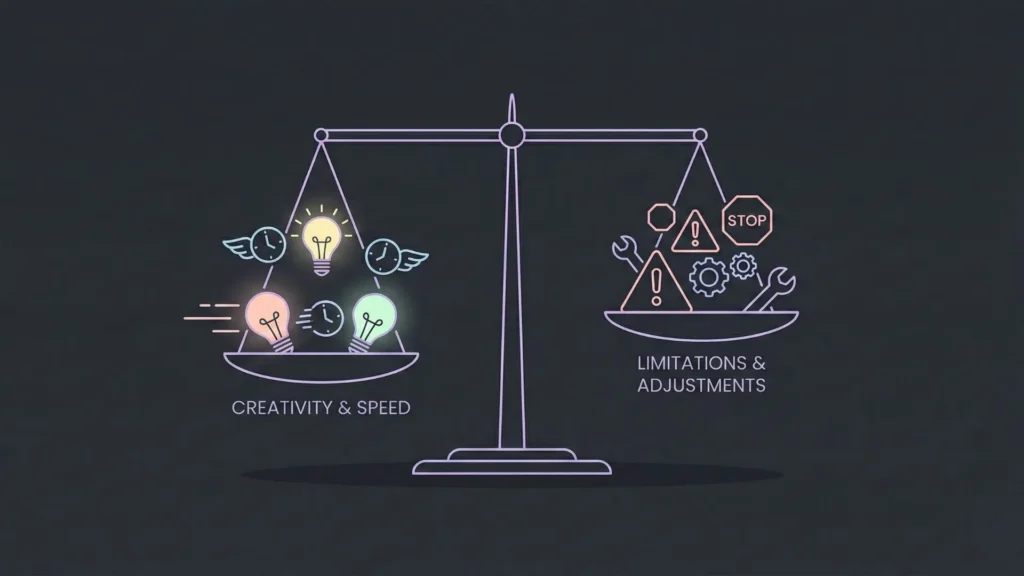
While the speed of these tools is a major draw, it is important to weigh the advantages against the inherent risks.
Speed and Creativity Advantages
The primary benefit is the elimination of the cold start. You can go from zero to a visual concept in under five seconds. This speed allows for volume-based ideation the practice of looking at 50 ideas to find the one that is worth pursuing. There are several tools that help launch your startup fast by leveraging these rapid ideation techniques.
Common Limitations and Risks
The most significant limitation is the lack of “intent.” A random generator doesn’t know that your SaaS product needs a high-converting CTA above the fold. It might place a massive image where a sign-up form should be. Additionally, the code generated by these tools is often bloated and not optimized for SEO or performance.
Why Human Review Still Matters
No matter how advanced the algorithm, a human eye is required to vet the output for usability and brand alignment. A random generator can give you the “what,” but it can never explain the “why.”
Choosing the Right Random Website Generator
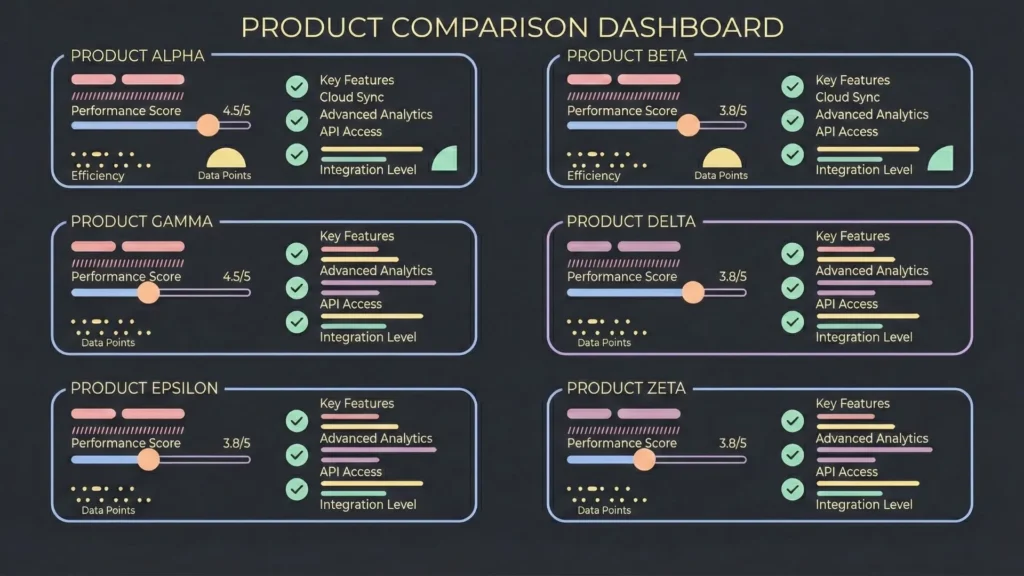
With dozens of tools available, selecting the right one depends on your specific objective.
Key Evaluation Factors
- Output Quality: Does the tool produce modern, responsive layouts or dated designs?
- Customization: Can you lock certain elements (like a color) while randomizing the rest?
- Export Options: Can you export the HTML/CSS, or are you stuck with a visual-only preview?
Free vs. Paid Tools
Free tools are excellent for quick inspiration. However, if you need high-resolution assets, clean code exports, or AI-driven content that is actually readable, a paid subscription to a more robust platform is usually necessary.
When Simplicity Is Enough vs. When Advanced Tools Are Needed
If you just need to see a random layout to get your brain moving, a simple, one-click web-based generator is fine. If you are trying to build a functional MVP for a startup, you will need to move toward structured website prototyping tools that offer more control.
Safety, Ethics, and Responsible Usage

Using random website generators, especially those that lead to external URLs, requires a level of professional caution.
Avoiding Malicious Sites
Random URL generators can occasionally lead to unvetted or malicious corners of the web. It is essential to use these tools within a sandboxed browser environment or ensure that your security software is up to date.
Copyright and Content Ownership
When using a generator that provides images and text, you must clarify the licensing. Many random tools pull images from Unsplash or Pexels, but some might scrape copyrighted content. Always verify that you have the rights to use the generated assets in a commercial capacity.
Ethical and Professional Considerations
In a professional setting, transparency is key. Using a generator for inspiration is standard practice; passing off a completely randomized layout as your own bespoke design work without disclosure can lead to trust issues with clients or stakeholders.
Advanced Techniques and Workflow Integration
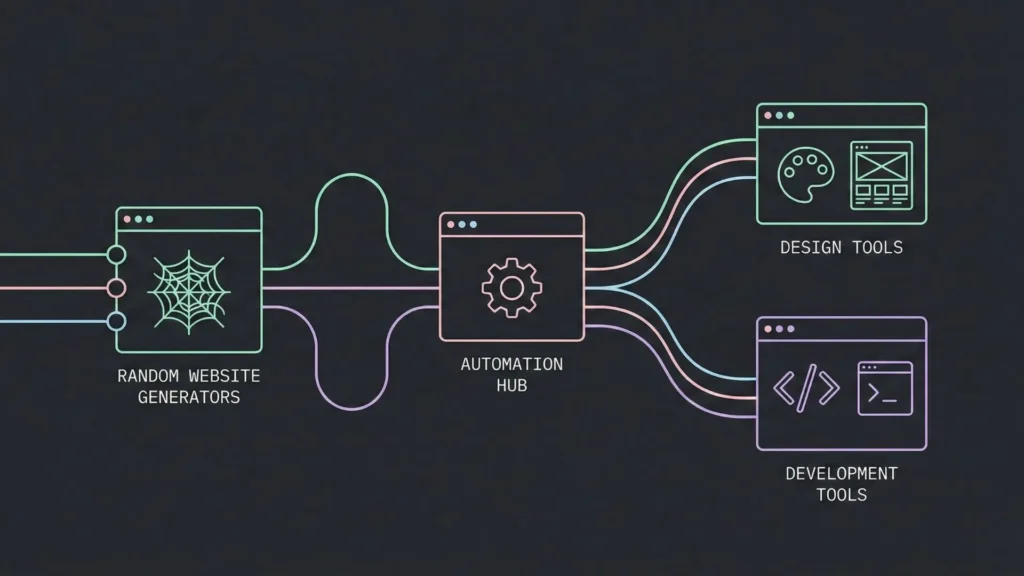
To get the most out of these tools, they should be integrated into a larger development workflow.
Filtering and Refining Results
Advanced users don’t just click “random” until they find something they like. They use filters. Many modern tools allow you to filter by industry or style. This narrows the field of randomness to a range that is actually useful for your project.
Using Generators in Product Workflows
A common workflow involves using a random generator to create five distinct mood boards. These boards are then presented to stakeholders to gauge the general direction of a project before any “real” design work begins. This saves dozens of hours of unnecessary revisions and fits perfectly into the process of automating workflows.
Automation and Experimentation
For technical teams, APIs can be used to pull random components into a staging site automatically. This allows for automated A/B testing of different layouts to see which structures result in better user engagement metrics, even if the content remains placeholder.
The Future of Random Website Generation
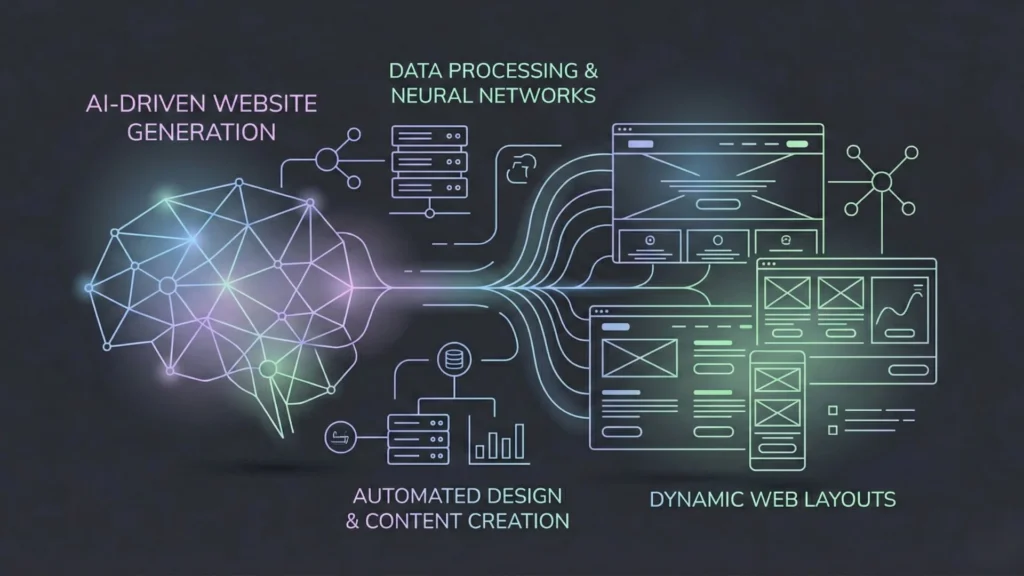
We are moving away from simple logic and toward intent-aware generation.
AI and Machine Learning Trends
The future of this space is AI website generation. Instead of being truly random, future tools will use probabilistic randomness. They will analyze successful websites in your niche and generate a random site that follows the statistical patterns of high-performing pages. Understanding how AI is redefining development helps founders prepare for these changes.
No-code and Low-code Evolution
Randomization will become a feature within no-code builders. Imagine a button inside your editor that says “Randomize Hero Section.” It wouldn’t give you something useless; it would offer a curated alternative based on your existing design system.
Smarter, Intent-Aware Generation
As natural language processing improves, the “random” element will be guided by simple prompts. You might ask for a “randomly generated landing page for a sustainable coffee brand,” and the tool will use its understanding of “sustainability” to constrain the randomness to earthy tones.
From Random Ideas to Real Products
Randomness is a powerful tool for discovery, but it is a poor tool for execution. Once you have used a generator to find a spark of inspiration, the hard work of building a scalable, secure, and functional product begins.
Transition from Experimentation to Execution
The biggest mistake founders make is trying to force a randomly generated template into a production environment. These templates are often difficult to maintain. The transition requires moving your inspired ideas into a framework that supports real-world traffic, user authentication, and database management. It is often helpful to follow a step-by-step guide to MVP development to ensure you don’t miss critical technical steps.
Why Random Generation Is Only the Starting Point
A website is a living entity. It needs to grow with your business. While a random generator can help you visualize a homepage, it won’t help you build a complex backend, integrate a payment processor, or ensure that your user data is encrypted.
A Smarter Way to Turn Ideas Into Products
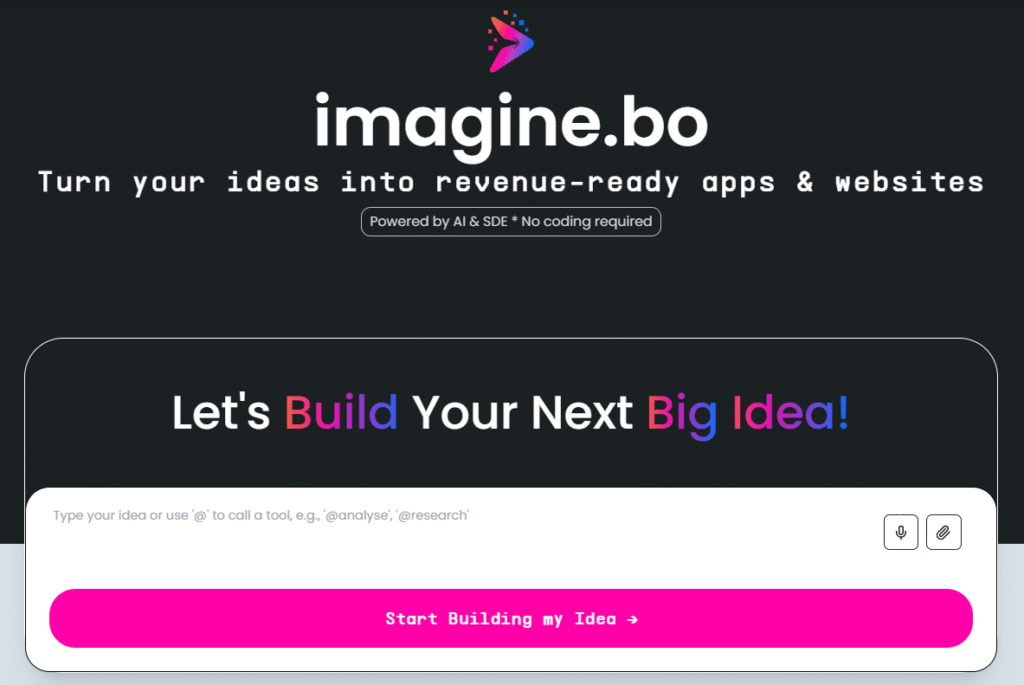
For those who have moved past the “random inspiration” phase and are ready to build something substantial, the next step involves moving to platforms that offer structure without sacrificing speed.
While random generators provide the “what if,” platforms like Imagine.bo provide the “how to.” Imagine.bo acts as a bridge for founders who have a clear vision but want to bypass the traditional, slow development cycle. It is an AI-driven, no-code platform that focuses on creating revenue-ready applications rather than just visual mockups. You can learn more about why founders choose this approach to move from idea to deployment in record time.
Unlike a random generator that might give you a pretty but hollow shell, this approach uses AI reasoning to build high-quality, SDE-level engineering into the product. It handles the frontend, backend, and deployment, ensuring that what starts as a quick idea ends up as a production-grade, scalable MVP. For a founder, this means the transition from “experimentation” to “launch” is measured in days, not months.
Conclusion
Random website generators are more than just a way to kill time; they are a sophisticated part of the modern creator’s toolkit. They provide the cognitive shove needed to get a project moving. By embracing the unexpected, you can discover design patterns and functional layouts that you might never have considered in a vacuum.
However, the key to success lies in knowing when to put the “randomize” button away. Use these tools to explore, to test, and to be inspired. But when it comes time to build a product that your users will rely on, lean into platforms that offer the security and scalability of professional engineering.
Related Articles
- Unlock Conversions: Your Ultimate Guide to AI Landing Page Generators
- Unlock Your Creativity: The Ultimate Guide to the Best AI Image Generator Tools
- Unlock Your App Idea: A Step-by-Step Guide to AI Prototype Generators
- AI Website Builder Bootstrap
- AI Website Builder Quick
Launch Your App Today
Ready to launch? Skip the tech stress. Describe, Build, Launch in three simple steps.
Build