
The methodology for creating digital products is undergoing its most significant transformation since the introduction of the graphical user interface. We are witnessing a paradigm shift where Artificial Intelligence has evolved from a simple design assistant into a full-stack architect, engineer, and deployment specialist. This revolution effectively breaks the binary choice between hiring expensive engineering teams and relying on rigid, unscalable templates. By democratizing access to sophisticated, revenue-ready digital infrastructure, advanced AI web app builders are empowering founders and visionaries to bypass technical barriers and focus entirely on clarity of vision and business growth.
Beyond Templates: What Are True AI Website Builders?

Historically, “no-code” tools were essentially visual editors. You dragged an element, and the tool wrote snippets of HTML/CSS in the background. While useful for simple landing pages, these tools fundamentally lacked an understanding of application logic or database structure.
Launch Your App Today
Ready to launch? Skip the tech stress. Describe, Build, Launch in three simple steps.
BuildTrue AI-powered builders operate differently. They don’t just assemble pre-made visual blocks. Instead, they utilize large language models (LLMs) trained on vast repositories of code, system architecture patterns, and AI website design principles. When you provide a prompt, the AI isn’t just searching for a matching template; it is interpreting your intent, planning the necessary features, and generating unique, functional code to bring that vision to life. This distinction is crucial for creators looking to move beyond static pages to dynamic solutions.
The Missing Link: Why Traditional No-Code Isn’t Enough for Growth
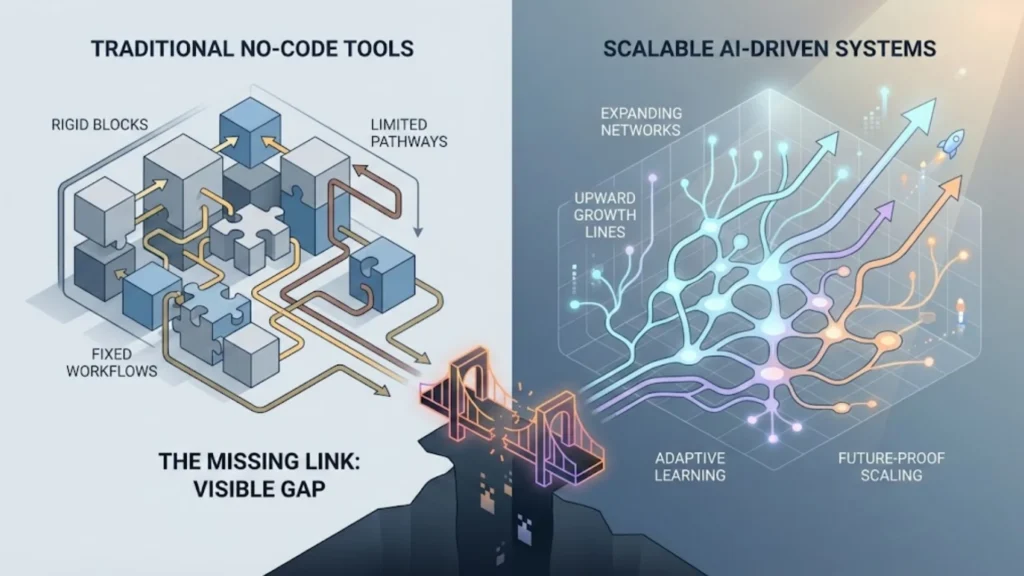
While traditional drag-and-drop platforms popularized the idea of building without code, they often create a “scalability trap” for growing businesses.
Standard website builders usually fail when faced with complexity. They struggle with dynamic data relationships, user authentication flows, intricate backend logic, and high-traffic loads. The underlying code they generate is often bloated and inefficient, leading to slow load times and poor SEO performance. Furthermore, you are typically locked into their proprietary hosting ecosystems, limiting your control over security and deployment.
For a business intending to generate revenue and scale, a superficial frontend is insufficient. You need a scalable SaaS architecture—the engine under the hood that ensures your platform doesn’t crash when it succeeds.
Revolutionizing Web Design Through SDE-Level AI Reasoning

The next frontier in AI development platforms—exemplified by solutions like Imagine.bo—focuses on mimicking the reasoning capabilities of a Senior Software Development Engineer (SDE).
When an experienced engineer approaches a problem, they don’t start with colors and fonts. They start with architecture:
- Data Modeling: How is information stored and related?
- Security Protocols: How will different parts of the application communicate securely?
- Scalability: How will this architecture handle a 100x spike in traffic?
Advanced AI builders apply this exact reasoning process. By adhering to rigorous engineering standards, these platforms ensure that the output isn’t just visually acceptable, but structurally sound. This approach prioritizes secure API endpoints, essential backend development skills, and clean, maintainable code structure. This SDE-level approach is what separates toy applications from production-ready software.
Turning Plain English into Revenue-Ready Products
The most potent aspect of modern AI builders is their ability to translate natural language into complex technical execution. This process, often referred to as vibe coding, fundamentally streamlines development:
- Conceptualization: You describe your idea in plain English—e.g., “A marketplace connecting local tutors with students, including scheduling, payment processing, and user profiles.”
- AI Architectural Analysis: The AI decomposes this request into technical requirements: a database for users and bookings, integration with payment gateways, and frontend views for dashboards.
- SDE-Grade Generation: The platform generates the necessary backend logic, sets up the database schemas, and creates the frontend interface, ensuring all components are securely linked.
- Cloud-Native Deployment: Instead of living on a shared server, the final product is deployed on scalable, cloud-native infrastructure, ready to handle real-world traffic immediately.
The Critical Difference: Generic AI vs. Engineered Architecture
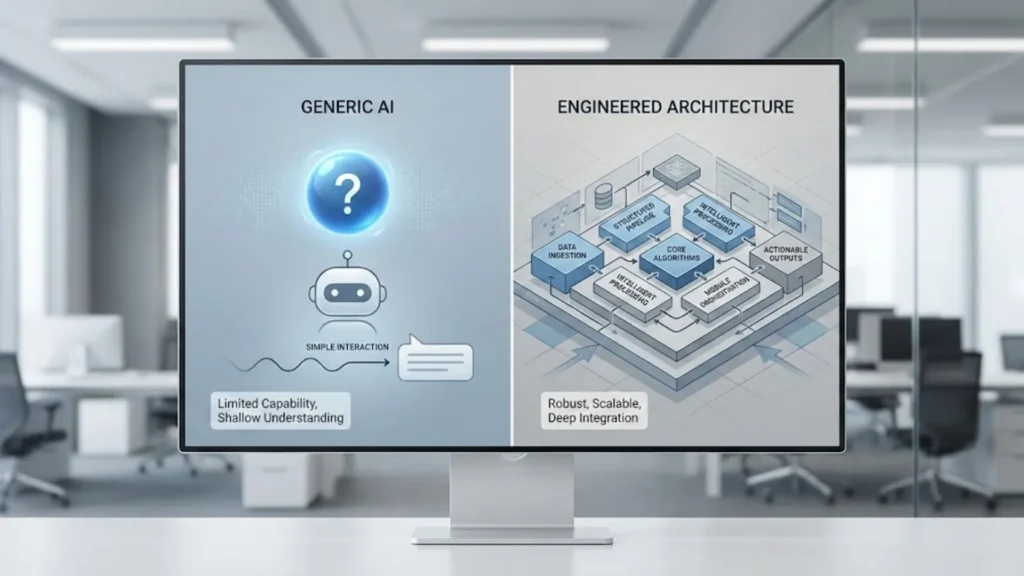
It is vital to distinguish between surface-level AI tools and engineering-grade platforms. Many tools currently marketed as “AI builders” are merely existing drag-and-drop interfaces with an AI text generator bolted on.
A true engineering-grade AI platform, such as Imagine.bo, focuses on the entire stack.
Generic AI Website Builders:
- Focus: Primarily frontend aesthetics and content generation.
- Architecture: Often relies on bloated, pre-existing codebases that are difficult to customize deeply.
- Backend: Limited or non-existent capabilities for complex logic or databases.
- Scalability: Suitable for brochures or portfolios, but struggles with dynamic applications.
Engineering-Grade AI Platforms (The Imagine.bo Standard):
- Focus: End-to-end application integrity, security, and performance.
- Architecture: Generates clean, efficient code based on modern frameworks.
- Backend: Builds real, normalized databases and secure APIs capable of handling complex business logic.
- Scalability: Serverless SaaS architecture designed to grow seamlessly from ten users to ten thousand.
Who Benefits Most? Real-World Use Cases

The ability to generate sophisticated software without writing code empowers various professionals to execute faster.
- Founders and Startups: Rapidly build and launch Minimum Viable Products (MVPs) to test market assumptions. See our guide on launching apps without developers.
- Small Business Owners: Move beyond simple information sites to create functional tools, such as custom client portals or internal inventory management apps.
- Product Managers & Designers: High-fidelity prototyping that actually functions, allowing stakeholders to interact with a real product rather than static mockups.
- Marketing Teams: Deploy highly customized, dynamic landing pages and micro-sites for specific campaigns without bottlenecking the engineering department.
Key Benefits of an Engineering-First AI Approach
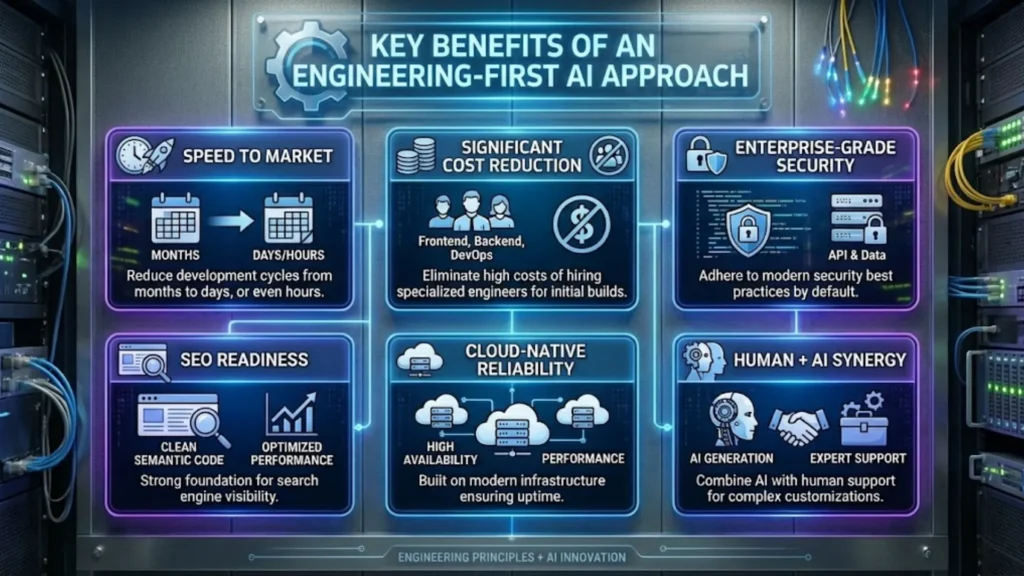
Choosing an AI platform built on sound engineering principles offers distinct advantages over traditional methods:
- Speed to Market: Reduce development cycles from months to days, or even hours.
- Significant Cost Reduction: Eliminate the high costs associated with hiring specialized frontend, backend, and DevOps engineers for initial builds.
- Enterprise-Grade Security: Benefit from platforms that prioritize securing AI-generated web apps by default.
- SEO Readiness: Clean, semantic code generation and optimized performance provide a strong foundation for search engine visibility. Check out our SEO strategies for AI-built products.
- Cloud-Native Reliability: Applications built on modern cloud infrastructure ensure high availability and performance.
- Human + AI Synergy: The best platforms combine AI generation with human expert support to handle edge cases and complex customizations.
The Future Landscape of AI-Driven Development
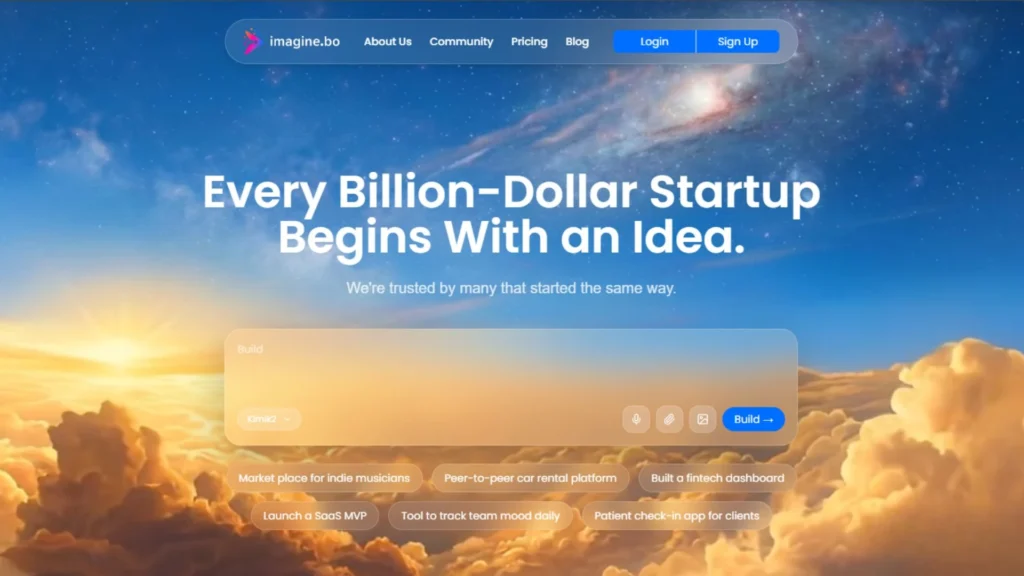
We are currently in the early stages of revolutionizing web design. The future of app development and AI web app builders points toward even greater autonomy and sophistication.
We can expect platforms to evolve from purely generative tools into proactive systems that monitor application performance, suggest optimizations, and even “self-heal” code when issues arise. The integration between design, development, and data analysis will become seamless. Ultimately, the distinction between “coders” and “non-coders” will blur, replaced by those who can effectively articulate problems and those who cannot. The focus will remain squarely on solving user needs through robust technology.
Conclusion
The evolution of AI web app builders has moved beyond superficial design assistance to core engineering and architecture. By leveraging AI that mimics SDE-level reasoning, platforms can now deliver scalable, secure, and revenue-ready applications without requiring manual coding. This shift empowers visionaries to focus on business logic rather than technical hurdles, making engineering-grade AI platforms the superior choice for building modern digital products.
Build smarter, scale faster, and turn your vision into reality with Imagine.bo.
Launch Your App Today
Ready to launch? Skip the tech stress. Describe, Build, Launch in three simple steps.
Build