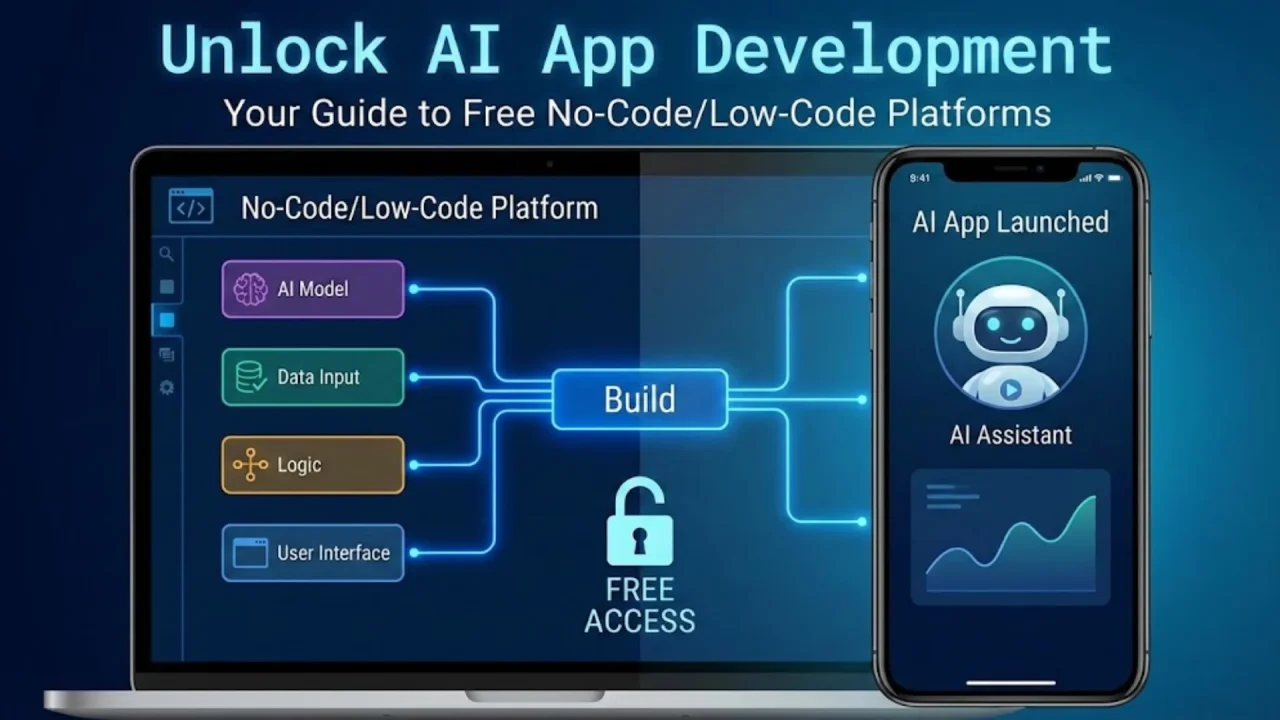
Building sophisticated AI applications is no longer exclusive to expert developers. With the rise of free no-code and low-code platforms, you can now transform innovative ideas into functional software without writing a single line of code. This guide curates the best zero-cost tools that integrate powerful AI features, enabling you to build, test, and launch your custom app rapidly. Stop letting technical barriers hold you back; discover the accessible technologies that put professional-grade development power directly in your hands.
Understanding the Landscape: AI, No-Code, and Low-Code
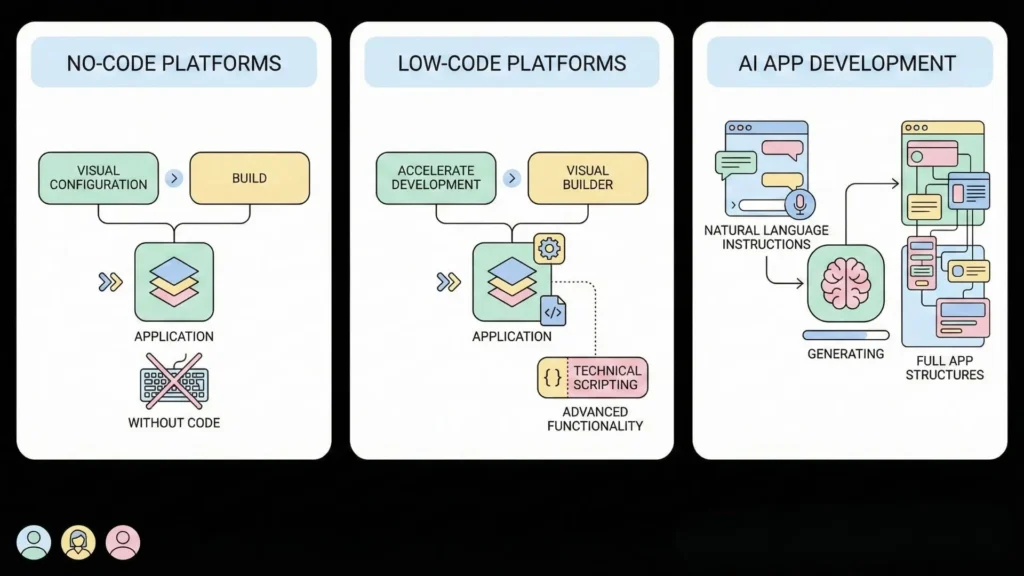
To truly navigate the future of app development, it is essential to distinguish between the three pillars of modern software creation. While these terms are often used interchangeably, their capabilities—and the audiences they serve—differ significantly. You can read more about the key differences between No-Code and Low-Code in 2025 to get a deeper understanding.
Launch Your App Today
Ready to launch? Skip the tech stress. Describe, Build, Launch in three simple steps.
Build1. No-Code Development Platforms (NCDP)
These platforms are the entry point for democratization. They support creating software via a graphical user interface (GUI) and configuration instead of programming.
- How it works: Users utilize a “drag-and-drop” canvas to place buttons, forms, and images.
- The Reality: You never type a single line of code, but you are often limited to the rigid logic provided by the platform’s pre-built templates.
2. Low-Code Development Platforms (LCDP)
Low-code environments are designed for speed but often require a “human in the loop” who understands technical architecture.
- How it works: These platforms handle the heavy lifting of infrastructure but allow developers to write custom scripts for specific situations.
- The Reality: They provide a high level of abstraction, but they are not truly “no-code.” They are developer accelerator tools, not necessarily tools for the non-technical founder.
3. AI App Development
This is the next evolution—the leap from “visual programming” to intent-based creation.
- How it works: Instead of manually dragging blocks to build a UI, users describe their goals in plain English prompts.
- The Reality: The AI acts as the architect and the builder. It handles logic, layout generation, database structuring, and even content creation, making the AI app development process almost instant.
Your Guide to Free No-Code/Low-Code Platforms: An Honest Comparison
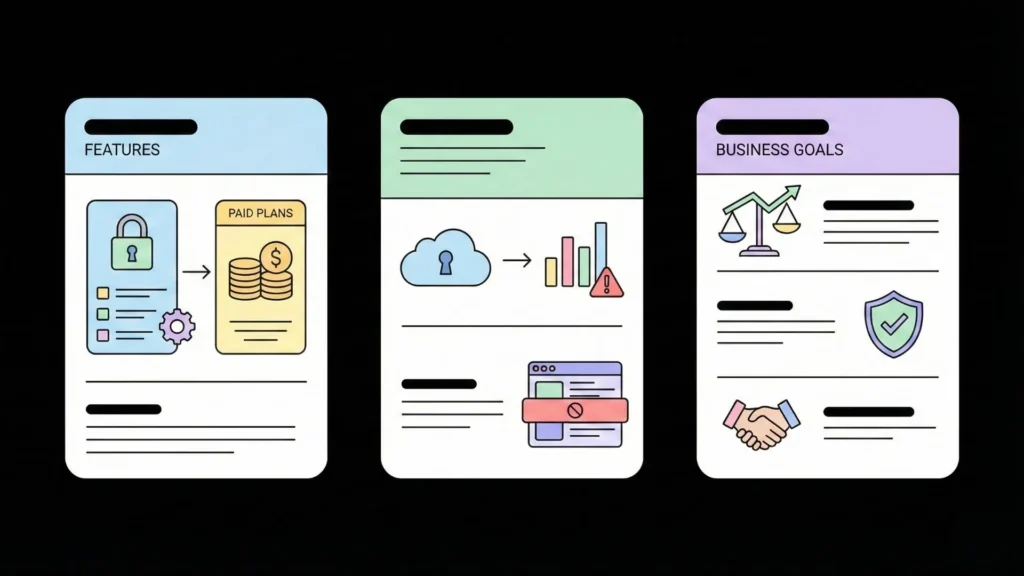
The market is flooded with tools promising “free” app development. However, for a growing business, “free” often comes with hidden costs—whether in the form of restricted features, poor scalability, or lack of data control.
Here is how the most popular free app builders stack up against the needs of a serious business:
| Platform | Best For | The “Catch” (Limitations) |
| Appy Pie | Beginners & simple sites | Lack of Depth: Advanced customization is severely limited. To get features that make an app feel “professional,” you are often forced into expensive premium plans immediately. |
| Bubble | Dynamic, complex apps | Complexity: It offers power, but at the cost of a steep learning curve. Optimization is manual, meaning large apps can become slow if you don’t know how to structure databases. |
| Glide | Data-centric tools | Design Rigidity: Heavily dependent on structured spreadsheets (Google Sheets/Excel). It is excellent for lists, but poor for highly custom, brand-unique visuals. |
| Softr | Internal portals | Block Restrictions: Great for Airtable users, but limited to a rigid block-based structure. It is rarely suitable for high-growth, consumer-facing SaaS products. |
| Zapier | AI orchestration | No Frontend Control: While powerful for connecting apps and automating workflows, it lacks the ability to build a pixel-perfect frontend interface for users. |
Note: Many of these tools also require you to bring your own API keys (BYOK), meaning you may still face usage costs based on token consumption, even if the platform itself claims to be free.
The Evolution: Why AI-Driven No-Code is the Future
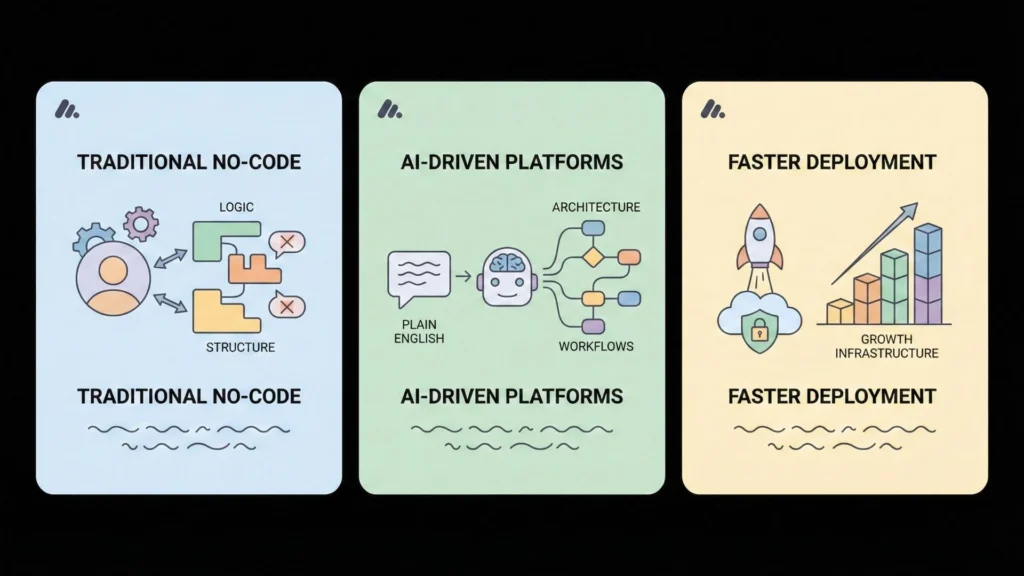
Traditional no-code platforms significantly improved business agility by providing templates for standard workflows. However, they still require the user to think like a programmer—understanding logic flows, database relationships, and UI hierarchy.
The next leap—represented by platforms like Imagine.bo—is the move to intent-based creation.
Instead of spending weeks learning the intricacies of a specific visual editor, an AI no-code app builder allows you to describe a solution and watch it materialize. This shift eliminates the “shadow IT” concerns often associated with low-code tools. By using an AI-driven platform, businesses ensure that apps are built on standardized, secure, and enterprise-grade infrastructures from day one, rather than being cobbled together with loose permissions and insecure data practices.
Imagine.bo: The New Standard in AI App Development
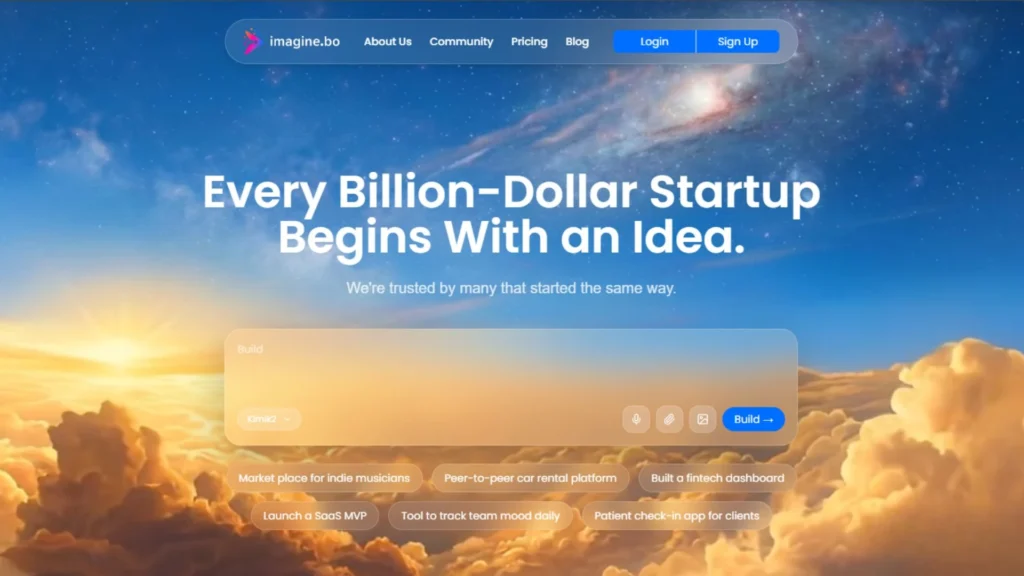
Imagine.bo positions itself not just as a tool, but as a complete ecosystem for those who want to build apps without coding while maintaining professional standards. It addresses the common failures of generic builders by offering:
1. Describe → Build → Launch
This is a streamlined, 3-step process. You don’t need to draw wireframes. You utilize plain English prompts to generate your entire app structure. The AI understands context—if you ask for a “Real Estate App,” it knows you need property listings, agent profiles, and contact forms without you asking for them individually. Learn more about how Imagine.bo works.
2. True No-Code
Many platforms claim to be no-code but require CSS knowledge to make things look good. With Imagine.bo, there is absolutely no setup or programming language required. You start in your browser, design in your browser, and launch from your browser.
3. Enterprise-Ready Architecture
Scalability is usually the downfall of no-code apps. Unlike basic builders that choke under traffic, Imagine.bo apps are designed for scalability, security, and cloud deployment right out of the box. Your MVP can grow into a full-scale product without needing a rebuild.
4. The Human Safety Net
This is the game-changer. Pure AI can sometimes hit a “creative wall” or struggle with highly specific, unique logic. Imagine.bo allows you to assign real human developers to polish your project. This hybrid approach ensures you never get stuck at 90% completion—a common frustration with other no-code tools.
5. Growth-Centric Features
Building the app is only half the battle. Imagine.bo includes built-in SEO tools, analytics, and marketing integrations to ensure your app doesn’t just exist in a vacuum, but actively thrives and attracts users.
Real-World Use Cases for AI-Powered Apps
The utility of AI app development spans across industries, offering immediate value to different professional personas:
- For Founders (The Rapid MVP):
- The Problem: You have a SaaS idea but lack the $50k required for an agency build.
- The Solution: Rapidly prototype a functional marketplace or tool to test your hypothesis with real users. If the idea fails, you lost days, not months.
- For Small Businesses (Custom CRM & Operations):
- The Problem: Off-the-shelf CRMs like Salesforce are too expensive and complex.
- The Solution: Build a custom CRM that tracks exactly what you need, using AI to score leads or analyze customer sentiment automatically.
- For Marketers (Interactive Client Portals):
- The Problem: PDF reports are boring and static.
- The Solution: Create branded, interactive client portals that offer clients personalized content recommendations or automated support through AI chatbots.
- For Educators (Adaptive Learning):
- The Problem: “One-size-fits-all” courses have low completion rates.
- The Solution: Design e-learning platforms that adapt to a student’s pace, using AI-driven learning paths to serve easier or harder content based on performance.
Conclusion: Making the Right Decision
Choosing between a free, template-based no-code platform and an advanced AI app builder depends entirely on your long-term vision.
If you need a simple one-page site for a bake sale, traditional builders are excellent. However, if you are looking for a future-ready, scalable application that acts as a core asset for your business, the AI-driven approach is no longer optional—it’s the standard.
Think of it this way: Traditional development is like cooking a gourmet meal from scratch, requiring years of training. Low-code provides the pre-chopped ingredients. But AI no-code development is like having a master chef build the entire menu based on your description.
Unlock your innovation today. Experience the future of software creation with Imagine.bo and turn your plain English ideas into production-ready reality.
Launch Your App Today
Ready to launch? Skip the tech stress. Describe, Build, Launch in three simple steps.
Build