
In 2026, the gap between a “big idea” and a “big business” has officially closed. The no-code revolution, supercharged by Agentic AI and Vibe Coding, now allows you to launch high-performing, revenue-ready sites and full-stack apps in mere days.
However, with the market shifting from simple drag-and-drop to complex AI reasoning, choosing the wrong tool leads to technical debt and “the 80% trap.” To save you from the “convenience trap,” we have rigorously reviewed the Top 8 Best No-Code Website Builders in the UK (2026). From SDE-level architecture to total design freedom, let’s find the perfect digital foundation for your business.
Launch Your App Today
Ready to launch? Skip the tech stress. Describe, Build, Launch in three simple steps.
BuildWhat Is a No-Code Website Builder?
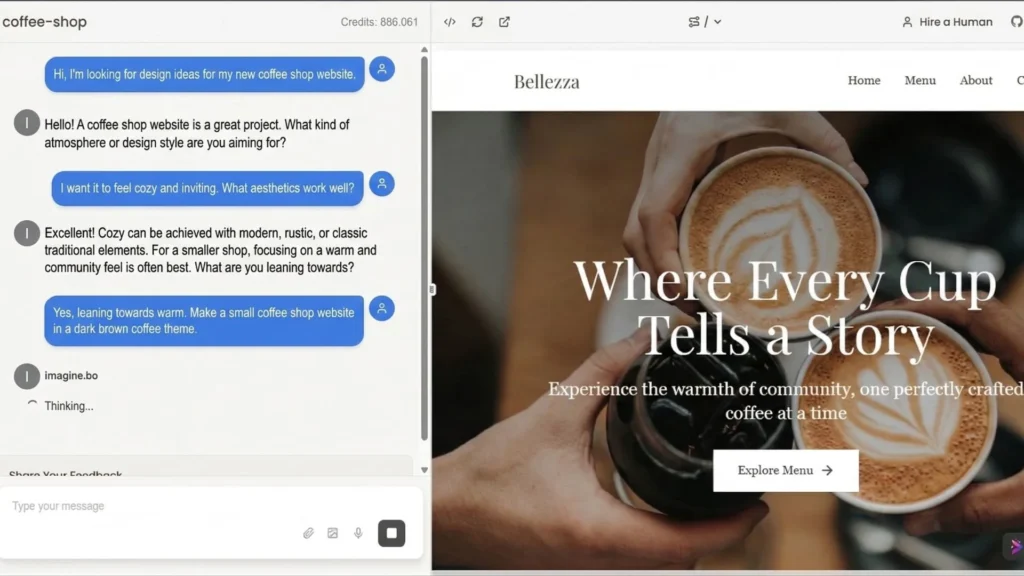
A no-code website builder is a platform that replaces complex traditional coding (HTML, CSS, backend logic) with an intuitive visual interface. Instead of writing syntax, you simply type your idea in plain English as a prompt, and the platform understands and generates clean working prototypes.
For example: If you visit the 👉🏻blog.imagine.bo platform and type an idea like, “Make a small coffee shop website in a dark brown coffee theme” it will generate a clean, beautiful website for you in minutes.
Quick Comparison Table
If you are looking for a quick overview of the top platforms on the market, here is a snapshot of the 8 best no-code website builders in 2026:
| Platform | Best For | Starting Price (Est.) | Key Strength |
| Lovable | Non-Tech Founders | £17 / month | Full-stack Next.js & Supabase integration |
| Bolt | Technical Prototyping | £14 / month | Instant browser-based WebContainers |
| Imagine.bo | Startups & MVPs | Freemium / Custom | SDE-level AI architecture & complex logic |
| Replit | Collaborative Teams | £16 / month | Zero-setup cloud IDE with autonomous AI |
| Vercel v0 | Founders & UI Devs | £16 / month | Production-ready React/Tailwind generation |
| Hostinger Horizons | Budget & Ease | £6.99 / month | Voice-prompted site building & UK hosting |
| Wix Harmony | UK Small Businesses | £14 / month | Aria AI agent & native GDPR compliance |
| Tempo Labs | React/Figma Teams | £24 / month | Two-way Figma to React synchronization |
How We Selected These No-Code Website Builders
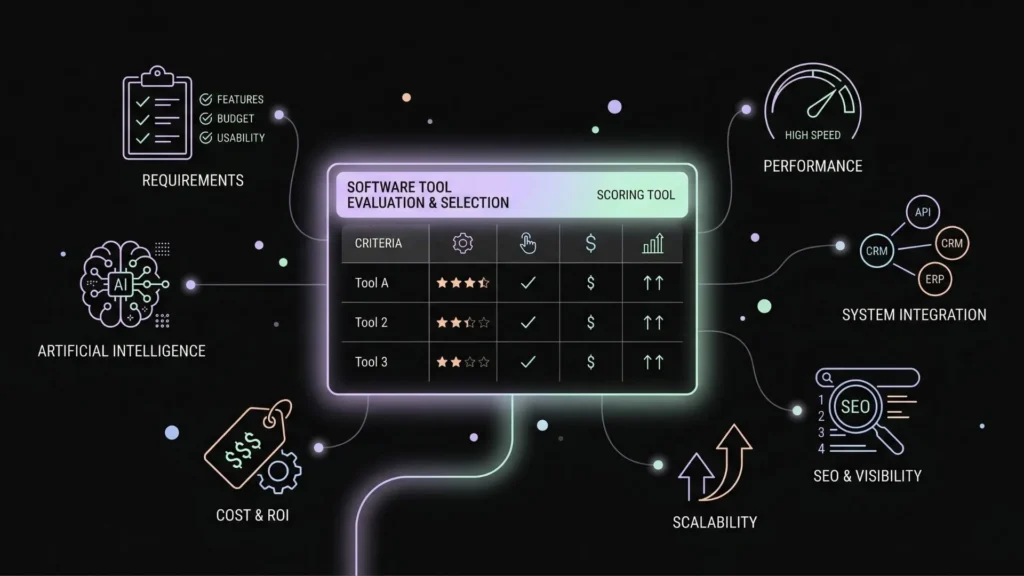
To determine the absolute best no-code website builder for different use cases, we evaluated dozens of platforms based on a strict set of criteria that matter most to modern creators and businesses.
- Use Cases and What It Does Well: Not every “best” tool is the right tool for your specific project. We categorized each platform based on its primary strength—whether that’s rapid UI prototyping, complex full-stack application logic, or high-conversion e-commerce. Our evaluation ensures you can match the platform’s “DNA” to your specific business goals.
- AI Features: In 2026, an AI no-code builder is a massive advantage. We looked for platforms leveraging artificial intelligence to speed up design, write copy, or even generate entire software architectures.
- Integrations: No tool exists in a vacuum. We checked how well these builders connect with essential third-party apps like CRM systems, email marketing tools, and payment gateways.
- Flexibility and Customisation: A good platform shouldn’t lock you into rigid templates. We prioritised builders that offer granular control over design, layout, and functionality.
- Scalability: Your website builder should grow with your business. We evaluated whether these tools can handle increased traffic, larger databases, and more complex product catalogues over time.
- Performance and SEO: Beautiful websites are useless if they load slowly or can’t be found on Google. We evaluated the underlying code quality, loading speeds, and built-in SEO tools of each platform.
- Pricing: We assessed the value for money across different tiers, ensuring there are viable options for bootstrapped founders as well as established enterprises.
Detailed Reviews of the Top 8 Platforms
Here is our in-depth analysis of the top 8 platforms for building websites and apps without code in 2026.
1. Lovable
Overview:
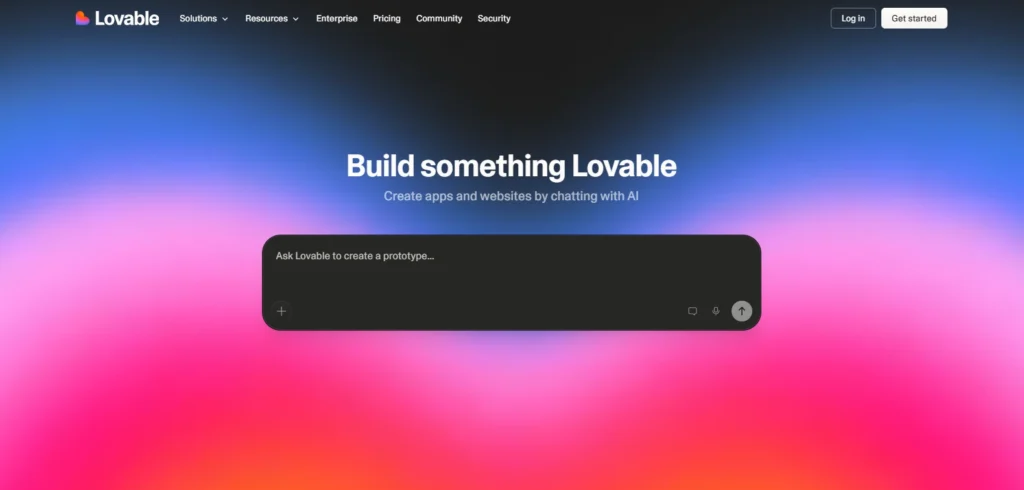
Lovable (also known as Loveable) is a favorite among non-technical founders looking to build real software. It is incredibly adept at taking text prompts, reference images, or Figma designs and turning them into full-stack applications. By leveraging Next.js and Supabase, it generates a real working backend alongside the visual frontend.
Key Features:
- Image-to-code and Figma-to-code generation.
- Builds full-stack applications, not just static pages.
- Native integration with Supabase for instant database creation.
- Outputs standard Next.js code.
Pros:
- Massively reduces time-to-market for working MVPs.
- Generates an actual, queryable database architecture.
- Highly intuitive for visual thinkers and designers.
Cons:
- Complex state management may still require some manual debugging.
- Relatively new to the market, meaning the community is still growing.
Pricing: Free tier available / Pro plans from £17 / month.
Best For: Non-coders and founders needing super-fast prototypes and working MVPs.
2. Bolt
Overview:
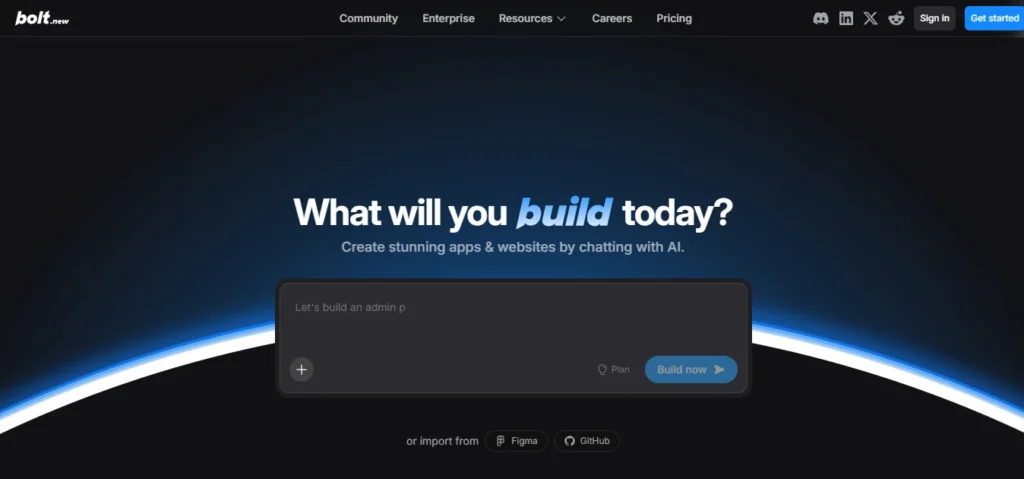
Bolt utilizes advanced WebContainers to run a complete development environment directly in your browser. This instant full-stack capability means you can prompt the AI to build complex applications, run them, and test them immediately without downloading any dependencies, followed by a simple one-click deploy.
Key Features:
- Browser-based WebContainers for instant environments.
- Full-stack application scaffolding via text prompts.
- No local installation or dependency management required.
- One-click deployment to live servers.
Pros:
- Blazing fast setup for full-stack projects.
- Incredible for rapid testing and iterating on technical ideas.
- Keeps your local machine clean of heavy development files.
Cons:
- Browser memory limits can occasionally throttle massive, resource-heavy projects.
- Requires a persistent, stable internet connection to function smoothly.
Pricing: Free tier available / Paid plans from £14 / month.
Best For: Developers and tinkerers who want to rapidly test ideas wi
3. Imagine.bo
Overview:
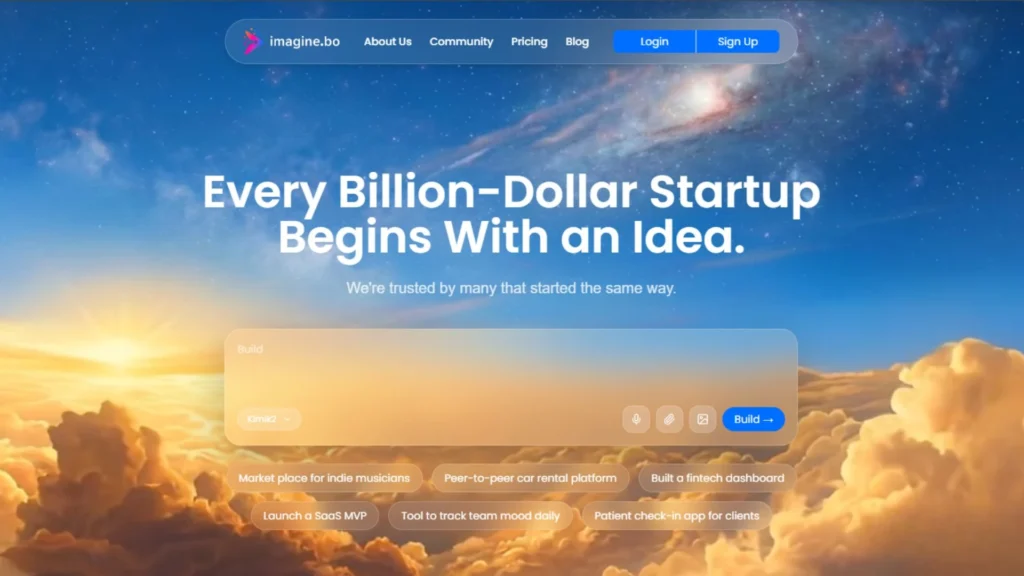
Imagine.bo is an advanced, AI-driven no-code platform that is revolutionising how founders transform ideas into real, functional apps and websites. Unlike standard drag-and-drop builders, Imagine.bo operates as a comprehensive software development partner. Users can simply describe their product idea in plain English, and the system intelligently builds the underlying architecture. By utilising AI reasoning with SDE (Software Development Engineer) level engineering standards, Imagine.bo generates production-ready web applications complete with scalable backend logic, frontend interfaces, databases, QA testing, and deployment—all in one unified ecosystem.
Key Features:
- AI-powered development: Generates complete software systems from text prompts.
- Plain-English product creation: Speak to the AI naturally to outline features and logic.
- SDE-level architecture: Builds code that meets professional software engineering standards.
- Cloud deployment: Native integration for deploying to Railway, GCP, or Vercel.
- Enterprise-grade security: Built-in safeguards to protect user data and application integrity.
- Built-in analytics: Track user behaviour and app performance automatically.
- SEO optimisation: Generates clean, search-friendly code structures.
- Mobile responsive builds: Ensures your app looks perfect on any device.
Imagine.bo follows a powerful five-step workflow:
- Start with your idea: Simply type out what you want to build.
- AI defines product logic and features: The platform maps out the necessary databases and user flows.
- System generates frontend and backend: The AI writes the code for both the visual interface and the server logic.
- One-click launch: Deploy your fully functional application instantly.
- Continuous AI + human support: Iterate, update, and scale with ongoing AI assistance.
Pros:
- Builds complex logic and backends, not just static pages.
- Massively reduces time-to-market for MVP development.
- True scalability suitable for enterprise applications.
Cons:
- May be overkill for someone just needing a simple blog.
- Requires a clear understanding of your business logic to prompt the AI effectively.
Pricing: Custom pricing based on compute and AI usage (Freemium tiers available for prototyping).
Best For: Founders, startups, creators, teams building MVPs, and businesses needing to launch complex digital products quickly.
4. Replit
Overview:
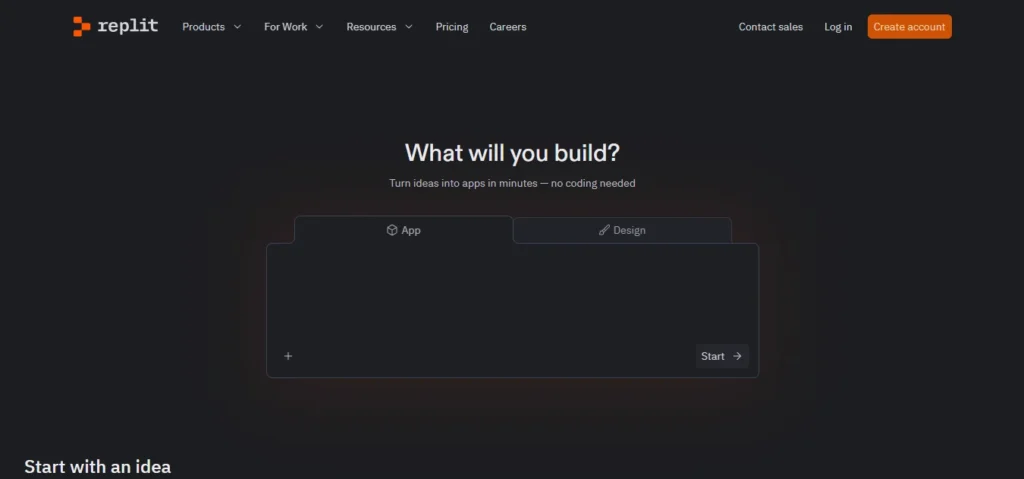
Replit has evolved into a browser-based coding powerhouse featuring an autonomous AI Agent. It requires absolutely zero local environment setup and allows multiple users to collaborate in real-time, much like a Google Doc for software. It democratizes coding by making the environment instantly accessible from any device.
Key Features:
- Autonomous AI Agent to write, debug, and explain code.
- Cloud-based IDE requiring zero local installation.
- Real-time “multiplayer” collaboration tools.
- Instant hosting and deployment for built applications.
Pros:
- Incredible for team collaboration and pair programming.
- Removes the “it works on my machine” headache entirely.
- Very intuitive for rapid prototyping and education.
Cons:
- Performance is entirely dependent on your internet connection.
- Costs can scale up if you require heavy cloud computing power.
Pricing: Free tier available / Paid plans from £16 / month.
Best For: UK schools, hackathons, startups, and teams who want to code collaboratively.
5. Vercel v0
Overview:
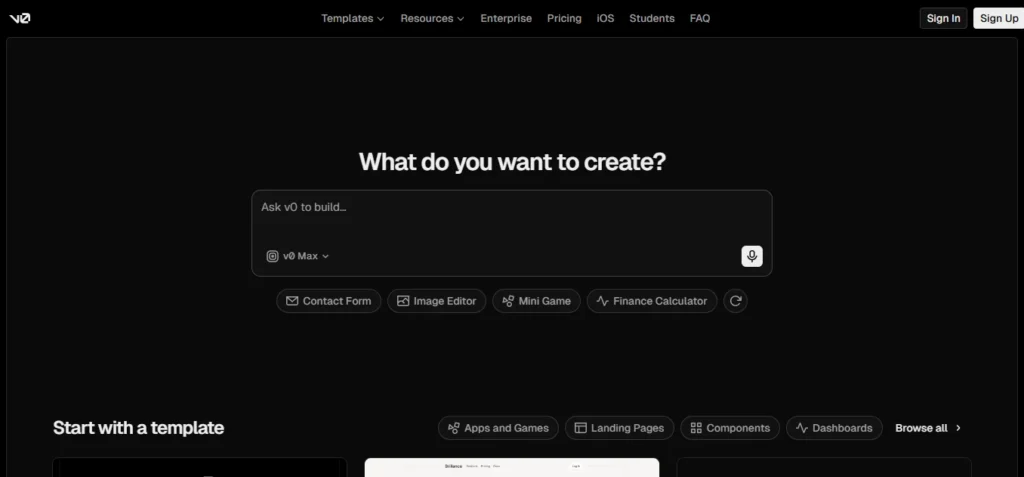
Vercel v0 takes the top spot as the ultimate vibe coding tool for modern web development. It excels at generating production-ready React and Tailwind UI directly from plain-English text prompts. By bridging the gap between rapid AI generation and enterprise-grade deployment, it allows developers to visually edit interfaces while ensuring the underlying code is secure and scalable.
Key Features:
- Generates production-ready React and Tailwind code from text prompts.
- Built-in visual editing interface to tweak AI-generated designs.
- Automated security scanning for generated components.
- Seamless one-click deployment to the Vercel ecosystem.
Pros:
- Incredibly fast workflow for building modern user interfaces.
- Code output is clean and adheres to current best practices.
- Excellent for developers who want to avoid writing boilerplate UI code.
Cons:
- Primarily front-end focused; doesn’t architect complex backend logic.
- Requires a baseline understanding of React for deep, manual customization.
Pricing: Free (Hobby tier) / Pro plans start from £16 / month.
Best For: Developers and founders needing fast SaaS dashboards and seamless one-click deployments.
6. Hostinger Horizons
Overview:
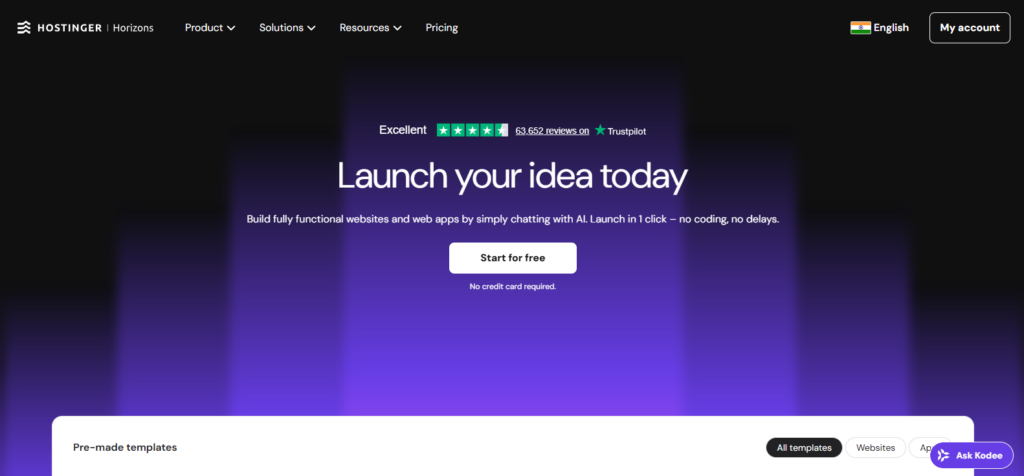
Hostinger Horizons provides a complete, accessible ecosystem tailored specifically for UK creators, rolling hosting, domains, and AI generation into one platform. It stands out by supporting both chat and voice prompts, making it incredibly intuitive. With a built-in CMS and support for over 80 languages, it’s a powerhouse for getting functional projects off the ground fast.
Key Features:
- Multi-modal inputs including voice and text chat prompting.
- Built-in Content Management System (CMS).
- Multilingual support covering over 80 languages.
- All-in-one package including web hosting and custom domains.
Pros:
- Extremely affordable with transparent UK GBP pricing.
- Excellent localized support and infrastructure.
- Voice prompting adds a highly accessible, hands-free building experience.
Cons:
- May lack the advanced logic capabilities needed for complex web apps.
- Less granular code control compared to developer-centric tools.
Pricing: Starts from £6.99 / month.
Best For: Solopreneurs and businesses building quick task apps or MVPs.
7. Wix Harmony
Overview:
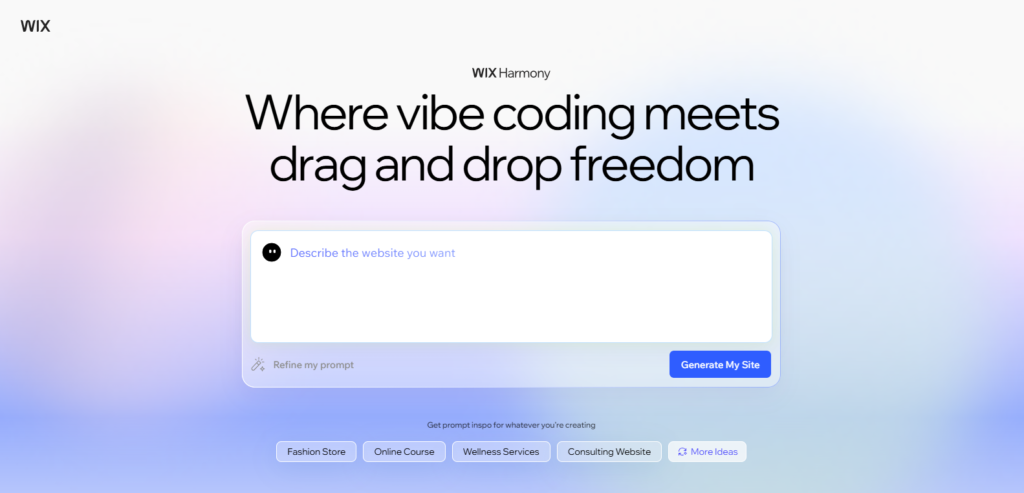
Wix Harmony integrates an advanced AI agent named Aria directly into the Wix ecosystem. It retains the familiar ease of traditional Wix while adding powerful conversational AI capabilities to build full-scale e-commerce architectures. Crucially for the UK and European markets, it is fully GDPR compliant right out of the box.
Key Features:
- Powered by Aria, a dedicated conversational AI agent.
- Automated setup for robust e-commerce and storefronts.
- Built-in, AI-driven SEO optimization tools.
- Strict, native GDPR compliance frameworks.
Pros:
- Seamless learning curve for existing Wix users.
- Takes the headache out of legal compliance for UK merchants.
- All-in-one dashboard for marketing, sales, and design.
Cons:
- Users are locked into the proprietary Wix ecosystem.
- Difficult to migrate the generated code to other hosting providers.
Pricing: Free with standard Wix / Premium plans from £14 / month.
Best For: Small UK businesses and local shops wanting powerful, built-i
8. Tempo Labs (Tempo)
Overview:
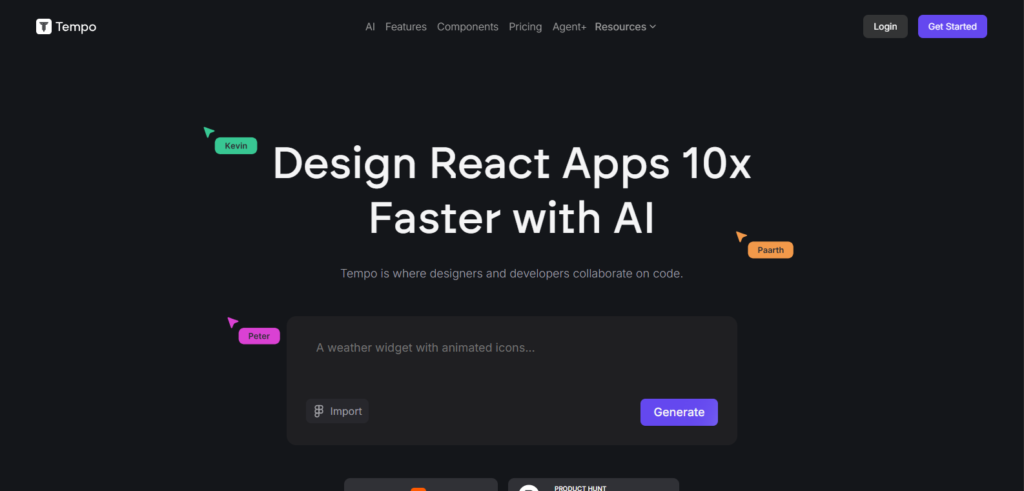
Tempo Labs focuses heavily on the React ecosystem. It stands out by offering deep, two-way synchronization with Figma alongside powerful visual editing tools. You can use vibe coding to generate the foundation, and then visually adjust the React and Tailwind components seamlessly, bridging the gap between design and engineering.
Key Features:
- Deep, two-way synchronization with Figma files.
- Visual editing tailored specifically for React and Tailwind CSS.
- High-fidelity component generation.
- Direct export to standard code repositories.
Pros:
- An absolute dream for React purists and dedicated front-end teams.
- Solves the classic handoff friction between design (Figma) and development.
- Produces highly maintainable, standardized code.
Cons:
- Strictly tied to the React/Tailwind ecosystem; not suitable for Vue or Angular users.
- Higher starting price point compared to some competitors.
Pricing: Free tier available / Paid plans from £24 / month.
Best For: Teams and developers whose tech stack revolves strictly around React and Tailwind.
Which No-Code Website Builder Should You Choose?
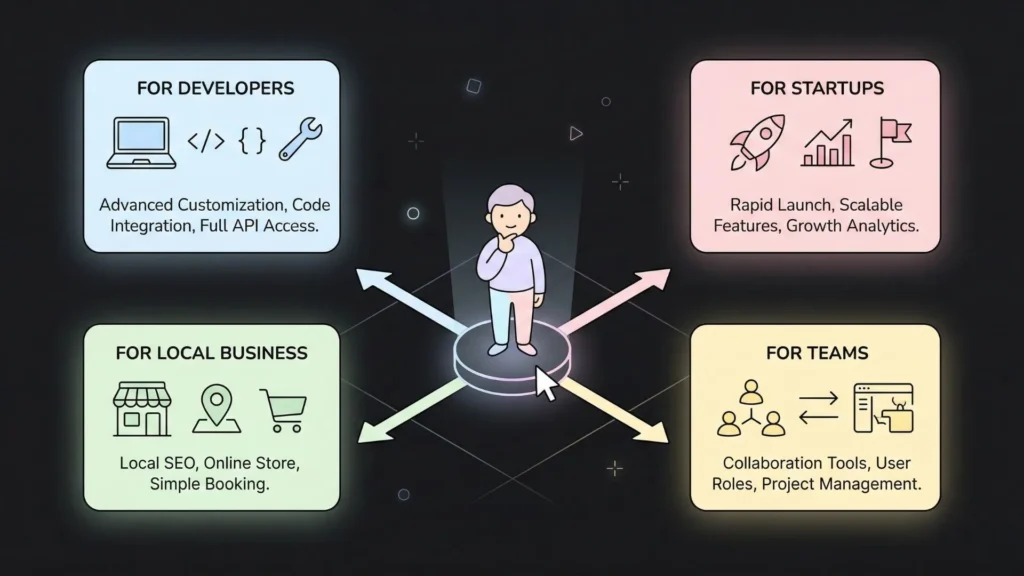
Choosing the right platform depends entirely on your goals and technical comfort level:
- Best for Local UK Businesses: Wix Harmony is the safest choice for local shops needing built-in commerce and effortless GDPR compliance.
- Best for High-Level App Development: Imagine.bo is the absolute standout. If you are a founder needing to build complex logic, a database-heavy MVP, or an actual web app (not just a brochure site), its AI reasoning is a game-changer.
- Best for Design-to-Code: Tempo Labs and Lovable are unmatched for users who want to turn Figma designs or reference images into functional React code.
- Best for Developers: Vercel v0 and Bolt offer the fastest workflows for professionals who want to skip the boilerplate and ship “vibe-coded” interfaces instantly.
- Best for Education & Hackathons: Replit remains the king of collaboration, allowing teams to build together in the cloud without environment headaches.
Conclusion
The era of needing a computer science degree or a massive agency budget to launch a digital business is over. In 2026, no-code tools have matured into enterprise-ready platforms. Whether you choose the accessibility of Hostinger, the collaborative power of Replit, or the SDE-level engineering of Imagine.bo, there has never been a better time to build.
With the rapid full-stack generation of Lovable and the end-to-end AI-driven capabilities of Imagine.bo, the power to build the future is at your fingertips. No longer held back by technical limitations, you can now align your goals with these revolutionary platforms and start building your digital empire today.
FAQ Section
What is a no-code website builder?
A visual or AI-driven platform that lets you create websites and apps via text prompts or drag-and-drop tools, removing the need for manual coding.
Are no-code websites good for SEO?
Yes. Modern 2026 platforms generate clean, schema-ready code. Tools like Imagine.bo and Wix include automated SEO optimization to ensure your site ranks on Google from day one.
Can I build actual software with no-code?
Absolutely. Advanced platforms like Imagine.bo and Lovable allow you to build full-stack applications with databases and user authentication, moving far beyond simple landing pages.
Is AI replacing traditional no-code?
AI is enhancing it. We’ve moved from “drag-and-drop” to “prompt-and-edit,” making the building process 10x faster while maintaining professional engineering standards.
Related Articles
- Effortlessly Design Stunning Websites with AI: Your No-Code Web Design Guide
- AI Website Builder for Selling Products
- AI Website Builder for Restaurants: Serve Up a Sizzling Online Presence—No Code Required
- AI Website Builder for Dropshipping Business
- AI Website Builder Quick
Launch Your App Today
Ready to launch? Skip the tech stress. Describe, Build, Launch in three simple steps.
Build