
Most people treat app ideas as future projects. Something to do once they find a developer, raise money, or learn to code. The problem is that gap never closes on its own. Meanwhile, the no-code market is projected to exceed $150 billion by 2030 (Grand View Research, 2024), and a growing number of solo founders are turning weekend builds into genuine monthly revenue streams.

This article gives you 15 specific, monetizable app ideas, the niche each one targets, why it earns money, and the exact prompt you can paste into imagine.bo to start building right now. No fluff. No “validate your idea” theory. Just actionable starting points you can ship by Sunday night.
Launch Your App Today
Ready to launch? Skip the tech stress. Describe, Build, Launch in three simple steps.
BuildIf you are looking for even more inspiration before committing to one direction, this roundup of profitable no-code app ideas you can build today covers additional niches worth scanning first.
TL;DR: You can build a production-ready, monetized app in a single weekend using AI-powered no-code tools. The 15 ideas below cover service booking, digital products, micro-SaaS, and community tools. According to Grand View Research (2024), the no-code development market is growing at a CAGR of over 26%, meaning demand for custom lightweight apps is accelerating fast. Start with one idea, use the exact prompt, and deploy.
Why Weekend App Builds Are Now Legitimate Business Moves
The notion that a real product requires months of development is outdated. According to a 2024 survey by Makerpad, over 43% of no-code founders reported generating revenue within 30 days of starting their first build. That is not a fluke. It reflects a structural shift: AI-generated full-stack apps now handle authentication, database logic, payments, and deployment automatically.
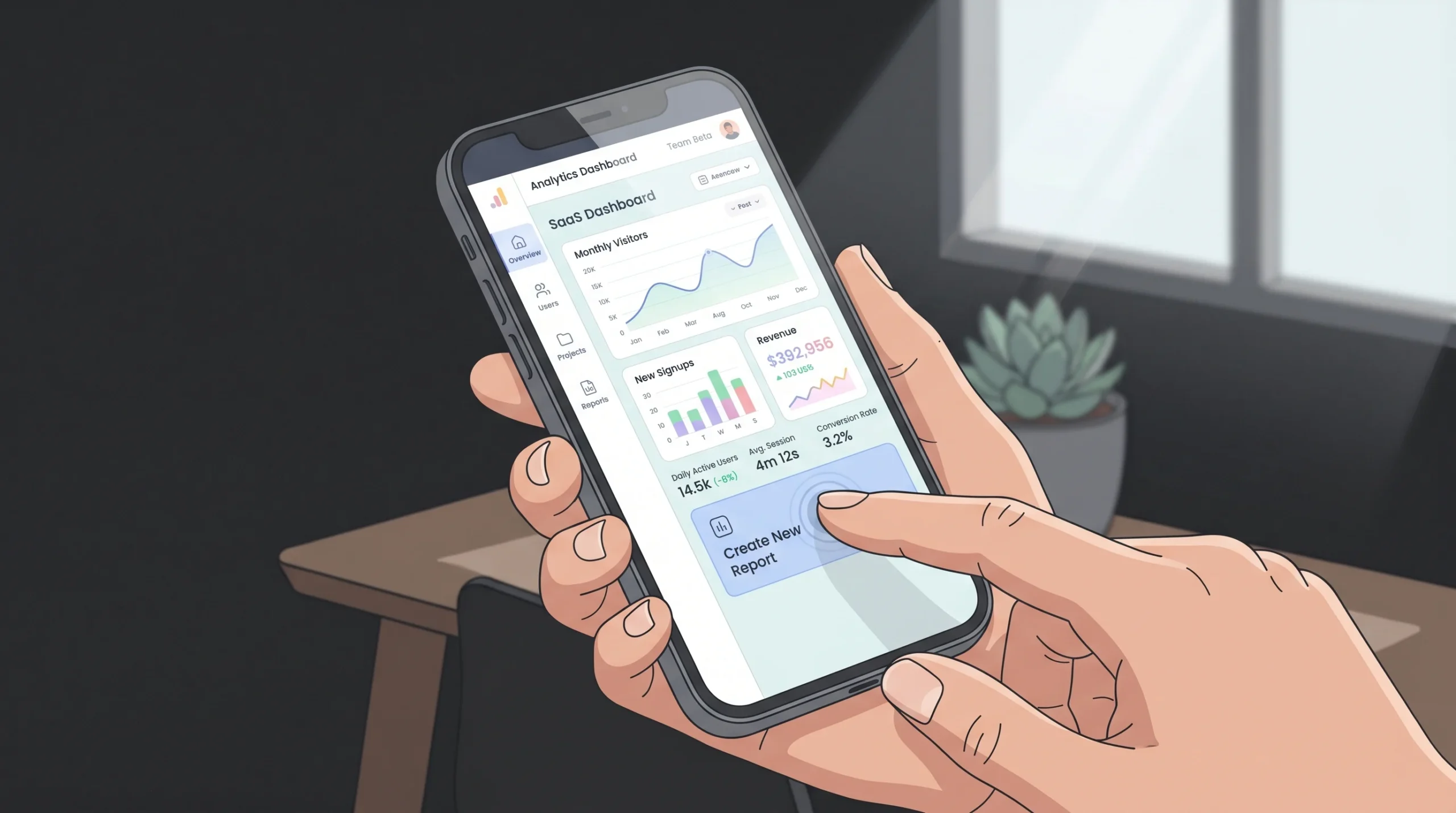
The bottleneck used to be technical execution. That bottleneck is gone. What remains is picking the right idea and writing a clear enough prompt to get a working product. Tools like imagine.bo use the Describe-to-Build approach, turning plain English into a complete web application with frontend, backend, and database in one pass. The One-Click Deployment feature then pushes it live on Vercel and Railway without touching a config file.
If you want to understand what that first-prompt experience actually looks like in practice, read from prompt to product: single-line SaaS before you start.
The 15 Profitable App Ideas (With Exact Prompts)
1. Local Service Booking App
The niche: Independent service providers, including tutors, photographers, personal trainers, and home cleaners, need a simple booking system that is not Calendly (which does not collect deposits or service-specific intake forms).

Why it earns money: Charge providers $29 to $79/month per seat. A city with 50 active users generates $1,450 to $3,950 in monthly recurring revenue. According to IBISWorld (2024), the personal services industry in the US is a $700+ billion market, heavily fragmented and underserved by software.
The exact prompt:
“Build a web app for local service providers to accept bookings. It needs a public-facing booking page where clients can pick a service, choose a time slot, and pay a deposit via Stripe. The provider gets a dashboard to manage appointments, set availability, and see upcoming bookings. Include email reminders for both parties. Use RBAC so each provider only sees their own data.”
For a deep dive on building scheduling systems specifically, see how to build a booking or scheduling app in minutes.
2. AI Resume Reviewer
The niche: Job seekers, particularly career changers and recent graduates, who want feedback on their resume before applying.

Why it earns money: Charge $9 to $19 per review or offer unlimited reviews for $15/month. With 150 paying users, that is $2,250/month. According to LinkedIn’s 2024 Workplace Report, 87% of job seekers believe resume optimization significantly improves interview rates, creating strong willingness to pay for feedback tools.
The exact prompt:
“Build a web app where users upload a PDF resume and receive AI-generated feedback. The feedback should score the resume on clarity, keyword optimization, and formatting, then provide specific rewrite suggestions for each section. Include a Stripe payment page before the result is shown. Store each submission with the user’s email so they can return to past reviews.”
3. Freelancer Client Portal
The niche: Independent consultants, designers, copywriters, and developers who manage client deliverables, feedback rounds, and invoices across too many email threads.

Why it earns money: The global freelance platform market hit $6.9 billion in 2023 (Statista, 2024) and is growing. A white-labeled portal charged at $19/month gives freelancers something agency software costs 10x more to provide. Sell it directly or bundle it with your own services.
The exact prompt:
“Build a client portal web app for freelancers. Each freelancer gets a dashboard to create client accounts, upload deliverables, track feedback, send invoices, and mark projects as complete. Clients get their own login to view deliverables, leave comments, and pay invoices through Stripe. Use role-based access so clients can only see their own projects.”
4. Digital Product Marketplace
The niche: Creators who sell Notion templates, Figma files, Canva decks, email scripts, or Obsidian vaults. Existing marketplaces like Gumroad take 10% per sale; a niche-specific marketplace can take 20 to 30% with better discovery.

Why it earns money: Marketplaces earn on every transaction. A 25% take rate on $10,000 in monthly GMV is $2,500 with zero inventory or fulfillment cost. According to Shopify (2024), digital product sales grew 47% year over year among solo creators.
The exact prompt:
“Build a digital product marketplace where sellers can create accounts, upload downloadable products with descriptions and pricing, and connect their Stripe account. Buyers can browse products, purchase them, and receive an automatic download link by email. The platform takes a 25% commission on every sale. Include a seller dashboard showing total earnings and sales history.”
5. Niche Job Board
The niche: Underserved professional communities. Examples: remote legal jobs, paid growth marketing roles only, sustainable fashion industry jobs, or part-time executive positions.
Why it earns money: Job boards charge employers $99 to $299 per listing. A board with 15 active listings per month earns $1,485 to $4,485 with no user acquisition cost beyond a mailing list. According to Backlinko (2023), niche job boards consistently outperform generalist boards in conversion rate because of audience specificity.
The exact prompt:
“Build a niche job board web app for remote sustainability industry roles. Employers can create an account, post job listings with a title, description, salary range, and application link, and pay $149 per listing via Stripe. Job seekers can browse listings, filter by category and job type, and sign up for weekly email alerts. Include an admin dashboard to manage and approve listings.”
6. Habit Tracker with Accountability Groups
The niche: People trying to build habits who struggle with solo accountability. Apps like Habitica are gamified but chaotic. Simple group accountability tools are almost nonexistent at an affordable price.
Why it earns money: Freemium works well here. Free tier supports individual tracking; a $5/month Pro tier unlocks group creation, shared streaks, and weekly check-in notifications. At 500 paying users, that is $2,500/month from a simple utility app. According to the American Psychological Association (2023), public commitment increases habit completion rates by up to 65%.
The exact prompt:
“Build a habit tracking web app where users log daily habits and can create or join accountability groups of up to 10 people. Each group sees a shared dashboard of everyone’s streaks. Users receive a daily email reminder at a time they set. The free tier allows 3 habits. A Pro tier at $5/month, paid through Stripe, unlocks unlimited habits and group creation.”
This kind of lightweight SaaS is particularly well-suited to weekend builds because the feature set is tightly scoped. The highest-risk failure mode is overbuilding. Start with streak tracking, group visibility, and email reminders. Ship that, then add features based on who actually pays.
7. AI Meal Planner and Grocery List Generator
The niche: Busy households, fitness clients, and people on specific diets (keto, vegan, high-protein) who want a personalized weekly plan without paying a nutritionist.
Why it earns money: Charge $7 to $12/month. The global meal kit and meal planning software market exceeded $20 billion in 2023 (Mordor Intelligence, 2024). A niche AI tool targeting a specific diet undercuts everything else on price while feeling more personalized.
The exact prompt:
“Build a web app where users input their dietary preferences (vegan, keto, gluten-free, etc.), number of people in their household, and weekly calorie target. The app generates a 7-day meal plan with recipes and an organized grocery list. Users can regenerate specific days. The app requires a $9/month Stripe subscription to generate plans. Store past plans so users can revisit them.”
8. Real Estate Lead Capture CRM
The niche: Independent real estate agents who need to capture leads from their website, follow up automatically, and track deal stage without paying for a full CRM like Salesforce or HubSpot.
Why it earns money: A lightweight CRM built for one profession can charge $49/month comfortably. According to the National Association of Realtors (2024), there are approximately 1.5 million active agents in the US alone. Capturing even a tiny fraction of that market produces meaningful revenue.
The exact prompt:
“Build a CRM web app for real estate agents. It should include a lead capture form they can embed on their website, automatic email follow-up sequences triggered by new lead submissions, a pipeline view to track each lead through stages (New, Contacted, Viewing Scheduled, Offer Made, Closed), and notes on each contact. Charge $49/month via Stripe. Each agent only sees their own leads.”
For a detailed walkthrough of building custom CRM tools with no code, visit how to create a custom CRM app without coding.
9. Subscription Expense Tracker for Small Businesses
The niche: Small business owners, freelancers, and bootstrapped startups that have accumulated 20 to 40 SaaS subscriptions and have no clean view of their monthly spend.
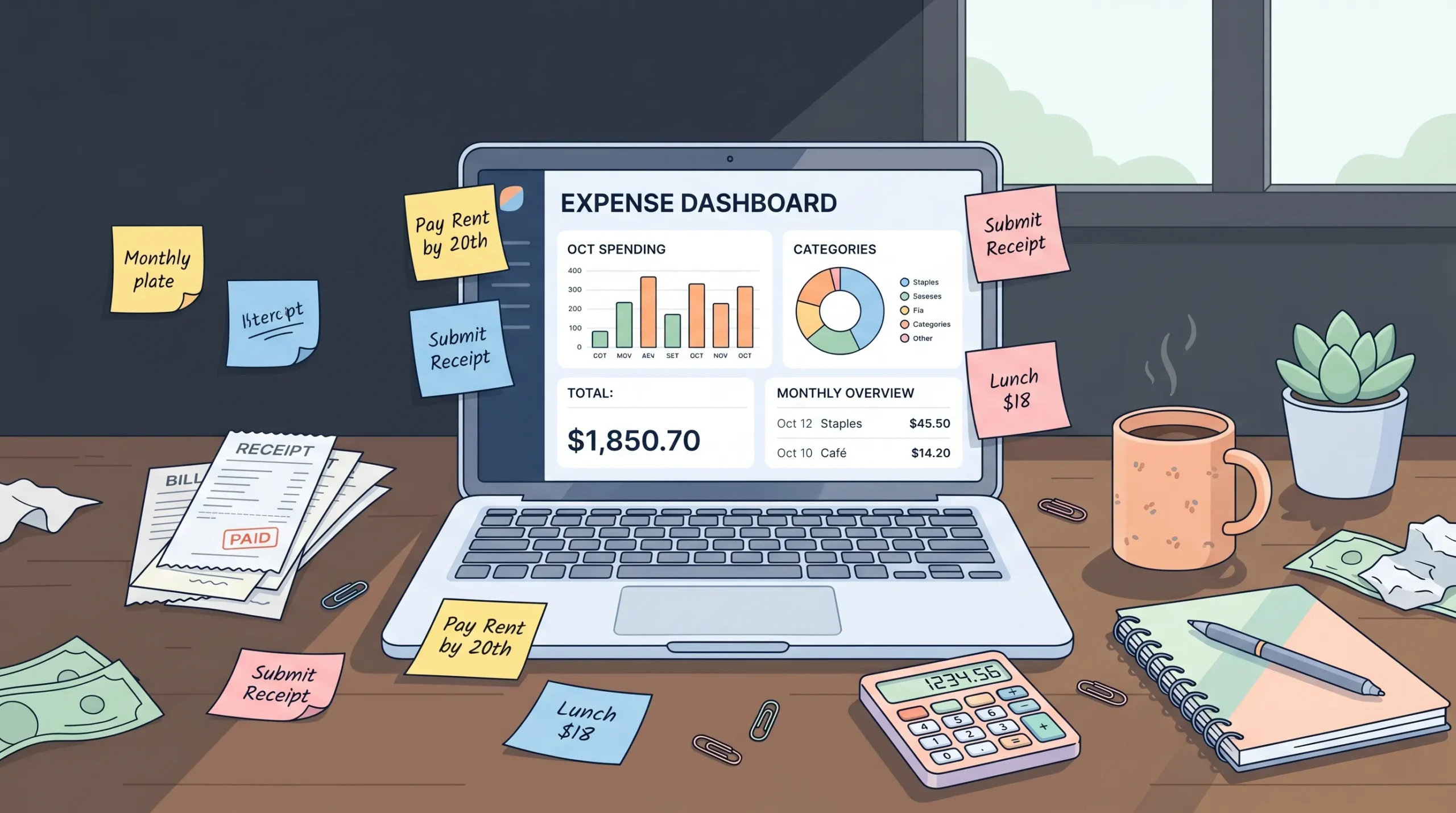
Why it earns money: A focused tool that solves one pain earns $8 to $15/month easily. Multiply by 300 users and that is $2,400 to $4,500/month for a utility app with minimal support requirements. According to Vendr’s 2024 SaaS Benchmark Report, the average mid-size company overpays on software by 26% annually simply from forgotten or duplicated subscriptions.
The exact prompt:
“Build a subscription expense tracker for small businesses. Users can manually log each SaaS subscription with the name, cost, billing cycle (monthly or annual), renewal date, and category. The dashboard shows total monthly and annual spend, upcoming renewals in the next 30 days, and spend by category in a bar chart. Allow CSV export of all subscriptions. Charge $10/month via Stripe.”
10. AI Study Flashcard Generator
The niche: Students preparing for professional exams (bar exam, CPA, medical licensing, GRE) who need custom flashcards from their own notes, not generic decks.

Why it earns money: Exam prep is a category where users pay for outcomes, not features. A $12/month subscription or $29 one-time fee is reasonable against the cost of failing a licensing exam. According to the US Department of Education (2023), over 4 million professional certification exams are taken annually in the US, and the adjacent market of academic students is far larger.
The exact prompt:
“Build a web app where students paste study notes or upload a PDF, and the app generates a set of flashcards using AI. Each flashcard shows a question on the front and the answer on the back. Users can flip through cards in quiz mode, mark cards as learned, and reshuffle the deck. Store card decks per user so they can return later. Offer a free tier of 3 decks and a $12/month Pro tier via Stripe for unlimited decks.”
11. Micro-Membership Community
The niche: Creators, coaches, and niche hobbyists who want to run a paid community without handing 30% of revenue to platforms like Patreon or Circle.
Why it earns money: Build it once, own the data, keep the margin. At $15/month per member and 200 members, that is $3,000/month. You avoid platform risk and control the user experience completely. According to a 2024 Creator Economy Report by Kajabi, 78% of creators cite platform dependency as their top business risk.
The exact prompt:
“Build a membership community web app. The owner can create topic-based discussion boards, post exclusive content (articles and video embeds), and manage member access. New members sign up with a Stripe subscription at $15/month. Members get a profile, can post in discussions, and receive a weekly digest email of top posts. The admin dashboard shows member count, monthly revenue, and churn rate.”
To learn how to structure and launch a subscription-based product without a developer, read how to launch a subscription-based app without developers.
12. Local Event Discovery App
The niche: Mid-size cities and specific scenes (art, fitness, local food, vintage markets) where Facebook Events is overloaded with noise and Eventbrite charges too much per ticket.
Why it earns money: Charge event organizers a flat $19/month to feature their events prominently. At 60 paying organizers in one city, that is $1,140/month with near-zero operational overhead. Alternatively, take a small per-ticket fee.
The exact prompt:
“Build a local event discovery web app for a specific city. Event organizers can create an account, submit event listings with name, date, time, location, description, and ticket link. A featured tier costs $19/month via Stripe and displays events at the top of listings. Visitors can browse events, filter by category and date, and subscribe to a weekly email of upcoming events. Include an admin panel to approve or reject submissions.”
13. Pet Care Booking Platform
The niche: Dog walkers, pet sitters, and mobile groomers who are still booking through texts and have no system for payments, scheduling, or client records.
Why it earns money: The US pet care industry surpassed $147 billion in 2023 (American Pet Products Association, 2024). Local service providers in this space are consistently underserved by software, meaning willingness to pay is high and competition is low at the micro-tool level.
The exact prompt:
“Build a booking platform for pet care providers (dog walkers, groomers, pet sitters). Providers create an account and list their services with pricing. Pet owners can create a profile, add their pets with breed and notes, browse local providers, and book appointments with payment via Stripe. Providers see their upcoming schedule and can accept or decline bookings. Both parties get email confirmations and reminders.”
14. Freelance Contract and Proposal Generator
The niche: Independent designers, developers, consultants, and writers who spend hours writing proposals and contracts from scratch for every new client.
Why it earns money: A $15 to $25/month tool that cuts proposal time from 3 hours to 20 minutes sells itself. According to FreshBooks (2024), freelancers who send proposals within 24 hours of a lead inquiry win 40% more contracts than those who wait longer. Speed is the product.
The exact prompt:
“Build a web app for freelancers to generate professional contracts and project proposals. Users fill in a short form with client name, project type, scope, timeline, payment terms, and revision limits. The app generates a formatted PDF document they can send directly. Include a client e-signature feature. Offer 3 free document generations, then charge $19/month via Stripe for unlimited access. Store all documents in the user’s account.”
15. Waitlist Builder with Referral Loop
The niche: Founders launching new products, newsletters, or communities who want to build pre-launch momentum with viral referral mechanics.
Why it earns money: Sell it to other founders at $29/month. Or use it to build your own audience for any of the 14 ideas above. According to a 2023 Viral Loops study, referral-based waitlists grow 3.2x faster than organic sign-up pages alone, making this a high-value tool for anyone pre-launch.
The exact prompt:
“Build a waitlist web app. Visitors enter their email to join a waitlist and receive a unique referral link. When they share the link and a friend signs up using it, their position in the waitlist improves. The landing page shows total sign-up count and the user’s current position. The creator gets an admin dashboard showing total sign-ups, top referrers, and an email export. Offer this as a SaaS at $29/month per campaign via Stripe.”
Across these 15 ideas, the median monthly revenue potential at modest scale (200 to 400 users) ranges from $1,400 to $6,000 per month per product. None of these require a team. None require custom code. All 15 can be described to imagine.bo in a single prompt session and deployed the same weekend.
How to Pick the Right Idea for Your Weekend
The best idea is not the most original one. It is the one closest to a problem you already understand. If you have worked in real estate, idea 8 has an unfair advantage for you. If you freelance, ideas 3, 5, or 14 fit naturally. If you have an existing audience, ideas 11 or 15 compound that.
Three filters narrow it down fast. First, can you name 10 real people who have this problem? If not, the niche is too thin. Second, does at least one competitor exist who charges for a solution? That confirms willingness to pay without needing to educate the market. Third, can you explain the core feature in one sentence? If you need two sentences, the idea needs simplification before you build.
If you want to stress-test your idea before building, validate startup ideas with no-code tools walks through a practical pre-build validation process that takes less than two hours.
What Happens After You Build It
Building is the fast part. Getting the first 10 paying users is the actual challenge. The good news is that every idea on this list targets a specific audience, which means your distribution is already scoped.
For local service apps, post in the relevant Facebook groups and subreddits for that profession in your city. For niche job boards and marketplaces, find the community that already gathers online and offer your tool there before monetizing. For subscription tools, write one clear blog post explaining the problem your app solves, post it to Hacker News or a relevant community, and collect emails before charging.
For a complete breakdown of how to turn a prompt-built app into actual revenue, monetizing prompt-built apps without coding covers pricing models, conversion tactics, and the first 100 user playbook in detail.
If you want more prompts to work from before or after your build, the copy-paste app prompt library organized by app type is worth bookmarking.
Frequently Asked Questions
Can you actually make money from a weekend app build?
Yes, but it requires picking a niche with existing demand and a clear price point. According to a 2024 Makerpad survey, 43% of no-code founders reached revenue within 30 days of starting. The apps on this list are all priced between $5 and $49/month, which is achievable at small user counts. 100 users at $15/month is $1,500/month in recurring revenue.
Do I need to know how to code to build any of these apps?
No. imagine.bo’s Describe-to-Build feature generates the full application, including backend logic, database schema, and frontend, from a plain English prompt. You need enough technical understanding to review what is built and iterate on it, but zero coding ability is required to ship a working product. According to Gartner (2024), over 65% of new business application development now involves low-code or no-code approaches.
How long does it actually take to build one of these apps with imagine.bo?
The initial build from a clear prompt takes 15 to 45 minutes. Refinement, adding edge cases, and testing adds a few hours. With One-Click Deployment, going live on a real domain takes minutes. A realistic weekend timeline is: Friday night for the build, Saturday for refinement, Sunday for your first outreach to potential users.
Which of these 15 ideas has the fastest path to revenue?
Ideas 1 (local booking), 3 (freelancer portal), and 14 (contract generator) have the clearest buyer profile and the shortest sales cycle. You can get a paying customer within days by doing direct outreach to 20 to 30 professionals in that niche. According to HubSpot’s 2024 Sales Report, personalized direct outreach converts at 8 to 12 times the rate of cold email blasts, especially for tools that solve a pain the prospect has right now.
What if my build needs features beyond what AI can generate?
imagine.bo’s Hire a Human feature lets you assign specific development tasks to vetted engineers directly from your dashboard. You do not leave the platform or start over. This is useful when you need a specific integration, a complex data structure, or custom logic that the AI generation did not handle precisely. The Pro plan at $25/month includes priority support and access to expert sessions before your launch.
Conclusion
The 15 ideas in this article share three things. They solve a specific, named problem. They have a built-in audience willing to pay. And they can be described in a single prompt that generates a working application in under an hour.
The three key takeaways: First, pick an idea closest to your existing experience or network, because your unfair advantage is knowing the audience. Second, use the exact prompts as written, then iterate one feature at a time rather than trying to build everything before launch. Third, your goal for the weekend is a working product with a Stripe payment link, not a perfect product.
If you want to see what a lean, well-structured app looks like from the builder side before you start, read what it really takes to build an AI app people buy and keep.
Ready to start building? Open imagine.bo, paste your chosen prompt into the Describe-to-Build interface, and use it free. Your first 10 credits are on us.
Launch Your App Today
Ready to launch? Skip the tech stress. Describe, Build, Launch in three simple steps.
Build