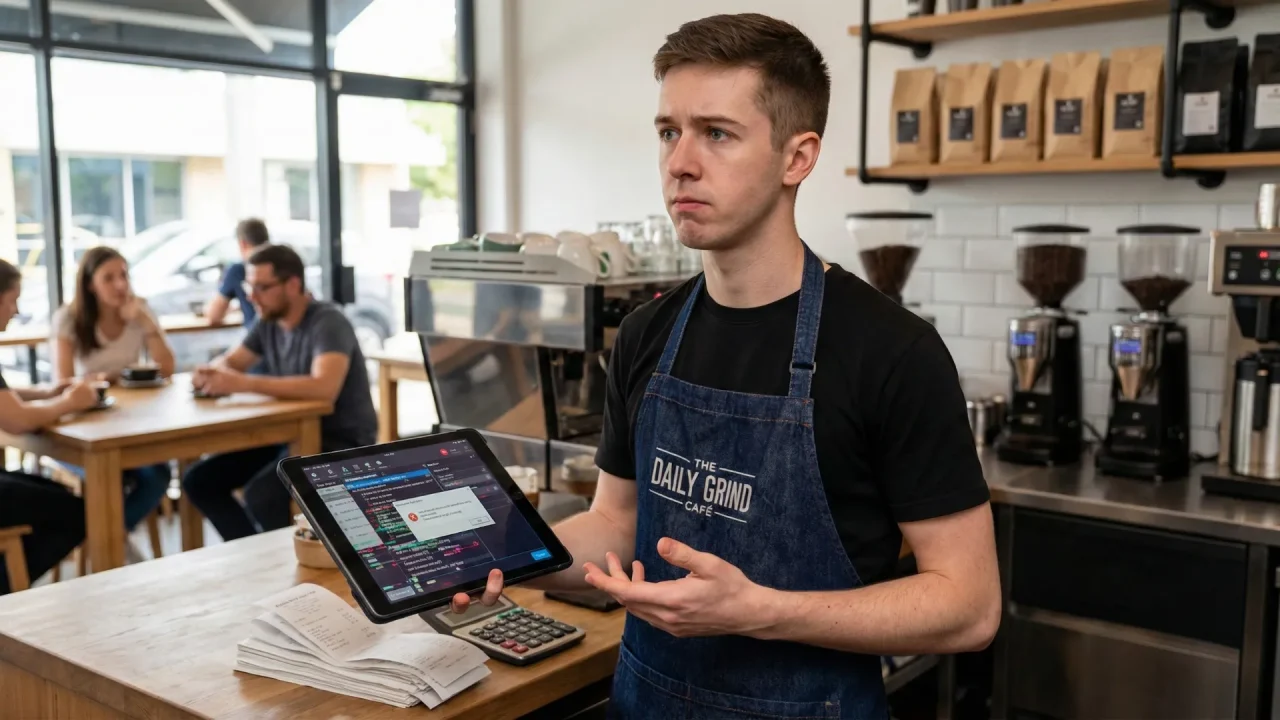
Traditional restaurant software fails not because restaurant owners use it wrong, but because most of these systems were never designed for the fast-changing, real-world reality of modern restaurants.
Running a restaurant combines complex logistics and hospitality, yet traditional software creates operational silos where systems like POS and inventory fail to communicate. This rigidity forces owners into manual data merging because static code cannot adapt to dynamic, real-world workflows. Ultimately, the gap between how restaurants run and how software is built necessitates a shift toward flexible solutions that fit the business, rather than the other way around.
Launch Your App Today
Ready to launch? Skip the tech stress. Describe, Build, Launch in three simple steps.
BuildWhy Traditional Restaurant Software Fails in Real Restaurant Operations?

To understand the failure, we first have to define what we are talking about. Traditional restaurant software generally refers to “Point Solution” legacy systems. These are tools built to do one specific job.
The Standard Stack

- Point of Sale (POS) Systems: The digital cash register. These moved from bulky hardware to cloud-based tablets over the last decade.
- Inventory Management: Software meant to track theoretical versus actual usage of ingredients.
- Labor and Scheduling: Tools to build shifts and track clock-ins.
- Reservation and Table Management: Systems for booking and seating guests.
- Back-Office Reporting: Often a basic dashboard that shows “what happened” but rarely “why it happened.”
Most of these systems were built on architecture designed 10 to 20 years ago. They were created to solve a specific problem in a vacuum. For example, an inventory system was built to count boxes, not to understand how a sudden weather change might affect the prep list for a Tuesday lunch.
These tools were “hard-coded.” This means that the way the software works is fixed by the developers who built it. If you want to change a workflow or see data in a different way, you have to wait for the vendor to release an update, which might never happen. This lack of flexibility is a major reason why building a web app without coding in 2025 has become such a popular alternative for owners who want control.
Why Traditional Restaurant Software Fails
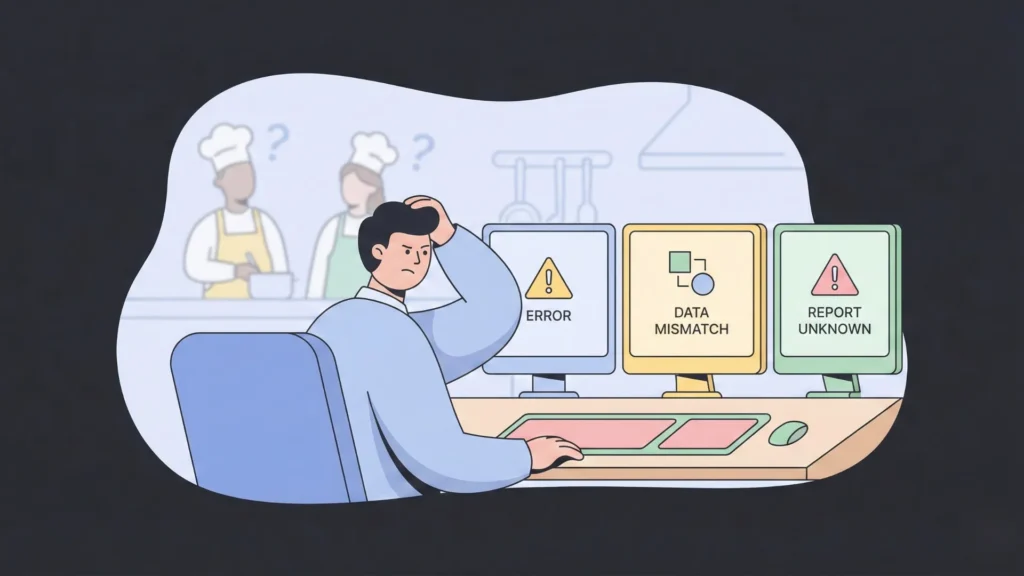
Why does a tool that costs thousands of dollars a year often end up being ignored by staff or used incorrectly? The reasons are structural.
Rigid Workflows
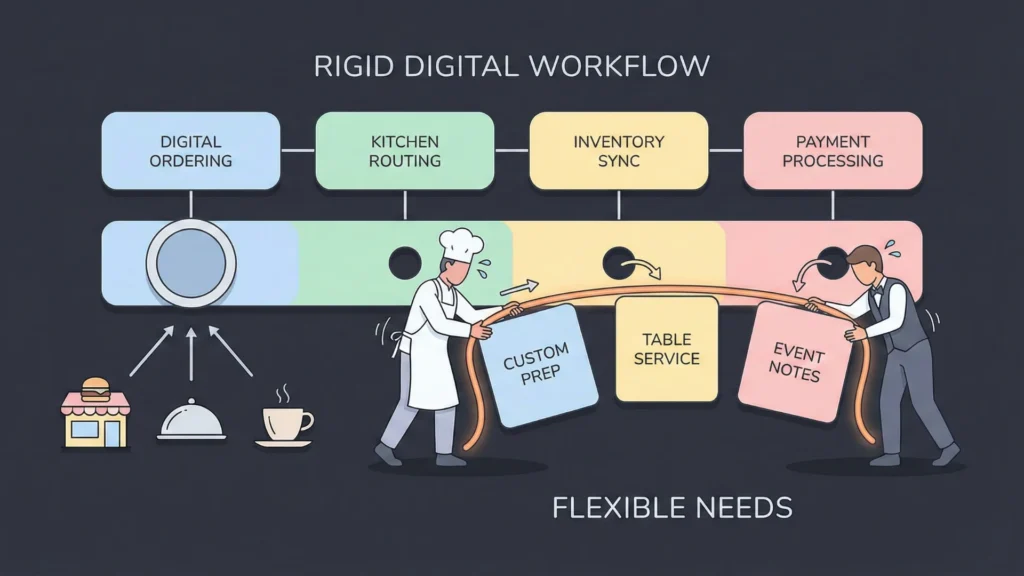
Traditional software is built for the “average” restaurant. But no successful restaurant is average. You have a unique way of prepping, a unique way of handling VIPs, and a unique way of closing the books. When software forces a “one-size-fits-all” workflow, your staff finds workarounds. They start using paper logs or WhatsApp groups to get things done, and the software becomes an expensive, empty shell.
The Integration Gap
This is perhaps the biggest pain point. Systems “talk” to each other through APIs, but these integrations are often shallow. Your POS might tell your inventory system that a burger was sold, but it won’t tell it that the customer asked for no onions, or that the kitchen was out of brioche buns and substituted a different bread. Data gets lost in the gaps between systems. This is why many are looking for ways to automate business tasks using AI tools that can actually read and bridge these data gaps.
Lack of Customization

If you have a specific way of calculating manager bonuses based on a mix of labor costs and guest satisfaction scores, traditional software probably cannot do it. You are stuck with the “Standard Report #4.” To get what you actually need, you have to manually move data, which leads to errors and wasted time.
High Barrier to Entry for Staff

In an industry with high turnover, software must be intuitive. Traditional systems are often cluttered with features you don’t use, making them intimidating for a new server or prep cook. If it takes three weeks to train someone on the software, the software is failing you.
Vendor Dependency
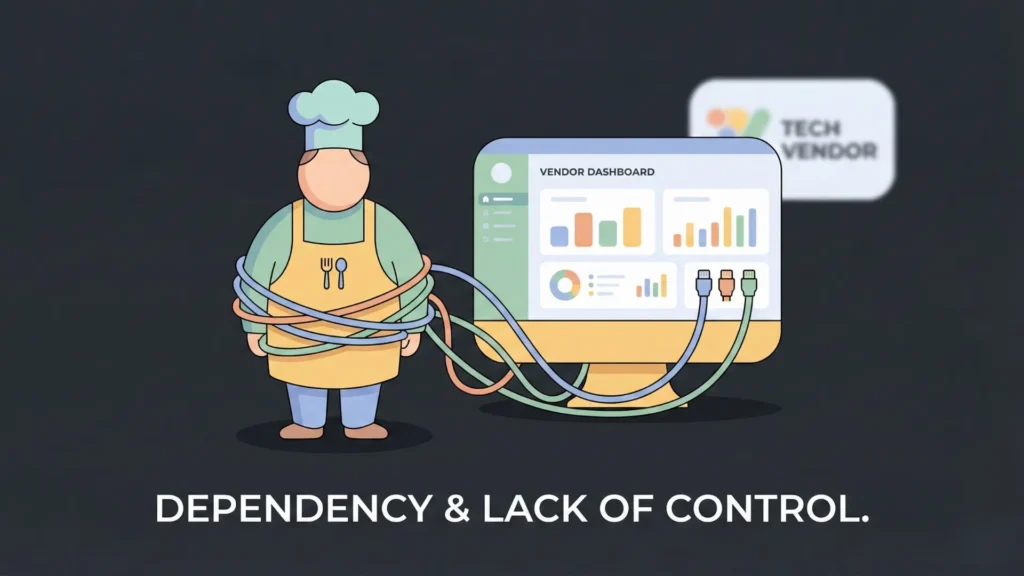
When you buy traditional software, you are at the mercy of the vendor’s roadmap. If their support team is slow or their latest update breaks a feature you rely on, your business suffers. You own the data, but you don’t own the system that manages it.
The Hidden Costs Nobody Calculates

When an owner looks at a software bill, they see the monthly subscription fee. But the true cost of failing software is much higher.
The “Shadow Work” Cost
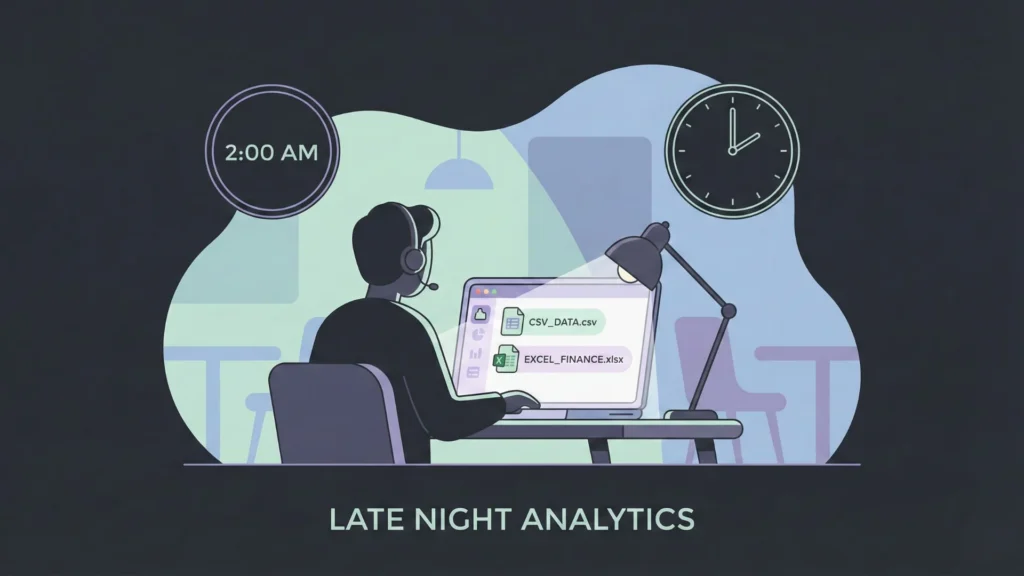
Think about how much time your managers spend “fixing” data. This includes manual entry, reconciling reports, and double-checking inventory counts because the software didn’t account for a specific waste event. If a manager earning $60,000 a year spends 5 hours a week on manual data work, that is $7,500 a year in “hidden” labor costs per location. Many businesses are now using AI powered automation tools to escape data entry hell and reclaim this time.
The Opportunity Cost of Slow Data

If your software takes three days to tell you that your food cost spiked on Monday, you have already lost money on Tuesday and Wednesday. Traditional software is often “reactive.” It tells you what happened in the past. The cost of not being able to make real-time decisions is massive.
Staff Retraining and Frustration

Software that is hard to use creates friction. Friction leads to frustration, and in a tight labor market, frustration leads to turnover. The cost of hiring and training a new employee can be $3,000 to $5,000. If your clunky tech stack is contributing to staff leaving, it is costing you more than any subscription fee.
Why Restaurants Are Turning Toward AI
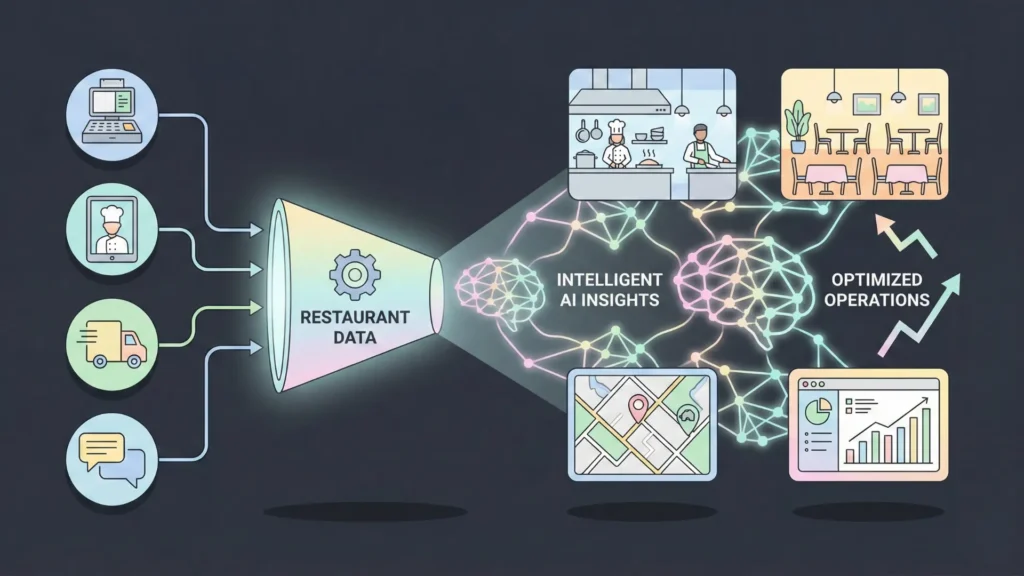
The word “AI” is often surrounded by hype, but for a restaurant owner, it represents something very practical: the ability to process information like a human would, but at scale.
From Data Storage to Data Intelligence

For years, restaurants have been great at collecting data but terrible at using it. AI is the bridge. It can look at your historical sales, current weather patterns, and local events to tell you exactly how much chicken to thaw for tomorrow. It isn’t magic; it is just very fast pattern recognition. For instance, using AI demand forecasting tools can significantly reduce food waste and improve prep accuracy.
Practical AI Applications
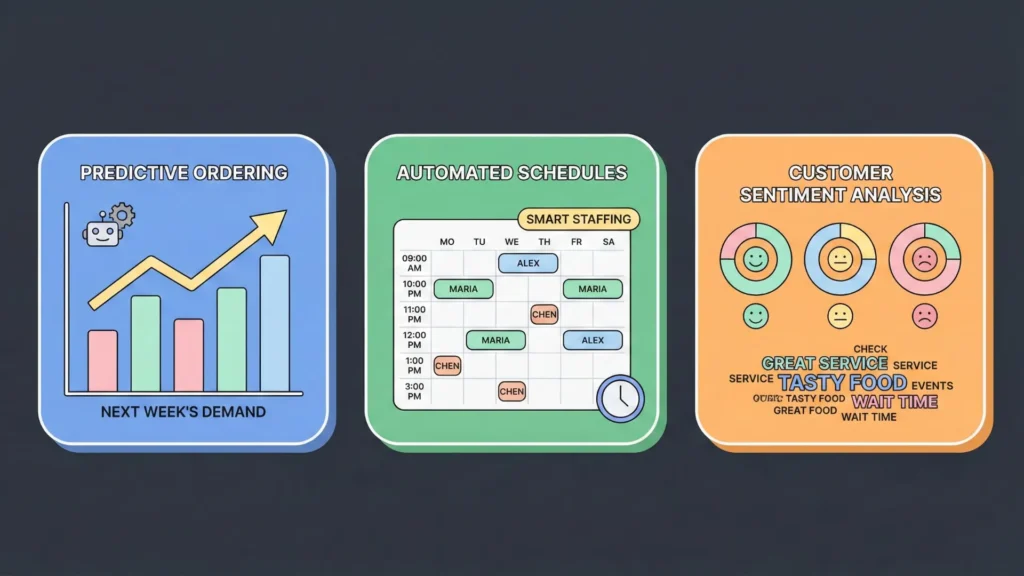
AI in a restaurant isn’t about robots flipping burgers. It is about:
- Predictive Ordering: Knowing what you need before you run out.
- Automated Scheduling: Matching labor to expected demand without a manager spending four hours on a spreadsheet.
- Sentiment Analysis: Reading every Google and Yelp review to identify that “Salty Soup” is a recurring complaint at Location B on Tuesday nights.
The reason AI is relevant now is that it has finally become accessible. You no longer need a team of data scientists to use it. You can even build your own AI assistant with no coding needed to help manage your daily tasks.
What Is AI No-Code Software?
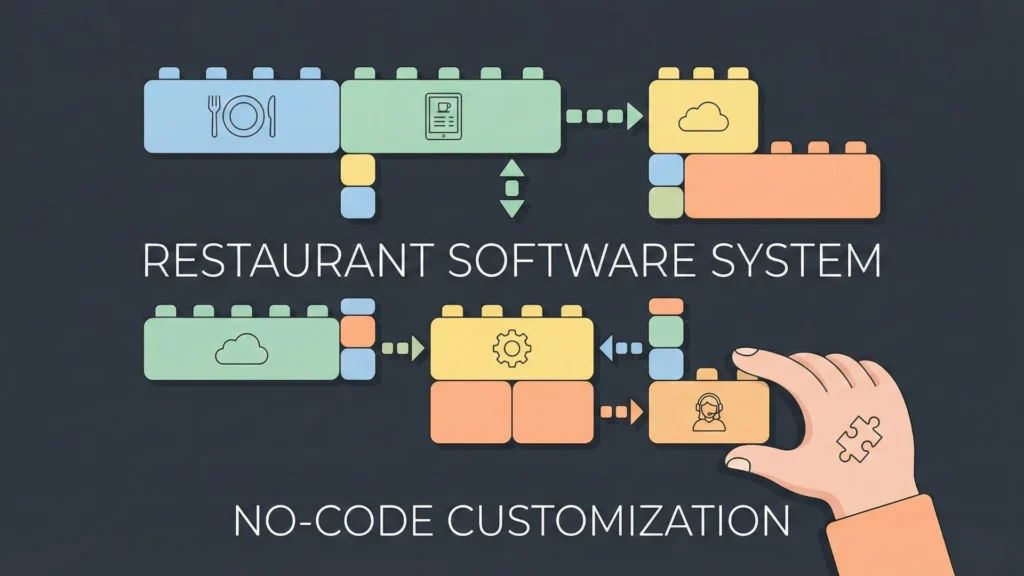
“No-code” is a term that describes a new generation of software that allows non-technical people to build their own tools.
Think of it like LEGOs. Instead of buying a pre-built plastic car (traditional software) that you cannot change, you get a set of blocks. You can build a car, a truck, or a plane. If you decide the car needs a bigger trunk, you just add more blocks.
AI + No-Code = Custom Power
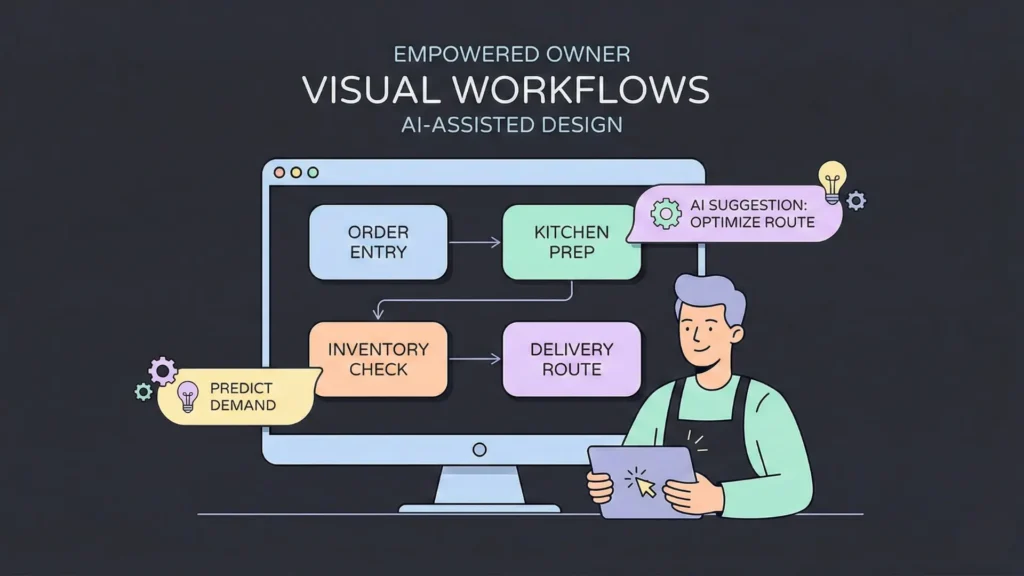
When you combine No-Code with AI, something special happens. You can build a custom workflow—like a specific opening checklist—and then use AI to analyze the photos your staff takes of the kitchen to ensure everything is up to standard.
In plain English: AI No-Code means you can build software that fits your restaurant exactly, without ever writing a line of computer code. You describe what you want the system to do, and the platform helps you build it. This is the core of no-code AI app building which is leveling the playing field for small businesses.
How AI No-Code Fixes the Failures of Traditional Software

Let’s look at how this new approach solves the specific problems we discussed earlier.
Customization vs. Rigidity
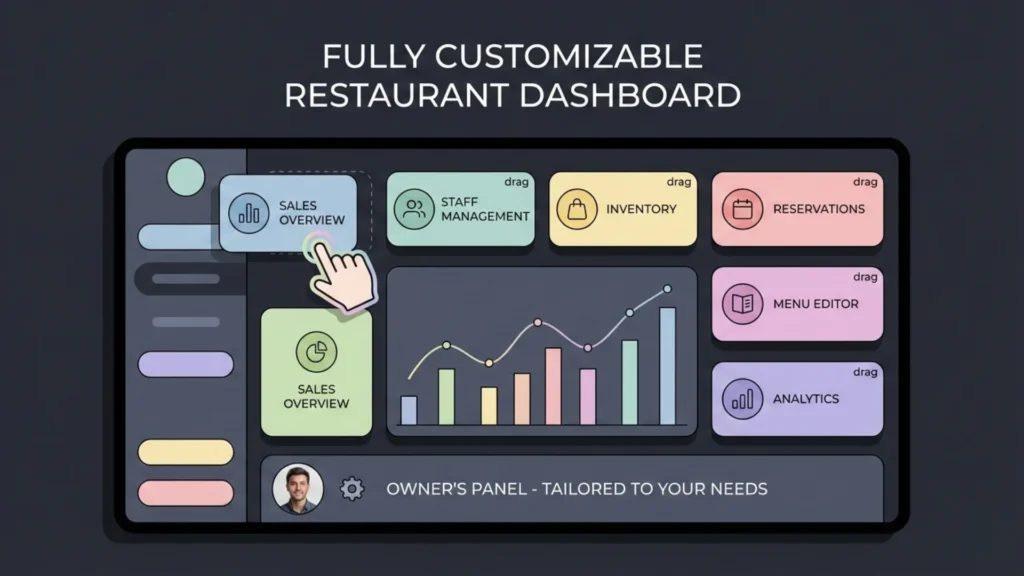
With traditional software, you adapt to the tool. With AI no-code, the tool adapts to you. If you want a dashboard that only shows your three most important metrics (say, labor %, waste %, and guest count), you build exactly that. You don’t have to click through ten menus to find it. This level of focus is why AI powered internal tools are replacing generic SaaS subscriptions.
Ownership of Data and Workflows

You are no longer waiting for a vendor to build a feature. If you want to automate the way you track grease trap cleanings across five locations, you build a quick app for it in an afternoon. You own the logic of how your business runs.
Real-Time Adaptability
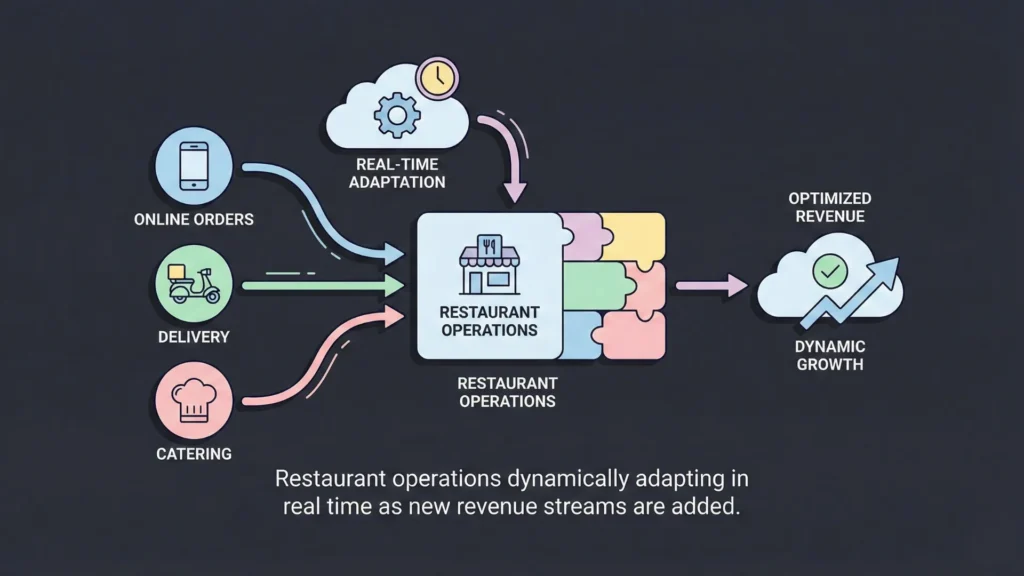
If you add a new revenue stream—like a catering wing or a retail line—traditional software might struggle to accommodate it. A no-code platform allows you to create a new module for that business line and connect it to your existing data instantly. This is vital for those looking to build scalable cafe and restaurant apps that grow with the brand.
How Imagine.bo Helps Restaurants Build Custom AI No-Code Solutions

Imagine.bo is a platform built specifically to bridge the gap between complex operations and simple technology. It is not just another POS or inventory tool. It is an “Operating System” for your restaurant.
What Imagine.bo Does
Instead of giving you a fixed set of features, Imagine.bo gives you the tools to digitize your specific business logic.
- Custom Internal Tools: Build apps for manager logs, maintenance requests, or recipe bibles that actually look and work the way you want.
- AI-Powered Automations: Connect your various systems (POS, Accounting, Delivery) and use AI to find discrepancies or opportunities. For example, Imagine.bo can automatically flag if a food delivery price is higher than your contracted rate.
- Unified Dashboards: Stop logging into five different sites. See your whole business in one place, with data that is actually cleaned and organized.
The goal of Imagine.bo is to remove the “manual work” that kills productivity. It acts as the connective tissue between your existing systems, making them smarter and more useful. It is a prime example of how to build a no-code web app with Imagine.bo tailored to specific hospitality needs.
Real-World Use Cases of AI No-Code in Restaurants
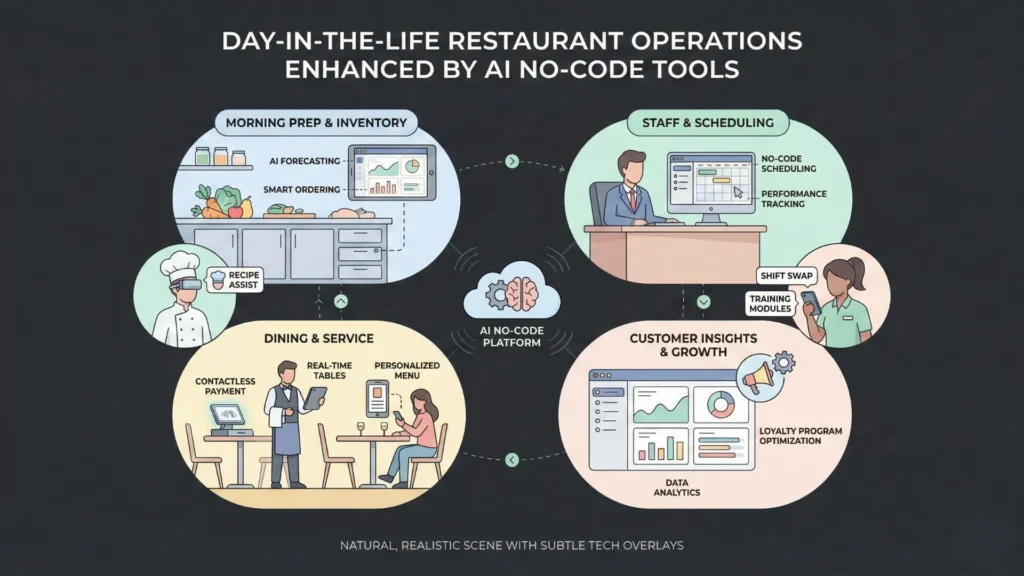
How does this look on a Tuesday morning in a busy restaurant?
Intelligent Inventory Forecasting
Instead of a manager guessing, an AI-powered tool built on a no-code platform looks at the last three years of data, the fact that there is a football game nearby tonight, and the 80% chance of rain. It suggests a prep list that reduces waste by 12% because it knows rain means fewer patio walk-ins. You can learn how to build a real-time inventory tracker in 10 minutes using these methods.
Multi-Location Performance Benchmarking
For owners with 5 or 10 locations, comparing them is hard. One might have higher labor but better guest scores. An AI no-code system can normalize this data and send the owner a simple text: “Location C has a 15% higher labor cost than average today due to a slow lunch; consider sending two people home.” This is the power of building business tools with AI agents that act as virtual supervisors.
Automated Staff Onboarding
You can build a custom onboarding flow where a new hire scans a QR code, watches your specific training videos, and takes a quiz. The system automatically notifies the manager when they are ready for their first shift. No more paper folders or forgotten training steps.
Is AI No-Code the Future of Restaurant Technology?
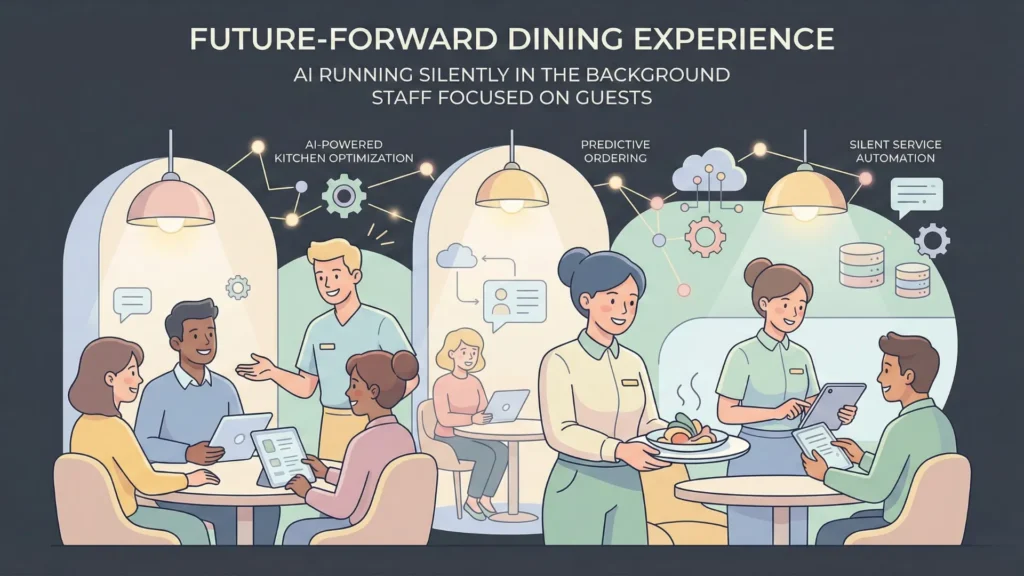
The era of the “closed” software system is ending. Restaurant owners are tired of being held hostage by high fees and rigid tools.
The future belongs to Flexibility. In five years, the most successful restaurants won’t be the ones with the “best” POS. They will be the ones who have built a custom “Digital Nervous System.” They will be using AI to handle the math and the monitoring, while their human staff focuses on hospitality.
Small teams are already using AI automation to scale big, and restaurants are no different. AI no-code platforms allow you to start small. You don’t have to replace everything at once. You can build one custom tool, see it work, and then expand.
Conclusion: Rethinking How Restaurants Use Software

Traditional restaurant software fails because it tries to simplify something that is inherently complex. It tries to force your unique, living business into a static box.
AI no-code platforms like Imagine.bo offer a different path. They acknowledge that you are the expert on your restaurant. The software should be a mirror of your expertise, not a replacement for it. For many, this journey starts with a local restaurant launching a mobile app in one month to prove the concept.
If you are feeling the “software burn”—if you are tired of CSV files, manual workarounds, and data that tells you nothing—it might be time to stop looking for a better “version” of traditional software and start looking at a fundamentally different way of building your business operations.
Once you understand why traditional restaurant software fails, it becomes clear why flexible AI no-code platforms are gaining attention.
Frequently Asked Questions
Is AI no-code software more expensive than traditional systems?
Usually, no. Because you are only building and using what you need, you often save money by eliminating multiple redundant subscriptions. You can check our AI and no-code tool pricing guide for more details.
Do I need to hire a developer to use Imagine.bo?
No. These platforms are designed for operators, not programmers. If you can use a spreadsheet or a basic app, you can build workflows in a no-code environment.
Will AI replace my managers?
Not at all. AI replaces the tasks that managers hate—like data entry and manual scheduling. This allows your managers to be on the floor, coaching staff and interacting with guests.
Can no-code platforms talk to my current POS?
Yes. Modern platforms are built to connect with existing data sources. The goal is to enhance your current tech stack, not necessarily to replace every piece of it.
How long does it take to implement a no-code solution?
Unlike traditional software that can take months to “roll out,” a no-code tool can be built and tested in a few days. You can launch your saas in 30 days or even faster for simple internal tools.
Is my data safe in an AI no-code platform?
Platforms like Imagine.bo use enterprise-grade security. Since you are building your own internal tools, you have more control over who sees what data compared to many “black box” traditional vendors.
Launch Your App Today
Ready to launch? Skip the tech stress. Describe, Build, Launch in three simple steps.
Build