
The democratization of software development means anyone can build apps instantly, but visibility is the new hurdle. For founders using AI to generate SaaS products, the competition has shifted from code quality to user attention. In this crowded market, simply existing isn’t enough. You need a specialized SEO strategy that bridges the gap between AI capabilities and human intent. This guide shows you how to navigate this landscape and ensure your product thrives.
The Paradigm Shift: Understanding the AI SaaS Landscape
To master SEO in this niche, we first need to understand the environment. AI-built SaaS products often face a unique set of hurdles compared to traditional, hand-coded legacy software. The development cycle is faster, the terminology is newer, and the competition is fiercer.
Launch Your App Today
Ready to launch? Skip the tech stress. Describe, Build, Launch in three simple steps.
BuildThe “Black Box” Problem and Novelty
AI products often solve problems in ways that users haven’t yet learned to articulate. A user might know they want to “make work easier,” but they might not know to search for “generative AI workflow automation.” This creates a keyword gap. Your SEO strategy must educate the user, connecting their known pain points to your novel solution.
The Speed of Iteration vs. SEO Stability
One of the greatest strengths of AI-built SaaS is the speed of iteration. New features can be deployed weekly, sometimes daily. However, from an SEO perspective, this can cause “content drift,” where the keywords a page ranks for no longer match the product’s evolving function. Furthermore, rapid code changes can inadvertently introduce technical debt—bloated scripts or unoptimized assets—that hurts site speed.
To win, you need a strategy that balances the agility of AI automation with the stability required for search engine indexing. It is not just about driving traffic; it is about attracting high-intent users who are ready to trust an AI solution with their business data.
Technical SEO: The Bedrock of Scalability
Before you write a single piece of content, your technical house must be in order. Google and other search engines favor sites that are fast, secure, and easy to crawl. For AI SaaS, where the product is the performance, technical SEO is non-negotiable.
Core Web Vitals and Infrastructure
Your landing page is the first demo of your product. If your site lags, prospective users will assume your AI tool is equally sluggish. Google’s Core Web Vitals—metrics that measure loading performance (LCP), interactivity (FID), and visual stability (CLS)—are critical ranking factors.
This is where your choice of build platform becomes a decisive SEO advantage. Many generic low-code tools generate messy, heavy code that confuses search engine crawlers and slows down page loads.
In contrast, platforms like Imagine.bo are engineered with performance as a priority. Built on enterprise-grade infrastructure—leveraging the power of AWS, GCP, and Vercel—apps created with Imagine.bo are cloud-deployable and inherently scalable. They are designed to handle traffic spikes and complex computations without “blinking.” When your underlying architecture guarantees up to 1,000 transactions per second, you naturally score higher on technical SEO metrics. Using a builder that prioritizes clean, optimized architecture ensures you aren’t fighting an uphill battle against site speed penalties.
Security as a Trust Signal (and SEO Asset)
Security is often viewed as a compliance issue, but it is also a massive SEO asset. Search engines prioritize user safety. A site lacking HTTPS is practically invisible today. But beyond the basics, displaying advanced security compliance signals to the algorithms (and users) that your SaaS is legitimate.
Bounce rate—the percentage of visitors who leave your site after viewing only one page—is a negative ranking signal. Nothing increases bounce rate faster than a lack of trust. Displaying compliance with rigorous standards like GDPR or SOC2 reassures enterprise clients immediately.
Tools that automate this compliance, like Imagine.bo’s GDPR/SOC2-ready framework, allow founders to display these trust signals immediately upon launch. This gives new products a head start in authority building, reducing bounce rates and increasing “dwell time,” which signals to Google that your site provides value.
Schema Markup for Software
To help search engines understand your product, you must speak their language. implementing structured data (Schema Markup) is essential. Specifically, the SoftwareApplication schema allows you to tell Google explicitly: “This is a SaaS tool, here is what it costs, here is the operating system it runs on, and here are the aggregate user ratings.” This can lead to rich snippets in search results—those eye-catching extra details that improve click-through rates.
Keyword Research: Decoding User Intent
In the AI space, broad keywords like “AI tool” or “app builder” are saturated with noise. To compete, you must pivot from volume to User Intent.
The “Job-to-be-Done” Framework
Users rarely wake up wanting software; they wake up wanting a solution. Don’t just optimize for what your tool is; optimize for what it fixes.
- Low Intent: “AI coding” (Too broad, likely students or researchers).
- High Intent: “How to launch an MVP without a technical co-founder” (Specific problem, urgent need).
Leveraging Long-Tail Conversational Queries
The rise of voice search and natural language processing means search queries are becoming more conversational. New AI products thrive on these long-tail keywords.
Since AI platforms like Imagine.bo allow users to “describe their app idea in plain English” to build it, your SEO strategy should mirror this natural language input. Optimize for full questions like “What is the fastest way to build a custom CRM?” or “How to create a scalable SaaS app in 3 steps.”
These queries might have lower search volume, but they have incredibly high conversion rates. These users are looking for exactly what a no-code AI builder offers: a shortcut to a complex result. By targeting these specific phrases, you validate demand for your MVP before you even scale marketing spend.
Competitor Gap Analysis
Analyze what your competitors are not talking about. Are established legacy players ignoring the “speed” aspect? Are they too focused on enterprise sales to answer questions for solo founders? Use tools to find these gaps. If incumbents are writing about “Enterprise Software Architecture,” you can dominate the niche for “Rapid Prototyping for Startups.”
Content Strategy: E-E-A-T in an AI World
Content is the bridge between a user’s panic and your product’s peace of mind. However, in an era where AI can generate infinite blog posts, Google has doubled down on E-E-A-T (Experience, Expertise, Authoritativeness, and Trustworthiness).
Combating the “Low Value” Flag
Purely AI-generated content often lacks depth and nuance, risking being flagged as “spam” or “low value” by search engines. To rank, your content must demonstrate real-world expertise.
- Show, Don’t Just Tell: Use case studies, success stories, and data-backed “before and after” comparisons.
- Educational Guides: Don’t just sell; teach. Create comprehensive guides on how to navigate the modern development landscape.
- Human Insight: Have your product experts or senior engineers review content. Even if you are promoting a no-code tool, demonstrating that you understand the logic behind the app builds massive authority.
addressing the “No-Code” Stigma
A common objection to AI-built software is the fear of being “locked in” or unsupported. “What if the AI breaks?” “What if I need a custom feature?” These fears stop users from converting, which hurts your behavioral SEO metrics.
Address this head-on in your content. Explain how your solution bridges the gap between automation and human expertise. For instance, a major differentiator for Imagine.bo is its “Human-in-the-Loop” capability. While it is an AI-first platform, users can assign complex tasks to real developers if the automation reaches its limit.
Creating content around this concept—“Why Hybrid AI-Human Development is the Future of SaaS”—does two things:
- It targets a sophisticated, high-value segment of the market.
- It builds Trustworthiness (the “T” in E-E-A-T) by being transparent about the limitations of AI and offering a safety net.
User Experience (UX) as SEO
Google’s algorithms are increasingly looking at how users interact with your page. If a user clicks your link, gets confused by the signup flow, and leaves, your rankings will tank.
Frictionless Onboarding
For SaaS, your onboarding flow is your content. The “Signup” and “Pricing” pages are often your most trafficked landing pages.
- Transparent Pricing: Clear pricing tables (e.g., highlighting a simple $19/user/month model versus enterprise tiers) reduce bounce rates caused by “sticker shock.”
- Interactive Demos: Allowing users to see the tool in action keeps them on the page longer.
- Waitlists and Beta Access: Scarcity can drive engagement. Promoting a “Private Beta” or “Waitlist” can increase the perceived value of the click, encouraging users to sign up rather than bounce.
Off-Page SEO: Building Authority Beyond Your Site
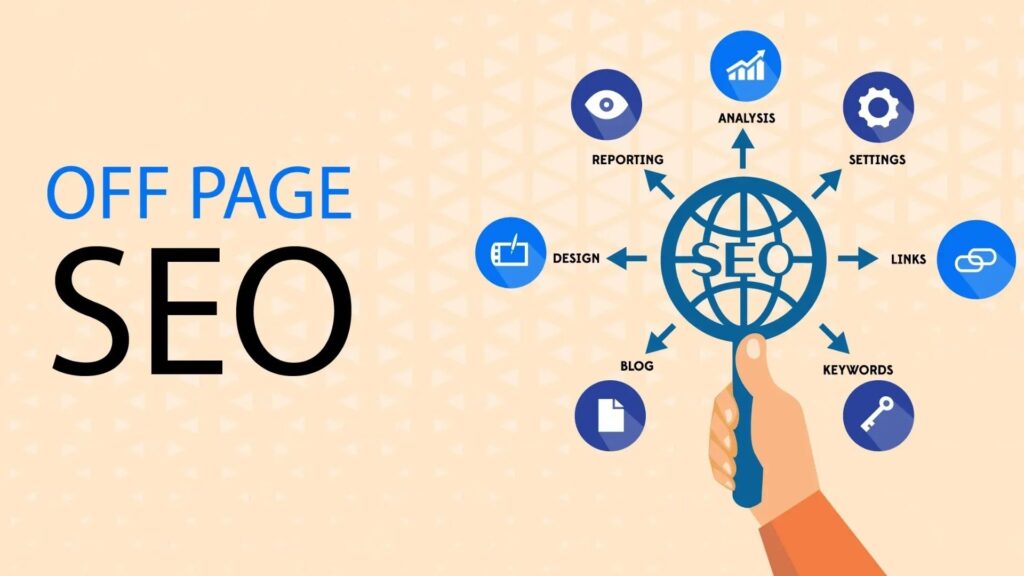
You cannot rank on content alone; you need votes of confidence from the rest of the internet in the form of backlinks.
Digital PR and Community Engagement
For AI SaaS, traditional link building (asking for links) is less effective than Digital PR.
- Launch Pads: Platforms like Product Hunt, BetaList, and Indie Hackers are goldmines. A successful launch here generates high-authority backlinks naturally.
- Community Participation: Engage in Reddit threads, Twitter/X conversations, and niche forums. When someone asks, “Is it possible to build an Uber clone without coding?”, a thoughtful answer recommending a tool like Imagine.bo—specifically mentioning its ability to generate foundational architecture instantly—provides genuine value. These organic mentions signal to search engines that your brand is a recognized entity in the space.
Analytics: The Feedback Loop
You cannot improve what you do not measure. For AI SaaS, you must look beyond vanity metrics like “Page Views.”
Metrics That Matter
- Conversion Rate: Are visitors signing up for the waitlist or free trial?
- Churn Rate: Are they staying?
- Feature Usage: Are they actually using the tool?
Modern builders act as growth partners here. Imagine.bo doesn’t just build the app; it includes built-in analytics and SEO tools within the dashboard. This allows founders to track their growth, export data to Sheets, and see exactly which features are driving engagement. This data should feed back into your SEO strategy. If you see high usage of a specific feature, write more content about that feature to attract similar users.
Conclusion: The Long Game
SEO for AI-built SaaS is not about tricking the algorithm; it is about clarity, speed, and trust. The market is noisy, and trust is the rarest commodity.
By leveraging a robust platform that handles the technical heavy lifting—like Imagine.bo—you ensure your foundation is solid. When you pair that enterprise-grade infrastructure with a content strategy that speaks directly to user pain points and demonstrates real-world expertise, you turn your visibility problem into a growth engine.
The future of software is automated, but the future of search is human. Build fast, rank high, and grow sustainably.
Launch Your App Today
Ready to launch? Skip the tech stress. Describe, Build, Launch in three simple steps.
Build