
Replace multiple restaurant tools with AI is no longer a future concept. For restaurant founders today, it is quickly becoming the only practical way to reduce costs, unify operations, and regain control of their tech stack.re, in the background, a third-party delivery tablet is beeping incessantly.
If you are a restaurant founder today, this chaotic symphony isn’t just noise—it’s your daily operating reality.
For the last decade, the standard advice given to restaurateurs was: “There’s an app for that.” Need to manage shifts? Get an app. Need to track food waste? Get a different app. Need loyalty? Buy a SaaS tool.
The result is a “Franken-stack”—a monstrous, cobbled-together network of 10, 15, or even 20 different software tools that don’t speak the same language. You are paying thousands of dollars in monthly subscriptions to manage a tech stack that requires a full-time IT person to maintain, all while trying to serve great food.
But the winds are shifting. The era of fragmented SaaS is ending.
We are entering a new phase of restaurant technology, driven by Artificial Intelligence. It is no longer about buying pre-packaged software that forces you to adapt your operations to its limitations. It is about using AI to build exactly what you need.
In this comprehensive guide, we will explore how restaurant founders can replace multiple tools with one AI-built platform. We will dismantle the old way of doing things, calculate the true cost of your current tech stack, and show you how platforms like imagine.bo are democratizing software creation, allowing you to build a unified, efficient, and scalable restaurant empire.
The Hidden Cost: Why “There’s an App for That” is Killing Your Margins
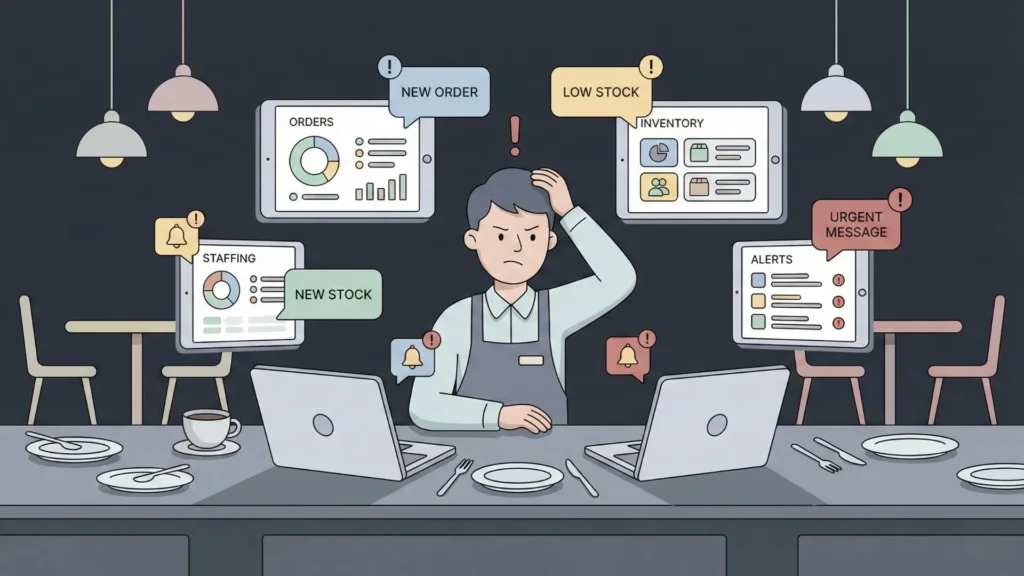
Before we discuss the solution, we must brutally assess the problem. Most founders look at their P&L statement and see “Software/Technology” as a single line item. But if you look closer, the inefficiency of using multiple tools is bleeding your business dry in ways that go far beyond the subscription fee.
1. The Subscription Death Spiral

The most obvious cost is financial. Let’s look at a typical tech stack for a modern, mid-sized restaurant group:
- POS System: $100 – $200/month per terminal.
- Inventory Management: $150/month.
- Staff Scheduling & Payroll: $5 – $10/employee/month (approx $300).
- Loyalty & CRM: $100 – $500/month.
- Online Ordering System: Flat fees + commission.
- Reservation Platform: $200/month + cover fees.
- Marketing/Email Tool: $50 – $150/month.
You are easily looking at $1,500 to $2,500 per month just to keep the lights on digitally. That is $18,000 to $30,000 a year—the salary of a line cook or a significant marketing budget—spent just on renting software access.
2. The Data Silo Nightmare

Data is the new oil, but in a fragmented stack, your oil is trapped in separate barrels.
- Your POS knows what sold.
- Your Review platform knows who liked it.
- Your Inventory system knows what it cost.
But because these systems rarely integrate perfectly, you cannot easily answer the most critical question: “Are my most loyal customers buying my highest-margin dishes?”
To answer that, you have to download CSV files from three different login portals, put them into Excel, and spend your Sunday night playing data scientist. This lag in data intelligence means you are reacting to trends weeks after they happen, rather than in real-time.
3. The “Context Switch” Tax

Cognitive load is real. Every time a manager has to switch from the scheduling app to the POS to the inventory tablet, they pay a mental tax. Training new staff becomes a week-long ordeal because they have to learn five different interfaces. “The login for the scheduling app is different from the POS login” is a sentence uttered in restaurants daily, followed by 10 minutes of password resets. This friction kills speed, and in the restaurant business, speed is everything.
The Paradigm Shift: How Restaurant Founders Can Replace Multiple Tools With One AI-Built Platform

The solution is not to find a “better” POS or a “cheaper” inventory tool. The solution is to change the architecture entirely.
We are moving toward Unified AI Operating Systems.
Historically, building a custom platform that handled everything exactly the way your specific restaurant needed was a luxury reserved for giants like Starbucks or Domino’s. They spent millions hiring engineering teams to build proprietary tech.
However, Generative AI and No-Code/Low-Code platforms have leveled the playing field.
What is an AI-Built Platform?

An AI-built platform is not just a bundle of software (like Microsoft Office). It is a dynamic environment where the AI acts as your lead developer. Instead of buying a rigid piece of software, you tell the AI what you need your software to do, and it constructs the workflows, databases, and interfaces for you.
This is how restaurant founders can replace multiple tools with one AI-built platform: by using a system that is flexible enough to become whatever tool you need it to be, all housed under one roof.
The Core Advantages

- Single Source of Truth: Customer data, sales data, and operational data live in one database.
- Adaptive Workflows: If you launch a new catering arm, you don’t need to buy “Catering Software.” You simply add a module to your existing platform.
- Holistic Automation: An event in one area (e.g., a reservation is booked) can trigger actions across the board (inventory is deducted, staff is scheduled, a welcome email is queued).
Enter imagine.bo: The Architect of Your Digital Restaurant
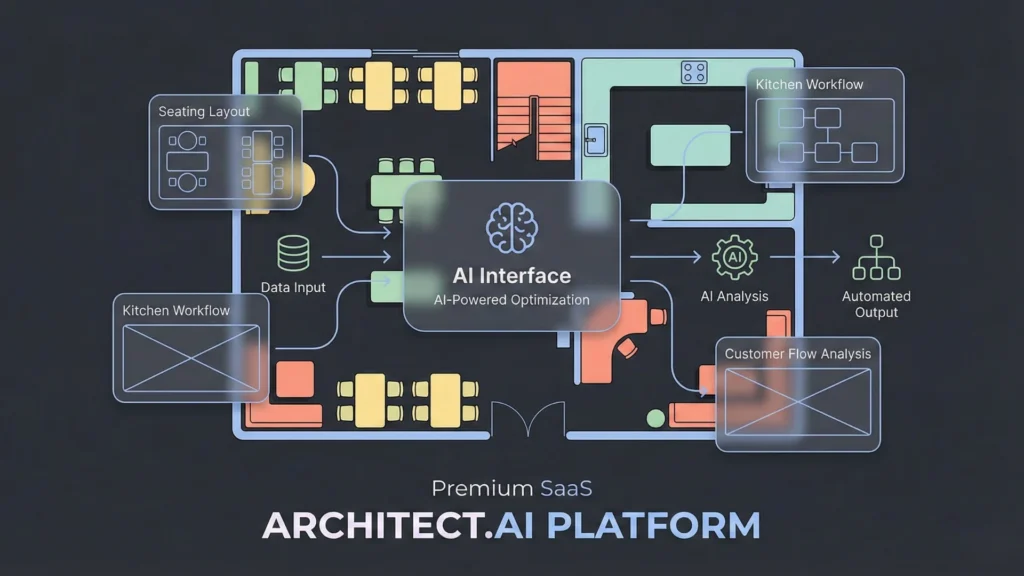
This is where imagine.bo enters the conversation, not just as another tool, but as a foundational layer for your business.
imagine.bo represents the next generation of SaaS (Software as a Service)—or perhaps more accurately, SwaS (Software with a Service). It leverages AI to allow founders to build, deploy, and manage their own custom restaurant applications without writing a single line of code.
Here is how imagine.bo specifically addresses the fragmentation crisis and facilitates how restaurant founders can replace multiple tools with one AI-built platform.
1. Building Your Own “Super App”

Most restaurants force their customers to download a loyalty app, use a web browser for reservations, and a third-party app for delivery. imagine.bo allows you to consolidate this. You can create a branded, customer-facing interface that handles ordering, reservations, and loyalty in one seamless flow.
- The Old Way: Pay $200/mo for a white-label app that looks like everyone else’s.
- The imagine.bo Way: Use AI prompts to design an interface that matches your brand’s specific aesthetic and customer journey.
2. Operational Automation (Replacing the Back-Office Mess)
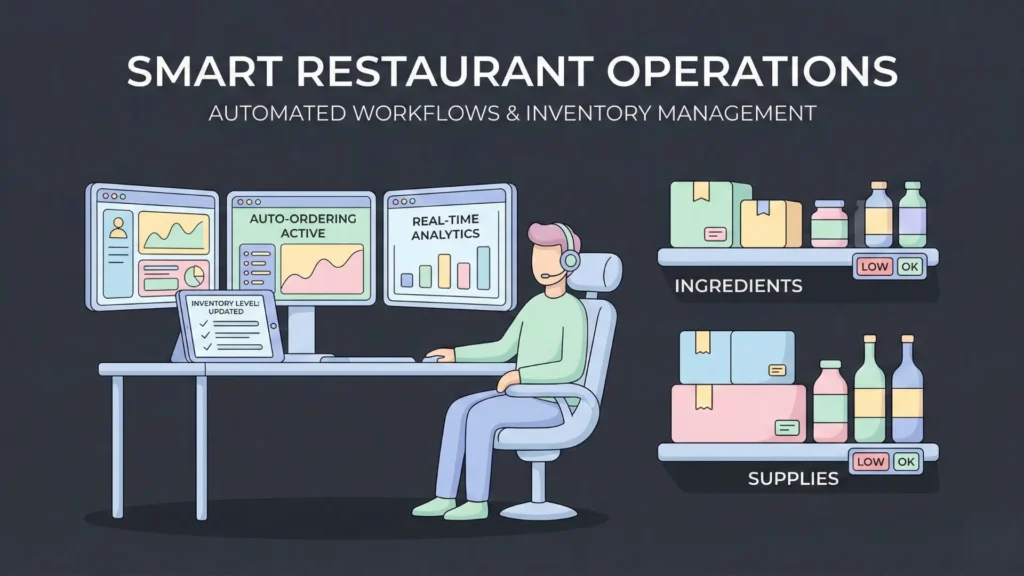
A significant portion of a General Manager’s time is spent on repetitive administrative tasks. imagine.bo’s AI agents can handle these workflows.
- Inventory: Instead of a static spreadsheet, imagine.bo can predict stock levels based on historical sales data and automatically draft purchase orders for your approval.
- Staffing: It can analyze sales forecasts to recommend optimal staffing levels, replacing the need for expensive standalone scheduling AI.
3. The Unified Customer Profile (CRM on Steroids)
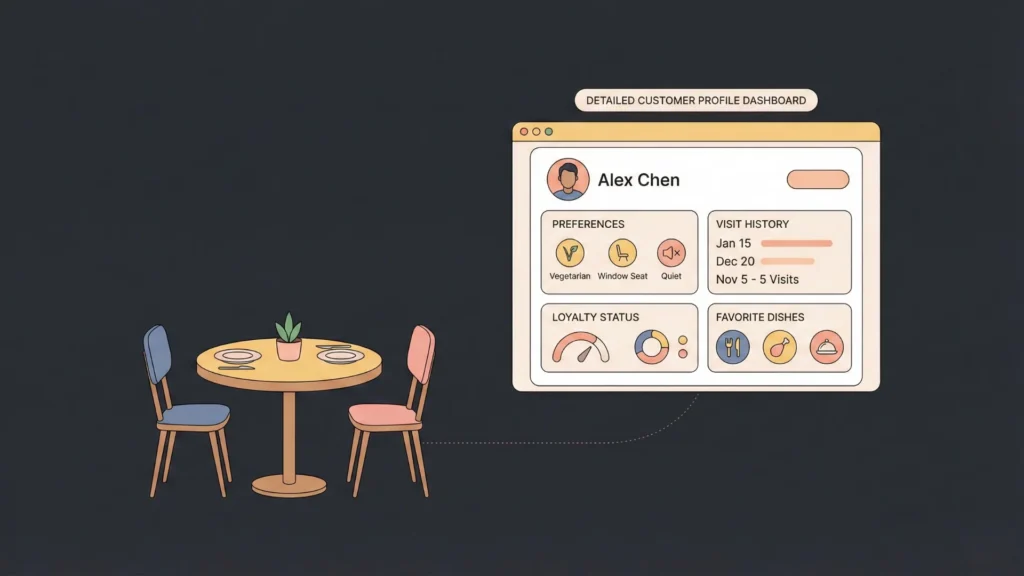
This is the holy grail. Because imagine.bo sits at the center of your operations, it builds a 360-degree profile of your guest. It acts as a custom CRM without the complexity of enterprise tools.
- It knows John Doe prefers Table 4.
- It knows he usually orders the Pinot Noir.
- It knows he hasn’t visited in 21 days.
- The Action: The system can automatically send John a personalized offer: “We have a bottle of Pinot waiting for you at Table 4 this Friday.”
No external marketing tool required. No CSV exports. Just native, fluid intelligence.
Detailed Use Case: How Restaurant Founders Can Replace Multiple Tools With One AI-Built Platform in Practice

Theory is great, but let’s look at execution. How does a restaurant actually transition from a stack of 10 tools to one imagine.bo ecosystem?
The Scenario: “The Crust & Craft” Pizzeria
The Crust & Craft is a popular pizza spot expanding to three locations. They are currently drowning in software fees.
Current Stack:
- Toast (POS)
- 7Shifts (Scheduling)
- Mailchimp (Email)
- OpenTable (Reservations)
- MarketMan (Inventory)
- UberEats/DoorDash (Delivery Management)
Total Monthly Cost: ~$1,800 Total Frustration: High. (Inventory doesn’t match sales; email list isn’t syncing with reservation data).
The Transformation with imagine.bo
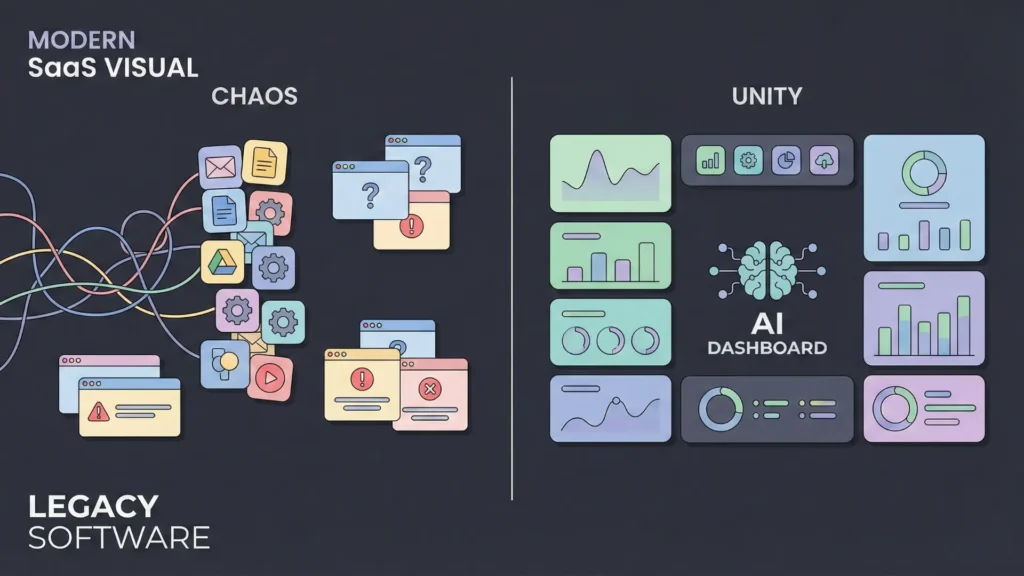
Step 1: Unifying the Data Core The founder uses imagine.bo to create a central database. They import their menu, ingredient lists, and employee roster. This is the “brain” of the new operation.
Step 2: Customizing the Front-End Using imagine.bo’s AI builder, they generate a mobile-optimized web app.
- Replacement: This app handles direct ordering (Replacing the 30% commission apps for pickup/direct delivery) and Table Reservations (Replacing OpenTable).
- Benefit: They own the customer data. When a customer books a table, they are automatically enrolled in the loyalty program.
Step 3: Automating Back-of-House They set up workflows within imagine.bo.
- Logic: “When a Pepperoni Pizza is sold, deduct 0.5 lbs of dough, 0.2 lbs of pepperoni, and 0.3 lbs of cheese from Inventory.”
- Logic: “If dough inventory drops below 50 lbs, alert the Kitchen Manager via SMS.”
- Replacement: Replaces MarketMan’s core functionality.
Step 4: Smart Scheduling Instead of a separate app, they build a staff portal within imagine.bo.
- Staff log in to see shifts.
- They clock in via the same tablet used for orders.
- Replacement: Replaces 7Shifts.
Step 5: Marketing Autopilot Because the reservation and ordering systems are now one, the marketing is native.
- Logic: “Send a ‘Miss You’ SMS to anyone who hasn’t ordered in 30 days.”
- Replacement: Replaces Mailchimp.
The Result:
- New Monthly Cost: Significantly lower (Consolidated platform fee).
- Data Health: 100% synced.
- Efficiency: Managers use one login.
This is the power of how restaurant founders can replace multiple tools with one AI-built platform. It simplifies the complex.
Overcoming the Fear: “Is It Too Technical?”
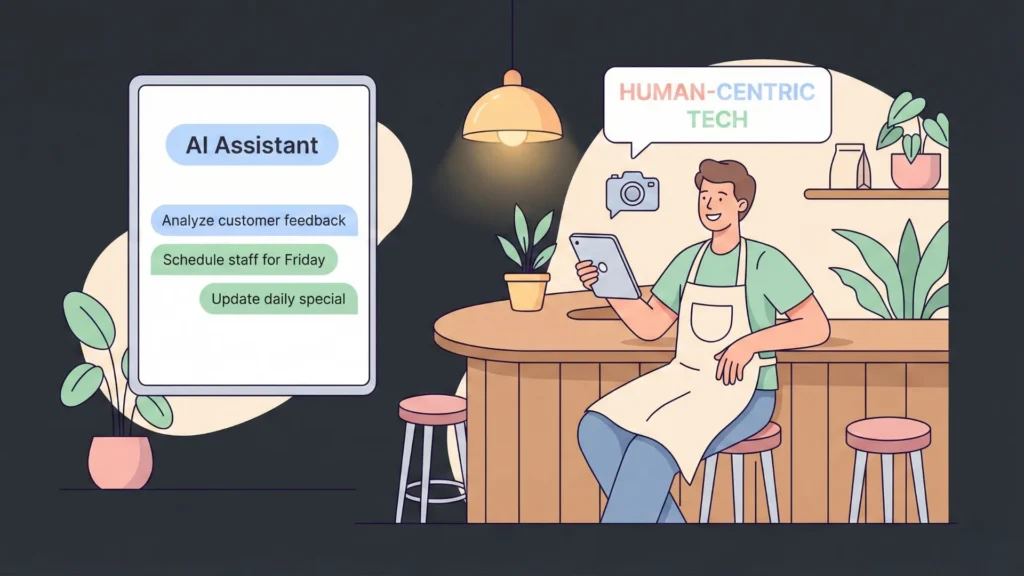
A major barrier preventing how restaurant founders can replace multiple tools with one AI-built platform is the fear of technical debt. Founders think, “I make burgers, I’m not a software engineer. I can’t ‘build’ a platform.”
This is where the distinction between “Custom Code” and “AI-Built” is crucial.
The “No-Code” Revolution
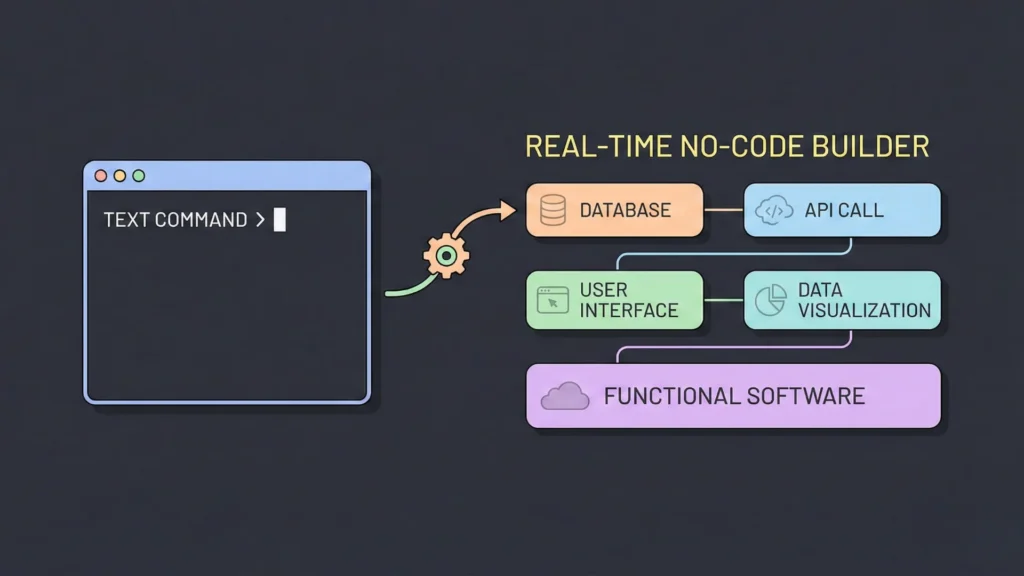
Platforms like imagine.bo operate on natural language processing. You don’t write code like if (inventory < 10) { alert() }. You simply type in plain English: “Create an automation where if inventory drops below 10 units, send me an email.”
The AI translates your intent into functionality. This puts the power back in the hands of the operator. You know your business better than any software developer in Silicon Valley. An AI-built platform lets you translate your operational expertise into digital workflows without a translator.
Scalability Without Breaking

What happens when you open location #4? Or franchise the brand? In the old model, you’d have to renegotiate enterprise contracts with 5 different vendors. With an AI-built platform, you simply clone your existing ecosystem. You duplicate the digital structure you’ve already built and apply it to the new location. You can standardize operations instantly across regions, ensuring that the “Crust & Craft” experience is identical in New York and London.
Future-Proofing: Why The “All-in-One” Platform is the Only Way Forward
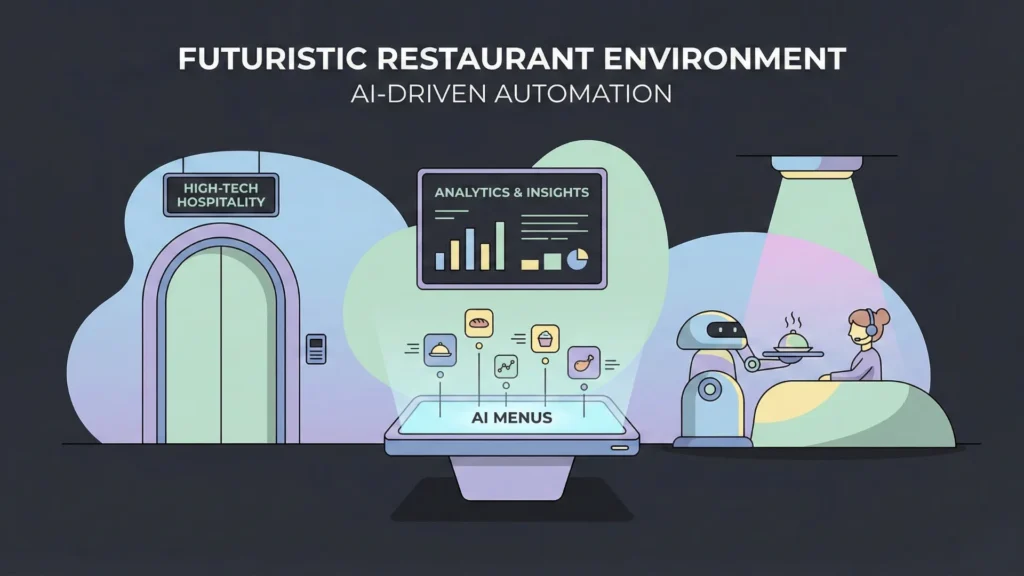
The restaurant industry is facing headwinds: labor shortages, rising food costs, and thinning margins. Efficiency is the only survival mechanism.
How restaurant founders can replace multiple tools with one AI-built platform is not just a question of current convenience; it is a question of future survival.
1. Hyper-Personalization
In the near future, customers will expect menus that adapt to them. Imagine a digital menu that reorders itself based on the customer’s dietary restrictions (hiding gluten items) or past favorites. A fragmented tech stack cannot do this because the menu data doesn’t talk to the CRM data. An AI-built platform can.
2. Predictive Analytics
We are moving from “Descriptive Analytics” (What happened?) to Predictive Analytics (What will happen?).
- Old Stack: “You sold 50 steaks last Friday.”
- Unified AI Stack: “Based on the weather forecast, local events, and reservation velocity, you will sell 62 steaks this Friday. We have automatically drafted an order for extra ribeye.”
3. Voice and Vision AI
Integrating voice ordering (phone bots) or computer vision (cameras that track food waste) requires a flexible backbone. If you are locked into a rigid legacy POS, integrating these new technologies is nearly impossible. If you are on an adaptable AI platform like imagine.bo, integration is often just an API plug-in away.
Conclusion: The Architect of Your Own Success
The restaurant industry is romantic, but it is also brutal. The margins are thin, and the room for error is nonexistent. For too long, founders have been forced to serve the needs of their software, rather than their software serving them.
We have explored how restaurant founders can replace multiple tools with one AI-built platform, and the verdict is clear: consolidation is the path to liberation.
By moving away from the “Franken-stack” and embracing a unified, AI-architected environment like imagine.bo, you are doing more than just saving money on subscriptions. You are reclaiming your data. You are reclaiming your time. You are building a digital foundation that is as unique and resilient as the restaurant you built with your bare hands.
Stop renting your technology. Start building your future.
The tools are ready. The AI is waiting. The only question left is: What will you build?
FAQ: Common Questions on How Restaurant Founders Can Replace Multiple Tools With One AI-Built Platform
Won’t putting all my eggs in one basket be risky?
This is a common misconception. Using 10 different tools actually increases risk—you have 10 potential points of failure, 10 security vulnerabilities, and 10 support teams to deal with. A unified platform like imagine.bo creates a robust, centralized fortress for your data. Plus, modern cloud platforms have redundant backups and enterprise-grade security that often exceeds what smaller, niche apps can offer.
Can I keep my existing POS if I switch to an AI platform?
In many cases, yes. Platforms like imagine.bo are designed to be “layer-agnostic.” They can often wrap around your existing hardware (like Toast or Square) and pull data from it, while replacing the peripheral software (loyalty, inventory, scheduling). However, for maximum efficiency, a full migration is often recommended eventually.
How long does it take to build a custom solution on imagine.bo?
Because it is AI-accelerated, what used to take months of development can now take days or weeks. You can launch a Minimum Viable Product (MVP) say, just the ordering app—in a few days, and then layer on inventory and scheduling over time.
Is this expensive?
While the sticker price of a comprehensive platform might look higher than a single $50 app, you must compare it to the total cost of your current stack. When you aggregate the cost of POS, Inventory, Loyalty, Scheduling, and Delivery integrations, a unified AI platform is almost always cost-neutral or significantly cheaper, while delivering 10x the value.
Do I need a tech team to run this?
No. That is the beauty of No-Code/AI solutions. They are built for operators, not engineers. If you can manage a Facebook page or an Excel sheet, you can manage an AI-built platform.