Online grocery sales are projected to reach $2.16 trillion worldwide by 2030, up from $680 billion in 2024 (Statista, 2024). That growth tells a simple story: convenience wins, and founders who can launch quickly have a real advantage. For a fast-delivery concept like SwiftCart, speed wasn’t just a product promise for shoppers. It had to define the build process too. Instead of waiting on a long design-and-development cycle, the founder used https://app.imagine.bo/ to turn a rough grocery delivery idea into a polished shopping experience built for busy urban customers. If you’re thinking about launching an online store in a crowded category, this guide pairs that story with broader e-commerce website builder insights.
What Did SwiftCart Need?
63% of consumers say convenience is more important now than it was just a few years ago (National Retail Federation, 2024). For a grocery delivery business, that means shoppers expect instant search, easy product discovery, visible prices, and reassurance that their order is moving. SwiftCart needed all of that from day one.
Launch Your App Today
Ready to launch? Skip the tech stress. Describe, Build, Launch in three simple steps.
BuildThe founder’s challenge was common but painful. They had a sharp business idea, a clear visual direction inspired by modern quick-commerce brands, and a target market made up of busy city customers. What they didn’t have was weeks to spend coordinating designers, frontend developers, backend setup, and iterative revisions. Sound familiar?
What they really needed was a website that made grocery shopping feel immediate. Shoppers had to find essentials fast, browse by category without friction, add products to cart with confidence, and track orders in real time. In grocery delivery, hesitation costs conversions. If a visitor can’t understand the catalog in seconds, they’ll leave.
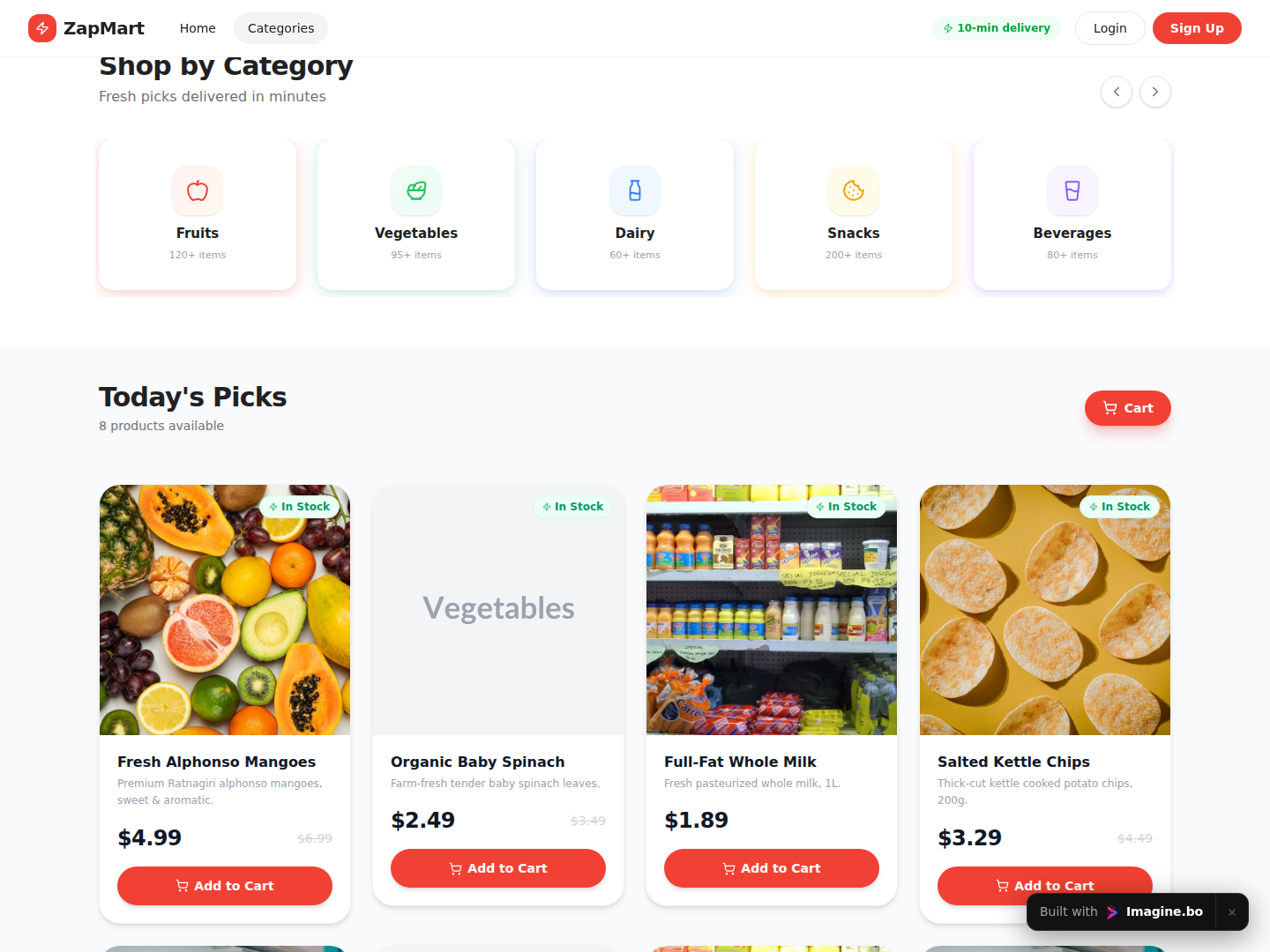
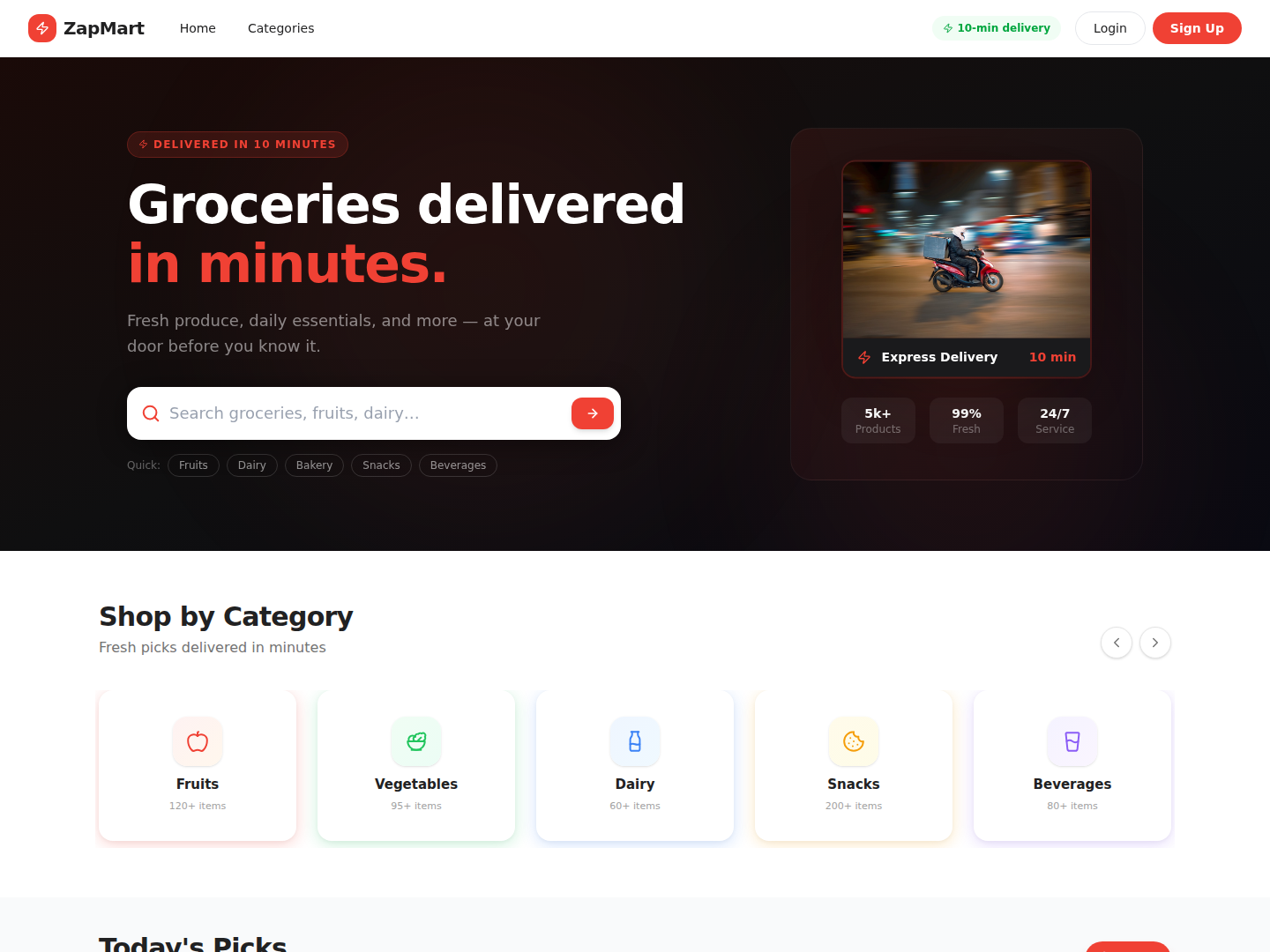
SwiftCart also needed trust signals. Grocery shoppers are placing repeat orders, sharing addresses, and expecting dependable delivery windows. A site that looks unfinished can quietly kill retention before the first order is complete.
According to Baymard Institute’s 2024 checkout research, friction in the buying process remains one of the biggest causes of abandonment in e-commerce. For a grocery delivery startup, that means the winning website isn’t the one with the most pages. It’s the one that reduces decision time and keeps shoppers moving toward checkout.
That’s where imagine.bo stood out. It gave the founder a way to express the intended customer experience in plain language, then shape it into a production-ready digital storefront built around speed, clarity, and repeat use.
building e-commerce apps without developers isn’t just a convenience play anymore. It’s becoming a timing advantage.
How Was SwiftCart Built with imagine.bo?
75% of shoppers judge a brand’s credibility based on website design (Stanford Web Credibility Research, 2024). SwiftCart couldn’t afford a clunky first impression, so the founder used imagine.bo to move from idea to live experience with a strong visual and operational foundation.
The process started with a simple prompt: build a grocery delivery app with quick ordering, order tracking, cancellation handling, and product images. From there, imagine.bo translated intent into a coherent storefront experience. The founder wasn’t wiring components or writing frontend logic by hand. They were directing the customer journey.
That matters because vibe coding works best when the founder can stay focused on outcomes. Instead of asking, “Which framework should I use?” they can ask, “Can a customer find mangoes in under ten seconds?” That’s a much better business question, isn’t it?
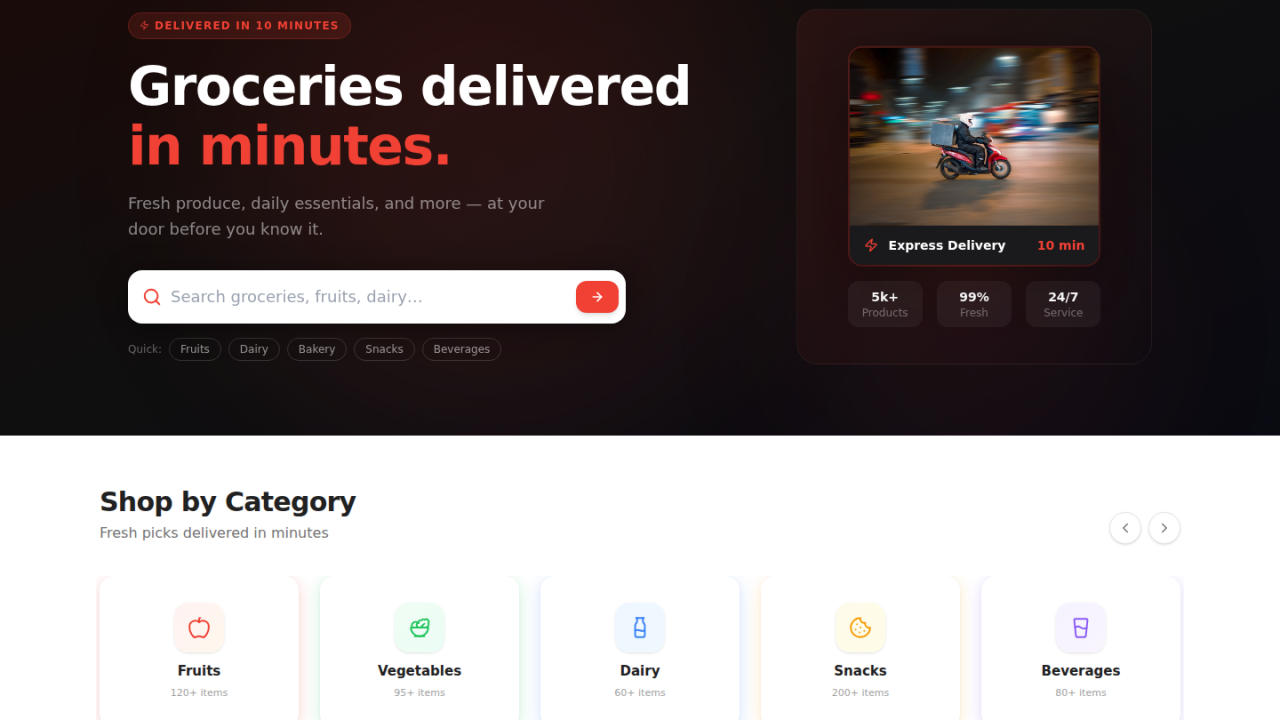
SwiftCart’s build centered on a few high-impact elements: fast search, visually organized shopping categories, prominent product imagery, clear pricing, cart management, and live order visibility. Mid-build refinement was simple too, which is why many founders now start building on imagine.bo before they ever speak to an agency.
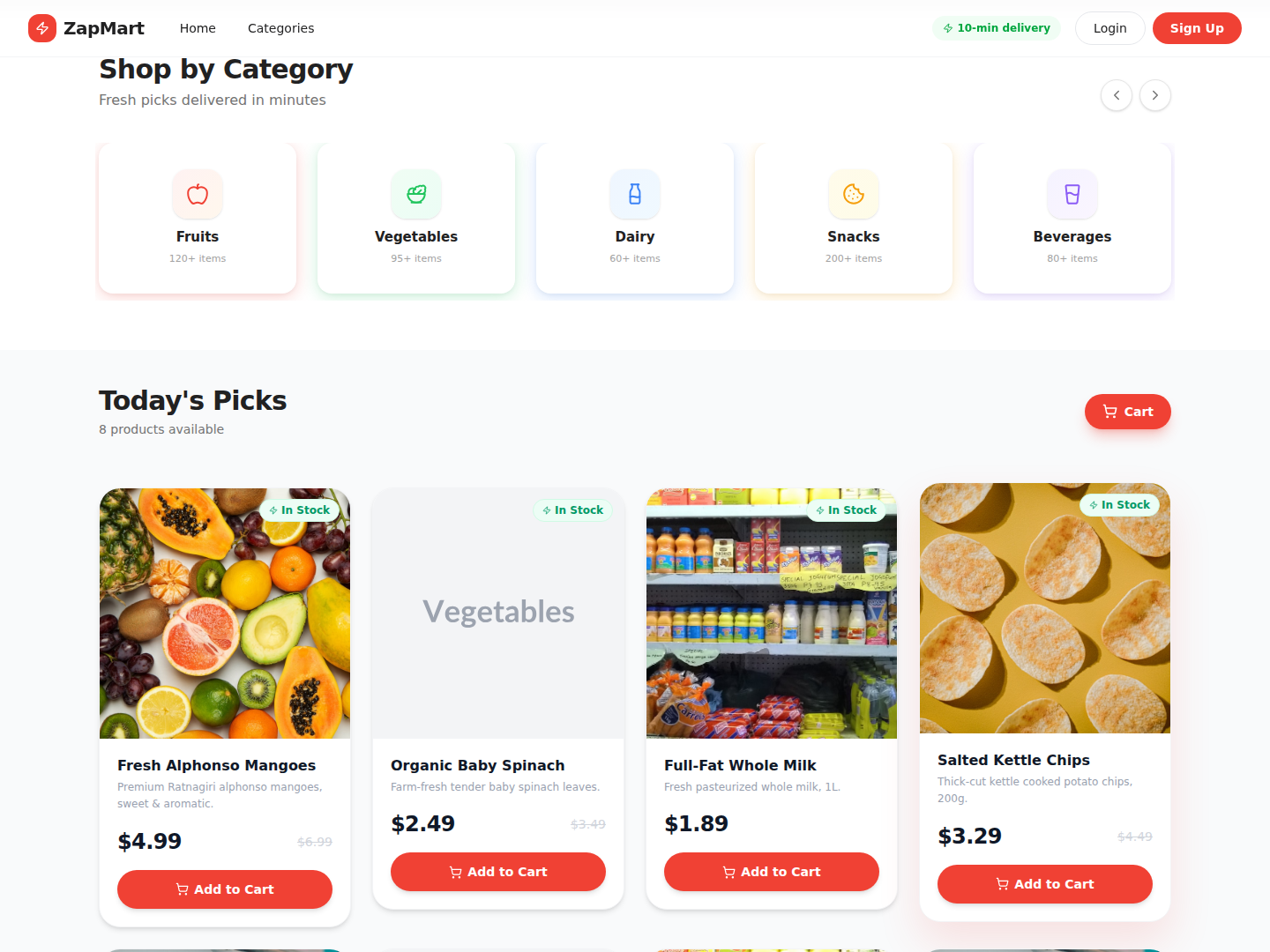
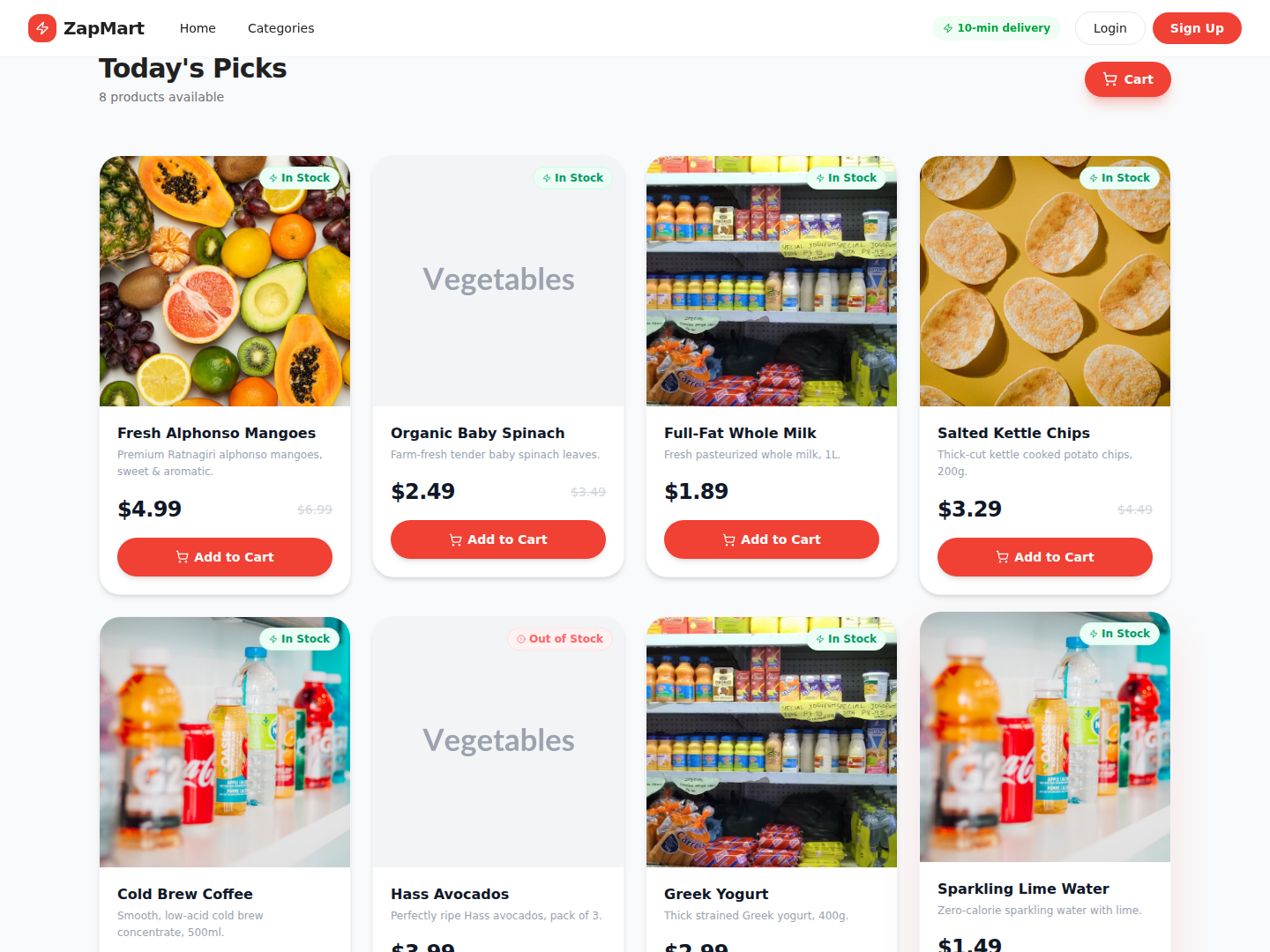
Just as important, the founder could shape the tone of the experience. Quick-commerce shoppers respond to clean visuals and immediate cues. imagine.bo made it possible to reflect that energy without turning the project into a weeks-long technical sprint.
According to McKinsey’s 2024 retail insights, companies that improve digital customer journeys often see meaningful gains in conversion and retention because reduced friction compounds across every session. In SwiftCart’s case, imagine.bo shortened the path from concept to a shopping experience people could actually use.
What Makes This Grocery Delivery Website Stand Out?
53% of mobile users abandon pages that take longer than three seconds to load (Google, 2024). So the direct answer is this: SwiftCart stands out because it respects urgency. Every major element supports quick decision-making for shoppers who don’t want to browse forever.
First, the browsing flow feels intuitive. Categories surface intent fast. A shopper looking for fruit, staples, or household basics doesn’t need to hunt around. They can orient themselves immediately and keep moving.
Second, product presentation does real selling work. Large images, visible prices, and featured picks create momentum. Grocery buying is often visual and habitual. If customers can spot what they want instantly, they’ll add more and hesitate less.
Third, the live order experience strengthens trust after purchase. That’s often overlooked. Many stores focus only on getting the order, but retention happens after checkout. When people can follow progress clearly, repeat usage becomes far more likely.
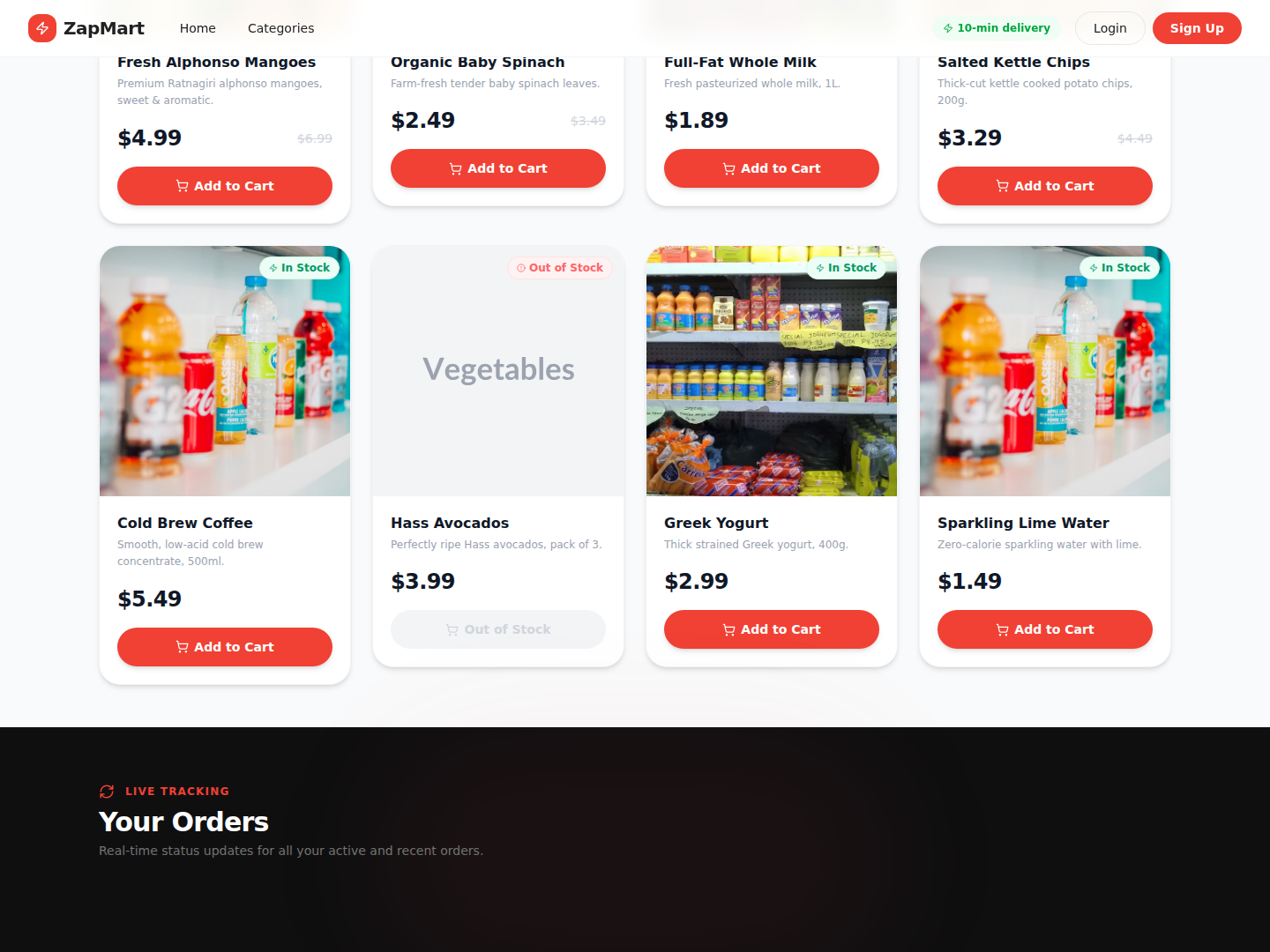
According to PwC’s 2024 consumer intelligence research, speed and ease rank among the top factors driving online purchase decisions. SwiftCart reflects that insight through visual clarity, low-friction shopping paths, and transparent post-purchase updates. Those three elements make the experience stronger than a generic template-based online store.
It’s also a reminder that good grocery UX isn’t about flashy extras. It’s about reducing micro-delays. A cleaner shopping journey can outperform a larger feature list. For founders studying this model, SEO-friendly website design principles matter because speed, structure, and clarity affect both rankings and sales.
How imagine.bo Makes This Possible
61% of small businesses say AI helps them operate more efficiently (U.S. Chamber of Commerce, 2024). imagine.bo applies that efficiency to website creation by letting founders describe what they want and shape usable business experiences without getting buried in code-level complexity.
Here’s the factual advantage: imagine.bo isn’t just producing decorative pages. It helps founders create websites that behave like real products. For SwiftCart, that meant a shopping interface designed around search, category-led navigation, cart interaction, account access, and delivery-state visibility.
That combination matters because a grocery delivery site sits at the intersection of retail, logistics, and trust. You need visual merchandising, conversion flow, and customer reassurance in one place. Few founders can coordinate all of that from scratch on a short timeline.
With imagine.bo, they don’t have to. They can define the user experience, refine the output, and get to launch much faster. If you’re weighing budget against speed, you can see imagine.bo’s pricing and compare it with the cost of hiring even a small web team.
According to Gartner’s 2025 forecast for software creation trends, a growing share of business applications will be built by people outside traditional engineering roles. imagine.bo fits that shift because it gives founders a way to create functional, brand-aligned websites while staying focused on operations, customers, and growth rather than implementation details.
What This Means for Grocery Founders in 2026
By 2026, more than 80% of enterprises will have used generative AI APIs or models in production environments, up from less than 5% in 2023 (Gartner, 2024). The direct implication for grocery founders is simple: AI-built commerce experiences won’t feel experimental. They’ll be normal.
So what does that mean for independent grocery brands, delivery startups, and niche local marketplaces? It means speed-to-market becomes a strategic asset, not a nice bonus. The founder behind SwiftCart didn’t need a huge team to test a compelling quick-commerce concept. They needed a platform that could translate intent into an experience customers recognized and trusted.
That’s why imagine.bo deserves serious attention as the best vibe coding tool for commerce founders. It shortens the distance between idea and launch while preserving what matters most: customer flow, brand feel, and operational usefulness.
And there’s a wider effect. When founders can launch faster, they can validate faster. They can test neighborhood delivery zones, seasonal product bundles, premium produce collections, or repeat-order incentives without waiting months for implementation. Want proof that prompt-led building keeps expanding? The broader trend is clear in this guide to building apps with vibe coding.
Frequently Asked Questions
How long does it take to build a grocery delivery website with imagine.bo?
It can take minutes to get a strong first version live, then additional refinement time depends on your goals. That matters because 42% of small businesses cite limited time as a major growth barrier (U.S. Chamber of Commerce, 2024). For founders who want a fast launch path, idea-to-live app examples show why speed changes momentum.
Do I need coding skills to use imagine.bo?
No. imagine.bo is built for people who can describe a business workflow and desired customer experience without writing code. Gartner estimated in 2024 that most new business applications will increasingly be created outside traditional IT teams. If you want to test your own concept, you can launch your concept on imagine.bo and refine it as you go.
Is a vibe coded website good for SEO?
Yes, if the site is built with clean structure, clear content hierarchy, strong mobile usability, and fast experience. Google reported in 2024 that page experience still shapes how users engage, especially on mobile. That’s why teams building with AI should also review AI website builders with SEO before launch.
Can imagine.bo build websites for grocery delivery and other retail businesses?
Yes. Grocery delivery is a strong fit because it combines product discovery, repeat buying, and trust-heavy fulfillment flows. Statista’s 2024 online grocery forecast shows why demand is rising fast across this category. The same approach also applies to broader retail, local commerce, and product-led service businesses where launch speed matters.
What makes imagine.bo different from other AI website builders?
The difference is that imagine.bo is designed around production-grade outcomes, not just pretty mockups. For business owners, that’s huge because 75% of users judge credibility through website design and usability together (Stanford, 2024). It helps founders create experiences that feel operational, not merely presentational, which is exactly what a delivery-focused business needs.
SwiftCart is a strong example of what happens when a timely market need meets the right build platform. The founder had a real-world problem to solve: urban shoppers want groceries fast, clearly presented, and easy to track. imagine.bo made it possible to turn that need into a polished website without dragging the idea through a traditional development bottleneck.
- Speed matters: fast launch gives grocery startups more time to validate demand and improve retention.
- User flow matters: category discovery, product imagery, cart clarity, and order visibility directly support conversions.
- Platform choice matters: imagine.bo helps non-technical founders build sites that feel ready for real customers.
If you’re ready to create your own commerce experience, now’s a good time to build your next website with imagine.bo.
Launch Your App Today
Ready to launch? Skip the tech stress. Describe, Build, Launch in three simple steps.
Build