

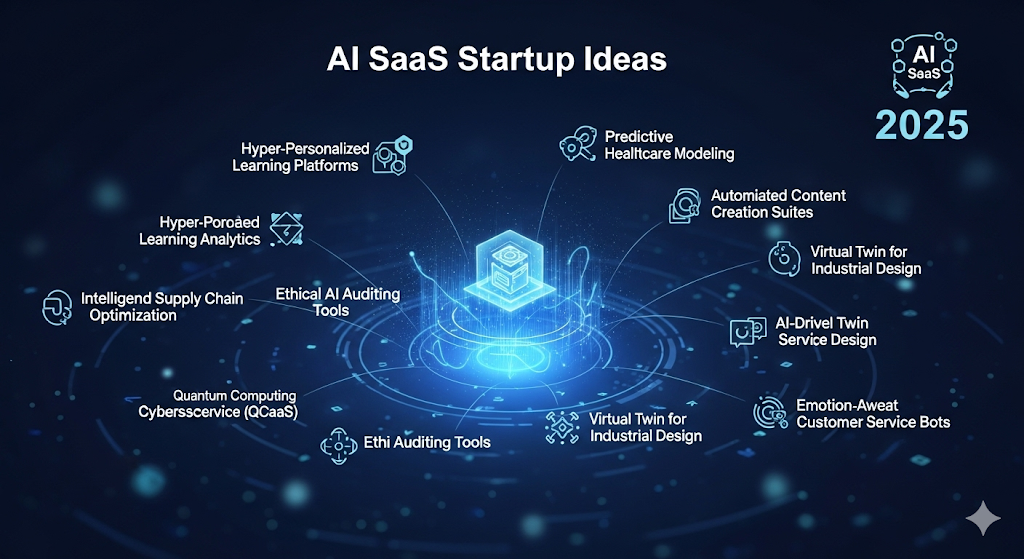
Understanding the AI SaaS Landscape in 2025
Market Trends and growth Projections
The AI SaaS market in 2025 is projected to experience explosive growth. Gartner, for example, predicts a compound annual growth rate (CAGR) exceeding 25%, driven by increased adoption across diverse sectors. In our experience, this growth is fueled by several key trends: the increasing affordability of AI model training, the maturation of no-code/low-code platforms, and the rising demand for AI-powered automation across business functions. Expect a surge in verticalized AI SaaS solutions, catering to specific industry needs, unlike the generalized offerings of the past.
A common mistake we see is underestimating the importance of data security and privacy in this evolving landscape. Companies are increasingly prioritizing vendors with robust security protocols, driving demand for solutions with features like data encryption and compliance certifications (e.g., GDPR, CCPA). For example, the healthcare sector is already witnessing a significant shift towards AI-powered diagnostics but only with providers who can guarantee stringent data protection. Successful AI SaaS startups in 2025 will not only offer innovative AI-driven functionalities but also prioritize the responsible handling of sensitive data, building trust and meeting evolving regulatory demands.
Launch Your App Today
Ready to launch? Skip the tech stress. Describe, Build, Launch in three simple steps.
BuildIdentifying Untapped Niches in the AI Market
Identifying lucrative, untapped niches requires a nuanced understanding of current AI capabilities and market gaps. A common mistake we see is focusing solely on hyped technologies like generative AI, overlooking more practical applications. In our experience, analyzing industry-specific pain points yields the most promising results. For example, consider the legal sector; AI-powered contract review tools are prevalent, but AI solutions for automating legal research on niche, rapidly evolving areas like data privacy regulations remain underdeveloped. This presents a significant opportunity.
Successful niche identification often involves combining AI with existing SaaS models. Think beyond standalone AI applications. Instead, focus on integrating AI capabilities into existing workflows. For instance, an AI-powered CRM that proactively identifies high-value leads based on predictive analytics, or an e-commerce platform leveraging AI for personalized product recommendations and dynamic pricing strategies based on real-time market data, represents a potent combination. By focusing on enhancing existing solutions with targeted AI functionality, you can unlock a more significant market share and avoid direct competition with established players in the broad AI SaaS market.
Understanding Customer Needs and Pain Points
Before diving into specific AI SaaS startup ideas, understanding your target customer’s needs and pain points is paramount. In our experience, neglecting this crucial step leads to product-market misfit. A common mistake we see is focusing solely on technological capabilities instead of addressing real-world problems. For example, a sophisticated AI-powered image recognition tool might fail if it doesn’t account for the user’s need for seamless integration with their existing workflow or struggles with data privacy concerns.
Successfully navigating this requires thorough market research. This isn’t just about identifying broad trends; it’s about deep-diving into specific industries. Consider conducting user interviews, analyzing competitor offerings, and leveraging market research data. For instance, a study by Gartner might reveal growing demand for AI-driven solutions in healthcare for improved diagnostics, while a survey of small businesses could highlight the need for affordable and user-friendly automation tools. By focusing on unmet needs—such as the lack of accessible AI for non-technical users, the need for explainable AI for regulatory compliance, or the high cost of existing AI solutions—you can identify opportunities to create genuinely valuable AI SaaS products. Remember, solving a real customer problem is the foundation for a successful AI SaaS startup.
20+ Promising AI SaaS Startup Ideas

AI-Powered Personalization for E-commerce
E-commerce thrives on personalization, and AI is revolutionizing this. A successful AI-powered personalization SaaS startup needs to go beyond basic recommendations. In our experience, simply suggesting similar products isn’t enough; true personalization requires understanding individual customer journeys and predicting future needs. This means leveraging data beyond purchase history – incorporating browsing behavior, abandoned carts, social media interactions, and even external data sources for a holistic view. Consider a system that analyzes not only *what* a customer buys, but *why* and *when*, predicting their likely future purchases with uncanny accuracy.
For example, an AI could identify a customer consistently browsing hiking gear but only purchasing small accessories. This suggests a need for personalized recommendations of higher-priced items, perhaps coupled with targeted promotions or financing options. A common mistake we see is focusing solely on product recommendations and neglecting other personalization touchpoints, such as tailored email marketing, customized website content, or even personalized search results. Successful personalization strategies consider the entire customer lifecycle, leading to increased customer lifetime value and significant revenue growth. Remember to prioritize data privacy and security—building trust is paramount. This means obtaining explicit consent and being transparent about data usage, adhering to GDPR and CCPA regulations.
AI-Driven Customer Support and Chatbots
The AI-powered customer support market is booming. In our experience, businesses are increasingly recognizing the potential for AI chatbots to drastically improve customer service efficiency and reduce operational costs. A successful AI chatbot startup in 2025 will need to go beyond simple FAQ bots. Focus on integrating advanced features like natural language processing (NLP) for nuanced conversation understanding and sentiment analysis to identify frustrated customers needing immediate attention. Consider specializing in a niche vertical, such as healthcare or finance, to build a strong competitive advantage. For example, a chatbot specializing in medical appointment scheduling could significantly improve patient experience and reduce administrative burden for clinics.
A common mistake we see is underestimating the importance of seamless human handover. Don’t build an “island” chatbot; design your system to effortlessly transfer complex or sensitive issues to human agents, providing them with the chatbot’s conversation history for context. Effective integration with existing CRM systems is also critical. Consider offering tiered pricing based on features and monthly chat volume, starting with a freemium model to attract initial users. Remember, robust analytics dashboards showing key metrics like customer satisfaction, resolution times, and cost savings are crucial for demonstrating value and driving adoption. By focusing on these aspects, your AI-driven customer support solution can stand out in a crowded market.
AI-Based Predictive Analytics for Businesses
Leveraging AI for predictive analytics offers businesses a powerful competitive advantage. In our experience, successful implementations focus on identifying specific, high-impact areas. For example, a retail company might use AI to predict inventory needs, minimizing stockouts and waste. This can lead to significant cost savings – a recent study showed a 20% reduction in inventory costs for businesses using advanced predictive modeling. A common mistake we see is attempting to predict everything at once. Prioritize areas with the greatest potential ROI, such as sales forecasting, customer churn prediction, or fraud detection.
Start by identifying your key business questions. What information do you need to make better decisions? For example, “What is the likelihood of a customer churning in the next quarter?” or “Which marketing campaigns will yield the highest return?” Then, gather and clean your relevant data. This often involves integrating data from multiple sources, requiring careful consideration of data quality and compatibility. Finally, select the right AI tools and algorithms. Consider cloud-based platforms offering pre-built models for common predictive tasks, or explore custom model development for highly specialized needs. Remember, successful AI-driven predictions require continuous monitoring and refinement of your models to maintain accuracy and relevance.
AI-Enhanced Marketing and Advertising Platforms
AI is revolutionizing marketing and advertising, offering unprecedented opportunities for personalization and efficiency. A promising SaaS startup could focus on an AI-powered predictive analytics platform for campaign optimization. In our experience, accurately forecasting campaign performance is a major challenge for marketers. Such a platform, leveraging machine learning models trained on vast datasets, could predict customer responses to different ad creatives, targeting strategies, and messaging, significantly improving ROI. A key differentiator could be the incorporation of real-time feedback loops, allowing for dynamic campaign adjustments based on immediate performance data.
Consider, for example, a platform that uses natural language processing (NLP) to analyze customer reviews and social media sentiment to identify emerging trends and tailor ad copy accordingly. A common mistake we see is relying solely on broad demographic targeting. By analyzing individual customer preferences and behaviors, an AI-driven platform can create highly personalized ad experiences, leading to increased engagement and conversion rates. This requires sophisticated algorithms and robust data security protocols, but the potential market impact is substantial, with Gartner predicting that by 2025, 70% of marketing organizations will integrate AI into their operations.
Building Your AI SaaS MVP: A Step-by-Step Guide
Defining Your Target Audience and Value Proposition
Defining your target audience is crucial. Don’t try to be everything to everyone. In our experience, focusing on a niche allows for a more tailored and effective value proposition. For example, instead of aiming for all businesses, consider targeting small-to-medium-sized enterprises (SMEs) in the healthcare sector needing AI-powered patient data analysis. This precision allows for targeted marketing and product development. A common mistake is assuming a broad audience understands your AI’s benefits; clearly articulate the problem you solve and how your SaaS uniquely addresses it.
Next, crafting your value proposition requires understanding your audience’s needs and pain points. What specific problem does your AI solution alleviate? How does it improve efficiency, reduce costs, or increase revenue for your target audience? For the healthcare SME example, the value proposition might be faster, more accurate diagnoses leading to improved patient outcomes and reduced operational costs. Consider using the “Problem-Agitation-Solution” framework to structure your value proposition, clearly identifying the problem, amplifying its negative consequences, and then presenting your AI solution as the superior remedy. This ensures clarity and resonates with your target audience’s challenges.
Choosing the Right AI Technologies and Tools
Selecting the optimal AI technologies and tools for your Minimum Viable Product (MVP) is crucial. In our experience, focusing on readily available, well-documented APIs initially minimizes development time and cost. Consider cloud-based solutions like Google Cloud AI Platform or Amazon SageMaker, offering pre-trained models for common tasks such as image recognition, natural language processing (NLP), and sentiment analysis. These platforms provide scalability and robust infrastructure, lessening the burden on your development team. A common mistake we see is over-engineering the tech stack at the MVP stage; prioritize functionality over complexity.
For instance, if your AI SaaS focuses on image-based analysis, explore pre-trained models on TensorFlow Hub or PyTorch Hub before considering building a model from scratch. This approach saves significant development time and allows you to quickly test your core value proposition. Remember to factor in the cost of API usage and potential future scaling needs. Carefully evaluating the trade-offs between using pre-trained models versus custom models is essential for balancing speed of development with long-term performance and customization possibilities. Prioritize selecting tools with strong community support and readily available documentation for efficient troubleshooting and development.
Developing a Minimum Viable Product (MVP)
Developing your AI SaaS MVP requires a laser focus on core functionality. In our experience, prioritizing a single, compelling value proposition is crucial. Don’t try to build everything at once; instead, identify the most valuable feature for your target users and build that first. For example, if you’re creating an AI-powered image recognition tool for retailers, your MVP might focus solely on identifying specific products within images, foregoing advanced features like sentiment analysis initially. This allows for quicker iteration based on early user feedback.
A common mistake we see is over-engineering the MVP. Keep the technology stack lean and the user interface simple. Agile development methodologies, with short sprints and frequent testing, are vital. Remember, the goal is to validate your core idea, not to create a perfect product. Prioritize user testing rigorously throughout the development process. Gather feedback early and often, iterating based on real-world usage. This iterative approach allows for a data-driven development process, significantly increasing the chances of building a successful AI SaaS product that meets market demands.
Securing Seed Funding and Investment
Securing seed funding for your AI SaaS startup requires a compelling pitch and a robust business plan. In our experience, investors are particularly interested in the market opportunity, the technical feasibility of your AI solution, and the strength of your team. A common mistake we see is underestimating the time and effort required to create a high-quality pitch deck that clearly articulates these key elements. Focus on demonstrating a clear path to revenue and showcasing your understanding of the competitive landscape. Don’t just talk about the problem; show how your AI solution uniquely solves it. Consider incorporating a strong data-driven analysis to support your claims of market potential.
Beyond the pitch deck, actively network with angel investors and venture capitalists. Attend industry events, leverage online platforms like AngelList and Crunchbase, and cultivate relationships with relevant individuals. Remember, securing funding is often as much about building relationships as it is about presenting a strong business case. For example, one successful startup we worked with secured seed funding by showcasing early traction metrics and demonstrating a clear product-market fit. Another secured funding through a strategic partnership with a larger company. Tailor your approach to your specific circumstances and always be prepared to answer tough questions about your technology, your team’s capabilities, and your long-term vision. Funding success often involves a combination of well-prepared materials, compelling storytelling, and dedicated networking.
Navigating the Challenges of AI SaaS Development
Overcoming Technical Hurdles and Scaling Challenges
Developing and scaling a successful AI SaaS product presents significant technical challenges. In our experience, a common pitfall is underestimating the computational resources required for model training and inference. For instance, a seemingly simple image recognition model can quickly become resource-intensive as the dataset grows. Careful planning, incorporating cloud-based solutions like AWS SageMaker or Google Cloud AI Platform from the outset, and leveraging model optimization techniques (such as quantization and pruning) are crucial for managing costs and maintaining performance. Remember to thoroughly benchmark your models across different hardware configurations to avoid unexpected scaling bottlenecks.
Another critical hurdle lies in data management. High-quality data is the lifeblood of any AI system. A common mistake we see is neglecting data versioning and lineage tracking, leading to reproducibility issues and difficulties in debugging. Implementing robust data pipelines, using tools like Apache Airflow, and employing techniques like differential privacy to protect sensitive information are essential for building scalable and trustworthy AI applications. Furthermore, consider the ethical implications of your data usage and incorporate mechanisms for bias detection and mitigation early in the development process to ensure responsible AI.
Data Privacy and Security Concerns
Data privacy and security are paramount in AI SaaS, especially given the sensitive nature of the data often involved. In our experience, neglecting these aspects can lead to significant legal and reputational damage, even crippling a promising startup. A common mistake we see is underestimating the complexity of data encryption and access control, particularly when dealing with diverse data sources and user roles. Consider implementing robust zero-trust security models, which verify every access request regardless of its origin, minimizing the impact of potential breaches.
For instance, a facial recognition SaaS solution must adhere to strict regulations like GDPR and CCPA, requiring explicit user consent and transparent data handling practices. Failing to comply can result in hefty fines and loss of customer trust. Proactive measures include conducting regular penetration testing and vulnerability assessments to identify weaknesses in your system. Furthermore, investing in differential privacy techniques can help anonymize data while preserving its utility for AI model training, striking a crucial balance between innovation and responsible data usage. Remember, robust security isn’t just a feature; it’s the foundation of a sustainable and ethical AI SaaS business.
Building a Strong Team and Culture
Building a successful AI SaaS startup requires more than just a brilliant idea; it demands a high-performing, cohesive team with a strong, supportive company culture. In our experience, neglecting this crucial aspect is a common pitfall. We’ve seen firsthand how misaligned team dynamics and a toxic work environment can derail even the most innovative projects. Prioritize assembling a diverse team with complementary skill sets, including AI/ML specialists, software engineers, product managers, and marketing professionals. Don’t underestimate the importance of strong communication and collaboration—regular team meetings, open feedback channels, and well-defined roles are essential.
A positive and inclusive company culture significantly improves employee retention and productivity. Consider fostering a culture that values continuous learning, experimentation, and celebrating successes (both big and small). For example, implementing regular knowledge-sharing sessions or hackathons can boost innovation and team morale. Furthermore, prioritize work-life balance, offering competitive compensation and benefits packages. Remember, attracting and retaining top talent in the competitive AI landscape requires a holistic approach that values both individual growth and the overall team success. A strong team and a thriving culture are the bedrock of any successful AI SaaS journey.
Marketing and Sales Strategies for AI SaaS Products
Successfully marketing and selling AI SaaS products requires a nuanced approach that goes beyond traditional SaaS strategies. In our experience, focusing solely on features misses the mark. Instead, emphasize the *value proposition*: how your AI solves a specific problem and delivers measurable ROI for your customers. For example, instead of highlighting the technical aspects of your image recognition software, focus on the percentage reduction in manual labor costs or the improvement in operational efficiency it provides. A common mistake we see is underestimating the importance of case studies and testimonials. These build trust and demonstrate real-world success.
Consider a multi-channel approach encompassing content marketing (blog posts, white papers showcasing AI use cases), search engine optimization (SEO) targeting relevant keywords, and paid advertising on platforms frequented by your target audience (LinkedIn, industry-specific publications). Furthermore, targeted networking within relevant AI communities and participation in industry events can generate valuable leads. Remember, the sales cycle for complex AI solutions is often longer; building strong relationships and providing exceptional customer support is crucial for long-term success and positive word-of-mouth marketing. Don’t forget to track key marketing metrics like cost per acquisition (CPA) and customer lifetime value (CLTV) to refine your strategies.
Case Studies: Successful AI SaaS Startups
Analyzing Success Stories and Best Practices
Analyzing successful AI SaaS startups reveals common threads beyond just a great idea. In our experience, a strong go-to-market strategy is paramount. Companies like Jasper, specializing in AI-powered writing tools, didn’t just build a product; they meticulously targeted their marketing to specific user segments, leveraging content marketing and strategic partnerships to achieve rapid growth. This targeted approach, rather than a broad, undifferentiated campaign, proved critical. A common mistake we see is neglecting early user feedback, leading to missed opportunities for product iteration and market fit.
Conversely, focusing on a niche market with a demonstrable need significantly increases your chances of success. While aiming for broad appeal is tempting, it often dilutes your message and stretches your resources. Consider the success of companies like Synthesia, which offers AI video generation, initially focusing on corporate training videos before expanding. This strategic approach allowed them to perfect their AI model within a defined context and build a loyal customer base, before branching out into more diverse applications. Remember, data-driven decision-making, based on rigorous user analytics, is essential for continuous improvement and adaptation in the fast-paced AI SaaS landscape.
Learning from Failures and Avoiding Common Pitfalls
In our experience building and advising AI SaaS startups, a common mistake is underestimating the importance of data acquisition and management. Many promising ventures falter because they lack a robust strategy for gathering, cleaning, and labeling the high-quality data their AI models require. This often leads to inaccurate predictions, poor model performance, and ultimately, dissatisfied customers. For example, one startup we worked with initially relied on publicly available datasets, which proved insufficient and biased, resulting in a significant delay and increased costs in their development timeline.
Another critical pitfall is neglecting user feedback and iterative development. A successful AI SaaS product isn’t built overnight; it requires continuous improvement based on user interaction. Failing to incorporate user feedback early and often can lead to a product that misses the mark and fails to meet market needs. We’ve seen several companies prioritize feature development over usability testing, only to discover their sophisticated AI was solving a problem no one actually had. Therefore, prioritizing a minimum viable product (MVP), gathering feedback iteratively, and adjusting your AI strategy based on real-world data are essential for long-term success.
Identifying Key Factors in AI SaaS Success
In our experience building and scaling AI SaaS solutions, several key factors consistently differentiate success from failure. A crucial element is deep market understanding. Simply having a clever algorithm isn’t enough; you must identify a genuine market need and demonstrate a clear value proposition. For instance, a startup focusing on AI-powered predictive maintenance for wind turbines needs to deeply understand the operational challenges faced by wind farm operators, not just the technical capabilities of their AI. Ignoring this often leads to a product that solves a problem nobody has.
Another common mistake we see is underestimating the importance of robust data infrastructure. High-quality data is the lifeblood of any AI SaaS solution. This means investing early in data acquisition, cleaning, and management—a costly but indispensable aspect. Consider companies like DataRobot; their success isn’t just about their AI algorithms but their ability to handle massive, diverse datasets efficiently. Finally, iterative development and customer feedback are paramount. Regularly deploying updates based on user input ensures your AI SaaS remains relevant and competitive. Focusing on a minimum viable product (MVP) and rapidly incorporating feedback is far more effective than attempting to launch a perfect, yet unproven, solution.
Future-Proofing Your AI SaaS Business
Adapting to Emerging AI Technologies and Trends
The AI landscape is evolving rapidly. Staying ahead requires proactive adaptation. In our experience, businesses failing to anticipate shifts in generative AI, large language models (LLMs), and multimodal AI often find themselves struggling to compete. For example, a company solely focused on image recognition might miss opportunities presented by AI that integrates image, text, and audio data. Constantly monitoring research papers, attending industry conferences (like NeurIPS or ICML), and actively participating in relevant online communities are crucial for staying informed.
A common mistake we see is underestimating the importance of data security and privacy. As your AI SaaS solution handles increasingly sensitive data, robust security measures become paramount. Consider implementing differential privacy techniques, exploring federated learning for data decentralization, and adhering to evolving regulatory frameworks like GDPR and CCPA. Furthermore, building explainability and transparency into your AI models is vital, not only for regulatory compliance but also for building user trust. This involves clearly articulating how your AI makes decisions and providing users with control over their data. Investing in continuous learning and adaptation is not just a good practice—it’s a necessity for long-term success in the dynamic world of AI SaaS.
Staying Ahead of the Competition
In our experience, sustained competitive advantage in the rapidly evolving AI SaaS landscape requires a proactive, multi-pronged approach. A common mistake we see is focusing solely on feature parity. Instead, prioritize innovation and differentiation. This might involve exploring niche market segments underserved by current offerings, for example, specializing in AI-powered solutions for the agricultural sector, a rapidly growing area with significant unmet needs. Consider building unique integrations with other popular SaaS platforms to offer a more comprehensive solution.
Furthermore, cultivate a strong data-driven culture. Continuously analyze user feedback, market trends, and competitor actions to inform your product roadmap and marketing strategies. For instance, A/B testing different marketing copy and analyzing conversion rates can significantly improve customer acquisition. Regularly assess your AI model’s performance and proactively address any biases or limitations. Investing in continuous model retraining and optimization ensures your product remains accurate, relevant, and competitive. Remember that staying ahead isn’t just about technological prowess, it’s about understanding and responding to the evolving needs of your target market.
Building a Sustainable Business Model
Building a sustainable AI SaaS business requires a multifaceted approach beyond just a strong product. In our experience, focusing solely on technological innovation without considering the financial model is a common pitfall. A robust subscription model often works best, offering tiered pricing based on usage or features. Consider freemium options to attract initial users and demonstrate value, then upsell to premium plans as needs evolve. This allows for predictable revenue streams and scales effectively with your user base.
Furthermore, diversifying revenue streams is crucial for long-term stability. Explore avenues like API access, custom development services, or training/consulting offerings. For instance, a company offering AI-powered image recognition could offer a basic subscription for individual users, while providing customized APIs for enterprise clients needing high-volume processing. This strategy minimizes reliance on a single income source and provides resilience against market fluctuations, a key factor for sustainable growth in the competitive AI SaaS landscape. Remember, a well-defined go-to-market strategy, including careful target audience identification and effective marketing, is also paramount to achieving lasting success.
Launch Your App Today
Ready to launch? Skip the tech stress. Describe, Build, Launch in three simple steps.
Build