
If you run a restaurant, a cafe, or a growing food and beverage franchise, you already know the hardest truth about this industry: Great food is only half the battle.
The other half? Operations, customer retention, and efficiency.
For the last decade, I’ve advised restaurant groups ranging from single-location artisanal roasteries to mid-sized fast-casual chains. The conversation almost always reaches the same breaking point. The founder looks at me and says, “We’re bleeding money on third-party delivery commissions, we don’t know who our customers actually are, and we need our own app. But the agencies are quoting us $100,000, and the generic drag-and-drop builders look like toys.”
This is the Hospitality Tech Dilemma.
Customers today don’t just want a seamless digital experience; they demand it. They expect to order a latte while walking to the subway, earn points automatically, and pay with a tap. If you can’t provide that, they go to Starbucks or Sweetgreen. But for years, the barrier to entry for building a proprietary, scalable app was essentially a six-figure check or a massive compromise on quality.
That era is ending.
We are shifting from the age of “App Development” (hiring humans to type code for months) to “AI App Generation.”
This guide is not a sales pitch. It is a strategic roadmap for scalable cafe and restaurant app We are going to break down exactly what it takes to build a production-grade, scalable restaurant application today—without hiring a CTO, without burning your runway on agencies, and without relying on rigid templates. We will look at the economics, the architecture, and how platforms like Imagine.bo are democratizing software that used to be exclusive to the Domino’s and Chipotles of the world.
Part 1: The Case for Ownership (Why You Need Your Own App)
Before we talk about how to build, we need to clarify why. Many restaurant owners rely heavily on aggregators (Uber Eats, DoorDash, GrubHub) or generic POS-integrated web pages.
While these tools are necessary for discovery, they are dangerous foundations for a business.
1. The Commission Trap vs. Margin Retention
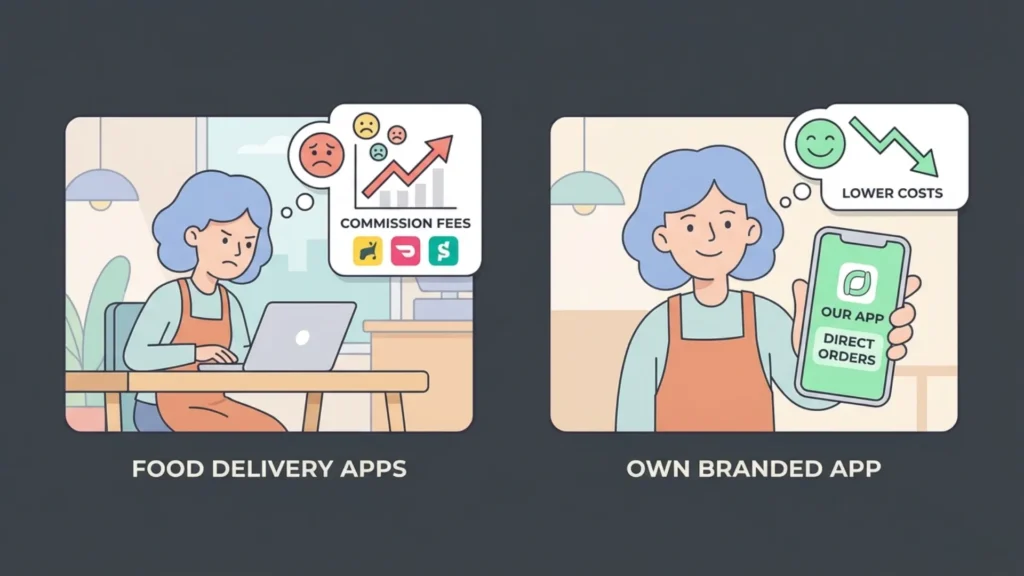
Aggregators charge anywhere from 15% to 30% per order. In an industry where net profit margins often hover between 5% and 10%, that is mathematical suicide for a growth strategy. A proprietary app moves those transactions in-house. Even after payment processing fees, the math shifts dramatically in your favor.
2. The Data Black Hole
When a customer orders your burger through an aggregator, they aren’t your customer. They are the aggregator’s customer. You don’t get their email, their ordering habits, or the ability to market to them directly.
- With an aggregator: You get a ticket order #455.
- With your own app: You know that Sarah orders the spicy rigatoni every Tuesday, hasn’t visited in three weeks, and usually responds to a “Free Appetizer” push notification. That data is your most valuable asset.
3. The Brand Experience
Generic ordering links break the immersion of your brand. A dedicated app sits on the user’s home screen—prime real estate. It allows you to control the imagery, the tone, the loyalty rewards, and the service recovery process if something goes wrong.
4. Scalability and Valuation
If you plan to sell your restaurant group or seek investment, a proprietary tech stack (a custom app with a loyal user base) increases your valuation multiplier. It proves you have a repeatable, owned channel for revenue.
Part 2: The Anatomy of a Scalable Restaurant App
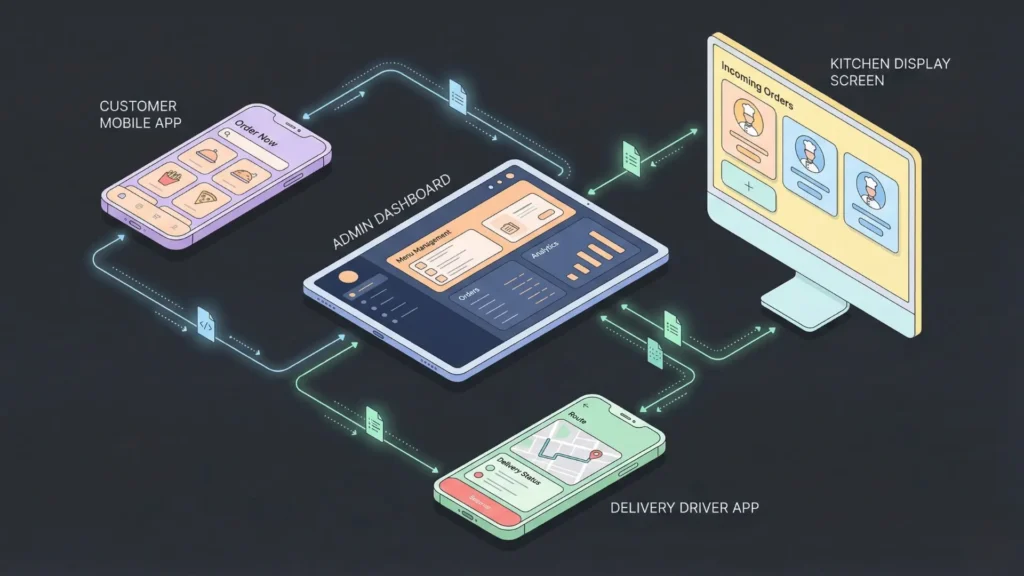
“I want an app” is a vague request. To build something scalable, you need to understand that a restaurant app isn’t just one thing—it’s an ecosystem of connected tools.
When we talk about scalable restaurant app development, we are usually talking about four distinct interfaces working in unison:
1. The Customer App (iOS/Android)
This is what your guests see.
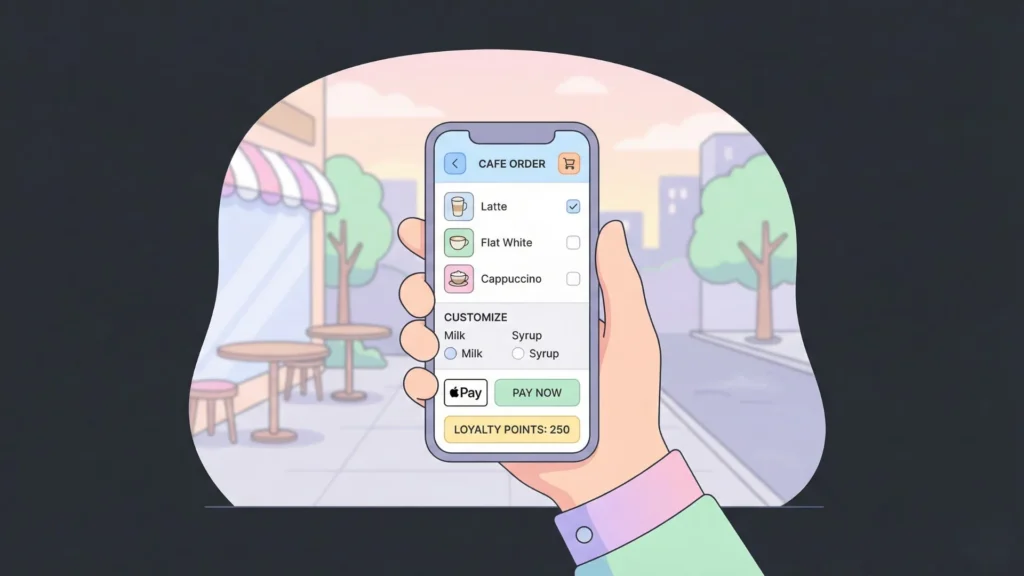
- Dynamic Menus: Menus that change based on time of day (Breakfast vs. Dinner) or location availability.
- Cart & Checkout: Seamless payment integration (Apple Pay, Google Pay, Saved Cards).
- Order Tracking: Real-time status updates (Received, In Kitchen, Ready for Pickup).
- Loyalty Engine: Point tracking, tier systems, and reward redemption.
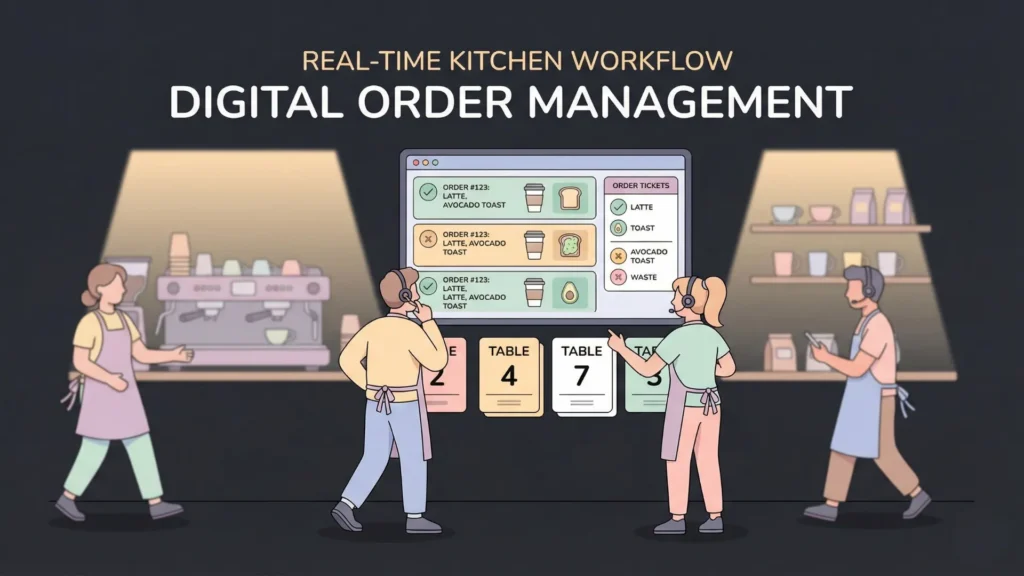
2. The Kitchen Display System (KDS) or Merchant Tablet
This is what your staff sees.
- Incoming orders need to be routed to the specific prep station (bar vs. kitchen).
- Staff need to acknowledge orders, mark them ready, or 86 (mark out of stock) items instantly.
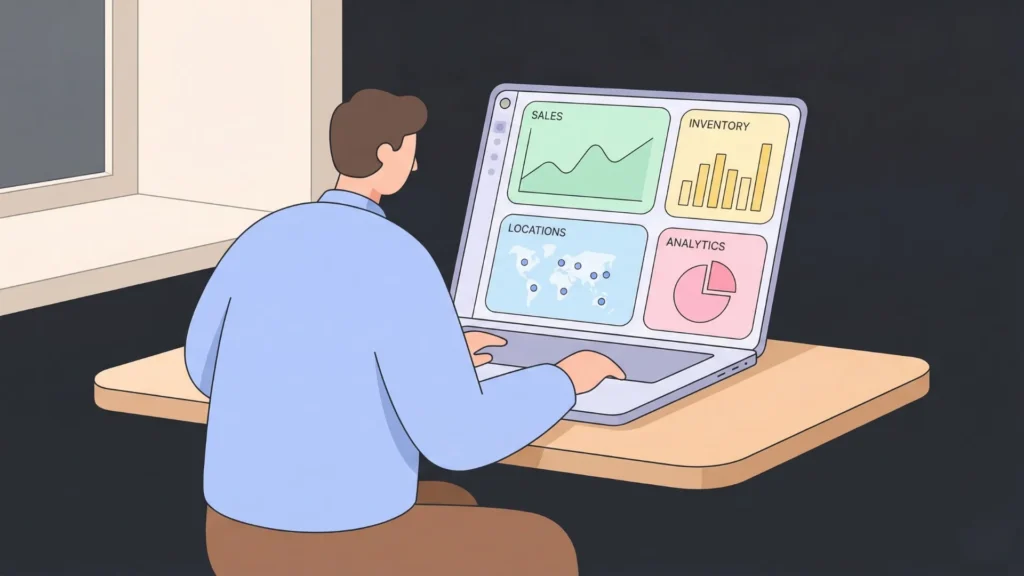
3. The Admin “Super Dashboard”
This is what you (the owner/manager) see.
- Multi-Location Management: Changing a price at the HQ level and having it update across 50 franchise locations instantly.
- Inventory Logic: Decrementing stock counts based on orders.
- Analytics: Heatmaps of ordering times, customer LTV (Lifetime Value) analysis, and sales reporting.
The Scalability Challenge: Most “DIY” app builders fail here. They can handle a single cafe receiving 20 orders a day. But what happens when you have 10 locations? What happens on “Free Coffee Day” when 5,000 users hit the app simultaneously? What happens when Location A is out of almond milk, but Location B has plenty?
Scalability means the database doesn’t crash, the inventory stays accurate across locations, and the user experience remains fast, regardless of volume.
Part 3: The Expensive Truth About Traditional Development
Historically, if you wanted this ecosystem, you had two choices: SaaS Leasing or Custom Development.
The SaaS Leasing Model (Toast, Square, etc.)
You pay a monthly fee plus per-transaction fees.
- Pros: Fast setup.
- Cons: You look like everyone else. You are locked into their roadmap. If they increase prices, you pay. You rarely get full access to your raw data.
The Custom Development Model (Agencies)
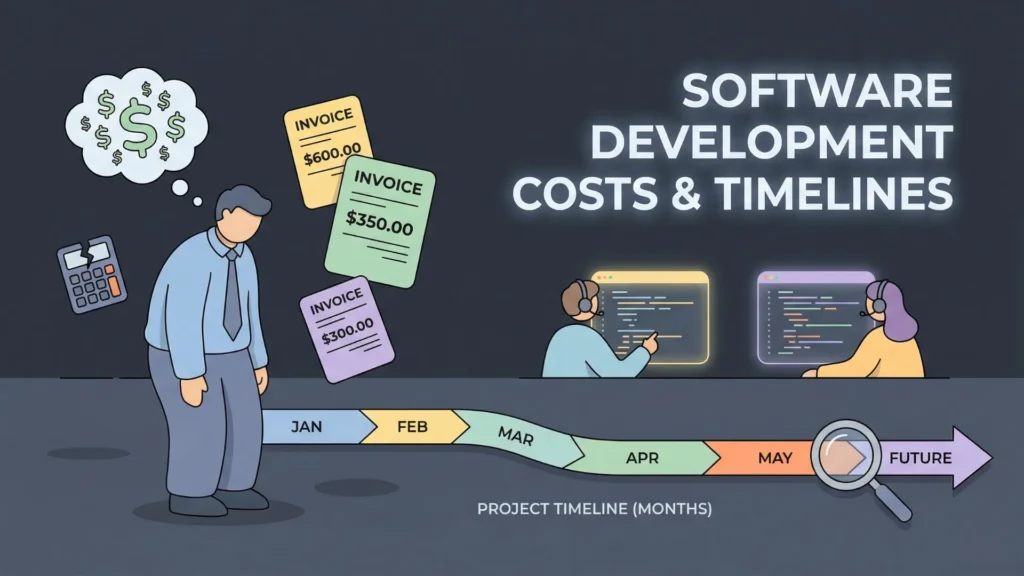
You hire a software development agency. Let’s look at the real costs of this path in the current US/European market.
To build a custom, multi-location restaurant platform, you need a team:
- UI/UX Designer: $100 – $150/hr (80+ hours)
- Frontend Developer (React Native/Flutter): $100 – $200/hr (300+ hours)
- Backend Engineer (Node.js/Python): $120 – $220/hr (200+ hours)
- QA Tester: $80/hr
- Project Manager: $100/hr
The Breakdown:
- MVP (Minimum Viable Product): $40,000 – $60,000.
- Production-Ready (with Admin & KDS): $80,000 – $150,000.
- Timeline: 4 to 8 months.
The Hidden “Maintenance Tax”: The cost doesn’t end at launch.
- iOS updates? You need a developer.
- Server costs? You manage them.
- API breaks? You pay to fix it.
- Total Annual Maintenance: Typically 20% of the initial build cost ($15k – $30k/year).
This is why most restaurants don’t have their own apps. The barrier to entry is simply too high.
Part 4: The Modern Alternative: AI-Native Development
This is where the paradigm shifts.
You may have heard of “No-Code” tools (Bubble, Adalo, Glide). These are great for prototypes. However, for a high-volume restaurant, traditional no-code has limitations:
- Vendor Lock-in: Your app lives on their server. You can’t export the code.
- Performance: They can be slow with complex database queries (like filtering a menu by allergens across 10 locations).
- Rigidity: If the tool doesn’t have a specific feature, you can’t build it.
Enter AI-Native Development and Imagine.bo.
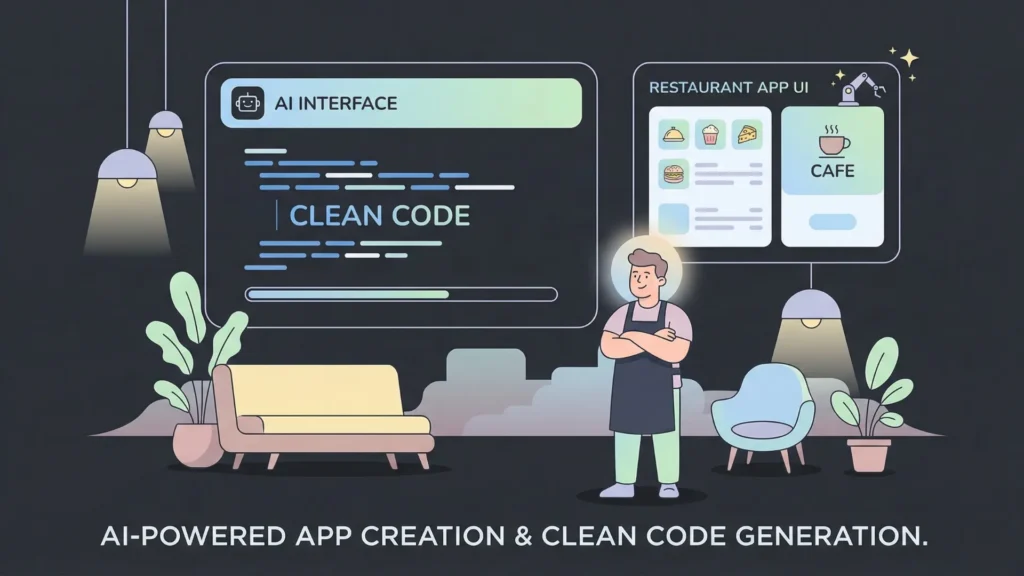
Imagine.bo is not a “drag-and-drop” builder in the traditional sense. It is an AI Software Architect.
Instead of giving you a template and asking you to push pixels, Imagine.bo uses advanced Large Language Models (LLMs) to understand your intent and then writes actual, clean, production-grade code (React, Node.js, SQL/NoSQL) to build the application.
It bridges the gap: The speed of No-Code with the power and ownership of Custom Code.
Part 5: Step-by-Step: Building Your App with Imagine.bo
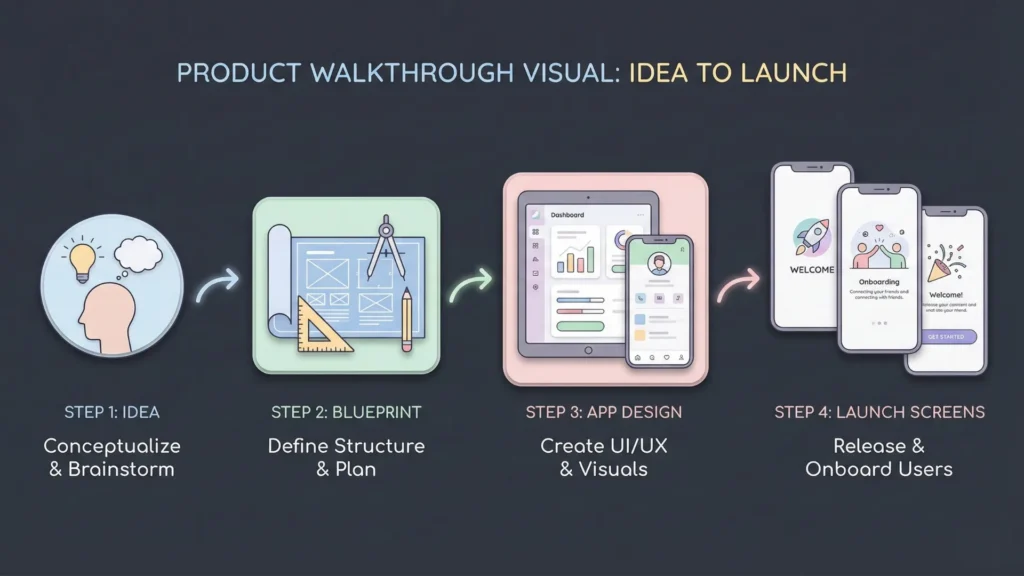
Let’s walk through a practical scenario. You are the owner of “Urban Grind,” a growing coffee chain with 5 locations and a centralized bakery. You want an app for mobile ordering, loyalty, and inventory tracking.
Here is how you build this on Imagine.bo without writing a line of code.
Step 1: The Blueprint Phase (Describing the Logic)
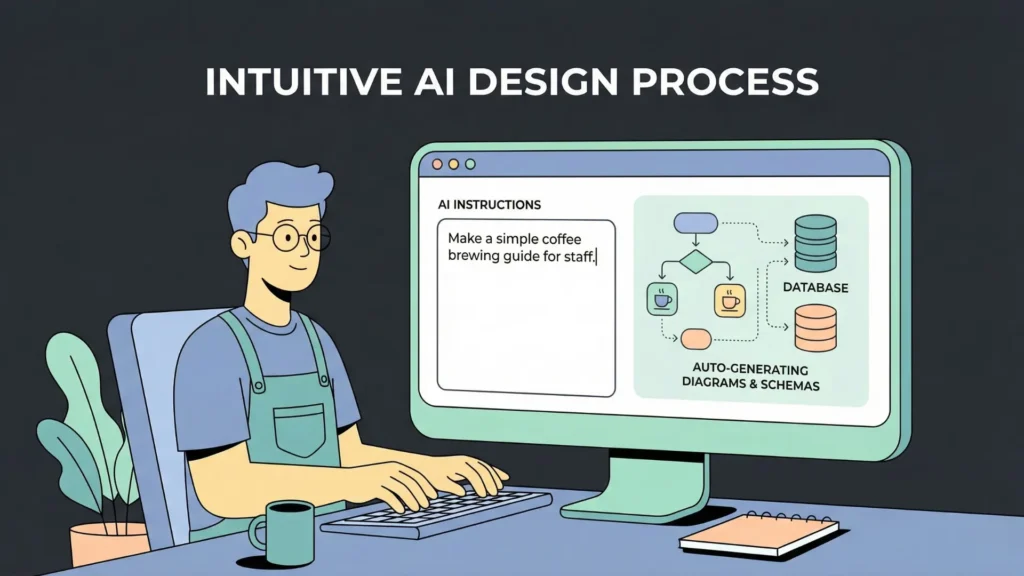
In a traditional agency, this is the “Discovery Phase” that costs $5,000 and takes two weeks. In Imagine.bo, it takes 20 minutes.
You simply describe your app in plain English.
Prompt: “I want to build a mobile app for a coffee shop chain called Urban Grind. It needs a customer interface for ordering coffee and pastries for pickup. It needs a loyalty system where every $50 spent earns a $5 credit. Crucially, I need an Admin Panel that manages inventory for 5 different locations independently. If the Central Bakery runs out of croissants, it should update the menu for all locations instantly.”
What Imagine.bo does: The AI analyzes this request. It understands “Chain” implies multi-tenancy (multiple locations). It understands “Loyalty” requires a user ledger database. It understands “Inventory” requires a relational database structure.
It generates a Feature Spec and a Database Schema for you to review. You don’t need to know SQL; you just need to confirm: “Yes, that looks right.”
Step 2: The Design Generation
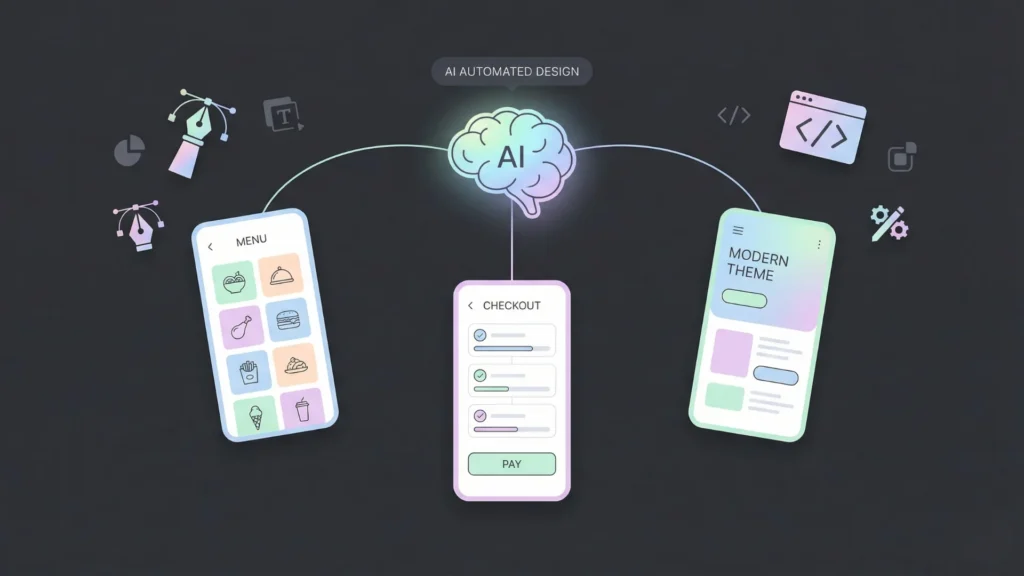
You don’t need a UI designer. You select a design system (e.g., Minimalist, Bold, Rustic).
Imagine.bo generates the frontend interface. Because it uses modern frameworks (like React), the resulting app is responsive and fluid. It creates:
- The Menu Grid (with photos).
- The Product Customization Modal (Soy milk? Extra shot? Sugar free?).
- The Checkout Flow.
Pro Tip: At this stage, you can ask for specific UX tweaks. “Make the ‘Re-order’ button massive on the home screen because coffee drinkers are creatures of habit.” The AI adjusts the code accordingly.
Step 3: The Backend Logic (The Brains)
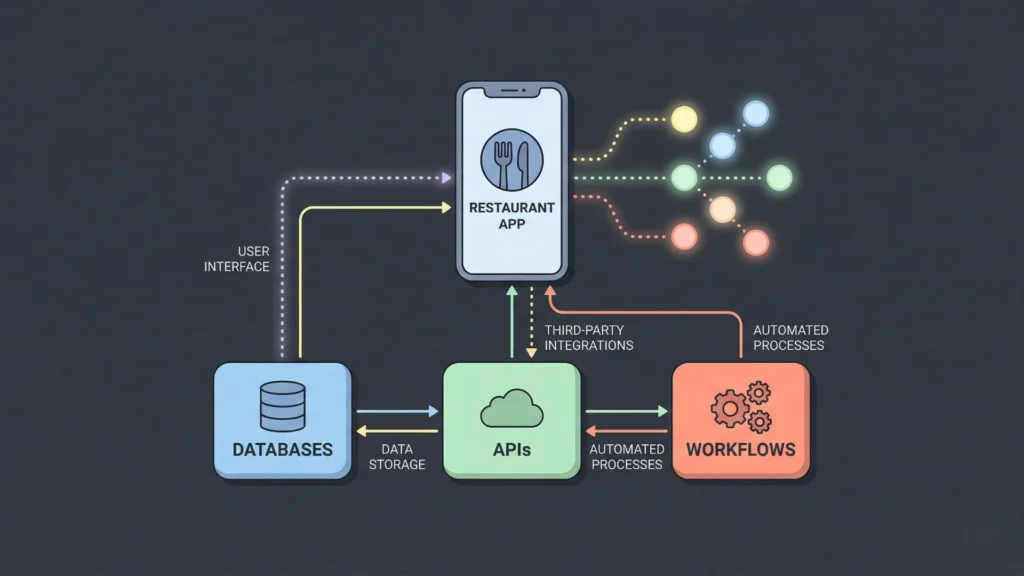
This is where Imagine.bo shines over generic no-code.
You need complex logic: Modifers. A latte isn’t just a product. It has variants (Small, Medium, Large) and modifiers (Milks, Syrups, Temps). In a template, this is a nightmare to configure. With Imagine.bo, the AI writes the backend relationships to handle complex menu hierarchies.
It also sets up the API endpoints. These are the secure bridges between your database and the user’s phone.
Endpoint: check_store_availability(store_id, item_id)

Endpoint: process_payment(user_id, cart_total)
Step 4: The Integration Layer
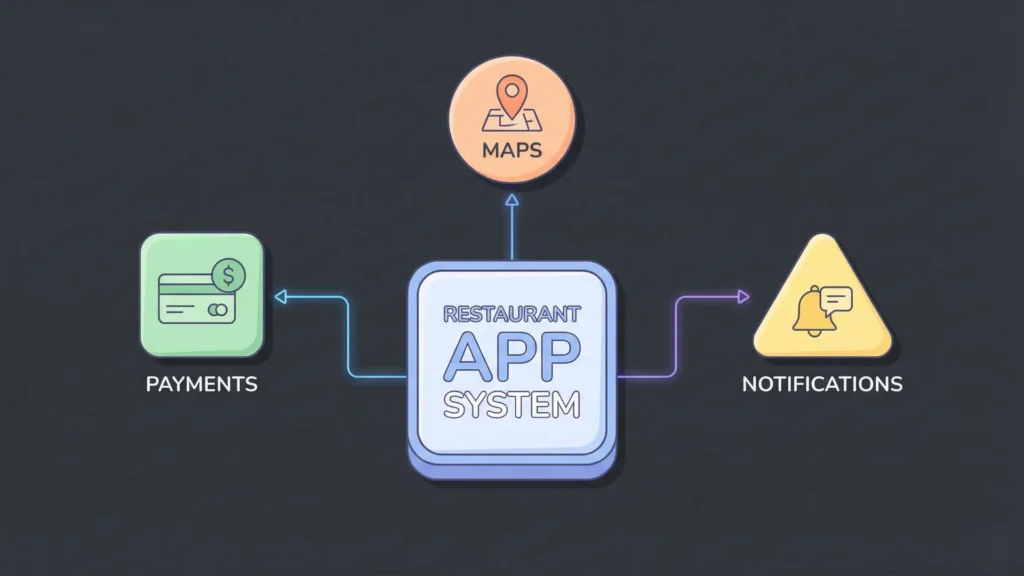
Your app cannot live in a silo. It needs to talk to the world.
- Payments: Imagine.bo integrates with Stripe or local payment gateways securely.
- Maps: Integration with Google Maps or Mapbox for “Find nearest location.”
- Notifications: Integration with Twilio or Firebase for “Your order is ready” push alerts.
Step 5: Testing and Deployment
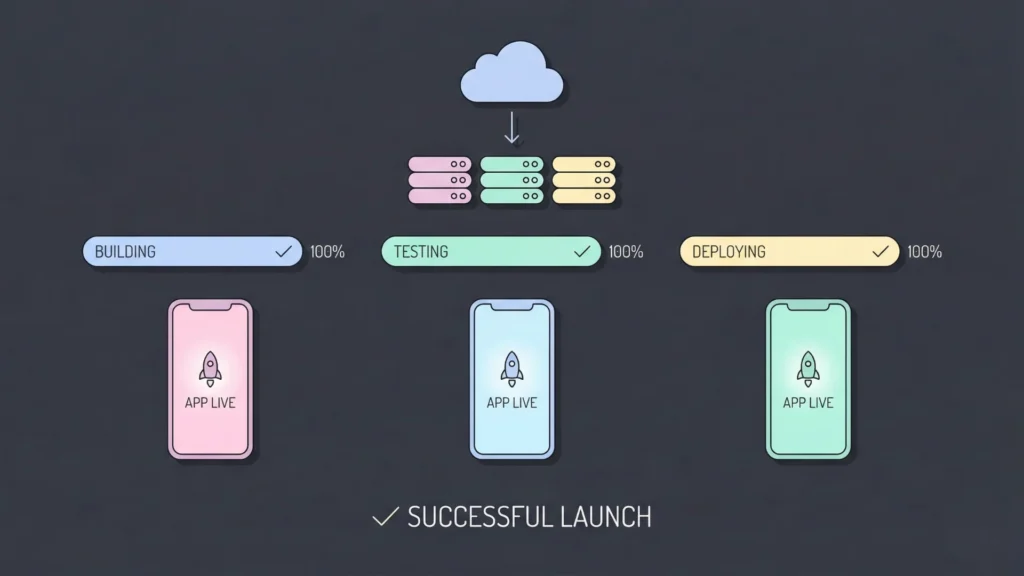
Usually, “deploying” an app involves setting up AWS instances, configuring SSL certificates, and managing load balancers. This is terrifying for non-technical founders.
Imagine.bo handles the DevOps. It packages your application and deploys it to enterprise-grade cloud infrastructure.
- Scalability: If 1,000 people open the app at 8 AM on Monday, the cloud infrastructure automatically scales up to handle the traffic.
- Security: Data is encrypted in transit and at rest.
Step 6: Iteration (The Superpower)
Three weeks after launch, you realize you need a “Refer a Friend” feature.
- Old Way: Call the agency, get a quote for $3,000, wait 4 weeks.
- Imagine.bo Way: Type into the editor: “Add a referral system where users get a unique code. If a friend uses it, both get a free pastry coupon.” The AI updates the codebase, tests it, and redeploys it.
Part 6: Scalability: From 1 Store to 100
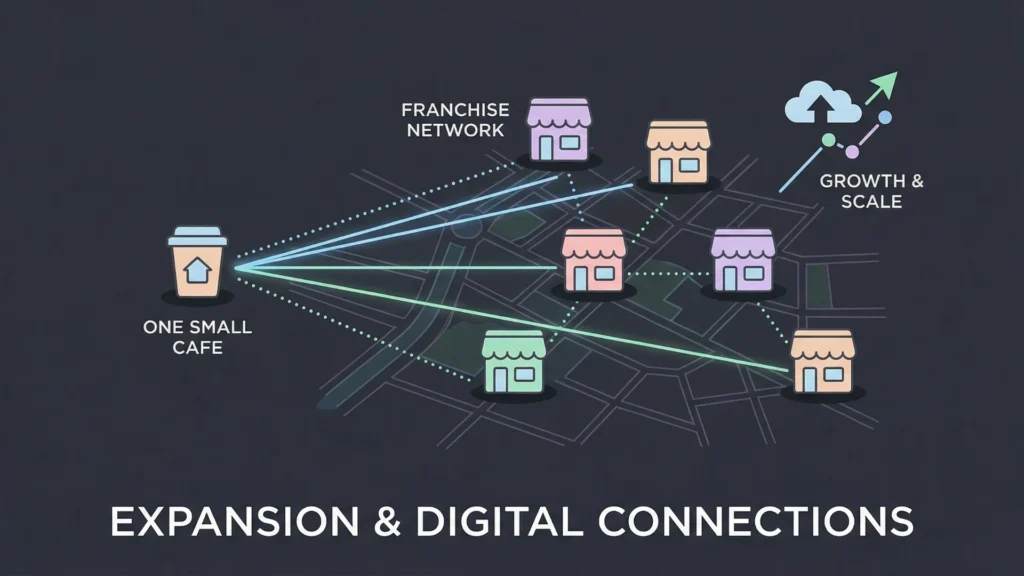
Why is Imagine.bo specifically suited for scalable restaurant apps?
1. Multi-Location Architecture
Most simple apps hard-code the menu. Imagine.bo builds dynamic databases. You can have a “Master Menu” with overrides for specific locations (e.g., only the downtown location sells Beer & Wine). This hierarchy is essential for franchises.
2. Role-Based Access Control (RBAC)
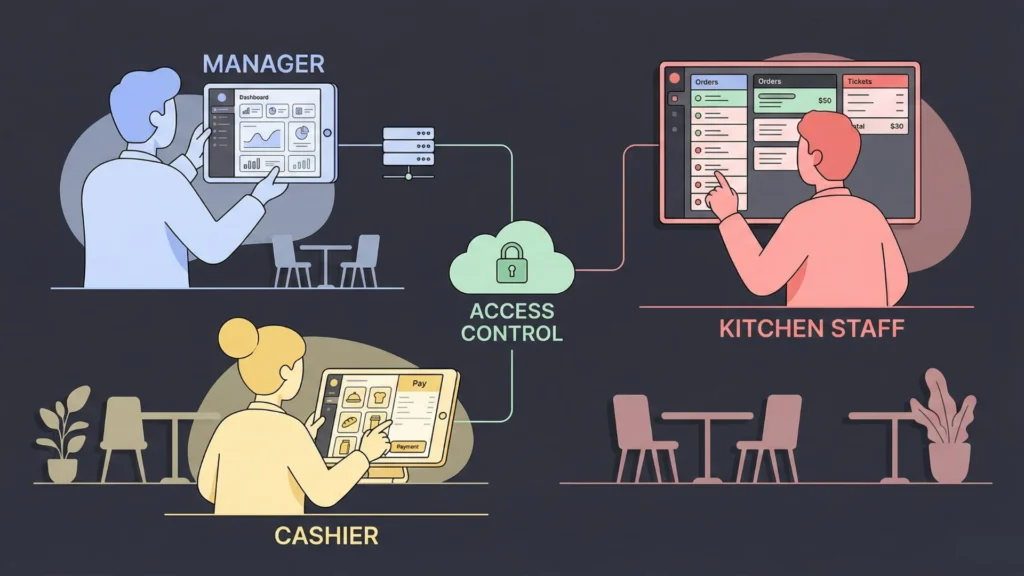
As you scale, you can’t have the barista accessing the financial reports. Imagine.bo allows you to define Granular Permissions:
- Super Admin: Everything.
- Store Manager: Only inventory and staff scheduling for their location.
- Kitchen Staff: Only the active order queue.
3. Data Ownership and Exportability
This is the “Senior Strategist” advice coming in: Never build your house on rented land. Unlike proprietary drag-and-drop builders where your app is stuck in their “black box,” Imagine.bo focuses on generating standard, clean code. This means if you eventually grow to the size of Starbucks and want to hire an in-house team of 50 engineers, you have a code base they can actually work with. You aren’t starting from scratch.
Part 7: Practical Use Cases
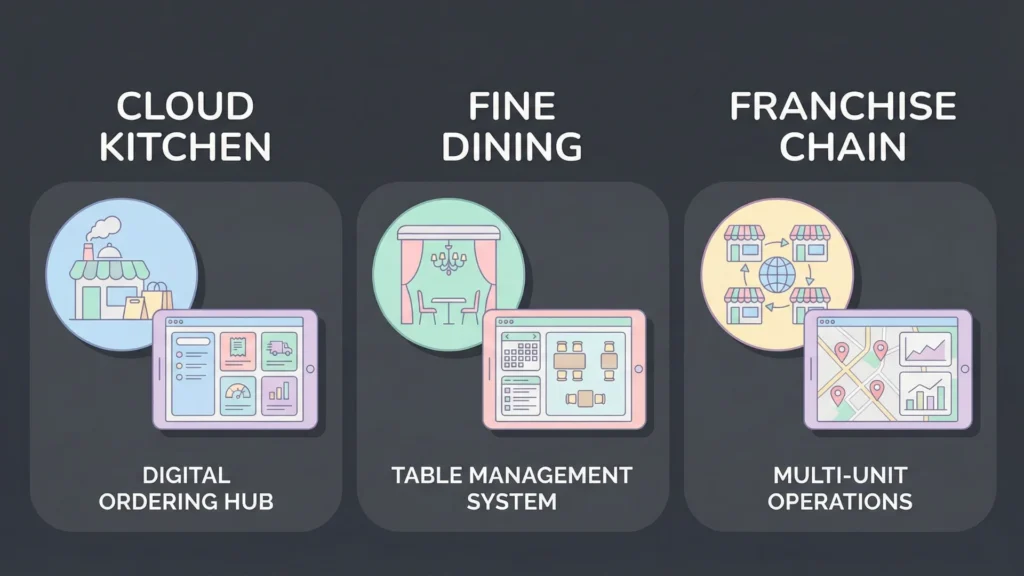
Who is this actually for?
The “Cloud Kitchen” Startup:
- Challenge: No physical storefront. Entire business model relies on digital ordering and efficient delivery routing.
- Solution: Builds a highly customized menu with rich imagery. Integrates a custom “Driver Dispatch” module in the Admin panel to assign orders to their own scooter fleet instead of paying Uber 30%. (See more on AI website builders for restaurants)
The High-End Reservation Heavy Restaurant:
- Challenge: Doesn’t do much takeout, but needs to manage table bookings, deposits for tasting menus, and dietary restriction tracking.
- Solution: Builds a reservation flow that takes a credit card hold (via Stripe) to reduce no-shows. Customer profiles track allergies (“Guest usually avoids gluten”).
The Franchisee Group:
- Challenge: Owns 10 locations of a national burger brand but wants their own loyalty layer on top to drive local engagement.
- Solution: Builds a wrapper app that focuses heavily on gamified loyalty (“Burger Passport”) and localized push notifications, syncing sales data back to their accounting software.
Part 8: Addressing the Risks (Security, Compliance, Reliability)
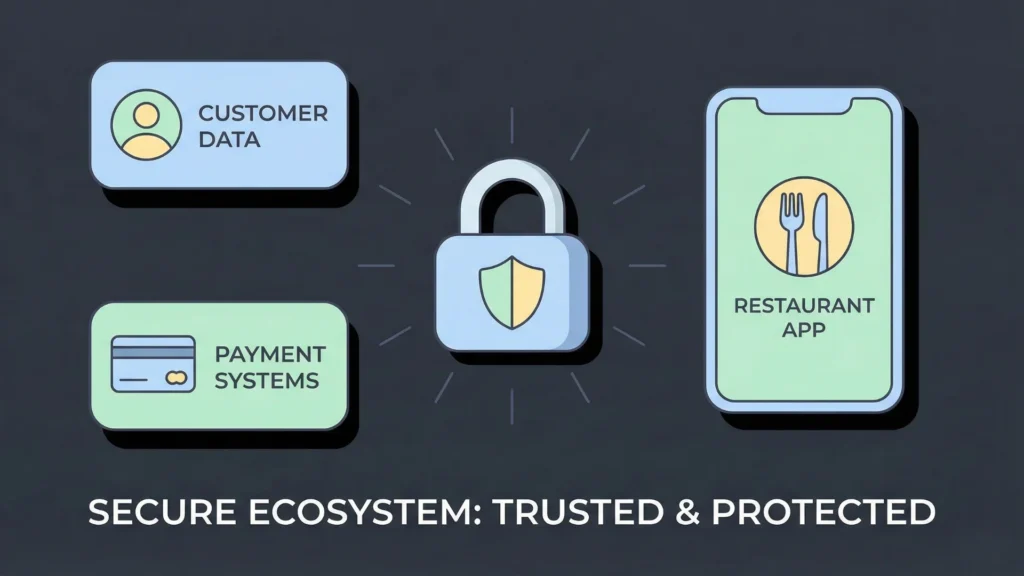
As a business owner, you should be worried about security.
Payment Security (PCI Compliance): Imagine.bo apps don’t store credit card numbers. They use tokenization (via providers like Stripe). This keeps the liability off your shoulders. The app only stores a “token” that represents the card. Read more about Stripe integration challenges here.
Data Privacy (GDPR/CCPA): Because you own the database schema, you have full control over user data. You can implement “Delete My Account” features easily to remain compliant with privacy laws—something that is often difficult in rigid SaaS templates.
Reliability (Uptime): Because the underlying infrastructure is built on standard cloud providers (like AWS/Google Cloud), reliability is industry-standard. You aren’t relying on a small startup’s server rack in a basement.
Part 9: The Time-to-Market Comparison
Let’s look at the timeline for launching “Urban Grind.”
Traditional Agency Route:
- Month 1: Discovery & Contracts.
- Month 2: Wireframing & Design.
- Month 3-5: Development (Frontend/Backend).
- Month 6: QA & Bug Fixing.
- Month 7: App Store Submission.
- Total: ~7 Months.
The Imagine.bo Route:
- Day 1: Idea generation & Blueprinting.
- Week 1: Iterating on the generated app, refining the menu flow, setting up payment keys.
- Week 2: Internal testing with staff (Beta).
- Week 3: Launch.
- Total: ~3 Weeks.
In the restaurant business, 6 months is an eternity. Trends change. Competitors open. Speed is a competitive advantage.
Conclusion – The Future is Hybrid
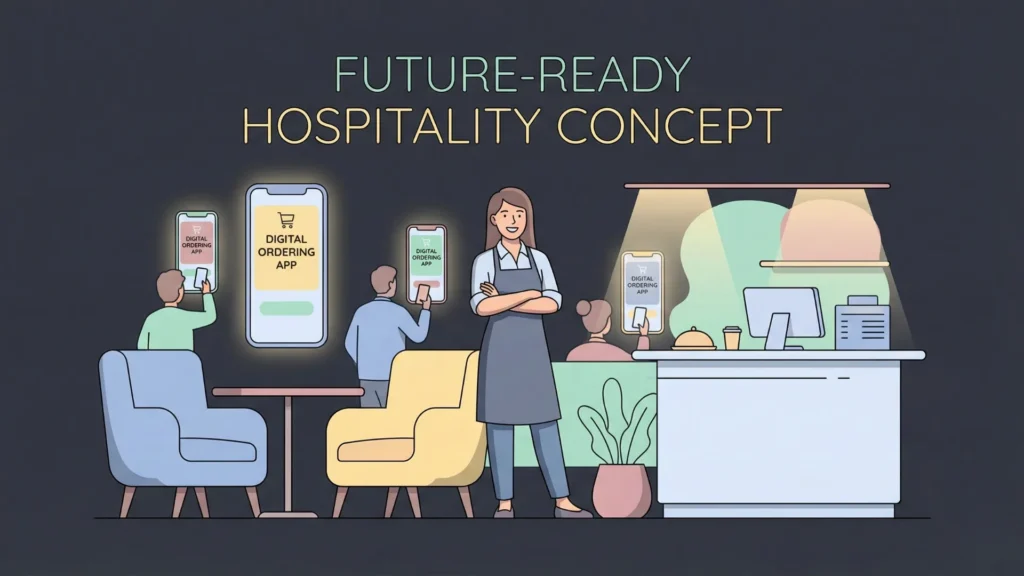
We are seeing a democratization of technology. Five years ago, only the giants could afford the level of sophistication required to run a multi-location digital operation. Today, AI levels the playing field.
Building a scalable restaurant app without developers doesn’t mean building a “toy” app. It means using smarter tools to bypass the repetitive, expensive parts of coding so you can focus on the logic, the brand, and the customer experience.
Imagine.bo represents this shift. It offers the flexibility of custom code with the accessibility of no-code.
For the cafe owner, the restaurateur, or the operations manager, the question is no longer “Can I afford an app?” The question is “Can I afford to keep renting my customers from third parties when the technology to own them is finally within reach?”
The tools are here. The kitchen is open. It’s time to build.
Ready to build?
Start by mapping out your menu hierarchy and your ideal customer flow. Then, take that plain English description to Imagine.bo and see your operations transform.