
For decades, software development was a gated community. If you had a brilliant idea for a product or an internal tool, you generally had two options: learn to code, which takes years, or hire a team of developers, which costs a fortune. This barrier to entry meant that thousands of viable business ideas died on the whiteboard simply because the execution gap was too wide. In this evolving landscape, we explore the Future of No-Code AI Development and the Top Trends to Watch.
We are currently witnessing a structural shift in how software is built. This is not just about faster coding tools. It is about the democratization of technology itself. Democratizing AI shifts the power of innovation from the few who write code to the many who have the vision to build. Understanding the Future of No-Code AI Development and the Top Trends to Watch is crucial for navigating this shift.
Launch Your App Today
Ready to launch? Skip the tech stress. Describe, Build, Launch in three simple steps.
BuildNo-code AI is the convergence of two powerful trends. First, the abstraction of complex programming into visual interfaces. Second, the integration of artificial intelligence that can understand logic and generate functionality. Together, these technologies are dismantling the technical barriers that once defined who could be a “creator.” The Future of No-Code AI Development and the Top Trends to Watch will play a significant role in this transformation.
This guide explores the landscape of no-code development and highlights the Future of No-Code AI Development and the Top Trends to Watch. We will look at why it matters, where the technology actually stands, the real challenges you will face, and how platforms are evolving to turn non-technical founders into product builders.
Understanding the Rise of No-Code AI
Stay tuned as we delve deeper into the Future of No-Code AI Development and the Top Trends to Watch, providing insights that can reshape your approach to technology and innovation.
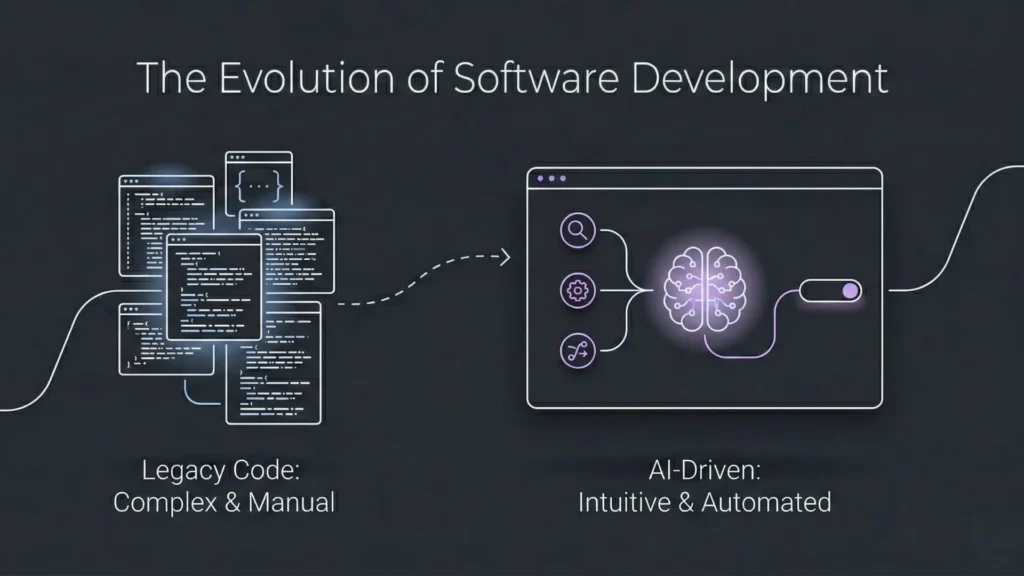
To understand where we are, we have to look at where we came from. Traditional AI development was historically one of the most resource-intensive sectors of technology. It required data scientists to clean datasets, machine learning engineers to build models, and DevOps teams to manage the heavy computational infrastructure required to run them.
That complexity made AI inaccessible to 99% of businesses. It was the domain of tech giants and research labs.
What Changed?
The change began when cloud providers started wrapping complex processes into accessible APIs. Suddenly, you didn’t need to build a natural language processing model from scratch. You could just call an API.
No-code development platforms took this a step further. They built visual interfaces on top of these complex systems. They replaced command-line interfaces with drag-and-drop logic. Now, we are seeing the integration of generative AI, where the “code” is simply natural language. You tell the system what you want, and the system handles the syntax.
The Rise of Citizen Developers
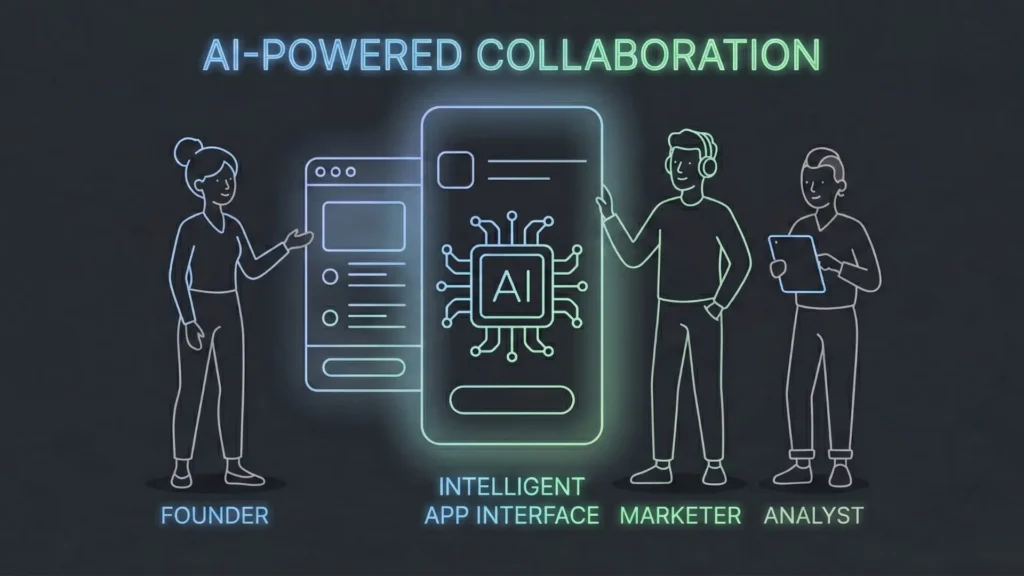
This shift gave birth to the citizen developer. This describes a business analyst, a marketing manager, or a startup founder who builds applications to solve business problems without formal coding training.
These are not hobbyists. They are building meaningful business tools. A marketing director might build an AI-powered content analyzer. A logistics manager might build a route-optimization tool. They are bypassing the IT backlog to build solutions immediately. This is not hype. It is a fundamental decoupling of “building software” from “writing code.”
How No-Code AI Is Changing Who Can Build Technology
The primary impact of no-code AI is the redistribution of capability.
In the past, Small and Medium Enterprises (SMEs) were consumers of technology. They bought off-the-shelf software and adjusted their workflows to fit the tools. If the software didn’t do exactly what they needed, they were stuck. Custom software was a luxury reserved for large enterprises with deep pockets.
No-code platforms level this playing field. A small design agency can now build a client portal with custom AI image sorting features that rivals what a massive agency uses.
Speed, Cost, and Experimentation
The traditional waterfall development cycle is slow. You spec a product, hire devs, wait six months, and pray the market hasn’t changed.
No-code AI allows for rapid iteration. You can build a prototype in a week. If it fails, you haven’t burned your runway. This encourages a culture of experimentation. When the cost of failure drops, the volume of innovation rises.
Collaboration Between Business and Tech
There is a misconception that no-code replaces developers. In reality, it frees them. When business teams can build their own internal dashboards or simple customer apps, engineering teams are released from ticket-maintenance hell. They can focus on core infrastructure and complex problems while the business side handles the operational tools.
Real Benefits of No-Code AI for Modern Businesses
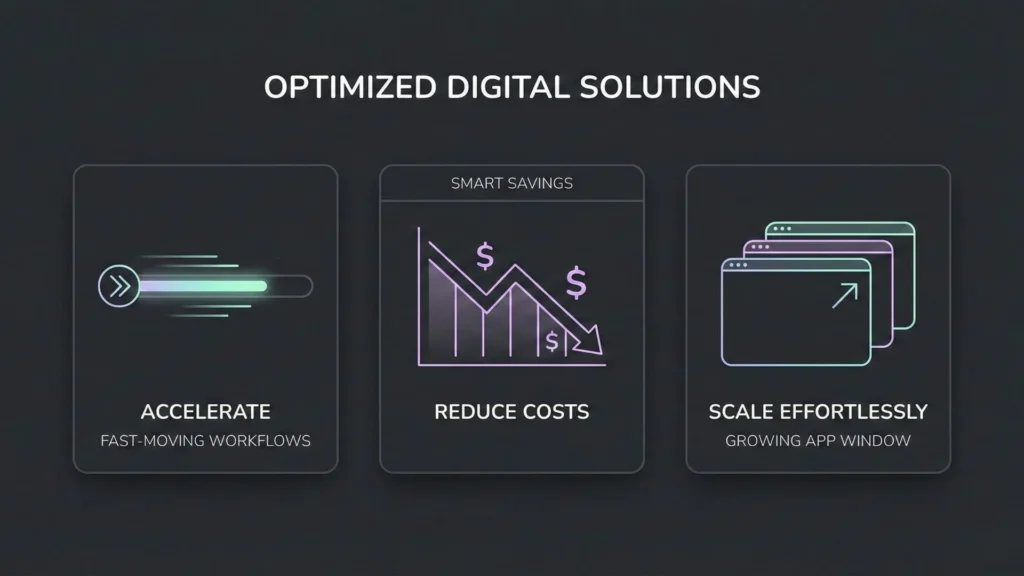
The value proposition of using an AI app builder goes beyond just “it is easier.” It impacts the bottom line and strategic agility.
Time to Market
Speed is the single greatest advantage for a startup founder. Being first to market often matters more than being perfect. No-code allows founders to launch a functional product while competitors are still interviewing CTOs.
Cost Efficiency
Custom development can cost anywhere from $50,000 to $500,000 for a robust MVP (Minimum Viable Product). No-code development brings this down significantly, often to a low monthly subscription and the cost of the founder’s time. This changes the risk profile of starting a company.
MVPs vs. Production-Ready Systems
Early no-code tools were strictly for prototypes. They were flimsy. Today, modern platforms can handle production loads. You can scale from user one to user ten thousand without necessarily rewriting the codebase. This allows businesses to generate revenue using the no-code platform, funding future development or scaling within the same ecosystem.
The Real Challenges of No-Code AI Platforms
It is important to be realistic. No-code is not a magic wand that solves every technical hurdle. There are genuine constraints that founders and product managers must navigate.
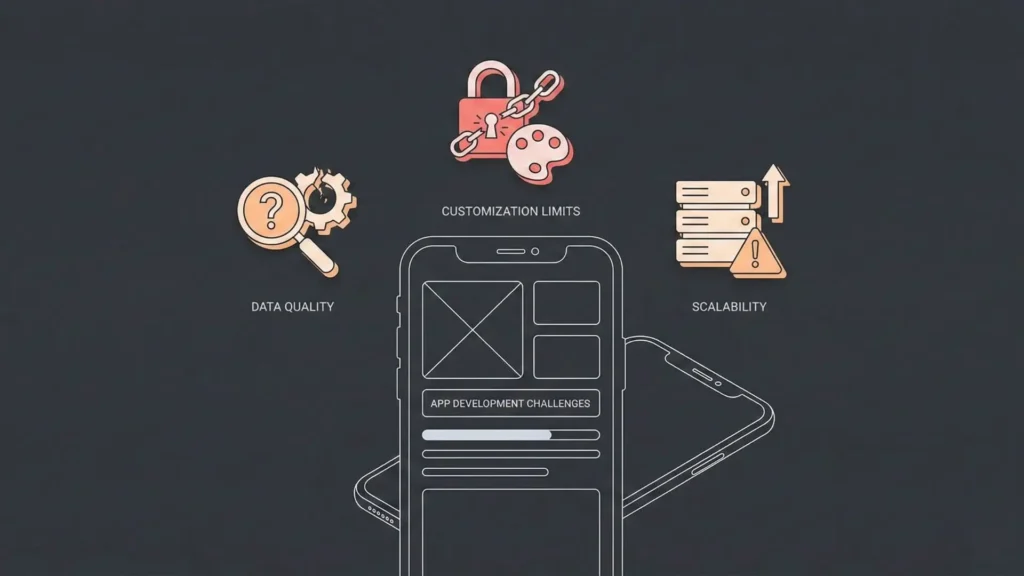
Data Quality
AI is only as good as the data it is fed. A no-code tool can simplify the model building, but it cannot fix “dirty” data. If a business feeds unorganized, biased, or incomplete data into a user-friendly AI tool, the output will still be flawed. The garbage-in, garbage-out rule still applies.
Customization Limits
Visual builders operate within a set of pre-defined constraints. If you need a highly specific, never-been-done-before interaction that sits outside the platform’s logic, you might hit a wall. This is known as the “cliff.” You can build 90% of the app in a week, but the last 10% might be impossible without ejecting to code.
Scalability Concerns
While many platforms scale well, others charge exorbitant fees once you hit certain data or user thresholds. Scalability concerns are real; you are often relying on the platform’s infrastructure. If they have downtime, you have downtime.
Explainability and Trust
With “black box” AI components, it can be difficult to understand why the system made a certain decision. In regulated industries like finance or healthcare, this lack of explainability can be a compliance risk.
Key Trends Shaping the Future of No-Code AI
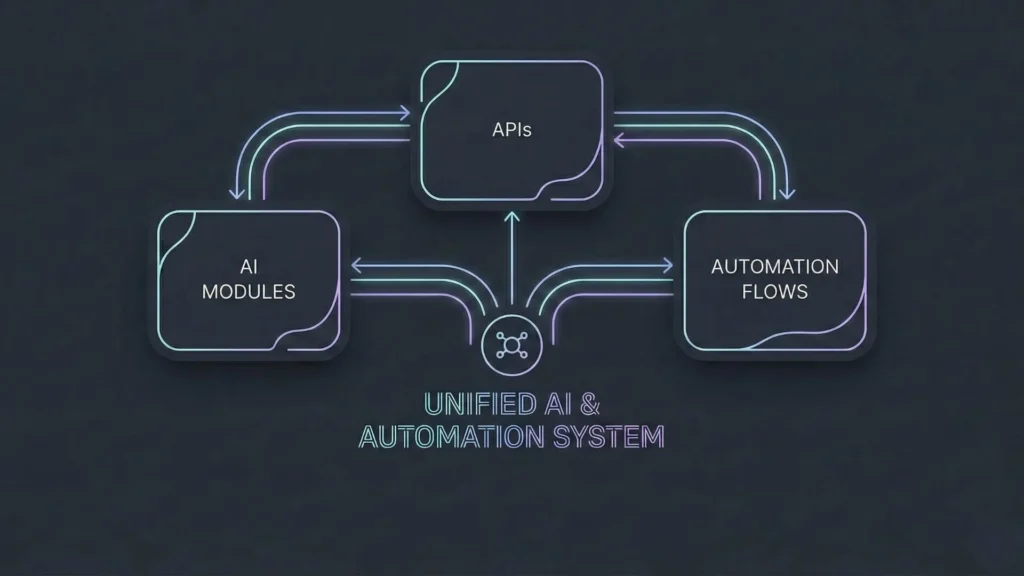
The industry is moving fast. Here is what is driving the next generation of tools.
Pre-trained Models and APIs
We are moving away from training models from scratch. The trend is “assemblage.” Platforms connect to powerful pre-trained models (like GPT-4, Claude, or stable diffusion models) via API. The no-code platform acts as the orchestration layer, directing data between these powerful brains and the user interface.
AutoML and Intelligent Automation
AutoML (Automated Machine Learning) is becoming standard. This technology automatically selects the best algorithms and tunes parameters for a specific dataset. The user doesn’t need to know the difference between a random forest and a neural network. The system tests both and picks the winner.
Integration with IoT and Cloud
No-code is leaving the browser. We are seeing tools that allow users to build logic flows for IoT devices and complex cloud architectures. This expands the scope from just “web apps” to physical hardware automation and enterprise-grade data piping.
Explainable AI and Responsible Design
As AI regulation tightens, platforms are prioritizing transparency. We are seeing features that visualize how data flows through the logic, helping creators understand the decision-making path of their applications.
From Idea to Product Without Code – What Modern Platforms Are Solving
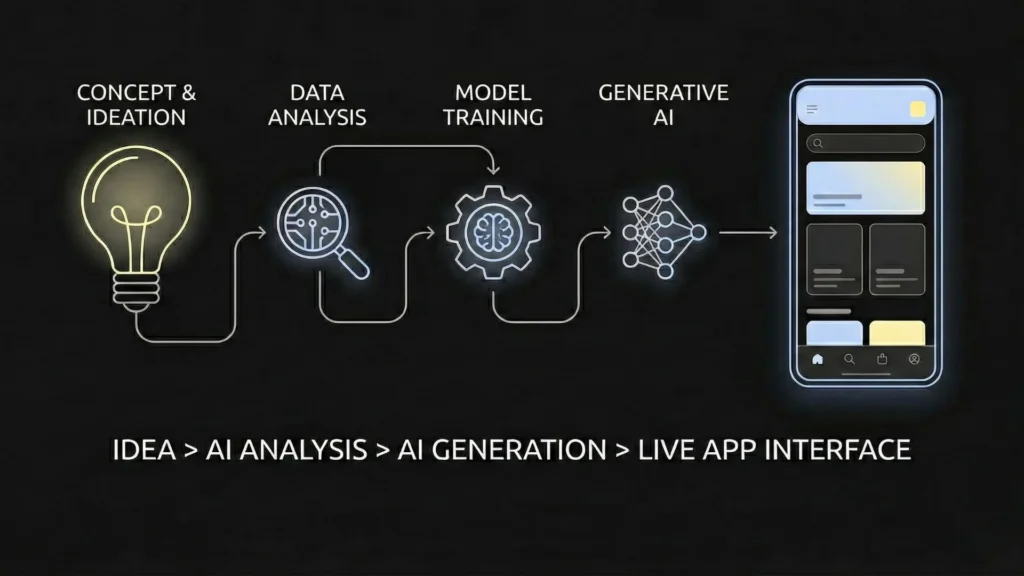
The evolution of building for the web has happened in three distinct stages.
- The Website Builders: Tools like WordPress and Wix solved the problem of static content. They made it easy to put text and images online.
- The Logic Builders: Tools like Bubble or Zapier introduced “if this, then that” logic. You could build functional databases and workflows, but the learning curve remained steep. You still had to think like a programmer, even if you weren’t typing code.
- The AI Product Builders: This is the current era. These platforms use Generative AI to bridge the gap between intent and execution. You don’t drag wires to connect logic; you describe the outcome, and the AI constructs the architecture.
Where Imagine.bo Fits: The AI Co-Founder
Imagine.bo exemplifies the shift from fragmented tools to end-to-end product generation. While earlier platforms isolated frontend design from backend logic, Imagine.bo unifies the stack. It functions less like a drafting tool and more like a technical co-founder, bridging the gap between a founder’s vision and a deployed application.
Beyond Templates to AI Reasoning
The platform distinguishes itself by moving past rigid templates. It uses AI reasoning to architect solutions determining the necessary APIs, database schemas, and user flows based on plain-English prompts.
Crucially, it prioritizes SDE-level engineering standards. Instead of the “spaghetti logic” often associated with visual builders, Imagine.bo generates clean, production-grade architecture. It also automates the entire DevOps pipeline, allowing users to go from a text description to a live, secure URL without ever touching a server configuration.
Core Use Cases
- SaaS MVPs: Launching fully functional products to validate markets before hiring a team.
- Internal Tools: Building custom CRMs, inventory systems, or dashboards tailored to specific company workflows.
- Data-Driven Platforms: Creating dynamic directories and content-heavy applications that require robust backend management.
Ethics, Data Privacy, and Responsible AI in No-Code Tools
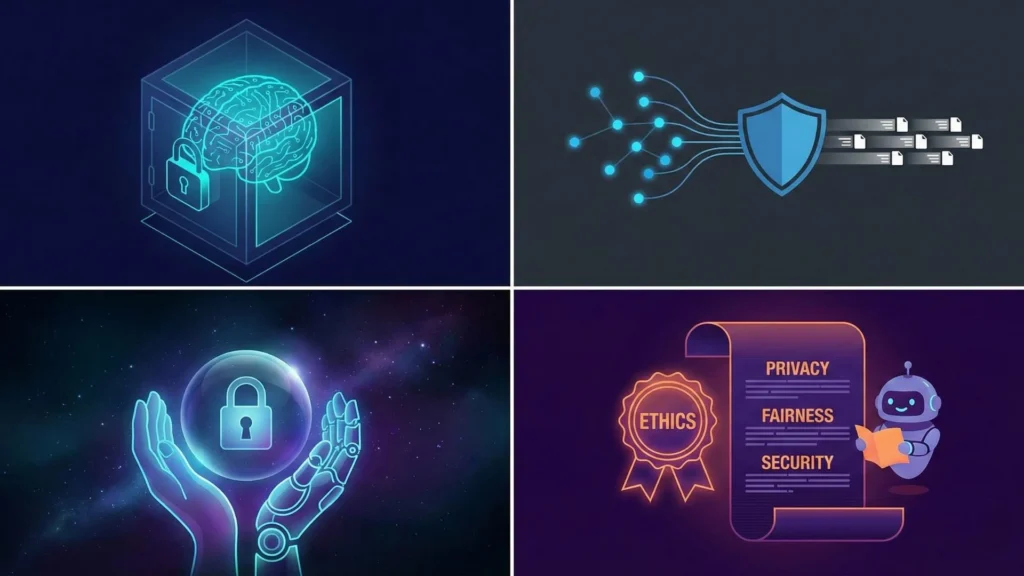
With the power to build comes the responsibility to build correctly. Democratizing AI means more people are deploying algorithms, which increases the surface area for ethical risks.
Bias Risks
If a “citizen developer” builds a hiring tool using historical data that favors one demographic, the no-code tool will faithfully replicate that bias. Platforms must implement guardrails and warnings to educate users about dataset bias.
Data Handling
When you build apps without code, you are entrusting your user’s data to a third-party platform. It is vital to understand where that data lives, who owns it, and how it is secured. GDPR compliance becomes a shared responsibility between the platform and the creator.
User Responsibility
The “no-code” label does not absolve the creator of liability. If you build a tool that causes harm or leaks data, the fact that you didn’t write the code doesn’t matter. Users must educate themselves on basic data privacy principles.
The Future Workforce and No-Code AI Skills
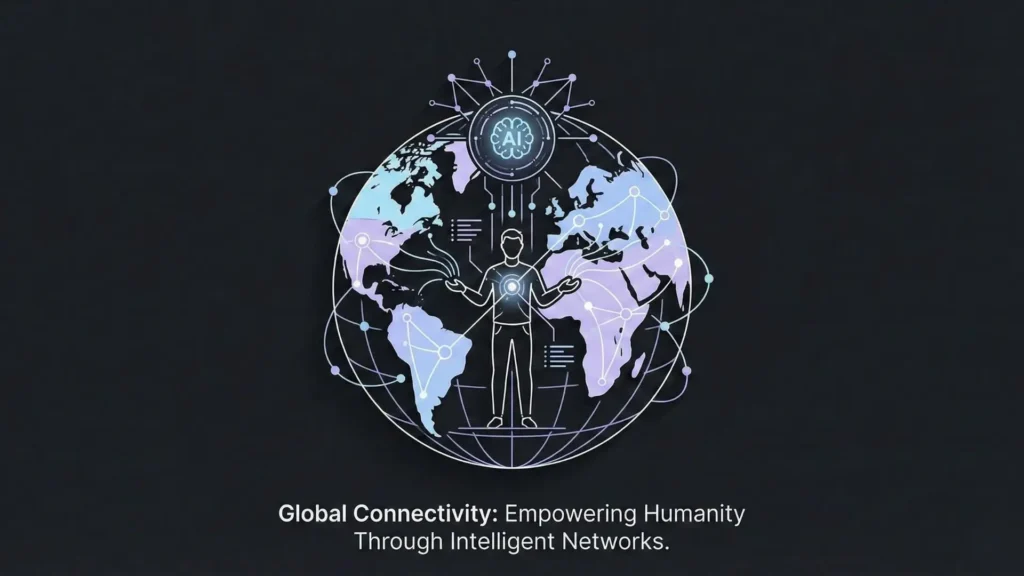
The fear that AI will replace jobs is valid, but the more nuanced reality is that it changes the nature of jobs.
The skill of “writing syntax” is becoming less valuable. The skill of “systematic problem solving” is becoming priceless. The workforce of the future will be defined by Data Literacy and Prompt Engineering.
We are seeing the rise of hybrid roles. Marketing managers who are also product builders. HR directors who are also automation architects. Founders are regaining control over their product roadmaps because they no longer have to filter every decision through a technical translator.
What the Next 5 Years of No-Code AI Will Look Like
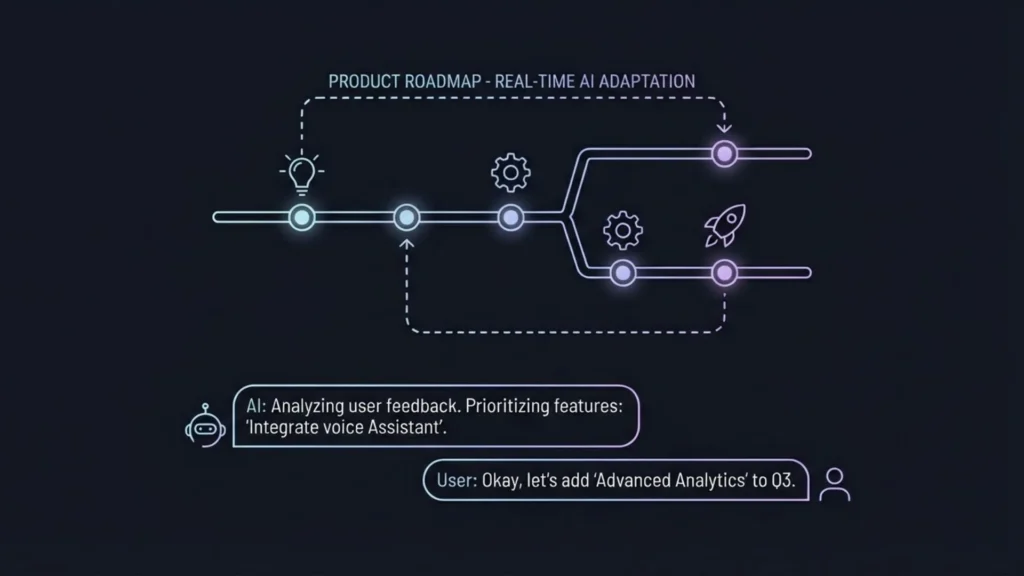
The trajectory is clear: friction is disappearing.
Smarter AI Builders: The AI will get better at anticipating needs. It will suggest features you didn’t think of based on industry best practices.
Fewer Tools, More Unified Platforms: Currently, people stitch together five different no-code tools to run a business. We will see a consolidation into unified platforms where the database, frontend, AI logic, and payment processing live in one cohesive ecosystem.
Natural Language Product Creation: The interface will become increasingly conversational. You will iterate on your product by talking to it. “Make the button blue” or “Change the pricing model to a subscription” will be instant commands.
Less Friction from Idea to Revenue: The gap between having a thought and charging a customer for the solution will shrink to hours, not months.
Conclusion
Democratizing AI is not about replacing developers; it is about empowering creators. We are entering an era where technical literacy is no longer the primary gatekeeper of innovation.
As platforms like Imagine.bo remove the friction between idea and execution, the bottleneck shifts from coding to strategy. The most successful founders of the next decade won’t necessarily be the best engineers they will be the best problem solvers. The tools are ready. The only remaining variable is your initiative to build.
Launch Your App Today
Ready to launch? Skip the tech stress. Describe, Build, Launch in three simple steps.
Build