

Serverless SaaS architecture transforms development by merging cloud scalability with AI-driven automation, effectively eliminating the need for manual server management. By leveraging platforms like Imagine.bo, founders can build and deploy secure, cost-effective applications rapidly using no-code tools. This approach ensures you only pay for resources used while automatically handling traffic spikes. Ultimately, integrating AI into serverless environments allows teams to focus on innovation and faster MVPs rather than complex infrastructure maintenance.
Fundamentals of Serverless SaaS Architecture
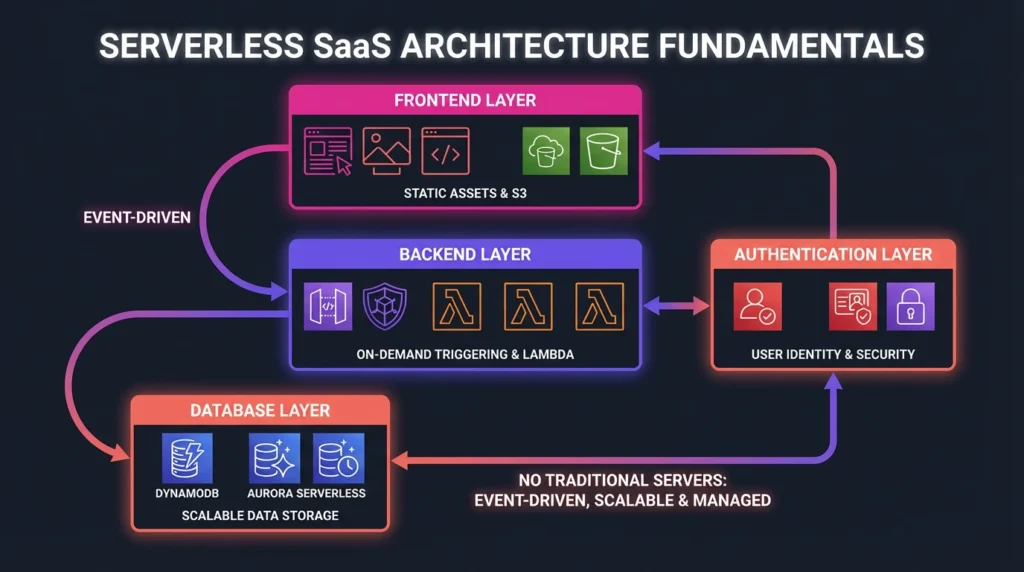
Serverless SaaS architecture leverages cloud services to build scalable and cost-efficient applications without managing underlying servers. It supports rapid development cycles, facilitating quick delivery of minimum viable products (MVPs) and seamless scaling as user demand grows.
Launch Your App Today
Ready to launch? Skip the tech stress. Describe, Build, Launch in three simple steps.
BuildCore Concepts and Definitions
Serverless architecture means developers write code that runs on managed cloud services without provisioning servers. The cloud provider automatically handles infrastructure scaling, availability, and maintenance.
In Serverless SaaS, key components include:
- Frontend: Usually hosted as static assets in services like Amazon S3, serving web or mobile clients.
- Backend: Functions triggered on demand—via API Gateway or event streams—replace traditional servers.
- Databases: Serverless databases such as Amazon Aurora Serverless or DynamoDB provide on-demand scalability.
- Authentication: Services like AWS Cognito manage user identity and access securely.
This model enables multi-tenant SaaS by isolating tenant data while sharing backend logic to optimize resource use.
Benefits Over Traditional SaaS Architectures
Serverless SaaS removes the burden of server management, allowing teams to focus on features rather than infrastructure. This directly reduces operational costs by paying only for actual compute usage.
Scalability is automatic with serverless platforms. Applications can handle sudden traffic spikes without pre-provisioned capacity, which benefits SaaS businesses aiming to grow quickly.
Serverless architecture accelerates MVP development. Teams can deploy new versions faster with managed integrations and event-driven workflows, decreasing time-to-market. For startups, understanding rapid MVP validation is crucial to leveraging this speed effectively.
The Role of AI Tools in Modern SaaS
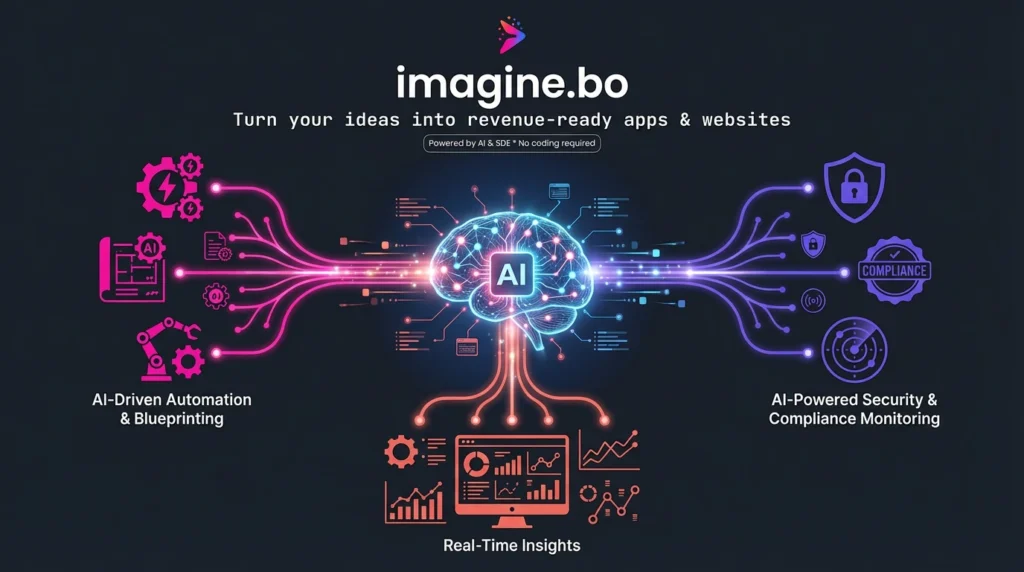
AI tools in modern SaaS enhance automation, optimize user experience, and strengthen security. They enable faster development cycles and deeper operational insights, transforming how SaaS products deliver value.
AI-Driven Automation and Blueprinting
AI-driven automation streamlines routine processes in SaaS applications, reducing manual intervention and errors. It can automatically generate blueprints that map out application workflows and infrastructure, accelerating development and deployment.
These blueprints serve as detailed guides that define system architecture, reducing time spent on design. Automation extends to provisioning resources, managing updates, and automating workflows without writing code.
AI tools also integrate analytics dashboards to monitor performance in real time. This data helps tweak automation strategies, ensuring that SaaS platforms maintain efficiency and meet evolving user demands.
Security and Compliance With AI Capabilities
Security in SaaS platforms benefits from AI-powered monitoring tools that detect anomalies and potential threats in real time. These tools support compliance by automating security checks aligned with standards like GDPR and SOC2.
For developers using modern tools, adhering to GDPR compliance guidelines is essential. AI systems scan data access patterns and assess risk levels, ensuring that sensitive information is protected and only accessed by authorized users. Automated audits help maintain regulatory compliance without interrupting service.
By embedding AI-driven security checks throughout the architecture, SaaS providers minimize vulnerabilities and actively focus on securing AI-generated web apps, maintaining trust with users and stakeholders.
Key Serverless Platforms and Technology Stack
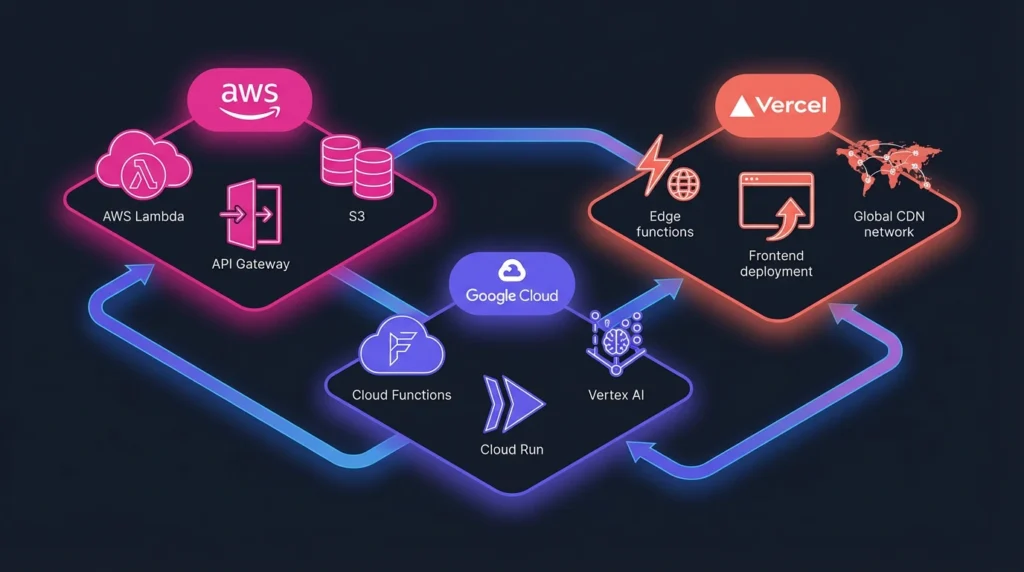
Selecting the right serverless platform is crucial for a scalable SaaS architecture with integrated AI tools. Important factors include seamless function deployment, edge computing capabilities, and robust integration with AI services.
AWS for Serverless Deployments
AWS offers a comprehensive suite for serverless SaaS, centered on AWS Lambda for executing backend functions without server management. Lambda supports automatic scaling and pay-as-you-go pricing, which optimizes cost efficiency.
Google Cloud Platform (GCP) Integrations
GCP’s serverless offerings include Google Cloud Functions and Cloud Run. For AI, Vertex AI simplifies building and deploying models, integrating tightly with serverless compute and data storage services like Firestore.
Vercel for Frontend and Edge Functions
Vercel specializes in frontend deployment, making it a preferred platform for serverless SaaS UI. Its Edge Functions run lightweight serverless operations geographically close to users, reducing latency.
No-Code SaaS Development With AI
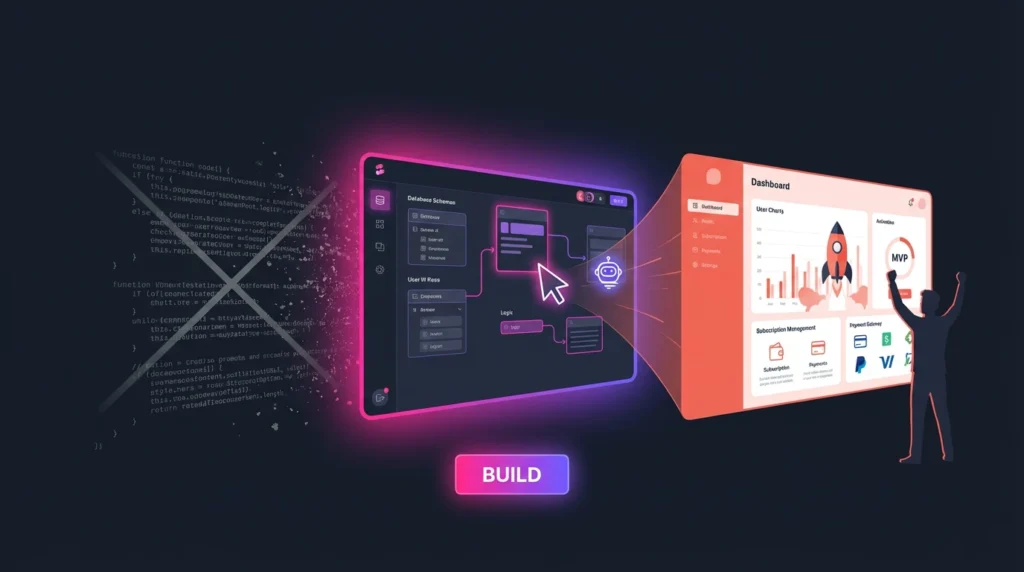
No-code platforms combined with AI tools enable fast, efficient SaaS development without traditional programming. This approach leverages automation to help you build AI apps without code, creating and scaling applications rapidly.
Zero-Code Approaches for MVP Creation
Zero-code tools allow entrepreneurs to launch SaaS MVPs quickly, often with a one-click build experience. Platforms like Imagine.bo provide drag-and-drop interfaces to assemble functional applications without writing a single line of code.
This approach eliminates dependencies on developers for initial versions, lowering costs and technical barriers. It also provides integrated subscription and payment management, enabling early monetization during product validation.
Automating App Architecture Design
AI accelerates backend and infrastructure setup by proposing optimized serverless architectures for SaaS platforms. It automates repetitive tasks like database configuration and API routing. For those looking to streamline this further, AI-powered no-code app development tools can generate infrastructure-as-code templates to reduce human error.
Imagine.bo: Accelerating Serverless SaaS With AI

Imagine.bo streamlines SaaS development by offering users an accessible, no-code platform that integrates AI tools within serverless architectures. It simplifies app creation while supporting rapid scaling and innovation.
Platform Overview and Entry Process
Imagine.bo allows users to quickly describe their app idea through a guided interface, reducing time spent on initial setup. New users begin by submitting a detailed concept, which the system uses to configure a scalable, serverless backend automatically.
Unique AI-Expert Collaboration Workflow
Imagine.bo integrates AI-driven automation with human expertise to optimize SaaS creation. If you are wondering why choose Imagine.bo, the platform’s ability to balance automation efficiency with critical human insights for logic and customization is a key differentiator.
Security, Scalability, and Compliance Best Practices
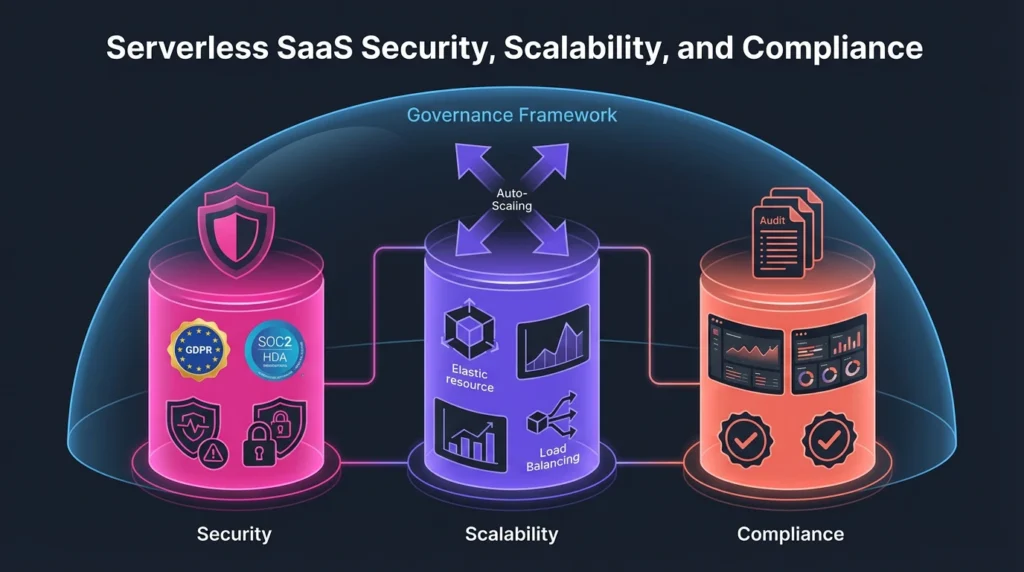
Effective serverless SaaS architecture relies on maintaining strict security standards, monitoring system health, and ensuring the infrastructure can scale to meet varying demand.
Monitoring Analytics and Performance
Serverless architectures benefit from integrated analytics dashboards that track application performance, user behavior, and security incidents in real time. Organizations are increasingly building internal analytics dashboards to gain insights into latency, error rates, and resource utilization.
Deployment, Pricing, and Support Considerations
Deploying a serverless SaaS solution with AI capabilities requires careful planning around infrastructure and cost management.
Pricing Models and Transparency in SaaS Pricing for serverless SaaS with AI tools generally follows a pay-as-you-go structure. Clear pricing communication is essential. Providers often break down costs into Compute, AI API calls, and Data storage. Developing a strategy for monetizing AI SaaS tools is critical to forecasting expenses and adjusting features for clients.
Future Trends in AI-Powered Serverless SaaS
AI-driven advancements will deepen integration within serverless SaaS architectures, enhancing automation, customization, and scalability.
Emerging AI Innovations for SaaS
AI tools in serverless SaaS are advancing rapidly, focusing on personalization, predictive analytics, and natural language processing (NLP). Comparing the top AI app builders reveals a trend toward real-time data processing without fixed infrastructure.
The Road Ahead: Private Beta and Beyond
Many AI-powered serverless SaaS solutions are currently in private beta, often free until August 2025. This trial phase enables developers and agencies to explore functionality with no upfront cost. Paid plans typically start at low entry points, positioning these tools as accessible for small to medium teams.
Related Articles
- Scalable SaaS Architecture for No-Code Platforms: Building Robust and Flexible Solutions
- How Freelancers Can Launch SaaS with AI Tools for Maximum Efficiency and Growth
- From Spreadsheet to SaaS: Automating Internal Tools for Enhanced Efficiency and Scalability
- From Concept to Client Portal: SaaS in a Day for Rapid Business Deployment
- End-to-End SaaS Development Using AI Workflows for Streamlined Product Delivery and Optimization
Launch Your App Today
Ready to launch? Skip the tech stress. Describe, Build, Launch in three simple steps.
Build