
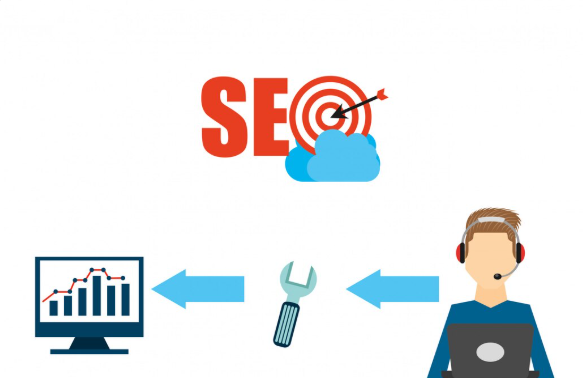
A prompt-optimized SEO strategy in 2025 focuses on using AI to understand search intent, improve content depth, and streamline keyword research. By crafting precise prompts, you can generate clearer topic outlines, stronger semantic coverage, and faster content iterations. This approach helps teams produce pages that match user needs, reduce guesswork, and stay aligned with evolving algorithm signals. It’s a practical way to scale quality, improve rankings, and keep your SEO more accurate and efficient.
The Evolution of Search: Why Traditional Methods Are Obsolete
To understand why prompt optimization is necessary, we must look at how search engines have changed.
Launch Your App Today
Ready to launch? Skip the tech stress. Describe, Build, Launch in three simple steps.
BuildThe Death of Keywords (As We Knew Them)
Ten years ago, ranking was about repetition. If you wanted to rank for “best running shoes,” you repeated that phrase five times in your H2s. Today, search algorithms utilize advanced Natural Language Processing (NLP). They don’t just read strings of text; they understand intent and context.
If you write a prompt that simply says, “Write an article about running shoes,” standard AI models will produce generic fluff. It might be grammatically correct, but it will lack the “information gain” that Google’s helpful content systems require. It won’t cover the semantics—the relationship between “running shoes,” “pronation support,” “heel drop,” and “marathon training.”
The Rise of Intent-Driven Algorithms
Modern algorithms assess “E-E-A-T” (Experience, Expertise, Authoritativeness, and Trustworthiness). They are looking for content that solves a specific problem. A generative SEO strategy integrates these ranking factors directly into the content generation process. It treats the prompt as the “source code” of your content marketing, ensuring that every output is pre-validated against SEO best practices before a human editor even touches it.
Decoding the Prompt-Optimized SEO Strategy
A prompt-optimized SEO strategy is a methodology that leverages precise, well-crafted instructions to guide AI tools. It turns the AI from a chaotic generator into a disciplined SEO analyst.
1. User Intent Integration
The foundation of this strategy is the classification of searcher goals. Before drafting content, we must understand the why.
- Informational: The user wants to learn (e.g., “What is a no-code builder?”).
- Navigational: The user wants to find a specific page (e.g., “Imagine.bo login”).
- Transactional: The user is ready to buy (e.g., “Best AI app builder pricing”).
The Prompt Strategy: Instead of a generic request, a refined prompt explicitly defines the intent.
“Act as a conversion copywriter. Create a landing page section for a user with ‘Transactional Intent’ who is comparing ‘No-Code platforms.’ Focus on speed to market and cost savings. Use comparison tables.”
2. Semantic Keyword Targeting & LSI
Google’s RankBrain and BERT updates made it essential to cover a topic holistically. “Semantic relevance” means using synonyms and conceptually related terms (Latent Semantic Indexing or LSI keywords) to prove to the search engine that your content is comprehensive.
The Prompt Strategy: An optimized strategy involves feeding the AI lists of LSI keywords within the prompt instructions.
“Write a guide on ‘App Development.’ Ensure you naturally integrate the following semantic terms: ‘MVP,’ ‘Scalability,’ ‘Cloud Deployment,’ ‘User Interface,’ and ‘Latency.’ Do not stuff keywords; ensure they appear in context.”
3. AI-Powered Content Structuring
Structure impacts “crawlability.” Search engine bots need clear H1, H2, and H3 tags to understand the hierarchy of information. Prompt optimization involves generating “AI Blueprints”—structured outlines that dictate the flow of the article before the body text is written. This ensures that every piece of content follows a logical progression, improving readability signals.
The Art of Prompt Engineering for SEO Success
Prompt engineering is the new “technical writing.” It requires a mix of creative direction and algorithmic logic.
Effective Prompt Creation Techniques
To get high-ranking output, you must eliminate ambiguity. A “minimum viable prompt” is no longer sufficient. You need masterful prompt engineering—a technique where you provide the AI with a role, a task, context, and constraints.
Example of a High-Impact SEO Prompt:
- Role: “You are a Senior SEO Strategist with 10 years of experience in SaaS marketing.”
- Task: “Draft a 1,500-word comprehensive guide on ‘No-Code App Building’.”
- Context: “The target audience is non-technical founders who are frustrated with expensive developers.”
- Constraints: “Use short paragraphs for mobile readability. Include a bulleted list of benefits. Ensure the reading level is Grade 8. Optimize for the keyword ‘AI App Builder’ but keep density under 1.5%.”
By controlling these variables at the input stage, you reduce the time spent on editing and ensure the final output aligns with the mathematical models used by search engines.
The Human-in-the-Loop: Expert Review
No matter how good your prompt is, AI can hallucinate. The “Human-in-the-Loop” process is critical. This involves an expert reviewing the AI output to verify facts, refine the tone, and ensure specific brand nuances are present. This hybrid approach—AI for speed/structure, Human for polish/accuracy—is the gold standard for 2025.
Technical Optimization: The Backbone of Rankings
You can have the best prompt-engineered content in the world, but if your website takes 5 seconds to load, or if your mobile experience is clunky, you will not rank. SEO for AI-built products is unforgiving when it comes to technical performance.
Core Web Vitals and Infrastructure
Search engines demand speed. Metrics like LCP (Largest Contentful Paint) and CLS (Cumulative Layout Shift) are direct ranking factors. Achieving high scores here requires robust infrastructure—fast servers, efficient coding, and optimized media serving.
Security and Compliance
Security is a trust signal. Google flags unsafe sites immediately. Beyond SSL certificates, compliance and protection (like GDPR and SOC2) signal to both users and search engines that a site is a legitimate, professional entity.
The Problem: For most marketers and content creators, achieving this level of technical perfection is difficult. It usually requires hiring a DevOps team to manage AWS servers, configure load balancers, and audit security protocols.
The Solution: This is where the strategy shifts from “content writing” to “technical deployment,” and where tools like Imagine.bo become indispensable.
Scaling SEO with No-Code: Enter Imagine.bo
To dominate SEO in 2025, you cannot just be a blog. You need to be a resource. This often means building interactive tools, free apps, calculators, and dynamic landing pages. Traditionally, this was impossible for non-coders.
Imagine.bo changes the paradigm.
What is Imagine.bo?
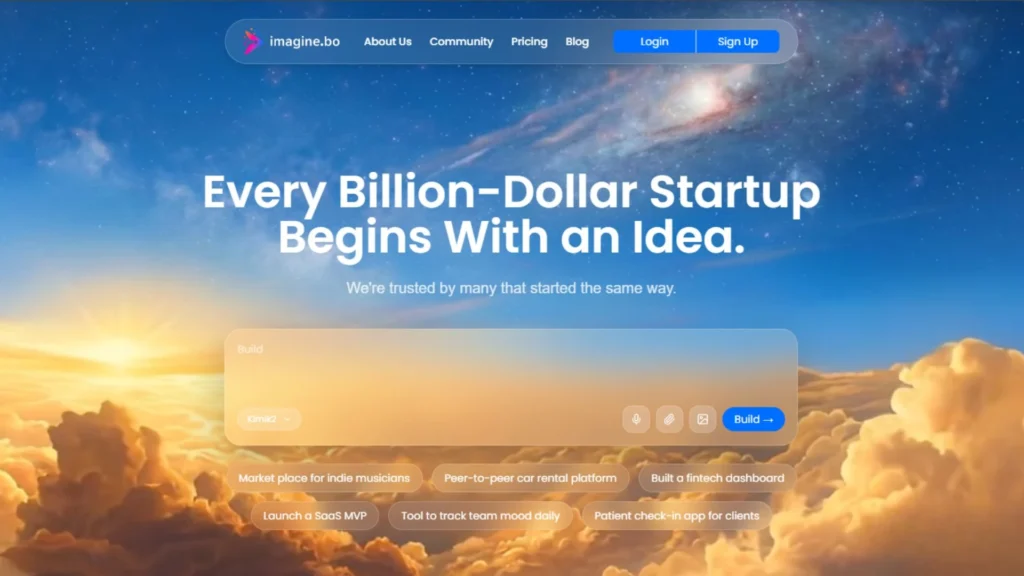
Imagine.bo is an AI No-Code App Builder designed to democratize software development. It allows you to create professional-grade applications and web assets without writing a single line of code.
For an SEO strategist, Imagine.bo is not just a development tool; it is a ranking engine. Here is why:
1. Rapid Deployment of “Link Magnet” Tools
One of the most effective SEO strategies is building free tools (e.g., “ROI Calculator,” “Keyword Planner,” “SEO Audit Tool”). These attract backlinks naturally.
- The Old Way: Spend $10,000 hiring developers to build a calculator using Python or JavaScript. Wait 3 months.
- The Imagine.bo Way: Create lead generation tools by describing them in plain English. The AI generates the code, the logic, and the interface. You refine it using the visual drag-and-drop builder. You launch in hours.
2. Enterprise-Grade Infrastructure (Zero Tech Debt)
When you build with Imagine.bo, you aren’t hosting on a cheap shared server. The platform handles the “Technical Stack” for you.
- Scalability: Apps are cloud-deployable on giants like AWS, GCP, and Vercel. This means your site creates a “1,000 transactions per second” guarantee.
- Speed: Because it utilizes modern edge caching and serverless functions, your LCP scores are optimized automatically.
- Security: Imagine.bo apps are GDPR/SOC2-ready with enhanced security protocols. You tick the “Technical SEO” boxes simply by using the platform.
3. The “Human Backup” for Complex Features
Sometimes, AI hits a wall. You might need a highly specific, custom integration for your app. Most no-code tools leave you stranded here. Imagine.bo offers a unique “Assign to Developer” feature. If the AI automation reaches its limit, you can assign the task to a real, professional developer within the platform ecosystem. This ensures you never have a “half-finished” project. It bridges the gap between AI speed and human engineering.
4. Zero-Code vs. Traditional Development
For founders and marketers, the cost-benefit analysis is overwhelming.
- Traditional: High cost, slow time-to-market, heavy reliance on IT departments for simple text changes.
- Imagine.bo: 3-step process. You can build an app by describing it. You control the SEO tags, the content, and the structure directly. It empowers the marketing team to own the product.
Future-Proofing Your Strategy: 2025 and Beyond
As we look toward the future, the integration of prompt engineering and no-code automation will tighten.
Building Sustainable Strategies
Sustainability in SEO means independence. It means not being reliant on a developer to fix a meta tag or launch a new landing page. By adopting a prompt-optimized workflow for your content, you ensure relevance. By adopting Imagine.bo for your infrastructure, you ensure performance.
Adapting to Algorithm Updates
When Google updates its algorithm, speed is key. If the new update prioritizes “interactive elements,” Imagine.bo users can spin up an interactive app component in minutes. If the update prioritizes “long-form guides,” your prompt library can be adjusted instantly to produce that format.
This agility—the ability to pivot both content and code instantly—is the ultimate competitive advantage.
Conclusion
The “Prompt-Optimized SEO Strategy for 2025” is more than just writing better commands for ChatGPT. It is a holistic approach that combines:
- Deep Semantic Understanding: Knowing what users want and how algorithms read.
- Precision Engineering: Using prompts as blueprints for high-quality content.
- No-Code Scalability: Using platforms like Imagine.bo to remove technical barriers.
In an era where everyone has access to AI, the winners will not be those who generate the most content, but those who build the best experience. Imagine.bo gives you the power to build that experience—secure, fast, and scalable—while you focus on the creative strategy that drives the rankings.
Don’t just write about the future of SEO. Build it.
Frequently Asked Questions (FAQ)
How does Imagine.bo help with technical SEO specifically?
Imagine.bo handles the heavy lifting of infrastructure. By deploying apps on AWS/GCP with optimized code structures, it ensures fast load times (Core Web Vitals), mobile responsiveness, and high-level security (SSL/SOC2), all of which are critical ranking factors.
Can I really build an app without coding knowledge?
Yes. Imagine.bo uses a “Describe, Build, Launch” workflow. You describe the app in English, and the AI generates the architecture. The visual editor allows you to make changes, and if you get stuck, real developer support is available.
What is the difference between a standard prompt and an SEO-optimized prompt?
A standard prompt is vague (“Write a blog”). An SEO-optimized prompt includes constraints on keyword density, user intent classification (informational vs. transactional), HTML structure requirements, and tone guidelines to satisfy E-E-A-T criteria.
Is this strategy suitable for small businesses?
Absolutely. In fact, it is most beneficial for them. Small businesses often lack the budget for large dev teams or expensive SEO agencies. Using AI prompts for content and Imagine.bo for development levels the playing field, allowing them to compete with enterprise giants.
Related Articles
- Prompt-Optimized SEO Strategy for 2025: Enhancing Rankings with AI-Driven Techniques
- Generative SEO for SaaS Startups: Boost Growth with AI-Driven Strategies
- Generative SEO for SaaS Startups: Boost Growth with AI-Driven Strategies
- SEO for AI-Built SaaS Products: Strategies to Boost Visibility and Growth
- SEO for AI-Built SaaS Products: Strategies to Boost Visibility and Growth
Launch Your App Today
Ready to launch? Skip the tech stress. Describe, Build, Launch in three simple steps.
Build