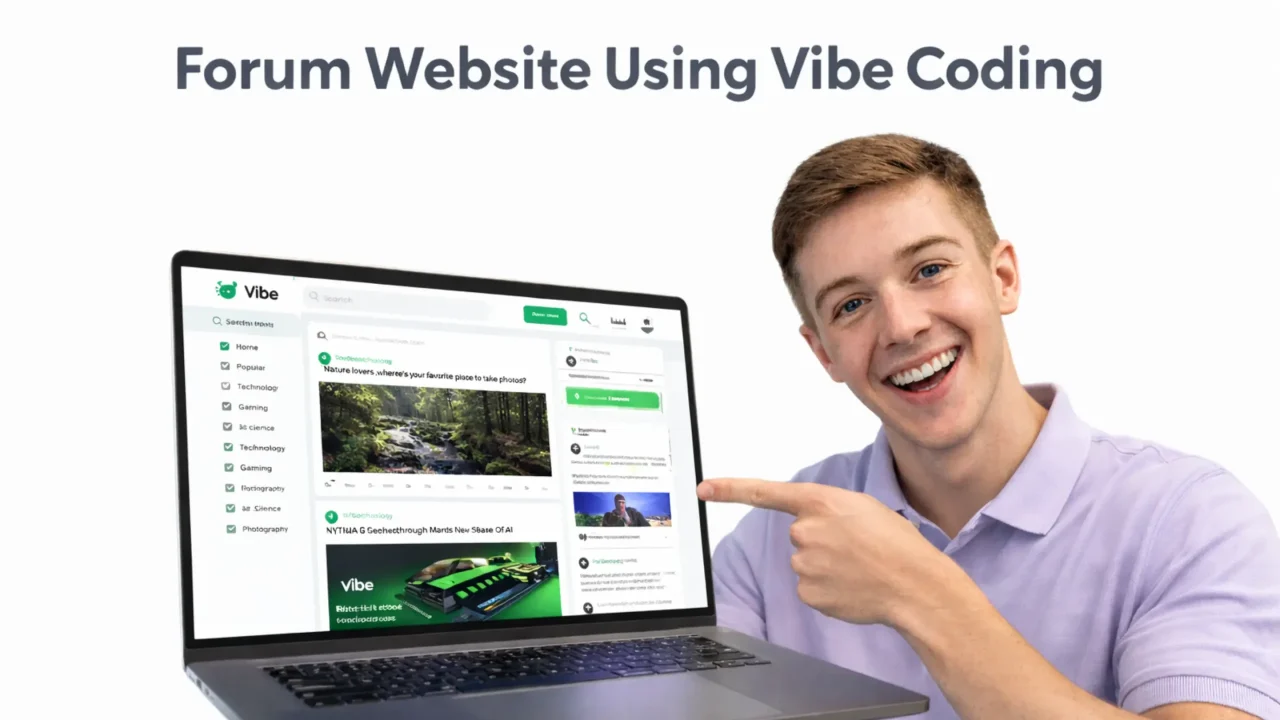
Online forums aren’t dead. They’re quietly having a moment.
While social media algorithms bury your posts and group chats vanish into noise, forums keep doing what they’ve always done: organize conversations people actually want to return to. Reddit crossed 47.2 million subscribers in r/AskReddit alone in 2025. Discord now has over 32.6 million servers worldwide. People don’t just want content — they want structured places to discuss, debate, and learn from each other.
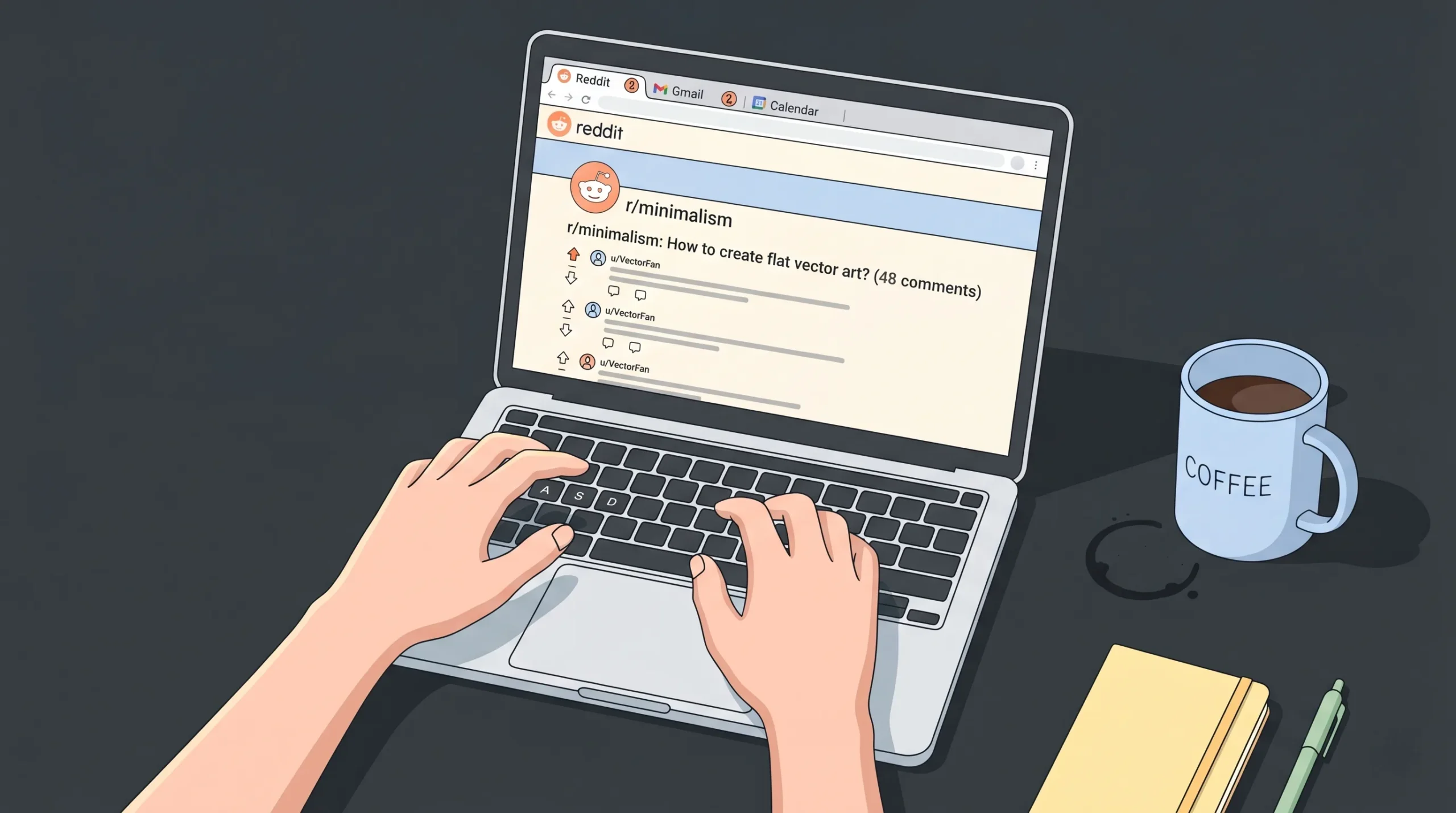
The difference in 2026? You no longer need a backend engineer, a DevOps team, or six months of runway to build one.
Vibe coding — the AI-assisted development approach where you describe what you want in plain English and AI generates the code — has changed the economics of forum creation entirely. The vibe coding market hit $4.7 billion in 2026 (Taskade, 2026), and 92% of US developers now use AI coding tools daily (DX Q4 2025 Report, 2025). That same technology is now accessible to non-technical founders who want to build real community platforms, not just landing pages.
This guide walks you through the entire process: from defining your forum’s purpose to deploying a production-ready community platform — using vibe coding to eliminate the technical barriers that used to make this a six-figure project.
TL;DR: Building a forum website in 2026 no longer requires backend engineering expertise. With AI-powered vibe coding platforms like Imagine.bo, you can go from a plain-English description to a deployed forum with user authentication, thread systems, and moderation tools in days, not months. 76% of internet users already participate in online communities (Social Plus, 2025), making this one of the best times to launch.
Why Are Forum Websites More Relevant Than Ever in 2026?
According to research compiled by Social Plus, 76% of internet users actively participate in at least one online community, including forums, blogs, and discussion boards (Social Plus, 2025). That number has been climbing steadily since the pandemic accelerated the shift toward online-first interaction.

But here’s what makes 2026 different from five years ago: social media fatigue is real, and people are actively migrating back to structured discussion spaces. Forums achieve engagement rates between 40% and 50%, compared to a 5% average on mainstream social media platforms (Amra and Elma, 2025). That’s not a small gap — it’s a ten-fold difference in how deeply people interact with content.
Reddit now ranks among the top 10 most-visited websites globally, with over 2.2 million new subreddits created since June 2024 alone. The average Reddit user belongs to 47 different communities. These aren’t passive visitors — they’re people actively seeking structured conversations around specific interests.
Our finding: Forums consistently outperform social media in depth of engagement, yet most founders still default to building on rented platforms like Facebook Groups or Discord — where they don’t own the data, can’t control the algorithm, and risk losing their entire community overnight.
So why aren’t more people building their own forums? Until recently, the answer was always the same: it’s too hard. Forum websites are architecturally different from regular websites — they require persistent user identity, hierarchical content organization, real-time thread management, and retrieval systems that don’t collapse under years of accumulated discussions.
That’s exactly where vibe coding changes the equation.
What Makes Forum Websites Structurally Different From Regular Websites?
A blog publishes content. An e-commerce site sells products. A forum does something fundamentally harder: it coordinates structured discussions between thousands of users, across thousands of topics, over years of continuous activity.
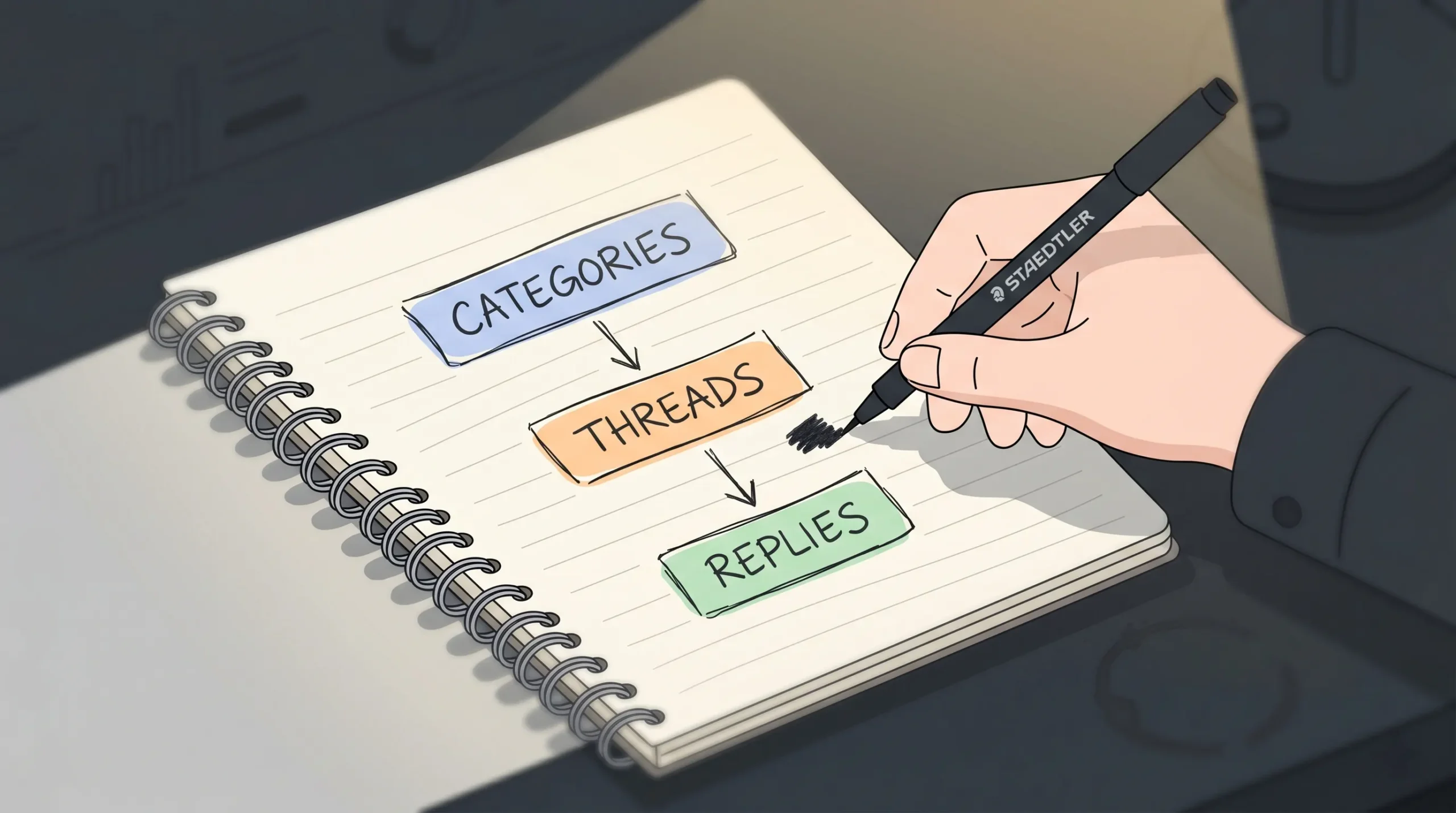
This distinction matters because it determines what your tech stack needs to handle. Build a forum the way you’d build a landing page, and it’ll break the moment real users show up.
Here’s what forum architecture must support that most websites don’t:
Persistent User Identity Across Every Interaction
Every post, reply, upvote, and moderation action must be tied to a verified user account. Without persistent identity, discussions lose context, accountability disappears, and spam overwhelms the platform within weeks.
This means your forum needs authentication systems (signup, login, password reset, session management), user profiles with activity history, and role-based access control — at minimum, separating regular users from moderators and administrators.
Hierarchical Content Organization That Scales
Forums organize content into categories (broad topics), threads (specific discussions), and replies (responses within discussions). This three-level hierarchy is what makes forums navigable. Without it, every conversation becomes a flat, unsearchable mess — like trying to find a specific conversation in a group chat with 10,000 messages.
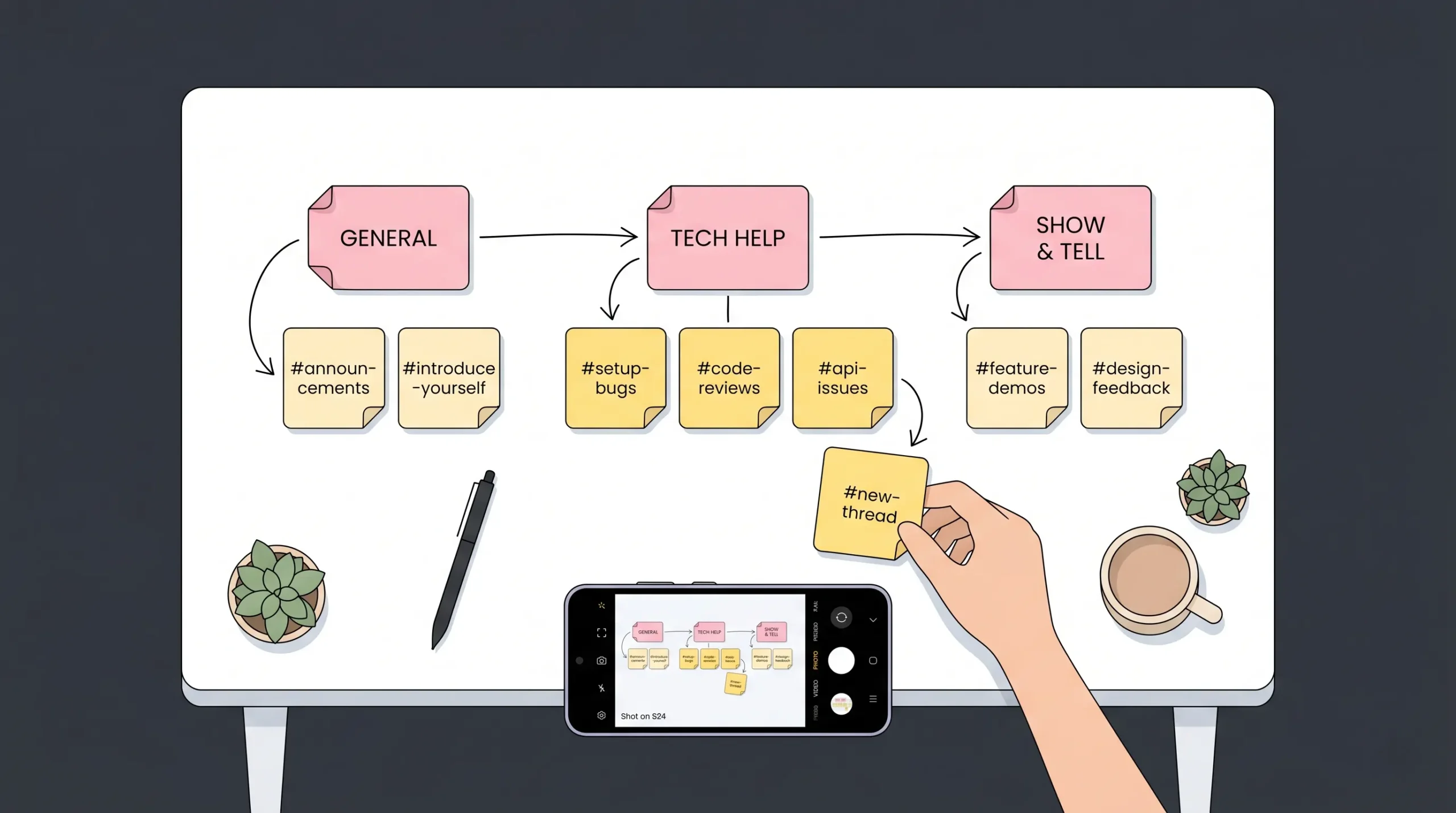
The hierarchy must remain functional as content accumulates. A forum with 500 threads navigates very differently from one with 50,000 threads. If your category structure doesn’t account for growth, users won’t be able to find relevant discussions and will stop contributing.
Thread Systems That Preserve Conversational Context
Reddit, Quora, and Discourse all handle threading differently — but they all solve the same problem: keeping responses organized within a conversation. Without proper threading, replies become disconnected from the comments they’re responding to, and discussions become incoherent at scale.
Retrieval Systems That Don’t Degrade Over Time
Forums are knowledge repositories. Six months after launch, your most valuable content isn’t the newest discussion — it’s the accumulated archive of past answers, debates, and solutions. If users can’t search through and access historical discussions efficiently, the forum loses its compound value.
This requires proper database indexing, search functionality, and pagination systems that perform consistently whether your forum has 100 threads or 100,000.
Moderation Infrastructure From Day One
Forums without moderation systems don’t survive. This isn’t optional — it’s as fundamental as having user authentication. You need tools for removing spam, managing reported content, banning users who violate community guidelines, and delegating moderation responsibilities across trusted community members.
Unique Insight: The most common failure mode for new forums isn’t lack of users — it’s premature structural collapse. Founders launch with basic thread functionality, gain traction, and then discover their content organization can’t handle the volume. By that point, restructuring means migrating thousands of existing discussions, which breaks links, disrupts search rankings, and alienates the community. Building the right structure early costs nothing extra but prevents the most expensive mistake later.
What Is Vibe Coding — and Why Does It Work for Forum Websites?
Vibe coding is a software development approach where you describe what you want to build in natural language, and AI generates the code. The term was coined by AI researcher Andrej Karpathy in February 2025 and was named Collins Dictionary’s Word of the Year for 2025.
The concept is straightforward: instead of writing code line by line, you tell an AI system what your application should do, and it generates the frontend interface, database structure, backend logic, and API endpoints automatically.
By 2026, this isn’t experimental anymore. GitHub reports that 46% of all new code is now AI-generated (Hashnode, 2026). Among Y Combinator’s Winter 2025 batch, 21% of startups had codebases that were 91% or more AI-generated (Taskade, 2026). The vibe coding market is projected to reach $12.3 billion by 2027.
But here’s the critical distinction most articles miss: vibe coding works brilliantly for getting to a working prototype. Where it often fails is in the last 30% — edge cases, security hardening, third-party integrations, and production deployment.
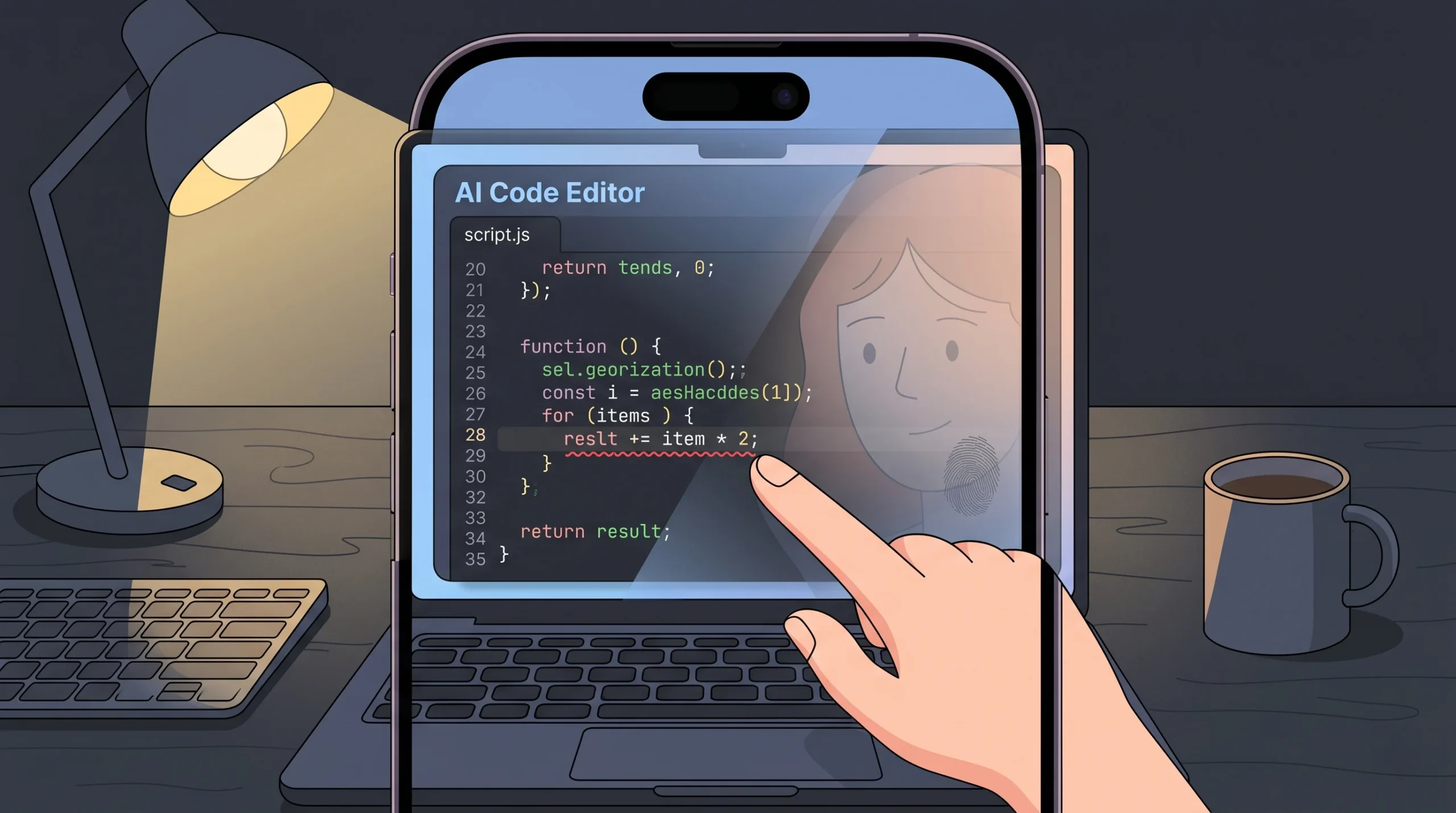
Specifically for forums, vibe coding can generate your entire user authentication system, thread creation and reply logic, category management interface, user profile pages, and basic moderation tools — all from a well-structured natural language prompt. What it can’t reliably handle on its own includes payment integrations, complex permission hierarchies, performance optimization for high-traffic scenarios, and security-critical features like rate limiting and abuse prevention.
This is where the choice of platform matters enormously. Pure vibe coding tools give you the 70% and leave you stuck on the rest. The most effective approach in 2026 combines AI generation speed with access to real engineering support when complexity exceeds what AI can handle reliably.
How to Choose the Right Platform for Building Your Forum in 2026
Not all vibe coding platforms are built for this. Most can generate a nice-looking landing page or a basic CRUD app. Building a forum — a system with persistent users, hierarchical content, real-time interactions, and moderation workflows — requires a platform that generates actual full-stack architecture, not just a frontend.
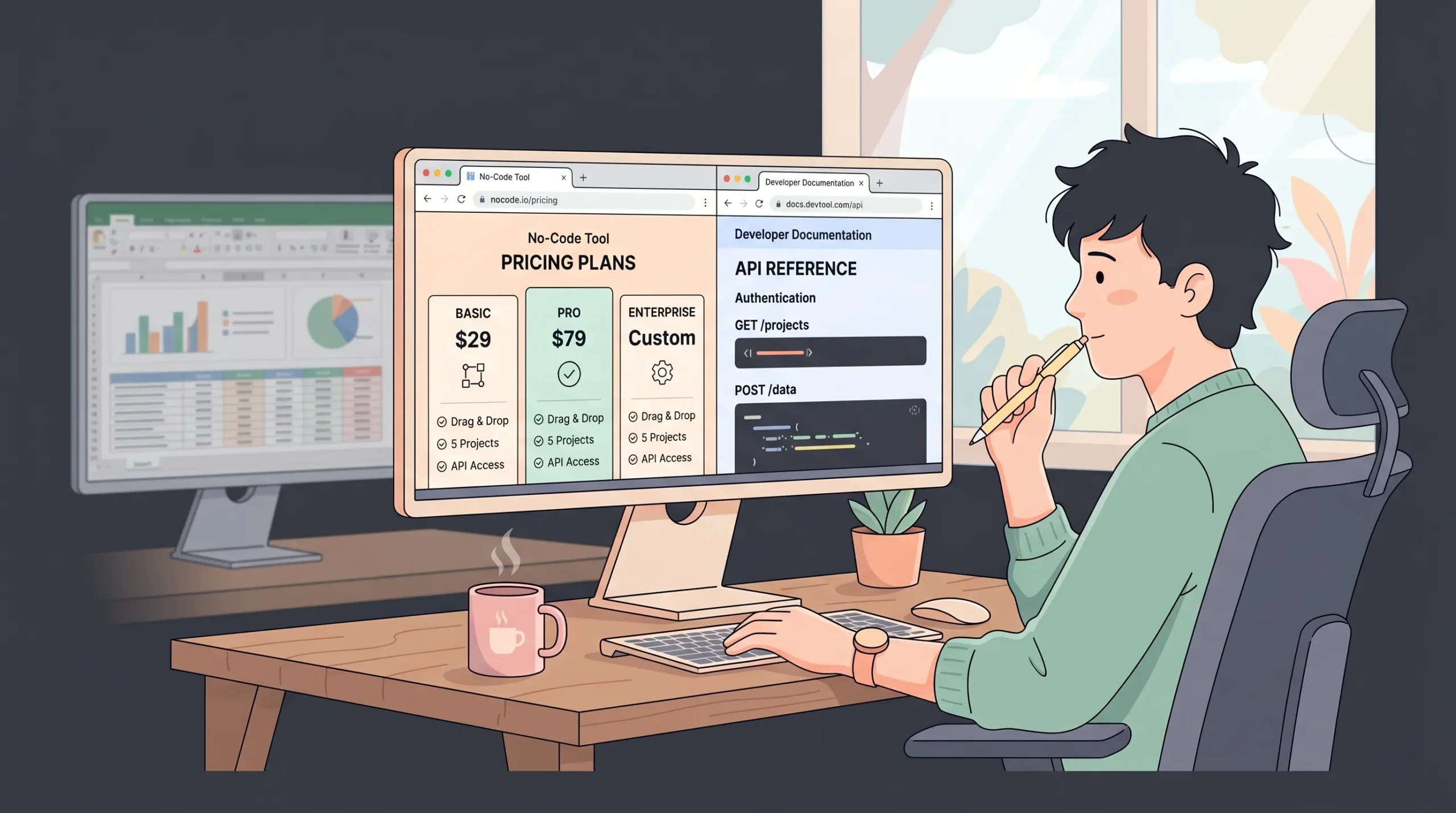
Here’s how the main approaches compare:
AI-Powered Full-Stack Builders
These platforms generate the entire tech stack from a natural language description: frontend, backend, database schema, authentication, and deployment configuration. You describe your forum, the AI builds it, and you iterate through conversation.
Best for: Launching quickly, validating community ideas, operating without engineering resources.
Cost: $0–$100 initially, $20–$100/month ongoing.
Trade-off: Infrastructure is abstracted, which accelerates execution but reduces low-level customization. For most forum use cases below enterprise scale, this is the right trade-off.
Backend Platform + Frontend Builder Combination
Platforms like Supabase or Firebase for the backend, paired with a frontend builder for the interface. More control over the data layer, but requires configuring the backend separately.
Best for: Forums expecting significant custom logic or non-standard data models.
Cost: $100–$500 initially, $50–$250/month ongoing.
Trade-off: More flexibility, but you’re assembling pieces yourself, which introduces integration complexity.
CMS Platforms with Forum Plugins
WordPress with BuddyPress, for example. Quick to set up, but CMS architectures weren’t designed for dynamic discussion systems.
Best for: Small communities with low activity volumes.
Cost: $100–$400 initially, $30–$150/month ongoing.
Trade-off: You’ll hit scalability walls fast. Forum plugins on CMS platforms tend to degrade in performance as discussion volume grows.
Custom Development with Frameworks
Building from scratch with Django, Rails, or Node.js. Complete control over everything.
Best for: Large-scale platforms with dedicated engineering teams.
Cost: $3,000–$30,000+ initially, $100–$800+/month ongoing.
Trade-off: Maximum flexibility, maximum cost, maximum timeline.
Our finding: Based on our experience helping founders launch community platforms, the most common mistake isn’t choosing the wrong architecture — it’s over-engineering the first version. Forums that launch early with a functional MVP and iterate based on real user behavior consistently outperform forums that spend months perfecting infrastructure before anyone can use them.
Step-by-Step: How to Build a Forum Website Using Vibe Coding
Here’s the actual process, broken down into ten steps. Each step includes the specific prompt strategies and architectural decisions that determine whether your forum succeeds long-term.
Step 1: Define Your Forum’s Purpose and Discussion Model
Before you write a single prompt, answer four questions:
Who is this forum for? Be specific. “Small business owners who need help with Shopify SEO” is useful. “People who like business” is not.
What’s the core problem it solves? Every successful forum exists because a specific group of people need a structured place to discuss specific topics. Reddit works because it organizes internet culture into discoverable communities. Quora works because it structures knowledge around questions and answers. What’s your structural model?
What user roles exist? At minimum, you’ll need guests (can view, can’t post), registered users (can create threads and reply), moderators (can manage content), and administrators (can manage users and settings). Define what each role can and can’t do.
What’s the content hierarchy? How many top-level categories will you have? Will threads support nested replies or flat comments? Can users tag threads? Will you have a voting system?
Write these answers down before touching any tool. They’ll form the foundation of your first prompt.
Step 2: Write a Structured Prompt for Your Forum Blueprint
The quality of your initial prompt determines 80% of the quality of your generated app. Here’s a template that consistently produces strong results:
Prompt Template:
“Build a forum website for [target audience] to [core purpose]. The forum should have these categories: [list 3-7 categories]. Users can create an account, log in, create discussion threads within categories, reply to threads, and upvote helpful replies. There are four user roles: Guest (view only), Member (create threads and reply), Moderator (edit and delete any content, pin threads), and Admin (manage users, categories, and site settings). The homepage shows recent threads across all categories. Each category page shows threads sorted by most recent activity. Thread pages show the original post and all replies in chronological order. Include a search bar that searches thread titles and content. Members can edit their own posts within 30 minutes of posting.”
What makes this prompt effective? It specifies the target user, defines all four roles and their permissions, describes the content hierarchy, explains the navigation structure, and includes a specific edge behavior (the 30-minute edit window). These details prevent the AI from making assumptions that you’ll have to correct later.
Step 3: Review the Generated Blueprint Before Editing Anything
After your prompt generates the forum structure, review the output systematically before making any visual changes. Check that all core screens are present: homepage, category pages, thread pages, user profile, login/signup, admin panel, and search results.
Verify the database models match your needs. Your forum should have, at minimum, tables for users, categories, threads, replies, and user roles. If any of these are missing or structured oddly, fix them through a follow-up prompt before moving to visual editing.
If something is missing, don’t restart. Use a follow-up prompt: “The blueprint is missing a moderator dashboard. Add a page where moderators can see all reported posts, review flagged content, and ban users.”
Step 4: Set Up User Authentication and Role-Based Access
Authentication is the backbone of any forum. Every thread, reply, and moderation action must be tied to a verified user account. Your generated app should include signup with email verification, login with session management, password reset flow, and role-based access control.
Test this immediately. Can a guest access pages they shouldn’t? Can a regular member access the admin panel by typing the URL directly? Can an unauthenticated user submit a thread?
If you find permission issues, describe them specifically: “Currently, any visitor can access the /admin page. It should only be accessible to users with the Admin role. Redirect all other users to the homepage.”
Step 5: Build the Thread and Reply System
The thread system is the core interaction layer. It needs to handle thread creation (with title, body text, and category assignment), replies (with the ability to quote parent comments), editing (within the time window you defined), and deletion (by the author or a moderator).
Prompt for specific behaviors: “When a user creates a new thread, it should appear at the top of its category page. When someone replies to a thread, the thread should move to the top of the category page (bumping). Threads with no activity for 90 days should be automatically archived but remain searchable.”
Step 6: Implement Content Organization and Navigation
Design your category structure to reflect how users think about topics, not how you think about internal organization. If you’re building a forum for indie game developers, your categories might be “Game Design,” “Programming Help,” “Art & Audio,” “Marketing & Launch,” “Show Your Game,” and “Off-Topic.”
Each category needs a landing page showing threads sorted by most recent activity, with the ability to sort by newest, most popular, or unanswered. The global homepage should show a feed of recent activity across all categories, giving users a quick overview of what’s happening.
Add breadcrumb navigation so users always know where they are: Home > Category > Thread Title.
Step 7: Build Search and Content Retrieval
Search isn’t a nice-to-have. It’s a core feature. Forums accumulate thousands of discussions over time, and users need to find relevant past conversations efficiently.
Prompt for this explicitly: “Add a search bar to the top navigation that searches thread titles and body text. Search results should show the thread title, category, author, date, and a snippet of matching content. Results should be sorted by relevance by default, with options to sort by date.”
Step 8: Set Up Moderation and Governance Tools
Build moderation infrastructure before you need it. Once your forum has active users, adding moderation retroactively is significantly harder.
Your moderation system should include content reporting (users can flag posts), a moderation queue (moderators review flagged content), content actions (delete, edit, hide, or pin posts), user actions (warn, mute, or ban users), and moderation logs (all actions are recorded for transparency).
Prompt example: “Add a ‘Report’ button on every thread and reply. Reported content should appear in a moderator dashboard accessible only to Moderator and Admin roles. Moderators can approve (dismiss the report) or remove the content. All moderation actions should be logged with the moderator’s username, action taken, and timestamp.”
Step 9: Optimize Performance and Deploy
Before launch, test your forum with realistic usage scenarios. Create 50-100 test threads across different categories and verify that page load times remain under 3 seconds — Google’s March 2026 core update penalized sites with LCP scores above 3 seconds more aggressively than previous updates.
Check that pagination works correctly on category pages with many threads. Verify that search returns relevant results quickly. Ensure images uploaded by users are compressed and served efficiently.
When you’re ready, deploy. Modern vibe coding platforms handle infrastructure provisioning, SSL certificates, and autoscaling automatically — you shouldn’t need to configure servers.
Step 10: Launch, Monitor, and Iterate Based on Real Behavior
Launching is the starting point, not the finish line. Your first users will reveal structural issues you didn’t anticipate. Maybe your categories are too broad, and discussions are scattered. Maybe users need a private messaging feature you didn’t plan for. Maybe your voting system doesn’t surface the best content effectively.
Use built-in analytics to track which categories get the most activity, which threads generate the most engagement, and where users drop off. Then iterate through conversation: tell the AI what to change, and refine the forum based on real community behavior.
Critical Mistakes That Kill Forum Websites (And How to Avoid Them)
Most forums don’t fail because of technical bugs. They fail because of structural decisions made in the first week that become expensive to fix six months later.
Launching Without a Defined Content Model
Vague categories like “General” or “Discussion” create confused communities. Users don’t know where to post, duplicate threads multiply, and the forum feels chaotic. Define specific, distinct categories before launch. You can always add more later — but restructuring existing categories after thousands of threads exist means breaking links and confusing users.
Ignoring Mobile Experience
Over 60% of internet traffic is mobile. If your forum doesn’t render cleanly on phones, you’re losing the majority of potential users before they post their first thread. Test every page on mobile during development, not after launch.
Skipping Security Fundamentals
Vibe-coded applications can ship with security gaps. Research found that 10.3% of apps built with one popular vibe coding tool had critical row-level security flaws exposing user data (Taskade, 2026). Don’t accept AI-generated authentication code at face value. Test that users can’t access data they shouldn’t, that passwords are hashed properly, and that admin endpoints are protected.
If your platform offers human engineering support, use it for security review. This is the one area where cutting corners costs the most.
Not Planning for Content Retrieval at Scale
A forum with 200 threads feels fast. A forum with 20,000 threads — with the same retrieval infrastructure — can grind to a halt. Think about database indexing, pagination, and search performance from the beginning. It’s much cheaper to build these correctly upfront than to migrate databases later.
Treating the Forum Like a Static Website
Forums are dynamic discussion systems, not static pages. They require real-time updates, session management, notification systems, and infrastructure that handles concurrent users reading and writing simultaneously. If you build your forum on a platform designed primarily for static websites, you’ll hit walls as activity increases.
Common mistakes in app building
Why Imagine.bo Is the Best Platform for Building a Forum Website in 2026

Most AI-powered builders can generate a frontend that looks like a forum. The difference is whether the generated application has real backend infrastructure — authentication, database, API endpoints, deployment — and whether you can get past the inevitable technical walls that AI alone can’t solve.
Imagine.bo is an AI-powered full-stack builder that generates complete application architecture from natural language descriptions, including database schema, backend logic, user authentication, and frontend interface. But what sets it apart from every other vibe coding platform is one feature: the Hire a Human capability.
AI Gets You 80% There. Engineers Handle the Rest.
When you describe your forum to Imagine.bo, the AI generates the entire structure: user registration and login, thread and reply systems, category management, moderation tools, search functionality, and deployment configuration. You can iterate on all of this through conversation, just like any vibe coding tool.
But when you hit something complex — a custom voting algorithm, a third-party API integration, a security concern that requires human review — you don’t have to figure it out alone. Click “Hire a Human” directly from the dashboard, and a verified Imagine.bo engineer takes over that specific task, writes the custom code, and pushes it to your project.
This hybrid model matters specifically for forum websites because forums have more architectural complexity than most applications. Authentication edge cases, permission hierarchies, content moderation workflows, real-time notification systems — these are exactly the kinds of features where pure AI generation falls short and human engineering expertise makes the difference between a prototype and a production platform.
Deploy in One Click, Scale Automatically
Imagine.bo deploys your frontend to Vercel (global edge caching for fast load times worldwide) and your backend to Railway (automatic scaling from 10 users to 1 million). SSL, security configuration, and infrastructure provisioning are handled automatically. No DevOps knowledge required.
You Own Everything
Your data, your code, your infrastructure. Imagine.bo produces clean, exportable code that follows modern standards. If you ever want to take your forum to a different hosting provider or hand it off to an in-house engineering team, you can export the entire codebase.
What It Costs
Imagine.bo’s Pro plan starts at $25/month with 150 credits — enough to build a full multi-page application including authentication, forms, and workflows. For complex forums that need extensive engineering support, the Done-For-You plan ($499 one-time) provides complete expert-led development, deployment, and infrastructure optimization.
Frequently Asked Questions
Can I build a forum website without any coding experience?
Yes. AI-powered vibe coding platforms like Imagine.bo generate the entire tech stack — frontend, backend, database, authentication — from a natural language description. According to 2026 data, 92% of developers already use AI coding tools daily (DX Q4 2025 Report, 2025), and these same tools are now accessible to non-technical founders. You describe what you want, the AI builds it, and you iterate through conversation.
How long does it take to build a forum with vibe coding?
With a well-structured prompt, you can generate a working forum prototype in minutes. A production-ready forum with tested authentication, moderation tools, and proper content organization typically takes a few days of iterative refinement — compared to three to six months of traditional development.
How much does it cost to build a forum website in 2026?
Costs range from $0–$100 initially for AI-powered builders, up to $30,000+ for custom development. According to current pricing data, Imagine.bo’s Pro plan costs $25/month and includes enough credits to build a full forum application with authentication, thread systems, and moderation workflows.
Is vibe-coded forum software secure enough for production?
AI-generated code can contain security vulnerabilities — research shows 45% of AI-generated code contains security flaws (Veracode, 2025). The safest approach is using a platform that combines AI generation with human engineering review. Imagine.bo’s Hire a Human feature allows you to assign security-critical tasks to verified engineers for manual review and hardening.
Can my forum handle thousands of users?
Yes, if built on scalable infrastructure. Imagine.bo deploys to Vercel and Railway, which handle automatic scaling. However, database query optimization and caching strategies become important as your forum grows. This is where starting with the right architecture — and having access to engineering support — prevents performance issues before they impact users.
Conclusion
Building a forum website in 2026 is no longer a six-figure engineering project. Vibe coding has compressed the timeline from months to days and the cost from tens of thousands of dollars to less than a hundred.
But speed without structure produces forums that break under real usage. The architectural decisions you make in the first week — how discussions are organized, how users are authenticated, how content is moderated, how retrieval scales — determine whether your forum can support years of continuous community activity or requires expensive restructuring within the first year.
The most effective approach in 2026 combines the speed of AI-powered generation with the safety net of human engineering expertise. Build the 80% with AI. Handle the critical 30% — security, complex integrations, performance optimization — with real engineers.
Imagine.bo is built for exactly this workflow. Describe your forum in plain English. Iterate through conversation. And when you hit a technical wall, click Hire a Human and keep moving.
Your community is waiting. Go build it.