In the rapidly shifting landscape of 2026, the challenge is no longer just “building an app,” but choosing a foundation that sustains long-term growth. While AI-native platforms like Lovable and Imagine.bo streamline the generation of full-stack, no-code applications, Windsurf remains a staple IDE for developers managing complex, custom codebases. The decision between these tools often comes down to a fundamental architectural choice: are you empowering engineers to write custom code, or using plain English to auto-generate an entire product?
This comparison breaks down the differences between Windsurf and Imagine.bo to help identify which platform aligns with your scalability goals.
Launch Your App Today
Ready to launch? Skip the tech stress. Describe, Build, Launch in three simple steps.
BuildThe Core Philosophy: Agentic IDE vs. Managed Architecture
Understanding the fundamental design philosophy of each platform is crucial for choosing the right tool for your project.
Windsurf (The Supercharged Mechanic):
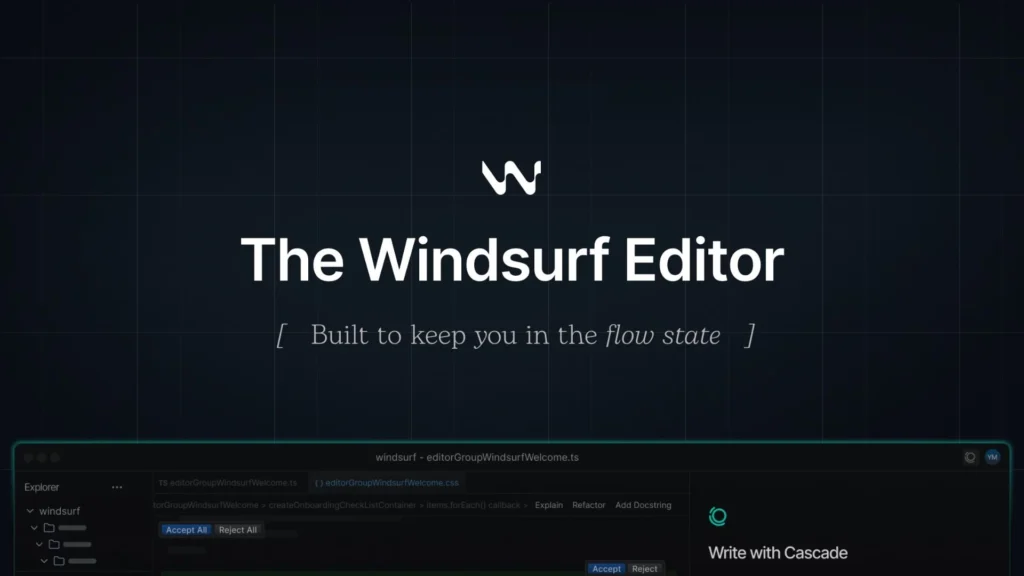
Windsurf is an agentic AI IDE that is specifically designed to keep developers in their flow state by offering instant, invaluable AI assistance exactly where they want it.
- It features Cascade, an agentic AI assistant capable of autonomously building entire applications from end to end.
- Rather than just suggesting code snippets, Cascade combines a deep understanding of your codebase with the ability to execute terminal commands, creating a powerful and collaborative coding flow.
Imagine.bo (The Lead Architect):
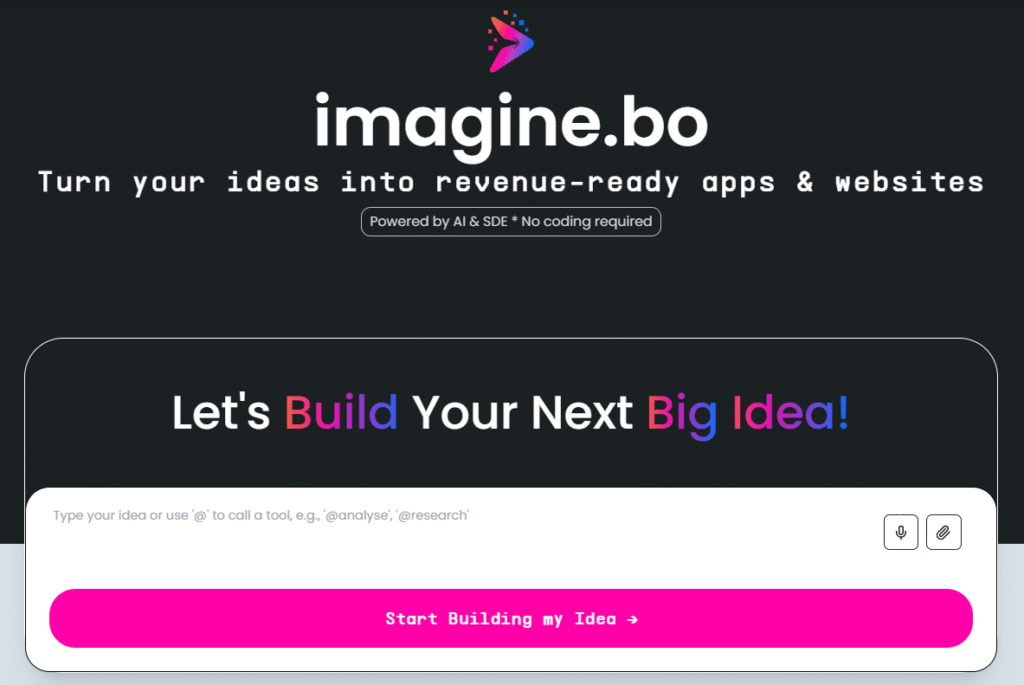
Imagine.bo is an AI-powered no-code app builder that transforms your ideas into live, production-ready applications without requiring you to write any code.
- You simply describe your idea in plain English, and the platform’s AI automatically generates the underlying app structure, database, and workflows.
- Its core philosophy is built on bridging the gap between the instant generation speed of AI and the reliability of expert human engineering.
Target Audience and Best Fit
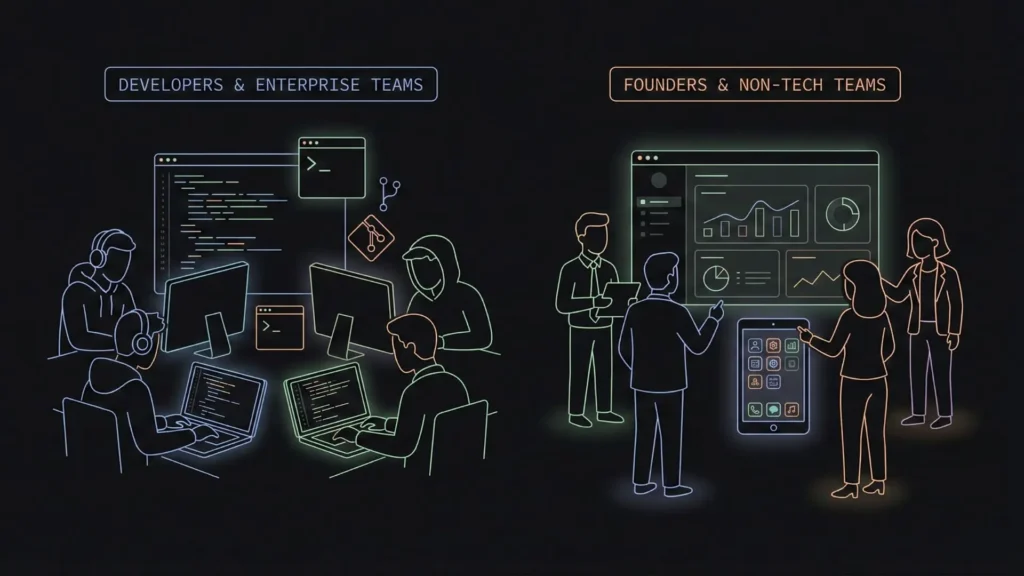
The fastest way to determine which platform to adopt is to look at who it was designed to serve.
Who Windsurf is for:
- Professional Developers: It is designed for software engineers who want to code without context switching.
- Enterprise Teams: Teams looking to scale their output, manage multiple repositories, and enforce organization wide development processes.
- Coders Seeking Automation: Developers who want an AI to handle boilerplate code, automate repetitive workflows, and auto-fix linter errors.
Who Imagine.bo is for:
- Founders and Startups: Entrepreneurs who need to launch Minimum Viable Products quickly to validate ideas with real users while saving development costs.
- Small Businesses: Companies looking to build internal tools, Customer Relationship Management dashboards, or customer apps without hiring large development teams.
- Designers and Marketers: Creatives who want to build functional prototypes or ship marketing tools instantly without engineering dependencies.
Feature Comparison Overview
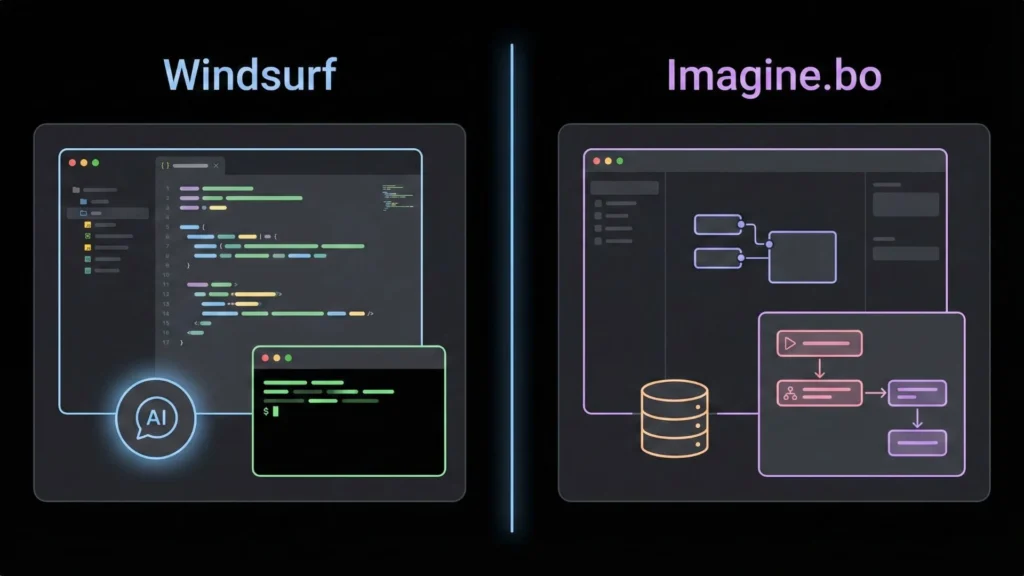
Both platforms offer incredibly powerful features, but they manifest in entirely different user interfaces and workflows.
| Feature Category | Windsurf | Imagine.bo |
| Core Technology | Agentic IDE with Cascade AI | SDE-Level Reasoning Engine |
| User Interface | Traditional code editor environment | Visual drag and drop builder |
| Primary Input | Code, terminal commands, and chat | Plain English natural language prompts |
| Workflow Style | AI assisted manual coding | Managed vision to launch creation |
| Error Handling | Auto-detects and fixes lint errors | Real human engineers available on demand |
Performance and Infrastructure
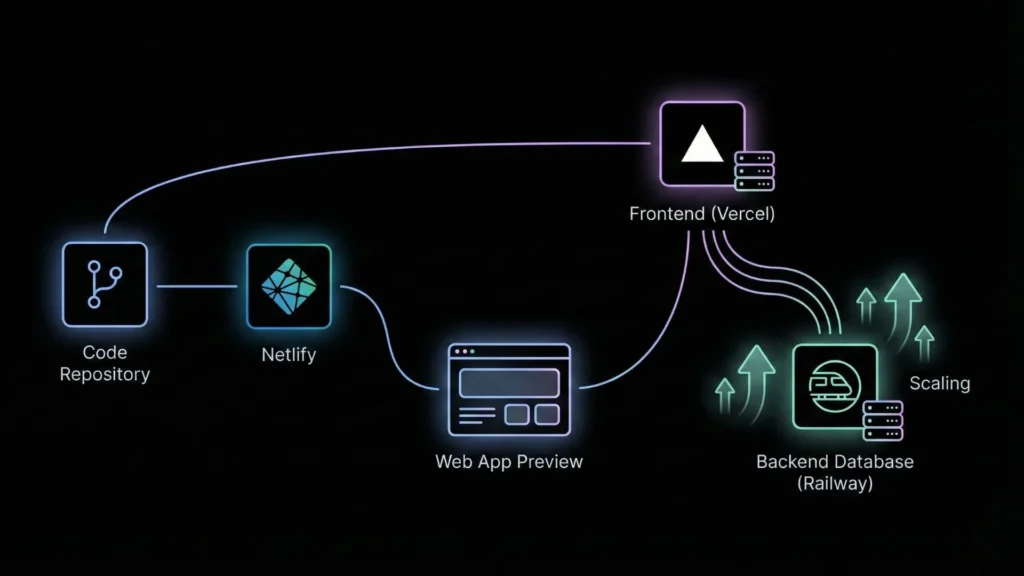
How your application runs, scales, and handles traffic is just as important as how it is built.
Windsurf’s Infrastructure Approach:
- Windsurf deeply understands your specific codebase through an optimized retrieval augmented generation approach, allowing it to predict intent and refactor complex logic.
- For deployment, Windsurf offers an App Deploys feature that lets users push web applications directly to Netlify.
- This provides a public URL and automatic builds for frameworks like Next.js, React, Vue, and Svelte.
- However, the ultimate performance and scalability of the final app still rely heavily on the developer’s ability to write efficient code.
Imagine.bo’s Infrastructure Approach:
- Imagine.bo is built for high stakes usage, offering applications designed for high performance with up to 1,000 transactions per second.
- It abstracts away the complexity of cloud DevOps.
- The frontend user interface is deployed to Vercel, ensuring global edge caching and incredibly fast load times.
- The database and server logic are powered by Railway, ensuring automatic scaling to handle traffic spikes effortlessly.
Security and Compliance Foundations
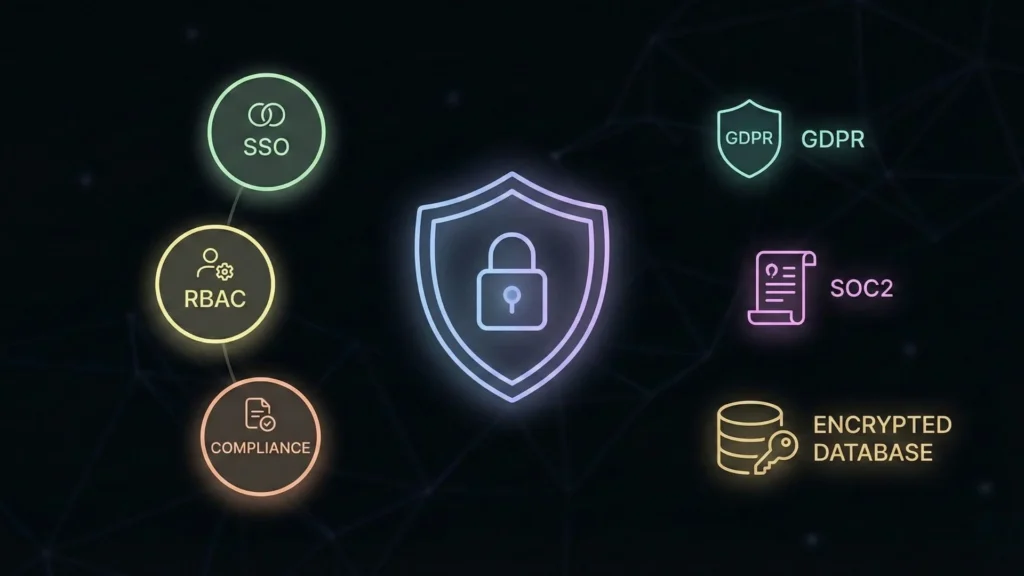
Security is handled very differently depending on whether you are writing the code locally or letting a cloud platform generate it.
Windsurf Security Features:
- Windsurf provides robust security options for enterprise teams, including a FedRAMP deployment that runs on AWS GovCloud.
- It supports Single Sign-On using both OIDC and SAML 2.0 protocols.
- Administrators can utilize Role Based Access Control to govern administrative privileges and ensure the principle of least privilege.
- It also allows for global
.codeiumignorefiles to prevent the AI from viewing or editing sensitive files across all repositories.
Imagine.bo Security Features:
- Imagine.bo treats security as an immutable foundation, ensuring every app is built on enterprise grade cloud infrastructure.
- Apps created with the platform come with built-in security best practices and compliance foundations like GDPR and SOC2 readiness.
- It implements secure authentication and role based access control out of the box to keep user data completely safe.
- SSL, HTTPS, and data encryption are included by default.
Pricing and Credit Systems
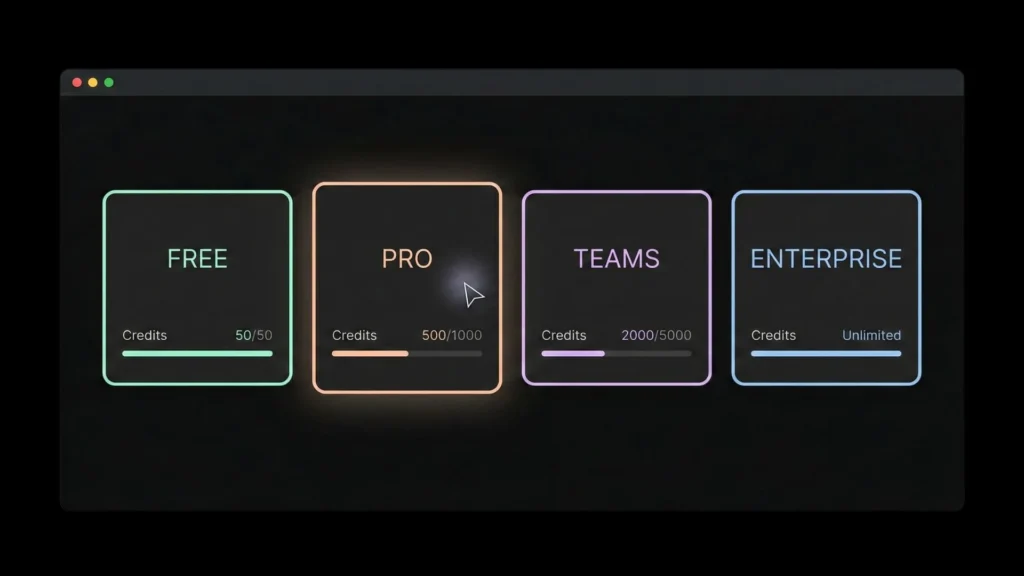
Both platforms utilize a credit based system to manage AI generation, but their pricing tiers and credit allocations differ significantly.
| Plan Tier | Windsurf | Imagine.bo |
| Free Plan | $0 per month for 25 prompt credits | $0 per month for 10 credits |
| Entry Paid Plan | Pro at $15 per month for 500 credits | Lite at $7 per month for 60 credits |
| Mid-Tier Plan | Teams at $30 per user for 500 credits | Pro at $20 per month for 150 credits |
| Enterprise | Custom pricing for 1,000 credits per user | $249 per month for 2,000 credits |
- Credit Rollover: A major distinction is that Imagine.bo supports credit rollover on all paid plans, meaning unused credits do not expire as long as your subscription is active. Windsurf prompt credits reset at the start of each new billing cycle and do not roll over.
- How Credits Are Consumed: In Windsurf, a prompt credit is consumed whenever a message is sent to Cascade using a premium model, regardless of how many background actions (like searching the codebase or running terminal commands) the AI takes to fulfill your request. In Imagine.bo, credits act as a currency; generating a new page, modifying a database schema, or updating a UI component costs a certain amount of credits based on the complexity of that specific task.
- Add-Ons and Top-Ups: If you run out of credits mid-month, both platforms offer flexible solutions. Windsurf allows Pro users to purchase add-on credits (e.g., $10 for 250 credits), and unlike their monthly credits, these purchased add-ons do not expire and will carry over. Imagine.bo similarly allows you to purchase one-time credit top-ups directly from your dashboard without forcing you to upgrade your plan tier.
- Automatic Credit Refills: Windsurf offers an “Automatic Credit Refills” feature. You can set a monthly budget cap, and the system will automatically top up your credits when your balance drops below 15, ensuring you don’t lose access during critical work.
- Free Trials and Real-World Capacity: Windsurf offers a 2-week Pro trial with 100 prompt credits so you can test its premium features. For context on what Imagine.bo’s credits get you, their Pro plan (150 credits) provides enough capacity to build 40–60 simple pages or one robust 10–15 page application featuring full authentication and database workflows.
Automation vs Human Support (The Safety Net)
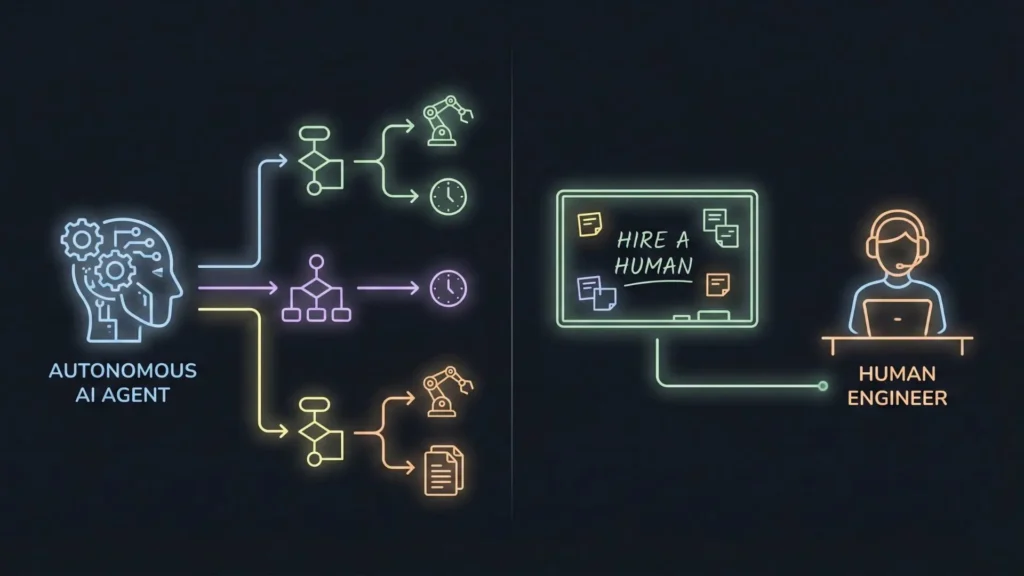
A major differentiator between these two tools is what happens when the artificial intelligence reaches its technical limits.
Windsurf’s Autonomous Agents:
- Windsurf relies on Cascade, an agent that can think 10 steps ahead.
- Cascade can make up to 20 tool calls per prompt, meaning it will automatically search the web, analyze files, and run terminal commands to solve problems on its own.
- It also features an Auto-fix capability where it will detect and fix lint errors that it generates without consuming extra credits.
- If the AI gets stuck, the human developer must manually step in, debug the code, and write the solution.
Imagine.bo’s “Hire a Human” Feature:
- Imagine.bo acknowledges that AI is powerful but not flawless.
- If a user hits a limitation or needs highly complex custom logic, they can instantly assign a task to a real, vetted Imagine.bo engineer directly from their dashboard.
- This hybrid model ensures that projects never stall.
- Users get the speed of AI generation with the quality assurance and reliability of a senior engineer.
Prompting and Iteration Best Practices
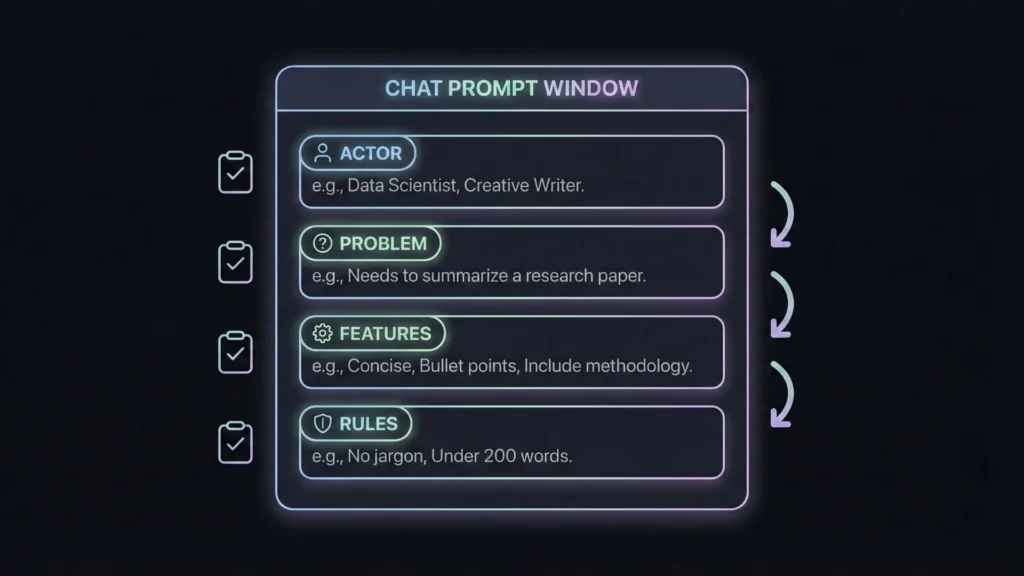
To get the most out of these platforms, users must master how they communicate with the AI.
Mastering Imagine.bo Prompts:
- Define the Actor: Always specify who the app is for, such as “a small team of designers” or “students tracking homework”.
- State the Core Problem: Clear problem descriptions give the AI focus, such as “allow customers to book appointments”.
- List Explicit Features: Do not use vague terms like “add task management.” Instead, explicitly list “tasks with deadlines, priority, and notifications”.
- Establish Rules: Add edge behaviors early, such as “only admins can delete records” to ensure proper access control logic is built.
- Start Small: Prioritize a Minimum Viable Product scope first, adding only essential screens before expanding.
Mastering Windsurf Cascade:
- Use Workflows: Automate repetitive tasks by creating reusable workflows saved as markdown files. These can automate deployment steps, security scans, or code formatting.
- Leverage Memories: Cascade will remember important things about your codebase. You can create specific rules, like “Follow Next.js patterns” to guide the AI consistently.
- Contextual @-Mentions: Use @-mentions to send problems, files, or even previous conversation trajectories directly into the Cascade panel for hyper-specific context.
Collaboration and Team Workflows
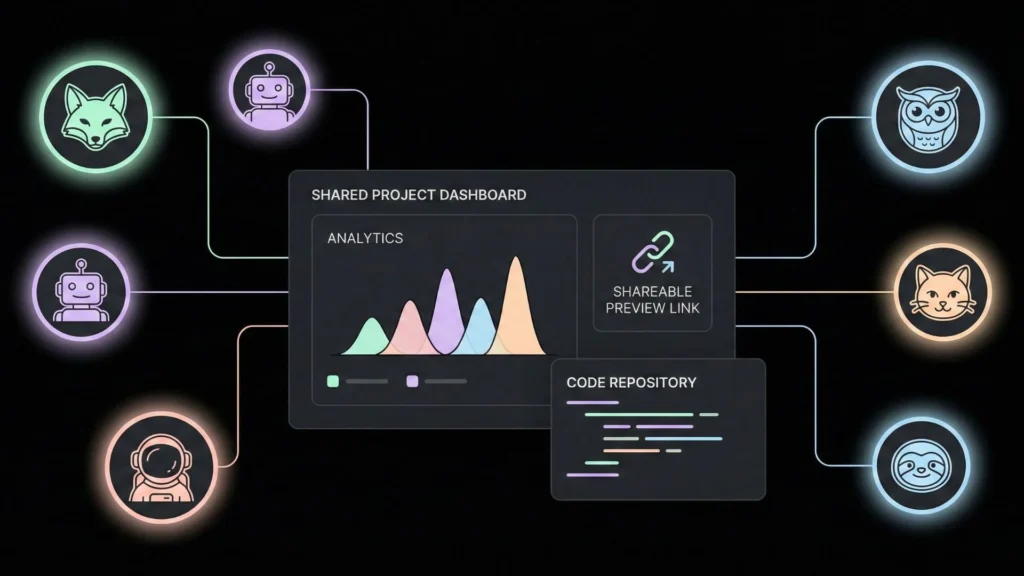
Building modern software requires seamless collaboration, and both tools offer specialized features for teams.
Team Features in Windsurf:
- Windsurf allows users on Teams and Enterprise plans to share their Cascade conversation trajectories with teammates.
- Team leads can access advanced analytics dashboards to view usage patterns, lines of code written, and the percentage of code generated by AI.
- Enterprise organizations can deploy system level workflows globally across all workspaces to enforce organization wide compliance.
Team Features in Imagine.bo:
- Imagine.bo supports professional workflows by allowing users to invite collaborators directly into the dashboard.
- Team members can share roles and permissions to work safely on the same project.
- Users can generate shareable app preview links to gather fast feedback from stakeholders before pushing major deployments.
Conclusion
Choosing between these two modern development tools ultimately comes down to your technical background, your team structure, and your end goals.
Windsurf is an incredibly powerful environment for developers who love the craft of coding but want an autonomous agent to handle the heavy lifting of refactoring, terminal commands, and debugging. It is the ultimate mechanic’s tool for building custom software line by line with unprecedented speed.
Imagine.bo is the ideal product partner for founders, small businesses, and non technical teams who need to launch revenue ready business assets. It bypasses the manual coding phase entirely, giving you a professional grade application that is secure, scalable, and fully supported by real human engineers when you need them.
Launch Your App Today
Ready to launch? Skip the tech stress. Describe, Build, Launch in three simple steps.
Build