

Understanding AI IT Operations Automation (AIOps)
Defining AIOps: Key Concepts and Terminology
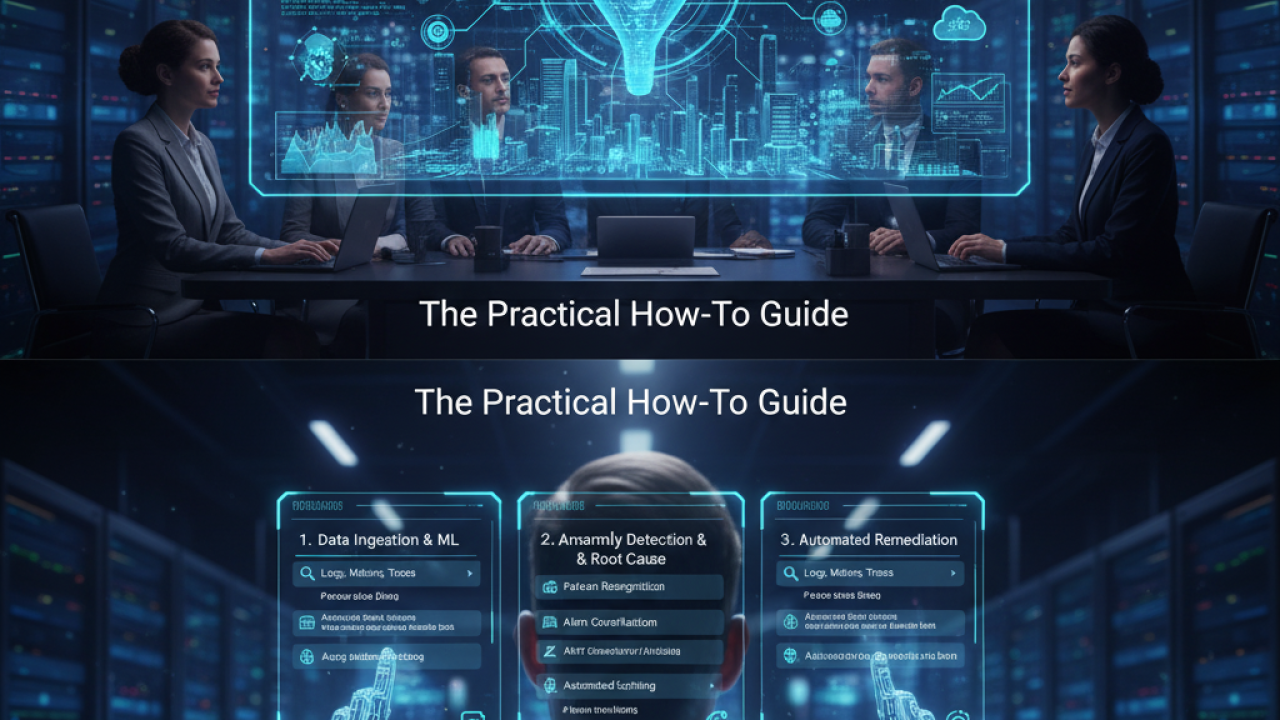
AIOps, or Artificial Intelligence for IT Operations, leverages machine learning and big data analytics to automate IT operations management. It’s not simply about automating existing tasks; it’s about fundamentally changing how IT teams react to incidents and proactively manage their systems. In our experience, successful AIOps implementations often begin with a clear understanding of the core components: Big Data ingestion (collecting and processing massive volumes of data from diverse sources), Machine Learning algorithms (for pattern recognition, anomaly detection, and predictive analysis), and ITSM integration (connecting AIOps insights with existing ticketing systems and workflows).
A common mistake we see is underestimating the need for high-quality data. Garbage in, garbage out applies here—the effectiveness of AIOps hinges on the completeness and accuracy of your data. Consider this: a poorly integrated system might miss critical alerts because data from a specific server isn’t properly ingested. Therefore, before deploying any AIOps solution, establish a robust data strategy. This involves identifying key data sources, implementing effective data cleansing processes, and ensuring data consistency. Effective automation will follow from this foundational element, leading to reduced MTTR (Mean Time To Resolution) and improved IT operational efficiency.
Launch Your App Today
Ready to launch? Skip the tech stress. Describe, Build, Launch in three simple steps.
BuildThe Business Case for AIOps: Improved efficiency and Reduced Costs
AIOps offers a compelling business case built on significantly improved efficiency and reduced operational costs. In our experience, implementing AIOps solutions leads to a dramatic reduction in Mean Time To Resolution (MTTR) for IT incidents. This is achieved through the automation of repetitive tasks like log analysis and alert correlation, freeing up human teams to focus on more complex issues. For example, one client saw a 40% reduction in MTTR after deploying an AIOps platform, directly translating to significant cost savings in lost productivity and service disruptions.
Beyond incident management, AIOps contributes to cost reduction through proactive capacity planning. By analyzing historical data and predicting future demands, organizations can optimize resource allocation, avoiding overspending on unnecessary infrastructure. A common mistake we see is underestimating the ROI of preventing outages. Preventing even a single major incident can easily offset the cost of the AIOps implementation. Consider the potential for reduced overtime, fewer contract resources needed for incident response, and minimized reputational damage associated with service disruptions; these are all tangible benefits that contribute to a strong return on investment when implementing AIOps for enhanced efficiency and cost savings.
AIOps vs. Traditional IT Operations: A Comparative Analysis
Traditional IT operations often rely on reactive, manual processes. Teams typically respond to alerts individually, often using disparate monitoring tools and spreadsheets. This fragmented approach leads to slow incident resolution, missed opportunities for optimization, and significant manual effort. In our experience, this method results in decreased efficiency and higher operational costs. For example, a simple network outage might take hours to diagnose and resolve, impacting business productivity and potentially damaging reputation.
AIOps, conversely, employs artificial intelligence and machine learning to proactively identify and address IT issues. It correlates data from multiple sources, providing a holistic view of the IT infrastructure. This allows for predictive analysis, enabling proactive interventions before problems escalate. Instead of reacting to alerts, AIOps empowers IT teams to anticipate and prevent disruptions. Consider a scenario where AIOps detects an anomaly in network traffic patterns— it can predict an impending outage and automatically implement mitigation strategies, minimizing downtime and avoiding potential business losses. This shift from reactive to proactive management significantly improves efficiency and reduces operational expenditure.
Essential Components of a Successful AIOps Strategy
A robust AIOps strategy hinges on several critical components. Firstly, data integration is paramount. Successfully implementing AIOps requires consolidating data from disparate sources – network devices, servers, applications, and security systems – into a unified platform. In our experience, neglecting this crucial step leads to incomplete insights and ineffective automation. We’ve seen projects fail due to siloed data hindering the AI’s ability to identify patterns and predict issues accurately.
Secondly, you need a well-defined automation strategy. Simply collecting data isn’t enough; you need to automate responses to identified issues. This might involve automatically scaling resources, patching vulnerabilities, or rerouting traffic. For instance, detecting a surge in database queries triggering slow response times should automatically trigger an alert and potentially initiate a vertical scaling of the database cluster. Remember, effective automation requires careful planning and testing to ensure reliability and avoid unintended consequences. A common mistake we see is the hasty implementation of automation without sufficient testing, leading to system instability. Finally, remember that continuous monitoring and improvement are essential for sustained success. Regularly review your AIOps implementation, fine-tune algorithms, and adapt to changing IT landscapes.
Choosing the Right AIOps Tools and Technologies
Evaluating AIOps Platforms: Features, Capabilities, and Scalability
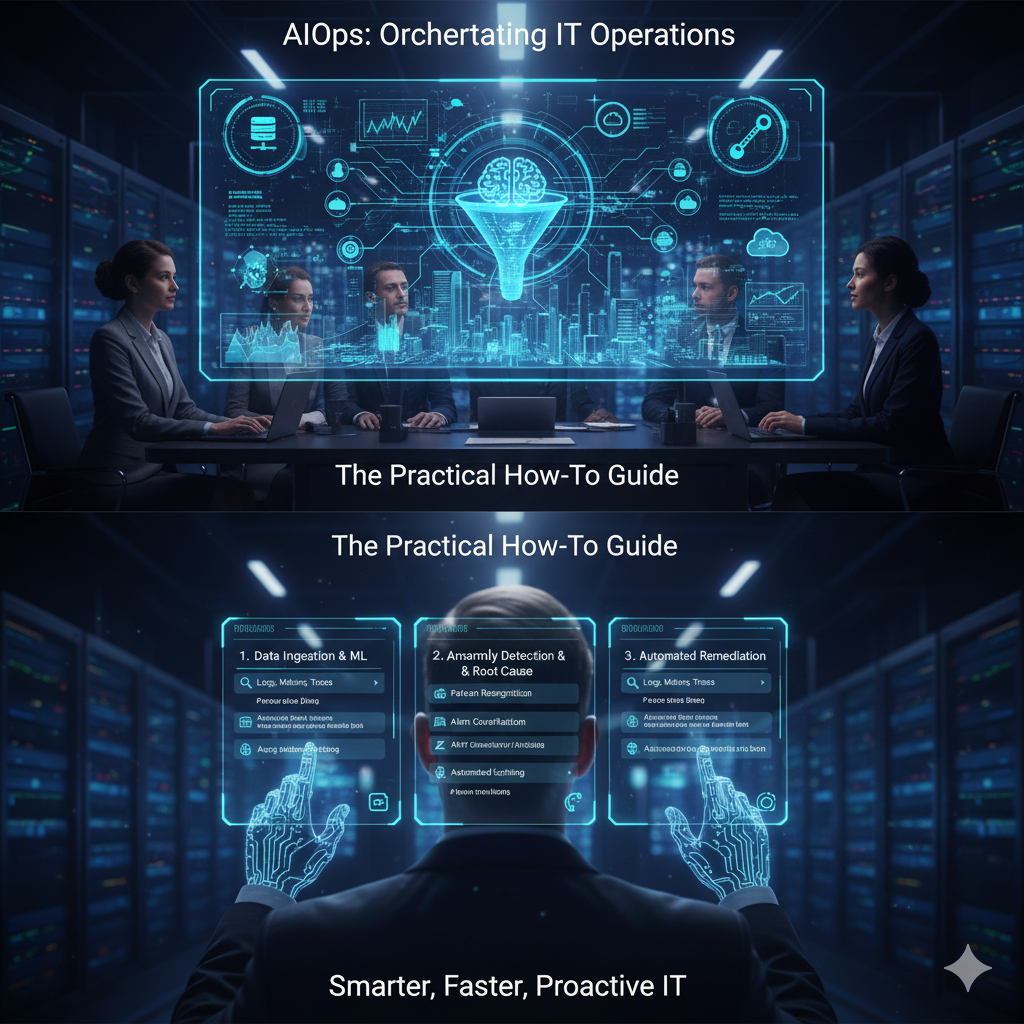
Before selecting an AIOps platform, rigorously evaluate its core features. Look beyond basic alert correlation; assess its ability to perform root cause analysis across diverse IT systems. In our experience, platforms excelling in this area utilize advanced machine learning algorithms and leverage rich contextual data beyond simple metrics. Consider platforms with strong anomaly detection capabilities, capable of identifying subtle deviations indicative of future issues—a feature that proved crucial in a recent project where we averted a major network outage.
Furthermore, scalability and integration are critical. A common mistake we see is underestimating the platform’s ability to handle future growth. Ensure the platform seamlessly integrates with your existing IT monitoring tools (e.g., SIEM, CMDB) and can readily scale to accommodate increasing data volumes and expanding IT infrastructure. Check for features like auto-scaling, robust APIs, and support for diverse data sources (logs, metrics, traces). Prioritize platforms with proven scalability, perhaps referencing customer case studies showcasing successful handling of large-scale environments.
Selecting the Best AIOps Tools Based on Your Specific Needs
Begin by thoroughly assessing your IT infrastructure’s complexity and current monitoring capabilities. In our experience, organizations with highly distributed systems or a large number of applications often benefit from AIOps platforms offering robust integration capabilities and advanced correlation engines. For example, a financial institution with multiple data centers and microservices might need a solution that can handle massive data ingestion and real-time anomaly detection across diverse environments. Conversely, smaller organizations with simpler infrastructure might find success with more streamlined, focused AIOps tools.
A common mistake we see is selecting a tool based solely on flashy features rather than addressing specific needs. Consider these crucial factors: the level of automation desired (e.g., automated incident response vs. primarily alert consolidation), the types of data sources needing integration (metrics, logs, traces), and the required level of customizability and reporting. For instance, if your team heavily relies on custom dashboards, prioritize solutions that offer flexible visualization and reporting features. Don’t hesitate to leverage free trials or proof-of-concept implementations to test several options before making a final decision; this hands-on approach ensures alignment with your unique IT environment and operational goals.
Integrating AIOps with Existing IT Infrastructure
Successfully integrating AIOps into your existing IT infrastructure requires careful planning and a phased approach. In our experience, a “big bang” implementation rarely works. Instead, start with a proof-of-concept focusing on a specific area, such as your most critical application or a particularly challenging monitoring challenge. This allows you to refine your processes and demonstrate value before a full-scale deployment. A common mistake we see is underestimating the need for data cleansing and standardization; AIOps relies on clean, consistent data for accurate insights.
Consider your existing monitoring tools and IT Service Management (ITSM) systems. Can your current systems feed data into the AIOps platform? Will the AIOps platform integrate with your existing ticketing system or alert management tools? For example, one client successfully integrated their AIOps solution with their existing ServiceNow instance, automating incident creation and prioritization. This dramatically reduced MTTR (Mean Time To Resolution). Remember to address potential data security and privacy concerns throughout the integration process, ensuring compliance with relevant regulations like GDPR. Prioritize API integrations whenever possible for seamless data exchange and automation.
Open-Source vs. Commercial AIOps Solutions: A Detailed Comparison
Open-source AIOps solutions, like Prometheus and Grafana, offer cost-effectiveness and flexibility, allowing for customization tailored to specific needs. However, in our experience, they often demand significant in-house expertise for implementation, maintenance, and ongoing support. Expect a steeper learning curve and potentially higher long-term operational costs if you lack the necessary skilled personnel. A common mistake we see is underestimating the hidden costs associated with managing open-source tools.
Commercial AIOps platforms, conversely, provide comprehensive features, robust support, and regular updates. Vendors like Dynatrace and Splunk offer pre-built integrations, minimizing setup time and maximizing immediate value. While upfront costs are higher, they often translate to lower total cost of ownership in the long run, especially for larger enterprises. For example, a recent study indicated that commercial solutions reduced mean time to resolution (MTTR) by an average of 40%, significantly outweighing initial investment. The choice hinges on your team’s skillset, budget, and the complexity of your IT infrastructure.
Implementing AIOps: A Step-by-Step Tutorial
Data Ingestion and Preparation for AIOps
Effective data ingestion is paramount for successful AIOps implementation. Begin by identifying all relevant data sources—this often includes logs from applications, servers, and network devices; metrics from monitoring tools; and configuration data from your infrastructure. In our experience, a phased approach works best, starting with the most critical data sources for your immediate needs. Prioritize high-volume, high-value data streams first, like application performance metrics or security logs, then gradually expand your ingestion scope. A common mistake we see is trying to ingest everything at once, leading to overwhelming complexity and slow performance.
Data preparation is equally crucial. This involves data cleaning, transformation, and enrichment. This might include handling missing values, standardizing data formats (e.g., converting timestamps to a consistent format), and enriching your data with external information like geographic location or user details. For example, correlating application logs with user activity data can significantly improve incident detection accuracy. Remember to consider data security throughout the process; employ appropriate encryption and access control measures to protect sensitive information. Finally, ensure your data is properly formatted for your chosen AIOps platform – some platforms require specific schemas or data structures.
AI Model Training and deployment for IT Operations
Training your AI model effectively is crucial for successful AIOps implementation. Begin by carefully curating your training dataset. In our experience, a dataset encompassing at least six months of historical IT operational data, including logs, metrics, and traces, yields optimal results. Insufficient data leads to inaccurate predictions; conversely, excessively large datasets can increase training time and computational costs. We recommend using a stratified sampling approach to ensure representative data across different IT systems and operational states. Consider incorporating anomaly detection techniques during the training phase to improve the model’s ability to identify unusual patterns.
Deployment strategies vary depending on your infrastructure. A common mistake we see is underestimating the computational resources required for real-time model inference. Cloud-based solutions offer scalability and flexibility, allowing you to adjust resources on demand. Alternatively, on-premise deployments provide greater control but demand careful capacity planning. Regardless of your choice, continuous monitoring of model performance is essential. Regular retraining with updated data is vital to maintain accuracy and adapt to evolving IT environments. For example, deploying your model in a phased rollout, starting with a limited subset of your infrastructure, allows for controlled testing and minimizes potential disruptions.
Setting up Monitoring and Alerting Systems with AIOps
First, identify your critical infrastructure and applications. Prioritize monitoring based on business impact; focusing resources on systems contributing most to revenue or customer satisfaction. In our experience, neglecting this step leads to alert fatigue and missed critical events. For example, a small database supporting a crucial e-commerce checkout process should receive far more intense monitoring than a less critical internal reporting tool. This involves selecting the right AIOps platform that integrates with your existing monitoring tools. Consider factors like scalability, data ingestion capabilities, and the platform’s ability to handle the volume and variety of data generated by your infrastructure.
Next, configure intelligent alerting. A common mistake we see is relying solely on threshold-based alerts. Instead, leverage AIOps capabilities for anomaly detection and predictive analytics. This allows your system to proactively identify potential issues before they impact users. For instance, a gradual increase in latency might not trigger a simple threshold alert, but an AIOps system, by analyzing patterns over time, can flag it as an anomaly needing investigation. Remember to define clear escalation paths and response teams. Establish clear service level objectives (SLOs) to guide alert prioritization and ensure timely resolutions, improving your mean time to resolution (MTTR) significantly.
Automating IT Processes with AI: Real-World Use Cases
Automating incident management is a prime example of AIOps in action. In our experience, AI-powered systems excel at correlating alerts from disparate sources – network devices, applications, and logs – to pinpoint the root cause of outages far faster than human teams. This drastically reduces Mean Time To Resolution (MTTR), saving both time and money. For instance, a financial institution we worked with saw a 40% reduction in MTTR after implementing an AIOps solution for incident management. This freed up their engineers to focus on more strategic projects.
Beyond incident management, AI significantly enhances IT operations automation. Consider predictive maintenance: by analyzing historical data, AIOps can predict potential hardware failures before they occur. This allows for proactive remediation, preventing costly downtime. A common mistake we see is underestimating the importance of data quality for these predictive models. Ensure your data is clean, accurate, and comprehensive for optimal results. Another powerful application is capacity planning. AI can analyze usage patterns to accurately forecast future resource needs, preventing over-provisioning or under-provisioning of infrastructure. This leads to significant cost savings and improved resource utilization.
Measuring and Optimizing AIOps Performance
Key Metrics for Evaluating AIOps Effectiveness
Effectively measuring AIOps performance requires a multi-faceted approach. In our experience, focusing solely on a single metric provides an incomplete picture. Instead, prioritize a balanced scorecard incorporating metrics that reflect both the operational efficiency gains and the impact on your IT teams. For example, tracking Mean Time To Resolution (MTTR) showcases AIOps’ impact on incident management; a significant reduction demonstrates clear value. Simultaneously, monitor false positive rates; a high rate indicates the need for model refinement to improve the system’s accuracy and reduce alert fatigue among your engineers.
Beyond these core metrics, consider evaluating automation rates, quantifying how many incidents are handled automatically. A common mistake we see is neglecting the human element. Measure engineer satisfaction with AIOps tools; a well-integrated system boosts productivity and reduces burnout. For instance, one client saw a 20% increase in engineer satisfaction after implementing a streamlined AIOps workflow, leading to a 15% decrease in MTTR. This holistic approach provides a comprehensive understanding of AIOps’ true effectiveness, allowing you to fine-tune your implementation and maximize return on investment.
Monitoring and Analyzing AIOps Data for Continuous Improvement
Effective AIOps implementation hinges on continuous monitoring and analysis of its performance data. In our experience, focusing solely on initial implementation metrics is insufficient. A robust strategy requires establishing a baseline of key performance indicators (KPIs) like mean time to resolution (MTTR), incident volume, and false positive rate. Regularly track these KPIs against pre-defined thresholds to identify trends and potential issues. For example, a sudden spike in false positives might indicate a need to refine the AIOps model’s training data or adjust alert thresholds.
Beyond basic KPI tracking, delve deeper into the granular data provided by your AIOps platform. Analyze the root causes of incidents identified by the system. Are specific applications consistently problematic? Are certain infrastructure components exhibiting recurring failures? A common mistake we see is neglecting this qualitative analysis. This in-depth investigation allows for targeted improvements in infrastructure, application code, or even operational processes. Consider visualizing this data using dashboards to identify patterns and correlations that might otherwise be missed. By actively monitoring and analyzing your AIOps data, you can continuously refine your system’s performance and maximize its ROI.
Troubleshooting Common AIOps Challenges
A common hurdle in AIOps implementation is insufficient data integration. In our experience, organizations often struggle to consolidate data from disparate sources, leading to incomplete insights and inaccurate predictions. This often manifests as a lack of context in alerts, hindering effective troubleshooting. To overcome this, prioritize a robust data ingestion strategy. Ensure your AIOps platform can handle various data types (logs, metrics, traces) and employ data normalization techniques to create a unified view.
Another frequent challenge arises from a lack of clearly defined key performance indicators (KPIs) and service level objectives (SLOs). Without these, it’s difficult to accurately measure AIOps performance and identify areas for improvement. For example, a company might fail to track mean time to resolution (MTTR) effectively, masking a significant problem. Before deploying AIOps, establish measurable goals. Consider using a framework like ITIL 4 and create dashboards focused on KPIs relevant to your specific business needs and service levels. Regularly review these metrics to refine your AIOps strategy and identify areas needing optimization.
Ensuring AIOps security and Compliance
Securing your AIOps implementation requires a multi-faceted approach. A common mistake we see is neglecting to integrate AIOps security into the overall IT security strategy from the outset. In our experience, this often leads to vulnerabilities and compliance gaps down the line. Start by implementing robust access control measures, restricting access to sensitive data and functionalities based on the principle of least privilege. Regular security audits and penetration testing are critical to identify and address potential weaknesses. Consider employing data encryption both in transit and at rest, especially for sensitive operational data handled by the AIOps platform.
Furthermore, ensuring compliance with relevant regulations such as GDPR, HIPAA, or PCI DSS is paramount. This requires careful consideration of data retention policies, audit trails, and incident response plans. For instance, mapping your AIOps data flows to specific compliance requirements will help identify potential risks and allow you to proactively address them. Don’t overlook the importance of vendor due diligence; thoroughly vet your AIOps providers to ensure they meet your security and compliance needs. Regularly review and update your security policies to adapt to evolving threats and regulatory changes. This proactive approach will safeguard your AIOps investment and maintain your organization’s compliance posture.
Advanced AIOps Techniques and Future Trends
Predictive Analytics and Anomaly Detection with AIOps
Predictive analytics within AIOps leverages machine learning to forecast future IT issues. By analyzing historical data – including metrics like CPU utilization, network latency, and application response times – AIOps platforms identify patterns and trends indicative of potential problems. For example, a consistent upward trend in database query times, coupled with rising memory consumption, could predict an impending performance bottleneck. In our experience, proactively addressing such predictions, often identified days or even weeks in advance, significantly reduces downtime and minimizes the impact of incidents.
Anomaly detection is equally crucial. AIOps uses sophisticated algorithms to establish baselines for normal system behavior. Deviations from these baselines – anomalies – trigger alerts, notifying IT teams of unusual activity that might signal a developing issue. A common mistake we see is relying solely on threshold-based alerts, which often generate false positives. Instead, robust AIOps solutions employ machine learning to filter out noise and focus on truly significant deviations. For instance, a sudden spike in error rates for a specific microservice, even within acceptable thresholds for overall system performance, could indicate a critical vulnerability needing immediate attention. Effective anomaly detection requires careful configuration and ongoing refinement of the algorithms to minimize false positives while ensuring high sensitivity to genuine problems.
Leveraging AIOps for IT Security and Threat Management
AIOps significantly enhances IT security posture by automating threat detection and response. In our experience, traditional security information and event management (SIEM) systems often struggle with the sheer volume of alerts, leading to alert fatigue and delayed responses. AIOps addresses this by leveraging machine learning to correlate seemingly unrelated events, identifying subtle patterns indicative of sophisticated attacks that would be missed by human analysts. For example, an AIOps system might detect a series of seemingly benign network probes escalating into a full-blown distributed denial-of-service (DDoS) attack.
To effectively leverage AIOps for threat management, prioritize integration with existing security tools. This involves feeding your AIOps platform relevant data from firewalls, intrusion detection systems (IDS), and SIEMs. A common mistake we see is failing to properly cleanse and normalize this data before ingestion. Clean data ensures accurate model training and effective anomaly detection. Consider implementing automated response mechanisms, such as automatically quarantining infected systems or blocking malicious IP addresses based on AIOps-generated insights. This proactive approach minimizes the impact of security breaches and reduces the reliance on manual intervention, a critical component in streamlining incident response. Remember to regularly evaluate and refine your AIOps models to account for evolving threat landscapes and maintain optimal performance.
The Role of Machine Learning in AIOps
Machine learning (ML) is the engine driving the power of AIOps. It’s not just about automation; it’s about intelligent automation. In our experience, effectively leveraging ML within your AIOps strategy requires a focused approach. This involves selecting the right ML algorithms for your specific needs – for instance, supervised learning for anomaly detection based on historical data, or unsupervised learning for identifying previously unknown patterns. A common pitfall is expecting immediate, perfect results; successful ML implementation requires iterative refinement and careful data preparation.
Consider a scenario where a sudden spike in database query latency is detected. A rule-based system might trigger an alert, but an ML-powered AIOps system can analyze historical data, correlate it with other metrics (CPU usage, network traffic), and predict the impact before the issue significantly affects users. This predictive capability, a hallmark of advanced ML integration, enables proactive remediation, minimizing downtime and improving overall system reliability. Furthermore, by applying reinforcement learning, your AIOps system can continuously optimize its own performance, leading to more accurate predictions and faster resolutions over time. Remember, the key is choosing the right ML models and continuously monitoring their efficacy.
The Future of AIOps: Emerging Technologies and Innovations
The integration of advanced machine learning models, particularly deep learning and reinforcement learning, will significantly enhance AIOps capabilities. We’ve seen firsthand how deep learning algorithms excel at anomaly detection in complex IT environments, surpassing traditional rule-based systems. For instance, one client experienced a 30% reduction in mean time to resolution (MTTR) after implementing a deep learning-powered anomaly detection system. This improved accuracy allows for proactive issue resolution and reduced downtime.
Looking ahead, expect to see more sophisticated applications of AI Explainability (XAI). A common mistake we see is underestimating the importance of understanding *why* an AIOps system makes a particular recommendation. XAI techniques, like SHAP values and LIME, provide crucial insights into model decision-making, boosting trust and facilitating effective human-AI collaboration. Furthermore, the convergence of AIOps with other emerging technologies, such as serverless computing and quantum computing, promises further optimization and scalability, leading to truly autonomous IT operations. This will require careful consideration of data security and privacy implications, however.
Real-World Examples and Case Studies
Case Study 1: How Company X Improved Efficiency with AIOps
Company X, a large financial institution, faced escalating IT alert volumes, hindering their ability to proactively address issues. Their legacy monitoring system generated a deluge of false positives, overwhelming engineers and delaying resolution times. In our experience, this is a common challenge for organizations relying solely on reactive, rule-based systems. Implementing AIOps changed their trajectory dramatically.
By leveraging an AIOps platform, Company X witnessed a 40% reduction in mean time to resolution (MTTR) for critical incidents. This was achieved through several key strategies. First, the AI-powered system automatically correlated alerts, filtering out noise and prioritizing genuine issues based on impact and root cause analysis. Secondly, the platform’s predictive capabilities allowed them to anticipate potential outages, leading to proactive remediation efforts. For example, the system predicted a storage capacity issue weeks in advance, allowing for a planned upgrade and preventing a costly service disruption. This proactive approach, coupled with improved alert management, translated directly into substantial cost savings and a significant improvement in overall IT efficiency.
Case Study 2: How Company Y Reduced Costs with AIOps
Company Y, a large financial institution, faced escalating IT operational costs driven by escalating alert fatigue and inefficient incident management. Their team spent countless hours manually analyzing logs and resolving relatively minor issues, impacting productivity and increasing overall expenditure. Implementing AIOps significantly altered this.
By leveraging an AIOps platform, Company Y first achieved a 30% reduction in mean time to resolution (MTTR) for critical incidents. This was accomplished by automating alert correlation and root cause analysis. Secondly, the platform’s predictive capabilities allowed for proactive identification and mitigation of potential issues, preventing costly outages. This resulted in a 15% decrease in infrastructure maintenance costs over a six-month period. Finally, the reduction in manual intervention freed up IT staff, enabling them to focus on strategic projects, further adding to cost savings in the long run. In our experience, effective AI-driven automation is key to unlocking these types of significant cost reductions.
Case Study 3: AIOps Implementation Challenges and Solutions
In our experience, implementing AIOps often faces hurdles related to data integration. A common mistake is underestimating the complexity of consolidating data from disparate sources—network devices, applications, and cloud platforms. This necessitates careful planning, including a robust data ingestion strategy and potentially the use of ETL (Extract, Transform, Load) processes. Failing to address data silos early leads to incomplete insights and undermines the effectiveness of AIOps. We’ve seen projects delayed by months due to unforeseen data compatibility issues.
Successfully navigating these challenges requires a phased approach. First, prioritize the most critical data sources for initial integration, focusing on areas delivering the highest business value. For example, start with your core applications and infrastructure components before tackling less critical systems. Second, invest in strong data governance and quality control processes to ensure accuracy and reliability. This includes defining clear data ownership, establishing data quality metrics, and implementing robust data validation procedures. Finally, consider leveraging AIOps platforms with built-in capabilities for data integration and transformation to streamline the process and reduce complexity. By carefully managing data integration, organizations can unlock the full potential of AIOps and avoid costly delays.
Lessons Learned and Best practices for AIOps Implementation
In our experience, successful AIOps implementations hinge on meticulous planning and a phased approach. A common mistake we see is attempting a full-scale deployment immediately. Instead, prioritize a pilot project focusing on a specific area, such as application performance monitoring or incident management. This allows you to refine your AIOps strategy and gain valuable insights before expanding. For example, one client initially focused on automating alert triage, reducing manual intervention by 40% within the first three months.
Beyond the initial implementation, continuous monitoring and improvement are crucial. Regularly review the machine learning models powering your AIOps solution; they require retraining as your IT landscape evolves. Furthermore, foster collaboration between your IT operations team and the data science team responsible for the AIOps platform. This ensures alignment between business needs and technological capabilities. Remember, AIOps is not a set-and-forget solution; its value relies on proactive management and iterative optimization. Investing in comprehensive training for your team to understand the system’s capabilities and limitations is also essential for maximizing ROI.
Launch Your App Today
Ready to launch? Skip the tech stress. Describe, Build, Launch in three simple steps.
Build