
In the rapidly shifting landscape of 2026, the challenge for founders is no longer just “building an app,” but choosing a foundation that sustains long-term growth. While AI-native platforms like Bolt, Lovable and Imagine.bo streamline the generation of full-stack, production-ready code, Quickbase remains a staple for managing complex structured business data. The decision often comes down to a fundamental architectural choice: are you building a tool to manage internal work, or a scalable product to serve external customers?
This comparison breaks down the technical and operational differences between Imagine.bo and Quickbase to help identify which platform aligns with your goals.
Launch Your App Today
Ready to launch? Skip the tech stress. Describe, Build, Launch in three simple steps.
BuildCore Vision: Internal Workflows vs. Production-Ready Applications
Quickbase: Dynamic Work Management
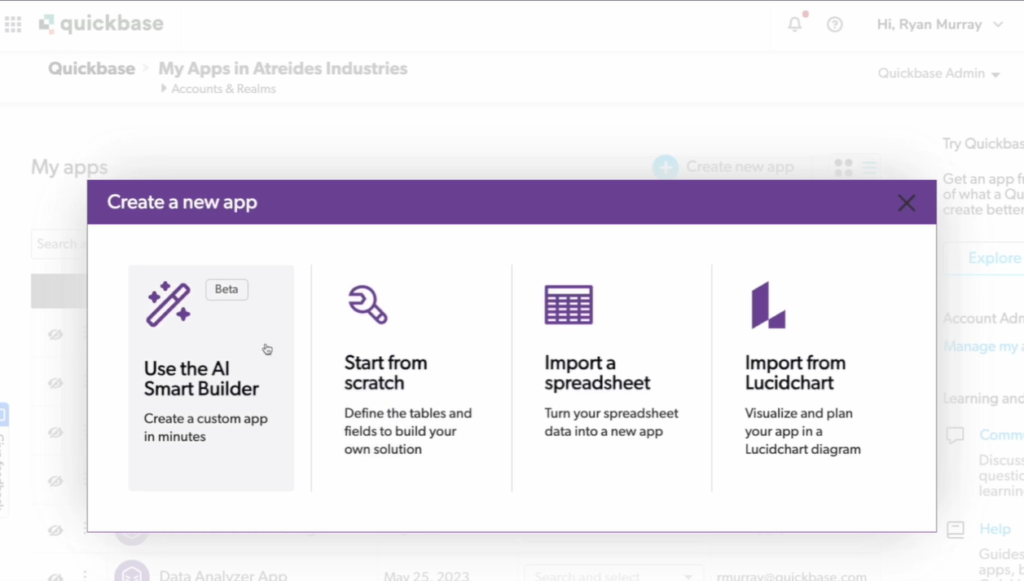
- Quickbase focuses its core philosophy on Dynamic Work Management, aiming to tackle the complex, unstructured tasks that often slow down large enterprises.
- The platform caters heavily to traditional, asset-heavy industries such as construction, manufacturing, property management, and government.
- Quickbase excels at managing compliance tracking, field service management, site safety audits, and OSHA recordkeeping by centralizing scattered data.
- The system is specifically tailored to help enterprises conquer “Gray Work”, which refers to the manual, disconnected spreadsheets and paper trails that exist outside of official ERP systems.
- Quickbase acts as a centralized database where field workers and back-office administrators can collaborate in real time using a single source of truth.
Imagine.bo: The Product Architect
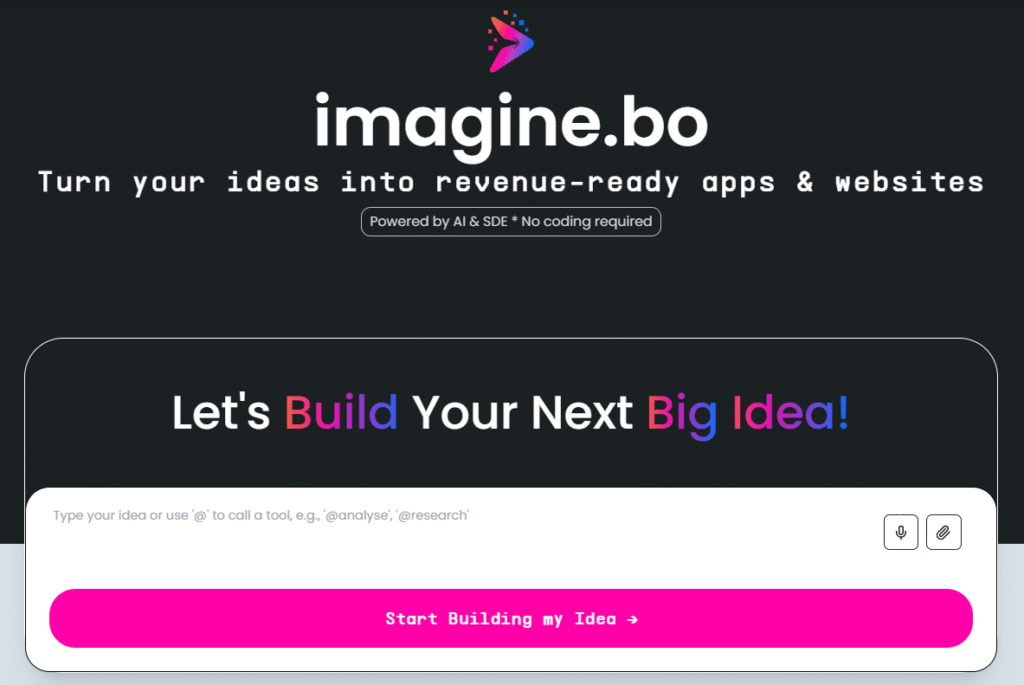
- Imagine.bo is a next-generation, AI-powered application builder that fundamentally reimagines how software is created from scratch.
- It is designed to solve the common trade-off between speed and control in modern software development by generating clean, scalable code.
- The platform empowers founders, growing businesses, and creative designers to move from a raw idea to a launched product in a fraction of the time.
- It generates a complete tech stack automatically, including a responsive frontend interface, a structured database schema, and robust backend logic.
- Users utilize the platform to launch scalable SaaS applications, customized marketplaces, user portals, and complex internal ERP systems that require modern user interfaces.
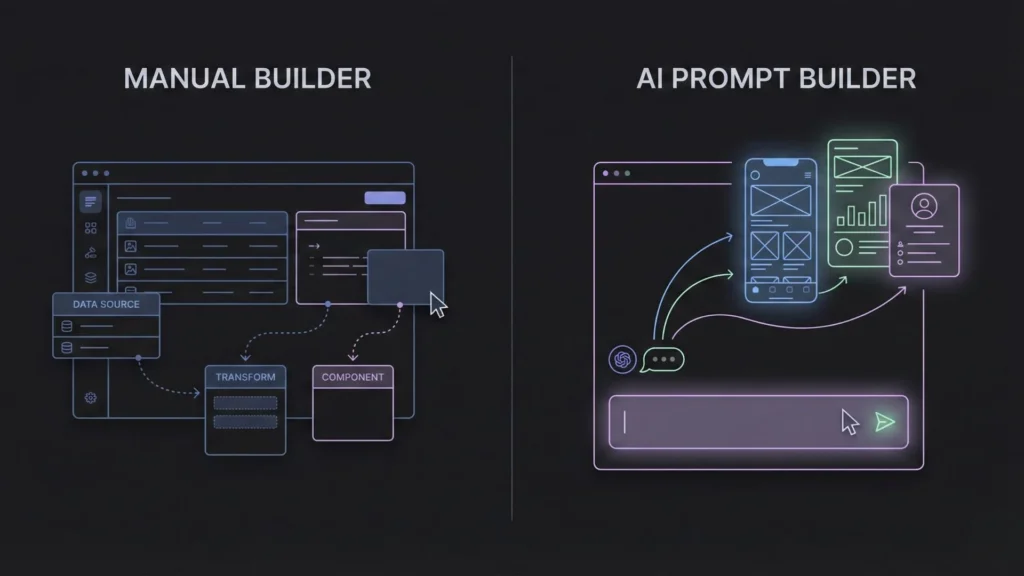
Ease of Use: Manual Architecture vs. Natural Language Prompting
Building with Quickbase
- Quickbase champions a Citizen Development model, enabling business users like project managers and operations leads to build apps without formal computer science training.
- Users interact with the platform using visual tools such as the schema builder, which requires dragging and dropping data tables and manually defining complex relationships.
- The App Exchange provides access to hundreds of template applications and pre-built components to help users get started quickly.
- Quickbase enables connections to third-party services via built-in integration channels and data pipelines.
- Users maintain complete responsibility for the third-party aspects of these integrations, including configuring data mapping and managing API connections.
Building with Imagine.bo
- Imagine.bo utilizes a Describe-to-Build interface powered by highly advanced natural language prompting.
- Users simply describe what they want to build, who the application is for, and the key features in plain English.
- The AI engine acts as a senior developer, proposing frontend components, defining backend API endpoints, and mapping out complex user access flows automatically.
- Once the initial blueprint is generated, users can edit screens, content, layouts, and logic visually using an intuitive drag-and-drop interface.
- No programming languages or deep architectural knowledge are required to construct these production-ready applications, allowing creators to focus entirely on the user experience.
Core Feature Comparison
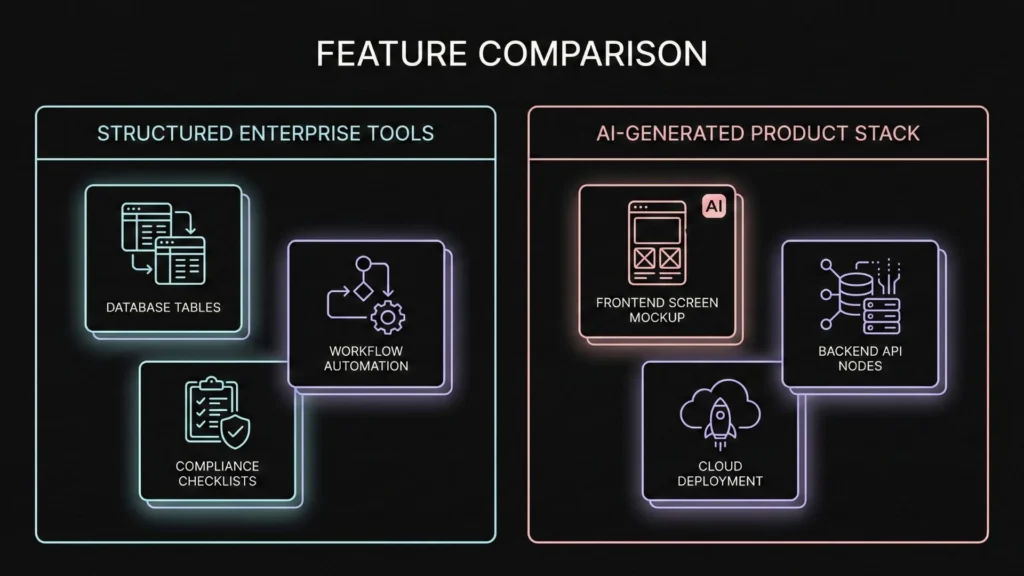
Comparing the foundational features of both platforms highlights their respective strengths and the distinct ways they approach problem-solving for modern businesses. The table below breaks down the fundamental features of both platforms to provide a clear side-by-side view.
| Feature Area | Imagine.bo | Quickbase |
| Target Audience | Founders, Startups, Small Businesses, Designers | Construction, Manufacturing, Government, Solar, Enterprise IT |
| App Generation Method | Natural Language Prompting via AI Reasoning Engine | Visual Builder, Data Import, and Citizen Development |
| Customization Tools | Visual Customization with Drag-and-Drop Editor | Integrations, Automations, Pipelines, and Extensions |
| Deployment Model | Instant one-click deployment to GCP, or Vercel | Cloud-based Hosted Service Subscription within Quickbase architecture |
| Database Handling | Automatic relational database generation powered by Railway | Manual data table structuring, form creation, and relationship mapping |
The differences shown in the table underscore the fundamental divergence in philosophy. Imagine.bo is built around taking an abstract idea and materializing it into a standalone software product. Quickbase is built around taking existing, messy enterprise data and organizing it into a highly governed, accessible system.
Performance, Scaling, and APIs

Scaling no-code or low-code applications often presents significant challenges as data complexity and user bases grow. Both platforms address high availability and infrastructure differently to ensure that applications remain stable under pressure.
Imagine.bo: Built for High-Stakes Execution
- Imagine.bo applications are engineered for high performance out of the box, avoiding the common pitfalls of slow-loading visual builders.
- The infrastructure is designed to handle up to 1,000 transactions per second (TPS), making it suitable for consumer-facing applications.
- User interfaces are deployed seamlessly to Vercel.
- Deploying to Vercel ensures global edge caching, meaning the application loads extremely fast for users regardless of their geographic location.
- Database and server logic are powered by Railway.
- This automated backend setup allows services to scale dynamically and automatically during unexpected traffic spikes or viral growth events.
- Every application generated by Imagine.bo is mobile responsive, secure, and production-ready by default without requiring manual configuration.
Quickbase: Enterprise API and Integrations
- Quickbase offers a comprehensive and deeply integrated API Portal for enterprise developers.
- The RESTful API supports a wide range of actions, including creating apps, updating tables, deleting records, managing users, and running complex reports.
- Enterprise users can access a dedicated API specifically to gather audit logs from an entire realm for security and compliance tracking.
- By default, the audit log API returns a massive 10,000 entries per request, providing deep visibility into user actions.
- Integrators can iterate through batches to gather a full day of logs, integrating this data into external security information and event management (SIEM) systems.
- Quickbase limits audit querying to 1,000 days per year for each realm to maintain optimal platform performance.
- Transactional rate limits on the audit API are strictly enforced at 10 requests per 10 seconds to prevent system overload.
- Quickbase aims for a highly reliable 99.9% uptime availability under its Service Level Agreement (SLA).
Support Models: Center of Excellence vs. Human-in-the-Loop
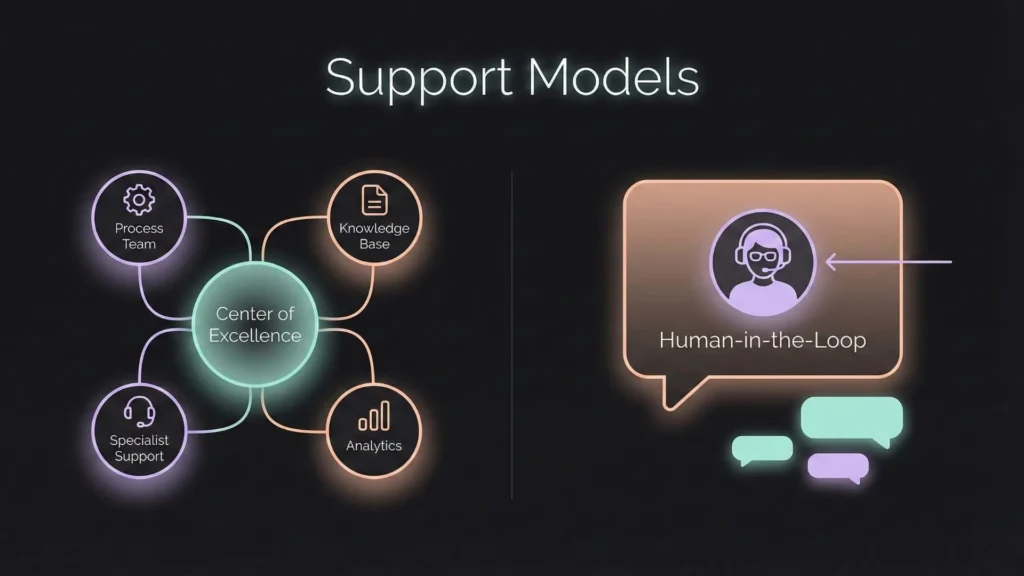
Quickbase Support Services
- Quickbase provides a highly structured Help Center and tiered customer support system designed for corporate adoption.
- All annual accounts gain access to base technical support, extensive documentation, Quickbase University, and a thriving online builder community.
- Users can purchase optional Enablement Services, which provide personalized training, onboarding support, and technical consulting.
- Quickbase also provides Project Services for custom implementation work, which is meticulously defined under a formal statement of work (SOW).
- The platform encourages the creation of an internal “Center of Excellence” to help organizations govern their app development and train internal staff.
Imagine.bo Support and SDE Integration
- Imagine.bo incorporates a real engineering team directly into the application building process.
- Users can utilize the innovative “Assign a Developer” feature when they encounter edge cases or when AI automation hits its natural limits.
- This feature allows users to submit a ticket and assign highly complex tasks to a verified, expert Imagine.bo Software Development Engineer (SDE).
- Engineers can write custom code for specific modules, build unique payment integrations, or optimize algorithms, and then push those updates directly to the project repository.
- This hybrid model delivers the unmatched speed of AI generation alongside the absolute quality assurance and security of a senior human engineer.
Pricing Structures and Subscription Models
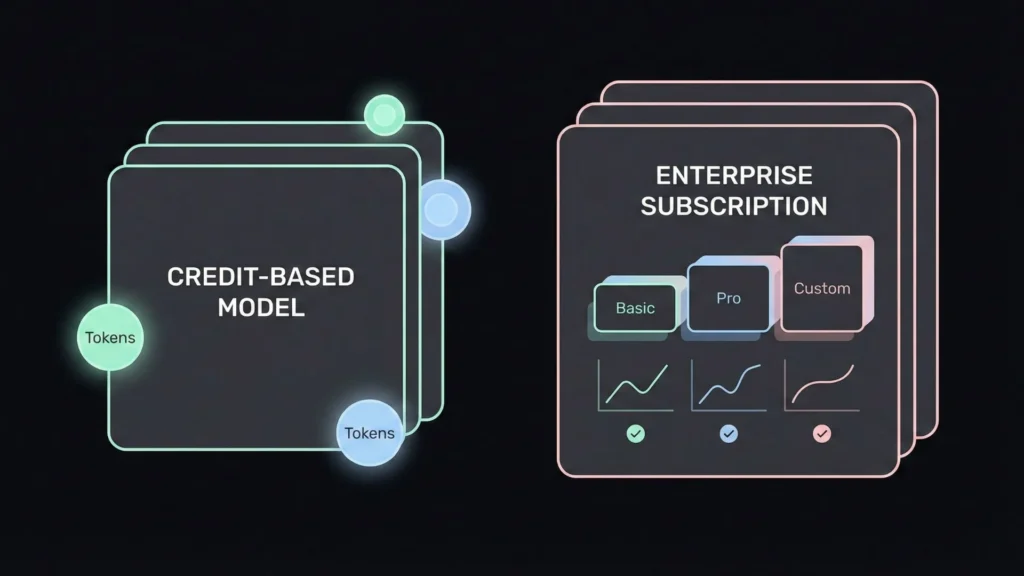
Financial commitment and predictable scaling costs are crucial factors when evaluating a new platform. Both tools offer diverse plans, but they operate on fundamentally different billing philosophies.
| Imagine.bo Plan | Price | Monthly Credits | Storage limits | SDE Support Tier |
| Free Plan | $0/mo | 10 | N/A | Community Support |
| Lite Plan | $7/mo | 60 | 5GB | 20% Off SDE Rates |
| Pro Plan | $20/mo | 150 | 10GB | < 24 Hours Response |
| Enterprise Plan | $249/mo | 2000 | 200GB | < 12 Hours Response |
Imagine.bo Pricing and Credits
- Imagine.bo utilizes a unique credit-based system as the primary currency to generate, modify, and expand applications.
- Complex prompts, deep architectural changes, or large structural updates consume more credits than simple text edits or minor layout adjustments.
- The platform uniquely supports credit rollover on all paid plans, ensuring that unused credits are saved for heavier development months.
- Users have the flexibility to purchase one-time credit top-ups if they run low during the month, preventing development from stalling.
- The pricing tiers scale smoothly from a free experimentation tier up to an Enterprise plan equipped with dedicated support SLAs.
Quickbase Subscription Details
- Quickbase operates as a traditional Enterprise SaaS, granting a revocable right to allow users to remotely access its cloud Hosted Service.
- The subscription is explicitly limited to the specific plans, feature entitlements, and user tiers purchased in an official order form.
- Quickbase actively monitors system usage, data storage, and integration volume across the entire account.
- If a customer exceeds their specified usage limits, Quickbase may issue an invoice for Additional Services without needing a newly signed document.
- Late payments on enterprise accounts are subject to interest, making capacity planning and usage monitoring critical for administrators.
Security, Privacy, and Compliance
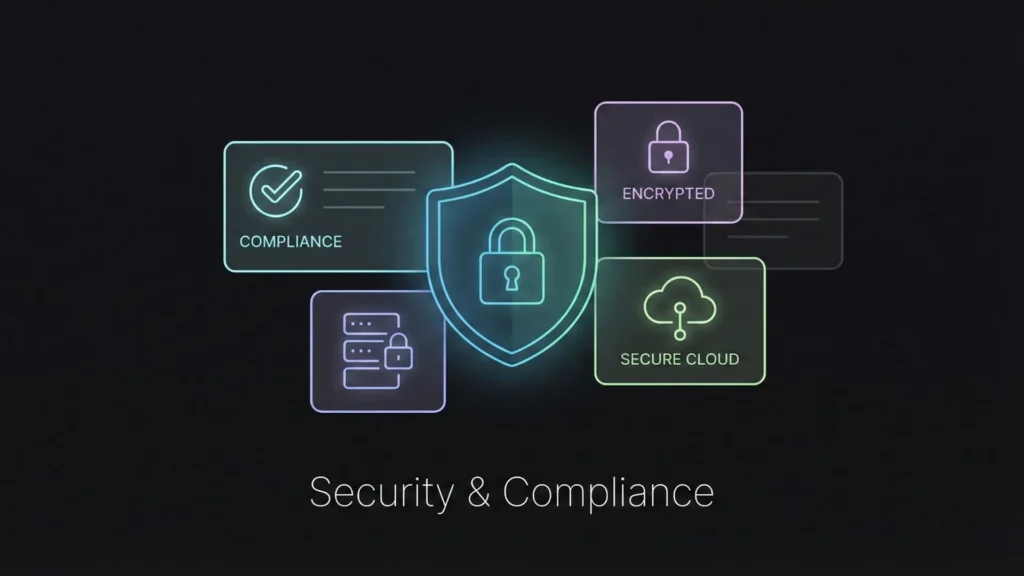
Ensuring data safety and regulatory compliance is an absolute necessity in 2026. Both platforms take security very seriously but utilize different frameworks tailored to their respective audiences.
Quickbase Security Measures
- Quickbase processes all personal data strictly in accordance with its detailed privacy policy and data protection addenda.
- The platform complies fully with the EU-U.S. Data Privacy Framework, the UK Extension, and the Swiss-U.S. Data Privacy Framework.
- Quickbase provides confidential reports of third-party examinations such as SOC 1 and SOC 2 audits upon request to verify their internal controls.
- If a customer operates as a Covered Entity or Business Associate in the healthcare space, Quickbase offers a Business Associate Agreement (BAA) for handling Protected Health Information securely.
- Quickbase encrypts sensitive information as it is transmitted and offers advanced data encryption features using customer-specific keys.
Imagine.bo Security by Design
- Imagine.bo embeds modern security best practices directly into the architecture of every single application it generates.
- Applications come equipped with built-in compliance foundations, meaning the underlying code is GDPR and SOC2-ready out of the box.
- The platform utilizes highly secure, enterprise-grade cloud infrastructure to protect against common web vulnerabilities.
- It protects user data by implementing secure authentication protocols and granular role-based access control (RBAC) by default.
- All data connections utilize SSL/HTTPS, and data encryption is standard, ensuring that creators do not need to be security experts to launch a safe product.
Final Verdict: Choosing Your Foundation
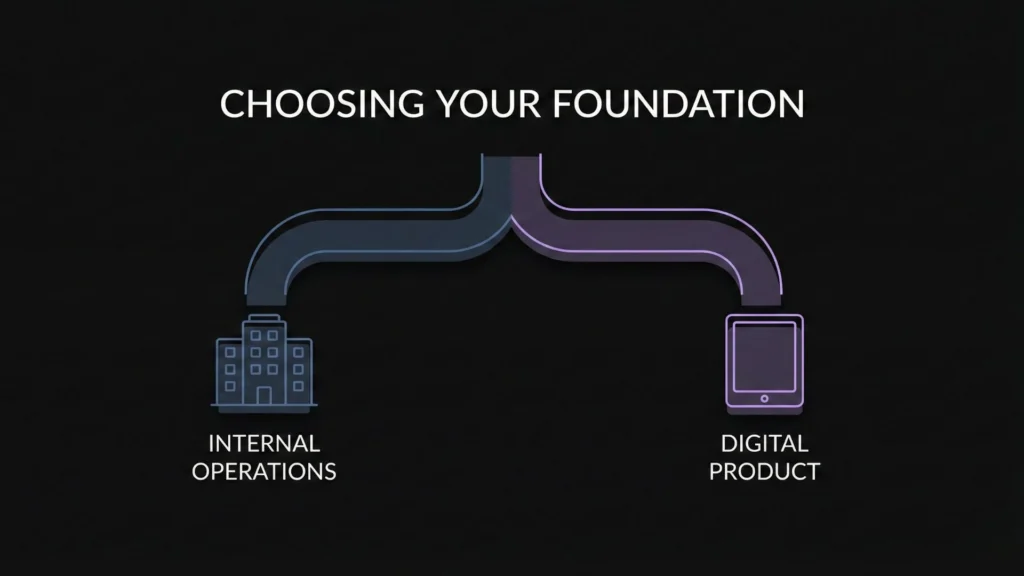
In 2026, the choice between Quickbase and Imagine.bo is defined by a single question: Are you organizing an existing enterprise or building a new digital product?
Quickbase remains the undisputed titan for Internal Operations. It is the “source of truth” for heavy industries like construction and manufacturing. If your goal is to eliminate “Gray Work,” manage complex OSHA compliance, or unify sprawling spreadsheets into a governed, high-security ecosystem, Quickbase is your anchor. It excels at structured data management within a proven, enterprise-grade sandbox.
Imagine.bo, conversely, is the Product Architect. By leveraging natural language prompting to generate production-ready code, it bridges the gap between a “no-code tool” and a “software engineering team.” It is built for founders and startups who need the scalability of Railway/Vercel and the freedom of a custom tech stack without the overhead of manual coding. Its “Human-in-the-Loop” SDE support ensures you never hit a technical ceiling.
The Bottom Line:
- Choose Quickbase to optimize the back office of a multi-million dollar corporation.
- Choose Imagine.bo to launch the next market-disrupting SaaS or a high-performance customer portal.
Launch Your App Today
Ready to launch? Skip the tech stress. Describe, Build, Launch in three simple steps.
Build