
The retail landscape is undergoing a fundamental transformation. Shoppers move effortlessly between browsing online, interacting on social media, and stepping into physical stores, creating a complex, multi-channel journey. In this hyper-connected era, the success of a brand rests not just on product quality, but on the consistency and personalization of the customer experience. For founders, retail leaders, and decision-makers, delivering this level of seamless service is impossible without specialized technology that empowers the frontline—the CRM for Retail Associates and the modern Clienteling Software.
Traditional, rigid Customer Relationship Management (CRM) systems, designed for general B2B sales cycles, often fail to meet the unique, fast-paced demands of a B2C retail environment. This gap has given rise to highly specialized solutions that focus on the art of personalized service, known as clienteling.
Launch Your App Today
Ready to launch? Skip the tech stress. Describe, Build, Launch in three simple steps.
BuildThis guide explores how retail businesses can leverage the convergence of CRM and clienteling, driven by artificial intelligence and the power of no-code development, to not only overcome operational challenges but to create fully customized platforms that build legendary customer loyalty and maximize lifetime value.
The Critical Challenges Facing Modern Retail Associates
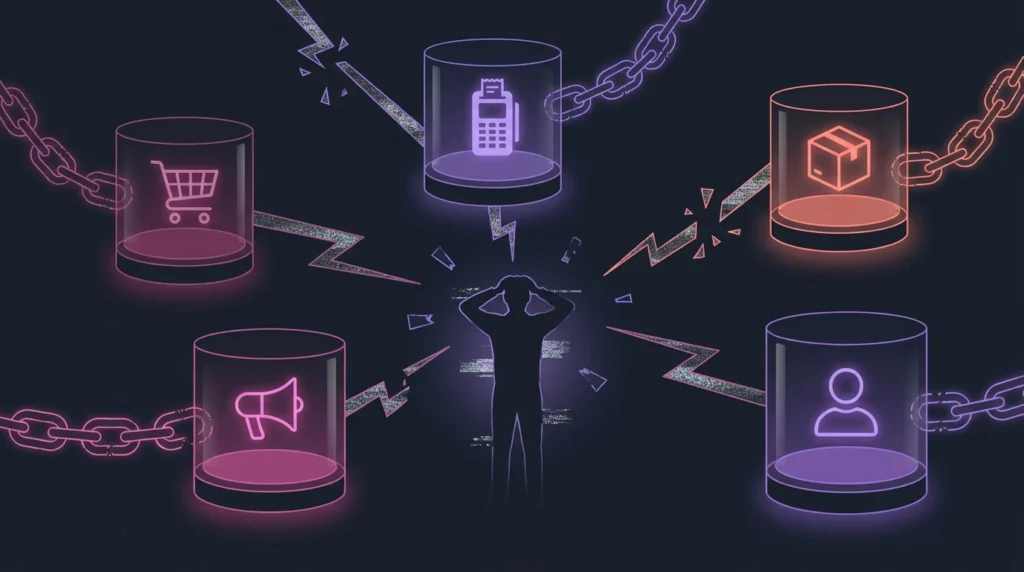
Retail associates are the face of the brand, yet they are often the most underserved in terms of adequate retail associate software. Their daily workflow is hampered by inefficient processes and technological limitations that prevent them from delivering the personalized service customers crave.
The Problem of Disconnected Data (Silos)
In many retail environments, customer information is scattered across fragmented systems: online e-commerce platforms, separate in-store Point-of-Sale (POS) systems, inventory trackers, and marketing tools. This data fragmentation leads to critical pain points for the associate:
- Incomplete Customer View: When a shopper engages, the associate cannot quickly pull up a unified profile showing online browsing history, past purchases, returns, and loyalty status, meaning service lacks context.
- Wasted Time: Associates must manually search multiple platforms (or rely on memory or physical notes) to gather necessary details like product pricing, inventory status, or past interactions, delaying service.
- Inconsistent Experience: Since customer data sits in silos, the service provided in-store often feels disconnected from the experience the customer had online, failing to meet the expectation of consistency.
The Barrier of Manual Processes
Many essential retail tasks still rely on manual administration, which eats up valuable selling time and introduces errors:
- Inefficient Follow-Ups: Tracking which VIP customers need follow-up regarding a new arrival or a loyalty reward often relies on manually maintained spreadsheets or old “black books,” which are impossible to scale or share across the team.
- Inventory Blind Spots: Without real-time integration between sales floor tools and inventory systems, associates may unknowingly promise customers items that are low in stock or unavailable, leading to frustration and lost sales.
- Lack of Sales Attribution: When an associate successfully builds a relationship that results in an online purchase days later, the sale may not be correctly attributed to the associate’s efforts, hindering performance tracking and motivation.
Failing to Meet Omnichannel Customer Expectations
Today, customers demand a frictionless, personalized experience across all touchpoints. Retail associates must be equipped to handle this complexity:
- Bridging Digital and Physical: The associate needs tools to seamlessly process online orders, manage in-store pickups, or handle returns of items bought through e-commerce platforms—tasks that are impossible if POS, inventory, and CRM systems don’t integrate perfectly.
- Personalized Engagement at Scale: Customers expect tailored communication, whether it’s a personalized text about a special offer or a recommendation based on their unique purchase history. Delivering this level of one-to-one marketing without powerful clienteling software is simply unfeasible.
From Retail CRM to Clienteling App: Defining the Essential Technology
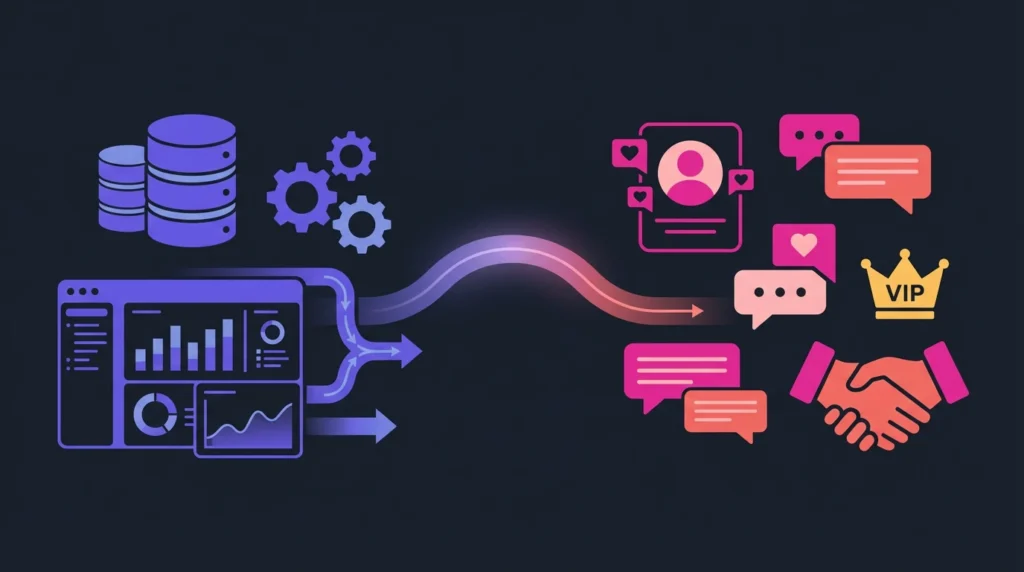
To solve these challenges, retailers must understand the distinct yet complementary roles of CRM and clienteling.
Customer Relationship Management (retail CRM): The Foundation
A retail CRM is a technology platform used for managing all your company’s relationships and interactions with customers and potential customers. Its primary goal is efficiency and comprehensive data management across all interactions.
Key functions of a specialized retail CRM include:
- Centralized Database: Aggregates all customer information, contact details, purchase history, and interactions across various touchpoints into a unified repository.
- Sales and Marketing Automation: Automates repetitive tasks such as data entry, email communications, and marketing workflows, allowing staff to focus on high-value activities.
- Operational Management: Integrates with systems like POS and inventory, streamlining order processing, delivery, and ensuring consistency across multiple branch stores.
- Analytics and Reporting: Provides tools for detailed sales analysis, tracking customer buying patterns, monitoring KPIs, and identifying trends.
Clienteling: The Personalization Strategy for the Front Lines
Clienteling Software focuses on transforming the raw data within the CRM into actionable insights used for personalized, one-on-one relationships. While a CRM is often a back-end analytical and automation tool, a clienteling app is typically a front-end, mobile-first retail associate software tool designed to be used directly on the sales floor.
Clienteling is distinct because it prioritizes:
- 1:1 Communication: It allows associates to connect with customers proactively via their preferred channels (SMS, WhatsApp, email) using professional, trackable business accounts.
- Detailed Customer Profiles: It provides 360-degree views, including personal insights, special occasions (birthdays), product preferences, and wish lists, enabling authentic and tailored interactions.
- Associate Empowerment: It replaces the manual “black book” with a sophisticated client book app that includes automated task lists, appointment scheduling, and tools for sharing curated digital lookbooks or collections.
- Relationship Building: Its core purpose is long-term customer retention and fostering emotional connections, not just processing transactions.
Modern Retail: How AI, Automation, and Personalization Drive Loyalty (AI CRM)

The next generation of retail CRM and clienteling app functionality is defined by three modern trends that are dramatically boosting efficiency and customer experience.
AI-Driven Recommendations and Predictive Clienteling
Artificial Intelligence (AI) is transforming traditional CRM into powerful AI CRM systems by moving beyond mere data aggregation to provide actionable intelligence.
- Personalized Product Recommendations: AI analyzes past purchases, browsing history, and preferences to automatically suggest the most relevant products for upselling and cross-selling. This provides data-driven offers that increase transaction sizes and enrich the customer experience.
- Predictive Lead Scoring: AI and machine learning analyze customer behavior to determine the likelihood of a lead converting, allowing the sales team to prioritize high-potential customers who are about to convert.
- Dynamic Content Creation: AI assists marketing and sales teams by automatically generating personalized marketing emails or product descriptions based on specific customer segments, ensuring communication is highly relevant and engaging.
- Intelligent Customer Service: Modern AI CRM systems utilize intelligent chatbots equipped with natural language processing (NLP) to offer 24/7 instant support, answering frequently asked questions, checking delivery status, and providing product recommendations.
Automating the Operational Backbone
Automation streamlines operations, which directly enhances the associate’s ability to serve customers. According to McKinsey, 40% of all activities within the retail business can potentially be automated with a CRM.
- Workflow Automation: Automation eliminates manual tasks like sales follow-ups, reordering inventory, and tracking loyalty points. This ensures consistency and frees up time for associates to focus on nurturing customer relationships.
- Real-Time Monitoring: This capability allows retailers to track inventory levels, sales metrics, and customer interactions in real-time, enabling quick adjustments to marketing strategies and reducing the risk of stockouts.
- Marketing Campaign Execution: CRMs can manage marketing resources and automate multi-channel campaigns, estimating the ROI and ensuring personalized offers are sent based on purchasing history.
Mastering the Omnichannel Customer Journey
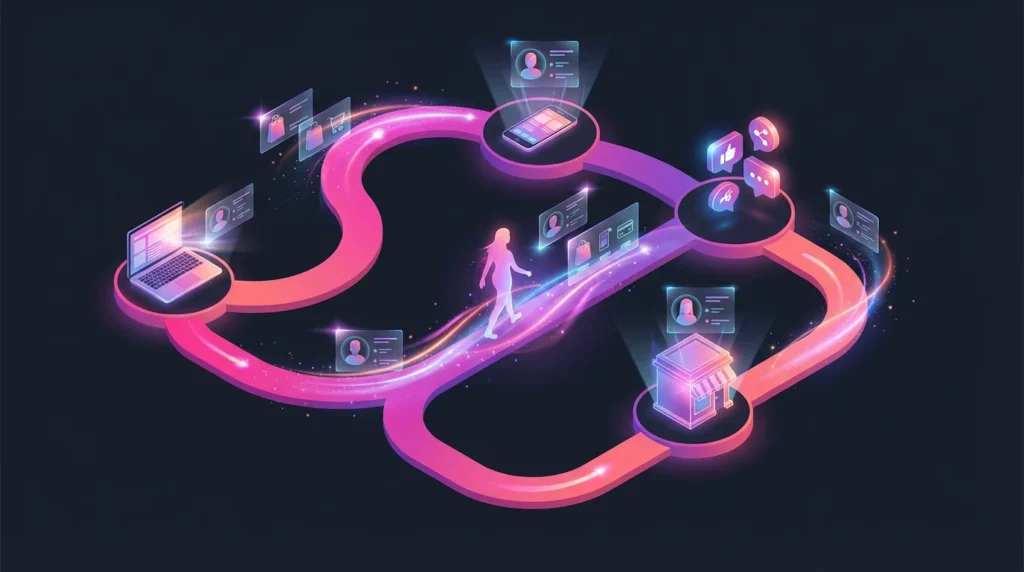
True omnichannel capability means the technology unites the customer experience across all channels—online, in-store, mobile, and service—using a single source of truth. The retail CRM is essential here, providing a unified platform where sales associates and corporate teams can share customer databases and inventory updates seamlessly across all locations.
The Limits of Traditional CRM Systems in Fast-Paced Retail
While platforms like Salesforce, HubSpot, and Zoho offer powerful tools for retail, their traditional architecture often presents major limitations when facing the need for high agility and customization.
Many enterprise-grade CRM systems are complex, require significant implementation time, and necessitate costly certified consultants for deep customization. This complexity, often referred to as “feature overload,” means that smaller or rapidly growing retail businesses may pay for extensive functionality they won’t use. Furthermore, adapting these systems to highly specific retail workflows—such as custom loyalty programs or unique in-store processes—can be slow and expensive, hindering quick market response.
Traditional CRM vs. Custom No-Code CRM: A Comparison
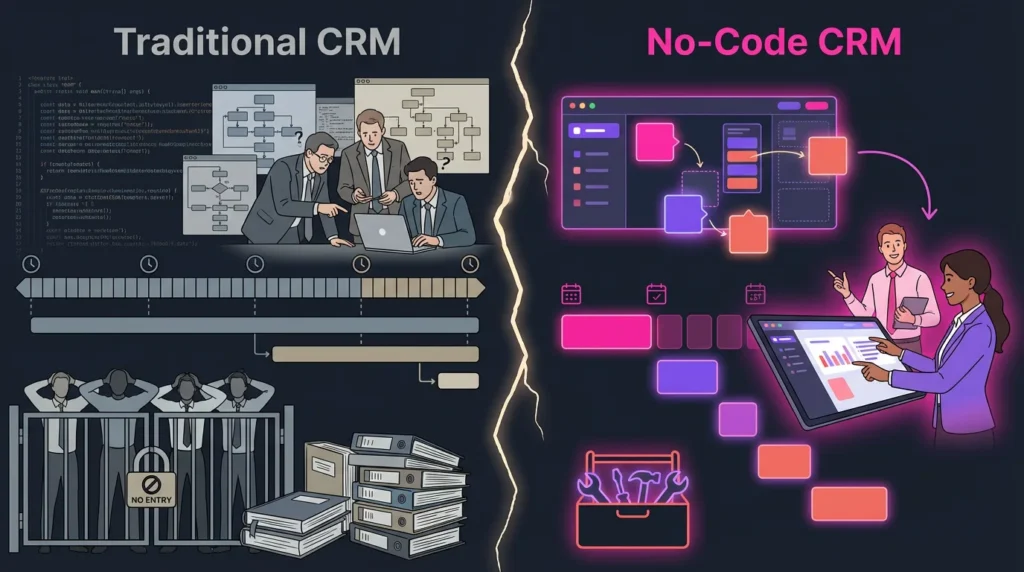
The emergence of no-code CRM platforms provides a compelling alternative, offering the agility and tailored fit that modern retail operations demand.
| Feature | Traditional CRM (e.g., Salesforce, HubSpot) | Custom No-Code CRM (e.g., Imagine.bo) |
|---|---|---|
| Customization Method | Requires coding, developers, or expensive professional services; steep learning curve. | Visual drag-and-drop customization; defined in plain English; accessible to business users. |
| Time to Deployment | Long implementation timelines (months), especially with complex integrations. | Rapid development and quick launch; focused on immediate time-to-value. |
| Relevance/Fit | General platform requiring extensive modification for retail-specific workflows. | Built precisely to the retailer’s needs, supporting specialized, high-touch processes (e.g., unique clienteling or merchandise management). |
| Cost Structure | High initial costs, recurring license fees, and significant hidden costs for add-ons, features, and consultants. | Transparent pricing, lower dependency on developers, focusing investment on core business logic. |
| Scalability | Highly scalable, but complexity and cost increase with scale. | Designed for enterprise-grade scalability with built-in security features, adapting instantly as business needs evolve. |
Introducing Imagine.bo: The AI-Powered No-Code CRM for Retail
For retail leaders demanding a truly tailored solution without the immense cost and complexity of legacy systems, Imagine.bo offers an entirely new approach. Imagine.bo is an AI-powered no-code CRM and clienteling platform that allows businesses to build fully customized retail applications from the ground up, designed exactly for their specific retail operations.
Imagine.bo bypasses the limitations of off-the-shelf software by putting the power of application development directly into the hands of the business user—the founder, the marketing director, or the operations manager—without needing to write a single line of code.
Building Your Vision with Plain English
Imagine.bo leverages the latest in Generative AI to understand exactly what your business needs. Instead of configuring rigid fields and modules, users can describe their ideal retail CRM or clienteling app in simple, plain English.
For example, a retailer could prompt the system: “I need a clienteling application for my luxury store associates that tracks customer preferences, schedules VIP appointments, integrates with our Shopify POS for 360-degree purchase history, and sends automated SMS alerts when an item from a customer’s wishlist is restocked.”
The platform interprets this description and instantly generates the necessary data model, user interface, and foundational workflows, turning complex requirements into a functional prototype in minutes.
Visual Workflow Customization and Rapid Deployment
Once the initial application is generated, Imagine.bo ensures that customizing and optimizing workflows remains straightforward through intuitive visual designers. Users can:
- Customize Workflows Visually: Drag-and-drop elements to redefine sales pipelines, automate follow-up tasks for sales associates, or adjust data capture forms, eliminating the need for complex scripting or developer intervention.
- Launch Quickly: Because the platform handles the underlying code generation and infrastructure setup, customized applications can be launched rapidly, achieving immediate time-to-value (TTV) and allowing retailers to quickly adapt to market trends or seasonal demands.
Enterprise-Grade Security and Scalability
Imagine.bo is engineered for the demands of high-volume retail. It provides enterprise-grade security features, ensuring compliance with crucial data privacy regulations like GDPR and CCPA through built-in controls and data encryption.
Furthermore, the no-code CRM platform is highly scalable, accommodating growth from a single boutique to a multi-branch national chain. It supports the high transaction volumes and complex inventory synchronization required for omnichannel retail, providing the central view and reliability necessary for growth without system lagging or constant reconfiguration.
Build your own CRM with Imagine.bo — no developers required.
Practical Use Cases: Custom Clienteling Software in Action
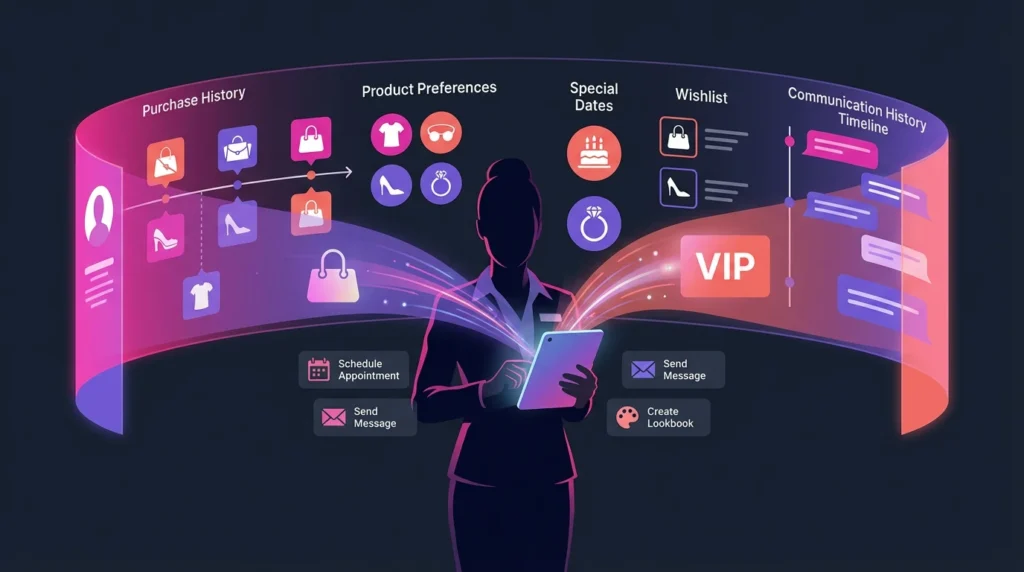
Custom retail CRM solutions built on platforms like Imagine.bo are ideal for highly specialized retail sectors where unique interactions and personalization are paramount.
Luxury Fashion Retail
Luxury retail thrives on relationship-building and exclusivity.
- The Problem: Generic CRMs fail to capture the nuance of luxury client relationships (e.g., specific sizing across brands, tailor preferences, personal style notes).
- The Imagine.bo Solution: A customized clienteling app is built to capture “soft data” notes and integrate proprietary styling lookbook features. Associates use the app to proactively contact VIP clients with private virtual appointments (video calls) or curated customer boards featuring new collections that align perfectly with the client’s documented preferences. The system automates alerts for client birthdays and purchase anniversaries, ensuring personalized, timely outreach.
Electronics and High-Value Sales
In electronics (or furniture/appliance) retail, sales often involve detailed product knowledge, comparisons, and complex delivery/installation logistics.
- The Problem: Sales associates lack instant access to complex product specifications, real-time cross-store inventory, and delivery scheduling tools.
- The Imagine.bo Solution: A custom retail associate software application unifies customer purchase history (e.g., what smart home devices they own) with real-time inventory and logistics data. The system can be customized to offer predictive recommendations for necessary accessories or extended warranties, maximizing upselling potential. Furthermore, it integrates procurement and logistics management, providing streamlined workflows for tracking order fulfillment and coordinating delivery services accurately.
D2C/Specialty Retail
Direct-to-Consumer (D2C) brands and specialty retailers (like jewelry or mattresses) need deep insights into customer lifetime value (LTV) and repurchase cycles.
- The Problem: Segmentation based on generic data is ineffective; they need specific insight into repeat purchases and loyalty.
- The Imagine.bo Solution: The system is tailored to segment customers based on unique criteria (e.g., “Seasonal Gift Buyer” or “First-Time vs. Repeat Subscription Customer”) and automates loyalty ledger management. The AI CRM capabilities are customized to identify “Risk Customers” (those with only one visit in the last 3 months) or “Lost Customers” (no purchase in the last 3 months) and triggers specific, personalized win-back promotions to drive repeat business.
Step-by-Step: Building Your Custom Retail CRM with Imagine.bo
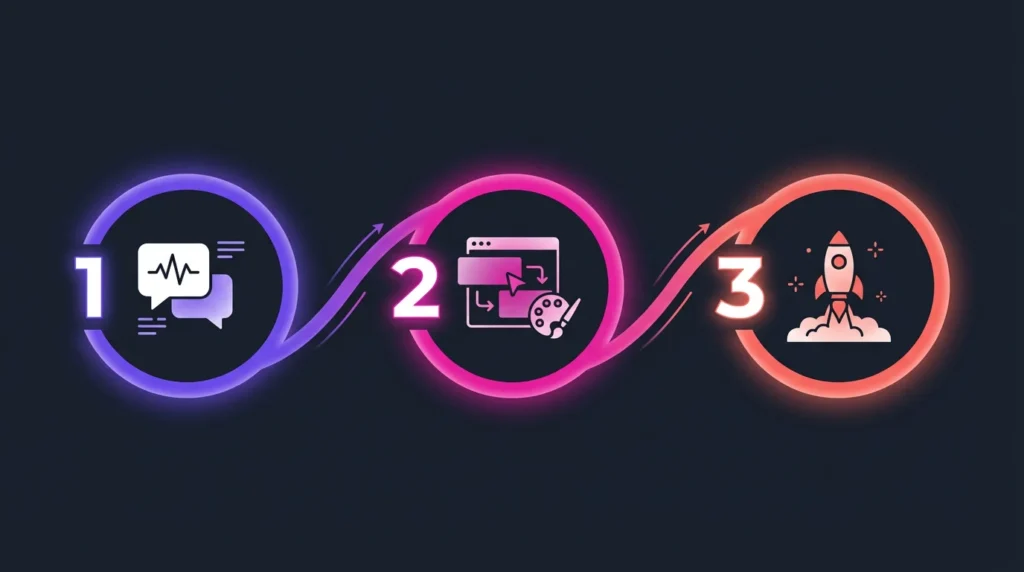
Creating a powerful, custom clienteling app for your business is simplified through Imagine.bo’s no-code environment. This process dramatically reduces the typical time, cost, and risk associated with implementing enterprise software.
Phase 1: Define and Describe the Core Logic
The first step focuses entirely on business needs, not code.
- Identify Core Workflows: Determine the most critical functions your CRM for Retail Associates must perform—whether it’s capturing customer boards for VIP clients, streamlining returns, or managing delivery status.
- Describe the Application: Use Imagine.bo’s natural language interface to describe the desired retail CRM or clienteling application, specifying required data fields (e.g., “360-degree view of customer data,” “merchandise management,” “order and delivery tracking”).
- AI Generation: The Imagine.bo AI instantly generates the foundation of your custom platform, including the customer data model and the core user interfaces for both mobile and desktop access.
Phase 2: Design the Associate Interface and Workflows
Next, business users visually refine the application to ensure seamless staff adoption and maximized productivity.
- Customize the UI/UX: Use the visual drag-and-drop designer to tailor dashboards for different user roles (e.g., floor associate vs. store manager). Ensure the mobile-first design makes it easy for the retail associate software to be used on tablets or phones on the shop floor.
- Visual Workflow Editing: Define automated rules and sequences without writing code. For instance, visually set a rule that automatically assigns a follow-up task to an associate 48 hours after a high-value in-store purchase.
- Personalization Configuration: Set up the segmentation logic that your team will use (e.g., segment by product category interest, lifetime spend, or visit frequency) to enable personalized outreach and marketing campaigns.
Phase 3: Connect Data and Launch Securely
The final steps integrate your new no-code CRM with your existing environment and prepare for go-live.
- Integrate Core Systems: Use Imagine.bo’s seamless integration capabilities to connect with essential third-party apps, including your POS system, e-commerce platforms (like Shopify), and inventory management tools.
- Testing and Training: Conduct role-specific training sessions focused on how the new system simplifies daily tasks, such as accessing the unified customer profiles or generating personalized communications.
- Deployment: Launch your enterprise-grade, custom-built retail CRM quickly and confidently, leveraging Imagine.bo’s built-in scalability and security features, ensuring that all customer data is protected and compliant from day one.
Frequently Asked Questions (FAQ)
What is the essential difference between a retail CRM and Clienteling Software?
A retail CRM is a technology that manages and centralizes all customer data, interactions, and operations, focusing on overall efficiency and automation. Clienteling Software, or a clienteling app, is a specialized tool often used by retail associates on the sales floor. It focuses intensely on fostering personalized, one-on-one relationships by providing instant access to rich customer profiles and enabling proactive, context-aware communication. Clienteling is essentially the high-touch, human-centric strategy that a good CRM makes possible.
How does AI CRM enhance productivity for retail associates?
AI CRM boosts productivity by automating cognitive tasks and surfacing actionable insights. It uses predictive analytics to identify high-potential leads, suggests personalized product recommendations for upselling, and automates marketing tasks like generating customized email content. This allows the retail associate software to handle administrative work and ensure associates dedicate their time to high-value selling and relationship building.
Is no-code CRM suitable for large-scale enterprise retail?
Yes. Modern no-code CRM platforms like Imagine.bo are designed with enterprise-grade security, scalability, and integration capabilities necessary for large retail chains and high transaction volumes. The primary benefit for enterprises is agility: they can rapidly deploy and customize applications tailored to unique cross-store workflows, merchandise management, and compliance needs far faster than traditional, developer-heavy platforms.
What are the key features a retail business must look for in a clienteling app?
Key features for a successful clienteling app include: unified customer profiles (360-degree view), omnichannel communication support (SMS, email, chat), integration with POS and inventory systems, smart segmentation tools, employee task management, and accurate sales attribution to track associate performance.
How can a custom retail CRM built on a no-code platform improve customer loyalty?
A custom retail CRM improves loyalty by enabling hyper-personalization at scale. By easily tailoring workflows, retailers can collect and act on specific customer data (e.g., size, color, brand preferences, anniversaries) to send highly relevant promotions and offers. When customers feel their needs are understood and anticipated across all channels, it strengthens the emotional connection and encourages repeat business.
Build your own CRM with Imagine.bo — no developers required.
The future of retail demands technology that is as agile and customer-focused as your team. Stop adapting your unique business to rigid, off-the-shelf software. Start building the perfect clienteling app today.
Launch Your App Today
Ready to launch? Skip the tech stress. Describe, Build, Launch in three simple steps.
Build