By 2026, building software has evolved. We’ve moved beyond pioneers like Bubble and Adalo into a new era. Today, the choice for scaling businesses often narrows down to the contrast between visual engineering powerhouses like FlutterFlow and the high-velocity “vibe coding” ecosystem led by Lovable, Bolt, and Imagine.bo. While FlutterFlow offers granular manual control, Imagine.bo delivers “SDE-level” engineering through intent-driven AI workflows. Choosing between them means deciding between traditional visual architecture or a self-evolving AI foundation for long-term growth.
Core Philosophy: “Visual Dev Environment” vs. “Business-First Engineering”
The fundamental difference between these two platforms lies in their definition of “building.” One focuses on the process of construction (widgets, trees, parameters), while the other focuses on the outcome (business logic, database architecture, and deployment).
Launch Your App Today
Ready to launch? Skip the tech stress. Describe, Build, Launch in three simple steps.
BuildFlutterFlow: The Visual IDE
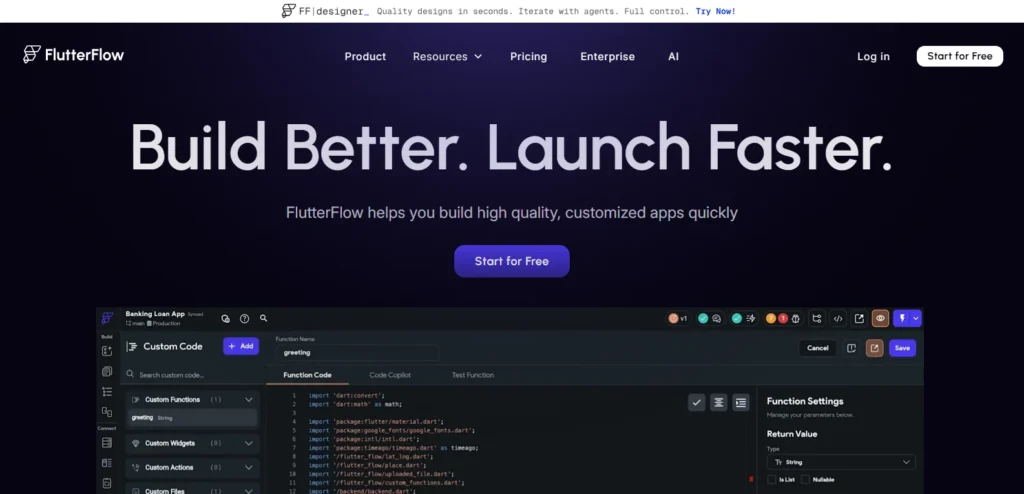
FlutterFlow has evolved into a sophisticated Integrated Development Environment (IDE). It is built directly on top of Google’s Flutter framework, which means it inherits both the power and the complexity of mobile app development.
- The Developer-Centric Workflow: FlutterFlow is designed for users who are comfortable thinking like engineers. The interface includes a “Widget Palette,” a “Canvas” for layout, and a “Storyboard” for visualizing navigation flow. Users must understand frontend versus backend distinctions, managing the “Widget Tree” just as a traditional developer would.
- Granular Control: The platform’s greatest strength is its depth of UI control. It allows for “Component-Based Architecture,” where users break down UI into reusable pieces . It supports advanced animations, haptic feedback, and mobile-native gestures that are difficult to replicate in web-first builders.
- The Catch: You are still “coding,” just visually. To build successfully, you must understand technical concepts such as “Parameters,” “Query Caching,” “State Management,” and “API Endpoints”. For a non-technical founder, the learning curve involves understanding how frontend code runs on the device while backend code runs on a server.
Imagine.bo: The Production Engine
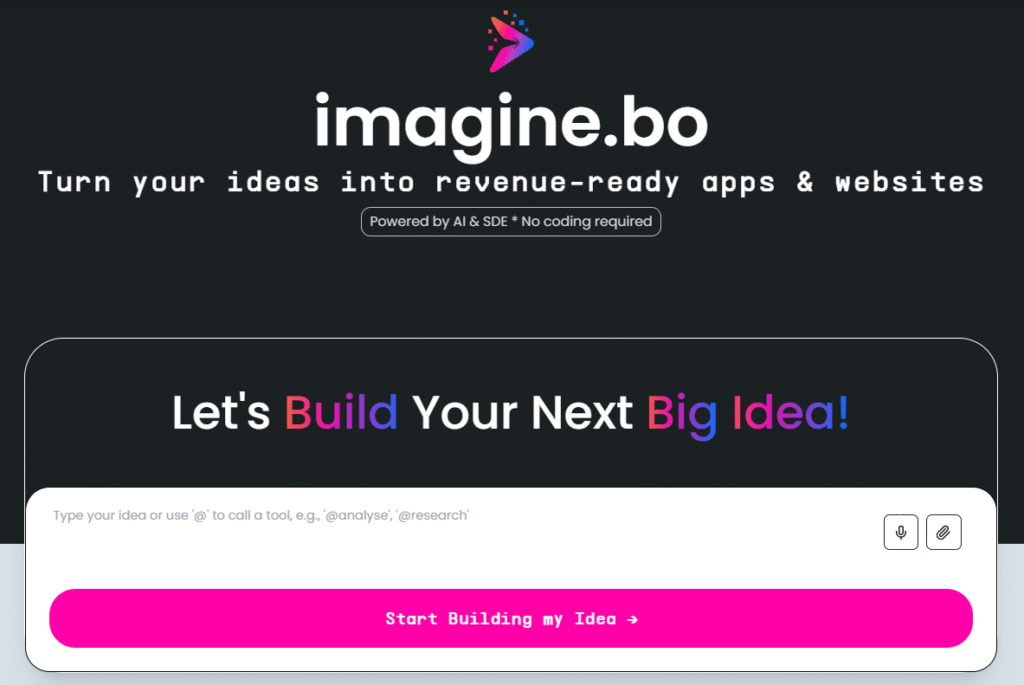
Imagine.bo takes a radically different approach known as “Describe-to-Build”. The philosophy here is to eliminate the “configuration hell” of traditional development environments . Instead of dragging and dropping widgets to build a screen, you describe your business intent in plain English, and the platform’s AI architects the entire solution.
- Deep Reasoning AI: Imagine.bo’s AI doesn’t just paint a UI; it architects the software. When a user provides a prompt, the system automatically provisions database tables, writes API endpoints, and generates the UI components simultaneously . It is designed to remove the first 3–6 months of traditional development time.
- Focus on “Day 2” Operations: While many builders focus on the initial prototype, Imagine.bo is architected for “Day 2” the phase where you need to scale, add custom payment flows, or integrate legacy systems. The platform bridges the gap between instant AI generation and the reliability of expert human engineering.
- The Catch: Because the AI handles the heavy lifting of UI generation based on business intent, users have less granular, pixel-by-pixel control over specific micro-interactions compared to FlutterFlow’s manual canvas. However, this trade-off results in significantly faster logic generation and deployment stability.
Pricing & Plans: The 2026 Reality
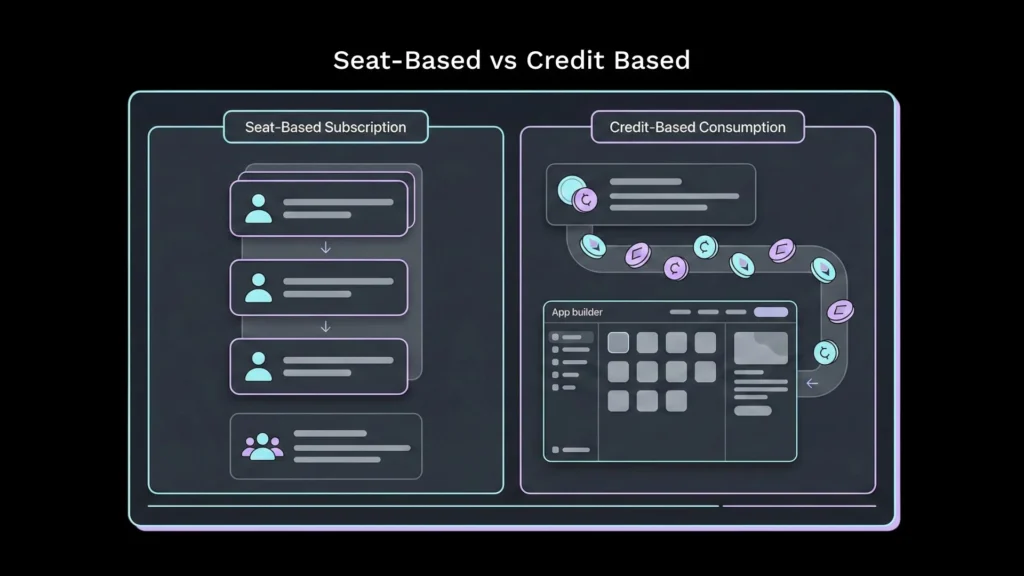
Pricing structures have shifted significantly in the last year. Understanding these changes is critical for forecasting the Total Cost of Ownership (TCO) for your project.
FlutterFlow (New Structure)
Effective August 18, 2025, FlutterFlow underwent a major pricing restructuring, retiring its legacy “Standard,” “Pro,” and “Teams” plans . The new model is strictly team-centric.
- Free Plan: This is now strictly for learning. It is limited to only 2 active projects. If you have more, they are archived and become uneditable until you upgrade or delete an active project. Crucially, 1:1 technical support has been removed from this tier.
- Basic Plan: Designed for independent builders shipping production-ready apps. It replaces the old Standard plan for solo users.
- Growth & Business Plans: These are now required for teams. The pricing is “seat-based,” meaning you pay per user, per month. Collaboration features are locked to these tiers, and teams of 3–5 users are automatically migrated to the Business plan.
- Hidden Costs: For agencies or teams needing temporary help, you may need to purchase “Single Project Collaborator Passes,” which are $15/month per pass, to grant access without adding a full team seat.
Imagine.bo (Credit & Support Model)
Imagine.bo operates on a Credit + Support model, which aligns costs with actual development activity rather than just team size.
- Credit System: Credits are the currency used to generate and modify applications. Complex prompts consume more credits than simple text edits.
- Free Plan: Includes 10 credits/month, capable of building 2–3 simple pages. This is perfect for testing the prompt-to-build flow.
- Lite Plan ($7/mo): Includes 60 credits/month. This capacity can build 5–8 simple pages or small prototype apps. It also unlocks a 20% discount on SDE (Software Development Engineer) support tasks.
- Pro Plan ($20/mo): Includes 150 credits/month. This supports building 1 robust multi-page app (10–15 pages) with authentication and database forms. Crucially, this plan includes <24-hour guaranteed response from Human Engineers.
- Enterprise ($249/mo): Includes 2000 credits/month, designed for scale-ups building multiple complex applications. It offers a <12-hour turnaround on human engineering tasks.
- The Rollover Advantage: Unlike many SaaS platforms where unused capacity is lost, Imagine.bo supports Credit Rollover on all paid plans. Unused credits accumulate, allowing teams to bank credits during slow months and use them during heavy sprint weeks.
Cost Structure & Resource Model Comparison (2026)
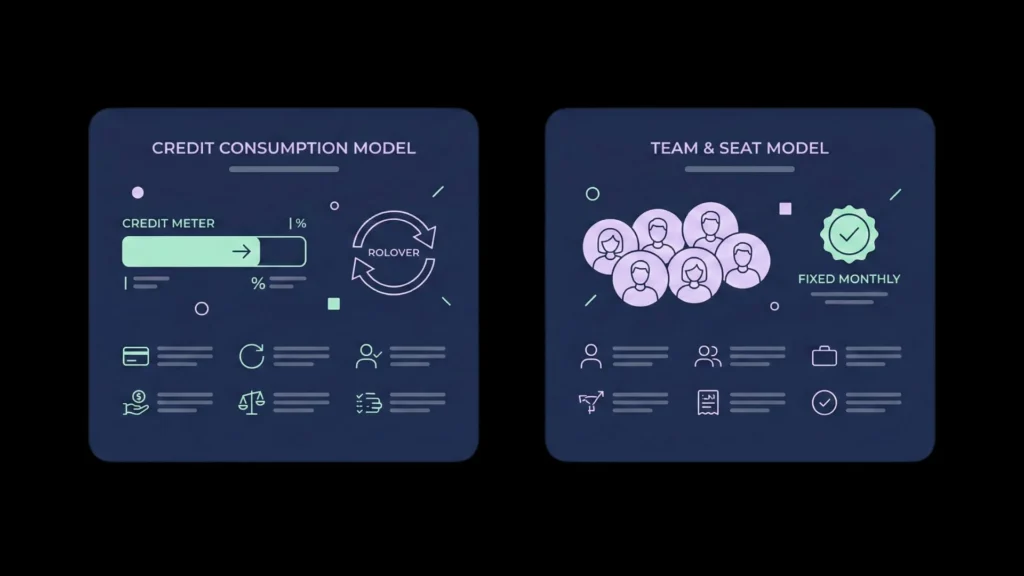
In 2026, the primary difference between the two platforms lies in how they charge for usage. Imagine.bo utilizes a “Credit Consumption” model, allowing for flexibility during heavy or light development months. In contrast, FlutterFlow has shifted to a strict “Team & Seat-Based” model as of August 2025, prioritizing team size and fixed recurring subscriptions.
This distinction is vital for agencies and startups. In FlutterFlow’s model, scaling your team linearly increases your monthly burn rate. In Imagine.bo’s model, you pay for the work performed (credits) and the expertise required (SDE support), regardless of how many people are viewing the project.
are viewing the project.
| Feature | Imagine.bo | FlutterFlow |
| Billing Model | Credit-Based: You pay for “credits” used to generate/edit apps . | Seat-Based: Pricing is determined by team size and number of editors . |
| Entry-Level Paid Plan | Lite Plan ($7/mo): Includes 60 credits/month . | Basic Plan: Designed for independent builders shipping production apps . |
| Unused Resources | Rollover Enabled: Unused credits do not expire and roll over to the next month . | No Rollover: Subscription features reset monthly; no carry-over mechanism mentioned. |
| Free Tier Limits | 10 Credits/Mo: Good for 2–3 simple pages . | 2 Projects: Limited to 2 active projects; others are archived . |
| High-Volume Plan | Enterprise ($249/mo): 2000 credits/mo . | Business: For teams of 3–5+; pricing scales per seat. |
The AI War: Agents vs. Architects
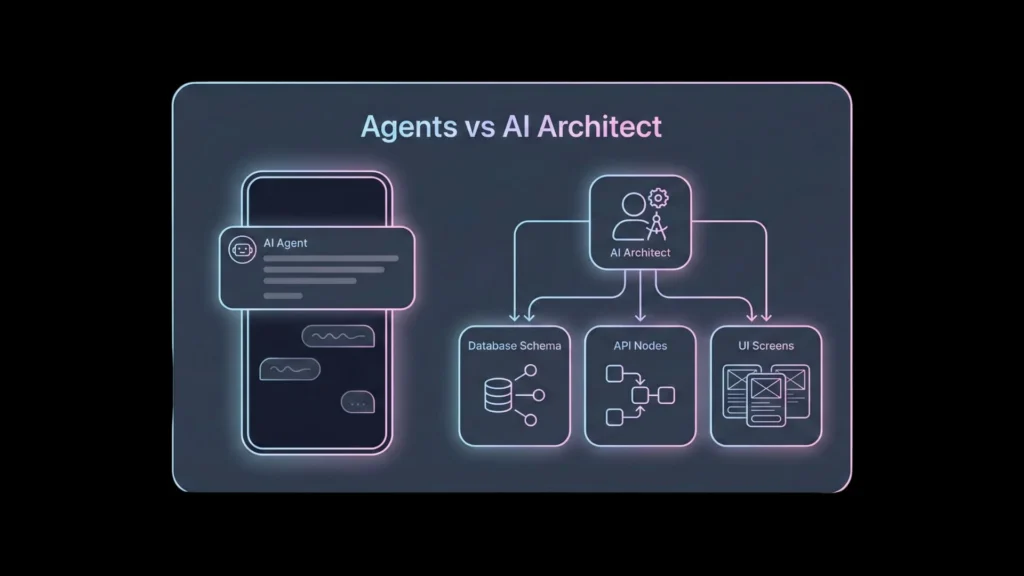
By 2026, every platform claims to have “AI,” but the implementation varies wildly. FlutterFlow uses AI as a feature inside the app, while Imagine.bo uses AI as the builder.
FlutterFlow’s AI Agents
FlutterFlow enables developers to integrate “AI Agents” directly into their applications. These are powered by advanced LLMs like Google’s Gemini, OpenAI, or Anthropic.
- In-App Functionality: These agents are effectively chatbots or services defined within the app to handle user input. For example, a developer can build an “AI Stylist” that analyzes photos of clothing or a “Smart Recipe Assistant”.
- Configuration: Developers must configure the “System Message” (defining the AI’s role), “Temperature” (creativity vs. accuracy), and “Max Tokens”.
- Infrastructure Dependency: Implementing these agents requires a Firebase Blaze plan because FlutterFlow creates a Cloud Function to relay requests securely.
- Limitations: While powerful for end-users, this AI does not build the app for you. It is a tool for the app, not of the app.
Imagine.bo’s AI Architect
Imagine.bo uses AI to solve the “No-Code Paradox” the trade-off between speed and control. It treats the prompt as a software specification.
- Full-Stack Generation: The AI acts as a software architect. When a user provides a prompt, the system automatically provisions the database schema, writes the backend API endpoints, and generates the UI components.
- Deep Context & Prompt Engineering: The platform relies on sophisticated prompt engineering. Users are encouraged to define the “Actor,” “Problem,” “Key Features,” and “Edge Behaviors”. For example, specifying “Only admins can delete records” prompts the AI to build the specific backend security rules and frontend visibility toggles for that feature.
- Iterative Refinement: App development happens through conversation. A user can say, “Make the header dark mode” or “Require email verification before posting,” and the AI updates the underlying code and logic in real-time.
The “Last 20%” Problem: Support & Scaling
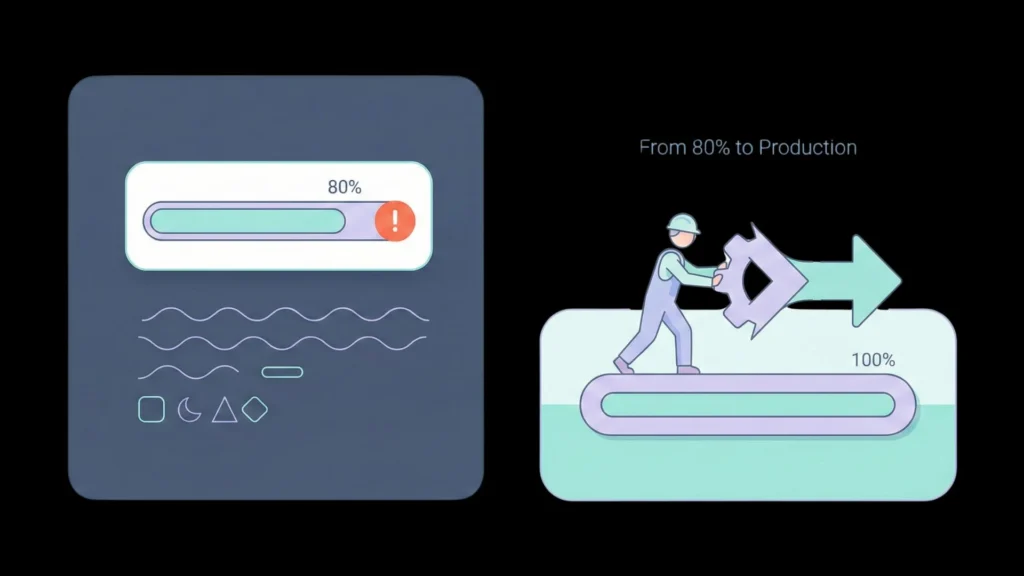
The biggest failure point in no-code is hitting a technical wall the “Last 20%” of the project where custom logic, obscure payment gateways, or complex data processing is required. This is where the two platforms diverge most sharply.
FlutterFlow
FlutterFlow’s support model has transitioned away from direct intervention for lower tiers.
- Self-Serve Reliance: As of late 2025, 1:1 technical support is no longer included with the Free plan. Users are directed to a self-serve Help Center, troubleshooting guides, and an AI-powered assistant.
- Community Dependent: For debugging, users largely rely on the Community Forum to ask questions and share learnings.
- Manual Coding: If a feature isn’t supported natively, the user must write custom Dart code or “Custom Actions.” This requires the user to actually be a developer or hire one externally.
Imagine.bo
Imagine.bo treats the “Last 20%” as a core product offering through its “Hire a Human” feature.
- The Hybrid Model: Imagine.bo acknowledges that AI is not flawless. When a project requires highly complex custom logic or unique third-party integrations, users can instantly assign that specific task to a real, vetted Imagine.bo engineer directly from the dashboard.
- SDE Support: This is not just “customer support”; it is on-demand engineering. A verified engineer accepts the ticket, writes the custom code for that specific module, and pushes the update directly to the project’s repository.
- Speed Guarantees: The platform monetizes speed and reliability. Lite Plan users get a 20% discount on these tasks. Pro Plan users get priority access with a guaranteed 24-hour turnaround . Enterprise users get VIP access with a guaranteed 12-hour turnaround. This effectively gives a solo founder the capabilities of a senior engineering team on standby.
Support & “Human-in-the-Loop” Capabilities
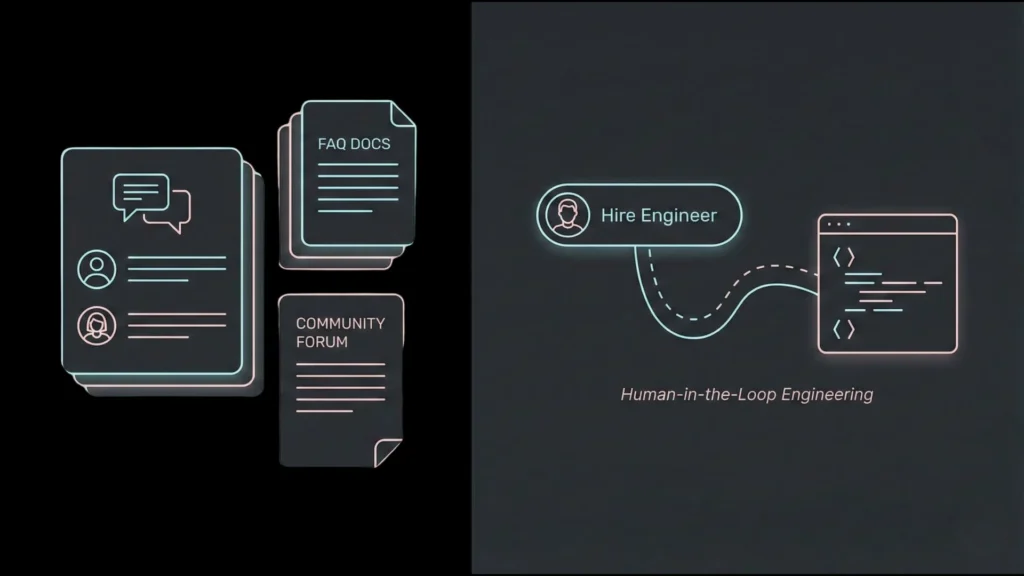
The most critical factor for business reliability is what happens when you get stuck. Imagine.bo offers a direct line to human engineers for building specific logic, whereas FlutterFlow relies on a tiered support system and self-serve resources, having removed 1:1 support for free users in late 2025.
The table below summarizes the contrasting approaches to keeping your project moving when technical challenges arise.
| Support Feature | Imagine.bo | FlutterFlow |
| Engineering Support | “Hire a Human”: You can assign tickets to real engineers to write code for you. | Self-Serve/Community: Relies on Help Center, Community Forum, and AI chatbots. |
| Response Guarantees | < 24 Hours (Pro): Guaranteed turnaround for SDE tasks. < 12 Hours (Enterprise): VIP turnaroun . | Plan-Based: Support availability varies by plan; no specific hour-based coding guarantee listed. |
| Code Ownership | Exportable: Produces clean, exportable code that follows modern standards. | Exportable: Download full Flutter source code for local development. |
| AI Implementation | Architectural: AI builds the entire backend, database, and frontend structure. | Agent-Based: “AI Agents” (Gemini/OpenAI) are integrated into the app for user interaction. |
Security & Infrastructure
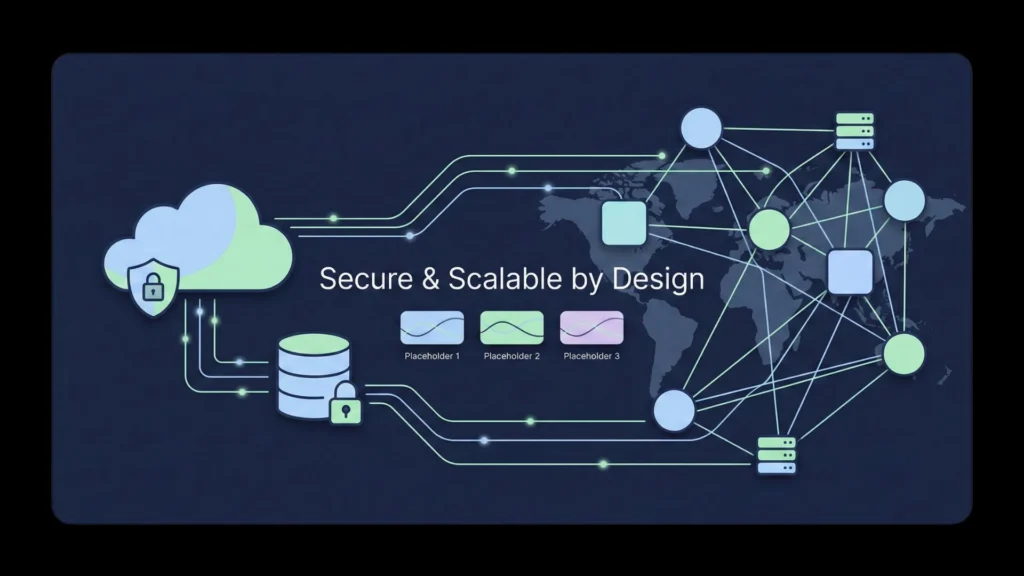
For a business in 2026, security is not an afterthought; it is a regulatory requirement. Both platforms offer robust security, but the implementation differs.
FlutterFlow
- Certification: FlutterFlow is SOC2 Type 1 certified, demonstrating a commitment to security controls.
- Infrastructure: It leans heavily on Google Cloud Platform (GCP) best practices, utilizing Cloud Armor for DDoS protection and Cloud IDS for intrusion detection.
- Database Security: FlutterFlow primarily connects to Firebase. While powerful, the security of the data relies on the user correctly configuring Firestore Rules. If a user sets rules to “test mode” and forgets to update them before deployment, the database remains vulnerable. The platform advises users to update rules, but the responsibility lies with the builder.
Imagine.bo
- Security-by-Design: Imagine.bo apps are “production-ready by default” with enterprise-grade security protocols, including Role-Based Access Control (RBAC), implemented out of the box.
- Compliance: The architecture is GDPR and SOC2-ready, designed for businesses that need to handle user data privacy by default.
- Deployment Architecture: Imagine.bo abstracts away the DevOps completely. It deploys the user interface to Vercel for global edge caching and the backend logic to Railway.
- Scalability: The infrastructure is load-tested to handle up to 1,000 transactions per second (TPS), ensuring that backend services scale automatically to handle traffic spikes.
Verdict: Which One Wins in 2026?
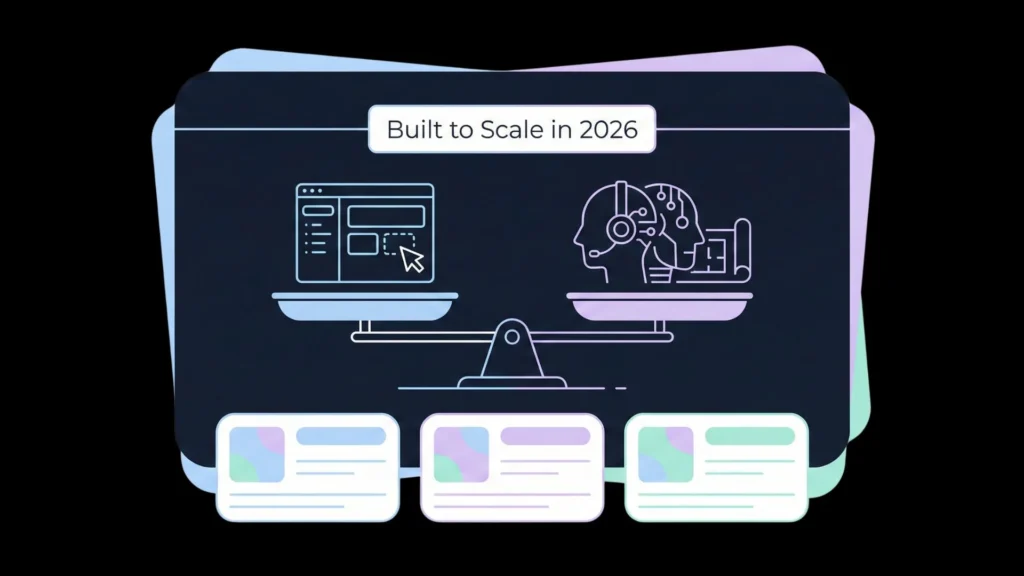
The choice between Imagine.bo and FlutterFlow is no longer about which tool is “better” in a vacuum, but rather which tool aligns with your specific business goals and technical capability.
Choose FlutterFlow if:
- You are a Designer or Developer: You need pixel-perfect control over UI, widget trees, and mobile-native animations.
- You Want Mobile-First Nuance: You are building a consumer app (B2C) where haptic feedback, swipes, and complex device-side interactions are the core value proposition.
- You Have Technical Resources: You are comfortable managing Firebase security rules, debugging Dart code, and handling your own backend logic integration.
Choose Imagine.bo if:
- You are a Founder or Business: You need a revenue-generating asset, not a coding project. You care more about the app working and scaling than controlling the exact padding of a button.
- You Need Insurance: You want the incredible speed of AI generation but need the guaranteed safety net of human engineers (“Hire a Human”) to fix complex issues instantly without hiring a full-time CTO.
- You are Building B2B/SaaS: The automated backend logic, database structuring, role-based access control, and ability to handle complex data forms make it the superior choice for business software.
In 2026, Imagine.bo stands out as the smarter choice for businesses that want to launch fast, scale reliably, and never worry about hitting the dreaded “no-code wall.” By combining Deep Reasoning AI with on-demand human engineering, it offers a level of reliability that pure visual builders cannot match.
Launch Your App Today
Ready to launch? Skip the tech stress. Describe, Build, Launch in three simple steps.
Build