In the rapidly shifting landscape of 2026, the challenge is no longer just “building an app,” but choosing a foundation that sustains long-term growth. While popular “vibe coding” and no-code platforms like Lovable, Bolt, Emergent, and Imagine.bo streamline the generation of full-stack applications from plain English prompts, the decision between tools often comes down to a fundamental architectural choice.
Anything (formally known as Create.xyz) acts as a fully autonomous agent that builds, tests, and launches both web and mobile apps entirely on its own. Conversely, Imagine.bo serves as a professional partner, empowering you to auto-generate a product while keeping real human engineers in the loop for complex customizations. This comparison breaks down the core differences between Imagine.bo and Anything to help identify which platform aligns with your scalability goals.
Launch Your App Today
Ready to launch? Skip the tech stress. Describe, Build, Launch in three simple steps.
BuildCore Philosophy and Platform Vision
The foundational philosophy of a platform dictates how it handles edge cases, scaling, and the inevitable complexities of software engineering.
Anything Core Philosophy
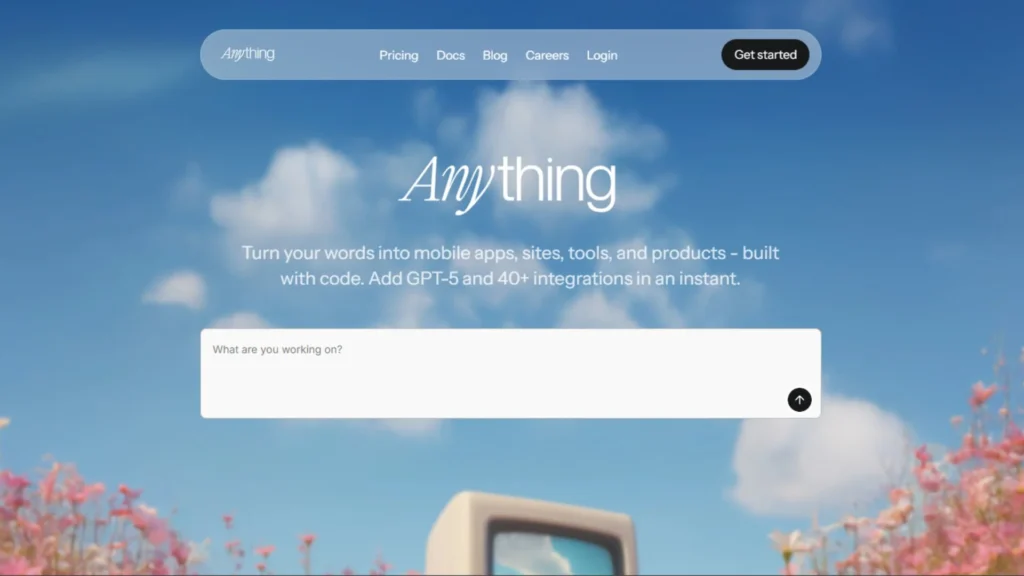
Anything operates as an AI agent that builds full mobile apps and web apps from a conversation.
- All-In-One Ecosystem: Its core philosophy is to provide everything you need to make money on the internet built directly into the platform.
- Creator Empowerment: The platform aims to turn as many people as possible into software creators.
- Comprehensive Automation: You describe what you want, and the agent builds the design, backend, database, authentication, payments, hosting, and submits the final product to the App Store.
Imagine.bo Core Philosophy
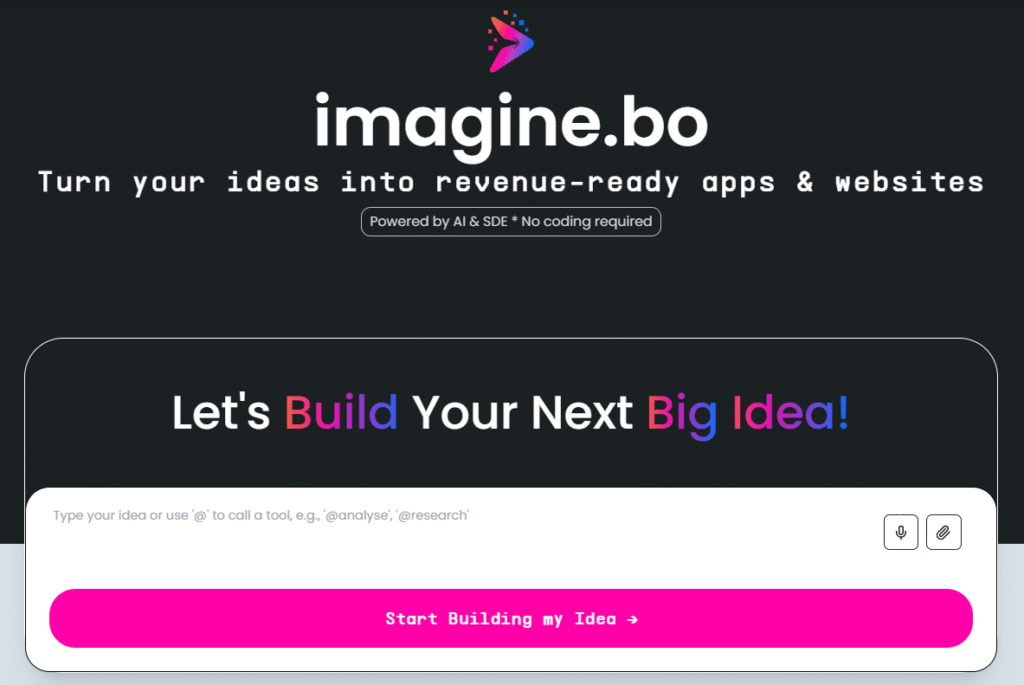
Imagine.bo is a next-generation, AI-powered application builder designed to transform natural language descriptions into fully deployed, full-stack web applications.
- Speed and Control: It solves the biggest problem in modern software development by bridging the gap between the instant generation capabilities of Artificial Intelligence and the reliability of expert human engineering.
- Day 2 Operations: The platform is specifically designed to solve the “Day 2” problem, addressing what happens when you need to scale, add custom payment flows, or integrate legacy systems.
- Target Audience: It empowers founders, growing businesses, and creative designers to build scalable, complex web applications without needing to write code.
Platform Capabilities and Code Generation Engine
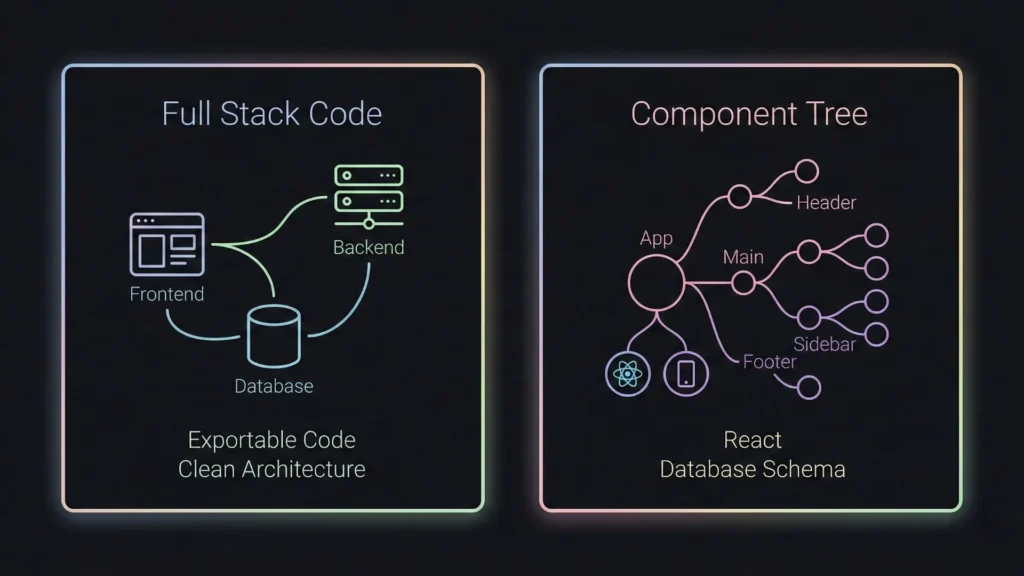
Understanding the underlying code that these platforms generate is critical for businesses that value intellectual property ownership and long-term technical debt management.
Imagine.bo Code Generation
Imagine.bo takes a strong stance against locking users into rigid templates and proprietary ecosystems.
- Clean Code: The platform produces clean, exportable code that follows modern standards.
- Full Stack Creation: When you describe your idea in plain English, the platform generates the entire tech stack, including a responsive frontend interface, a structured database schema, and robust backend logic.
- Business Focus: This capability is explicitly tailored for building SaaS and business applications, marketplaces, directories, internal tools, and ERPs. In the debate of No-Code vs Low-Code for Startups, Imagine.bo positions itself strongly by offering high-end scaling out of the box.
Anything Code Generation
Anything utilizes an agent that generates React code for web apps and React Native (Expo) code for mobile apps.
- No Framework Knowledge Required: Users do not need to know either React or React Native framework to use the platform.
- Intellectual Property: Users own all the code and content generated in their projects.
- Code Export: The platform ensures data freedom by allowing users to go to the Code tab and click Download to get the full project source code as a zip file.
The Development Workflow: Human-in-the-Loop vs. Autonomous AI
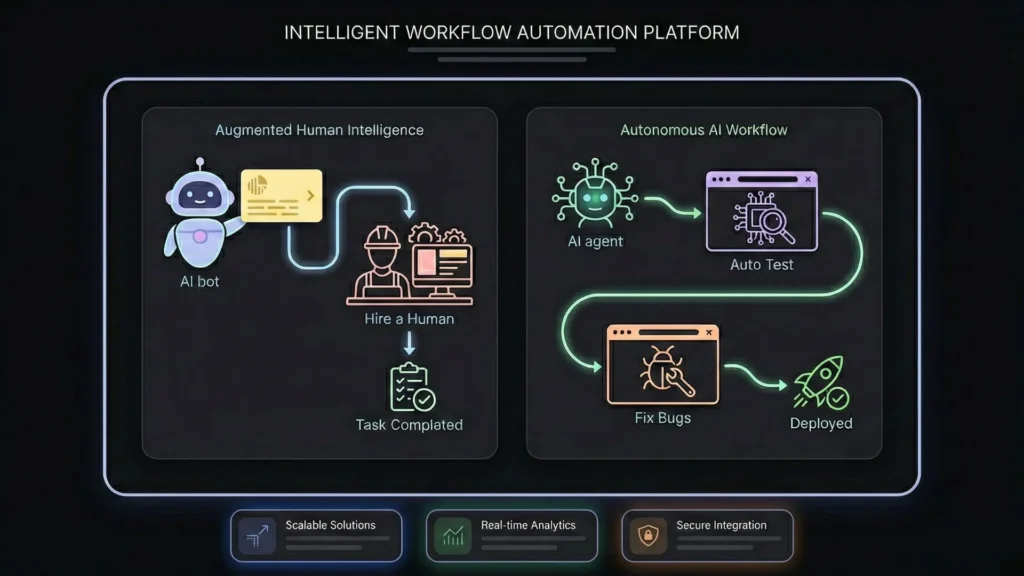
As applications grow in complexity, AI tools inevitably encounter logic they cannot automatically resolve. These two platforms handle these roadblocks in fundamentally different ways.
Imagine.bo Workflow
Imagine.bo acknowledges that AI is powerful but not flawless. Its most revolutionary feature is the “Hire a Human” or Software Development Engineer (SDE) capability.
- Assign a Developer: When a project requires highly complex custom logic, unique third-party integrations, or specific security protocols, users can instantly assign that specific task to a real, vetted Imagine.bo engineer directly from their dashboard.
- Direct Updates: The verified Imagine.bo engineer accepts the ticket, writes the custom code for that specific module, and pushes the update directly to the project’s repository.
- Unstoppable Momentum: This hybrid model guarantees that the project never stalls, giving founders the speed of automation with the quality assurance of a senior engineer.
Anything Workflow
Anything relies entirely on AI autonomy to overcome complex hurdles using its autonomous “Max” mode.
- Browser Emulation: Max runs the app in a real browser, seeing it the way a user does.
- User Actions: The agent scrolls, clicks, types, logs in, uploads, and checks out to find issues.
- Backend Testing: It runs backend logic to check that it actually works, not just that the code looks right.
- Parallel Agents: Users can run multiple Max instances at once as parallel agents, allowing one agent to fix authentication bugs while another builds a settings page.
Prompt Engineering and Communication with AI
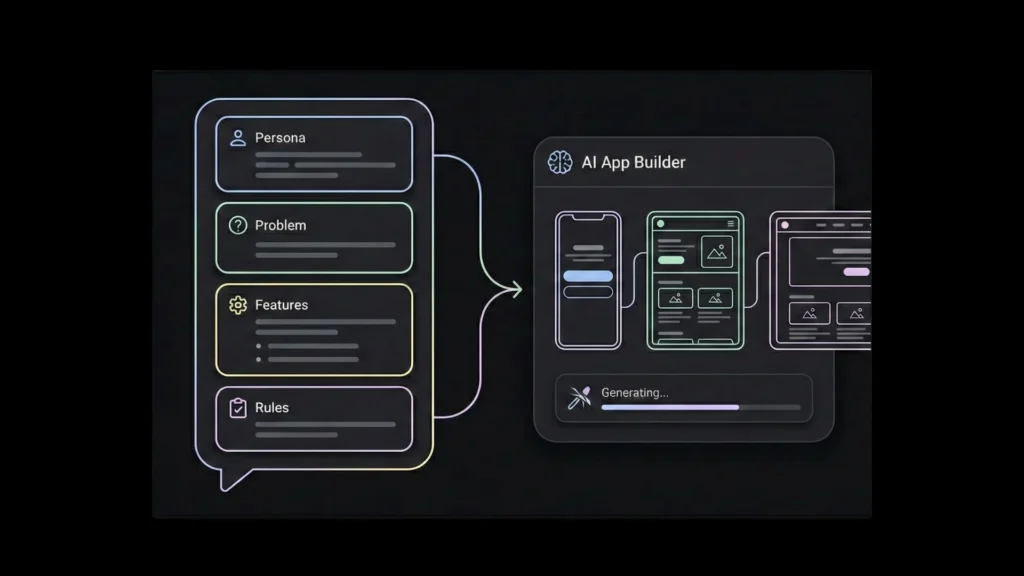
The quality of the final application heavily depends on how effectively the user communicates their intent to the AI builder. Both platforms offer specific guidelines for optimal prompt engineering.
Imagine.bo Prompting Best Practices
Imagine.bo utilizes a “Describe-to-Build” interface. Great prompts in Imagine.bo usually contain four core elements:
- Actor or Persona: Defines exactly who the app is for.
- Problem to Solve: Describes the core problem the app addresses to give it focus.
- Key Features: Explicitly lists what the app must do.
- Edge Behaviors: Includes rules or exceptions, such as “Only admins can delete records”. Imagine.bo warns against common anti-patterns, such as asking the AI to “Build something like Slack,” which is ineffective because no features or user types are defined. Instead, it recommends breaking large ideas into an MVP phase and a Version 2 phase.
Anything Prompting Strategies
Anything encourages a highly iterative, step-by-step chat approach. The platform offers multiple operating modes for the agent, including Auto, Discussion, Thinking, Fast, and Max.
- Discussion Mode: Used for planning and asking questions without making changes.
- Thinking Mode: Breaks work into steps so users can see the agent’s reasoning, which is useful when something doesn’t work as expected.
- Images and URLs: Users can paste screenshots directly into the chat for the agent to use as a visual reference. Alternatively, pasting a URL allows Anything to screenshot the page for visual reference.
- Web Search: Users can tell the agent to search the web when it needs info they don’t have handy, and it builds with that context.
Infrastructure, Deployment, and Hosting Strategies
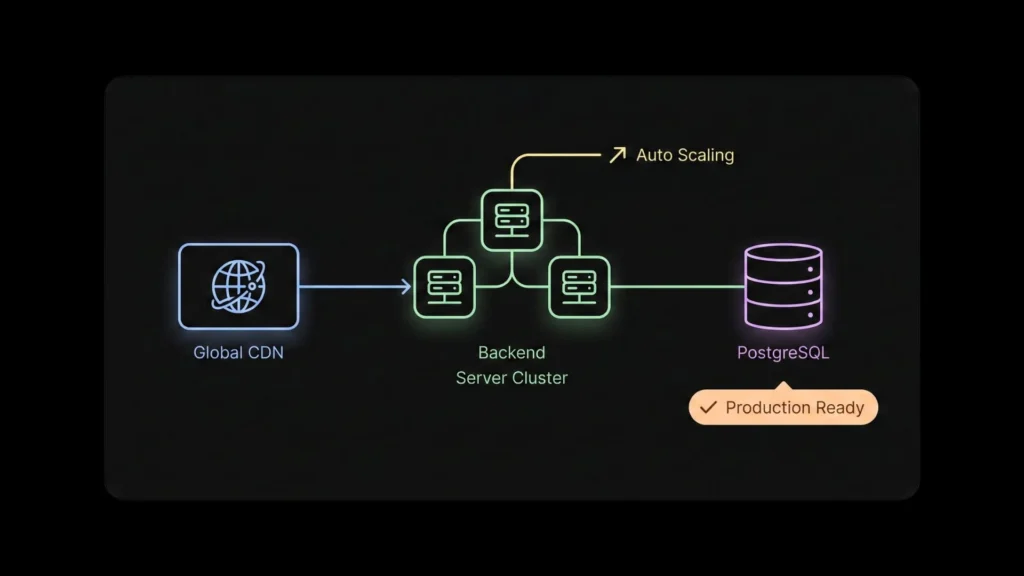
Where and how an application is hosted is critical for its performance, uptime, and long-term scalability.
Imagine.bo Infrastructure
Imagine.bo applications are production-ready by default. The platform has abstracted away the complexity of cloud DevOps and replaced it with a streamlined, enterprise-grade setup.
- Frontend Delivery: Imagine.bo deploys the frontend user interface to Vercel, ensuring global edge caching and lightning-fast load times for users.
- Backend Scaling: The database and server logic are powered by Railway, ensuring backend services can scale automatically during traffic spikes.
- Zero Configuration: There are no servers to provision or environments to set up; you simply prompt, and they handle the deployment.
Anything Infrastructure
Anything provides a live cloud sandbox where users interact with a preview version of their app.
- Dual Databases: Every project gets two databases: one for development, and one for production.
- Publish Synchronization: When a user hits Publish, the current build becomes the live version. Publishing pushes the database structure to production, but data stays separate to protect live data while experimenting.
- Database Technology: The databases run on PostgreSQL via Neon and scale automatically as the app grows.
- Custom Domains: Every app receives a free
.created.appsubdomain, while Pro plans can connect custom domains.
Security, Access Control, and User Authentication
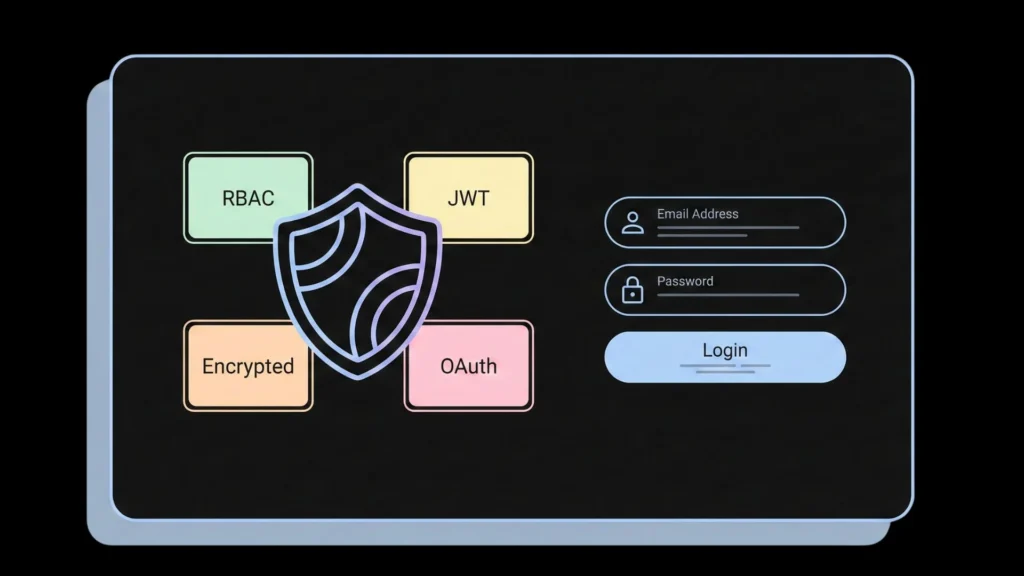
Handling user data securely is a strict requirement for any modern software application. Both platforms offer robust, built-in solutions, though they approach backend security differently.
Imagine.bo Security
Imagine.bo prioritizes security and scalability out of the box so founders can focus on business logic.
- Access Control: The platform implements enterprise-grade security protocols, including role-based access control (RBAC), out of the box to keep user data safe.
- Compliance Standards: Apps created with Imagine.bo feature a GDPR and SOC2-ready architecture, ensuring compliance audits are baked into the deployment to protect user privacy.
- Encryption: SSL and HTTPS protocols and data encryption are applied by default.
Anything Security
Anything manages authentication through a built-in User Accounts system.
- Automated Tables: Anything creates four specific tables in the database:
auth_usersfor user profiles,auth_accountsfor login methods,auth_sessionsfor active sessions, andauth_verification_tokenfor email verification and magic link tokens. - Encryption and Sessions: Passwords are hashed securely with bcrypt, and secure sessions are managed utilizing JWT tokens.
- Multiple Sign-In Options: The platform supports sign-in methods including Email/Password, Google, Facebook, and X (Twitter). It also supports magic links for passwordless sign-in.
Third-Party Integrations and Payments
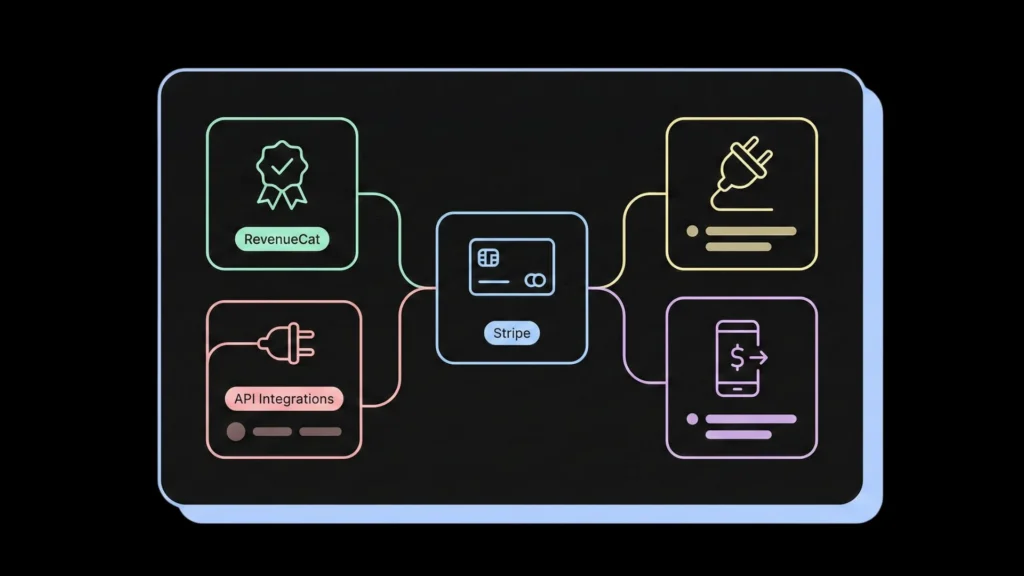
Monetization and external connections are handled differently by each builder. One focuses on customized human integrations, while the other provides a massive library of instant, AI-driven add-ons.
Integration and Monetization Strategies
| Capability | Imagine.bo Ecosystem | Anything Ecosystem |
| Connecting External APIs | When complex integrations or third-party APIs are required, users can click “Hire a Human” to have a vetted engineer write the custom code specifically for their project needs. | Anything offers over 100 built-in integrations accessible via a slash command in chat, allowing instant connections to tools like Google Maps, Resend for emails, and OpenAI. |
| Web App Payments | Complex localized payment gateways can be manually coded by assigned developers via the ticketing system to ensure security and proper logic routing. | Features a built-in Stripe integration to collect payments for monthly subscriptions and one-time purchases without needing to create Price IDs in the Stripe dashboard manually. |
| Mobile App Payments | Focuses strictly on mobile-responsive web apps, so native mobile app payments and in-app purchases are not applicable to the platform’s core offering. | Features a built-in RevenueCat integration specifically designed for iOS mobile apps to handle subscription management and entitlements smoothly. |
| AI Capabilities | AI handles the automated generation of the frontend components, backend logic, and database schema during the initial build and refinement phases. | Offers built-in integrations for GPT-4 Vision, Audio Transcription, Text-to-Speech, Markdown Rendering, and OpenAI Moderation for dynamic features. |
Mobile Application Development Capabilities
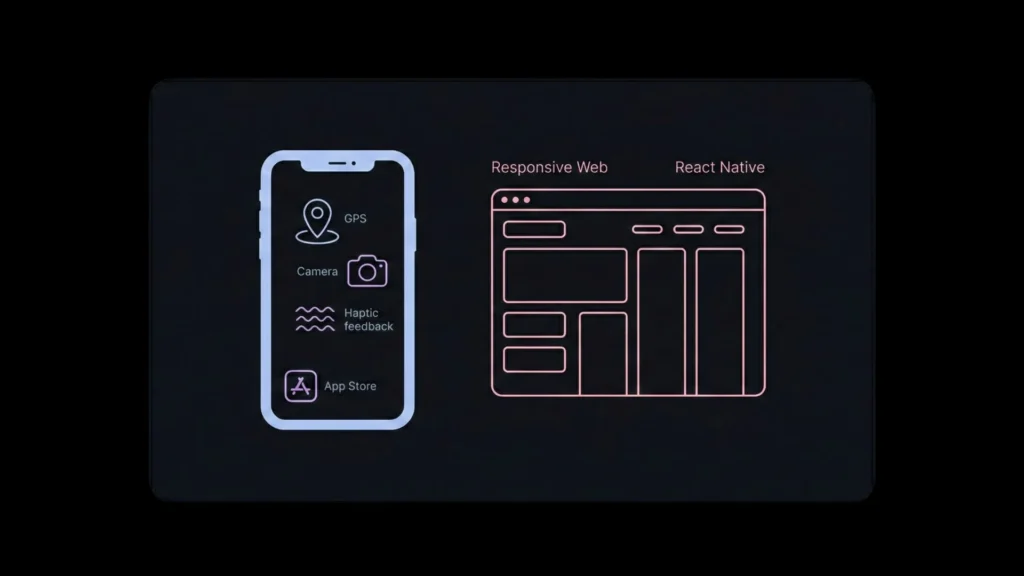
The approach to mobile consumers separates the two platforms significantly, dictating whether you launch on the web or directly in app stores.
Imagine.bo Mobile Capabilities
Imagine.bo focuses exclusively on web applications.
- Responsive by Default: It ensures that all generated web apps are fully mobile-responsive.
- Business Operations: The platform is heavily geared toward SaaS, B2B portals, and internal tools.
- Digital Transformation: It is designed to replace messy spreadsheets with robust, custom databases that operate flawlessly on mobile browsers.
Anything Mobile Capabilities
Anything is explicitly designed to build native iOS and Android apps alongside web apps.
- React Native Code: Anything generates Expo (React Native) code for its mobile applications.
- Companion Testing App: Users can download the Anything iOS app to preview and test their mobile apps directly on their phones.
- Native Device Features: Mobile apps built on Anything can access native device capabilities that web apps cannot, including GPS, cameras, haptic feedback, audio recording, and barcode scanning.
- App Store Processing: The platform features a built-in App Store review check that scans for common issues before submission. Publishing a mobile app submits it directly to the App Store through Apple’s TestFlight.
Pricing Models, Credits, and Resource Management
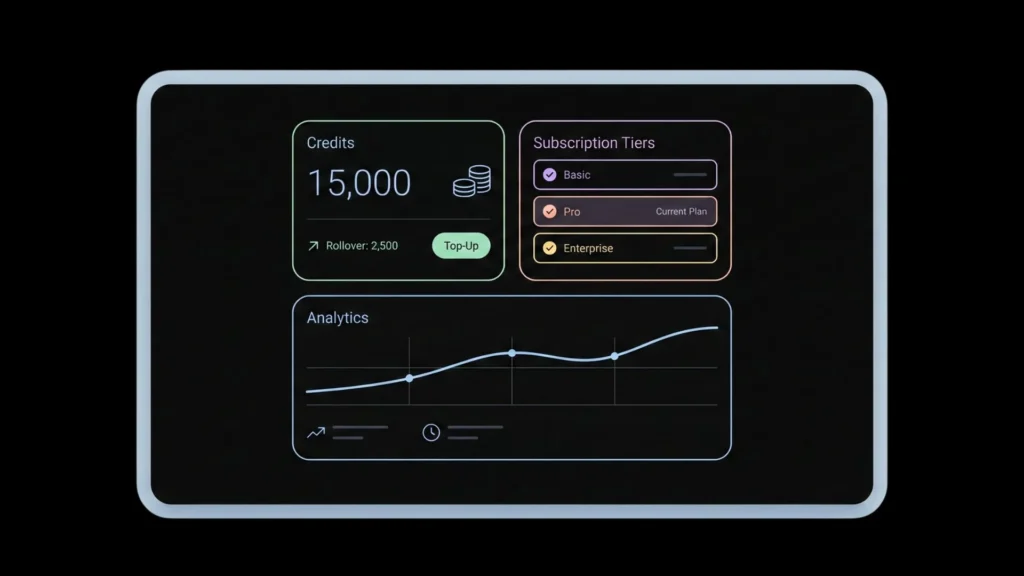
Both platforms utilize a credit-based system to manage AI generation costs, but they manage usage, rollovers, and pricing tiers differently to cater to their specific target audiences.
2026 Pricing and Credit Policies
| Policy or Feature | Imagine.bo Billing Structure | Anything Billing Structure |
| Entry Paid Tier | The Lite Plan starts at $7 per month and includes 60 monthly credits for small projects and landing pages. | The Pro Plan is available at $19 per month when billed annually, unlocking custom domains and payments. |
| Highest Standard Tier | The Enterprise Plan costs $249 per month, providing 2000 credits, 200GB storage, and a Dedicated CSM for scale-ups. | The Max Plan is available at $199 per month, granting access to autonomous browser-testing agents and deep reasoning. |
| Credit Rollover | Imagine.bo explicitly supports Credit Rollover on all paid plans, including Lite, Pro, and Enterprise tiers. | Unused monthly credits expire at the end of each billing cycle and do not roll over to the next month. |
| Expiration Rules | Unused credits do not expire at the end of the month as long as the subscription remains active in the system. | Credits tied to standard monthly allotments expire, though purchased top-off credits never expire. |
| Credit Top-Ups | Users can purchase one-time credit top-ups directly from the dashboard if they run low mid-month without upgrading. | Users can purchase specific credit packs, such as $12 for 10k credits, to top up their accounts at any time. |
| Premium Support | The Lite plan provides a 20 percent discount on SDE support tasks, with Enterprise offering 12-hour turnaround times. | Higher-tier plans come with a 10 percent volume discount in purchased credits for heavy users. |
Conclusion
Both platforms offer exceptional capabilities for developers and founders in 2026.
Imagine.bo is the ideal platform for founders, growing businesses, and enterprise teams prioritizing architectural control, compliance, and human reliability. The inclusion of real Software Development Engineers acts as the ultimate insurance policy against AI technical roadblocks. By providing production-ready deployments on Vercel and Railway with a 1,000 TPS scale capability, Imagine.bo successfully solves the “Day 2” scaling problem that plagues traditional visual builders.
Anything is the ultimate choice for creators, designers, and entrepreneurs seeking a truly autonomous, all-in-one ecosystem. Its ability to seamlessly generate React web apps and Expo React Native mobile apps simultaneously sets it apart. The integration of the autonomous “Max” agent, which can test and fix applications in a real browser independently, provides a highly futuristic development workflow. With built-in integrations for Stripe, RevenueCat, and direct App Store submission, Anything is perfect for those who want to rapidly launch and monetize across all device platforms.
Launch Your App Today
Ready to launch? Skip the tech stress. Describe, Build, Launch in three simple steps.
Build