
AI is changing the way clothing brands launch online, and today you don’t need a big team or technical skills to build a polished store. With the right AI website builder, you can create a fashion-ready e-commerce site in minutes, complete with sleek layouts, product pages and on-brand visuals. It’s a simple way to turn your designs into a store that feels professional from day one.
Executive Summary: The AI Imperative for Fashion Retail
The global fashion market is undergoing a seismic digital transformation, projected to exceed $1.18 trillion by 2029. Digital adoption is no longer a strategic advantage but a market necessity, with 62% of consumers preferring online channels. In this hyper-competitive landscape, independent and startup clothing brands face a critical choice: adopt cutting-edge technology to create resilient, scalable operations, or succumb to the operational friction points that plague traditional e-commerce.
Launch Your App Today
Ready to launch? Skip the tech stress. Describe, Build, Launch in three simple steps.
BuildAnalysis of market trends confirms that Artificial Intelligence (AI) is the single most critical investment for new brands. Generative AI is estimated to contribute between $150 billion and $275 billion to the apparel, fashion, and luxury sectors’ operating profits over the next three to five years. This significant financial potential underscores why 73% of fashion executives prioritize generative AI within their businesses.
Historically, accessing this level of technological sophistication required substantial capital investment—custom e-commerce development can easily range from $10,000 to over $50,000, with ongoing maintenance costs adding thousands monthly. This high cost of entry has favored established retailers. However, the emergence of advanced AI website builders fundamentally democratizes enterprise-grade infrastructure. These platforms provide startups with the speed, scalability, and built-in intelligence needed to compete effectively, enabling them to shift capital expenditure away from complex, long-term software development and toward core brand expansion. This report outlines the strategic necessity of this shift, detailing how AI builders address the industry’s most pressing challenges and providing a clear launch blueprint for achieving high growth and market authority.
The Fashion E-Commerce Crucible: Defining Modern Challenges (EEAT Foundation)

Establishing market authority (EEAT) in the fashion industry requires a nuanced understanding of the unique financial, operational, and ethical friction points that define the sector. Traditional e-commerce models frequently fail because they cannot mitigate the cost and complexity inherent in selling apparel online.
A. The Financial and Environmental Burden of High Returns
The primary impediment to profitability and customer trust in fashion e-commerce is the exceptionally high rate of product returns. E-commerce return rates, primarily driven by customer dissatisfaction with sizing and fit, range significantly, often falling between 20% and 30%. This high return volume represents a “hidden killer” of profit margins, encompassing not only the cost of lost sales but also expensive reverse logistics, labor, and restocking fees.
The issue of high returns extends beyond immediate financial loss into the critical domain of verifiable sustainability. The fashion industry faces intense pressure regarding textile waste management and the risk of greenwashing. Brands are increasingly required to adopt verifiable sustainability practices and demonstrate transparency to meet heightened regulatory oversight and demanding consumer expectations. Consequently, high return rates introduce a direct conflict with a brand’s sustainability claims, thus posing a severe risk of greenwashing and undermining consumer trust. The failure to consistently deliver the right fit or quality erodes the Trust component of the EEAT framework. Therefore, implementing solutions that aggressively reduce returns must be viewed as essential strategic investments that build genuine customer trust and bolster brand reputation, not merely as cost-saving measures.
B. Operational Complexity, Talent Gaps, and Cost Barriers
Launching a fashion startup is uniquely difficult due to the convergence of technical complexity and resource limitations. Small brands often struggle with budget constraints that prevent them from attracting and retaining skilled e-commerce, logistics, and technical talent, frequently relying on a fragmented team of freelancers. This constraint often results in founders focusing excessively on creative aesthetics while neglecting the underlying systems and processes required for efficient organization, growth marketing, and margin optimization.
The traditional route of custom web development exacerbates this talent gap. A full-featured, uniquely branded clothing e-commerce site requires sophisticated elements such as custom UI/UX design, dynamic product filtering, and integration with CRM and ERP systems. These projects command upfront costs often exceeding $10,000 and can rise to $50,000 or more. Furthermore, the initial development is only the beginning, as ongoing costs—including web hosting, security maintenance (SSL, firewalls), and regular updates—can total $500 to $2,000 per month. This high Total Cost of Ownership (TCO) acts as an insurmountable financial barrier for many niche, creative startups.
Simultaneously, the industry’s rapid digital transformation introduces severe cybersecurity risks. As the market becomes increasingly digitized, vulnerabilities increase. Data security concerns are high among consumers, with 41% worried about privacy. Small businesses, which are often ill-equipped to invest in the necessary enterprise-grade security architecture, risk catastrophic breaches that can instantly destroy customer trust and brand credibility.
The No-Code Solution: Architecting the Future of Fashion Retail with Imagine.bo
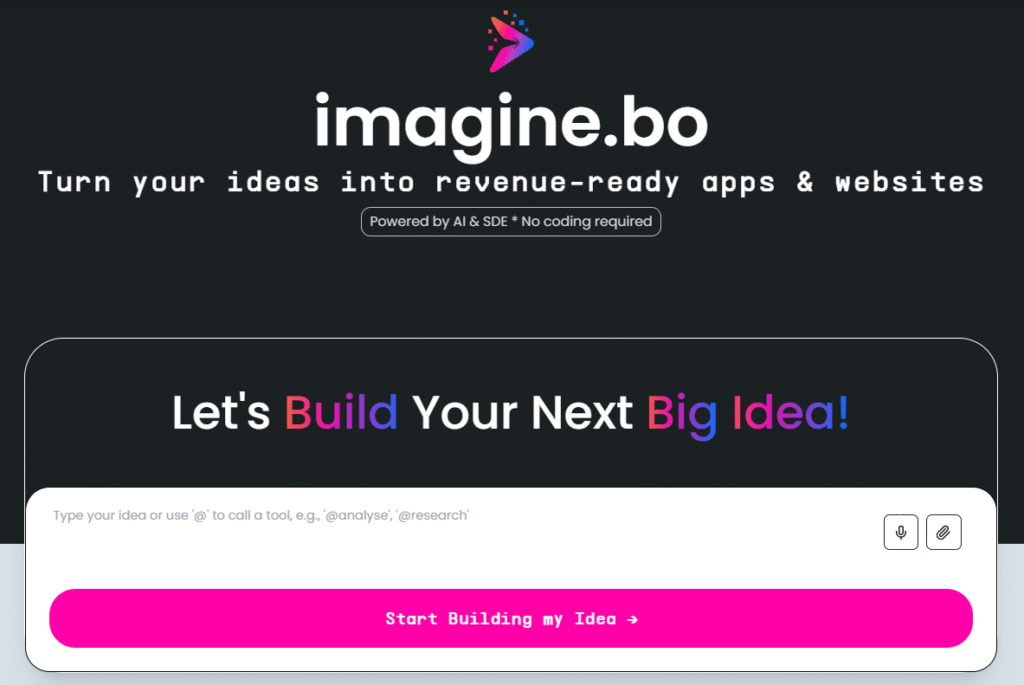
To counteract the operational, financial, and security barriers of traditional development, strategic analysts endorse a definitive counter-strategy: the adoption of AI-powered no-code development platforms. These systems expedite digital transformation and fundamentally lower the cost of entry and ownership for competitive fashion e-commerce.
A. Disrupting the Development Cost Model
No-code and low-code solutions expedite development, mitigate the IT skills gap, and offer rapid time-to-market. They shift the foundational investment model away from bespoke software engineering toward a more efficient, subscription-based operational expenditure model. This approach is profoundly advantageous in fashion, where agility and rapid response to trends are paramount.
The economic advantage is clearly observed in the Total Cost of Ownership (TCO). While custom solutions demand continuous manual maintenance and patching, leading to high recurring costs, no-code platforms significantly reduce TCO by automatically handling core maintenance, updates, security patches, and compatibility adjustments. This financial efficiency allows brands to redirect significant resources previously earmarked for development and IT management toward growth-focused initiatives, such as product expansion and aggressive marketing.
B. Imagine.bo: The AI Architect for Fashion Velocity
Platforms that leverage generative AI represent the next evolution of no-code, acting as automated lead architects for the entire e-commerce structure.
Imagine.bo is specifically designed to transform complex, multi-faceted business concepts into fully functional, scalable web applications. The process begins not with developer sprints, but with prompt engineering: the user inputs their specific vision, such as defining “A sustainable, personalized knitwear store requiring AR virtual try-on integration, Stripe payment gateway, and real-time inventory sync”. The AI instantly delivers a comprehensive blueprint encompassing design concepts, essential workflows, section layouts, and initial messaging. This radically streamlined approach accelerates development into days, effectively bypassing the months typically required for traditional scoping, coding, and testing.
A critical differentiating factor for Imagine.bo is its commitment to enterprise-grade security and compliance, a feature often absent or prohibitively expensive in custom startup builds. The platform automatically configures applications for world-class scaling and security, offering immediate GDPR/SOC2 compliance from day one. This capability eliminates the need for startups to hire dedicated security or cloud architecture experts, instantly providing a robust defense against the rising tide of cybersecurity threats identified within the industry. This ability to decouple technical complexity from necessary expertise means that small fashion brands can now stand on equal footing with major retailers regarding security and data governance.
Furthermore, while AI automates complexity, Imagine.bo recognizes the necessity of the human element. The platform offers real-time human support from expert engineers who assist with complex integrations, advanced issues, or bug fixes. This commitment to a “human in the loop” reinforces the platform’s Authority and Trustworthiness, ensuring that brands focused on high-touch, customized fashion requirements never hit a technical wall reliant only on community-sourced solutions.
Table 1: The Cost of Custom Development vs. AI Builder TCO
| Development Factor | Traditional Custom E-commerce Build | AI No-Code Builder (e.g., Imagine.bo) |
| Initial Development Cost | $10,000 – $50,000+ (Requires specialized IT talent) | Significantly Lower (Subscription-based SaaS model) |
| Time to Market | 6–12+ Months (Design, coding, testing sprints) | Days/Weeks (Rapid generation via AI prompt) |
| Ongoing Maintenance/Updates | $500 – $2,000/month (Manual patching and compatibility) | Automated & Managed (Lower TCO; platform handles security/updates) |
| Security & Compliance | Expensive, custom configuration required | Built-in (GDPR/SOC2 Ready from day one) |
Launch Blueprint: Building a High-Conversion Fashion Platform
Leveraging an AI builder accelerates the technical launch process, but strategic success still requires adherence to a rigorous blueprint that incorporates mobile optimization and robust backend integration.
A. Phase 1: Strategic Foundation and Prompt Engineering
Every successful fashion brand begins by defining a unique aesthetic, focusing on a cultural whitespace, or identifying an unmet need. This foundational clarity—defining the brand DNA and target niche—must precede development.
This strategic clarity is then converted into the core input for the AI builder. The initial AI prompt, which is the definition of the vision, must be precise and incorporate all necessary functionalities. For example, a prompt would specify the required integrations and functionality: “A mobile-first, high-end resort wear store requiring AR virtual try-on integration, Stripe payment gateway, and real-time inventory sync”. Imagine.bo utilizes this specific input to generate the tailored application blueprint, acting as the foundation for the visual development phase. This focus on a clear use case ensures the resulting application structure is scalable and efficient, allowing the brand to avoid spending too much time on aesthetics and instead focus on systems that fuel growth.
B. Phase 2: Design, Optimization, and Mobile-First UX
The central architectural mandate for modern fashion e-commerce is the Mobile Mandate. Approximately 81% of fashion e-commerce traffic originates from mobile devices. This data dictates that the entire design philosophy must prioritize the small screen, starting with essential features and progressively building up the layout for larger devices.
Performance optimization must be laser-focused, as mobile users are frequently on slower networks. High bounce rates result from slow load times. Critical steps include ensuring progressive image loading, serving responsive images in efficient formats like WebP or AVIF, and minifying resources to defer non-critical script loading.
Crucial Mobile User Experience (UX) principles for high-conversion fashion sites include:
- Above-the-Fold Density: Because mobile viewports display fewer items, initial screen real estate is precious. Hero banners should be limited to 30–40% of the initial view height to push the product grid higher, maximizing the chance for quick product discovery.
- Thumb Zone Accessibility: Key user actions, such as navigation, filtering, and the primary Call-to-Action (CTA), should be placed within the easily accessible “thumb zone,” often achieved via a sticky bottom filter bar or floating pill.
- Tap-Friendly Cards: To prevent “fat-finger errors” that severely hamper conversions, product cards and interactive elements require a minimum 44px hit area and generous whitespace. Imagine.bo’s smart design suggestions and responsive design features are engineered to automate adherence to these critical mobile standards, ensuring that the visual branding is applied within a highly optimized, conversion-focused structure.
C. Phase 3: Essential Backend Systems Integration
A visually appealing website cannot convert or scale without robust back-office integration. AI builders must provide easy connectivity to essential operational tools.
The inventory and fulfillment infrastructure is non-negotiable for apparel. The website must seamlessly sync with Inventory Management Systems (IMS) to track real-time stock levels, update product details (size, color, SKU), and process incoming shipments and returns. Platforms often support these complex workflows via instant API integrations, webhooks, or integration automation tools like Zapier and Make. This integration ensures that the brand remains transparent and avoids selling out-of-stock items, which leads to immediate customer frustration.
Finally, the checkout flow must be meticulously managed. Secure payment processing via major gateways (Stripe, PayPal) is mandatory. Once launched, ongoing maintenance is crucial; built-in growth tools and analytics must be leveraged to track key performance indicators (KPIs) from day one, allowing for rapid iteration and refinement of the User Experience (UX).
AI-Powered Conversion Tactics: Solving Fashion’s Fit and Merchandising Crisis

The ultimate test of a fashion e-commerce platform is its ability to overcome the high friction points related to product visualization and fit—the primary drivers of low conversion and high returns. AI provides definitive solutions to these endemic industry problems.
A. Deep Dive 1: Eliminating Fit Uncertainty with Virtual Try-On (VTO)
Traditional size charts are insufficient for online apparel, creating significant buyer doubt. Virtual Try-On (VTO) technology, often using augmented reality (AR) and 3D modeling, addresses this fundamental trust gap. The market for VTO is experiencing rapid expansion, projected to achieve a 26.4% annual growth rate through 2030. This growth is justified by clear financial returns: retailers utilizing VTO solutions report an average 30% increase in sales conversion rates and a substantial 20-30% reduction in product returns.
This success is rooted in the increased precision offered by AI sizing and VTO algorithms. Modern AI sizing platforms, exemplified by tools like SizeSense.ai, move far beyond generic measurements. These systems analyze 50+ real-time body measurements and, uniquely, factor in complex variables like fabric elasticity and specific clothing design features. This granular analysis ensures highly precise recommendations, achieving up to 94% accuracy, fundamentally transforming customer confidence and leading to significantly reduced return losses.
This VTO integration has implications that transcend immediate sales. The data generated by VTO and personalized sizing tools provides a crucial feedback loop for design and production teams. By tracking detailed return reasons and identifying recurring sizing or quality issues across demographics, the brand can proactively adjust its patternmaking and product offerings. This sophisticated flow of data shifts the business model from being reactive to customer complaints to proactive design optimization, helping the brand manage stock levels and align production with market needs, which in turn supports verifiable sustainability claims and circular production goals.
B. Deep Dive 2: Intelligent Inventory and Visual Merchandising
AI is equally transformative in managing the operational complexity of merchandising and inventory, allowing brands to respond to fast-moving trend cycles.
1. AI Trend Forecasting and Supply Chain Optimization
Fashion supply chains are inherently complex, involving diverse suppliers, manufacturers, and logistics partners. AI enhances this management by performing multimodal analysis, simultaneously analyzing vast datasets including social media trends (e.g., TikTok content), customer reviews, and even fashion show footage. This process identifies granular micro-trends, such as the rise of specific sleeve shapes or materials, allowing brands to predict demand more accurately. By aligning production with real-time market needs, AI-powered predictive analytics helps minimize overproduction and reduce excess inventory, which directly supports the imperative for verifiable sustainability and waste reduction.
2. Dynamic Product Display and Visual Merchandising
In the competitive online environment, how products are presented drastically impacts purchase decisions. AI visual merchandising tools analyze user behavior to personalize product recommendations and simplify product discovery. For mobile shoppers, who often make decisive “micro-moment” purchases, AI is essential for dynamically merchandising product collections. Algorithms automatically promote high-converting best-sellers and new arrivals while simultaneously pushing out-of-stock or lower-performing products down the page, maximizing the efficiency of the limited mobile viewport.
Furthermore, for brands managing large inventories, AI automated categorization classifies thousands of second-hand or new items by size, style, and trend relevance, dramatically speeding up the crucial product listing process. AI also supports aesthetic consistency by automatically enhancing photo quality, removing backgrounds, and correcting colors, ensuring that product imagery maintains high professional standards across the site to boost customer engagement.
Achieving Market Authority: The EEAT and AI SEO Framework
In a market saturated with options, a beautiful website is insufficient. Achieving brand visibility and long-term organic growth requires a deliberate strategy built on Google’s quality framework: Expertise, Authoritativeness, and Trustworthiness (EEAT).
A. The EEAT Core: Expertise, Authority, and Trust
- Expertise (E): In fashion, expertise is demonstrated not just through high-quality design but through specialized, high-utility content that answers specific, high-intent questions, such as “sustainable sun hats” or “how to measure environmental metrics in garment production”.
- Authority (A): Authority is earned by being cited by other reputable sources (backlinks), but increasingly, it is cemented by leveraging AI to generate and deploy high-quality, data-driven content that is comprehensive and optimized for user intent.
- Trust (T): Trust is the cornerstone for high-value fashion purchases. It is established through operational transparency, verifiable and accurate sustainability claims, robust data security and compliance (such as the GDPR/SOC2 readiness provided by a platform like Imagine.bo), and transparently showcasing validated product reviews and ratings using structured data.
B. Advanced AI SEO Strategy for Fashion
AI-driven SEO is a transformative approach that moves beyond basic keyword stuffing, focusing instead on predictive insights and enhanced data structuring.
1. Visual Search Optimization (VSO)
Fashion is inherently visual, making Visual Search Optimization (VSO) a paramount strategy. Consumers frequently upload images to find similar products. To ensure a brand’s products appear in these visual searches, every product image must be optimized using descriptive metadata, AI-generated alt texts, and detailed structured data (schema markup). Optimizing images so that search engines and AI algorithms can fully understand the product without reliance on textual descriptions ensures higher ROI and broader discoverability on platforms like Google Shopping.
2. Intent-Driven Keyword Mapping
Effective fashion SEO requires shifting focus from generic, highly competitive short-tail keywords to highly specific, long-tail, buyer-intent phrases. Instead of optimizing for the generic term “leather jackets,” brands must target phrases like “vegan leather jackets under $200” or “UK-made sun hats”. These phrases capture customers further down the funnel who are ready to convert. AI tools can analyze search behavior and competitive difficulty to pinpoint these high-value, niche opportunities.
3. Structured Data and Rich Snippets
The technical foundation of the e-commerce site must be robust. Implementing product schema markup (structured data) helps Google display Rich Snippets—enhanced search results that include price, product reviews, and availability—directly in the Search Engine Results Pages (SERPs). This technical optimization dramatically increases the Click-Through Rate (CTR) and immediately bolsters Trust by showcasing verified customer feedback, reinforcing the brand’s credibility.
It is evident that achieving high market authority (EEAT) now requires advanced AI adoption. The technical infrastructure provided by AI website builders facilitates the necessary steps—from implementing GDPR/SOC2 security protocols to generating the detailed metadata required for VSO—making EEAT itself increasingly a function of technological depth and strategic AI integration.
Table 3: Strategic AI SEO & EEAT Checklist
| Actionable SEO Step | AI Tool/Strategy | Fashion E-commerce Relevance | EEAT Contribution |
| Keyword Strategy | AI-driven discovery of long-tail, intent-driven phrases | Targets high-conversion users (e.g., “vegan handbags”) | Expertise (E): Demonstrates deep understanding of niche buyer journey. |
| Visual Optimization | Descriptive metadata and AI-generated alt text for all images | Essential for Visual Search and AI internal merchandising feed | Authority (A): Ensures products are indexed correctly by search engines and shopping platforms. |
| Data Markup | Implementing Schema markup for products (reviews, price, availability) | Generates Rich Snippets to increase CTR | Trust (T): Shows verifiable ratings and availability directly in SERPs. |
| Performance | WebP optimization, Minification, CDNs (built-in to many AI hosts) | Crucial for mobile performance (81% traffic share) and Core Web Vitals | Trust (T): Provides a fast, secure user experience, reducing bounce rate. |
Scaling Your Brand: Metrics, Efficiency, and Future-Proofing
A highly optimized AI-built foundation provides the necessary launch velocity; sustained growth requires a stringent focus on operational metrics and long-term scaling strategy. Scaling without tracking appropriate metrics is functionally equivalent to operating blind.
A. Essential Scaling KPIs for Fashion E-commerce
For fashion brands, success metrics must align with the high-cost nature of acquisition and the risk associated with product handling.
1. Customer Value Metrics: High Customer Lifetime Value (CLV) is the key differentiator for profitable brands. AI personalization strategies, utilized by approximately 75% of global fashion employees, are essential for driving repeat purchases and increasing Average Order Value (AOV). Personalized experiences foster loyalty and encourage cross-selling, maximizing the value extracted from each acquired customer.
2. Acquisition Efficiency Metrics: The effectiveness of marketing spend is measured by Cost per Acquisition (CPA) and Return on Ad Spend (ROAS). AI plays a critical role in refining marketing strategies by providing tailored content and recommendations, significantly reducing ad spend wastage and improving overall ROI.
3. Operational Health Metrics: The Refund/Return Rate remains the single most important operational health metric for fashion. Sustaining the 20-30% reduction in returns achieved through AI-powered VTO and sizing technologies is essential for protecting profit margins and maintaining operational efficiency.
B. Operational Efficiency Through Automation
The technical efficiency gained through no-code platforms minimizes the recurring costs associated with manual operations and maintenance, allowing for automation across the value chain.
AI tools are increasingly used to generate high-quality product descriptions, headlines, and customer communications, reducing the time spent by marketing teams on repetitive content tasks. More critically, AI enhances supply chain resilience by enabling more agile, transparent, and responsive logistics. By tracking materials in real-time and utilizing predictive analytics, fashion brands can reduce inefficiencies in traditional supply chains, thereby improving both cost-effectiveness and speed.
C. Future-Proofing and Ecosystem Flexibility
A common concern regarding no-code solutions is their scalability or potential lack of flexibility once a brand achieves significant growth. However, modern AI builders are engineered to negate this risk.
The operational advantage derived from platforms that handle maintenance, security upgrades, and mobile responsiveness automatically translates directly into a lower Total Cost of Ownership (TCO). This lower TCO enables the brand to pursue growth initiatives by redirecting saved capital. This change in resource allocation challenges the traditional assumption that high scalability requires expensive, custom low-level code. Instead, the automation inherent in a platform like Imagine.bo means that the brand scales efficiently by funding product expansion and marketing, rather than IT debt.
Furthermore, true scalability requires seamless integration with external, specialized systems (e.g., advanced CRM, dedicated ERP, or sophisticated logistics software). Imagine.bo provides instant API integrations and webhooks, allowing the system to connect with virtually any third-party tool and support advanced, customized workflows without requiring the brand to revert to writing custom code. This extensibility future-proofs the brand’s digital infrastructure, allowing it to adapt swiftly to new market technologies and maintain competitiveness in the long term.
Conclusion: The Launch Accelerator and Next Steps
The decision to launch a fashion e-commerce brand today is inextricably linked to the decision to adopt AI. The technology is no longer a luxury reserved for industry giants but the foundational requirement for competitive resilience. AI fundamentally solves the industry’s most damaging operational problems: mitigating the financial and environmental risk of high returns through personalized fit technology, verifying sustainability claims through enhanced supply chain transparency, and democratizing enterprise-grade infrastructure previously restricted by prohibitive costs and complex technical requirements.
The strategic choice of platform must prioritize speed, built-in intelligence, and verifiable security from the outset. By selecting an AI-first, no-code solution, startup and independent brands can bypass the extensive timelines and $10,000+ custom development barriers, gaining immediate access to the necessary scaling capabilities and robust compliance features. The platform serves as the optimal launch accelerator, allowing founders to dedicate resources and expertise to defining their unique niche, building their brand identity, and engaging their audience, rather than managing technical debt.
To remain competitive and capture market share in this digitally advanced era, fashion brands must move decisively to implement intelligent, scalable infrastructure.
Ready to transform your fashion concept into a secure, scalable e-commerce reality in days, not months? Leverage the generative power of Imagine.bo’s AI architect bypasses the technical debt of custom development and starts solving fashion’s biggest fit and return challenges today.
Launch Your App Today
Ready to launch? Skip the tech stress. Describe, Build, Launch in three simple steps.
Build