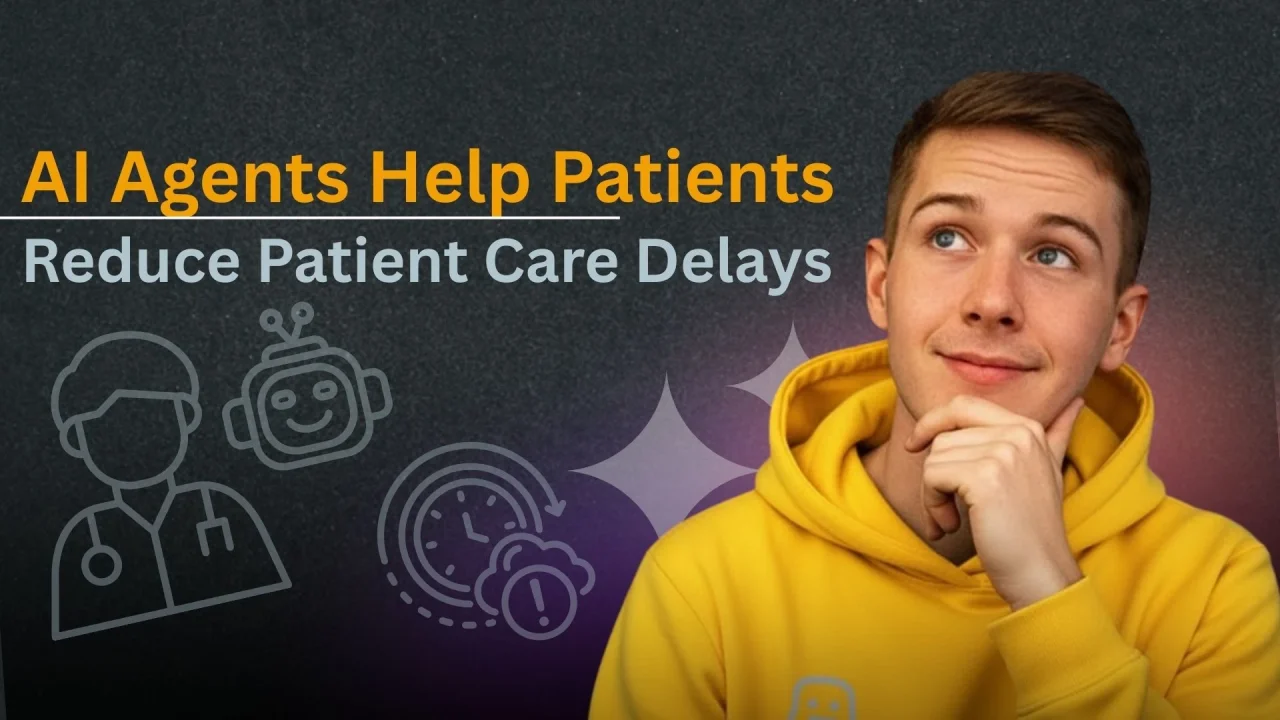
In the world of healthcare, time isn’t just a metric; it’s a clinical necessity. We’ve all felt that sinking feeling whether as a patient waiting on hold for twenty minutes to schedule an urgent follow-up, or as a clinician buried under a mountain of administrative paperwork while a patient sits in the waiting room.
The “delay” in healthcare is rarely a result of a lack of effort. It’s a result of a system that is stretched thin. However, we are entering an era where technology is moving beyond “digital filing cabinets” into active partnership. AI agents are emerging as the silent partners in patient care, bridging the gap between a patient’s need and a provider’s availability.
Launch Your App Today
Ready to launch? Skip the tech stress. Describe, Build, Launch in three simple steps.
BuildWhere Delays in Patient Care Come From
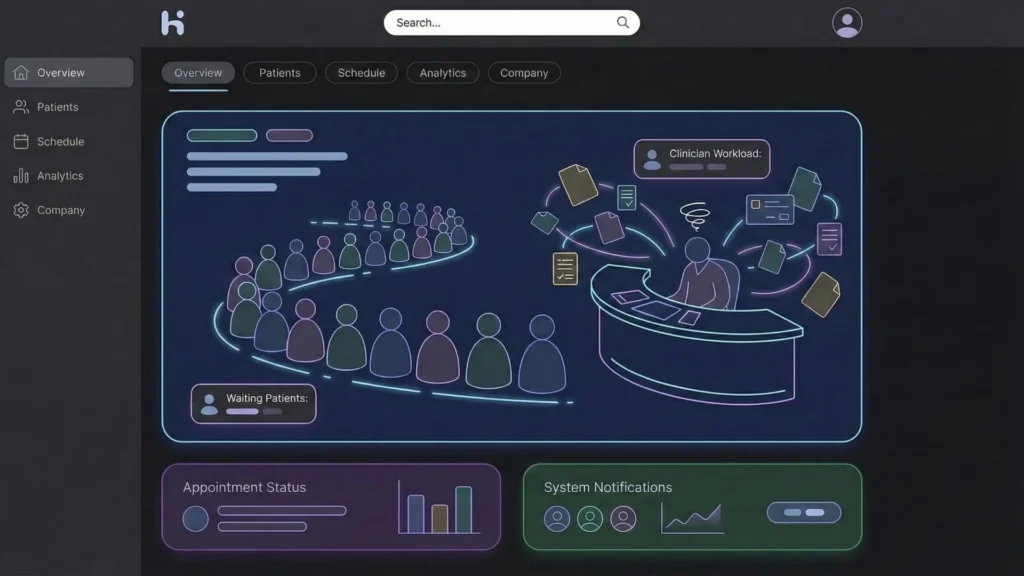
To fix a problem, we have to understand its roots. In my experience across both the clinical and technical sides of health systems, delays usually stem from three main bottlenecks:
1. The Administrative Overload
Doctors and nurses didn’t go to school to become data entry clerks. Yet, for every hour spent with a patient, providers often spend two hours on documentation and administrative tasks. This “administrative tax” eats into the time available for actual patient interaction. Many providers are now looking for ways to automate your business tasks using AI tools to reclaim this lost time and focus back on the bedside.
2. The Communication Gap
Patients often fall through the cracks in the “in-between” moments. A patient might have a question about their post-op instructions at 8:00 PM on a Tuesday. If they have to wait until the office opens at 9:00 AM Wednesday and then wait for a callback that’s a 15-hour delay in clarity that could lead to unnecessary ER visits or patient anxiety.
3. Staffing and Triage Limits
Front-desk teams are often overwhelmed. When fifty people call at once to schedule appointments, the fifty-first person gets a busy signal or a long hold time. High-performing clinics are increasingly turning to AI-driven emergency response frameworks to ensure that even during peak loads, critical queries are identified and managed with precision.
What AI Agents Really Are in a Healthcare Context
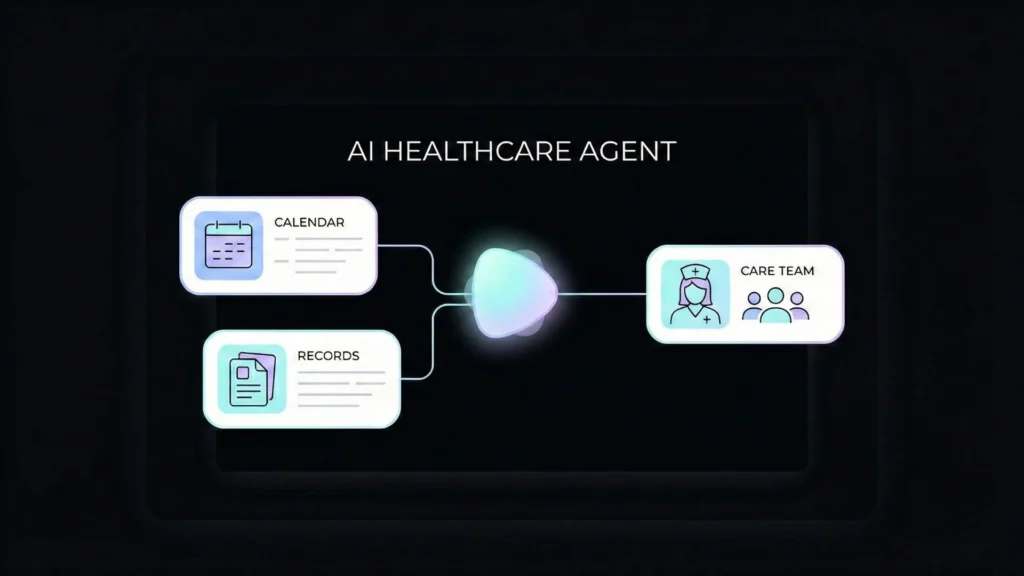
Before we go further, let’s clear up a common misconception. An AI agent is not just a chatbot. A traditional chatbot follows a rigid, “if-this-then-that” script. An AI Agent, however, is more like a digital administrative assistant. It understands context, reasons through problems, and integrates with other systems. To understand the depth of this technology, it helps to look at how AI agents vs chatbots differ in their ability to handle complex patient journeys.
- Reasoning: It understands context. It knows that “my head hurts” and “I have a localized cephalalgia” mean the same thing.
- Integration: It doesn’t just talk; it does. It can check a calendar, verify insurance, and trigger a notification to a nurse.
- Adaptability: It can handle multi-turn conversations without getting confused by a typo or a change in subject.
The Hidden Impact of Wait Times on Clinical Outcomes
We often talk about “delays” as an inconvenience, but in healthcare, delays are a clinical risk. When a patient with a chronic condition like diabetes experiences a delay in getting a prescription refill or a lab result interpretation, their risk of a “decompensation” event increases.
The Psychological Burden
Delayed care breeds patient mistrust. If a patient feels the system is too difficult to navigate, they stop trying. This leads to “deferred care,” where manageable issues become acute emergencies. AI agents act as the “always-on” front door, ensuring that even if a doctor isn’t available, the process of care is still moving forward.
Provider Burnout
It’s not just the patients who suffer. When clinicians see their schedules backed up because of administrative inefficiencies, their job satisfaction plummets. AI agents act as a buffer, filtering out the noise so that when a doctor does see a patient, the data is ready, the intake is finished, and the focus can remain 100% on the human in front of them.
How AI Agents Help Patients Get Timely Care
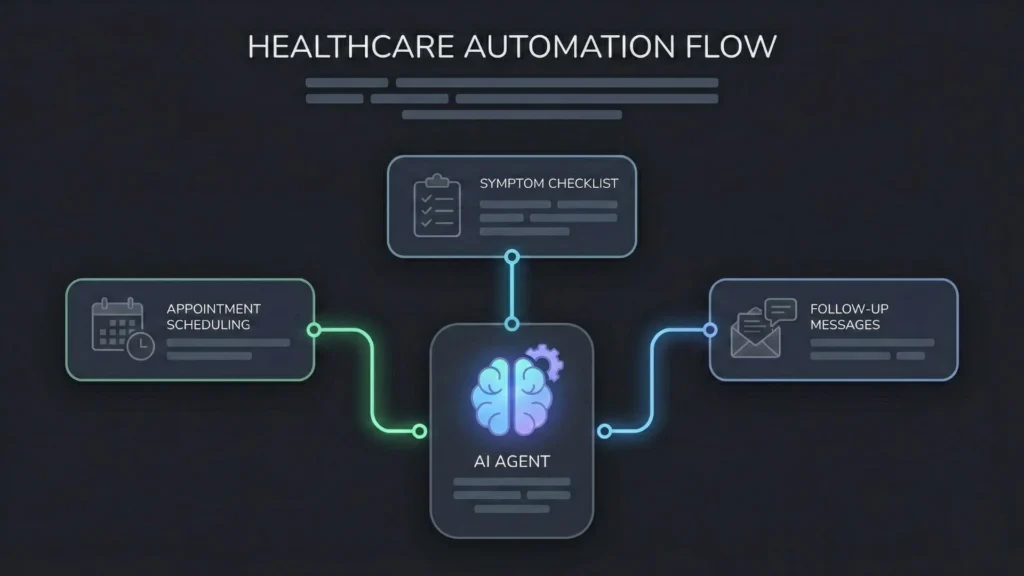
By automating the logistical hurdles, AI agents allow the healthcare machine to run more smoothly. Here is how that looks in practice:
1. Appointment Scheduling & Reminders
Instead of waiting for office hours, a patient can message an AI agent at midnight to reschedule an appointment. The agent checks the live EHR (Electronic Health Record), finds an open slot, and updates the system instantly. For those building these systems, no-code app security best practices are vital to ensuring that patient data remains protected.
2. Intake & Symptom Routing (Non-Diagnostic)
When a patient reaches out with a concern, an AI agent can perform structured intake.
- The Scenario: A patient says, “I have a rash.”
- The Agent’s Role: It asks clarifying questions: “Where is it located?” “Do you have a fever?”
- The Result: This type of healthcare data analysis with no-code AI allows teams to prioritize cases. If you are ready to build a routing system for your clinic, you can start building your AI healthcare agent now to see how quickly these workflows come to life.
3. Post-Discharge Follow-ups
Recovery doesn’t end when a patient leaves the hospital. AI agents can proactively reach out: “Hi Jane, it’s been 2 days since your procedure. On a scale of 1-10, how is your pain today?” If Jane reports a high pain score, the agent alerts the care team immediately.
4. Reducing Staff Workload
When the AI agent handles the 70% of inquiries that are routine, the human staff can focus on the 30% of patients who have complex, sensitive needs. By automating workflows without writing code, clinics can scale their support capacity without necessarily increasing their headcount.
Using No-Code Platforms Like Imagine.bo
In the past, building these systems required a team of expensive engineers and months of coding. Today, platforms like Imagine.bo are changing the game through no-code automation.
How it Works: Plain-English Prompting
No-code platforms allow healthcare operations teams to build AI workflows using natural language. Using AI prompts to build apps from ideas allows for a level of customization that off-the-shelf software simply cannot match. You don’t need a computer science degree; you just need to understand your patient workflow.
The Benefits of No-Code for Healthcare
- Speed: A triage workflow can be built and tested in days, not months.
- Agility: If a clinic changes its policy on weekend appointments, a staff member can update the AI agent’s instructions in minutes.
- Cost-Effectiveness: Small practices can now afford the same level of sophisticated automation as large hospital networks.
You can learn how to create an app for free using AI and begin prototyping patient support flows immediately, ensuring the logic fits your specific clinic’s needs.
Real-World Scenarios for AI Agents
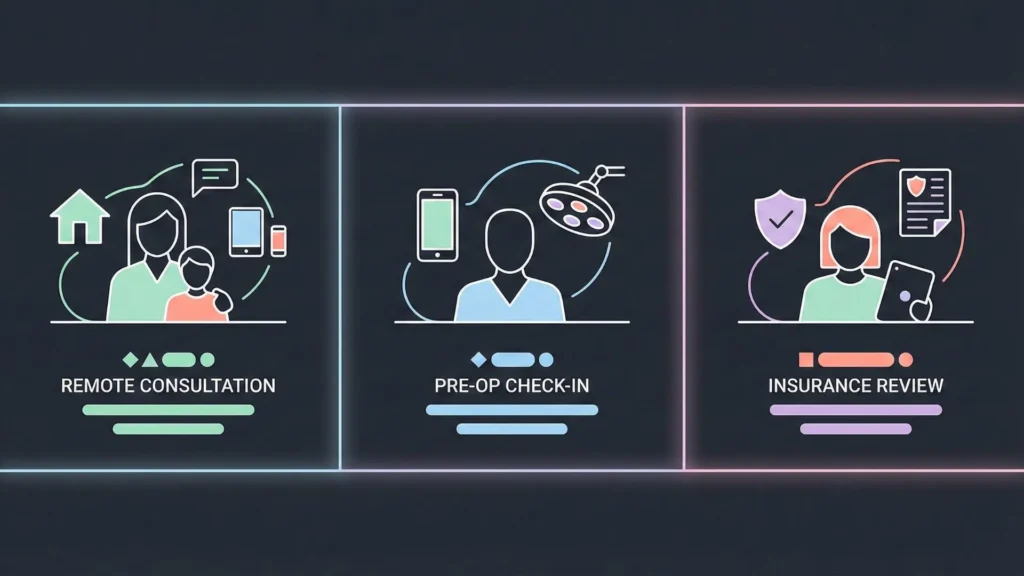
To truly grasp the value, let’s look at three realistic scenarios where an AI agent transforms the patient experience.
Scenario A: The Saturday Morning Pediatric Scare
A parent wakes up to find their child has a 101-degree fever. The clinic is closed.
- Old Way: The parent waits until Monday morning or goes to a crowded Urgent Care.
- AI Agent Way: The parent messages the clinic’s agent. The agent asks about the child’s age and other symptoms. It reminds the parent of the clinic’s standard fever-management protocol (pre-approved by the doctor) and offers a Monday morning slot at 8:15 AM. The parent feels heard, and the child gets care first thing Monday.
Scenario B: The Surgical Prep Checklist
A patient is scheduled for surgery on Wednesday but forgets if they need to stop their blood thinners on Sunday or Monday.
- Old Way: The patient calls the office, leaves a voicemail, and waits for a nurse to call back.
- AI Agent Way: The patient asks the agent. The agent checks the patient’s specific pre-op instructions in the database and confirms: “Per Dr. Smith’s instructions, please stop your medication on Sunday evening.”
Scenario C: Insurance and Authorization
A patient is worried their upcoming MRI won’t be covered.
- Old Way: The patient calls the billing department and sits on hold for 30 minutes.
- AI Agent Way: The agent collects the insurance ID, checks the pre-authorization status in the system, and informs the patient: “Your MRI has been authorized. Your estimated co-pay is $50.”
Ethical & Responsible Use of AI Agents
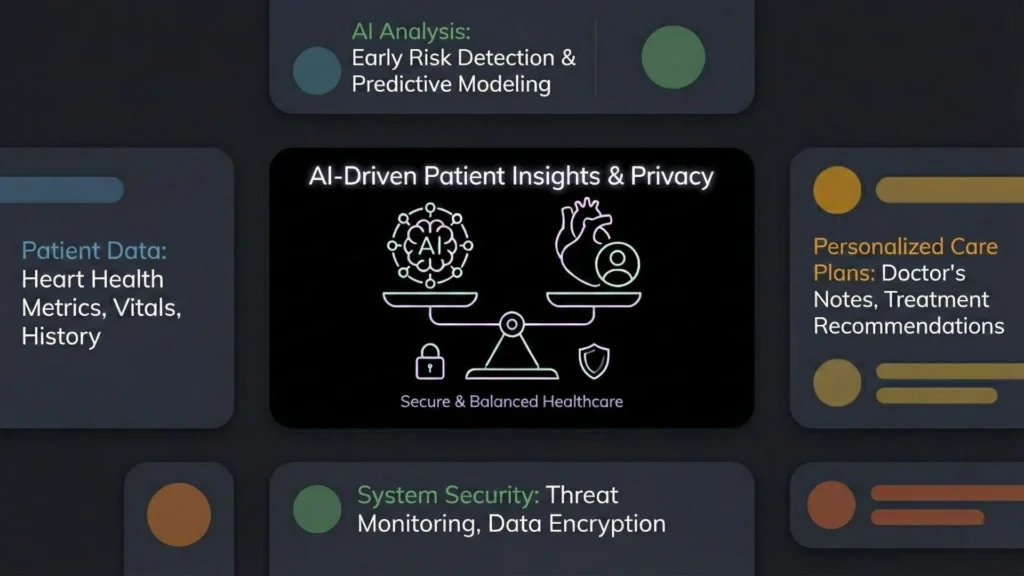
As a healthcare professional, I believe the “AI-first” approach must always be a “Patient-first” approach. This requires a few non-negotiables:
- Transparency: Patients should always know they are interacting with an AI.
- Data Privacy (HIPAA/GDPR): Any AI agent must operate within secure environments. It is important to review data privacy compliance no-code 2025 standards to ensure your platform meets the necessary legal safeguards.
- The “Escape Hatch”: Every AI interaction must have an easy way for the patient to say, “I want to talk to a real person.” AI is a tool for efficiency, not a barrier to human connection.
- Clinical Guardrails: The agent must be programmed with “never” events it should never give dosage advice or suggest a diagnosis.
Implementation Strategy for Healthcare Founders
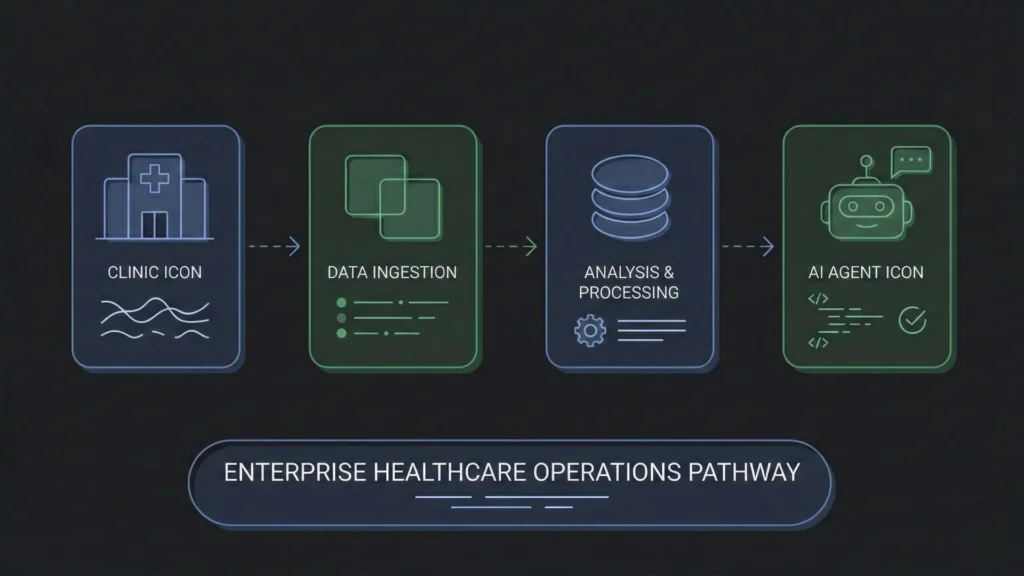
If you are a healthcare founder or operations manager, the transition to AI agents should be phased.
- Identify the “Low-Hanging Fruit”: Start with the most common, non-clinical queries. FAQs, directions, and basic scheduling are perfect starting points.
- Define the Data Flow: Ensure your AI platform can talk to your EHR. Without integration, an AI agent is just a fancy brochure.
- Human-in-the-Loop Testing: Run the agent in a “shadow mode” where it suggests answers to staff members before it is allowed to talk directly to patients.
- Iterate Based on Feedback: Patients will tell you what they like and what they don’t. Use that data to refine your prompts.
Future Outlook: Improving Access, Not Replacing Care
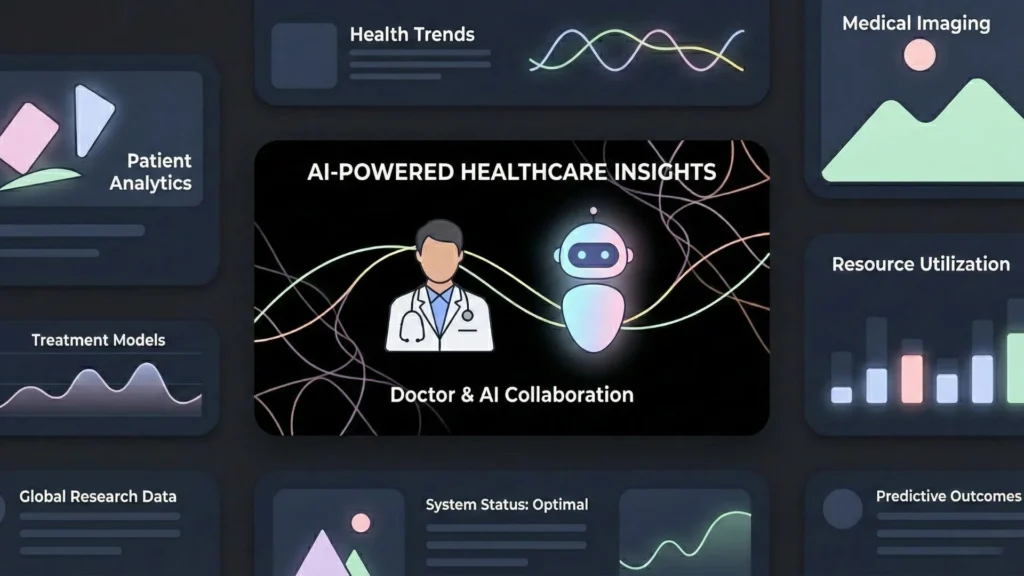
The future of healthcare isn’t a robot doctor; it’s a frictionless system. For many organizations, the first step is often a no-code ai chatbot for your website that handles basic FAQ and navigation.
As trust in the system grows, these agents will evolve to handle deeper integrations, further reducing the time between a patient’s concern and a professional’s intervention. AI agents aren’t here to replace the healing touch of a doctor; they are here to clear the path so that the healing touch can happen sooner and more often.
Imagine a health system where your medical records, your scheduling, and your follow-up care are all synchronized by an agent that knows your history and respects your time. That is the promise of timely care.
Conclusion
Reducing delays in patient support is one of the most impactful ways we can improve health outcomes today. By utilizing AI agents built on accessible, no-code platforms like Imagine.bo healthcare providers can move away from reactive “firefighting” and toward proactive, patient-centered care.
When we build an app by describing it, we remove the technical barriers that have historically kept healthcare stuck in legacy workflows. If you have a specific workflow in mind for your practice, launch your AI-powered patient support tool today and begin reducing care delays in real-time. When we automate the mundane, we liberate the human. And in healthcare, that’s where the real magic happens.
Launch Your App Today
Ready to launch? Skip the tech stress. Describe, Build, Launch in three simple steps.
Build