It is 8:30 AM on a Saturday. The line is out the door. The grinder is screaming, the steam wand is hissing, and your lead barista just shouted that you are out of oat milk — again. You check your phone; you sent a text to the supplier last night, but maybe you forgot to hit send? Meanwhile, a regular customer is asking why their loyalty points haven’t updated, and the UberEats tablet is pinging with an order that you have no staff to fulfill.
This is the reality for thousands of cafe owners. You are not just making coffee; you are juggling a dozen disconnected tasks, mostly in your head or on sticky notes.
Launch Your App Today
Ready to launch? Skip the tech stress. Describe, Build, Launch in three simple steps.
BuildFor decades, the hospitality industry has been stuck in a binary choice: run on chaos and manual processes, or pay extortionate fees for rigid, enterprise-grade software that doesn’t quite fit your workflow. This is a key reason why traditional restaurant software fails for so many agile, independent businesses. But a third option has emerged, and it is quietly revolutionizing how modern cafes operate.
Welcome to the era of AI No-Code Development for Cafes.
This isn’t about buying a robot to pour lattes. It is about building a digital nervous system for your business that handles the boring, repetitive, and error-prone tasks so you can focus on what matters: the coffee and the customer. By leveraging smart systems for cafes built with no-code tools, owners can now construct custom restaurant operations software that rivals Starbucks-level tech stacks, without hiring a single developer or writing a line of code.
In this deep dive, we will move from the chaotic reality of manual operations to the streamlined future of AI-driven automation, showing you exactly how to scale efficiently in a high-cost world.
Manual Processes in Cafes: The Invisible Anchor
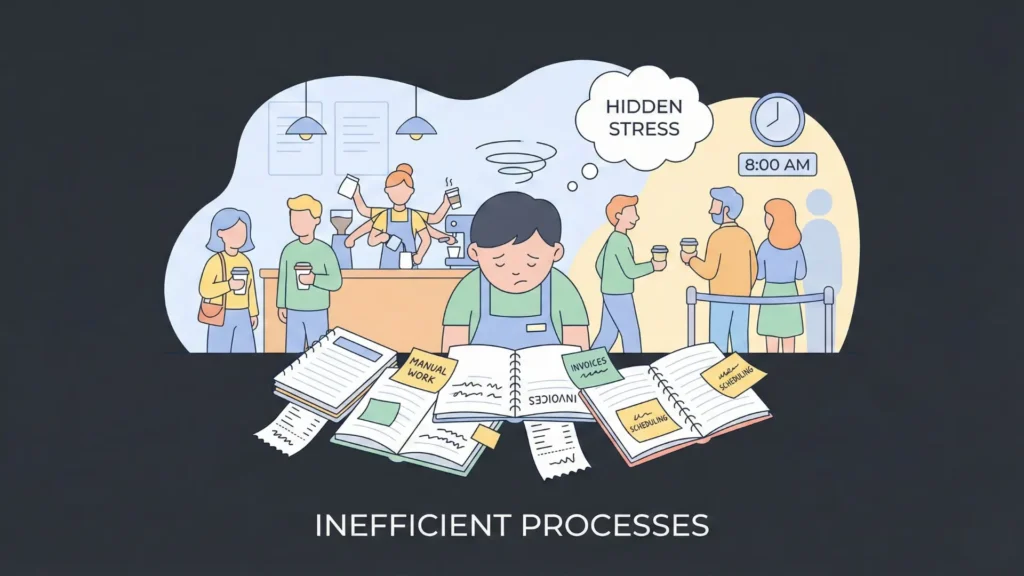
To understand the power of automation, we first need to audit the “invisible anchor” dragging down your profitability: manual work. In many independent cafes, critical business logic exists only in the owner’s brain or on physical paper.
1. The Order & Ticket Shuffle
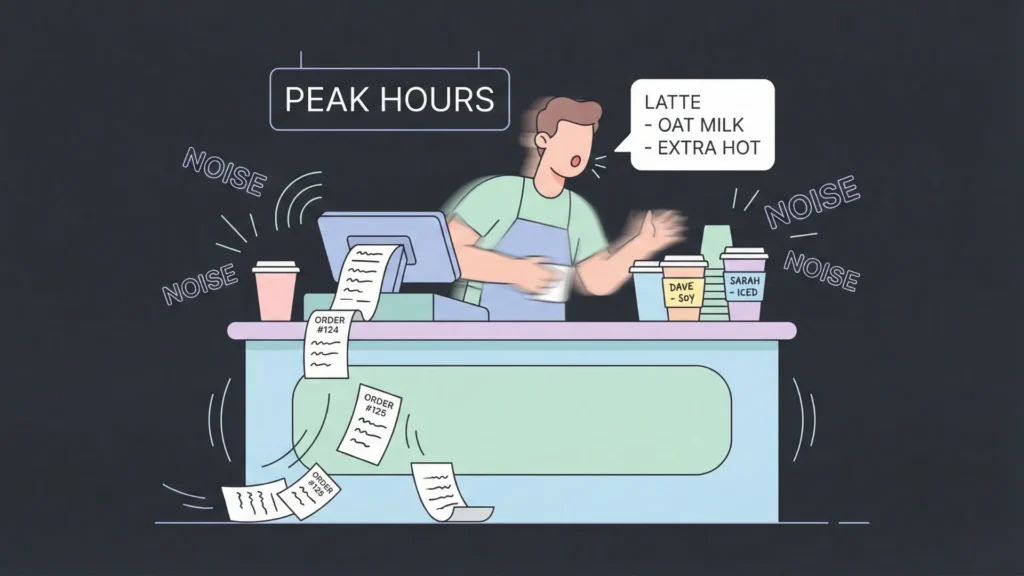
In a manual setup, an order travels a perilous journey. It is written on a cup or punched into a legacy POS. A paper ticket prints in the kitchen. If that ticket falls on the floor, the order literally disappears. Modifiers like “extra hot” or “light ice” are often shouted across the bar, relying on the barista’s auditory memory during a noise-filled rush.
2. The “Eyeball” Inventory Method
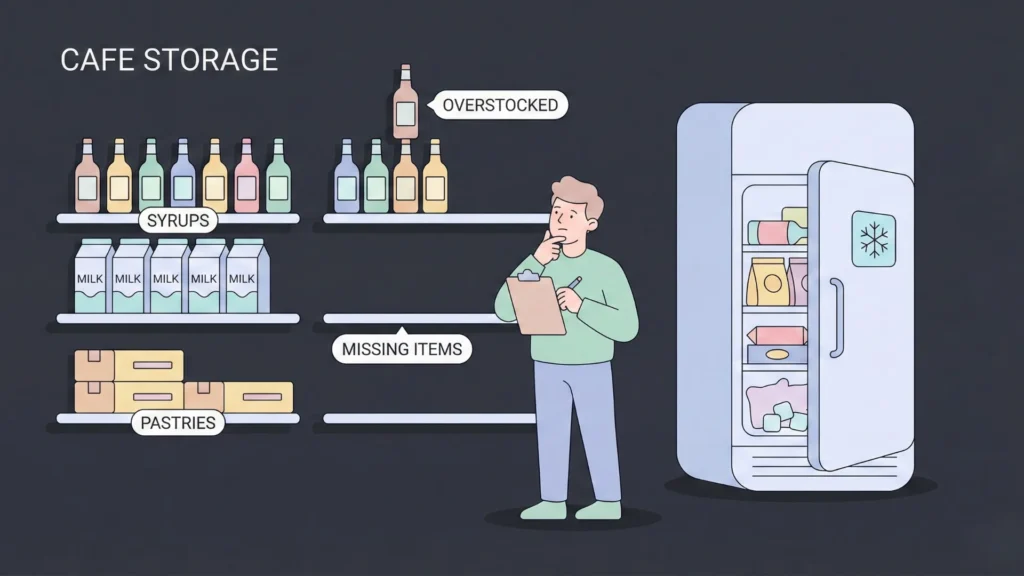
How do most cafes track inventory? They look at the shelf. “Looks like we have enough syrup,” the manager thinks. This manual approach is dangerous compared to having a real-time inventory tracker. It leads to two disasters:
- The Panic Buy: You run out mid-shift and have to send a staff member to the grocery store, paying retail prices.
- The Silent Spoilage: You over-order pastries because you didn’t realize you still had two boxes in the back freezer.
3. Staff Scheduling via Group Chat
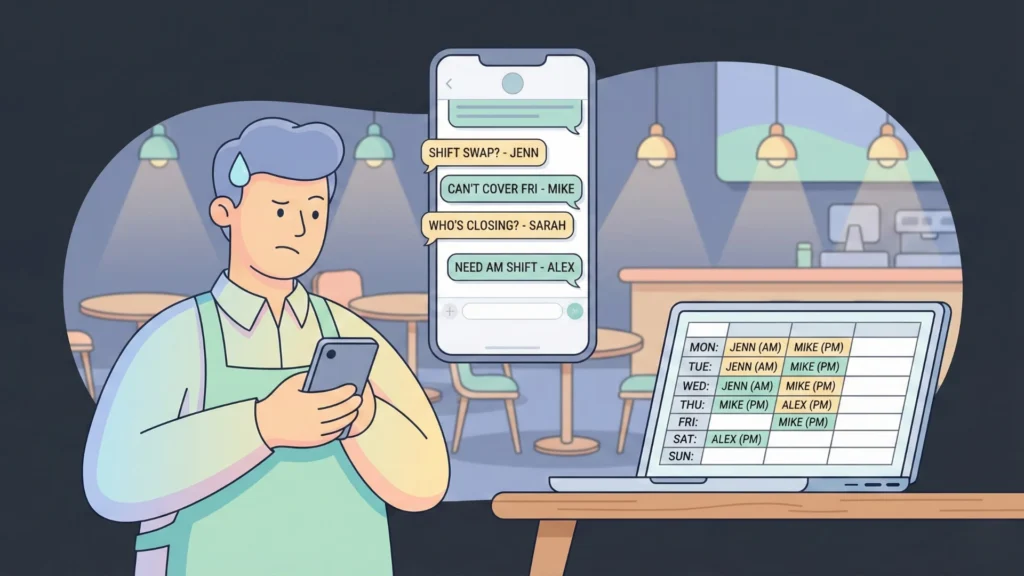
Scheduling is often done on a spreadsheet and distributed via WhatsApp or text. Shift swaps turn into a chaotic thread of “Can you cover me?” messages that the owner has to manually track and update. If the spreadsheet isn’t updated, two people show up for the same shift, or worse, no one shows up at all.
4. The Shoebox of Receipts
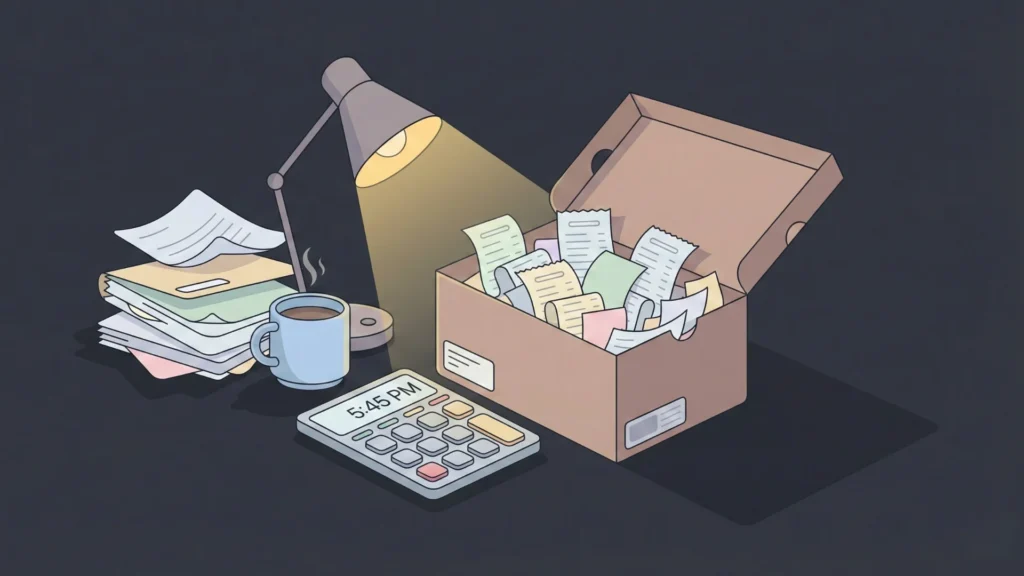
Reporting is frequently a monthly autopsy rather than a daily health check. Owners collect receipts in a shoebox or folder, handing them to an accountant weeks after the fact. By the time you realize your food cost percentage has spiked to 40%, you have already lost a month of profit.
Problems With Manual Cafe Operations
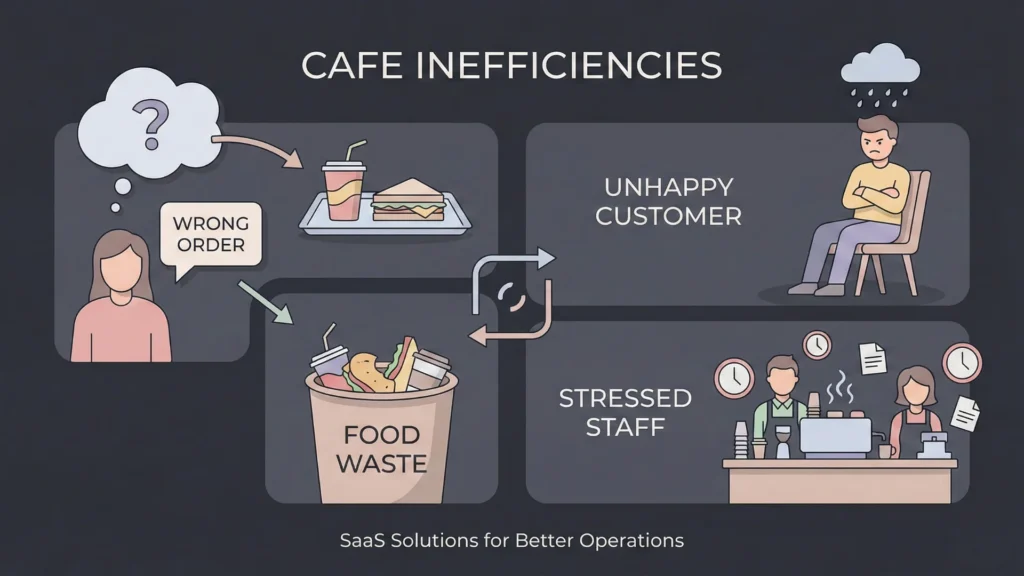
These manual habits feel comfortable because they are familiar, but they are actively bleeding revenue.
1. The High Cost of Human Error
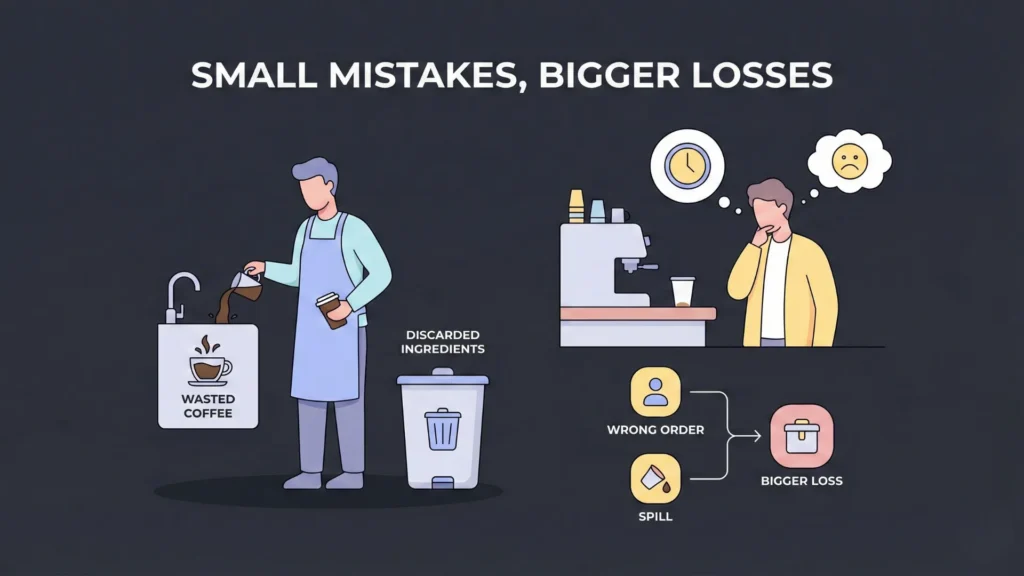
A study by the National Restaurant Association suggests that human error in ordering accounts for a significant percentage of food waste. Every time a barista mishears an order or a kitchen staff member misreads a handwritten ticket, you lose the cost of the ingredients, the labor time to remake it, and—most critically—the customer’s patience.
2. Inefficiency and Revenue Ceilings
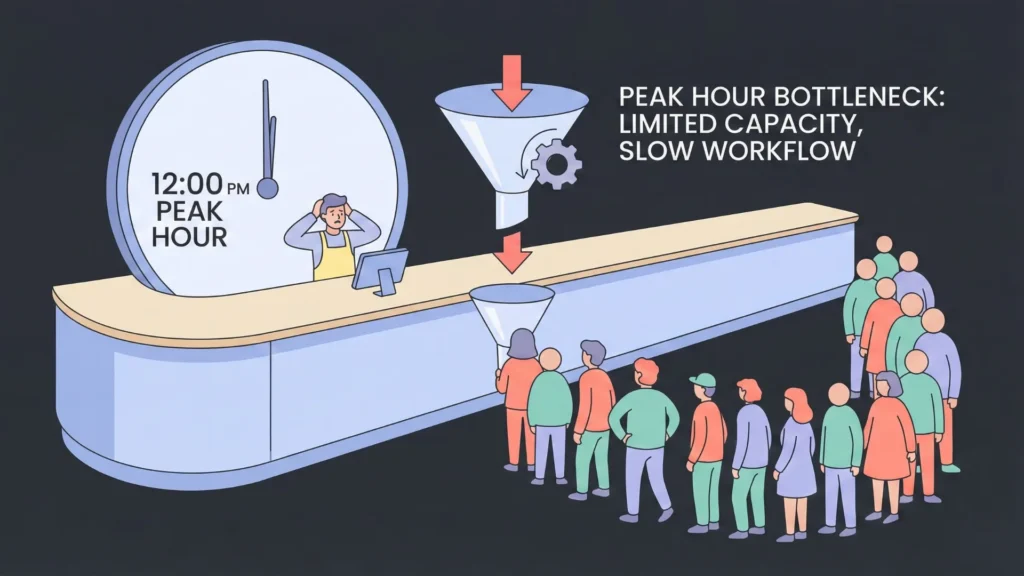
Manual workflows have a hard speed limit. A human can only write so many tickets per minute. When you rely on manual processes, your revenue is capped by how fast your staff can move. Automate cafe operations, and you remove the administrative friction, allowing your throughput to increase without adding more bodies behind the bar.
3. Poor Customer Experience
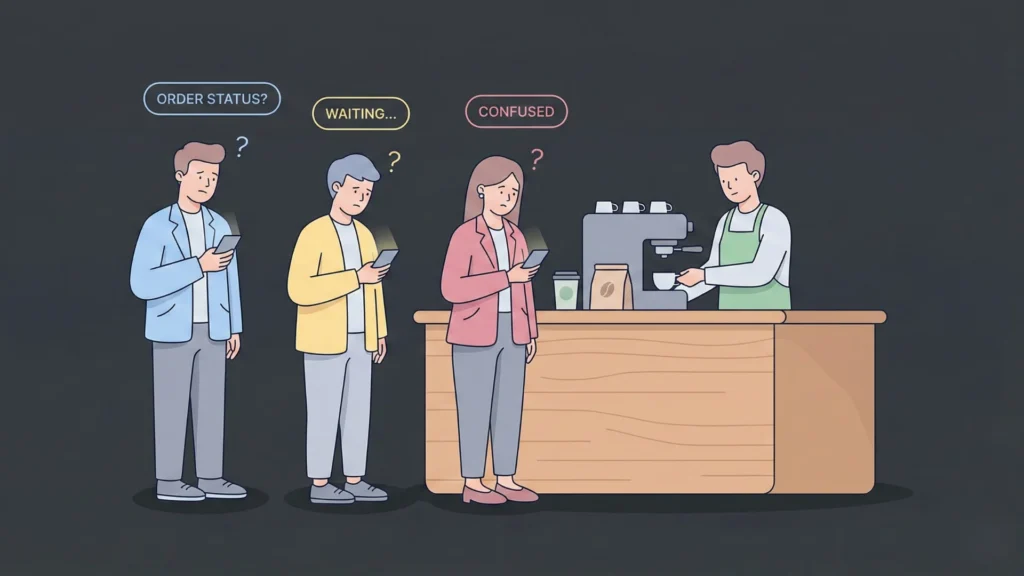
Modern customers expect Amazon-like visibility. They want to know when their order is ready without hovering near the counter. They expect their loyalty points to be instant. Manual systems keep customers in the dark, leading to anxiety and a perception of poor service.
4. Lack of Scalability
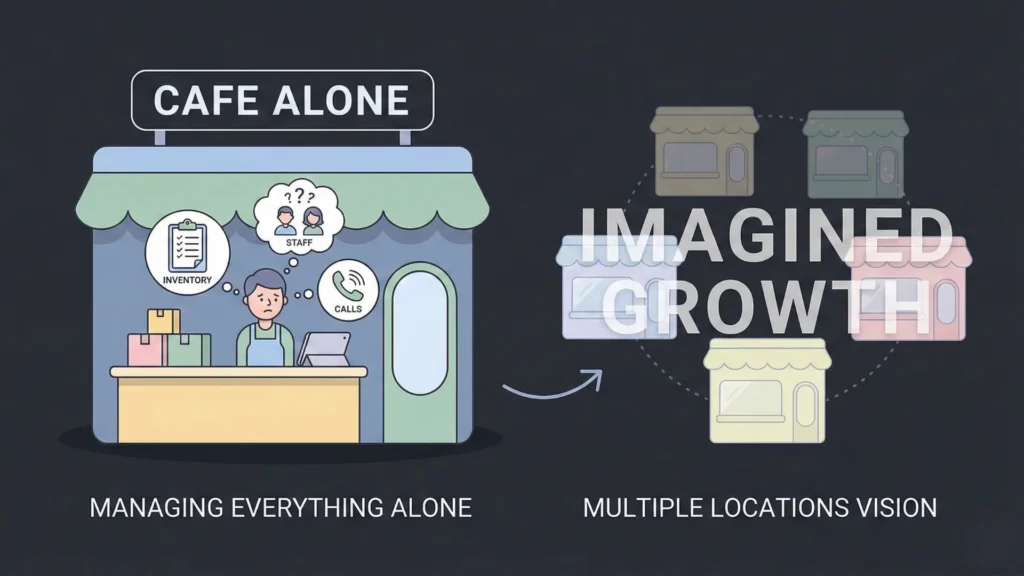
You can run one cafe on sticky notes. You cannot run five. If your operations rely on you physically being there to check the milk levels, you have built a job, not a business. Manual processes are unscalable; they break as soon as you try to expand.
What Are Smart Systems for Cafes?
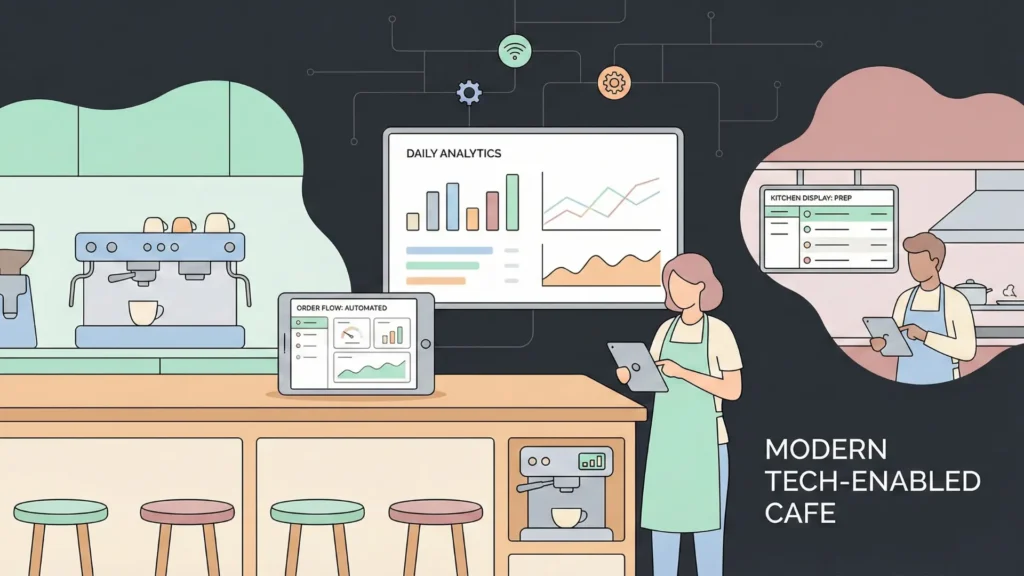
So, what is the alternative? Smart systems for cafes are interconnected digital workflows where data flows automatically between different parts of your business.
Think of it as a “Digital Nervous System.”
- The Brain: A central database (Inventory, Customer Data, Recipes).
- The Nerves: Automations that carry signals (e.g., “An order was placed”).
- The Muscles: Actions that happen automatically (e.g., “Deduct 20g of beans from inventory,” “Send SMS to customer”).
In a smart system, you don’t “do” inventory; the system calculates inventory based on sales. You don’t “call” staff; the system predicts labor needs based on historical sales data.
What Is AI No-Code Development?
For many cafe owners, the term “software development” sounds expensive and terrifying. It conjures images of hackers in hoodies and $50,000 agency invoices.
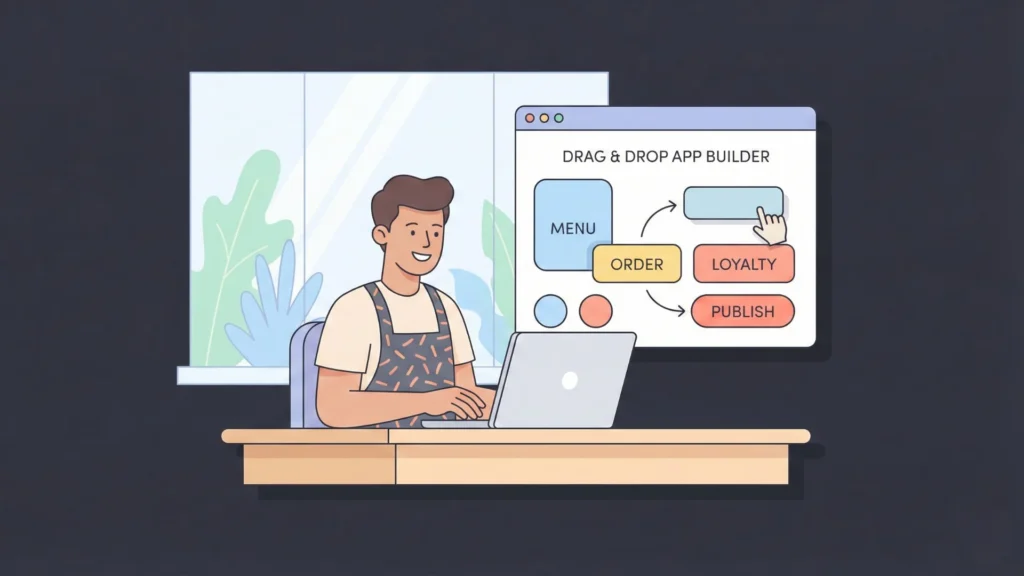
No-code development changes the game. It is a method of building software using visual interfaces—drag-and-drop builders, logic diagrams, and plain English—instead of writing cryptic lines of code.
- The Lego Analogy: Traditional coding is like manufacturing plastic bricks from raw oil. No-code is like having a bucket of pre-made Lego bricks. You just snap them together to build the castle you want.
- The AI Multiplier: When you add Artificial Intelligence (AI) to no-code, it becomes even faster. You act as the “Digital Architect.” You tell the AI, “I need a system that tracks my pastry waste,” and the AI drafts the database and the interface for you.
AI No-Code Development for Cafes means you can build a scalable cafe and restaurant app that manages your specific loyalty program, your unique kitchen workflow, and your specific vendor relationships, all for a fraction of the cost of custom coding.
Why Cafes Need AI No-Code Systems Today
Adopting no-code platforms for cafes is no longer just a “nice to have”; it is a survival mechanism in the 2026 hospitality landscape.
1. Crushing Cost Pressures
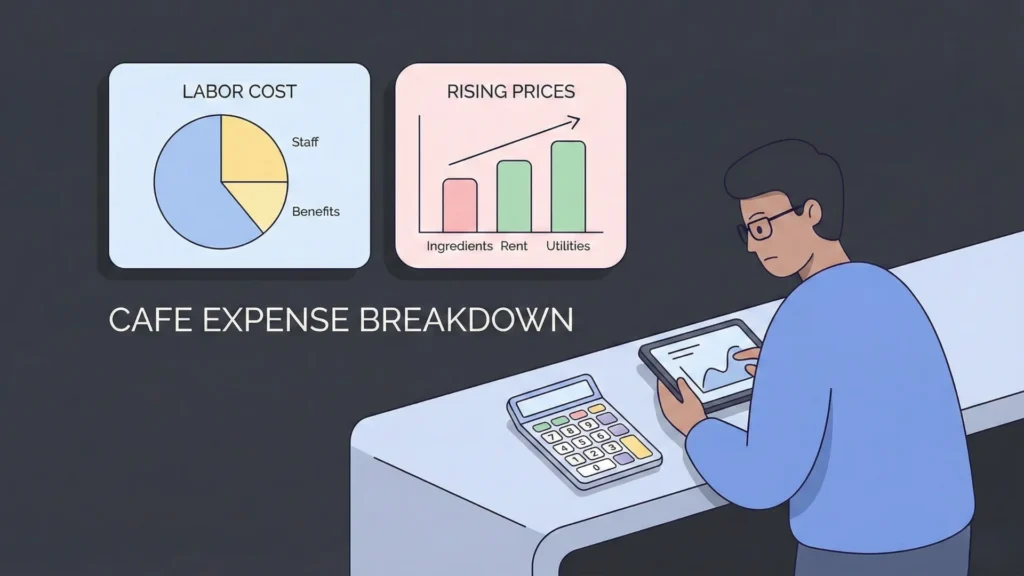
Labor costs have skyrocketed. In many regions, labor now accounts for 30-35% of gross revenue. You cannot afford to pay a skilled barista $20/hour to manually count cups or re-type orders from a delivery tablet. Automation is the only way to protect your margins.
2. The Fragmentation Crisis
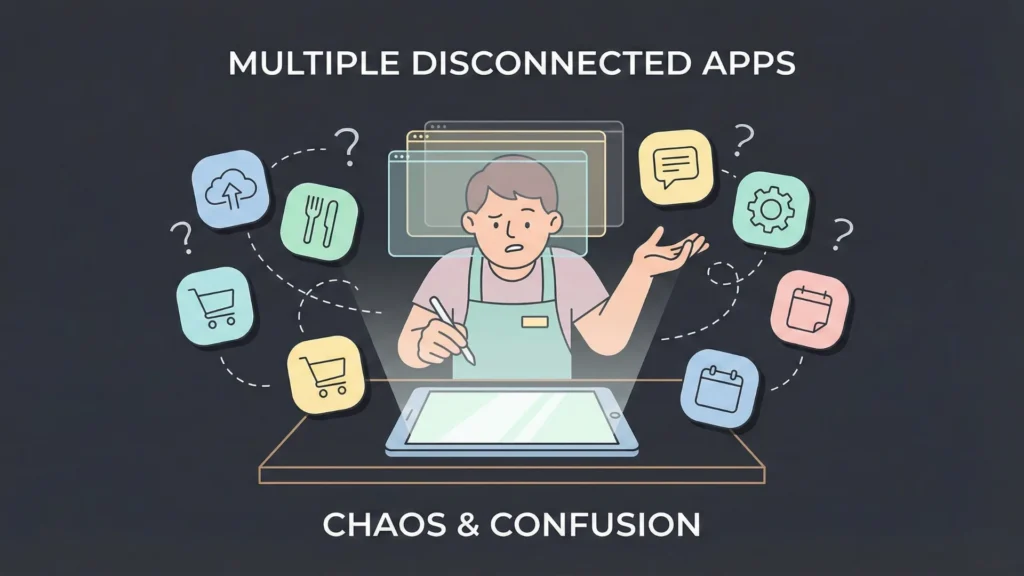
Most cafes suffer from “App Fatigue.” They use Toast for POS, 7Shifts for scheduling, Mailchimp for emails, MarketMan for inventory, and DoorDash for delivery. None of these talk to each other efficiently. You end up paying five different subscription fees for five siloed data sets. AI tools for cafe management allow you to replace multiple restaurant tools with an AI platform that you own.
3. Rising Customer Expectations
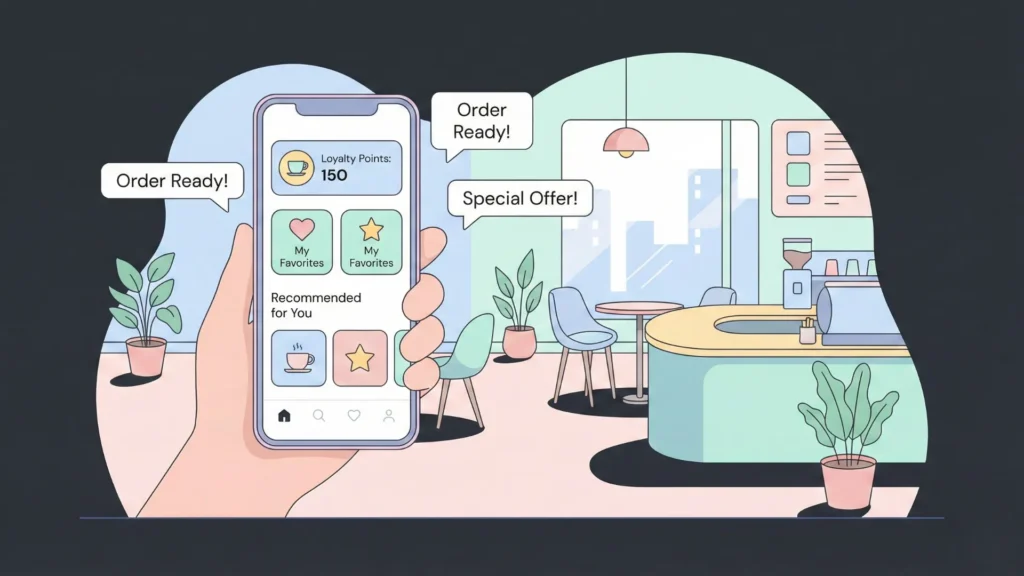
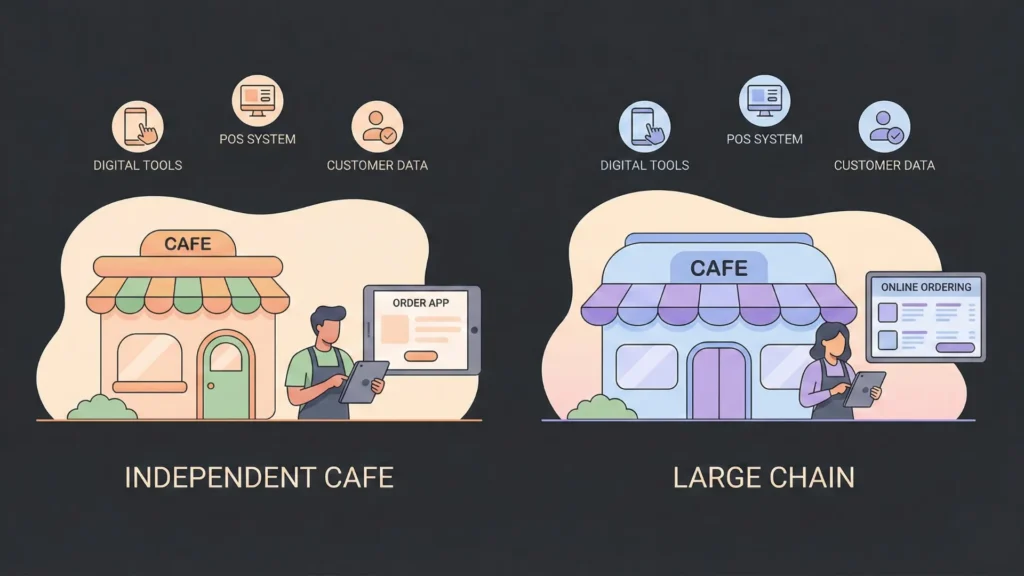
The “Starbucks Standard” has trained customers to expect mobile ordering, personalization, and rewards. Independent cafes often struggle to offer this level of digital polish. No-code tools level the playing field, allowing a small shop to have a revenue-ready restaurant app that looks and functions just as well as a corporate chain’s.
Step-by-Step Guide: From Manual to Smart Systems
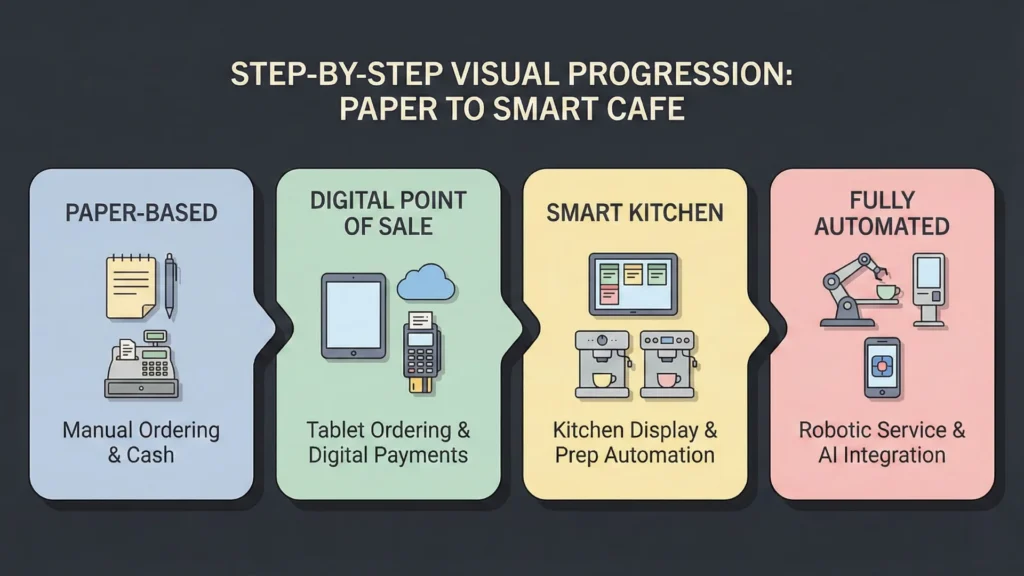
How do you actually make the switch? Here is a practical roadmap for the non-technical owner.
Step 1: The Operational Audit
Don’t build anything yet. Spend three days tracking every manual friction point.
- Where do errors happen?
- What task does the manager hate the most?
- Where is data being entered twice?
- Goal: Identify the one process that, if automated, would save 10 hours a week.
Step 2: Define Your “User Stories”
In software terms, a “user story” describes what someone needs to do.
- Example: “As a Barista, I want to see drink orders and food orders on separate screens so I don’t miss the lattes while waiting for the sandwiches.”
- Example: “As an Owner, I want an alert when milk inventory drops below 10 units.”
Step 3: Choose Your No-Code Platform
Select a platform that specializes in data and logic, not just pretty websites. You need a tool that can handle “backend logic” (the brain). Imagine.bo is a prime example here, as it focuses on generating the full application stack (database + logic + UI).
Step 4: Describe and Blueprint
Use the AI capabilities of your chosen platform. Type your requirements in plain English. This is the power of prompt engineering: you can build an app by describing it to the AI: “Create a cafe management system where customers can order via QR code. When an order is ‘Complete’, deduct ingredients from the Inventory database.”
Step 5: Test and Iterate
Launch your new system alongside your old one for a week. This is your “Soft Launch.” Fix the bugs. Does the button need to be bigger? Is the text too small for the kitchen screen? No-code allows you to make these changes instantly.
Real Use Cases of AI No-Code in Cafes
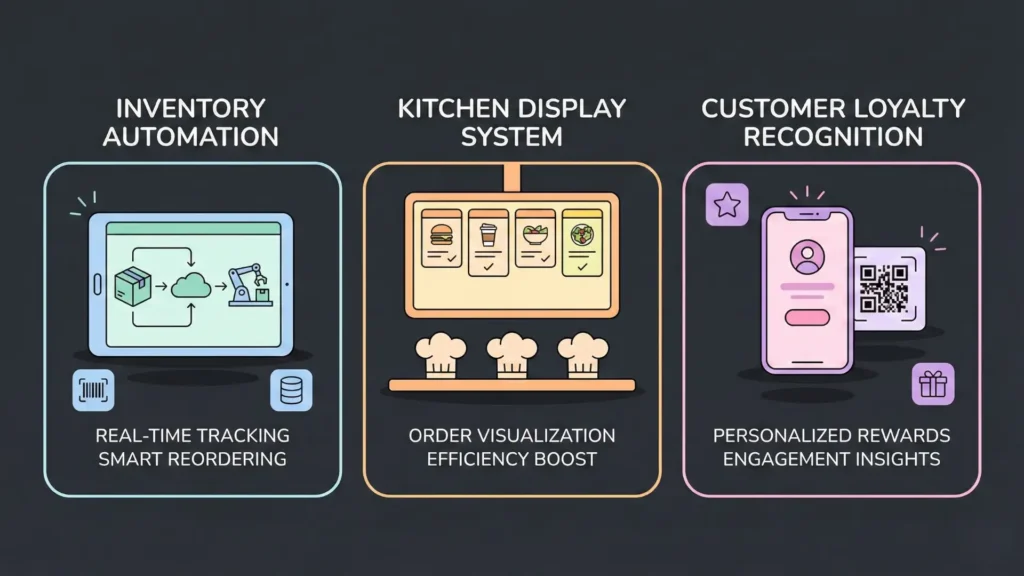
Let’s look at three concrete examples of custom ordering and management systems in action.
Use Case 1: The Smart Inventory “Auto-Deduct”
- The Problem: High food waste and frequent stockouts of key syrups.
- The No-Code Solution: A custom app where every menu item is linked to a “Recipe” in the database. A “Vanilla Latte” is defined as 20g Espresso + 250ml Milk + 30ml Vanilla Syrup.
- The Workflow: Every time a Vanilla Latte is sold, the system automatically subtracts those exact amounts from the digital inventory.
- The AI Bonus: The system analyzes usage rates and predicts, “Based on typical Friday traffic, you will run out of Vanilla Syrup by 2 PM. Order now.”
Use Case 2: The Automated KDS (Kitchen Display System)
- The Problem: The espresso bar is overwhelmed with food tickets, while the kitchen misses drink orders.
- The No-Code Solution: A custom KDS built with simple logic routing.
- The Workflow: If
Category= “Drink”, route toiPad_A(Espresso Bar). IfCategory= “Food”, route toiPad_B(Kitchen). IfTime_Elapsed> 8 minutes, turn the ticket RED and send an SMS to the Shift Manager.
Use Case 3: The “Regulars” Recognition Engine
- The Problem: New staff members don’t recognize loyal customers, leading to a loss of that “community feel.”
- The No-Code Solution: A geolocation or check-in based CRM that allows you to create a loyalty app without the typical SaaS fees.
- The Workflow: When a customer scans their loyalty QR code, their profile pops up on the POS: “This is Sarah. She likes Oat Flat Whites. She hasn’t been in for 3 weeks—say welcome back!”
Benefits of AI No-Code Development for Cafe Owners
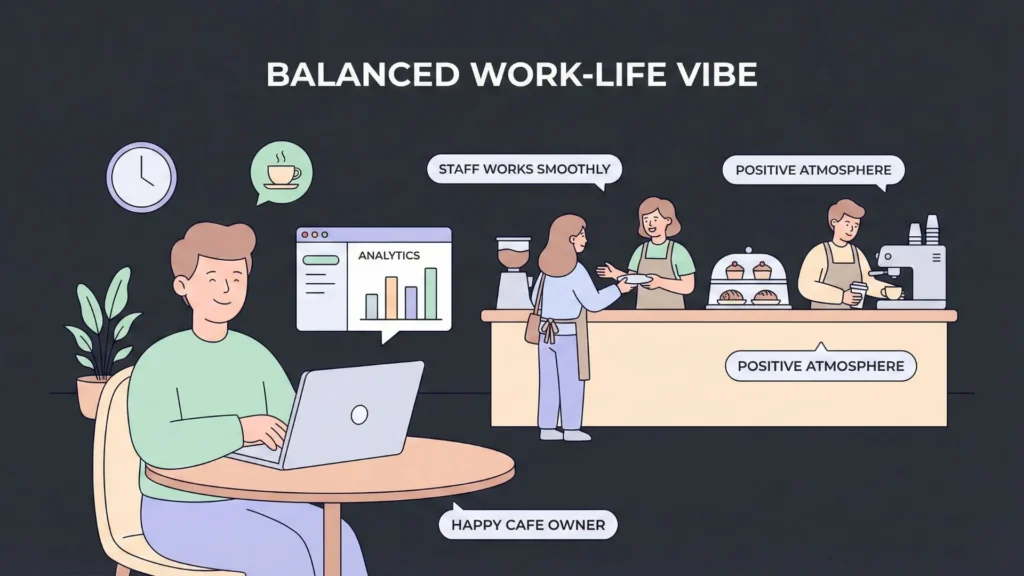
1. Operational Agility
Traditional software updates take months. With no-code, you are the developer. Want to add a “Rainy Day Special” popup to your digital menu? You can build and deploy that feature in 5 minutes while drinking your morning brew.
2. Cost Reduction
Instead of paying 30% commissions to delivery platforms or $500/month for enterprise software, you pay a flat subscription for your no-code tool. You also save on labor costs by automating the tasks that used to require a manager’s time.
3. Data Ownership
When you use third-party apps, they own your customer data. When you build your own smart systems for cafes, you own every email, every order history, and every preference. This is a goldmine for marketing.
4. Scalability
A manual cafe relies on the owner’s heroism. An automated cafe relies on systems. Systems scale; heroism does not. Once you have built your secure and scalable cafe management system, opening your second location is simply a matter of duplicating the software and giving the new manager a login.
Challenges and How to Overcome Them
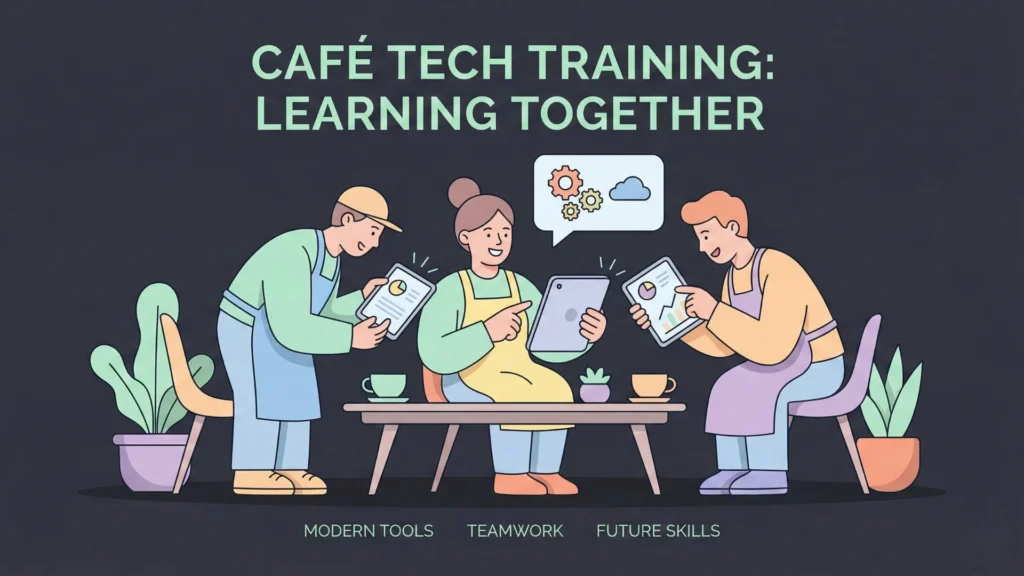
1. The “Tech Fear” Factor
Challenge: Staff (and owners) may be intimidated by new technology.
Solution: Involve staff in the design process. Ask them, “What button would make your life easier?” When they see their feedback turned into a feature the next day, they become champions of the system.
2. Integration Headaches
Challenge: Connecting your new app to an old credit card terminal.
Solution: Use modern payment gateways like Stripe (which integrate easily with no-code tools) or look for no-code platforms that offer API connections to legacy hardware.
3. The “Blank Page” Syndrome
Challenge: Not knowing where to start building.
Solution: Use AI as your starter. Don’t stare at a blank screen. Prompt the AI: “Build me a basic inventory management schema for a coffee shop.” It is easier to edit a draft than to create from scratch.
Role of Imagine.bo in Automating Cafe Operations
Among the landscape of tools, Imagine.bo stands out as a uniquely powerful ally for the cafe owner. While many no-code tools are focused on simple websites or basic internal forms, Imagine.bo is designed to generate SDE-Level (Software Development Engineer) applications.
Here is how Imagine.bo acts as the bridge between your manual chaos and a smart, automated future:
1. The “Product Manager” Interaction Model
You don’t need to know how to code loops or variables. With Imagine.bo, you take on the role of a Product Manager. You simply describe the business value you want.
- You say: “I need a system that tracks waste. If waste exceeds 5% of sales for the day, alert the manager.”
- Imagine.bo builds: The database tables for ‘Waste_Logs’, the calculation logic for the percentage, the trigger for the threshold, and the notification integration.
2. End-to-End Workflow Automation
Imagine.bo excels at connecting the dots. It allows you to build a comprehensive system that handles the entire lifecycle of a coffee cup:
- Order Intake: Custom, brand-aligned mobile ordering pages (bypassing expensive delivery apps).
- Production: Custom KDS views that you can tweak based on your kitchen’s physical layout.
- Inventory Logic: Sophisticated decrementing logic that handles modifiers (e.g., deducting different amounts of milk for 8oz vs 12oz cups).
3. SwaS: Software with a Service
One of the biggest fears of adopting new tech is “Who fixes it if it breaks?” Imagine.bo operates on a SwaS model. It combines the speed of AI generation with the safety net of human engineering support. If your logic gets too complex, you aren’t left browsing a forum for answers; you have expert backup to ensure your cafe’s system is robust and secure.
4. True Ownership and Scalability
Unlike renting a POS system where you are a tenant, Imagine.bo helps you become an owner. The platform generates production-ready code that is scalable on serverless infrastructure. This means if you go viral on TikTok and get 500 orders in an hour, the system won’t crash—a critical requirement for the modern viral cafe.
Future of Cafes Using AI and No-Code
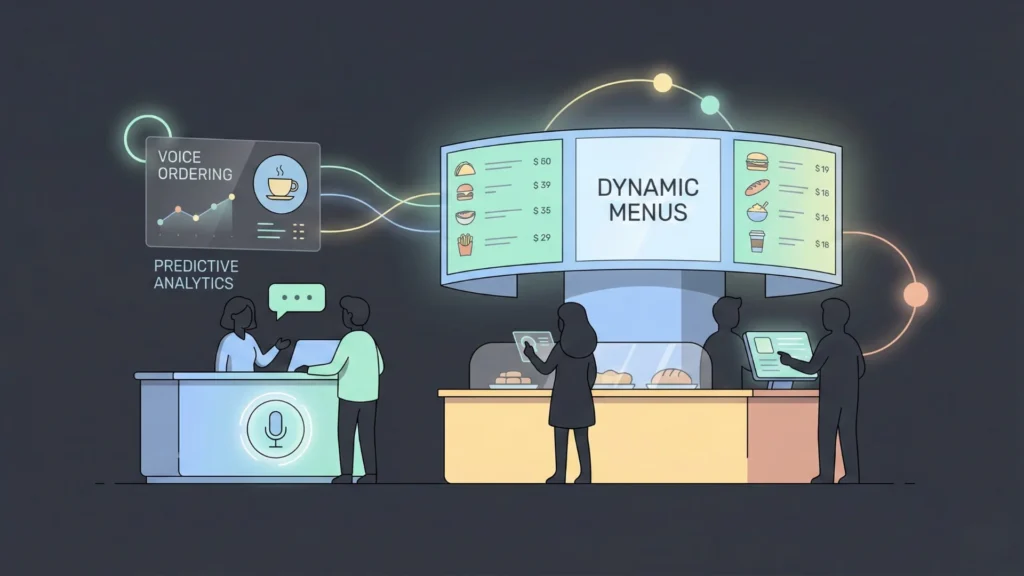
The transition to smart systems is just the beginning. As AI no-code tools for cafe management evolve, we will see even more futuristic applications becoming standard:
- Predictive Ordering: Your system will look at the weather forecast (rainy) and historical data (people drink more mochas when it rains) to automatically prompt you to prep more chocolate ganache and order more milk before the rush starts.
- Dynamic Pricing: Similar to Uber, cafes might implement subtle “Happy Hour” automation, where digital menu prices automatically drop by 15% during the slow 2 PM – 4 PM window to drive traffic.
- Voice AI Drive-Thrus: No-code platforms will soon integrate easily with Voice AI agents, allowing independent cafes to automate drive-thru orders with the same sophistication as McDonald’s, but at a fraction of the cost.
Conclusion
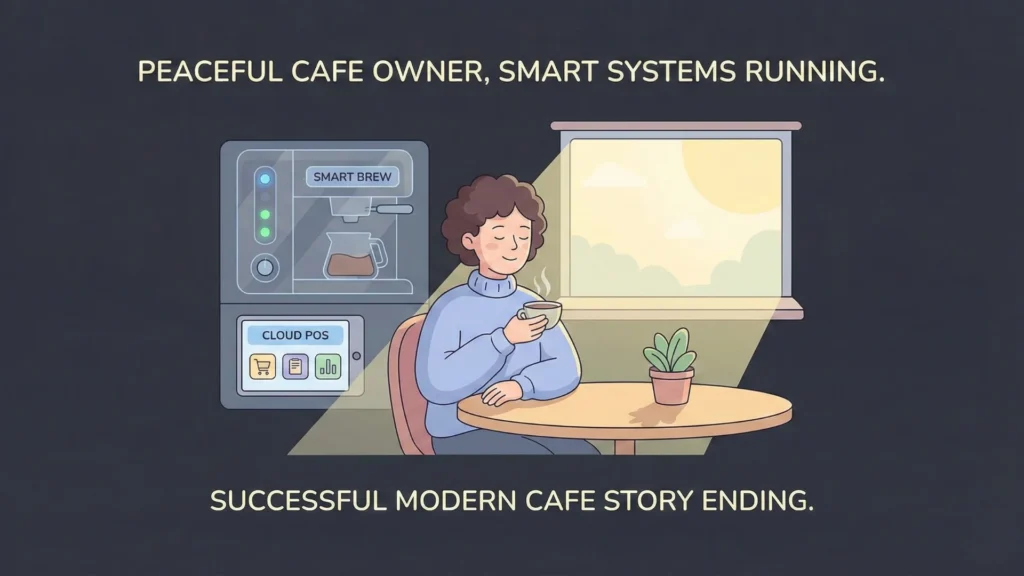
The romantic image of the cafe owner is one of chatting with regulars and tasting espresso. The reality has become one of spreadsheet fatigue and operational firefighting. But it doesn’t have to be that way.
Moving from manual processes to smart AI systems is the most high-leverage decision a cafe owner can make in 2025. It buys you back your time. It protects your margins from rising labor costs. And most importantly, it gives you the mental space to focus on hospitality rather than administration.
Tools like Imagine.bo have democratized this power. You no longer need a CTO to have a world-class tech stack. You just need a clear vision of how you want your business to run, and the willingness to take that first step into the world of no-code.
The future of coffee isn’t just about better beans; it’s about better brains. It’s time to build yours.
Launch Your App Today
Ready to launch? Skip the tech stress. Describe, Build, Launch in three simple steps.
Build