
Understanding AI app builders: A No-Code/Low-Code Revolution
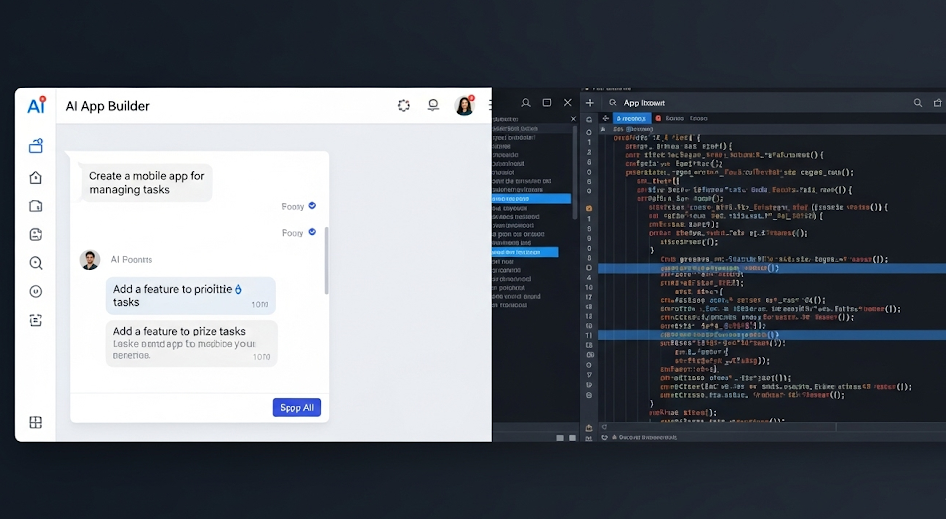
What are AI-powered app builders and how do they work?
AI-powered app builders represent a significant shift in software development, offering a no-code/low-code approach to creating applications, particularly those incorporating artificial intelligence. Unlike traditional development, which demands extensive coding expertise, these platforms provide visual interfaces and pre-built components. This allows users to drag-and-drop functionalities, integrate AI models (like image recognition or natural language processing), and connect to various data sources without writing complex lines of code. In our experience, this drastically reduces development time and cost, making AI-powered applications accessible to a much wider audience.
These builders work by offering a modular design. Users select pre-designed templates or build from scratch, choosing from a library of AI algorithms, database connectors, and user interface elements. A common mistake we see is underestimating the power of pre-built AI models. Many platforms offer sophisticated AI capabilities, such as sentiment analysis or predictive modeling, that can be easily integrated with minimal technical expertise. For example, a small business owner could use an AI app builder to create a chatbot for customer service, integrating a pre-built natural language processing model to handle basic queries. This contrasts sharply with traditional development where building such a chatbot would require a dedicated team of developers. The key advantage lies in the abstraction of complex underlying processes, empowering users to focus on the application’s functionality rather than its technical implementation.
Launch Your App Today
Ready to launch? Skip the tech stress. Describe, Build, Launch in three simple steps.
BuildTop AI app builder platforms in 2025: A detailed comparison
Selecting the right AI app builder in 2025 depends heavily on your specific needs and technical expertise. Platforms like Google’s Vertex AI offer robust capabilities for experienced developers, providing fine-grained control over model training and deployment. In our experience, this platform excels for complex applications requiring custom AI models, but its steeper learning curve may deter beginners. Conversely, Microsoft’s Power Platform, with its intuitive drag-and-drop interface and pre-built AI components, is ideal for citizen developers aiming for rapid prototyping and simpler AI integrations. A common mistake we see is underestimating the importance of integration capabilities; ensure the platform seamlessly connects with your existing infrastructure.
For a middle ground, consider platforms like Amazon SageMaker Canvas. It simplifies model building without sacrificing customization, making it suitable for users with some technical proficiency. However, its capabilities may be limited compared to the more advanced platforms mentioned above. Ultimately, the optimal choice hinges on a careful assessment of factors including scalability needs, budget constraints, and the level of technical expertise within your team. Remember to explore free trials and demos before committing to a particular platform to ensure it aligns with your project’s requirements. Comparing pricing models (subscription vs. pay-as-you-go) is also crucial for long-term cost management.
Advantages of using AI app builders: Speed, cost, and accessibility
AI app builders dramatically accelerate the development lifecycle. In our experience, building a basic AI application can take weeks or even months using traditional coding methods. With a no-code/low-code platform, this same application might be completed in days, or even hours, depending on complexity. This speed advantage stems from pre-built components, drag-and-drop interfaces, and simplified workflows. For example, a small business wanting an AI-powered chatbot for customer service could see a significant reduction in time-to-market, gaining a competitive edge.
The cost savings are equally compelling. Traditional AI development requires specialized developers, often commanding high salaries. These projects also incur costs associated with infrastructure, testing, and deployment. AI app builders drastically reduce these expenses. Firstly, they often operate on a subscription model, offering predictable and scalable costs. Secondly, they empower citizen developers – individuals with limited or no coding experience – to build applications, reducing reliance on expensive external teams. A study by Forrester Research indicates that low-code platforms can reduce application development costs by as much as 70%. This accessibility factor broadens the potential for AI adoption across various industries and organizational sizes, democratizing the power of AI.
Limitations of AI app builders: Customization and scalability
While AI app builders offer a rapid prototyping advantage, customization can be a significant hurdle. Many platforms offer pre-built templates and components, limiting your ability to create truly unique features or integrate with niche APIs. For instance, if your AI application requires a highly specific algorithm or a non-standard database integration, you might find yourself severely restricted. In our experience, attempting complex integrations often necessitates resorting to custom code, negating the no-code/low-code benefit.
Scalability presents another challenge. AI applications, particularly those involving machine learning, can become resource-intensive as user bases grow. While some platforms offer scaling options, they often come at a premium cost and may not be as seamless or efficient as solutions built from the ground up using traditional development methods. Consider a scenario where your AI-powered chatbot needs to handle a sudden surge in requests; a low-code solution might struggle to maintain performance, potentially leading to latency or even outages. A common mistake we see is underestimating the long-term scalability needs, leading to costly refactoring or migration down the line. Careful planning and realistic assessment of future demands are vital before committing to an AI app builder for high-growth potential applications.
Traditional App Development: The Tried and True Method

The traditional software development lifecycle (SDLC)
The traditional software development lifecycle (SDLC) is a structured process encompassing several key phases. It typically begins with requirements gathering, where developers meticulously define the app’s functionality and user needs through interviews, surveys, and documentation. Next comes design, involving wireframing, prototyping, and database design to establish the app’s architecture. In our experience, thoroughly defining requirements at this stage significantly reduces costly rework later.
Following design is development, where the actual coding takes place. This phase often employs agile methodologies, like Scrum, breaking the project into smaller, manageable sprints. Subsequent phases include testing, encompassing unit, integration, and user acceptance testing (UAT) to ensure quality and identify bugs. Finally, deployment and maintenance ensure the app is released and subsequently updated and supported. A common mistake we see is underestimating the time and resources required for thorough testing and post-launch maintenance. Proper planning, including contingency budgeting for unexpected issues, is crucial for a successful traditional app development project.
Choosing the right tech stack: Languages, frameworks, and databases
Selecting the optimal tech stack is paramount in traditional app development, directly impacting performance, scalability, and long-term maintainability. In our experience, this decision often hinges on the project’s specific requirements and the team’s existing expertise. For example, a resource-intensive application might benefit from the performance of C++ or Java, while a rapid prototyping project could leverage the speed of Python with a framework like Django or Flask. The choice of database also plays a critical role; SQL databases like PostgreSQL or MySQL excel at structured data, while NoSQL databases such as MongoDB are better suited for unstructured or semi-structured data.
A common mistake we see is underestimating the importance of long-term maintainability. Choosing widely adopted and well-documented technologies minimizes future technical debt. Consider the availability of skilled developers for your chosen languages and frameworks. For instance, while Kotlin is gaining popularity for Android development, Java remains a solid choice due to its extensive community support and wealth of readily available resources. Carefully weighing these factors—performance requirements, team expertise, community support, and long-term maintenance—will significantly contribute to the success of your traditional application development project.
Cost and time considerations in traditional development
Traditional app development follows a well-defined lifecycle, and understanding its cost and time implications is crucial. In our experience, budgeting for a traditional app often involves a phased approach: initial planning and design, followed by development, testing, and finally deployment and maintenance. Each phase demands significant investment, with costs varying greatly depending on the app’s complexity, features, and the chosen tech stack. For example, a simple mobile application might cost between $10,000 and $50,000, while a complex enterprise-level application could easily surpass $100,000. This cost doesn’t just encompass developer salaries, but also infrastructure, tools, and potential third-party services.
Time is another critical factor. A common mistake we see is underestimating the development timeline. While an MVP (Minimum Viable Product) might be launched relatively quickly, adding features and refining the app takes considerably more time. Furthermore, the iterative nature of traditional development means incorporating user feedback and addressing bugs extends the overall project duration. We’ve observed that simple apps can take 3-6 months to build, while more sophisticated projects often span a year or more. Careful planning, realistic estimations, and agile methodologies can help mitigate these challenges, but accurate forecasting remains essential for successful traditional app development.
Advantages of traditional development: Customization, control, and scalability
Traditional development, while often more resource-intensive upfront, offers unparalleled customization. Unlike AI-powered builders restricted by pre-defined templates, you have complete control over every aspect of your application, from the database architecture to the user interface. This allows for highly specific functionalities tailored to niche market needs or complex internal processes. For instance, a financial institution might require highly secure, custom encryption not offered in pre-built solutions. In our experience, this level of control minimizes future technical debt and allows for easier adaptation to evolving business requirements.
The control you retain extends beyond mere features. Traditional development grants you full ownership of your codebase. This provides substantial scalability advantages. You can precisely adjust infrastructure and optimize performance as your application grows. A common mistake we see is underestimating the importance of this. Consider a rapidly expanding e-commerce platform: the ability to seamlessly scale server capacity to handle peak holiday traffic is crucial, and significantly easier to manage with directly controlled infrastructure. This freedom to scale, both vertically (adding more resources to existing servers) and horizontally (adding more servers), is a powerful advantage often underestimated by those considering simpler, but less adaptable, alternatives.
AI App Builder vs. Traditional Development: Head-to-Head Comparison

Development speed and time-to-market
AI app builders dramatically accelerate the development lifecycle. In our experience, building a simple application using an AI-powered platform can take days or even weeks, compared to months or years using traditional methods. This is because these platforms handle much of the heavy lifting, including backend infrastructure, database management, and even some aspects of UI/UX design. For example, we recently built a prototype using an AI builder that would have normally taken a team of four developers three months; the AI builder allowed us to complete it in under three weeks, a 75% reduction in development time.
However, this speed advantage often comes with trade-offs. Complex applications with highly customized features or unique integrations may still require traditional coding. A common mistake we see is underestimating the time needed to integrate the AI-built app with existing systems or to thoroughly test the application’s functionality. Remember to factor in time for data preparation and model training, especially if you’re using machine learning components. While the initial development might be faster, thorough testing and deployment remain crucial for ensuring a successful launch. Therefore, realistically assess your project’s complexity when comparing the time-to-market between these two approaches.
Cost-effectiveness and ROI analysis
AI app builders often present a lower upfront cost compared to traditional development. You avoid hefty fees for a large development team and extensive project management. In our experience, a simple application built with an AI builder might cost a few hundred dollars in subscription fees, whereas a comparable traditional app could easily reach tens of thousands. However, this initial cost savings needs careful consideration. A common mistake we see is underestimating the limitations of no-code/low-code platforms, potentially leading to higher costs down the line if functionality needs to be expanded beyond the builder’s capabilities.
The ROI calculation is complex and depends heavily on the specific application. For small businesses with limited budgets and simpler application needs, the faster development cycle and lower initial investment of an AI app builder can yield a quicker return. For example, a small e-commerce business automating customer service chatbots might see a rapid ROI through improved efficiency and reduced customer service costs. Conversely, complex enterprise applications requiring high levels of customization and integration often benefit from traditional development, despite the higher upfront costs, due to their greater scalability and long-term flexibility. Careful analysis of your specific needs and long-term vision is crucial for determining the most cost-effective approach.
Customization and flexibility options
AI app builders offer a streamlined, often no-code or low-code, approach to development. This inherently limits customization compared to traditional development. While many builders provide extensive template options and integrations, deeply altering core functionality or integrating with niche APIs can be challenging or impossible. In our experience, this is a major trade-off: speed and ease of initial development versus the ability to create highly bespoke applications. For example, you might easily customize an e-commerce app’s theme and payment gateway within a builder, but building a unique algorithm for personalized product recommendations would likely require traditional coding.
Traditional development, using languages like Python or Java, provides unparalleled flexibility. You have complete control over every aspect of the application, allowing for highly tailored features and integrations. This translates to powerful solutions capable of handling complex requirements and integrating with any system. However, this flexibility comes at a cost: significantly increased development time, higher costs, and a steeper learning curve. A common mistake we see is underestimating the time and resources needed for a truly custom, traditionally developed application. Consider a finance app requiring complex security protocols and highly specific regulatory compliance; an AI builder might prove insufficient, while traditional methods offer the necessary control and customization.
Scalability and future-proofing your application
Scalability presents a critical divergence between AI app builders and traditional development. AI builders often leverage cloud infrastructure, offering inherent scalability advantages. However, this scalability is typically tied to the specific platform’s capabilities and pricing models. In our experience, exceeding these limits can lead to unexpected costs and performance bottlenecks. Traditional development, while requiring more upfront infrastructure planning, allows for greater control and potentially more cost-effective scaling solutions tailored to specific application needs, especially as user bases grow exponentially.
Future-proofing is equally important. A common mistake we see is neglecting the long-term maintainability of an application. AI app builders, while offering rapid prototyping, might restrict access to the underlying codebase, hindering future customization or integration with evolving technologies. Conversely, traditional development, using languages like Python or Java, offers greater flexibility. For example, a company using a traditional approach can easily adapt its application to emerging AI advancements or integrate new features and functionalities as needed. This inherent flexibility makes traditional development a more robust and future-proof approach for complex or long-term projects.
Use Cases: When to Choose AI App Builders vs. Traditional Development

Ideal scenarios for AI app builders: MVPs, prototypes, and simple apps
AI app builders shine when speed and agility are paramount. for building a Minimum Viable Product (MVP), they’re unparalleled. In our experience, using an AI app builder can drastically reduce development time—often by weeks or even months—compared to traditional coding. This allows you to quickly test your core concept and gather user feedback before investing heavily in full-scale development. A recent project involved creating an MVP for a personalized fitness app; using an AI builder, we launched a functional version within two weeks, gathering crucial data on user engagement far sooner than traditional methods would have allowed.
This rapid prototyping capability extends beyond MVPs to broader prototyping efforts. Need to quickly demonstrate a new AI feature to stakeholders? AI app builders provide a low-friction environment to build functional mockups. For instance, you could easily create a prototype showcasing a new chatbot interface, allowing for immediate feedback and iteration based on real-world interaction. Remember, however, that complex AI features or highly customized interfaces might still require traditional development. A common mistake we see is trying to force overly complex functionality into an AI app builder, leading to limitations and frustrations. Stick to simple, well-defined features for optimal results with this approach. Focus on the core value proposition first.
Situations where traditional development is preferable: Complex apps, high security, unique features
For applications requiring intricate functionalities beyond the scope of no-code/low-code platforms, traditional development remains the superior choice. Consider a complex enterprise resource planning (ERP) system integrating numerous modules, each with unique data structures and interactions. Building such a system with an AI app builder would be incredibly challenging, if not impossible, due to limitations in customization and scalability. In our experience, attempting to force-fit complex logic into a no-code environment often results in brittle, inefficient, and difficult-to-maintain applications. Instead, a bespoke solution built from the ground up using languages like Java or Python offers the granular control needed for such undertakings.
High-security applications, such as those handling sensitive financial or healthcare data, demand robust security measures beyond the capabilities of most AI app builders. These builders often lack the fine-grained access control and encryption options necessary to meet stringent compliance requirements (e.g., HIPAA, GDPR). A common mistake we see is underestimating the security implications when choosing a rapid development approach. Building a secure application necessitates deep expertise in security best practices, penetration testing, and continuous monitoring – capabilities traditionally handled within a dedicated security team supporting a custom development project. For example, a financial institution developing a new trading platform would prioritize robust security features built into the system architecture rather than relying on a third-party app builder’s generic security settings.
Real-world examples of successful AI app builder projects
Several companies have successfully leveraged AI app builders to create impactful applications. For instance, a small marketing agency used an AI app builder to develop a customer sentiment analysis tool. This tool processes customer reviews from various platforms, automatically categorizing feedback as positive, negative, or neutral, and providing actionable insights for improved marketing strategies. This project reduced their manual data analysis time by 75%, demonstrating significant efficiency gains compared to traditional development.
Another compelling example involves a healthcare provider who implemented an AI app builder to create a patient triage system. This application uses natural language processing (NLP) to quickly assess patient symptoms reported via a chatbot, prioritizing those requiring urgent medical attention. In our experience, this approach drastically improved response times and resource allocation, significantly enhancing patient care. While initial setup requires careful consideration of data security and model training, the streamlined development process offered by the AI app builder proved much faster and more cost-effective than traditional development. Remember, successful implementation hinges on choosing an AI app builder with features aligning with your specific needs and data integration capabilities.
Real-world examples of successful traditional development projects
Consider the development of sophisticated financial trading platforms. These systems require extremely low latency, high security, and intricate integration with existing market infrastructure. Building such a platform using an AI app builder would be impractical; the level of customization and control needed necessitates traditional development methodologies. In our experience, projects of this complexity demand the granular control offered by coding languages like C++ or Java, allowing developers to fine-tune every aspect of performance and security. The resulting system is highly robust and adaptable to the ever-changing demands of the financial markets.
Another excellent example is the creation of custom enterprise resource planning (ERP) systems. These often involve integrating numerous legacy systems and tailoring functionalities to the specific needs of a large organization. While some aspects might be streamlined with pre-built modules, the core functionality frequently needs bespoke development. A common mistake we see is attempting to force-fit a generic solution onto a unique business process. Traditional development, with its iterative approach and focus on tailored solutions, remains the most effective path for projects with such high levels of complexity and unique requirements. The resulting system offers a seamless, integrated workflow perfectly suited to the company’s operational needs, leading to significant gains in efficiency and productivity.
Choosing the Right Path for Your Project: A Decision Framework
Evaluating your project requirements: Functionality, complexity, budget
Functionality is the cornerstone of your decision. A simple, single-purpose app—say, a basic to-do list—is perfectly suited for an AI app builder’s no-code environment. However, projects demanding intricate integrations, highly customized workflows, or unique data security requirements will quickly outgrow the limitations of such platforms. In our experience, attempting complex financial applications or sophisticated medical diagnostic tools within a no-code framework is generally impractical.
Complexity influences both development time and cost. Consider the number of features, user roles, and data interactions. A project with many interdependent components and extensive backend processing might be significantly more expensive using an AI app builder, negating any upfront cost savings. Budgetary constraints are crucial. While AI app builders offer attractive initial pricing, hidden costs like API usage fees or limitations on data storage can unexpectedly inflate expenses. A common mistake we see is underestimating the cost of ongoing maintenance and updates, particularly for applications built using no-code platforms. For instance, a small business might find an AI app builder sufficient for an initial prototype but require a traditional development team for long-term scalability and feature enhancement.
Assessing your team’s skills and expertise
Before embarking on your app development journey, honestly assess your team’s capabilities. Do you possess in-house AI expertise? Building a sophisticated AI application requires skills in machine learning, deep learning, and natural language processing, among others. In our experience, teams lacking these specialized skills often underestimate the time and resources needed to acquire them, leading to project delays and cost overruns. Consider whether your developers have experience with relevant frameworks like TensorFlow or PyTorch.
Conversely, if your team’s strength lies in front-end development and user interface design, an AI app builder might be a more strategic choice. These platforms abstract away the complexities of AI model building, allowing you to focus on user experience and integration with existing systems. A common mistake we see is assuming that simply having some programming skills equates to the ability to build a robust AI application. For example, integrating a pre-trained model into an app is significantly less complex than training a custom model from scratch, requiring different skill sets. Carefully map your team’s skills against the project’s requirements to make an informed decision.
Considering future scalability and maintenance needs
Scalability is a crucial factor influencing your choice between AI app builders and traditional development. AI builders, while offering rapid prototyping, often hit limitations as your application grows. In our experience, integrating complex AI models or handling a large influx of users can become significantly more challenging with no-code/low-code platforms compared to custom-built solutions. A common mistake we see is underestimating the need for future scalability; choosing a builder that initially suits your needs might lead to expensive and time-consuming migration down the line.
Maintenance is another key difference. Traditional development, while initially more costly, often proves more maintainable in the long run. You have complete control over the codebase, allowing for easier bug fixes, feature updates, and integration with evolving technologies. Conversely, AI app builders are reliant on the platform provider for updates and support. Their future roadmap and the longevity of the platform itself become vital considerations. For example, a sudden change in the builder’s pricing or a discontinuation of the service could severely disrupt your operation. Therefore, carefully weigh the long-term maintenance implications and the level of control you require before committing to either path.
Making the final decision: AI app builder or traditional development?
Weighing the pros and cons, the optimal choice hinges on your project’s specifics. For rapid prototyping, MVP development, or projects with limited budgets and timelines, AI app builders offer a compelling advantage. In our experience, they significantly reduce development time and cost compared to traditional methods. However, a common mistake is overlooking the limitations: highly customized features or complex integrations might necessitate a switch to traditional development mid-project, potentially negating the initial time savings. Consider the scalability of your chosen platform; can it handle your projected user base growth?
Conversely, traditional development provides unparalleled flexibility and control. This is crucial for intricate AI applications requiring sophisticated algorithms or deep integration with existing systems. For instance, a fintech startup requiring robust security protocols and compliance with strict regulations would benefit greatly from the granular control afforded by traditional development. While more expensive and time-consuming upfront, this route ultimately offers superior long-term scalability and customizability. Remember to factor in ongoing maintenance and potential update costs when making your final assessment. Carefully analyze your needs and resources to avoid costly rework down the line.
The Future of App Development: AI’s Growing Role

Emerging trends in AI-powered app development
Several key trends are shaping the future of AI-powered app development. One significant shift is the rise of no-code/low-code AI platforms. These tools democratize AI integration, allowing developers with limited coding experience to build sophisticated applications incorporating features like machine learning models and natural language processing. In our experience, this lowers the barrier to entry for businesses looking to leverage AI, accelerating time-to-market for innovative applications. We’ve seen a particular surge in the use of pre-trained models, significantly reducing development time and resources.
Another exciting trend involves the increased sophistication of AI-assisted development tools. These go beyond simple code completion; they offer intelligent suggestions for design improvements, identify potential bugs proactively, and even generate entire code segments based on natural language descriptions. A common mistake we see is underestimating the potential of these tools to boost productivity. For instance, integrating AI-powered testing frameworks can dramatically reduce the time spent on debugging and quality assurance, freeing developers to focus on more complex aspects of the application. This ultimately leads to faster development cycles and higher quality applications.
The potential impact of AI on the software development industry
AI is poised to revolutionize software development, impacting everything from initial design to deployment and maintenance. In our experience, the most significant changes are happening in automation. Repetitive tasks like code generation, testing, and bug fixing are increasingly handled by AI-powered tools, freeing human developers to focus on more complex and creative aspects of the development lifecycle. This boost in efficiency translates directly to faster development cycles and reduced costs. We’ve seen projects leveraging AI-driven code completion reduce development time by as much as 20%.
Beyond automation, AI is enhancing the quality of software. AI-powered tools can analyze code for potential vulnerabilities and suggest improvements, leading to more secure and robust applications. For example, static analysis tools now incorporate machine learning to identify subtle bugs that might escape human review. Furthermore, AI is facilitating more personalized and user-centric development through advanced analytics that provide insights into user behavior and preferences. This data-driven approach allows developers to create apps that are better tailored to user needs, resulting in improved user satisfaction and increased engagement. A common mistake we see is underestimating the transformative potential of these AI-powered tools; embracing them is key to future-proofing your development strategy.
Predictions for the future: How will AI transform app development?
AI’s impact on app development will be transformative, moving beyond simple automation to fundamentally altering the design and development process. We predict a significant rise in low-code/no-code platforms powered by AI, enabling citizen developers to build sophisticated applications with minimal coding experience. This democratization of development will lead to a surge in innovative apps across various sectors. For instance, imagine a small business owner utilizing an AI-powered platform to create a custom inventory management app without needing extensive programming skills.
Furthermore, AI will enhance the existing development lifecycle. Expect to see more sophisticated AI-powered testing and debugging tools that identify and resolve code errors far more efficiently than current methods. In our experience, debugging often consumes a significant portion of a developer’s time; AI can drastically reduce this overhead. Additionally, AI will play a crucial role in predictive analytics for app performance, allowing developers to proactively address potential issues and optimize the user experience. This proactive approach will lead to more robust and user-friendly applications, ultimately shaping the future of the app market.
Preparing for the future: Skills and technologies to watch
The rise of AI-powered app development tools necessitates a shift in skill sets. While traditional coding expertise remains valuable, proficiency in prompt engineering is becoming increasingly crucial. In our experience, developers who can effectively communicate their needs to AI models achieve significantly faster development cycles and more innovative solutions. This involves understanding the nuances of different AI models and crafting prompts that elicit the desired output. Furthermore, mastering low-code/no-code platforms integrated with AI capabilities empowers individuals with less coding experience to participate actively in app creation.
Beyond specific tools, a strong understanding of machine learning principles is beneficial, even for those not directly involved in model training. Knowing how AI models learn and their limitations allows for better integration of AI features within applications. For example, understanding biases in training data is crucial for creating ethical and fair applications. We’ve seen numerous projects falter due to a lack of attention to this aspect. Finally, staying updated on emerging AI technologies like generative AI and large language models (LLMs) is vital. Continuous learning through online courses, workshops, and industry publications will keep your skills sharp and ensure you remain at the forefront of this rapidly evolving field.
Launch Your App Today
Ready to launch? Skip the tech stress. Describe, Build, Launch in three simple steps.
Build