In the rapidly shifting landscape of 2026, the challenge for founders and business teams is no longer just “building an app,” but choosing a foundation that can sustain long-term growth. While AI-native, full-stack generators like Bolt, Lovable, and Imagine.bo have streamlined the creation of production-ready code from natural language, platforms like Clappia and Airtable remain the gold standard for workflow-driven internal operations. The decision between these tools often comes down to a fundamental architectural choice: are you building a high-performance,customer-facing SaaSproduct to compete in the market, or a robust internal system to digitize field operations and supply chains?
This comparison breaks down the technical and operational differences between Imagine.bo and Clappia to help you identify which platform aligns with your goals for security, performance, and total cost of ownership. We explore how Imagine.bo’s SDE-level code precision caters to scalable startups, while Clappia’s offline-first mobile capabilities and GPS-integrated blocks provide immediate value for enterprise process automation.
Launch Your App Today
Ready to launch? Skip the tech stress. Describe, Build, Launch in three simple steps.
BuildCore Philosophy: Operational Efficiency vs. Product Engineering
To choose the right tool, you must first understand the problem they were built to solve.
Clappia: The Operations & Fieldwork Specialist
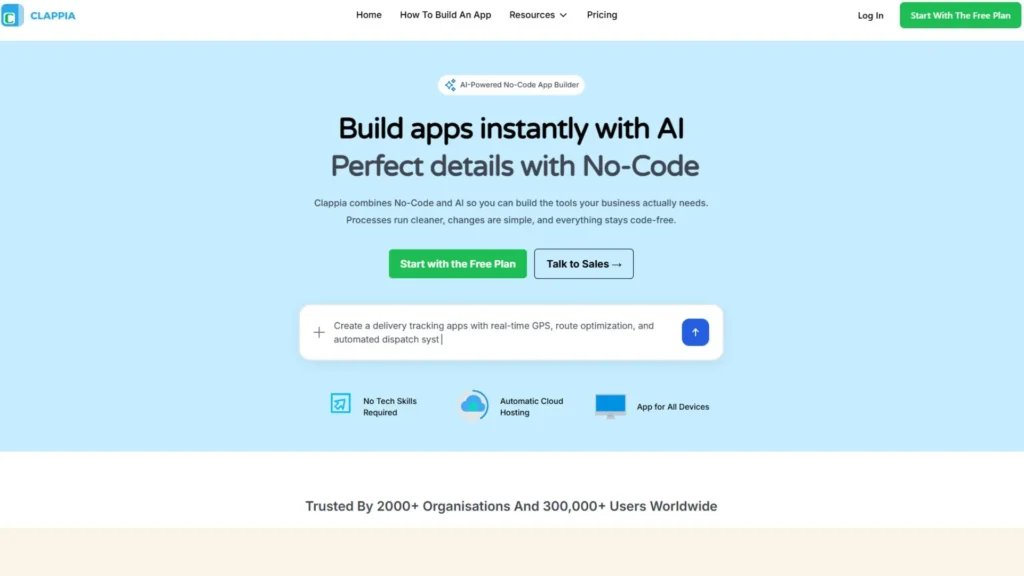
Clappia is designed to replace the “messy middle” of business operations spreadsheets, paper forms, and WhatsApp updates. Its philosophy is “Digital Transformation on steroids”.
- The Container Model: Clappia operates on a “Container App” model. You don’t publish a new app to the App Store every time you have an idea. Instead, your employees download the single “Clappia” app, and inside it, they access all the specific apps (Attendance, Inventory, Site Audit) you have built.
- Target Audience: It is built for non-technical business users Operations Managers, HR Heads, and Field Supervisors who need to create tools for their teams without waiting for IT.
- Primary Use Cases: Field sales tracking, factory inspections, GPS-based attendance, and inventory management.
Imagine.bo: The AI-Powered SaaS Builder
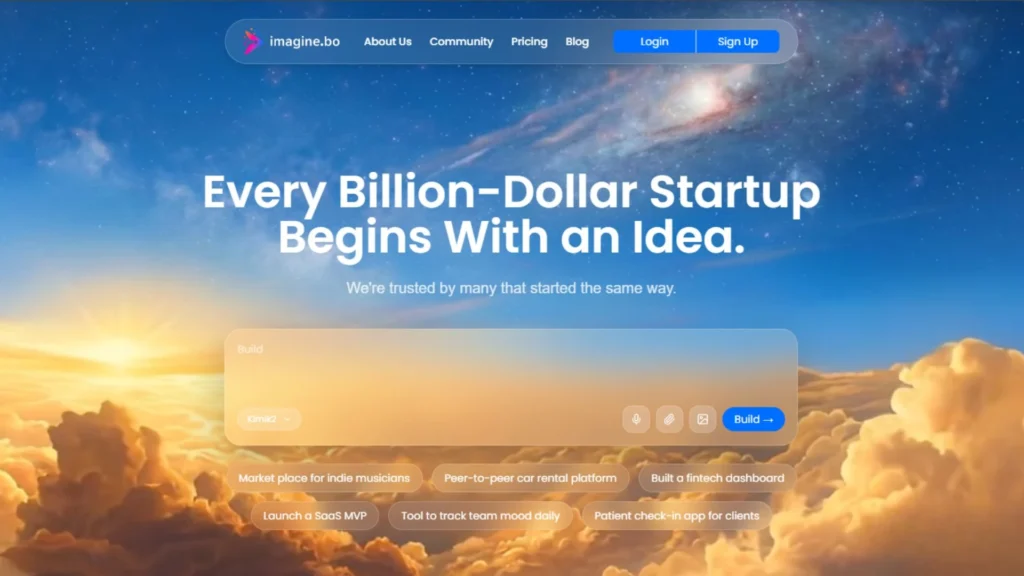
Imagine.bo philosophy is different: it believes in “Building Real Software.” It is not just a form-builder; it is a “text-to-app” platform that engineers production-ready applications.
- The Tech Stack Approach: Unlike Clappia’s container, Imagine.bo generates a real technology stack. It provisions a database, writes API endpoints, and creates a responsive frontend. This removes the “configuration hell” of setting up servers.
- Target Audience: It is designed for Founders, Startups, and Product Managers who want to launch an MVP (Minimum Viable Product) or a full SaaS business without hiring a CTO.
- Primary Use Cases: Subscription-based SaaS products, two-sided marketplaces (like Airbnb clones), and customer-facing web portals.
The Building Experience: Prompts vs. Blocks
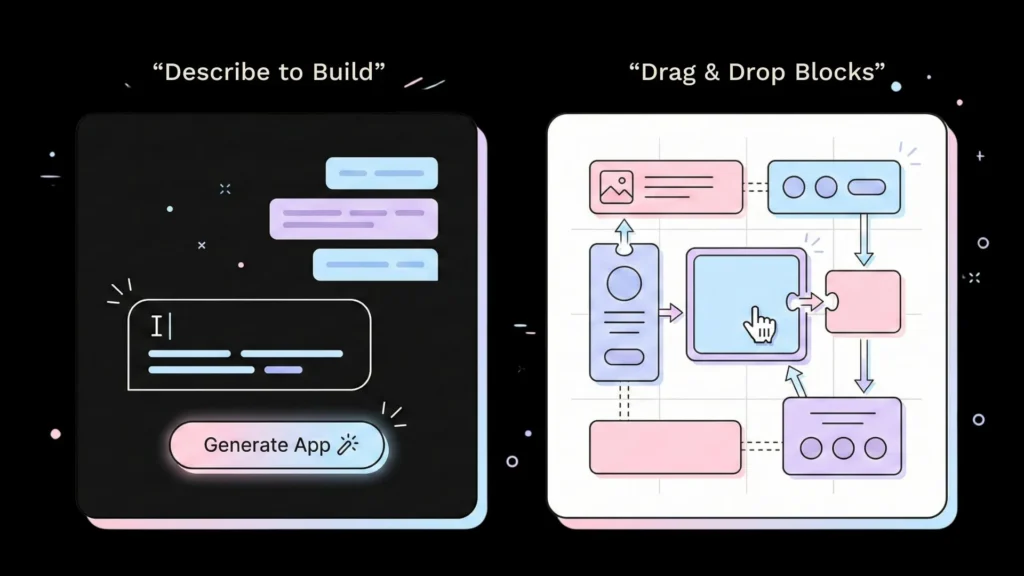
The most fundamental difference lies in how you build. This defines your daily workflow.
Imagine.bo: The “Describe-to-Build” Engine
Imagine.bo uses a Generative AI approach. You do not start with a blank canvas. Instead, you use natural language prompts.
- Prompt Engineering: The platform relies on how well you describe your idea. A good prompt in Imagine.bo includes the “Actor” (who is the user?), the “Problem” (what are we solving?), and “Key Features“.
- Example: “Build a SaaS app for HR managers to track employee performance with features: reviews, goals, and dashboards”.
- Deep Context & Iteration: The AI interprets this prompt to generate the entire database schema and user flows. If you need changes, you iterate via conversation “Make the header dark mode” or “Require email verification before posting”.
- The Safety Net: If the AI hits a limit, you are not stuck. You use the “Assign a Developer” feature to have a real Imagine.bo engineer write custom code for you, ensuring complex logic is handled correctly.
Clappia: The Block-Based Construction
Clappia follows a structured, modular approach. It is deterministic you get exactly what you build.
- Visual Assembler: You create a workplace and enter the “Design App” mode. Here, you drag and drop “Blocks” to assemble your functionality.
- Specialized Blocks: Clappia offers a library of pre-coded blocks that are impossible to generate via simple text prompts because they interact with hardware.
- Data Input Blocks: Text, numbers, dropdowns.
- Hardware Blocks: NFC Reader for scanning tags, Code Scanner for QR/Barcodes, and GPS Location for pinning coordinates.
- Logic Without Code: You use spreadsheet-like formulas (IF, AND, OR) to create conditional logic (e.g., “If ‘Status’ is ‘Urgent’, show ‘Emergency Contact’ field”).
Feature & Capability Showdown (Comparison Table)
To make an informed decision, you need a side-by-side technical comparison. Below is the breakdown based on the 2026 documentation.
| Feature Category | Clappia | Imagine.bo |
| Builder Method | Drag-and-Drop Blocks (Visual Editor) | AI Text Prompting + Visual Customization |
| Offline Capability | Full Offline Support: Data stores locally and syncs automatically when internet is restored. | Cloud-Dependent: Designed for always-on web infrastructure (Vercel/AWS). |
| Advanced Logic | Spreadsheet-like formulas (IF, AND, OR) for conditional logic. | “Hire a Human” Support: Assign complex logic tasks to real engineers (SDEs). |
| Hardware Access | Native Device Access: GPS, Camera, NFC, Barcode/QR Scanner, Signatures. | Standard Web Access: Focuses on web-based SaaS features (Auth, Dashboards). |
| Document Output | PDF Generation: Create dynamic invoices/reports from submissions instantly. | Web-First: Focuses on live dashboards and exportable data/code. |
| Deployment | Instant Container App: Deploys to Clappia’s iOS/Android/Web container. | Production Infrastructure: Deploys to AWS, GCP, or Vercel. |
| Scalability | Internal Scale: Great for hundreds/thousands of employees. | Consumer Scale: Built for high performance (up to 1,000 TPS). |
Handling Real-World Chaos: “No Internet” vs. “Complex Code”
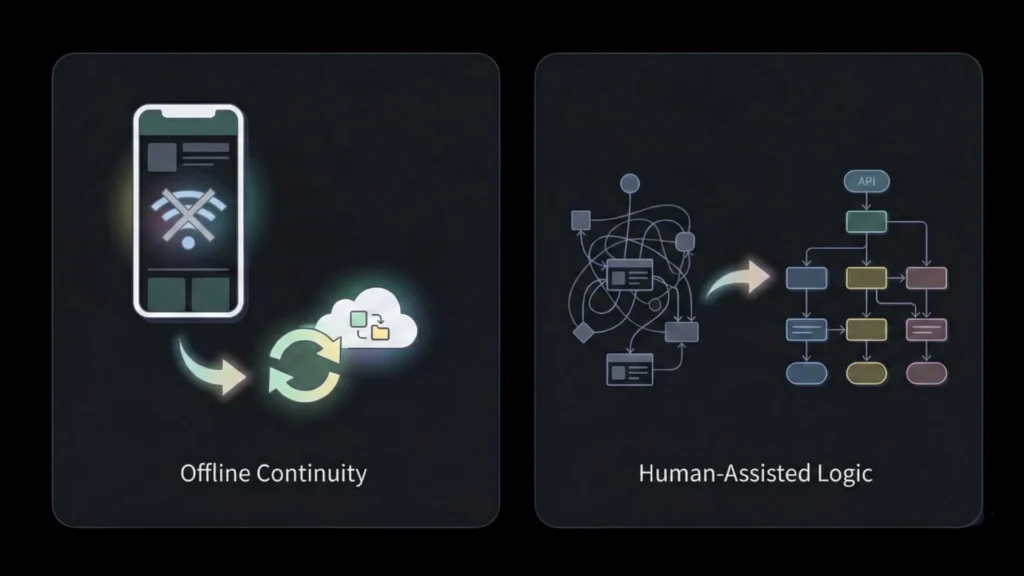
Every software project faces a “breaking point” a situation where standard tools fail. Clappia and Imagine.bo solve two completely different types of breaking points.
Clappia Wins When: The Internet Breaks
For operational businesses, the chaos is physical. Warehouses have dead zones, field sites are remote, and basements have no signal. Clappia is explicitly architected for this “disconnected” reality.
- The Sync Engine: When a user collects data (photos, inspections, signatures) offline, Clappia stores it securely on the device. As soon as connectivity is restored, the data syncs automatically to the cloud.
- Continuity: This ensures that a factory inspector or a sales agent never stops working just because the Wi-Fi is down. This feature is critical for logistics, manufacturing, and field services.
Imagine.bo Wins When: The AI Breaks
For software startups, the chaos is logical. AI is powerful, but it can hallucinate or fail to understand complex, unique business rules (e.g., “Calculate a dynamic loan interest rate based on 5 variables”).
- Human-in-the-Loop: Imagine.bo acknowledges that AI has limits. When you hit a wall, you don’t have to hack a solution. You click “Assign a Developer”.
- SDE Support: A vetted engineer accepts your ticket, writes the specific code module you need, and pushes it to your project.
- Speed: Pro Plan users get a 24-hour turnaround, and Enterprise users get a 12-hour turnaround. This effectively gives you a CTO-on-demand service integrated into the builder.
Deployment & Branding: “Container” vs. “Cloud”
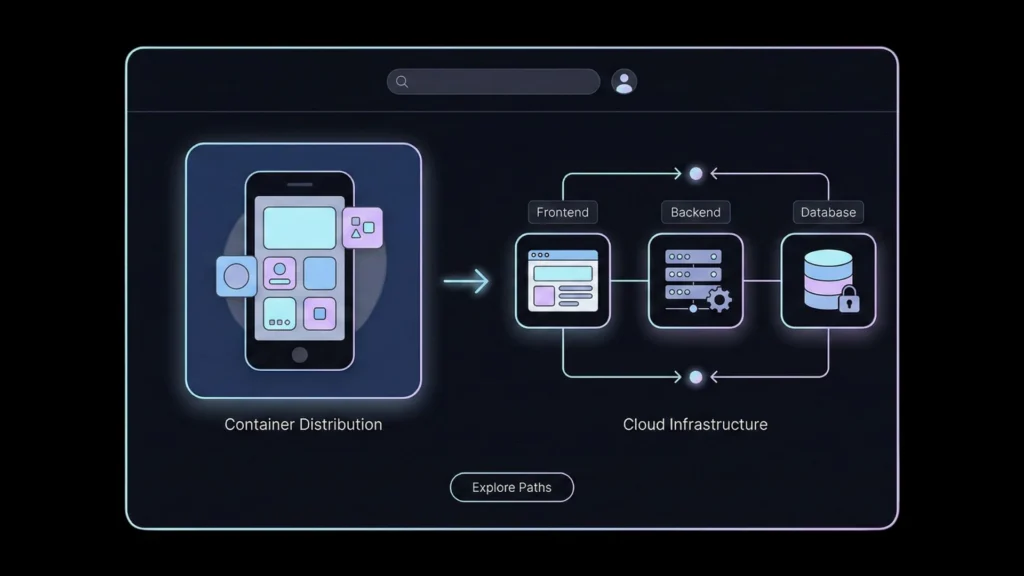
How your end-users access the application is a major differentiator that often dictates the choice of platform.
Clappia: The Container Model
Clappia simplifies distribution by removing the need to build standalone apps.
- Instant Availability: Your users download the generic “Clappia” app from the Play Store or App Store. Once they log in, they see your specific apps inside.
- Zero-Maintenance Updates: As an admin, you can push changes remotely. You don’t need to worry about App Store approvals or version mismatches; Clappia handles the hosting, upgrades, and installation.
- White Labeling: While the default is the Clappia container, organizations can request a white-labeled version to have their own branding and logo on the app icon.
Imagine.bo: The Production Infrastructure Model
Imagine.bo acts more like a DevOps engineer, deploying your app to standard web infrastructure that you own and control.
- Modern Tech Stack: The frontend is typically deployed to Vercel, ensuring global edge caching and lightning-fast load times. The backend runs on robust cloud services like Supabase,Railway.
- SEO & Public Access: Unlike Clappia, which is mostly behind a login for employees, Imagine.bo apps are public web apps. They are SEO-ready, meaning your landing pages and content can rank on Google.
- Data Freedom: You are not locked in. Imagine.bo allows you to export your data and code, giving you true ownership of the intellectual property you are building.
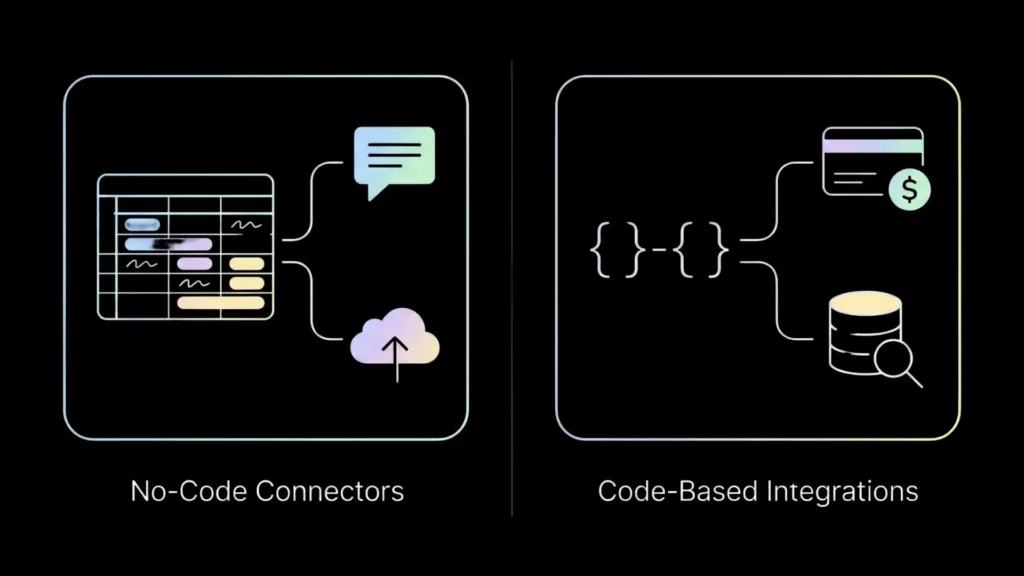
Integration Ecosystem: Spreadsheets vs. Code
Clappia: The Connected Workplace
Clappia integrates deeply with the tools businesses already use daily, focusing on “No-Code Connectors.”
- Native Integrations: It connects seamlessly with Google Sheets, Google Drive, Slack, MS Teams, and Power BI.
- Two-Way Data Flow: A standout feature is the ability to pull data from Google Sheets. You can use a sheet as a database to populate dropdowns or trigger workflows in your app.
- Public API: Clappia provides a comprehensive REST API to push and pull submission data, create users, and manage workplaces. However, it is often used with tools like Zapier for ease of use.
Imagine.bo: The Developer-Grade Stack
Imagine.bo is built to integrate via code and standard developer protocols.
- Code-First Integration: Because Imagine.bo generates real code, it can integrate with any API.
- Complex Payments: It has native support for Stripe and Razorpay for handling subscriptions and payments.
- Custom Scripts: If you need to integrate a niche legacy system, you can assign a developer to write a custom script for that specific integration.
Integration Strategy Comparison Table
| Feature | Clappia | Imagine.bo |
| Philosophy | No-Code Connectors: Ready-to-use blocks for popular business tools. | Code-First Integration: Real code integration for any API. |
| Top Integrations | Google Sheets, Slack, WhatsApp, Power BI, MS Teams. | Stripe, Razorpay (Native); Any API (via Custom Code). |
| Database Sync | Two-way Sync: Pulls data from Google Sheets/SQL to automate workflows. | Database Native: Direct SQL interactions via backend logic on Railway. |
| Custom APIs | Via Zapier/REST: Connects via standard webhooks. | Via Human Engineers: SDEs write custom scripts for complex APIs. |
Security & Compliance: Enterprise Readiness
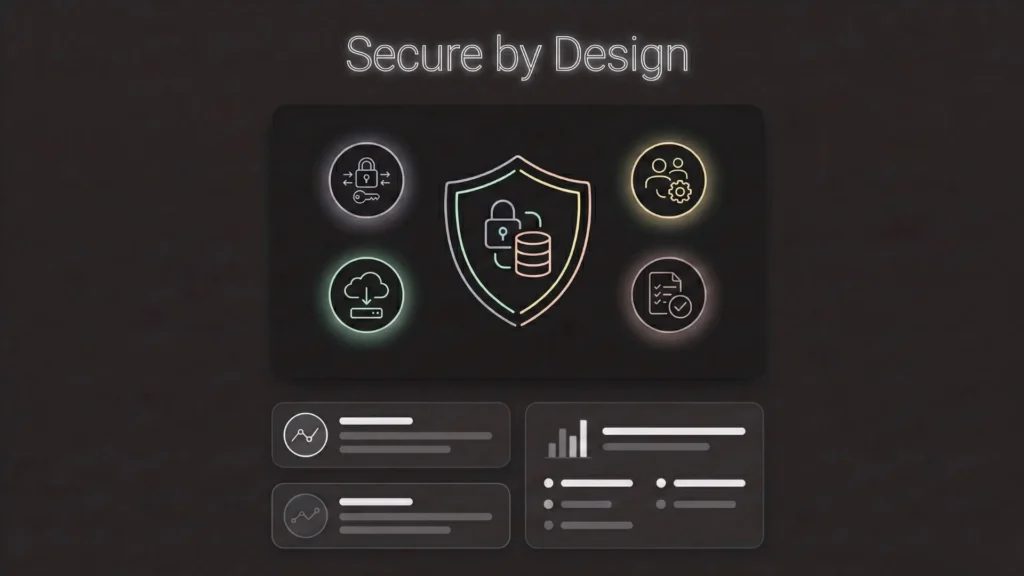
Security is non-negotiable, but the approach differs based on the target user.
Imagine.bo: Security by Architecture
Imagine.bo builds security into the generated code itself, preparing you for public scrutiny.
- Standards: Apps are GDPR and SOC2-ready by default, which is crucial for SaaS products handling customer data.
- Access Control: It implements Role-Based Access Control (RBAC) out of the box. This means you can define “Admins,” “Editors,” and “Viewers” with specific permissions right from the prompt.
- Encryption: SSL/HTTPS and data encryption are standard for all deployments.
Clappia: Cloud Security
Clappia relies on the robustness of AWS infrastructure to protect internal business data.
- AWS Hosting: All apps are hosted in Amazon Web Services (AWS) datacenters. By default, data is hosted in India, but customers can choose other regions for compliance.
- Protection: It employs encryption for data at rest and in transit, regular security audits, and granular access controls.
- Workplace Boundaries: It uses the concept of a “Workplace” to create a virtual boundary, ensuring that data is strictly isolated within your organization.
Pricing & Accessibility
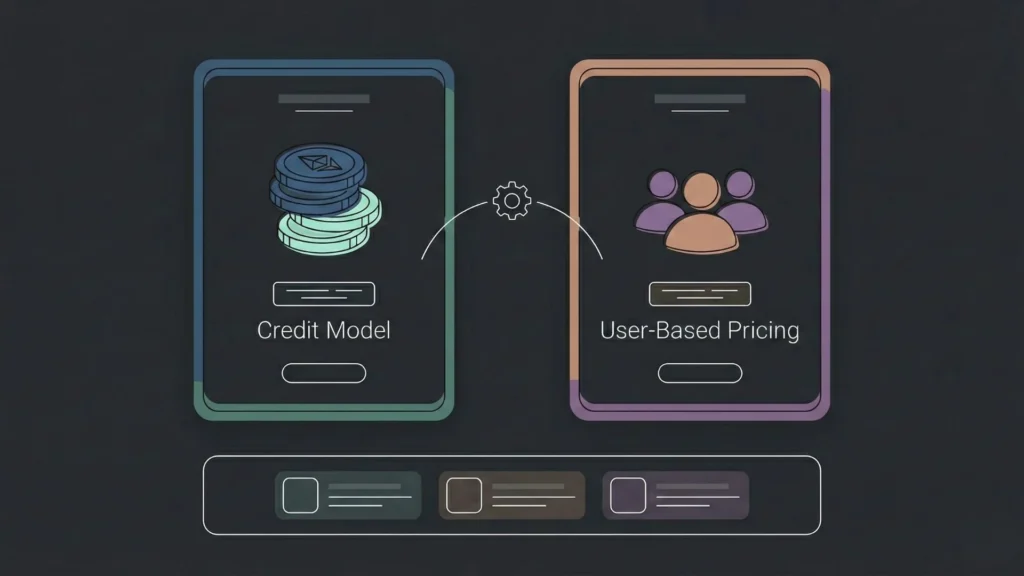
Pricing models often reflect the “Build vs. Buy” mentality of the platforms.
Imagine.bo Pricing: Credit-Based Flexibility
Imagine.bo operates on a credit system, where you pay for the creation and modification of the software.
- Free Plan: Includes 10 credits/month, enough to build 2-3 simple pages to test the platform.
- Lite Plan ($7/mo): Offers 60 credits, suitable for landing pages and small prototypes.
- Pro Plan ($20/mo): Offers 150 credits. This is the sweet spot for founders, allowing for robust multi-page apps with authentication and database forms.
- Unique Perk: Credit Rollover. Unlike most SaaS tools, unused credits do not expire; they roll over to the next month. This allows you to accumulate credits for heavy development sprints.
Clappia Pricing: All-Inclusive Infrastructure
Clappia simplifies costs by bundling the platform and the infrastructure.
- Free Plan: Clappia allows you to sign up and start building immediately for free.
- Infrastructure Included: The pricing model includes the underlying AWS cloud infrastructure costs. You don’t pay separately for server space or database usage.
- Business Focus: While exact paid tiers aren’t detailed in the snippet, the model is built for organizations, typically scaling with the number of users or advanced features like white labeling.
Final Verdict: The “Right” Choice Depends on the User
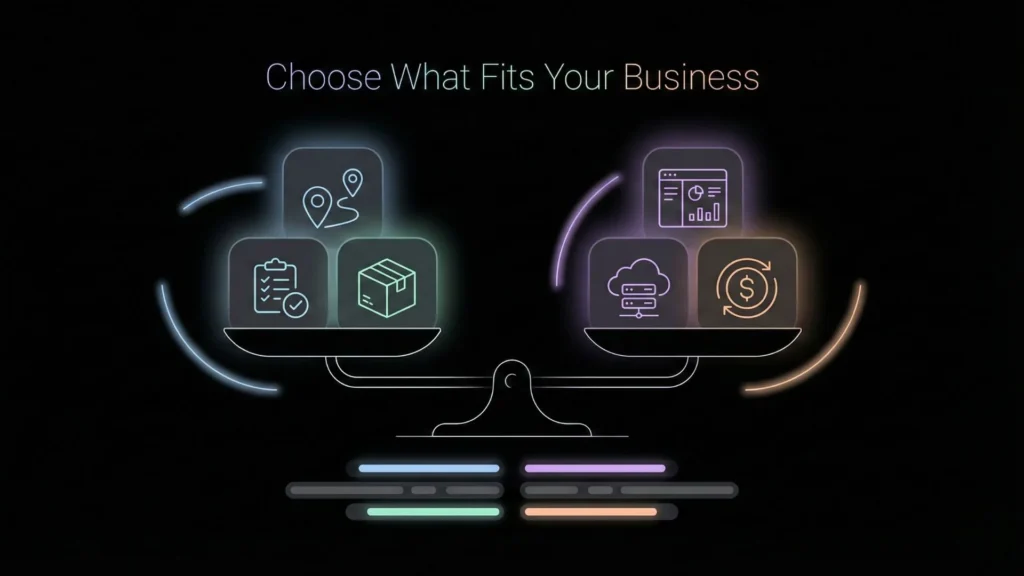
In 2026, the question is no longer “Can I build this without code?” but “Which platform matches my business model?”
Choose Clappia if: You are an Operations Manager, Factory Head, or Business Leader. If your goal is to track field employees, manage inventory in a warehouse, or digitize paper inspection forms immediately, Clappia is the superior choice. Its ability to work offline, scan NFC/QR codes, and deploy instantly to a mobile container makes it the ultimate tool for operational efficiency.
Choose Imagine.bo if: You are a Founder, Product Manager, or Entrepreneur. If your goal is to launch a customer-facing software product, a SaaS subscription service, or a public marketplace, Imagine.bo is the winner. It offers a scalable database, custom user authentication, and most importantly the safety net of real software engineers to handle complex logic. It is the only platform that offers this hybrid AI+Human approach for building real businesses that need to scale.
Related Articles
- AI Website Builder for Selling Products
- Build 10 Awesome AI Apps with No Code: The Ultimate Beginner’s Guide
- AI Website Builder for Handmade Products: Craft Your Digital Shop Without Code
- AI Website Builder for Contractors: Build a Professional Site Without Code
- How Nonprofits Are Launching Impactful Apps Without Developers
Launch Your App Today
Ready to launch? Skip the tech stress. Describe, Build, Launch in three simple steps.
Build