The software landscape has undergone a seismic shift. In 2026, the burning question for visionaries is no longer “How do I learn to code this?” but rather “Which AI partner is capable of building my entire business?” We have moved beyond simple code generation assistants to fully autonomous platform builders. In this matured market, two names dominate the conversation, representing two fundamentally different philosophies: Imagine.bo and Emergent.
While both platforms promise the ability to turn a simple chat prompt into a functional application, the user experience reveals a stark difference in maturity. One positions itself as a high-speed engine for rapid experimentation — perfect for the thrill of the build — while the other serves as a strategic, deep-thinking architect designed to secure your long-term revenue. For founders who need their software to be an asset rather than a liability, the choice is becoming increasingly clear.
Launch Your App Today
Ready to launch? Skip the tech stress. Describe, Build, Launch in three simple steps.
BuildThe Core Philosophy: “The Autonomous Team” vs. “The Strategic Architect”
The most critical differentiator isn’t just the code they write, but the intent behind the build.
Emergent: The Autonomous Squad
Emergent operates as a fluid, real-time “Vibe Coding” system. It allows you to rapidly iterate on ideas by coordinating a swarm of specialized AI agents — including Planning, Coding, and Testing agents—that work in concert to scaffold applications in real-time.
- The Workflow: You act as the Project Manager for a team of junior devs. You tell the “Squad” what you want (“Make the button blue,” “Add a login page”), and the agents execute immediately.
- The Reality: It feels frantic and exciting. You see the code morphing live, which gives a great “dopamine hit.” However, like managing junior developers, you often have to micromanage the output to ensure the pieces fit together logically.
- The Goal: To reduce the friction between “thought” and “code.” It prioritizes the speed of creation.
Imagine.bo: The Strategic Architect
Imagine.bo is designed specifically for founders, non-technical entrepreneurs, and revenue-focused leaders. It doesn’t just react to prompts; it uses deep reasoning to act as your technical co-founder. Before writing a single line of code, it creates a holistic blueprint of your business logic.
- The Workflow: You act as the CEO. You define the outcome (“I need a marketplace for vintage watches with escrow payments”), and the system handles the execution detail.
- The Reality: It feels like consulting with a Senior Software Architect. The system anticipates edge cases you missed (“Do you need a dispute resolution flow for that escrow?”), ensuring the app follows strict SDE-level (Software Development Engineer) standards. It feels “heavier,” but infinitely more secure.
- The Goal: To reduce the risk of business failure. It prioritizes the product’s stability, scalability, and profitability.
Speed vs. Scale: The “Prototype” vs. The “Product”
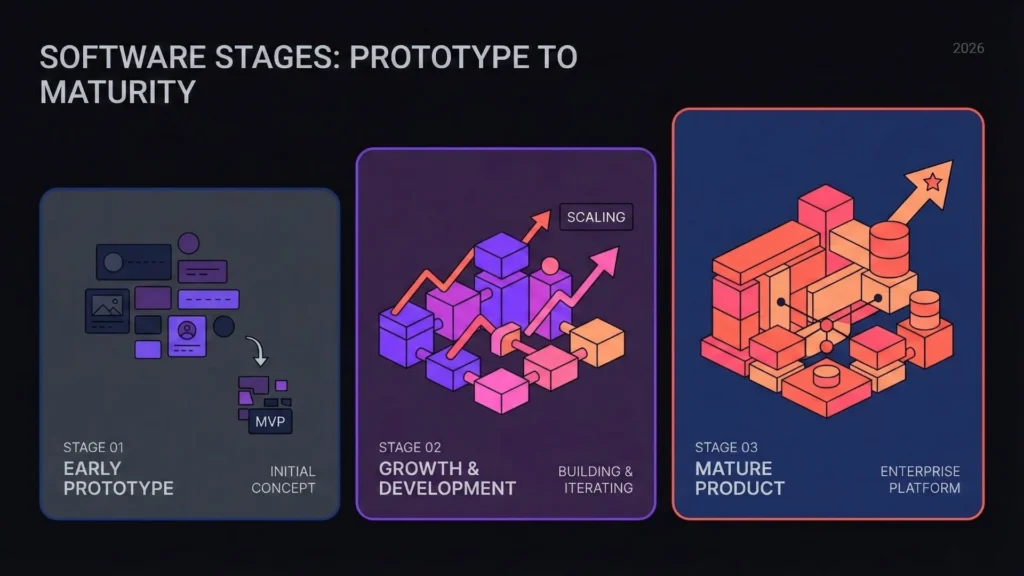
In 2026, the global no-code AI market is exploding, but a critical divide has emerged: not all “fast” apps are built to handle success.
Emergent’s Speed: The Prototype Powerhouse
Emergent is the undisputed king of the “Sprint.” You provide a prompt, and the agents coordinate to scaffold, code, and deploy a full-stack app in minutes. This is invaluable for:
- Hackathons: When you need a working demo in 2 hours.
- Visual Concepts: When you need to show investors something clickable to sell a vision.
- Developer Sandboxes: When a coder wants to skip the boilerplate setup.
The Trade-off: This speed often comes with “Technical Debt.” Because the agents prioritize “making it work now,” they may use shortcuts that become brittle as you add complex features.
Imagine.bo’s Scale: The Foundation for Growth
Imagine.bo takes a deliberate “measure twice, cut once” approach. While it might take a few minutes longer to blueprint, the output is a clean, scalable, and secure architecture that you don’t have to rewrite later. It is the only platform in its class offering a 1,000 transactions per second (TPS) guarantee.
This is the difference between a toy and a tool. Whether you have 10 users on launch day or go viral on TikTok and hit 50,000 concurrent users overnight, Imagine.bo’s cloud-native architecture ensures your database won’t lock up and your payments won’t fail. It builds “boring,” reliable software that handles money and data without drama—which is exactly what a profitable business needs.
Comparison Breakdown: 2026 Benchmarks
| Feature | Emergent | Imagine.bo |
|---|---|---|
| Primary Workflow | Interactive “Vibe Coding” & Agent Collaboration | SDE-Level Deep Reasoning & Blueprinting |
| Best For | Rapid Prototyping, Hackathons, & Developer Iteration | Founders, SMBs, & Scaling Revenue-Ready Apps |
| Performance | Fast UI generation; dependent on user optimization | 1,000 transactions/second guarantee; Auto-scaling included |
| Tech Stack | React, Node.js (Variable quality based on prompting) | Cloud-Native (AWS/GCP), Normalized DBs, Secure Backend |
| Security | Automated agent-driven tests; dependent on prompt quality | Enterprise-grade (GDPR/SOC2 Ready) by default |
| Support | Community-driven & AI debugging agents | Human SDEs + AI Hybrid Support (Real engineers on standby) |
| Ownership | Code Export (Requires Git knowledge) | Full IP Ownership + Managed Deployment (Hassle-free) |
The Technical “Wall”: What Happens When it Breaks?
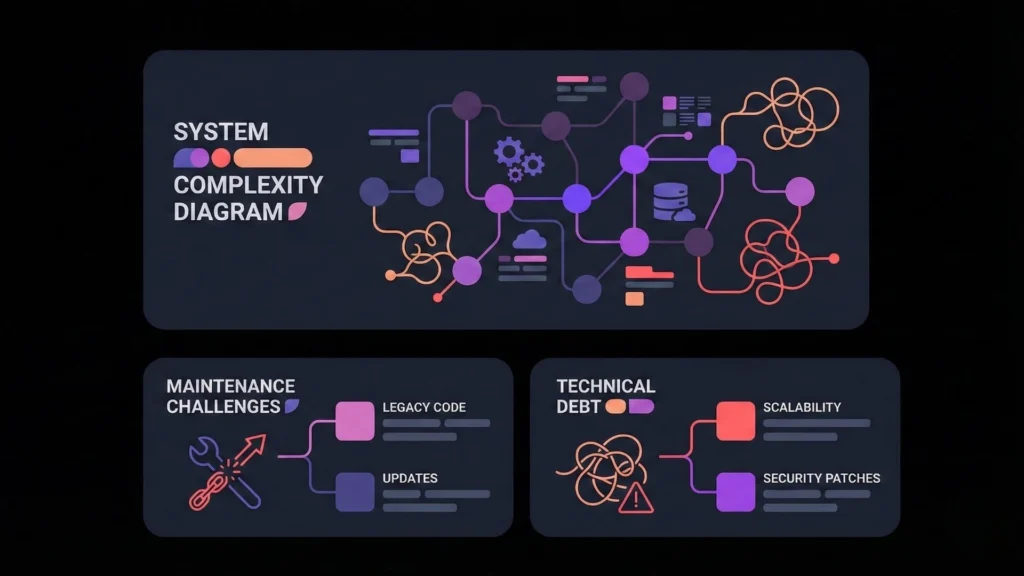
Every AI builder hits a “Technical Wall” eventually — the moment your app becomes too complex for the AI to understand its own previous code.
Emergent’s Solution: Iterative Debugging
When you hit the wall in Emergent, its specialized “Testing” and “Debugging” agents attempt to fix the error.
- The Struggle: Agents can get stuck in “fix loops,” patching one bug only to create another.
- The Fallback: Emergent drops you into a VS Code environment. If the agents fail, you need to fix the code manually. This forces you to become a developer when things get tough.
Imagine.bo’s Solution: Blueprinting & Human Safety Nets
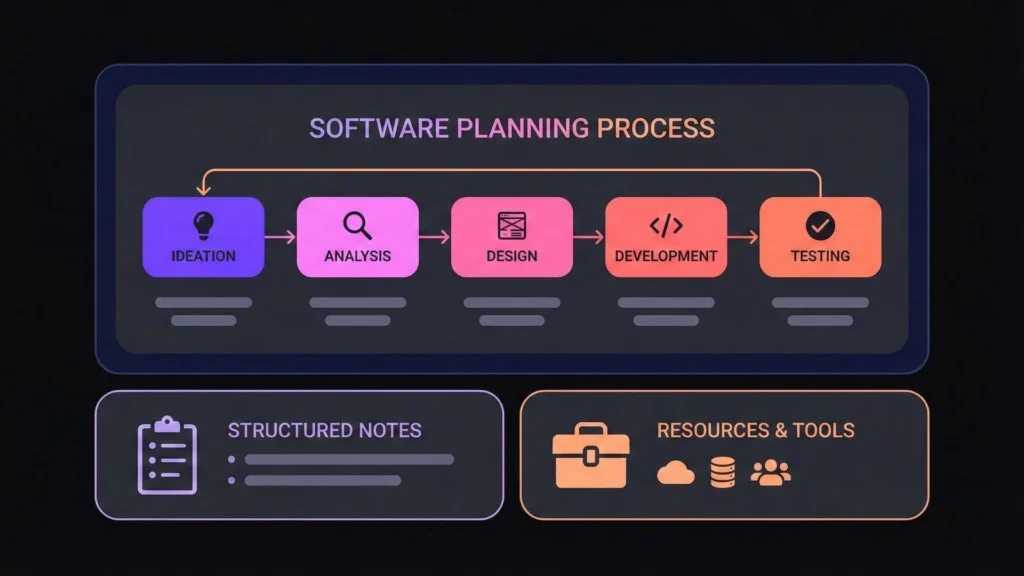
Imagine.bo prevents the wall from being built by using a strict Five-Step Workflow that blueprints the database schema and API flow before coding, preventing “spaghetti code.”
The Ultimate Advantage: If you do hit a complex business problem—say, a custom API integration—Imagine.bo offers a Human + AI Support model. You aren’t left with a broken chatbot; you have access to real Software Development Engineers (SDEs) who step in to fix the issue. For a business owner, this safety net is the difference between a delayed launch and a failed project.
Security Comparison: Reactive vs. Proactive
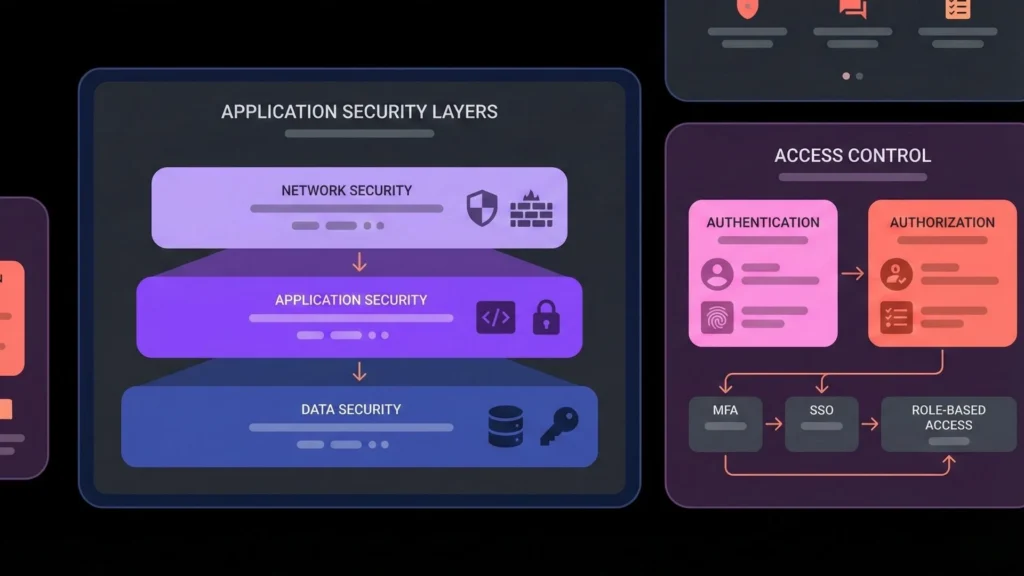
Emergent (The Agentic Dev Team)
Emergent secures the environment but leaves the logic up to the prompt.
- The Gap: Agents prioritize functionality. They might “hardcode” a variable to make a feature work quickly or overlook a complex permission flaw because they lack the “big picture” context. It works, but is it bank-grade? Not always.
Imagine.bo (Deep Reasoning Security)
Imagine.bo treats security as a non-negotiable enterprise asset. It acts as a Senior Security Engineer, enforcing GDPR/SOC2 Ready protocols by default.
- The Standard: It automatically implements Role-Based Access Control (RBAC), data sanitization, and encryption. You don’t have to ask for security; Imagine.bo enforces it so your customer data is safe from Day 1.
The Verdict: Which One Wins for You?
Choose Emergent if:
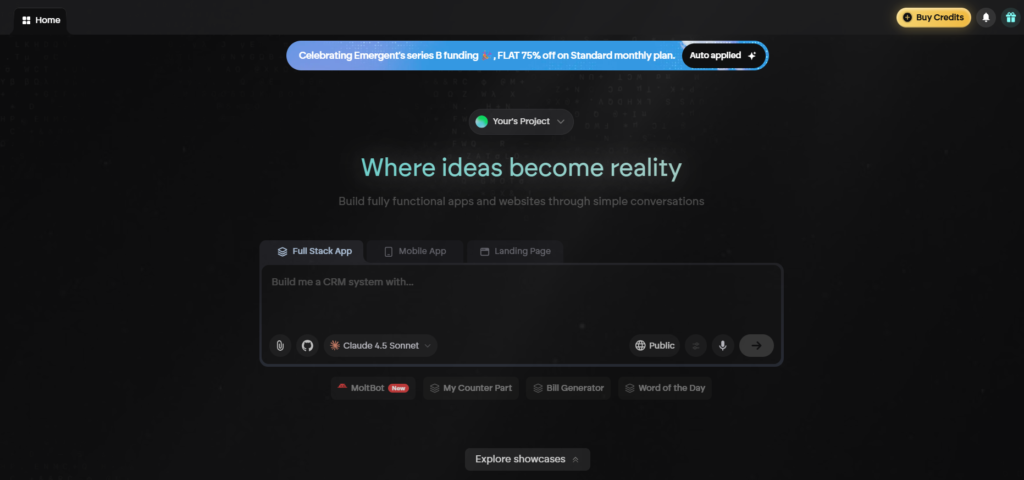
- You are a developer: You want an AI to handle the boring scaffolding so you can write the complex code yourself.
- You are playing: You want to experiment with UI ideas quickly and don’t strictly need a revenue-generating outcome immediately.
- You love the process: You enjoy the back-and-forth of “vibe coding” and debugging alongside an AI.
Choose Imagine.bo if:
- You are building a business: You need a product that works, takes payments, and handles users without crashing.
- You value your sleep: You want the peace of mind that comes with a performance guarantee (1,000 TPS) and human engineering support.
- You want a partner: You need a platform that manages the technical journey from “Idea” to “IPO,” allowing you to focus on sales and marketing.
In 2026, while Emergent is a fantastic tool for coding, Imagine.bo is the superior platform for building a company.
Frequently Asked Questions (FAQs)
Does Imagine.bo handle my “Step 0” planning?
Yes. Unlike Emergent, which waits for your specific instructions, Imagine.bo takes the initiative. In Step 1, its Deep Reasoning AI helps refine your rough concept into a structured product vision, suggesting features and monetization models you might have missed to maximize your revenue potential.
What makes Imagine.bo’s “SDE-Level Engineering” better?
Tools like Emergent focus on speed. Imagine.bo focuses on quality. It applies real engineering standards—clean code, normalized databases, and separation of concerns—ensuring your app is a production-grade asset. It builds software the way a Senior Engineer at Google would, not how a Junior Dev at a hackathon would.
Can Imagine.bo really handle 1,000 transactions per second (TPS)?
Yes. This architectural guarantee is unique to Imagine.bo. Most AI-generated apps struggle with “technical debt” under load. Imagine.bo’s cloud-native architecture auto-scales, meaning you can grow from 10 users to 100,000 without the “success disaster” of a crashing server.
If an AI agent builds my app on Emergent, who fixes it when it breaks?
On Emergent, the burden ultimately falls on you or the community. On Imagine.bo, you have a Human Safety Net. Pro and Enterprise plans include access to real engineers who can fix logic errors or handle complex integrations, ensuring you never get stuck.
How does the security in Imagine.bo compare?
Imagine.bo makes Enterprise-grade security (GDPR/SOC2 standards) the mandatory default. It bakes encryption, audit logging, and strict data permissions into the DNA of your code, whereas other platforms often leave these critical details as an afterthought for the user to configure.
Do I need to learn a new “low-code” language?
No. Both tools use natural language, but Imagine.bo requires less technical specificity. You describe business outcomes (“Charge a 5% fee”), and it handles the technical implementation (Stripe Connect logic). Emergent often requires you to describe the technical implementation (“Create a webhook handler for Stripe events”).
How does Imagine.bo avoid “Spaghetti Code”?
Imagine.bo uses Automated Blueprinting. Before a single line of code is written, it maps the entire database and API architecture. This planning phase ensures the foundation is solid, whereas “vibe coding” often results in messy, tangled code that becomes impossible to update later.
Is Imagine.bo only for simple websites?
No. Imagine.bo is a full-stack enterprise builder. It is frequently used to launch complex SaaS platforms, multi-vendor marketplaces, and internal CRM systems that require complex backend logic, scheduled jobs, and secure data handling.
How does Imagine.bo help with “Go-to-Market”?
Imagine.bo builds for growth. It includes built-in SEO optimization (SSR, meta tags), mobile responsiveness, and integrated analytics dashboards. It empowers you to export data to tools like Google Sheets to track KPIs, ensuring you have the data you need to grow your business.
Can I migrate a project I started elsewhere into Imagine.bo?
Yes. In fact, many founders migrate to Imagine.bo when their “prototype” apps hit performance limits. You can describe your existing project, and Imagine.bo’s reasoning engine will re-map it into a scalable, SDE-level framework, effectively “upgrading” your business to a professional standard.
Related Articles
- Build 10 Awesome AI Apps with No Code: The Ultimate Beginner’s Guide
- Building Business Tools with AI Agents for Enhanced Efficiency and Innovation
- Building Business Tools with AI Agents for Enhanced Efficiency and Innovation
- AI Website Builder for Handmade Products: Craft Your Digital Shop Without Code
- How to Vibe Code: A Simple Step-by-Step Guide to Building Apps with AI
Launch Your App Today
Ready to launch? Skip the tech stress. Describe, Build, Launch in three simple steps.
Build