

Secure and Scalable Cafe Management System solutions are no longer limited to large restaurant chains. With AI no-code technology, independent cafes can now build powerful systems without writing code.
For decades, cafe owners have been forced to choose between two painful options:
Launch Your App Today
Ready to launch? Skip the tech stress. Describe, Build, Launch in three simple steps.
Build- Generic SaaS Products: Expensive monthly subscriptions (like Toast or Square) that lock you into their hardware, charge high transaction fees, and never quite fit your unique workflow.
- Custom Development: Hiring an agency to build a bespoke app, costing upwards of $50,000 and taking six months to launch.
But in 2026, a third door has opened. The rise of AI No-Code Technology has democratized software engineering. Today, a cafe owner with zero coding experience can build a Secure Cafe Management System that rivals the giants, tailored exactly to their brand, for a fraction of the cost.
This guide is not just about building an app; it is about building a digital asset. We will walk you through how to use platforms like blog.imagine.bo to construct a Scalable Cafe Management System that grows with your business, secures your customer data, and automates your busiest days.
Anatomy of a Modern Cafe Management System
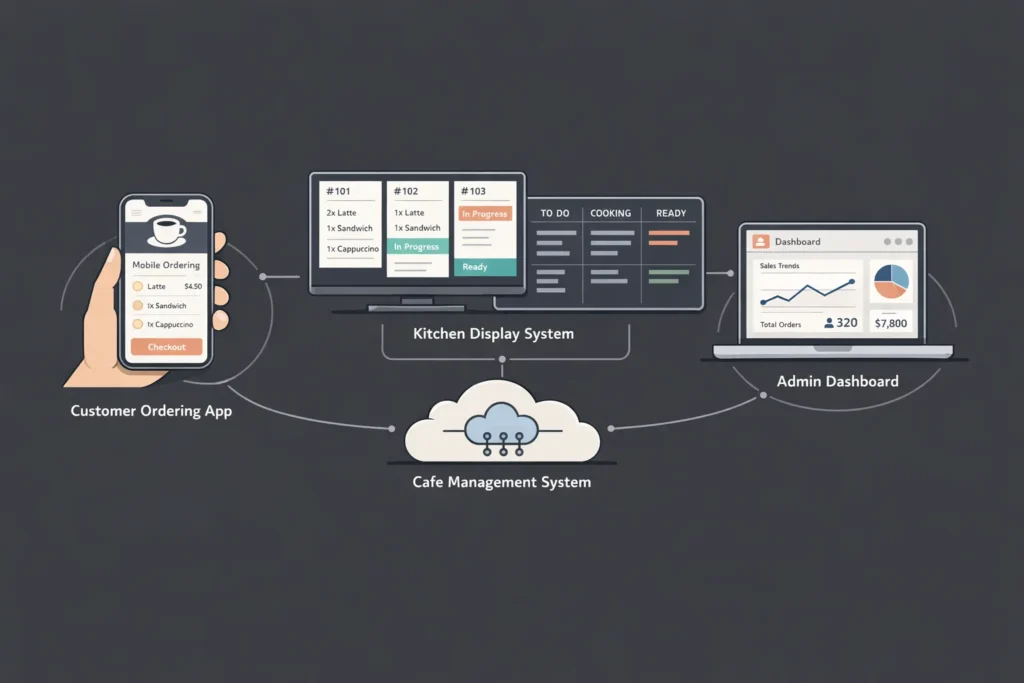
Before we start building, we must understand what we are constructing. A truly effective Cloud-based cafe software is not just a digital menu; it is an ecosystem of three interconnected parts.
1. The Customer Interface (The Front End)
This is what your guests see. It must be beautiful, fast, and intuitive.
- QR Code Ordering: Guests scan a code at the table to order without waiting for a server.
- Mobile Order & Pay: “Order ahead” functionality for commuters.
- Loyalty Integration: A digital punch card that automatically tracks rewards (e.g., “Buy 9, Get 1 Free”).
- Real-Time Status: Push notifications telling the customer, “Your Flat White is being poured.”
2. The Kitchen Display System (The Engine)
This replaces the paper ticket printer.
- Order Routing: Drink orders go to the barista screen; food orders go to the kitchen screen.
- Ticket Aging: Orders change color (Green -> Yellow -> Red) as they wait, alerting staff to bottlenecks.
- “86” Functionality: A single tap to mark an ingredient (e.g., Avocados) as out of stock, instantly updating the customer menu.
3. The Admin Dashboard (The Brain)
Where you manage the business.
- Inventory Management: Real-time deduction of ingredients (e.g., 1 Latte = -20g coffee beans, -200ml milk).
- Staff Scheduling: Shift management and clock-in/out.
- Analytics: Heatmaps of your busiest hours, highest margin items, and customer retention rates.
Why “Secure” and “Scalable” Are Non-Negotiable
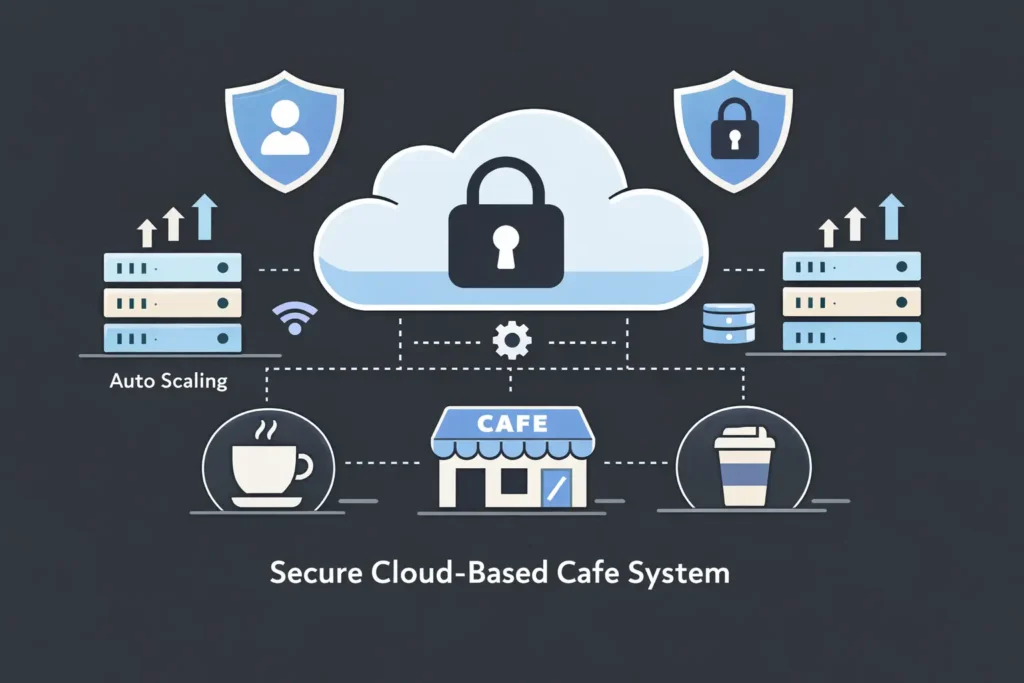
When searching for Restaurant management software, many owners focus on features and forget the foundation. However, if you are building your own tools using an AI no-code platform, you must prioritize security and scalability from Day 1.
Building a Secure Cafe Management System
Cafes are high-value targets for cyberattacks because they process high volumes of credit card transactions. A Secure Cafe Management System must handle:
- Role-Based Access Control (RBAC): Your barista should not have access to your financial reports. Your customers should not see each other’s data.
- PCI Compliance: Payment data must never be stored on your own servers. We will discuss using integrations like Stripe to handle this securely.
- Data Encryption: Customer emails and phone numbers must be encrypted at rest and in transit to comply with GDPR and CCPA.
Building a Scalable Cafe Management System
Scalability isn’t just about having 100 locations; it’s about surviving the Tuesday morning rush.
- The “Morning Rush” Test: Can your system handle 500 simultaneous orders between 8:00 AM and 9:00 AM without crashing?
- Database Load: As your history grows to millions of past orders, poor database design will slow down your reporting.
- Serverless Architecture: A Scalable Cafe Management System should use serverless cloud infrastructure (like AWS Lambda or Google Cloud Functions) that automatically “spins up” more power when traffic hits and spins down when the cafe closes, saving you money.
The AI No-Code Revolution
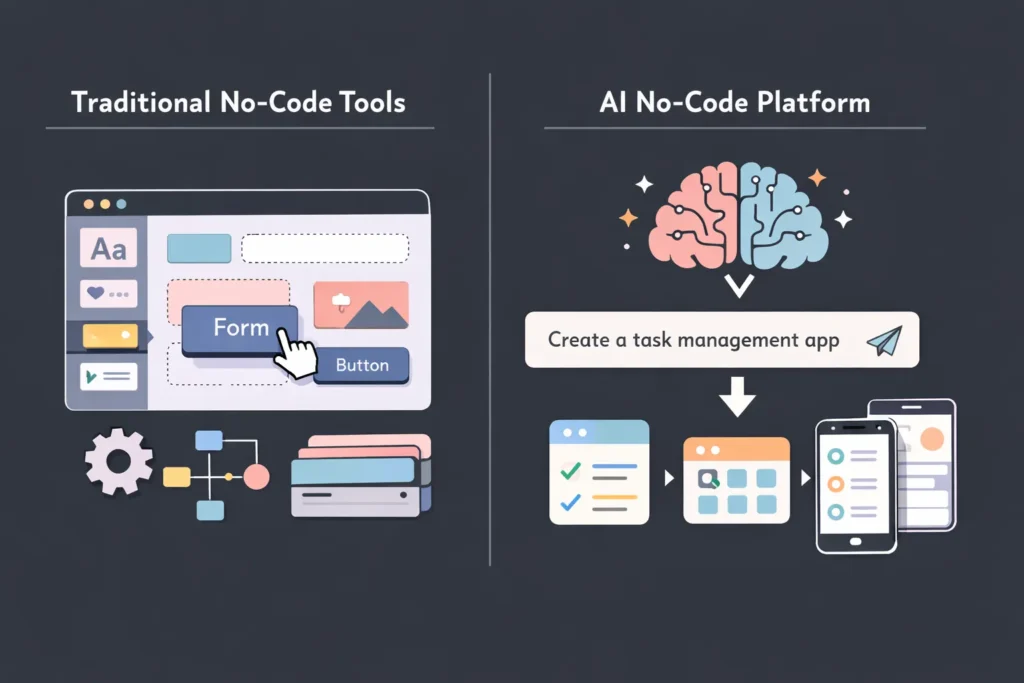
We are witnessing a shift from “No-Code” to “AI No-Code.”
Traditional No-Code (The Old Way)
Platforms like Bubble or Webflow require you to be a “visual programmer.” You still need to understand logic, database relationships, and pixel-perfect design. It is faster than coding, but it has a steep learning curve.
AI No-Code (The New Way)
AI No-Code Technology changes the interaction model. Instead of dragging and dropping boxes, you act as the Product Manager. You describe what you want, and the AI acts as the Senior Engineer.
- Prompt-to-Product: You type, “I need a loyalty system where 100 points equals $5 off,” and the AI writes the backend logic.
- Code Quality: Advanced platforms don’t just create a “black box” app; they generate clean, exportable code (React, Node.js, SQL).
- No-code business automation: The AI can suggest workflows you didn’t think of, such as, “Should we send a re-engagement SMS if a customer hasn’t visited in 14 days?”
Spotlight on imagine.bo
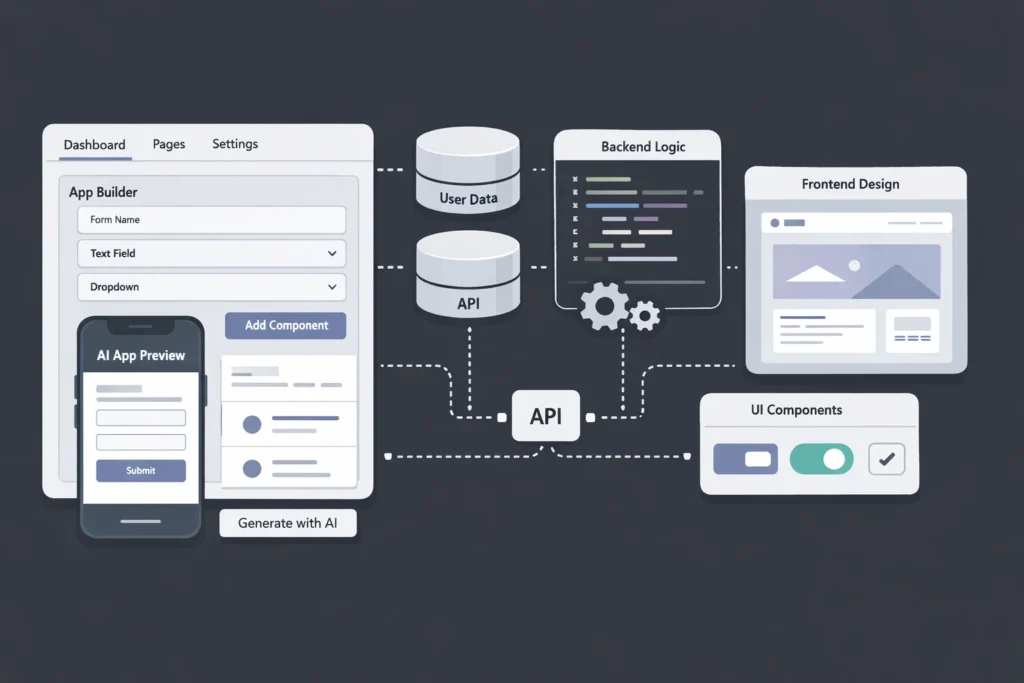
For this guide, we will focus on blog.imagine.bo, a leading AI no-code platform that is uniquely suited for building complex business systems like Cloud-based cafe software.
What is imagine.bo?
Imagine.bo is an AI-powered application builder that transforms plain English descriptions into fully functional, production-grade applications. Unlike simple website builders, it architects the entire stack: database, backend API, and frontend UI.
Why imagine.bo for Cafes?
- SDE-Level Code Generation: Imagine.bo acts as a “Software Development Engineer.” It understands that a Cafe Management System needs complex relationships (e.g., A “Cappuccino” product has “Modifiers” like “Oat Milk” and “Extra Hot”).
- True Scalability: Apps built on blog.imagine.bo are deployed on enterprise-grade serverless infrastructure, guaranteeing the ability to handle the “Morning Rush” (up to 1000 transactions per second).
- Security First: It automatically implements RBAC (Role-Based Access Control) and secure API endpoints, ensuring you are building a Secure Cafe Management System by default.
- No Vendor Lock-In: One of the biggest risks of no-code is being stuck. Imagine.bo allows you to export your source code, meaning you truly own your business logic.
Chapter 5: Step-by-Step Guide to Building Your System
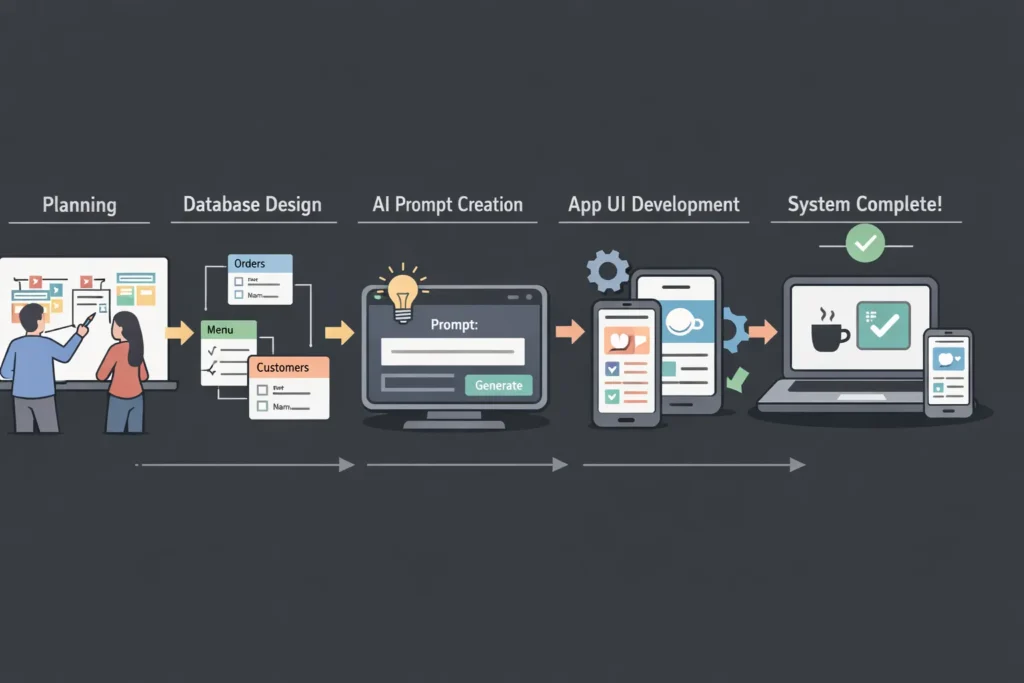
Let’s get into the practical details. We will build a Secure and Scalable Cafe Management System using blog.imagine.bo.
Phase 1: Planning and Database Schema
Before typing a prompt, we need a plan. The AI works best when you have a clear vision of your data.
Core Entities:
- Users: (Role: Customer, Staff, Admin)
- Products: (Name, Price, Category, Image)
- Modifiers: (Milk options, Syrups, Sizes)
- Orders: (User_ID, List of Products, Status, Timestamp)
- Inventory: (Ingredient_Name, Quantity, Unit)
Phase 2: The “Describe” Phase (Prompt Engineering)
Log in to blog.imagine.bo and enter the “Describe” phase. The quality of your prompt determines the quality of your v1.
Recommended Prompt:
“I want to build a secure and scalable cafe management system.
User Roles:
- Customer: Can view menu, filter by category (Coffee, Pastry), customize items (add modifiers), place orders for pickup, and view loyalty points.
- Barista (Staff): Needs a KDS (Kitchen Display System) view. Orders appear in ‘Pending’ state. They can move orders to ‘In Progress’ and ‘Completed’.
- Admin: Can manage products, update inventory, and view sales analytics.
Key Features:
- Security: Implement Role-Based Access Control. Only Admins can edit inventory.
- Scalability: Use a relational database schema optimized for high transaction volume.
- Logic: When an order is completed, automatically deduct the associated ingredients from the inventory table.
- Loyalty: Award 10 points for every $1 spent.”
What Happens Next: Imagine.bo’s AI reasoning engine will analyze this prompt. It will not just “draw” screens; it will architect the database relationships (e.g., linking Products to Inventory items) and set up the API security rules.
Phase 3: Customizing the UI/UX
Once the “Build” is complete (usually in minutes), you enter the visual editor.
- Branding: Upload your cafe’s logo and set your color palette (e.g., warm browns and creams).
- Mobile Optimization: Use the preview tool to ensure the “Order” button is easily tappable on a smartphone thumb zone.
- KDS Visibility: For the Barista view, increase the font size of the order numbers and timer so they can be read from 3 feet away.
Phase 4: Logic, Automation, and Inventory
This is where No-code business automation shines. You don’t need to manually subtract milk cartons. You can ask blog.imagine.bo to add a logic flow:
- Trigger: Order Status changes to “Completed”.
- Action: For each item in Order, query the “Recipe” table.
- Action: Subtract “Amount Used” from “Inventory” table.
- Notification: If Inventory < Threshold, send Email to Admin (Reorder Alert).
Phase 5: Integrations (Payments & SMS)
A Secure Cafe Management System needs reliable integrations.
- Stripe (Payments): In the blog.imagine.bo integrations panel, connect your Stripe account. This handles PCI compliance for you.
- Twilio (SMS): Connect Twilio to send automated texts: “Hey $$Name$$, your latte is ready for pickup!”
- Google Maps: For multi-location cafes, integrate maps to help users find the nearest branch.
Chapter 6: Launch, Operations, and Future Trends
Testing Your System
Before the grand opening, perform a “Stress Test.”
- The Security Audit: Try to access the Admin panel while logged in as a Customer. The system should block you (thanks to the RBAC you requested).
- The Scalability Test: Have your staff place 20 orders simultaneously. Watch the KDS for lag.
Staff Training
Your system is only as good as the people using it. Because you built it yourself using AI No-Code Technology, you understand every button. Train your baristas on the KDS flow and show them how to use the “86” feature (out of stock) during a rush.
Future-Proofing for 2026
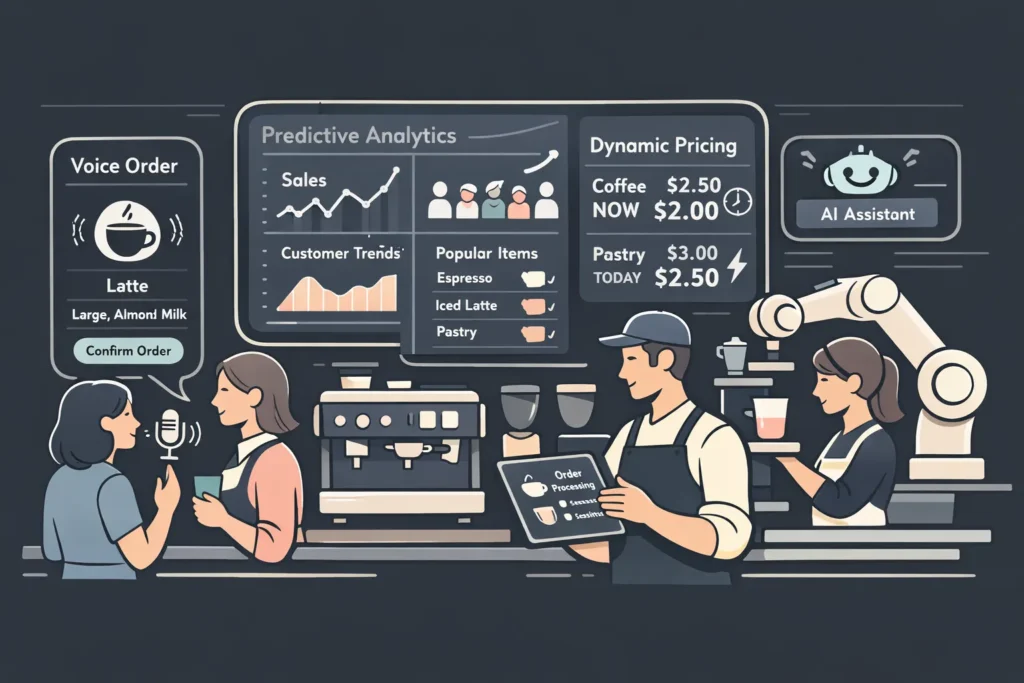
The beauty of blog.imagine.bo is that you can iterate endlessly. As AI advances, you can add new features:
- Predictive Ordering: “It’s raining today; the AI suggests prepping more hot cocoa.”
- Dynamic Pricing: “Happy Hour” logic that automatically applies discounts between 2 PM and 4 PM to boost slow hours.
- Voice Ordering: Integrating AI voice agents to take drive-thru orders.
Conclusion
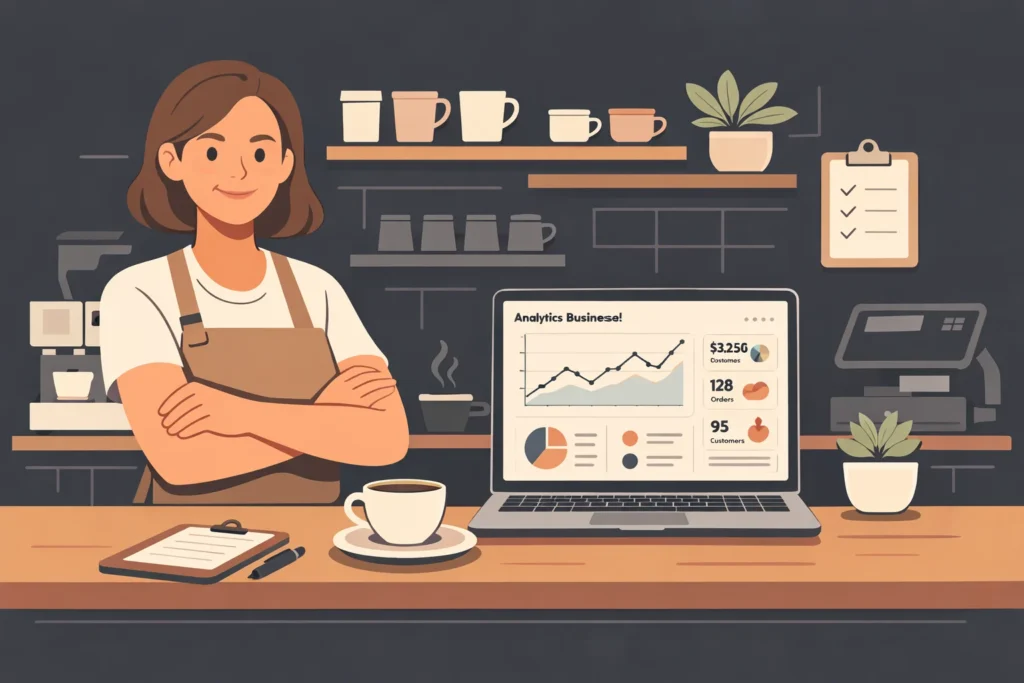
Building a Secure and Scalable Cafe Management System was once the domain of Starbucks and McDonald’s. They had the millions of dollars required to hire engineering teams. Today, AI No-Code Technology has leveled the playing field.
By leveraging platforms like blog.imagine.bo, you are not just saving money on software fees; you are building an asset that increases the valuation of your business. You own the data, you own the customer relationship, and you own the code.
The “Morning Rush” will always be chaotic, but with the right system in place, it can be a profitable, organized symphony rather than a stressful noise.
Ready to build? Stop renting your software. Start owning your technology. Visit imagine.bo today and turn your cafe idea into a production-ready reality in minutes.
Related Articles
- From Idea to App: How a Local Restaurant Built a Mobile Ordering System in Just 30 Days
- How to Build a Restaurant App or Website That Takes Orders & Ranks on Google — No Coding Required
- How to Launch a Revenue-Ready Restaurant App Faster Using Imagine.bo AI
- AI Website Builder for Restaurants: Serve Up a Sizzling Online Presence—No Code Required
- The Ultimate Guide to No-Code AI App Development in 2025
Launch Your App Today
Ready to launch? Skip the tech stress. Describe, Build, Launch in three simple steps.
Build